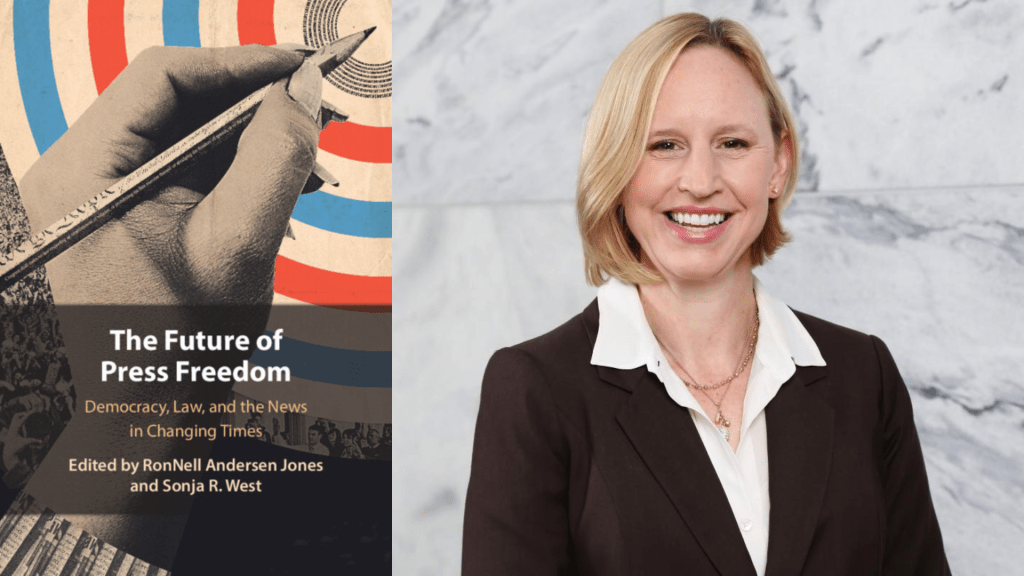
West holds the Otis Brumby Distinguished Professorship in First Amendment Law, a post shared by the law school and Grady College of Journalism and Mass Communication. She specializes in constitutional law, media law and the U.S. Supreme Court.
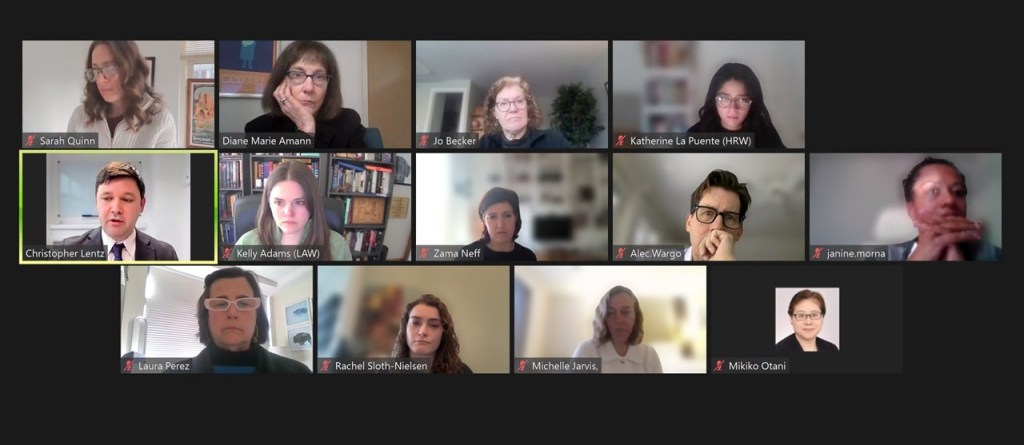
We at the University of Georgia School of Law Dean Rusk International Law Center were honored to host a recent two-part workshop intended to advance consideration of harms against children in a future crimes against humanity treaty.
Expanding that draft to include children’s concerns – specifically, by enumerating the recruitment and use of children as a standalone crime against humanity – was the aim of the Working Group on a Standalone Crime of Recruitment & Use of Children under the Crimes Against Humanity Treaty which our Center hosted. As explained by a briefing paper circulated before the first workshop:
Estimates indicate that a staggering 473 million children (or 18.9% of the global child population) live in conflict-affected areas and are at heightened risk of being recruited by State and non-State actors alike. The physical and developmental harms resulting from child recruitment and use can be severe and often long-lasting. Children may suffer death, physical injuries, or permanent disabilities because of combat, and many experience serious psychological trauma from being forced to commit or witness acts of violence. Even those not directly involved in combat are also at risk of attack due to their perceived association with armed actors. Recruited girls and boys are also frequently subjected to rape, sexual slavery, forced marriage, and other forms of sexual violence. For most children, recruitment also interrupts or ends their schooling, limiting future opportunities for sustainable livelihoods and civic participation. The harms experienced by recruited children are comparable in nature and gravity to other crimes against humanity enumerated in the Draft Articles.
Diane Marie Amann, who is Regents Professor Emerita, Emily & Ernest Woodruff Chair in International Law, and a former Center Faculty Co-Director at Georgia Law, was a co-convenor of the Working Group, along with Zama Neff, Executive Director of the Children’s Rights Division of Human Rights Watch, Laura Perez, Adjunct Professor at the Columbia University School of International & Public Affairs, and Janine Morna, Researcher on Children at the Amnesty International Crisis Response Programme.
University of Georgia School of Law Professor Emerita Diane Marie Amann recently took part in a panel entitled “(non-)peacefulness of the settlement of international disputes” at “The Future of International Law: Reflections on Challenges New and Old” conference at University College London Faculty of Laws. Cosponsoring along with UCL Laws was the National University of Singapore Centre for International Law.
Also on the panel were King’s College London Law Professor Christian J. Tams, International Law Commission member Vilawan Mangklatanakul, University of Geneva Law Professor Makane Moïse Mbengue, and University of Reading Law Professor Marko Milanovic. Together they explored current developments in relation to legal norms on the use of force, territorial conquest, decolonization, and economic coercion.
Amann, who is Regents’ Professor Emerita and Emily & Ernest Woodruff Chair in International Law Emerita at Georgia Law, served for many years as a Faculty Co-Director of our Dean Rusk International Law Center. At present she is an Academic Affiliate at University College London Faculty of Laws.
The panel focused on concerns about the second Trump administration’s impact on the international legal order, including U.S. engagement with international bodies and the potential effects on areas such as international criminal law and human rights law.
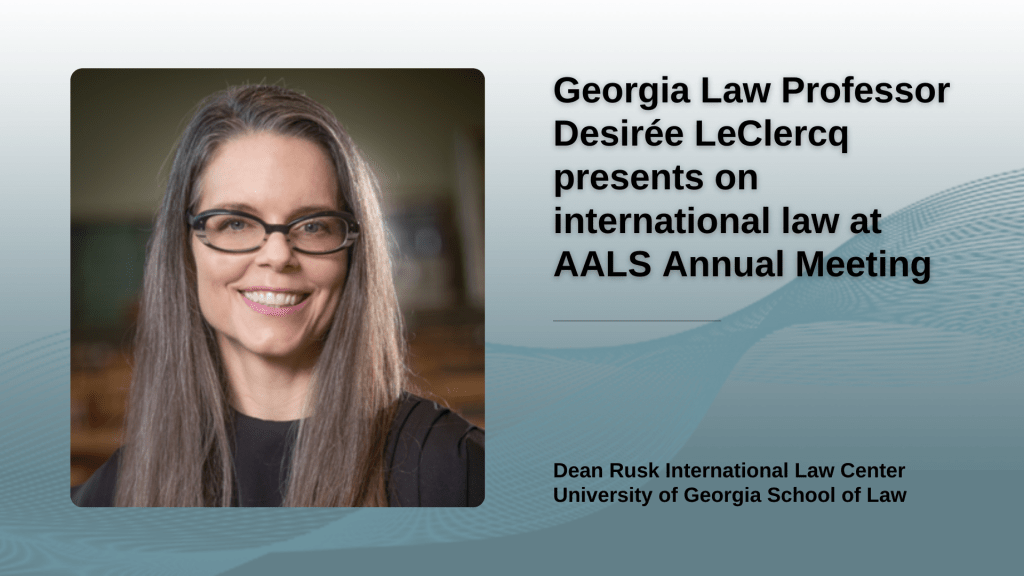
LeClercq also moderated the panel “Teaching Human Rights: From Specialized Courses to Doctrinal Integration”, which explored innovative approaches to teaching human rights, including strategies for standalone courses and ways to integrate human rights perspectives into first-year doctrinal courses and other core parts of the law school curriculum.
LeClercq joined the University of Georgia School of Law in 2024 as an assistant professor. She teaches Contracts, International Trade and Workers Rights, International Labor Law, U.S. Labor Law, and Public International Law. She also serves as a faculty co-director of the Dean Rusk International Law Center and as the faculty adviser for the Georgia Journal of International and Comparative Law and the Labor and Employment Student Association.
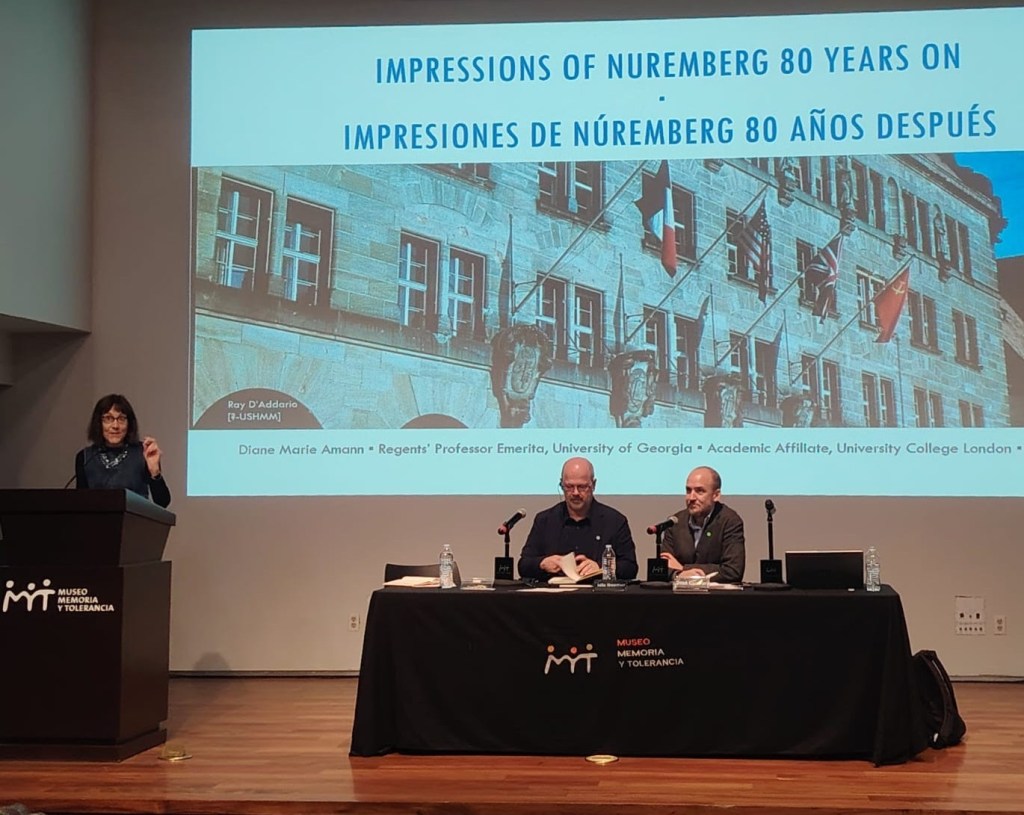
Amann examined legacies of the year-long war crimes trial which took place soon after World War II in Nuremberg, Germany, before an International Military Tribunal established by Britain, France, the Soviet Union, and the United States. After discussing some lesser known aspects, such as the roles of persons not affiliated with one of those four Allied states, Amann considered contemporary legacies of the landmark trial.
The University of Texas at Dallas joined the Museo Memoria y Tolerancia in cosponsoring the two-day conference.
Amann, who is Regents’ Professor Emerita and Emily & Ernest Woodruff Chair in International Law Emerita at Georgia Law, served for many years as a Faculty Co-Director of our Dean Rusk International Law Center. At present she is an Academic Affiliate at University College London Faculty of Laws.
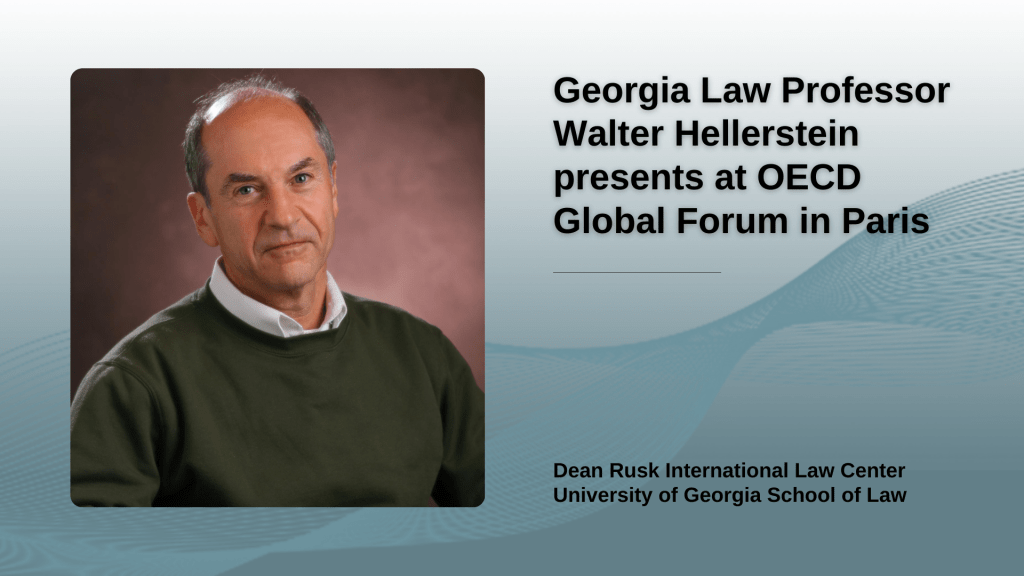
University of Georgia School of Law Professor Emeritus Walter Hellerstein presented at the Sixth Meeting of the OECDGlobal Forum on VAT in Paris, France in January. The Global Forum gathered government officials, international organizations, and business stakeholders to share approaches to building effective VAT systems.
Hellerstein is the Distinguished Research Professor & Francis Shackelford Distinguished Professor in Taxation Law Emeritus. He is a recipient of the National Tax Association’s Daniel M. Holland Medal for outstanding lifetime contributions to the study and practice of public finance, is widely regarded as the nation’s leading academician on state and local taxation. He has authored numerous books, textbooks, and law review articles, and has practiced extensively in the field. Hellerstein is currently a Visiting Professor at the Vienna University of Economics and Business, and he remains actively involved in his scholarship, consulting, and, in particular, his work as an academic advisor to the OECD.
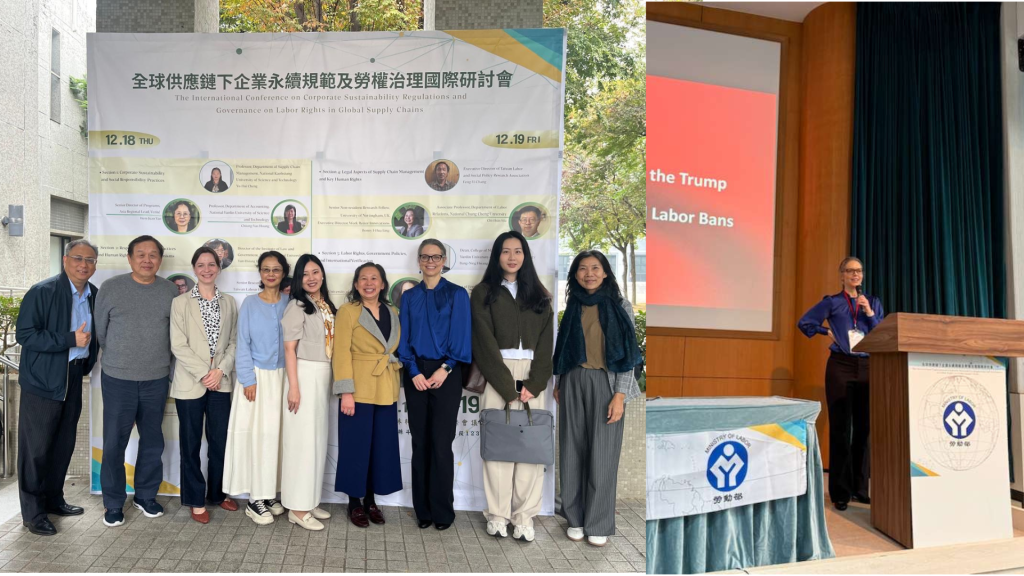
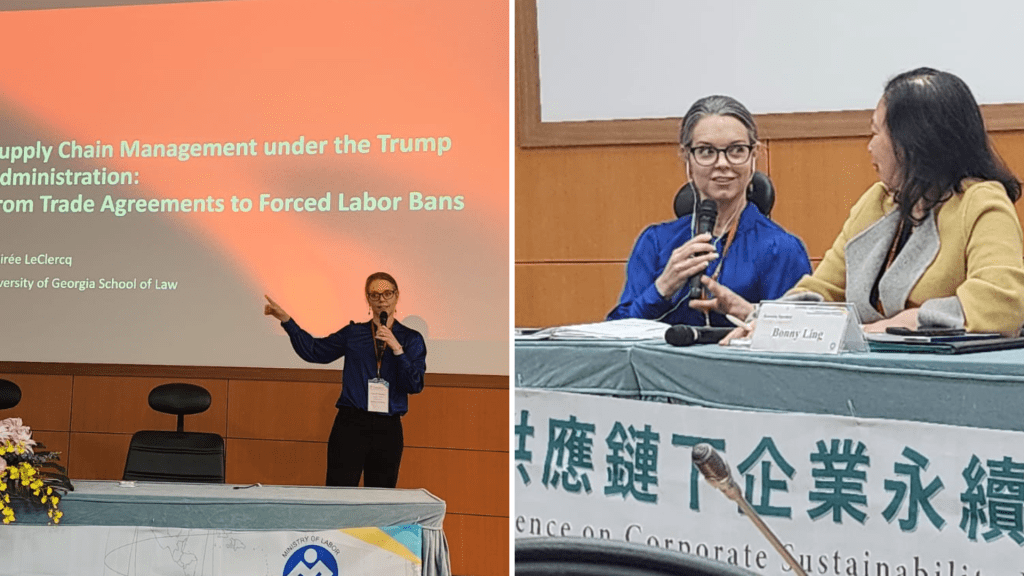
University of Georgia School of Law Professor Desirée LeClercq delivered a keynote address at the International Conference on Corporate Sustainability Regulations and Governance on Labor Rights in Global Supply Chains, held in Douliu, Taiwan, on 19 December 2025.
Her keynote, “Supply Chain Management under the Trump Administration: from Trade Agreements to Forced Labor Bans,” examined how shifting U.S. trade policy and enforcement tools shape corporate supply chain strategy, with a focus on labor rights compliance and emerging forced labor restrictions. A short video from her time in Taiwan was shared in an Instagram reel.
LeClercq joined the University of Georgia School of Law in 2024 as an assistant professor. She teaches Contracts, International Trade and Workers Rights, International Labor Law, U.S. Labor Law, and Public International Law. She also serves as a faculty co-director of the Dean Rusk International Law Center and as the faculty adviser for the Georgia Journal of International and Comparative Law and the Labor and Employment Student Association.
 exchange of notes