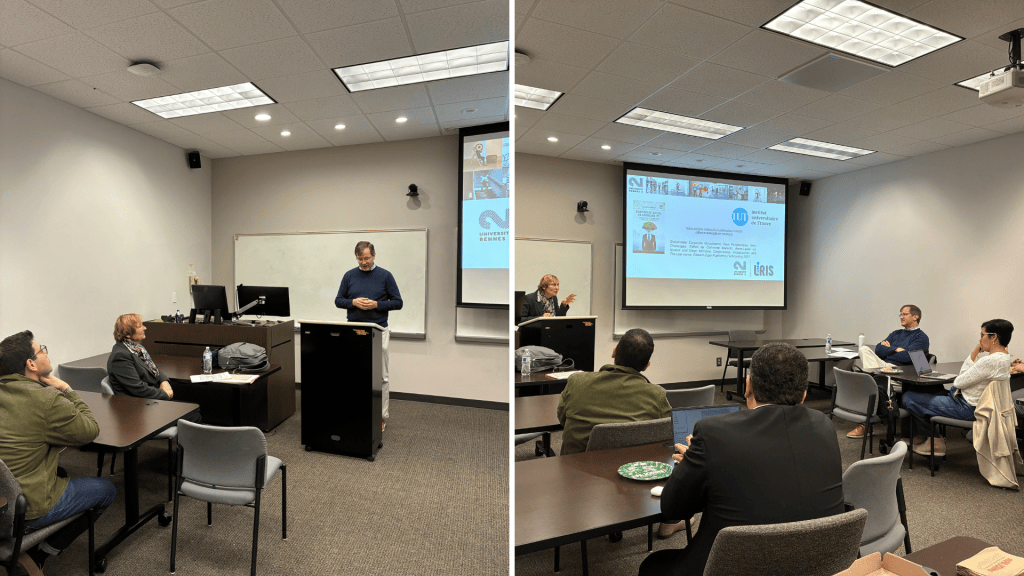
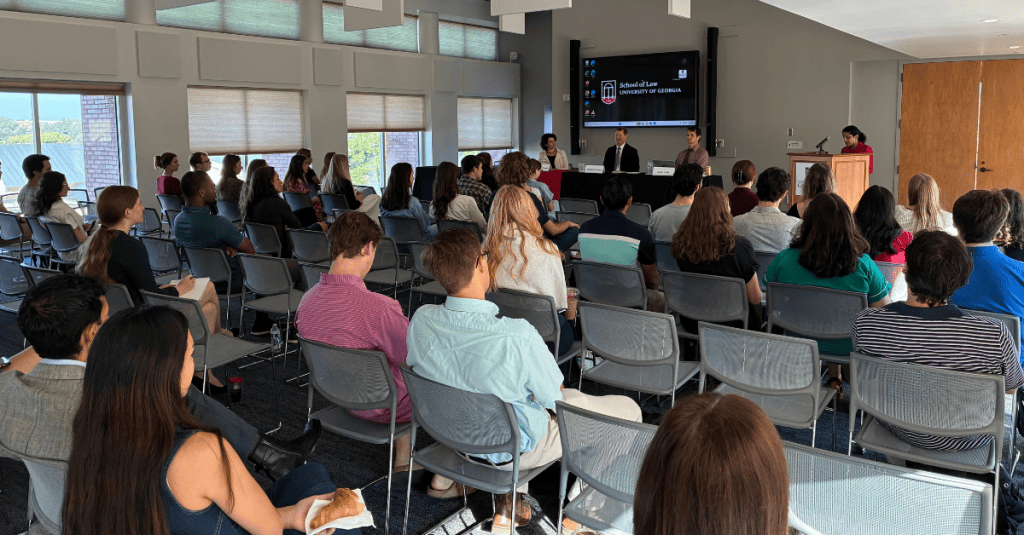
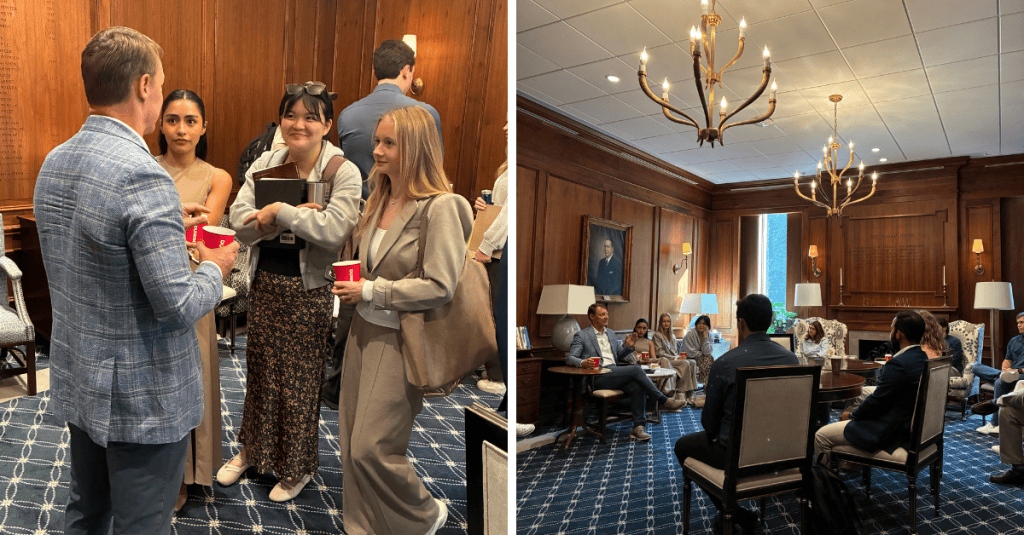
Université de Rennes 2 Professor Catherine Malecki recently presented “Holding the Course: The Resilience of European Stakeholder Corporate Governance,” at the University of Georgia School of Law. Georgia Law Professor Christopher Bruner, Stembler Family Distinguished Professor in Business Law & Faculty Co-Director of the Dean Rusk International Law Center, introduced Malecki and moderated audience questions following her presentation.
Malecki is a Professor of Private Law and a member of the Laboratoire Interdisciplinaire de Recherche en Innovations Sociétales (LiRIS), Rennes 2 University, France, an Associate Member of the Institut Droit Ethique Patrimoine, Paris-Saclay University, France, and an External Member of the Institute of Commercial and Corporate Law, Durham Law School, Durham University, UK. She is a member of the Institut universitaire de France (IUF). Her main research themes are business law (corporate governance, corporate social responsibility, sustainable finance, corporate law), comparative business law (English-speaking countries), sustainable and climate finance.
This event is part of International Education Week (IEW), a joint initiative of the U.S. Department of State and the U.S. Department of Education. IEW is an effort to promote programs that prepare Americans for a global environment and celebrate the benefits of international education. Join the Dean Rusk International Law Center in celebrating international education throughout the month of November. A full list of Center-sponsored events can be found here.
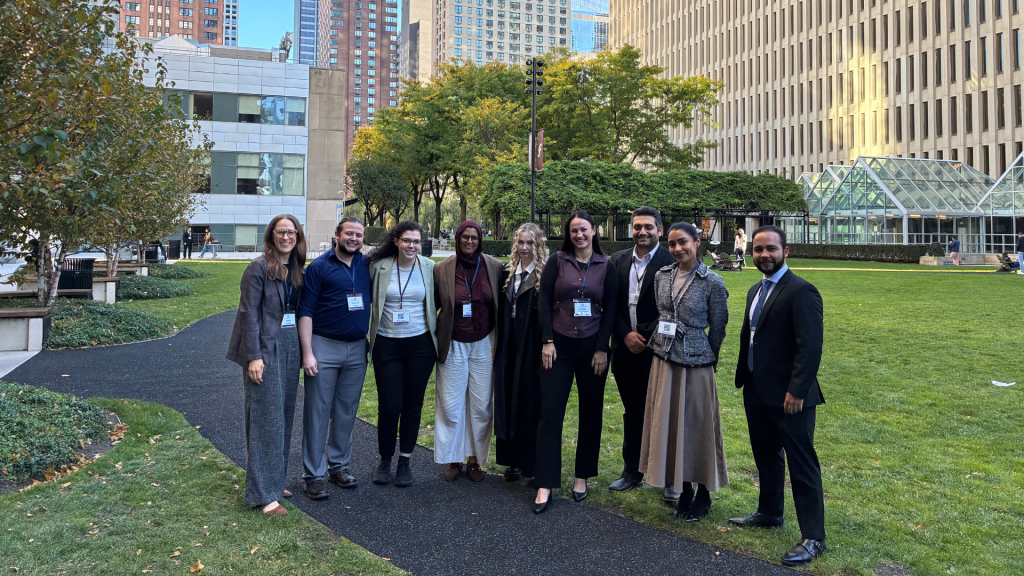
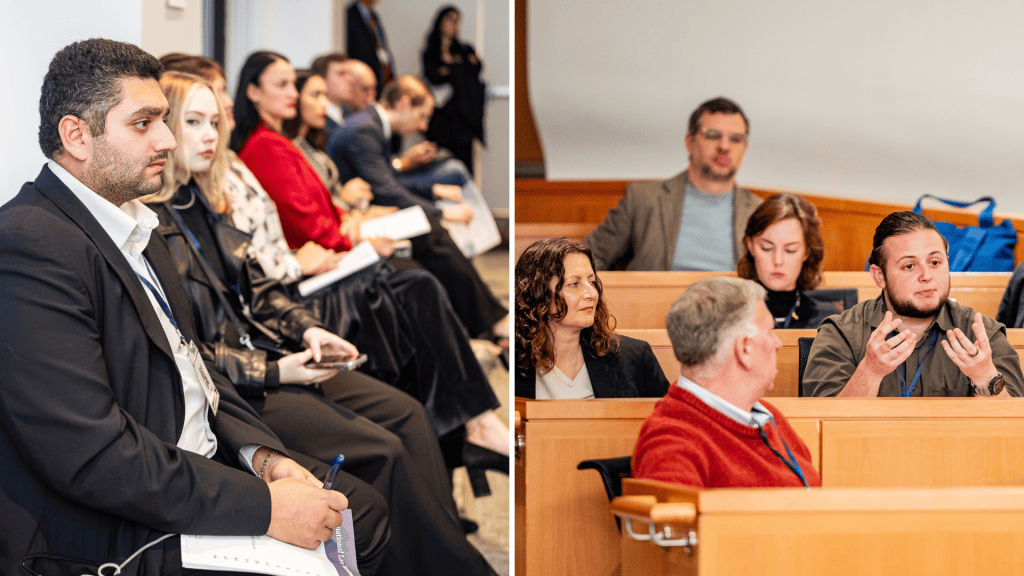
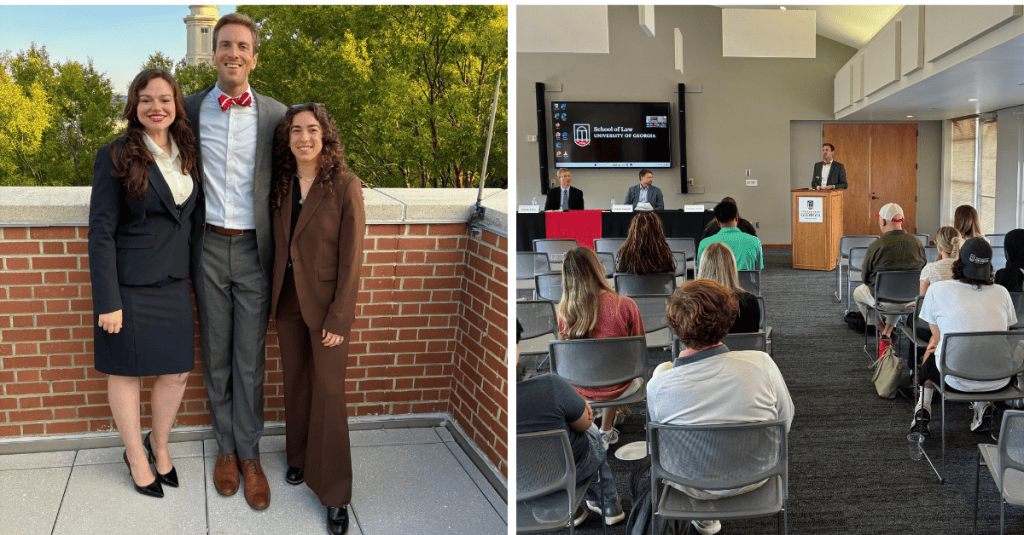
This fall, nine University of Georgia School of Law students received Louis B. Sohn Professional Development Fellowships to support their attendance of international law conferences. Named after the inaugural holder of the Emily and Ernest Woodruff Chair in International Law at Georgia Law, Sohn Fellowships enable law students to attend professional development opportunities related to international law. The Fellowships are administered by the Dean Rusk International Law Center.
Bussewitz was selected to be a 2026 Student Ambassador for ABILA (detailed here). She was one of eight Ambassadors selected nationwide to assist with International Law Weekend. Bussewitz is the fourth Georgia Law student in the last four years to be selected as an ABILA Student Ambassador. She follows Haichen Zhao (J.D. ’27), Madison Graham (J.D. ’25), and Bohdan Krivuts (LL.M. ’24, J.D. ’26).
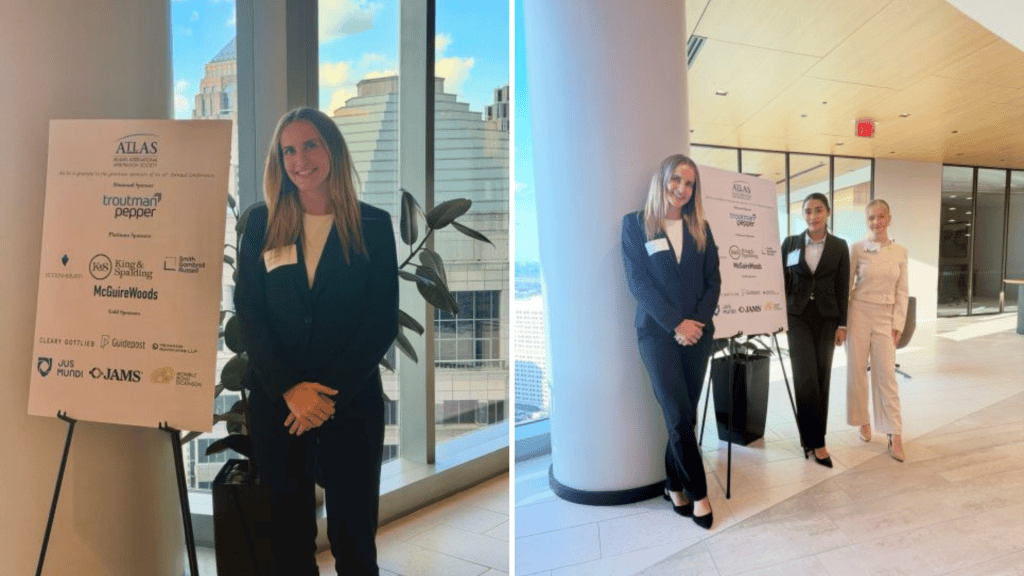
Paulsen shared about her favorite panel from the AtlAS annual conference:
One of the highlights was getting to hear Professor Peter B. “Bo” Rutledge, who teaches my International Arbitration course, speak at the conference. Hearing his perspective in a professional setting was specifically memorable, and the discussions at the conference have already influenced my academic interests. I am looking forward to exploring the issue of multiparty arbitration and nonsignatories following Outokumpu in an upcoming capstone paper for his class.
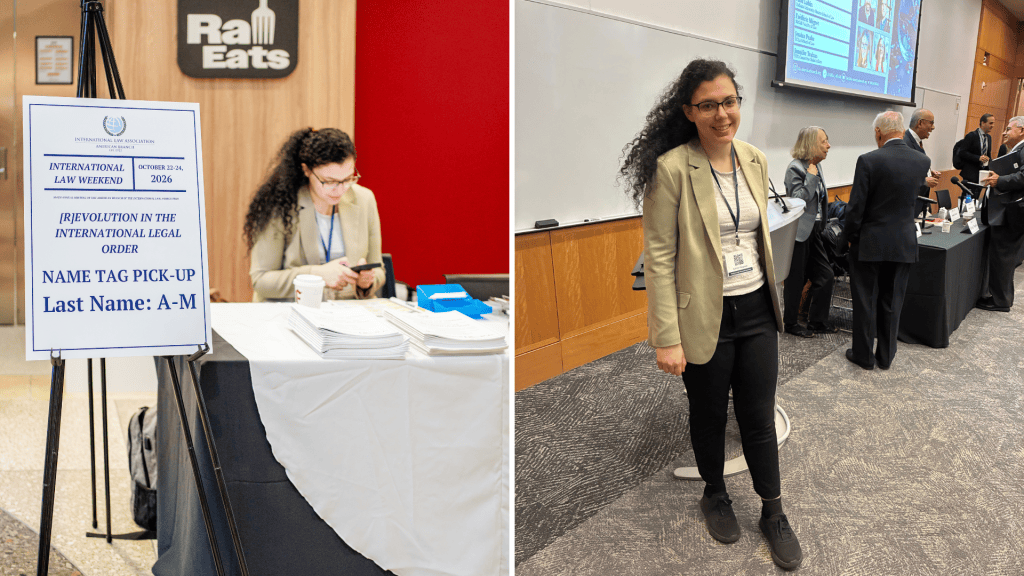
Reflecting on the experience of attending the ABILA ILW, Choudary stated:
My favorite panels were the ones on non-intervention (day 2), sovereignty (day 3), and reparations (day 2). I did not realize that there was a legal framework for reparations and movement lawyering programs working on this cause. The most significant part for me and the true value of events like this was hearing from non-American perspectives. It was a truly international affair and it was refreshing to hear about the law in the global context instead of just American. It has been a goal of mine in my final year of law school to get a more holistic view of the law and what it is capable of. The variety of topics discussed certainly helped me accomplish that goal.
Lizer noted her biggest takeaway from the ABILA ILW:
As an LL.M. student focused on international law and seeking to build a career in New York, I found these issues particularly relevant to my professional development. One of my main takeaways was the importance of understanding not only international legal rules, but also the political and institutional dynamics that shape their development and application. I was particularly interested in the question of whether emerging international arrangements can create more inclusive forms of governance or risk reinforcing existing inequalities. This perspective reinforced the importance of critical analysis, adaptability, and a broad understanding of international institutions in legal practice. The conference strengthened my motivation to continue developing my expertise and pursue opportunities to engage with complex international legal issues in my future career.
To read prior posts about Georgia Law students using Sohn Fellowships to attend professional development opportunities, please click here and here.
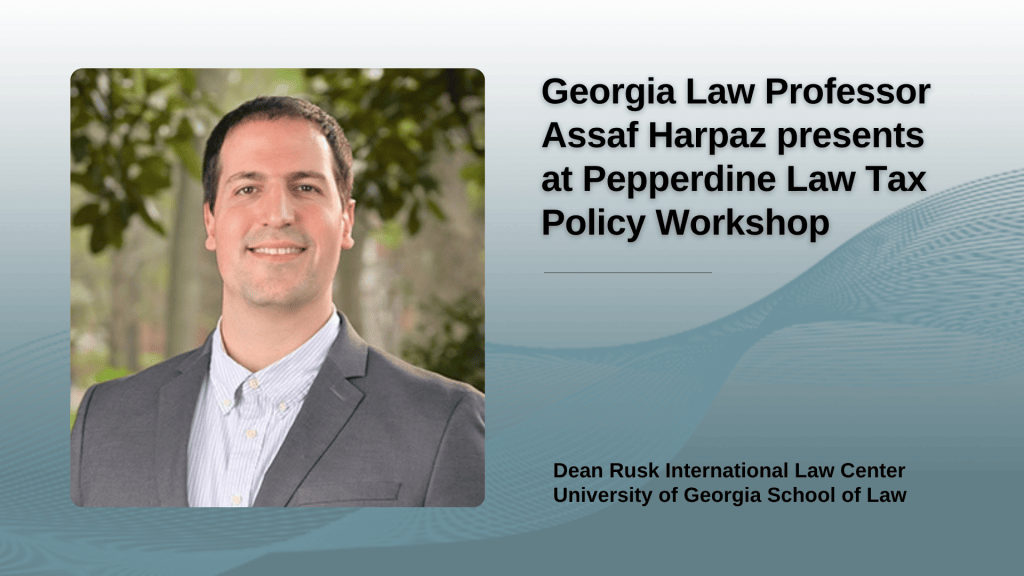
Tax sovereignty traditionally refers to a government’s authority to design and enforce its tax laws without external interference. Most legal scholars have examined the concept in the context of coordinated efforts to address harmful tax competition and tax evasion, focusing on the sovereignty concessions those efforts may require. However, recent assertions of tax sovereignty are arising in an increasingly fragmented international tax order marked by unilateralism and forum-shifting. That tension is demonstrated by the Trump administration’s withdrawal from international tax agreements, the proliferation of digital services taxes in Europe, and an emerging United Nations tax convention that incorporates a tax sovereignty principle. Nevertheless, tax sovereignty remains notoriously amorphous, and scholars have viewed it with skepticism because it is prone to manipulation and misuse.
This Article develops a relational theory of tax sovereignty. It argues that tax sovereignty should be understood as a principle of bounded autonomy, shaped and constrained by overlapping legal commitments and relationships of power. This theory operates across multiple axes. It applies to relations among states and between states and intergovernmental organizations, intra-state relations between national and subnational governments (e.g., U.S. states), and relations between governments and powerful institutional actors, like large corporations capable of shaping tax policy. The framework advanced in this Article ultimately rejects absolute claims of tax sovereignty, even by the world’s most powerful states. Effectively taxing offshore income demands cross-border cooperation and a willingness to accept reciprocal limits on tax sovereignty.
Harpaz joined the University of Georgia School of Law as an assistant professor in summer 2024 and teaches classes in federal income tax and business taxation. Harpaz’s scholarly focus lies in international taxation, with an emphasis on the intersection of taxation and digitalization. He explores the tax challenges of the digital economy and the ways to adapt 20th-century tax laws to modern business practices.
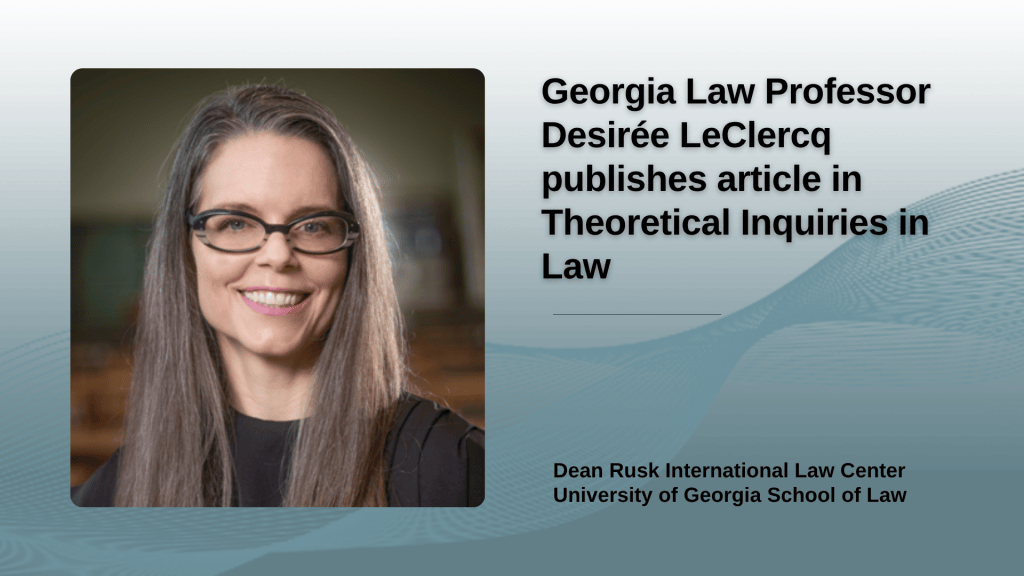
LeClercq joined the University of Georgia School of Law in 2024 as an assistant professor. She teaches Contracts, International Trade and Workers Rights, International Labor Law, U.S. Labor Law, and Public International Law. She also serves as a faculty co-director of the Dean Rusk International Law Center and as the faculty adviser for the Georgia Journal of International and Comparative Law, the Labor and Employment Student Association, and the International Law Students Association.
The day-long conference invited speakers representing a diverse range of doctrinal, institutional, and jurisdictional perspectives to the Georgia Law campus on Friday, September 18 to discuss how modern conflict is reshaping the relationships among state power, technological systems, and legal accountability. Across international law, technology law, and criminal law, the panels considered how contemporary conflicts expose pressure points in the rules-based international order, the governance of digital platforms and algorithmic systems, and the mechanisms available when states or individual actors violate legal norms.
GJICL Editor-in-Chief, William Stowers (J.D. ’27) and Executive Conference Editor Samantha Northenor (J.D. ’27) worked with Georgia Criminal Law Review Editor in Chief Eli Werbel (J.D. ’27) and Georgia Journal of Law & Technology Editor in Chief Cat Wood (J.D. ’27); Professor Joseph S. Miller, Ernest P. Rogers Chair of Intellectual Property and Unfair Competition Law; Center staff Sarah Quinn, Director; Taher S. Benany, Center Associate Director; and Lindsay Weinmann, Center Administrative Specialist; and with the GJICL’s Faculty Advisor, Professor Desirée LeClercq, who is Associate Professor of Law & Faculty Co-Director of the Dean Rusk International Law Center.
After opening remarks from Usha Rodrigues, Dean, University Professor & M.E. Kilpatrick Chair of Corporate Finance and Securities Law, the panels proceeded as follows:
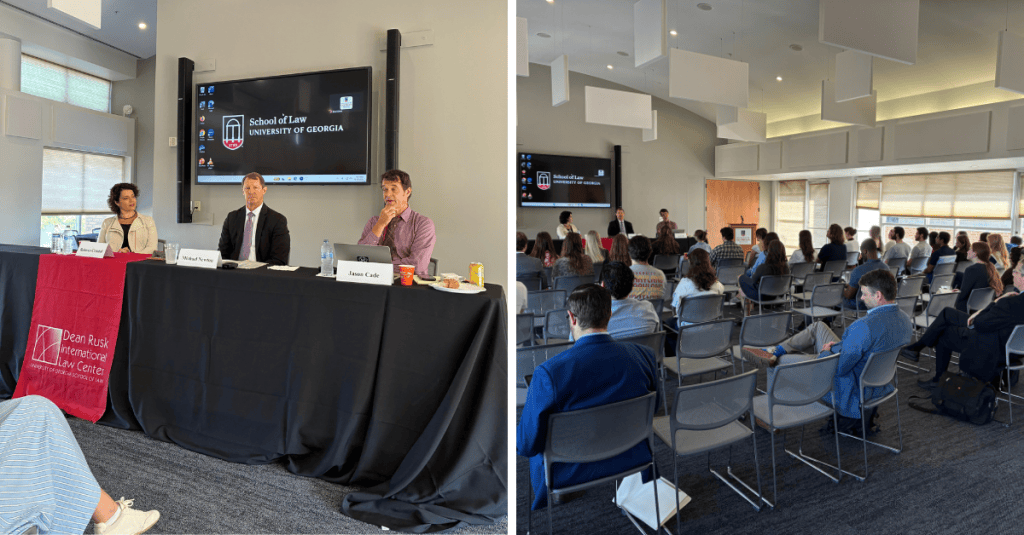
Panel 1: War Crimes: Accountability for Violations of International Law
Michael Newton, Professor of the Practice of Law & Director, International Legal Studies Program, Vanderbilt University Law School
Rebecca Crootof, Nancy Litchfield Hicks Professor of Law, University of Richmond School of Law
Moderator: Jason A. Cade, J. Alton Hosch Professor of Law & Community Health Law Partnership Clinic Director, University of Georgia School of Law
This panel examined what accountability means when states, armed groups, or individuals violate the laws governing armed conflict. Rather than addressing accountability in the abstract, the panel focused on the legal and practical mechanisms available when actors disregard established rules on war crimes, civilian protection, cyber operations, or other atrocity-related conduct. The discussion considered ways criminal law can respond to actors who exploit gaps in current legal international frameworks. It also assessed whether existing mechanisms are sufficient to hold nations accountable, and, if not, what reforms are needed to strengthen international accountability.
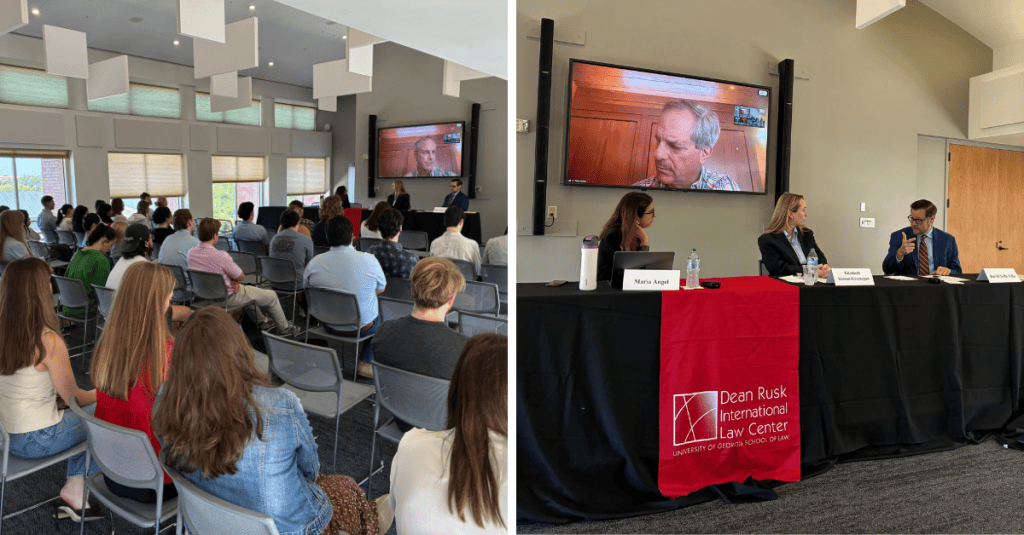
Panel 2: Sovereignty in the Cloud: Data Jurisdiction, Commercialized Reconnaissance, and Critical Infrastructure
Peter Swire, J.Z. Liang Chair, Professor, School of Cybersecurity and Privacy, College of Computing, Georgia Institute of Technology
David Sella-Villa, Assistant Professor of Law, University of South Carolina Joseph F. Rice School of Law
Moderator: María P. Angel, Assistant Professor of Law, University of Georgia School of Law
This panel examined the legal, jurisdictional, and national security crises that emerge when data capable of compromising critical infrastructure or exposing civilian populations is hosted on private cloud servers or sold on the open market. This panel explored how hostile foreign actors can exploit regulatory blind spots to buy or freely harvest operational data, facility layouts, and network vulnerabilities, alongside the consumer metadata and location histories of citizens. Finally, panelists addressed the limits of state sovereignty, individual digital privacy, and corporate liability when private data brokers and transnational cloud hosts inadvertently fuel the cyber reconnaissance phase of modern hybrid warfare.
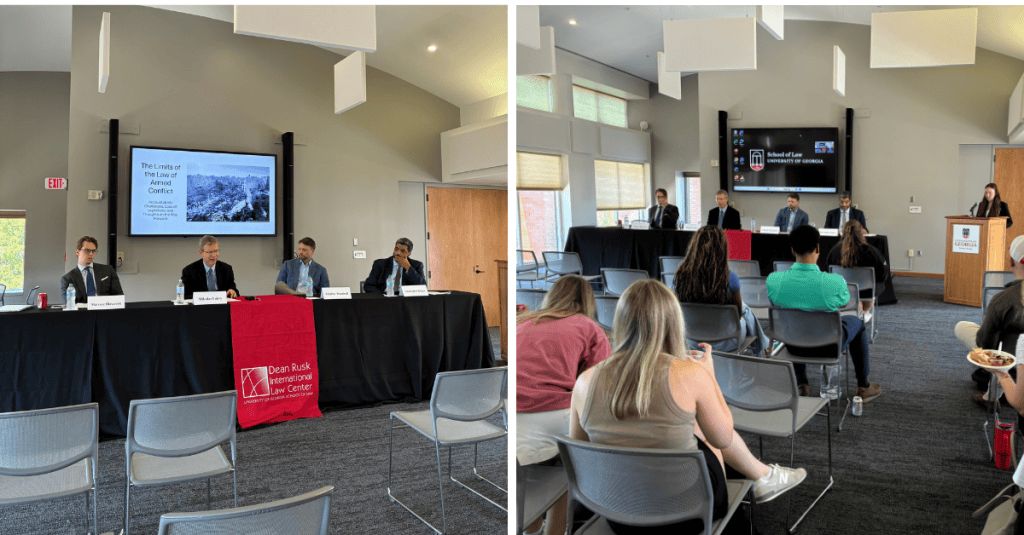
Panel 3: The Rules-Based Order Under Fire: Sovereignty, Force, and Adaptability from Ukraine, Gaza, and Taiwan
Charles Trumbull, Assistant Professor of Law, University of South Carolina Joseph F. Rice School of Law
Christopher J. Borgen, Professor of Law and Co-Director, Center for International and Comparative Law, St. John’s University School of Law
Mikulas Fabry, Associate Professor and Director of Undergraduate Studies, Georgia Institute of Technology
Moderator:Mateusz “Matt” Blaszczyk, Assistant Professor of Law, University of Georgia School of Law
This panel examined how contemporary conflicts test the core commitments and flexibility of the international legal order, including sovereignty, territorial integrity, the prohibition on force, civilian protection, humanitarian access, and current international frameworks. Using conflicts such as Russia-Ukraine, Israel-Palestine/Gaza, and Taiwan/South China Sea as reference points, the panel asked whether international law is failing, adapting, or being selectively invoked in ways that reveal both its continuing force and its institutional fragility. The panel also considered the limits of the existing international order, assessing its capacity to respond effectively to evolving geopolitical challenges and exploring the implications for future development and enforcement of international law.
***
The conference concluded with remarks from William Stowers (J.D. ’27), Editor-in-Chief of the Georgia Journal of International and Comparative Law.
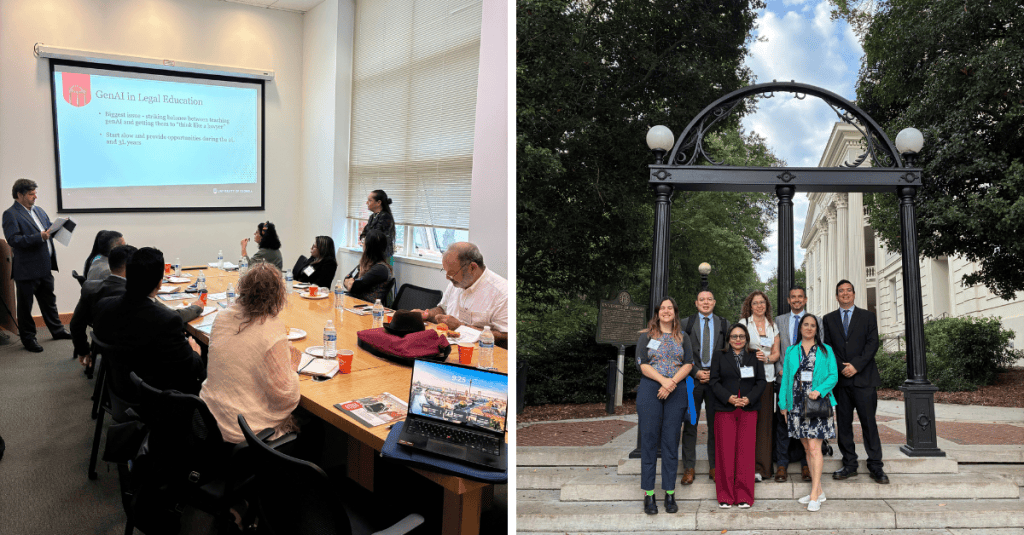
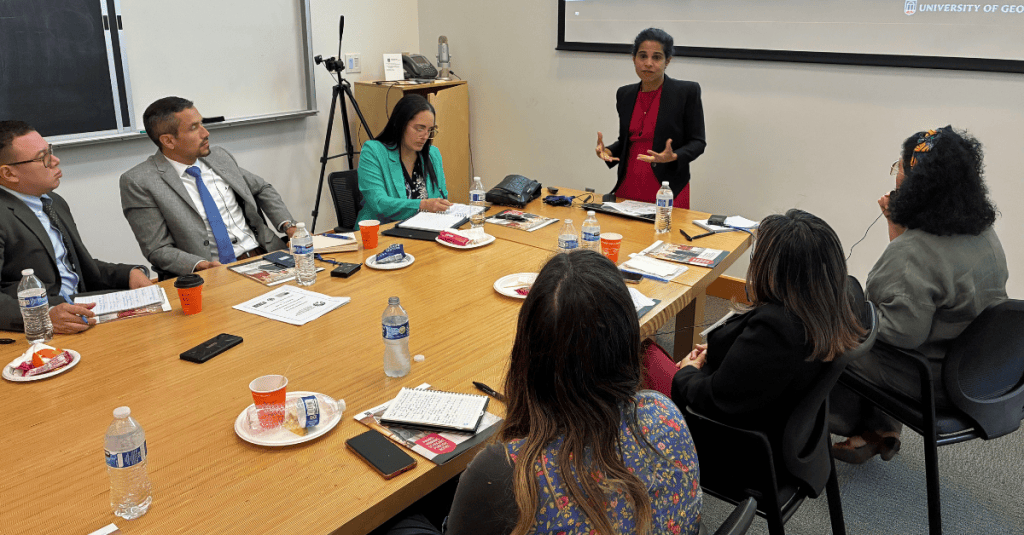
This week, the University of Georgia School of Law hosted a delegation of lawyers and judges from Central and South American countries through the U.S. Department of State’s International Visitor Leadership Program (IVLP). The morning visit to Athens was part of a three-week regional project entitled “The U.S. Judicial System: A Regional Project for the Western Hemisphere.” Seven individuals representing seven countries participated and learned about principles of the U.S. judicial and legal systems while deepening their understanding of federal and state judicial systems during their time in the U.S.
Professor Thomas “TJ” Striepe, Director of the Law Library, and Professor Brandy Ellis, Research Services Librarian, presented on practical applications of generative Artificial Intelligence (“genAI”) in U.S. legal education and in the legal system. They gave an overview of the law school’s approach to genAI instruction and use, as well as examples of how genAI has been used in courts and law firms in the U.S. recently. Professor María P. Angel, an expert in AI law and policy, contributed to the dialogue and provided specific examples of Georgia Law’s thought process behind the development and implementation of a new AI policy. The session concluded with a discussion of professional responsibility as it pertains to genAI usage in law school, academia, and the larger legal profession.
Launched in 1940, the IVLP deepens ties between the United States and other nations through carefully designed professional visits to the United States based on U.S. foreign policy goals for current and emerging foreign leaders. Each year, approximately 4,000 IVLP participants from around the world are selected by U.S. embassies to engage professional counterparts across the United States. Through these encounters, they develop a deeper understanding of the political, economic, and cultural influences within U.S. society. IVLP participants also gain a firsthand experience of the United States, its people, and its culture. Current and emerging leaders represent government, politics, the media, education, nongovernmental organizations, the arts, public health, international security, business and trade, and other fields. Over 500 current and former heads of government and state, 1,600 cabinet officials, 1,000 Members of Parliament, 12 Nobel Laureates, and many other distinguished world leaders in the public and private sectors have participated in the International Visitor Leadership Program.
Special thanks to Hannah Kim, Program Coordinator – Georgia Council for International Visitors (GCIV), and Lindsay Weinmann, Administrative Specialist to the Dean Rusk International Law Center, for their logistical support of this visit.
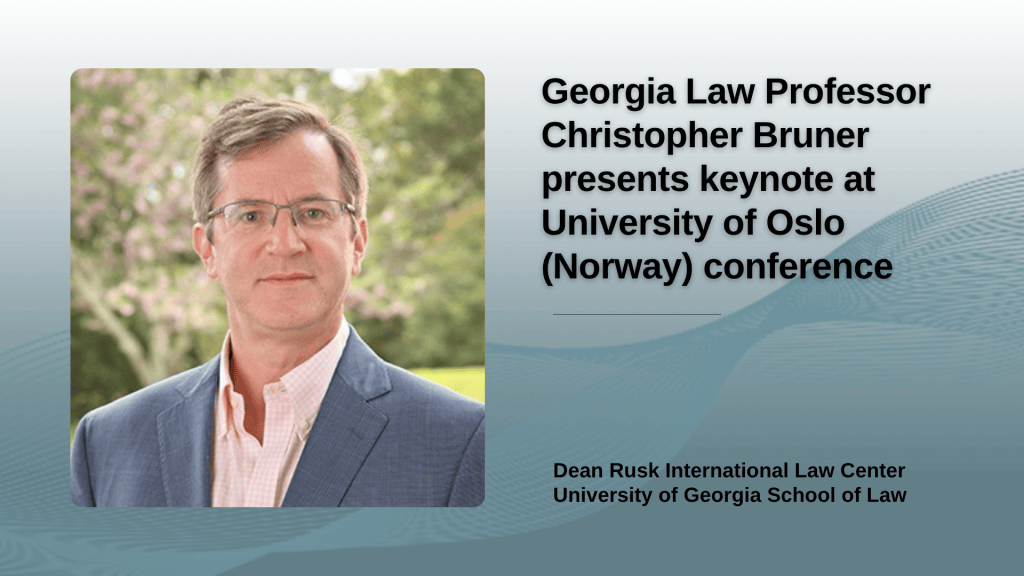
University of Georgia School of Law Professor Christopher Bruner presented a keynote address for a conference titled “Sustainability Law: Law’s Response to the Convergence of Crises” at the University of Oslo (Norway) in September. Bruner’s keynote was titled “Navigating Sustainability Backlash: Advancing Reform in Turbulent Times” and the conference was organized by the Sustainability Law research group and the Centre for Global Sustainability at the University of Oslo.
Bruner is the Stembler Family Distinguished Professor in Business Law at the University of Georgia School of Law and serves as a faculty co-director of the Dean Rusk International Law Center.
After being introduced by Georgia Law student and Federalist Society President Lucy Stallworth (J.D. ’28), Newton spoke with a group of students about the International Criminal Court’s jurisdiction, its relationship with sovereign states, and the recent U.S. sanctions against ICC officials. The conversation examined the legal foundations and limits of the Court’s authority under the Rome Statute, including questions of treaty jurisdiction, domestic investigations, and the proper role of the ICC in international criminal law.
Newton is an expert on terrorism, accountability, transnational justice and conduct of hostilities issues. Over the course of his career, he has published more than 100 books, articles, op-eds, and book chapters. He has been an expert witness in terrorism related trials both in domestic courts and at the International Court of Justice. Newton is admitted to the Counsel List of the International Criminal Court, where he helped prepare the appeal of Jean-Pierre Bemba and has participated in oral arguments at the Appeals Chamber in other cases. Read his full bio here.
Today, we welcome a guest post byGordon Oduor, a member of the University of Georgia School of Law Master of Laws (LL.M.) class of 2020. Oduor, who was recently named a Senior Associate in International Arbitration for Baker McKenzie in their Johannesburg, South Africa office, received a Fulbright grant for his LL.M. degree at Georgia Law. He is a first-generation university student and an honors graduate of the University of Nairobi Law School. He also holds a diploma in Business Administration with distinction from the Institute of Advanced Technology. Oduor, who is amember of the Chartered Institute of Arbitrators (ACIArb), wrote athesis on international arbitration in eastern and southern Africa under the supervision of former Dean and Talmadge Chair of Law Peter B. “Bo” Rutledge. Oduor is currently an adjunct professor of international arbitration at Strathmore Law School in Nairobi, a Member of the African Arbitration Association, a member of the International Chamber of Commerce, and a member of the ICC Kenya Commission on Arbitration and ADR.
Oduor’s reflections are part of the Dean Rusk International Law Center’s ongoing Alumni Spotlight series, through which we highlight the achievements of the Georgia Law community’s internationally-inclined alumni. Some responses have been edited for length and clarity.
What organizations, journals, clinics, or extra-curricular activities had the greatest impact on your experience at Georgia Law? Was there a class, professor, mentor, or administrator who had a lasting impact on you? How so?
I was involved with international law activities through the Dean Rusk International Law Center, and this re-affirmed my drive for a foot into international private law practice, especially international arbitration. The other members of my LL.M. cohort and the program’s administrative team, especially Dr. Laura Tate Kagel and Ms. Mandy Dixon, were also very supportive and provided the necessary resources for me to thrive in my pursuit of a career in international arbitration. In particular, I enjoyed attending the Atlanta International Arbitration Society (AtlAS) annual conference. I also completed a thesis focusing on COMESA International Arbitration Court under the supervision of former Dean and Talmadge Chair of Law Peter B. “Bo” Rutledge.
How has international law or global engagement shaped your career? Why do you think global perspectives are important for today’s legal professionals?
The world has shrunk into a global village: we now have a greater sense of interdependence and collaboration that is necessary to keep humanity going. To give perspective, I deal with commercial & investment disputes with parties from different jurisdictions, states, and countries. To effectively do my work, I often need to collaborate with a team made up of individuals in Johannesburg, New Yok City, London, and Dubai.
What is your advice for current law students?
Keep at it! It all comes together at some point; resilience is key!
Have a professional achievement, new role, award, or other milestone you’d like to share? Complete this Google Form to be considered for an upcoming Dean Rusk International Law Center Alumni Spotlight.
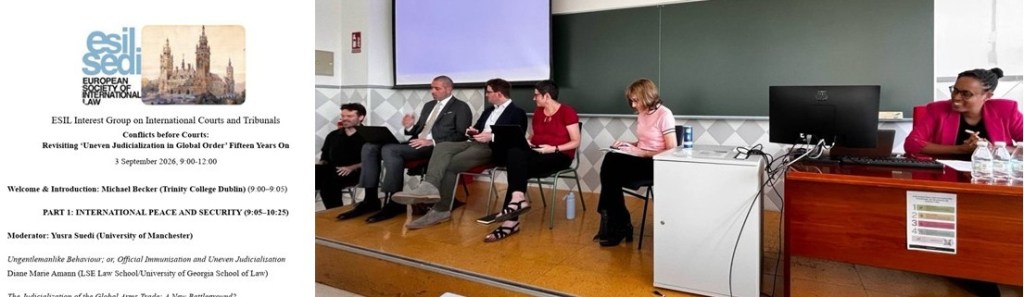
University of Georgia School of Law Professor Emerita Diane Marie Amann recently presented “Ungentlemanlike Behaviour; or, Official Immunisation and Uneven Judicialisation” during the annual gathering of the European Society of International Law (ESIL), held this year at the University of Málaga in Spain.
Amann’s talk considered the interrelation of international and national legal developments respecting grants of immunity to heads of state and certain other high-ranking officials, using the 2024 U.S. Supreme Court decision on the topic as a point of departure.
Amann, who is Regents’ Professor Emerita and Emily & Ernest Woodruff Chair in International Law Emerita at Georgia Law, served for many years as a Faculty Co-Director of our Dean Rusk International Law Center. Currently Visiting Professor at the London School of Economics and Political Science Law School and Honorary Professor at University College London Faculty of Laws, starting in October she will begin service as Departmental Lecturer in Public International Law at the University of Oxford.