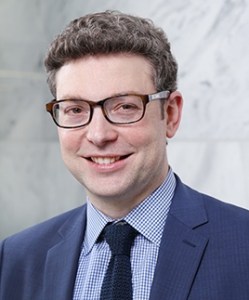
Georgia Law Alumni Spotlight: Gordon Oduor (LL.M. ’20) reflects on the importance of contributing to the “global village”

Today, we welcome a guest post by Gordon Oduor, a member of the University of Georgia School of Law Master of Laws (LL.M.) class of 2020. Oduor, who was recently named a Senior Associate in International Arbitration for Baker McKenzie in their Johannesburg, South Africa office, received a Fulbright grant for his LL.M. degree at Georgia Law. He is a first-generation university student and an honors graduate of the University of Nairobi Law School. He also holds a diploma in Business Administration with distinction from the Institute of Advanced Technology. Oduor, who is a member of the Chartered Institute of Arbitrators (ACIArb), wrote a thesis on international arbitration in eastern and southern Africa under the supervision of former Dean and Talmadge Chair of Law Peter B. “Bo” Rutledge. Oduor is currently an adjunct professor of international arbitration at Strathmore Law School in Nairobi, a Member of the African Arbitration Association, a member of the International Chamber of Commerce, and a member of the ICC Kenya Commission on Arbitration and ADR.

Oduor’s reflections are part of the Dean Rusk International Law Center’s ongoing Alumni Spotlight series, through which we highlight the achievements of the Georgia Law community’s internationally-inclined alumni. Some responses have been edited for length and clarity.

What organizations, journals, clinics, or extra-curricular activities had the greatest impact on your experience at Georgia Law? Was there a class, professor, mentor, or administrator who had a lasting impact on you? How so?

I was involved with international law activities through the Dean Rusk International Law Center, and this re-affirmed my drive for a foot into international private law practice, especially international arbitration. The other members of my LL.M. cohort and the program’s administrative team, especially Dr. Laura Tate Kagel and Ms. Mandy Dixon, were also very supportive and provided the necessary resources for me to thrive in my pursuit of a career in international arbitration. In particular, I enjoyed attending the Atlanta International Arbitration Society (AtlAS) annual conference. I also completed a thesis focusing on COMESA International Arbitration Court under the supervision of former Dean and Talmadge Chair of Law Peter B. “Bo” Rutledge.

How has international law or global engagement shaped your career? Why do you think global perspectives are important for today’s legal professionals?

The world has shrunk into a global village: we now have a greater sense of interdependence and collaboration that is necessary to keep humanity going. To give perspective, I deal with commercial & investment disputes with parties from different jurisdictions, states, and countries. To effectively do my work, I often need to collaborate with a team made up of individuals in Johannesburg, New Yok City, London, and Dubai.

What is your advice for current law students?

Keep at it! It all comes together at some point; resilience is key!

***

The application for the LL.M. Class of 2028 is now open; for information or to apply for LL.M. studies, visit our website and attend an upcoming recruiting event.

Have a professional achievement, new role, award, or other milestone you’d like to share? Complete this Google Form to be considered for an upcoming Dean Rusk International Law Center Alumni Spotlight.
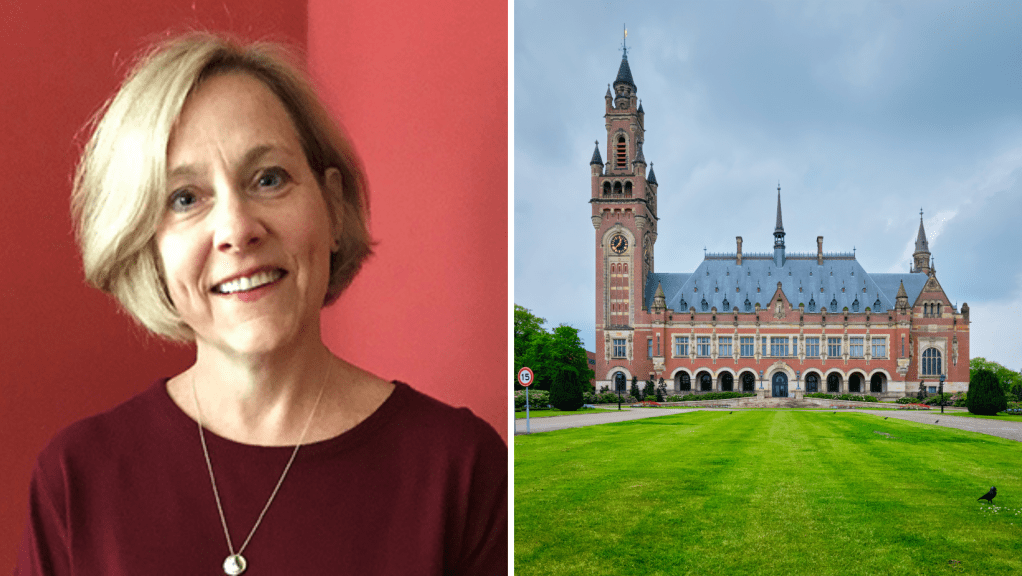
Georgia Law Professor Amann featured in The Wall Street Journal on Gaza ruling by International Court of Justice

University of Georgia School of Law Professor Diane Marie Amann was featured in The Wall Street Journal regarding the recent order of the International Court of Justice in the Genocide Convention case which South Africa has filed against Israel. 

The article titled “World Court Rejects Demands for Gaza Cease-Fire” was written by Jess Bravin and was published on January 26.

After reporting the opinion of Utah Law Professor Amos Guiora , that both parties won something, and that, in the words of the article, “Israel avoided a legal ruling that would force it either to stop military operations or defy the world court,” Bravin then wrote:

Still, the conduct of the Gaza campaign received no pass, said Diane Marie Amann, an international-law professor at the University of Georgia. ‘Israel will need to adjust if it wishes to comply with the court’s order,’ she said.

Amann is Regents’ Professor, Emily & Ernest Woodruff Chair in International Law, and Faculty Co-Director of the Dean Rusk International Law Center here at the University of Georgia School of Law. She teaches and publishes regularly on matters relating to international law.

During research stay at Wits Law in South Africa, Georgia Law Prof Bruner presents on corporations, sustainability

Professor Christopher Bruner, the Stembler Family Distinguished Professor in Business Law at the University of Georgia School of Law, recently gave a seminar presentation at the University of the Witwatersrand School of Law, as part of his ongoing research visit at that Johannesburg, South Africa, law school.

Title of the presentation was “Private Power and Public Good: Harnessing the Corporation for a Sustainable Future.” Its focus corresponded with Bruner’s research project, a comparative corporations book that:

1st, develops a new conception of the corporate form and associated rules of corporate law and governance; and

2d, builds on that framework to explore the corporation’s potential to contribute to environmental, social, and economic sustainability.

Professor Cohen’s AJIL essay on “Multilateralism’s Life-Cycle” at SSRN

Harlan Grant Cohen, the Gabriel M. Wilner/UGA Foundation Professor in International Law and Faculty Co-Director of our Dean Rusk International Law Center at the University of Georgia School of Law, has posted a chapter entitled “Multilateralism’s Life-Cycle,” which will appear in a forthcoming issue of volume 112 of the American Journal of International Law.

The manuscript, which forms part of our Dean Rusk International Law Center Research Paper Series at SSRN, may be downloaded at this SSRN link.

Here’s the abstract for this essay by Professor Cohen, an expert in global governance and member of the AJIL Board of Editors:

Does multilateralism have a life-cycle? Perhaps paradoxically, this essay suggests that current pressures on multilateralism and multilateral institutions, including threatened withdrawals by the United Kingdom from the European Union, the United States from the Paris climate change agreement, South Africa, Burundi, and Gambia from the International Criminal Court, and others, may be natural symptoms of those institutions’ relative success. Successful multilateralism and multilateral institutions, this essay argues, has four intertwined effects, which together, make continued multilateralism more difficult: (1) the wider dispersion of wealth or power among members, (2) the decreasing value for members of issue linkages, (3) changing assessment of multilateral institutions’ value in the face of increased effectiveness, and (4) members’ increased focus on relative or positional gains over absolute ones. Exploring how each of these manifests in the world today, this essay suggests that current stresses on multilateralism may best be understood as the natural growing pains of an increasingly mature set of institutions. The open question going forward is what form the next stage of development will take. Will strategies of multilateralism continue or will they be replaced by smaller clubs and more local approaches?