LLM alumna meets prospective students in Argentina

Last week our alumna Martina Lourdes Rojo (LLM ’04), a law professor in the faculty of judicial sciences at the Universidad del Salvador in Argentina, met with prospective LLM students in Buenos Aires.

1

EducationUSA is the US Department of State’s global network of educational advising centers that promotes the more than 4,700 accredited U.S. colleges and universities. Find the nearest advising center.

Part of a university fair sponsored by Education USA, an arm of the U.S. Department of State, the day offered an opportunity discuss the career benefits and special advantages of earning the Master of Law, or LL.M., degree at Georgia Law.

Students who missed it should feel free to email LLM@uga.edu to hear more about the flexible degree program. We are currently accepting applications and look forward to hearing from you!


Center’s Laura Kagel meets with prospective LLMs in Mexico

portada_esLaw students in Guadalajara, Mexico will have the opportunity to talk with a Dean Rusk International Law Center staffer about pursuing a degree at here at the University of Georgia School of Law.

Laura Tate Kagel, the Center’s Associate Director of International Professional Education, will give a presentation for students this evening, Friday, October 18, at 7:00 p.m. about the LL.M. degree at the University of Georgia.

She has spent the day at the Expo CEEAD (Centro de Estudios sobre la Enseñanza y el Aprendizaje del Derecho), speaking with prospective students about the career benefits and special advantages of earning the Master of Law, or LL.M., degree at Georgia Law. (See prior posts about our current LL.M. students, as well as our hundreds of LL.M. alums, here.)

If you’d like to learn more about the LL.M. degree, please email LLM@uga.edu. EXPO CEEAD information is available here.

Australian Broadcasting Co. features Georgia Law Professor Dennis and new coauthored book, “Rap Lyrics on Trial”

A just-published article at ABC News, a digital publication of the Australian Broadcasting Co., features Georgia Law Professor Andrea L. Dennis (right), who holds the law school’s John Byrd Martin Chair of Law.

The article poses this headline question:  “Can violent rap lyrics be evidence of criminality or does the law misunderstand music’s biggest genre?” In seeking an answer, ABC music & pop culture reporter Paul Donoughue focuses on the new book Rap on Trial: Race, Lyrics, and Guilt in America (The New Press 2019), which Dennis, a criminal law expert, has coauthored with University of Richmond Liberal Arts Professor Erik Nielson.

The ABC article notes that the coauthors identified more than “500 cases in the US alone of rap lyrics being used in criminal trials, at times leading to inappropriate or wrongful convictions,” and continues:

“Few would say Johnny Cash’s famous lyric ‘I shot a man in Reno just to watch him die’ was evidence of the country singer’s murderous leanings, they write.

“‘It is quite clear to us that this [rap] is the only fictional art form that is used in this way,’ Professor Dennis said, adding that race was an essential factor in the story.

“There are very limited examples of it being appropriate, Professor Dennis said. For example, when a lyric accurately describes a specific crime.

“‘Usually, what’s happening is the lyrics are somewhat generic — talking about general crime or very common types of behaviour that almost any rap artist might talk about,’ she said.”

Donoghue further compares the U.S. situation to that in Australia, where speech protections are less strong but where no similar prosecution has yet taken place.

The full Australian article is available here; Dennis’ book, here.

Student Caroline Harvey wins cultural heritage writing competition

Caroline HarveyCaroline Harvey, a current third-year student at the University of Georgia School of Law, is one of two 2019 winners of the Lawyer’s Committee for Cultural Heritage Preservation Law Student Writing Competition in Cultural Heritage Law.

Harvey’s paper, “An Avenue for Fairness: Disclosure-Based Compensation Schemes for Good Faith Purchasers of Stolen Art,” argues that in art replevin actions, courts should take an additional step in their due diligence analyses and consider whether a good faith possessor of stolen artwork should be entitled to compensation after forfeiting artwork to the true owner. This, she argues, would “more fairly balance the equities between the parties and avoid total loss to the good faith purchaser.”

Harvey currently serves as the Executive Notes Editor for the Georgia Law Review. After her first year, she participated in the Global Governance Summer School, and she completed a Global Externship At-Home at the Antiquities Coalition in Washington, D.C.  Last summer, she worked for Norris Legal Atlanta Law Group. She holds a B.A. in Art History from the University of Georgia, and hopes to practice in the areas of cultural heritage and art law.

Georgia Law Professor Ringhand presents comparative elections law paper on US, UK at Mercer conference

Lori A. Ringhand, J. Alton Hosch Professor of Law here at the University of Georgia School of Law, presented her comparative elections law scholarship last Friday at the “Contemporary Issues in Election Law” Law Review Symposium at Mercer University School of Law in Macon.

Ringhand, an expert in election law, constitutional law, and comparative law, presented a paper entitled “First Amendment (Un)Exceptionalism: US and UK Responses to Online Electioneering.” It’s a product of her Spring 2019 research as a Fulbright Distinguished Chair at the University of Aberdeen, Scotland (prior posts here and here).

Ringhand is presenting the same paper this semester at other law schools, including George Washington University and Marquette University.

The Mercer symposium also featured a paper by a United Kingdom-based scholar who’d spoken at Georgia Law last Wednesday: Professor Jacob Eisler, University of Southampton Law School.

Georgia Law Professor Bruner presents on comparative corporate governance methods at Fordham Law workshop

Christopher Bruner, the Stembler Family Distinguished Professor in Business Law here at the University of Georgia School of Law, took part this past weekend in a 2-day Comparative Corporate Governance Workshop at Fordham Law School in New York.

The  workshop centered around a new volume in progress, Research Handbook on Comparative Corporate Governance (Edward Elgar, forthcoming).

Bruner presented his own draft chapter, “Methods of Comparative Corporate Governance,” and also commented on draft chapters by two other contributors.

Georgia Law Dean Bo Rutledge, student Katherine Larsen publish commentary on promise of new international mediation treaty

A new treaty seems poised to raise the profile of mediation as a way of resolving disputes, according to commentary by the dean and a student researcher here at the University of Georgia School of Law.

Coauthoring the Daily Report article, entitled “Singapore Convention Presents an Opportunity for Georgia in Mediation,” were international dispute resolution expert Peter B. “Bo” Rutledge, Dean and Herman E. Talmadge Chair of Law at Georgia  Law, and 3L Katherine Larsen.

The United States belongs to a number of treaties – most notably, the UN Convention on the Recognition and Enforcement of Foreign Arbitral Awards, concluded in New York in 1958 and so known as the New York Convention – that make make arbitration awards enforceable. This membership, the article observed, “has given arbitration a comparative advantage over other forms of dispute resolution.”

But that could change once the 2018 UN Convention on International Settlement Agreements Resulting from Mediation – named the Singapore Convention in recognition of the city where it was concluded last December –  enters into force. Some predict that could happen within a year, the authors wrote, then focused on the significance of this for the state of Georgia:

“Much like it adopted an international arbitration code, the state should consider enacting an international mediation law tied to the provisions of the Singapore Convention. Such legislation could enhance Georgia’s appeal as a mediation forum and build upon its reputation as a jurisdiction hospitable to business, including the resolution of business disputes.”

The full commentary is available here. A Global Atlanta news report on a related talk that Dean Rutledge delivered at the annual conference of the Atlanta International Arbitration Society is here.

Georgia Law Professor Diane Marie Amann presents at ESIL and ICC on Dr. Aline Chalufour, lawyer on French prosecution team at Nuremberg

Earlier this month, in Europe, Professor Diane Marie Amann, the Emily & Ernest Woodruff Chair in International Law and Faculty Co-Director of the Dean Rusk International Law Center here at the University of Georgia School of Law, presented her research respecting the only French woman lawyer on Nuremberg.

Amann gave a paper entitled “Intersectional Sovereignties: Dr. Aline Chalufour, Woman at Nuremberg – and at Paris, Ottawa, and Dalat” at “New Histories of Sovereigns and Sovereignties,” a daylong workshop sponsored by the European Society of International Law Interest Group on the History of International Law. The workshop also featured scholars from Stanford University, the University of Glasgow in Scotland, and Oxford University in England. It took place at the National and Kapodistrian University of Athens, Greece, the day before the start of ESIL’s annual conference held at the same university.

The following week, Amann presented on Dr. Chalufour (pictured above at far right) as a guest lecturer in the series presented by the Office of the Prosecutor of the International Criminal Court at The Hague in the Netherlands.

The first talk explored the life of Dr. Chalufour, who was born in 1899 in Dieppe and lived at least until the early 1980s, through 3 theorizations of sovereignty: 1st, shared sovereignties theories developed alongside the 1920 establishment of the League of Nations; 2d, theories on the interrelation of international law with colonialism and imperialism; and 3d, feminist theorizations of human sovereignties. Amann’s second talk explored Dr. Chalufour’s work at Nuremberg as an example of a cross-cutting history from below.

This work in progress is part of Amann’s ongoing research into the roles that women played at post-World War II trials at Nuremberg and Tokyo.

Georgia Law Professor Melissa J. Durkee presents in Greece on customary international law, states, corporations and global commons

Professor Melissa J. Durkee, the J. Alton Hosch Associate Professor of Law here at the University of Georgia School of Law, presented her international law scholarship in Greece earlier this month.

Durkee spoke on “‘Attributed’ Customary International Law: States, Corporations and the Global Commons” at a panel entitled “Corporations, International Law and Human Rights For Sustainable Development.” The panel formed part of a meeting on “States, Corporations and Commons: Dissonance and Accord,” which took place the day before the start of the annual conference of the European Society of International Law, held this year in Athens, Greece.

Organizing the pre-conference meeting was the International Environmental Law Interest Group of the American Society of International Law. It took place at the Aristotle University of Thessaloniki, in northeastern Greece, and featured, in addition to Durkee, scholars from Germany, Greece, Italy, Russia, Slovenia, and the United Kingdom.

“The Future of Space Governance” conference will convene experts on October 28

17-098-Kepler-90_MultiExoplanetSystem-20171214On Monday, October 28, 2019, the Dean Rusk International Law Center and the Georgia Journal of International and Comparative Law at the University of Georgia School of Law will host a daylong conference to explore “The Future of Space Governance.” The conference will feature a keynote speech by Professor Emerita Joanne Irene Gabrynowicz, University of Mississippi School of Law, as well as panel discussions by academics and practitioners.

Participants will consider the following concept note:

International legal frameworks governing outer space developed under the conditions of a bi-polar, Cold War world, where the two great powers were the only spacefaring nations, and were engaged in a feverish race to space. The international agreements reflect the concerns of the time, primarily to prevent militarization and colonization of outer space. It seemed essential to keep the cold war out of space, and to keep it from going hot. Then, the U.S. made it to the moon, winning the race and effectively freezing space governance in Cold War terms.

Exactly half a century later, the world has changed, and so has space. A bi-polar world has gone multipolar, and an optimistic period of multilateralism has given way to a decline in robust international cooperation. Meanwhile, developments in outer space have exploded in complexity, ambition, and commercial promise. The number of entrants and potential entrants has proliferated: seventy-two nations now claim they have space agencies, and at least fourteen have orbital launch capabilities. One of the key new entrants is China, which is busy exploring the dark side of the moon and plans a permanent Chinese lunar colony as early as 2030. India, too, is broadening its ambitions, launching a moon lander trip this year, and planning for manned spaceflight and a space station launch soon thereafter. The SpaceX program is making rocket launches available for bargain basement prices, bringing space activities within the reach of a gaggle of startups keen to grab their piece of the commercial pie. Other commercial actors imagine space tourism, colonies, and missions to Mars. At the same time, the United States, still the dominant player in space, has announced plans to launch a “Space Force,” aimed at defense of U.S. military interests from space.

Fifty years after the first moonwalk, the prospect for a new set of multilateral agreements governing outer space is remote, yet the legal questions raised by new space activity are mounting. With little prospect of new multilateral treaties, outer space governance will need to make do with existing law, generate customary rules to govern new applications, and develop forms of sublegal understanding and cooperation.

This conference takes a stakeholder approach to emerging questions of outer space governance. It seeks to understand the perspective and concerns of classic space powers, new entrants, non-space faring nations, and international organizations like the Committee on the Peaceful Uses of Outer Space, as well as civilian space agencies, national militaries, and commercial actors. It asks for views on the sufficiency of existing law and governance structures and probes the legal needs of new and existing stakeholders. It will explore the agendas of the growing collection of actors, and attempt to find new prospects for governance.

Here’s the schedule:

RutledgeFull_cropped


8:45-9:00  Welcome

Peter B. “Bo” Rutledge, University of Georgia School of Law


9:00-10:30  New Entrants: Nations

What are the emerging governance challenges as new nations emerge as space-farers?

Slide1

Steven Mirmina, NASA

Saadia Pekkanen, University of Washington, Henry M. Jackson School of International Studies

Cassandra Steer, Women in International Security Canada

Charles Stotler, University of Mississippi School of Law

cohen2017crop


Moderator ǀ Harlan G. Cohen, University of Georgia School of Law


10:45-12:15  New Norms? Commercial Actors

What norms govern, or should govern, potential commercial uses such as extraction, tourism, and settlement?Panel 2

Julia Selman Ayetey, McGill University

Frans von der Dunk, Nebraska College of Law

Brian Israel, ConsenSys

Mark J. Sundahl, Cleveland-Marshall College of Law

UW Headshot


Moderator ǀ Melissa J. Durkee, University of Georgia School of Law
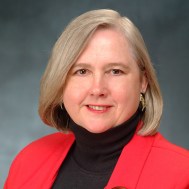
 

Gabrynowicz_hi_res_small1:15-2:00  Keynote

Professor Emerita Joanne Irene Gabrynowicz, University of Mississippi School of Law


2:15-3:45  New Uses: Security in Space

What are the appropriate responses to the new U.S. “Space Force” and other threats of space militarization?

Panel 3.jpg

Mariel Borowitz, Georgia Tech, Sam Nunn School of International Affairs

David Kuan-Wei Chen, Center for Research in Air and Space Law, McGill University

James Gutzman, United States Air Force

Andrea Harrington, Air Command and Staff College, Air University

img_2013crop


Moderator ǀ Diane Marie Amann, University of Georgia School of Law

GJICL EIC3:45-4:00  Closing Remarks

Lauren Elizabeth Lisauskas, Editor-in-Chief, Georgia Journal of International and Comparative Law


Registration, CLE credit, and other details here. Additional cosponsors include the International Law Society, Georgia Law’s chapter of the the International Law Students Association.