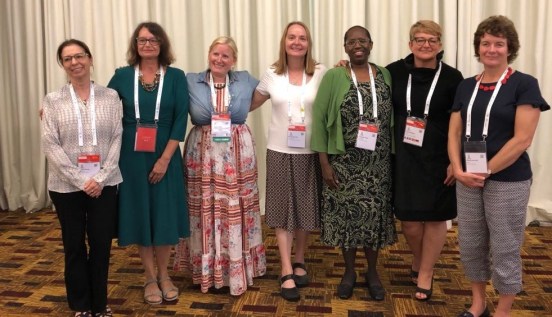
Pleased today to welcome a contribution from Anne Burnett, who has served since 1996 as the foreign and international law librarian at the University of Georgia School of Law Alexander Campbell King Law Library. She earned her B.A. degree from the University of Nevada, her J.D. cum laude from Georgia Law, and her MLIS from the University of Texas in Austin. Burnett teaches International Legal Research, among other courses, at Georgia Law, and is active in global societies, as indicated in the post below.
 Over 3,500 librarians and information professionals gathered in Kuala Lumpur, Malaysia, this past August 24-30 for the World Library and Information Congress (WLIC), the annual conference of the International Federation of Library Associations and Institutions (IFLA). As Secretary of the Standing Committee for the IFLA Law Libraries Section (I’m at center in the Standing Committee photo at top), I participated in a week of meetings, educational programs, leadership workshops and strategic planning.
I became involved in the IFLA Law Libraries Section because of its work supporting the rule of law by promoting access to information and access to justice globally. Our section’s business meetings this year concentrated on planning upcoming workshops for law librarians in Senegal and the country of Georgia (the latter in conjunction with the Georgian-Norwegian Rule of Law Association). The section has conducted similar workshops in Croatia, Côte d’Ivoire and Uganda. These workshops spotlight open access to legal materials and also provide a nucleus for law librarian networks in the targeted regions. The section also discussed means of promoting the principles set forth in the IFLA Statement on Government Provision of Public Legal Information in the Digital Age, drafted by Section members and adopted by IFLA’s Governing Board, to encourage governments to ensure access to information, identified as a right in Article 19 of the Universal Declaration of Human Rights and in the UN’s 2030 Agenda for Sustainable Development.
 One of my greatest pleasures in serving as an officer of the Standing Committee is my collaboration with law and government librarians from all corners of the world who share a common goal of providing and preserving access to government and legal information. Our Section Standing Committee meetings this year included members and observers from Africa, Southeast Asia, Australia, China, Canada, Australia and Europe.
The Section also sponsored two educational programs during the Kuala Lumpur conference:
- In a program titled The Role of Government and Law Libraries in Times of Crisis and Turmoil, three speakers, including Law Librarian of Congress Jane Sanchez, provided examples of different roles played by government and law libraries in responding to crises and with access to justice initiatives and social advocacy projects.
- A second program, titled Legal Capability: Law as a Life Skill, discussed programs in Canada and in the United States that seek to improve “legal capability” in the general population.
Additional programs of interest addressed global copyright issues, the impact of AI on information science, and providing services to indigenous populations.
 The conference schedule allowed for some sightseeing opportunities. Kuala Lumpur (KL), the capital and largest city of Malaysia, boasts record-setting skyscrapers housing national and international corporations, high-end fashion stores, insane traffic and delicious street food (right). The large convention center, where we met, is in the shadows of the twin towers (top right) of Malay’s Petroleum Company, Petronas, which are the emblematic symbol of the city. But KL’s architecture also reflects Portuguese, Dutch and British colonialism. The population is similarly diverse, with predominately Muslim Malaysians joined by significant Indian and Chinese populations. I was fortunate to take a trip to the outskirts of KL to see the Hindu temple at the Batu Caves (above left), an international pilgrimage site with imposing statues, natural limestone caves, and very friendly and bold resident Macaque monkeys!
During a day trip to the coastal town of Melaka (or Malacca), situated between KL and Singapore, I was struck by the stark contrast between the raucous Joncker Steet Night Market and the sobering architectural reminders of colonialism. The A Famosa Portuguese fort, built in the early 16th Century by forced indigenous labor, later fell under Dutch, then British control. Modern independent Malaysia, however, embraces its position as an upper middle—income economy, and the Malaysians I met were excited about the energy and growth there.
For a report from the overall WLIC conference, including details of the Law Libraries Section’s business meetings, see the October issue of the FCIL SIS newsletter and the FCIS SIS blog post on the Law Libraries’ Section’s educational programs.



 ► Professor

 The Dean Rusk International Law Center is delighted to serve as a cooperating entity for the 7th annual conference of the
  Speakers and participants will come to Atlanta from around the world, as detailed in the full
  The Dean Rusk International Law Center at the University of Georgia School of Law welcomes Laura Olson, Director of the Human Rights Program at The Carter Center, to campus next Tuesday, November 6. She will give a lecture, “
 Law students and lawyers in Russia are invited to take part in a free webinar regarding postgraduate legal study in the United States. It’s set for
  The Dean Rusk International Law Center at the University of Georgia School of Law welcomes Consul General Javier Díaz de León to campus on Tuesday, October 30. He will give a lecture, “


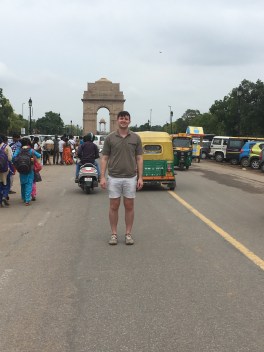 As Priti told me on more than one occasion, “India is not for the weak-hearted.” Living there was a difficult adjustment, in part because I stood out like a sore thumb as a tall white male in New Delhi. My fifteen-minute walk each day to and from the metro was the highlight of my time in India, but because I was so clearly foreign, strangers frequently approached me hoping I was a tourist they could refer back to a friend’s travel agency. Further, simple tasks became complex when every vendor, took-took driver, and businessman expected some bartering for each transaction. India seemed like it might be the easiest country in the world to get taken advantage of. However, these interactions speak to something I observed at the core of India.
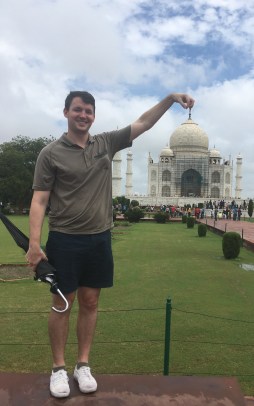 My externship at PSA confirmed my desire to be a lawyer. I saw thoughtful people work on difficult problems to help companies work effectively in an ever-expanding world. While it took some adjustment to be comfortable walking the streets of Paharganj, I was sad to leave India. I took one bite of the airplane pretzels, and already felt like I had made a huge mistake leaving the delicious Indian cooking behind. I will miss the warm smiles of people on the street and the friends I made over the summer. When I left India, I took home far more than my final review and certificate of internship. I took home a wider view of the world, a deeper understanding of why I want to be a lawyer, and many fond memories.
 For a recap of the year’s global law-and-practice accomplishments here at the University of Georgia School of Law, have a look at the just-published
  exchange of notes