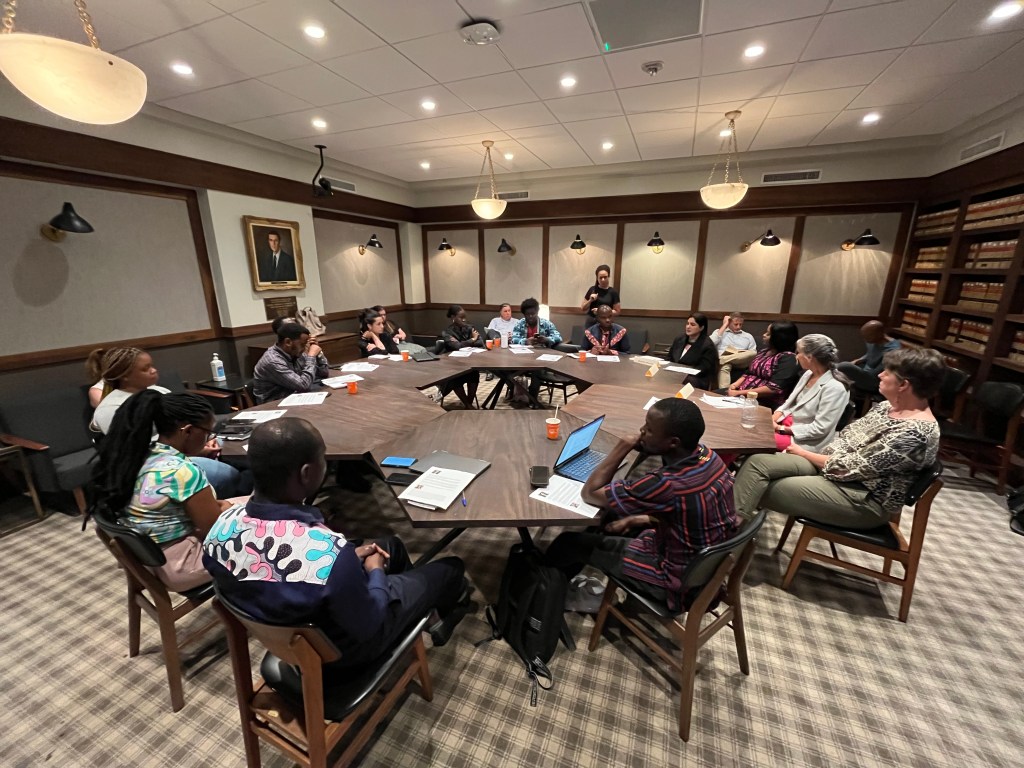
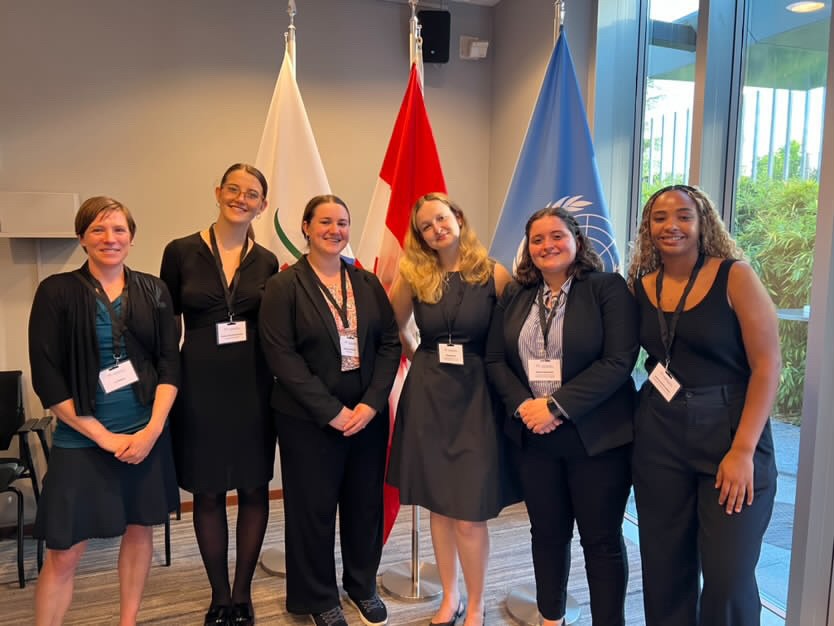
The 10 Fellows in attendance have work experience in anti-human trafficking, advocacy for women and girls, human rights, and refugee and victim assistance, among other topics. A total of 10 countries were represented in this group: The Republic of Congo, Ethiopia, Mali, South Africa, Zambia, Zimbabwe, Kenya, Burkina Faso, Uganda, and the Ivory Coast.
Scartz, Prittie, and Lartey began the roundtable by discussing their respective backgrounds and work, and then answered the Fellows’ questions. This is the second year that the law school has hosted a group of Fellows.
The Mandela Washington Fellowship for Young African Leaders is the flagship program of the U.S. government’s Young African Leaders Initiative (YALI) and sponsored by the U.S. Department of State. Since 2014, nearly 4,200 young leaders from every country in Sub-Saharan Africa have participated in the Fellowship. Mandela Washington Fellows, between the ages of 25 and 35, are accomplished innovators and leaders in their communities and countries.
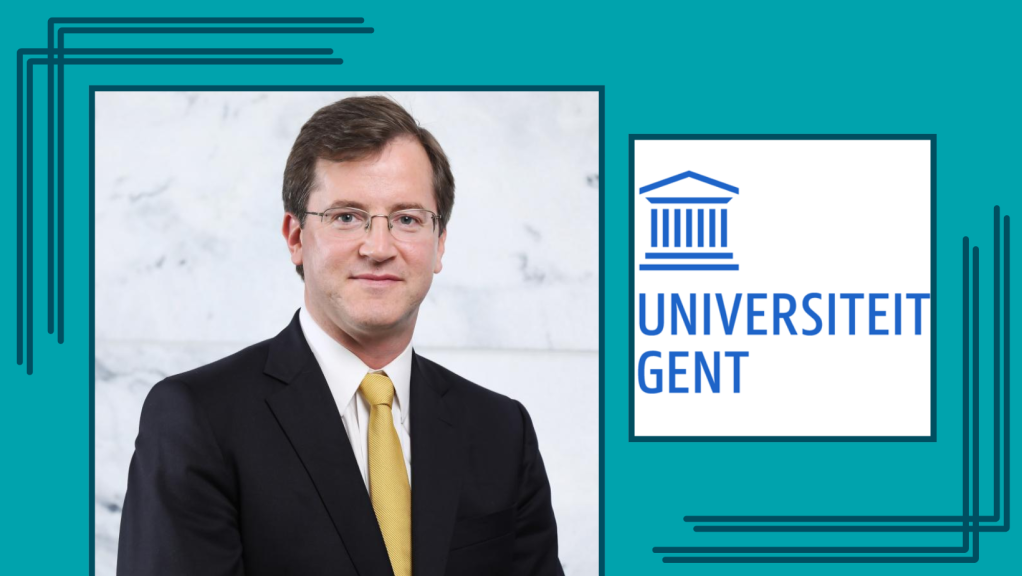
Christopher M. Bruner, Stembler Family Distinguished Professor in Business Law and Faculty Co-Director of the Dean Rusk International Law Center, gave the keynote address for a symposium on “Corporate Sustainability Due Diligence (CSDD), Sustainability, and Corporate Law” at Ghent University Law School in Belgium during May. Bruner’s keynote was titled “Developments and Debates on Corporate Sustainability in the US,” and the symposium was co-sponsored by the journal European Company Case Law (ECCL).
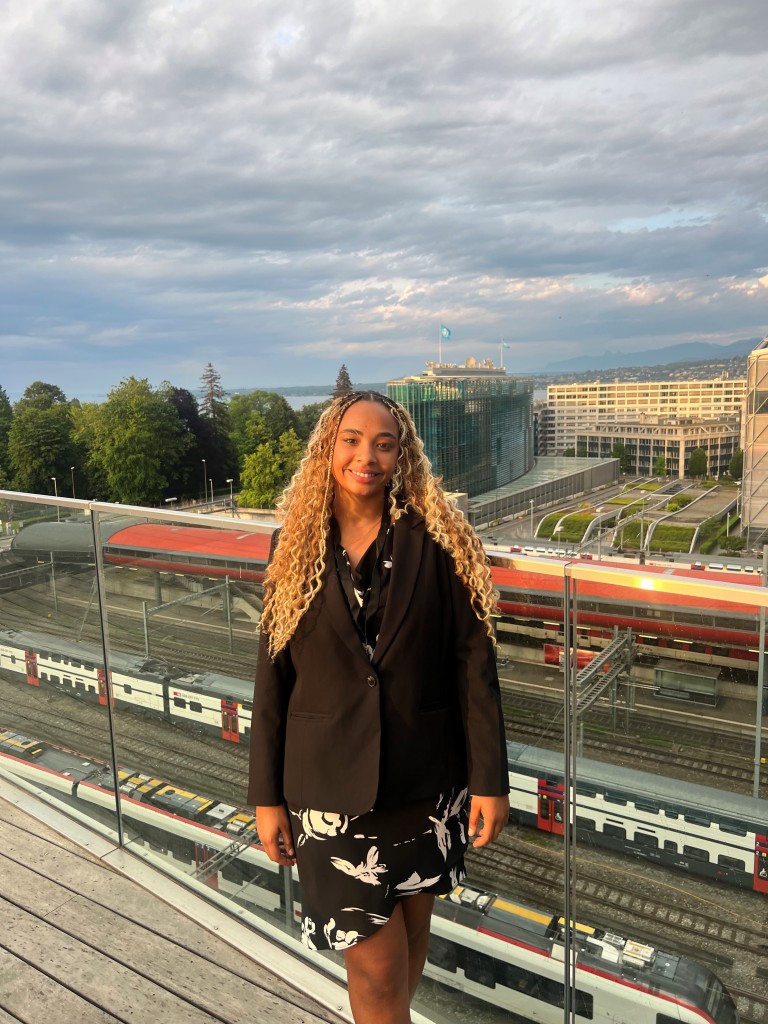
University of Georgia School of Law student, rising 2L Aubrey “Ellie” Wilson-Wade, recently attended the American Society of International Law (ASIL)’s 2024 ASIL Abroad meeting on June 5-6 at the University of Geneva in Geneva, Switzerland. The two-day conference consisted of dual parallel tracks on Human Rights, International Humanitarian Law, International Criminal Law (Track 1) and International Dispute Resolution & International Economic Law (Track 2). Georges Abi-Saab (honorary professor at The Geneva Graduate Institute) delivered a keynote speech, with Laurence Boisson de Chazournes (University of Geneva) as discussant. Below, Wilson-Wade reflects on her experience as an attendee of the conference. Georgia Law is an academic partner of ASIL.
I am so grateful to have had the opportunity to attend the 2024 ASIL Abroad Conference in Geneva, Switzerland. I was able to attend sessions in both track 1 and track 2, as I have an interest in both tracks’ topics. The most memorable sessions that I attended included “Enforcement of Arbitral Awards Rendered Against States” and “Compensation in International Law.” Additionally, I was able to see a mock arbitration related to growing tensions between investment treaties and environmental protection. These panels taught about investment and trade disputes in international law.
My favorite session was titled “Gender, Sexualized Violence, and Conflict: Incorporating the Women, Peace, and Security Agenda into Global Atrocity Prevention Efforts.” The panelists, including Priya Gopalan, Vanessa Murphy, and Dalila Seoane, were able to share their firsthand knowledge and experience working on issues related to gender-based violence.
Overall, the conference was a once-in-a-lifetime learning experience and every panel had an array of diverse perspectives and ideas. Not only was the substantive portion of the conference great, but I also met so many legal professionals and students during my time in Geneva. In just two days, I was able to connect with students attending law school throughout the United States, as well as from schools in England, Brazil, and Geneva. I was also able to network with legal professionals from all over the world.
As a first-year law student, it was a unique opportunity to learn about intricacies of international law outside of the typical classroom setting from professionals in the field. Additionally, it was a great way to make connections with international lawyers and law students. I would highly recommend any student who wishes to globalize their legal perspective and education to attend this conference.
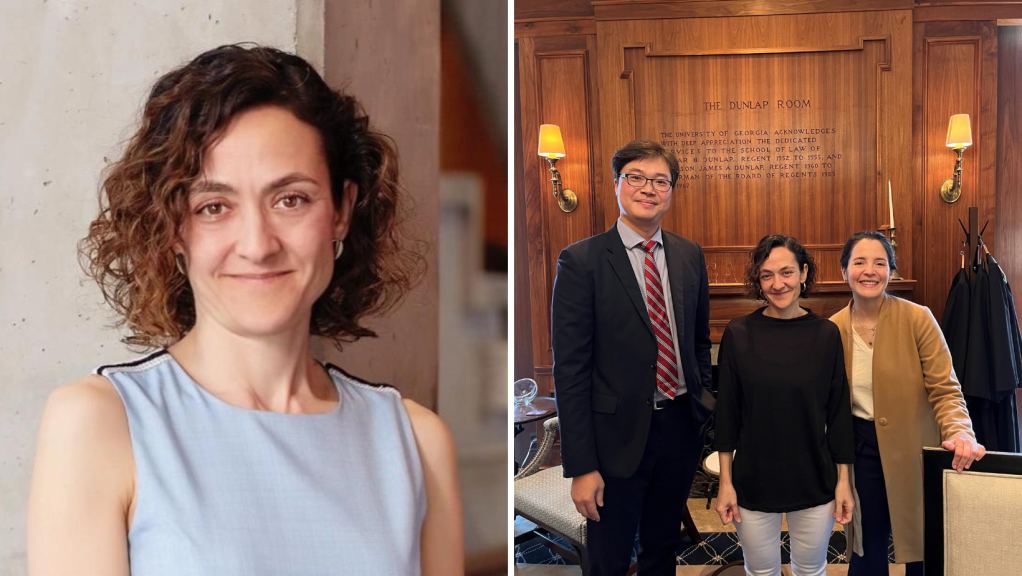
The Dean Rusk International Law Center Visiting Researcher for 2023-2024, Mine Turhan, Assistant Professor of Administrative Law in the Faculty of Law at the Izmir University of Economics in Türkiye, recently concluded her research year at the University of Georgia School of Law under the supervision of Georgia Athletic Association Professor in Law David E. Shipley. Below are some of Turhan’s reflections on her research findings regarding administrative procedure and procedural fairnessat Georgia Law.
I was a visiting researcher at the University of Georgia School of Law and the Dean Rusk International Law Center for my post-doc research during 2023-2024 academic year.
My research was related to administrative procedure and procedural fairness. The concept of administrative procedure serves a dual purpose within a legal framework. Primarily, it defines and establishes the limits of the authority of administrative agencies by outlining the structured steps and processes they must follow. Simultaneously, administrative procedure prevents arbitrary actions of agencies by ensuring accurate decisions by the proper application of the law to the facts. This dual function promotes transparency, fairness, and accountability in the functions of administrative agencies.
My research focused on the right to be heard in administrative procedure, and administrative hearings during the process of individual measures which would adversely affect the person concerned. I looked specifically at American and European procedural rights in adjudicative proceedings, in particular the right to be heard before administrative agencies. I tried to answer how procedural rights were protected by different administrative procedures in the U.S. and European countries against arbitrary actions of administrative agencies. I also tried to understand the administrative hearing procedures and components of hearings in common law and civil law systems.
Administrative procedure acts have a significant role in protecting the procedural rights. Therefore, I focused on the administrative procedure acts of different countries to find an answer. The U.S. Administrative Procedure Act, dated 1946, was helpful for my research. I have analyzed the court precedents regarding the right to be heard and I also have observed administrative hearings in U.S. to better understand administrative hearing procedures in U.S.
Throughout my time at the Dean Rusk International Law Center, I have been impressed by the dedication of the faculty, scholars, and staff to fostering a dynamic learning environment. The guidance and mentorship I received from Professor David Shipley has been instrumental in shaping my research. His expertise and encouragement have inspired me to push the boundaries of my intellectual curiosity and pursue excellence in my studies. The resources available at the School of Law, including the extensive library collections and research databases, have greatly enriched my research endeavors.
As I reflect on my time at the Dean Rusk International Law Center, I am filled with appreciation for the enriching experiences and lasting connections forged during my research. The skills and insights gained through my research studies will undoubtedly serve me well in my future endeavors, both academically and professionally.
I extend my heartfelt thanks to everyone at the Dean Rusk International Law Center and the University of Georgia School of Law for their support and encouragement. I am proud to have been a part of such an vibrant academic community and look forward to carrying forward the relationships formed as I embark on the next chapter of my journey.
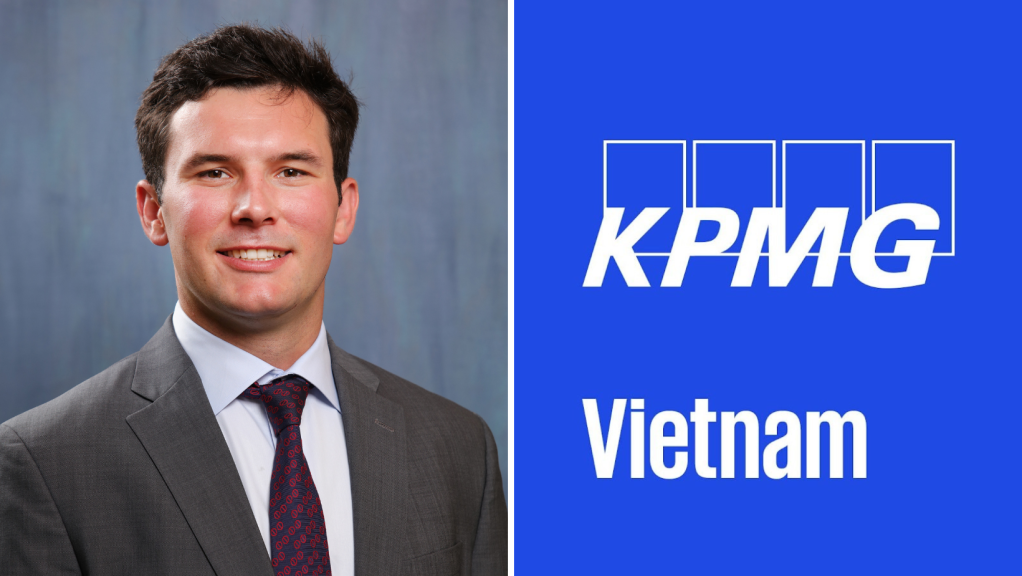
University of Georgia School of Law student Caden Pruitt, 2L, was selected as a recipient of the UGA Office of Global Engagement’s Asia-Georgia Internship Connection Scholarship to support his upcoming Global Externship Overseas (GEO) at KPMG Law in Ho Chi Minh City, Vietnam. Pruitt will be supervised at his externship by Georgia Law alumnus Binh Tran (J.D., ’11), Director at KPMG Law. In addition to the work he will complete as a legal extern, Pruitt will engage in a supervised research project with Professor Christopher M. Bruner, Stembler Family Distinguished Professor in Business Law & Faculty Co-Director of the Dean Rusk International Law Center.
Pruitt’s proposed research project will culminate in a note titled Vietnam: A guide to economic and legal developments,which will involve analyzing risks, opportunities, and the legal environment for foreign direct investors in Vietnam with consideration given to the interests of companies in Vietnam. The note will include three components: an analysis of the motivations for Foreign Direct Investments (“FDI”) in Vietnam, an analysis of the consumer market in Vietnam, and a proposal for contractual approaches to joint-value creation and mitigating risk. It will outline the legal framework for investments under Vietnamese law and will discuss contractual optimization for the resolution of disputes.
This scholarship funds student pursuing credit-bearing internships in southeast Asia for a duration of at least four weeks. Preference is given to students traveling to Cambodia, Indonesia, Japan, South Korea, Laos, Malaysia, Mongolia, the Philippines, Singapore, Taiwan, Thailand, and Vietnam.
This will be Pruitt’s second GEO; the summer of his first year at Georgia Law, he externed with Bodenheimer in Cologne, Germany, under the supervision of Georgia Law alumnus and Rusk Council member Dr. Christof Siefarth (LL.M., ’86).
University of Georgia School of Law Visiting Researcher Mine Turhan took part in the Spring 2024 Faculty Colloquium Series last month. Her presentation, “Right to be Heard in Administrative Procedure,” was the third of six talks this semester.
Turhan’s project at Georgia Law focuses on procedural due process rights, in particular the right to be heard before administrative agencies. Her talk began by describing the fundamentals of this right, followed by her findings about this right in comparative law, specifically focusing on the U.S. and EU countries. The final third of Turhan’s presentation looked at the right to be heard in Turkish law.
In addition to Turhan, this semester’s colloquium series includes Anne Tucker, Alyse Bertenthal, Alex Klass, Rachel Barkow, and Libby Adler. The series provides a forum for provocative and innovative legal scholarship and gives our law faculty the opportunity to collaborate on current legal research, exchange ideas and foster relationships with other institutions. It is made possible through the Kirbo Trust Endowed Faculty Enhancement Fund and the Talmadge Law Faculty Fund.
Turhan’s research is supported by a fellowship from the Scientific and Technological Research Council of Türkiye (TÜBİTAK) within the scope of the International Postdoctoral Research Fellowship Program. She is sponsored as a Visiting Research Scholar by Georgia Law Professor David E. Shipley, the Georgia Athletic Association Professor in Law. Her visit continues our Center’s long tradition of hosting scholars and researchers whose work touches on issues of international, comparative, or transnational law. Details and an online application to become a visiting scholar here.
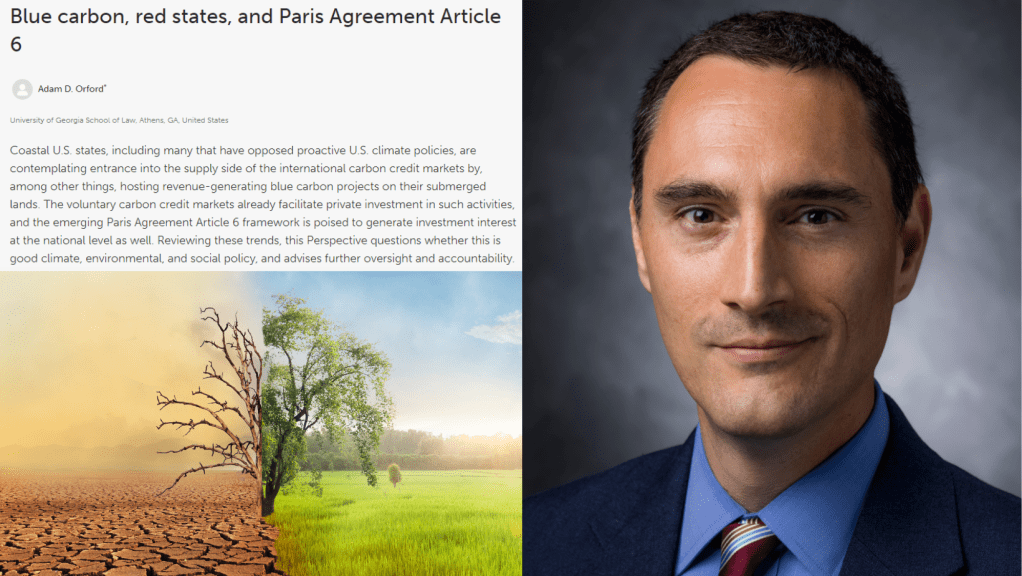
Coastal U.S. states, including many that have opposed proactive U.S. climate policies, are contemplating entrance into the supply side of the international carbon credit markets by, among other things, hosting revenue-generating blue carbon projects on their submerged lands. The voluntary carbon credit markets already facilitate private investment in such activities, and the emerging Paris Agreement Article 6 framework is poised to generate investment interest at the national level as well. Reviewing these trends, this Perspective questions whether this is good climate, environmental, and social policy, and advises further oversight and accountability.
Orford joined the University of Georgia School of Law in the fall of 2021. His interdisciplinary research investigates legal and policy approaches to environmental protection, human health and wellbeing, and deep decarbonization of the United States economy. He also participates in collaborative research initiatives across UGA, including as the lead of the Georgia element of the National Zoning Atlas and as a participant in ongoing investigations into the legal, political, environmental and social dimensions of new energy manufacturing and emerging carbon removal technologies.
One of the Dean Rusk International Law Center’s Visiting Researchers for 2023, Daesun Kim, Esq., recently concluded his research year at the University of Georgia School of Law under the supervision of Associate Dean for Academic Affairs & J. Alton Hosch Professor of LawKent Barnett. Below are some of Kim’s reflections on his research findings regarding the impact of the Covid-19 pandemic on foreign investment projects in Vietnam and his overall experienceat Georgia Law.
As a Korean legal professional with a U.S. law license, providing legal services for cross-border transactions in Vietnam has exposed me to myriad challenges stemming from legal, cultural, and linguistic disparities. My research at the University of Georgia School of Law’s Dean Rusk International Law Center focused on a comparative legal analysis of the material adverse impact of the Covid-19 pandemic on foreign investment projects in Vietnam. Throughout various project milestones, such as providing legal due diligence reports, offering second-party legal opinions or lender’s legal opinions to enhance project credibility, negotiating contracts, addressing implementation stage issues, and handling disputes, clients, especially those from the U.S. and Korea, increasingly seek insights from a common law perspective. However, providing clear answers to their queries has proven challenging, leading to a collective impasse when practitioners convene and even causing a temporary standstill when representing clients in local courts or arbitration panels.
As expected, Vietnam, alongside other Southeast Asian nations, is witnessing a surge in investors seeking a new production base, mirroring the rise of a second China. Notably, the country has rapidly ascended as a crucial player in the global value chain, boasting well-established production infrastructure in sectors like electronics, automotive, batteries, and textiles.
Over the past 15 years, global enterprises from the United States, South Korea, Germany, Japan, Australia, Russia, and the United Kingdom have established a significant presence in Vietnam. The competition is particularly intense among nations like Korea, Japan, and Singapore, vying for the top spots in foreign direct investment. Cities like Ho Chi Minh and Hanoi host numerous Korean law firms and accounting firms handling the legal and tax aspects of business operations, reflecting the growing interest and investment in the region.
Recent analyses underscore the evolving opportunities and risks faced by Vietnam due to the rapid escalation of global tensions, the rollback of globalization, and shifts in the global value chain, all intricately connected. Investors are increasingly scrutinizing the status and evaluation of supply chains, encompassing not only their subsidiaries but also their suppliers, considering comprehensive assessments, including human rights and environmental considerations. Moreover, challenges in obtaining approval for international arbitration decisions from Vietnamese courts and the lack of clear legal grounds in judgment documents contribute to the complexities faced by international investors, emphasizing the need for thorough preparation within the local legal system.
Reflecting on my experience entering the Vietnamese legal landscape seven years ago to contribute to cross-border M&A deals, I vividly recall the unfamiliarity of concepts commonplace in legally advanced countries like the U.S., Korea, Singapore, or Hong Kong. Tasks involved explaining and bridging the gap in understanding with local counterparts and regulatory authorities, presenting both a formidable and rewarding aspect of the work. Issues such as (i) offshore loans using stand-by LCs issued by local banks as a security for foreign-owned companies with a 51% or more stake in Vietnam, (ii) the issuance of perpetual bonds by foreign-invested enterprises, (iii) the feasibility of establishing a security on the residual assets of the mortgagor, (iv) issuance of a business license for the E-wallet of a payment gateway company, (v) whether a local Vietnamese company can provide its listed shares as collateral for the repayment of mezzanine debts, such as convertible bonds, when issuing to foreign-based private equity funds, and so on presented novel challenges requiring creative problem-solving beyond conventional legal education.
In addition, navigating through intricacies like land-use rights instead of ownership, foreign ownership restrictions in certain business sectors, and unique political and legal constraints became part of the routine. For instance, (i) when a foreign-invested company in Vietnam receives an offshore loan from a foreign lender to cover operational expenses, addressing issues related to the establishment of land use rights as collateral on the commercial & residential building complex owned by the company for loan repayment, and (ii) in cases where Vietnamese securities laws impose foreign investment ownership percentage limits on public and private companies, determining whether the same constraints apply unconditionally when issuing preference shares or dividend preference shares during repayment.
As foreign lawyers practicing in Vietnam and other developing nations provide legal services for foreign investors, a dynamic daily routine must be anticipated. Challenges range from the use of Vietnamese as the primary legal language, reliance on local lawyers proficient in the language, to the heavy reliance on the skills of local attorneys in drafting contracts and legal documents in the local language.
Despite the inherent difficulties and challenges, Vietnam remains a nation full of promise. With an ever-changing legal landscape, an influx of substantial investments amounting to approximately 36.61 billion USD in 2023, and a population characterized by a significant youth demographic and high domestic purchasing power, Vietnam stands as a beacon of development. As I encounter and contribute to these advancements daily, I am determined not to lose sight of the pride associated with making small but meaningful contributions to Vietnam’s progress.
Having spent the past year as a visiting researcher at the Dean Rusk International Law Center, I have observed the legal dynamics of the world’s leading nation, the United States, and the pivotal role it plays in international law. The experience has further amplified the stark differences in language, nationality, culture, and legal knowledge encountered during my legal practice in Vietnam. Notably, the U.S. legal system’s meticulous handling of the Covid-19 pandemic through clear precedents and statutes provides a stark contrast to the legal landscape in Vietnam, instilling hope for a future where such advanced legal systems and accumulated experiences emerge in developing countries like Vietnam.
I express my deepest gratitude to all those who have facilitated my research period at the Dean Rusk International Law Center. I am sincerely thankful to every individual involved for their consideration in providing me the opportunity to conduct research at this prestigious hub of international law. During my brief stay, I have sensed the scholarly dedication, efforts, support, and contributions of the faculty, scholars, and staff here. Thanks to their collective endeavors, practitioners like myself can find solid academic foundations in international law, enabling us to deliver comprehensive legal services to our clients.
***
Daesun Kim, Esq., was one of the four 2023-2024 Visiting Researchers at the Dean Rusk International Law Center. Kim is a foreign attorney practicing law in Vietnam who specializes in cross-border M&A, foreign investment, and public-private partnerships (PPP), with a focus on construction & real estate development projects and mezzanine project financing in Southeast Asian countries. He primarily represents Korean corporate clients and common-law jurisdiction clients (Singapore, Hong Kong, USA) investing inbound in Vietnam. He is a member of the International Construction & Energy Law Society, South Korea, and the Chartered Institute of Arbitrators. Previously, Kim worked at top-tier Korean firms such as Shin & Kim LLC and Yulchon LLC, representing Korean PEFs, conglomerates, banks, construction/engineering contractors, and developers in outbound investment. He also worked as in-house counsel at POSCO E&C, where he was in charge of contentious and non-contentious legal services encompassing overseas engineering, procurement, and construction works in power plants, oil & gas refinery plants, steel-making projects, project financing, and related international arbitration disputes.
Read more about the University of Georgia School of Law’s Visiting Researcher initiative here.
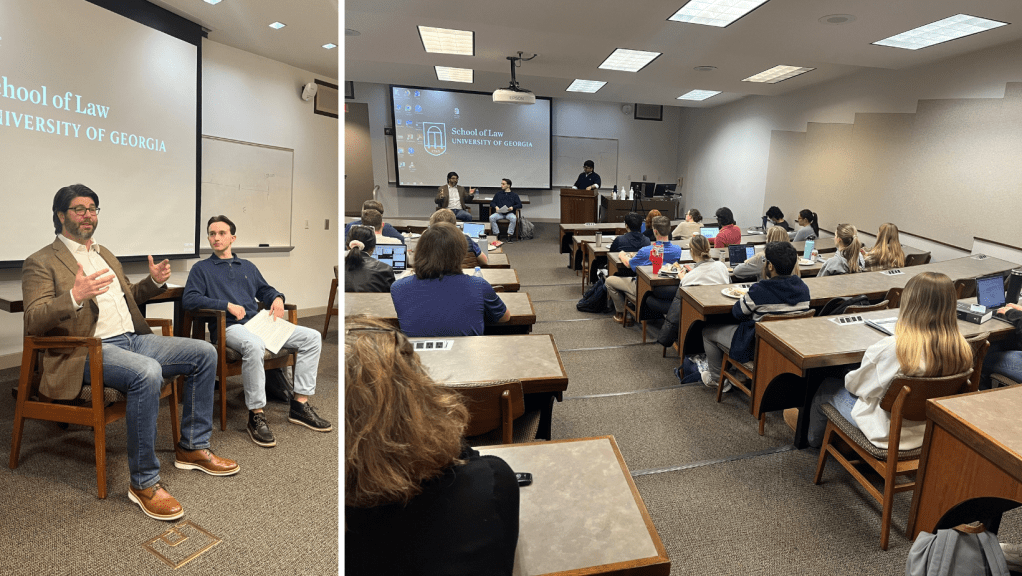
Johnson discussed how being in law school during 9/11 galvanized his interest in national security law. After graduation, he moved to DC and was able to gain experience in a wide variety of national security and cybersecurity leadership roles. His work in these national security and intelligence communities, in the regulatory arena, and in the Executive Branch now inform his advocacy to improve the efficiency of government-industry collaboration. Johnson stated that we are at an inflection point: incredible breakthroughs in technology and connectivity have the potential to solve the grand challenges of our time, but, as large holders of data, they can pose dangers to our freedoms.
Johnson was most recently the senior adviser for cybersecurity and technology at the U.S. Department of Commerce, where he coordinated the department’s cybersecurity initiatives and support for the Commission on Enhancing National Cybersecurity. He was also the department’s representative for National Security Council staff deliberations on cybersecurity, encryption, and other policy issues at the intersection of technology and security. Previously, Johnson was appointed by the Federal Communications Commission (FCC) chairman as the FCC’s first chief counsel for cybersecurity. In that position, he helped develop the FCC’s cybersecurity mission, focusing on creating new legal mechanisms for government collaboration with private sector stakeholders to improve the security and reliability of communications infrastructure. He was also the primary drafter of the charter for the Cybersecurity Forum for Independent and Executive Branch Regulators, a coordinating body of regulatory agencies presently chaired by the FCC. Prior to his time at the FCC, Johnson was Senator John D. Rockefeller IV’s designated counsel on the Senate Intelligence Committee and counsel for defense, foreign policy, and international trade. In those roles, he was a leading staffer on bipartisan Senate cybersecurity initiatives and the primary staff drafter of the legislation that codified the National Institute of Standards and Technology’s collaborative process to work with industry to develop and update the Cybersecurity Framework.
Before his government service, Johnson worked for a major Washington-based law firm, where he practiced in the areas of international trade, defense, and security. Earlier, he served as a U.S. Army officer in Germany, Korea, and the Balkans. He is a graduate of the University of Georgia School of Law, where he was editor-in-chief of the Georgia Journal of International and Comparative Law, and he received a master of science degree in international relations from the London School of Economics and Political Science. He received his bachelor’s degree from Harvard University, where he graduated cum laude, cross-enrolled at the Massachusetts Institute of Technology for service as executive officer of its Army ROTC Paul Revere Battalion.
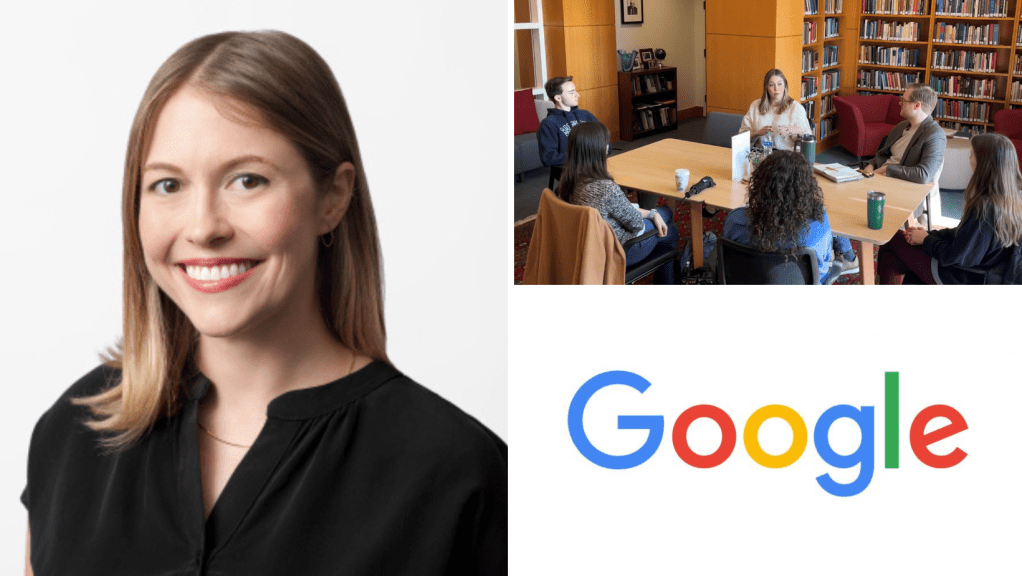
University of Georgia School of Law alumna Ellen Clarke (J.D., ’14), security counsel at Google, recently spoke to students about her career in data protection law at the Dean Rusk International Law Center’s Louis B. Sohn Library.
Students from Georgia Law’s International Law Society and Privacy, Security, and Technology Law Society attended the talk. Clarke began by discussing her professional background and explaining how her experience prosecuting white collar crime at the U.S. Department of Justice provided her with the skills and experiences to successfully transition into her current role at Google. As security counsel, Clarke advises on global data security and law enforcement issues. Students asked Clarke about her opinions on Artificial Intelligence, her decision to become a licensed solicitor in England and Wales, and about the realities of her day-to-day work at Google.
Before joining Google, Clarke prosecuted competition crimes as a trial attorney in the Washington Criminal I Section of the Antitrust Division of the U.S. Department of Justice. She joined the DOJ through the Attorney General’s Honors Program. Clarke previously served as a law clerk to Judge Richard W. Story of the U.S. District Court for the Northern District of Georgia. She received an Advanced Diploma in Data Protection Law from the Honorable Society of King’s Inns, a J.D. degree magna cum laude from the University of Georgia School of Law, and a B.S. in Foreign Service from Georgetown University. She is licensed as an attorney in Georgia and Washington, D.C., as registered in-house counsel in California, and as a solicitor in England and Wales. Clarke is currently an Adjunct Professor of Law at Georgia Law, where she teaches a mini-course entitled Cybercrime.



 exchange of notes