Georgia Law Professor Diane Marie Amann profiled by ATLAS women

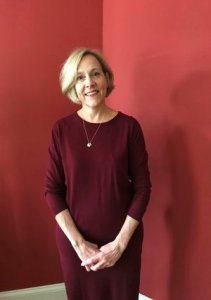
img_2013cropProfessor Diane Marie Amann, holder of the Emily & Ernest Woodruff Chair in International Law here at the University of Georgia School of Law and our Center’s Faculty Co-Director, was profiled at ATLAS yesterday, in a post written by the organization’s co-founder, barrister Sareta Ashraph.

ATLAS, which stands for “Acting Together: Law, Advice, Support,” is a community of female-identifying lawyers, activists, and jurists with expertise in public international law. Founded in 2012, the organization aims to create a space where women in the field can reach out to each other for information, career advice, and mentoring. ATLAS builds upon and is complementary to the ethos of IntlLawGrrls, a blog Amann founded in 2007. Her charter coeditors, as she notes, were Beth Van Schaack, Jaya Ramji-Nogales, and our Center’s Director, Kathleen A. Doty. Amann joins 8 other women so far featured by ATLAS.atlas+empowered+women+empower+women

In her profile, Amann reflects on her career path and its high points, including teaching, working with inspirational people such as Mireille Delmas-Marty, clerking for U.S. Supreme Court Justice John Paul Stevens, and serving as Special Adviser on children’s issues to Fatou Bensouda, Prosecutor of the International Criminal Court. Amann also comments on diversity of the profession, noting:

“Many (or perhaps, only some) in the profession have become more aware and more vocal on the need for diversity when it comes to gender, race, ethnicity, and sexual orientation. That has not yet translated into a level of progress that is both right and required. At the same time, there have been far fewer conversations, and less awareness, of the lack of diversity within our profession when it comes to class. There seem to be few international lawyers who come from a working-class background, who are in their family’s first college-going generation.”

Amann goes on to offer advice to young women hoping to work in international law: follow your heart; move towards the positive; never stop learning; build a network of friends and mentors; build skills; and find time to do the things that make you happy.

Read the full profile here.

Professor Amann’s draft “Glimpses of Women at the Tokyo Tribunal” @ SSRN

Coomee Rustom Strooker-Dantra, 1937 (credit)

I’m very pleased to have posted a draft of my most recent paper, Glimpses of Women at the Tokyo Tribunal, online. The work arises out of my ongoing scholarly research into the roles that women and others played in the post-World War II international criminal trials. (prior posts) This research focuses primarily on trials at Nuremberg rather than at Tokyo; however, as this essay indicates, the issues and even the personnel in the two forums overlapped considerably.

Many women are brought to the fore in Glimpses; for example: 5 American lawyers, Virginia Bowman, Lucille Brunner, Eleanor Jackson, Helen Grigware Lambert, Grace Kanode Llewellyn, and Bettie Renner; 1 Dutch lawyer, Coomee Rustom Strooker-Dantra, who had been born in what is now Myanmar; and 1 American, memoir-writer Elaine B. Fischel, who assisted defense counsel but did not herself  become a lawyer until after her Tokyo service.

From left, Eleanor Jackson, Virginia Bowman, Grace Kanode Llewellyn, Bettie Renner, and Lucille Brunner, in Los Angeles Times, 15 April 1946 (credit)

Other women also figure – including some who have been introduced into the Tokyo narrative through a documentary, a feature film, and a miniseries, each analyzed in the essay.

Intended as a chapter in a forthcoming essay collection marking the 70th anniversary of the Tokyo Trial judgment, this draft manuscript forms part of the Dean Rusk International Law Center Research Paper Series at SSRN. It may be found in numerous SSRN sites, including the International, Transnational and Comparative Criminal Law eJournal, of which I am the Editor-in-Chief. I was honored to have presented it during last November’s American Society of International Law Midyear Meeting Research Forum at UCLA Law.

Here’s the abstract:

Compared to its Nuremberg counterpart, the International Military Tribunal for the Far East has scarcely been visible in the seven decades since both tribunals’ inception. Recently the situation has changed, as publications of IMTFE documents have occurred alongside divers legal and historical writings, as well as two films and a miniseries. These new accounts give new visibility to the Tokyo Trial – or at least to the roles that men played at those trials. This essay identifies several of the women at Tokyo and explores roles they played there, with emphasis on lawyers and analysts for the prosecution and the defense. As was the case with my 2010 essay, “Portraits of Women at Nuremberg,” the discussion is preliminary, offering glimpses of the Tokyo women in an effort to encourage further research.

The full manuscript may be downloaded here.

Elaine B. Fischel with Tokyo defense counsel, 12 September 1946 (credit)

(cross-posted from Diane Marie Amann blog)

Georgia Law Professor Ringhand to meet with prospective LLM students in Tel Aviv, Israel

1 Lori A. Ringhand, a J. Alton Hosch Professor of Law here at the the University of Georgia School of Law, will meet this Wednesday, November 28, with law students and lawyers in Israel who are interested in postgraduate legal study in the United States. Hosted by EducationUSA Israel, the event is set for 5 p.m. at the Fulbright offices in Tel Aviv, 74-76 Sderot Rothschild.

RinghandHead

Ringhand is in Israel teaching a short course at Bar-Ilan University Faculty of Law, with which Georgia Law has a faculty exchange partnership.

A scholar whose expertise includes comparative constitutional law, Ringhand earned a B.C.L. in European and Comparative Law from Oxford University in England, and a J.D. from the University of Wisconsin Law School. She has been awarded a Fulbright Distinguished Chair for Spring 2019, when she will be in residence at the University of Aberdeen, Scotland.

At Wednesday’s event, students and practitioners in attendance will have the opportunity to learn more about what it is like to study law in the United States, and how an LL.M. degree can help advance their careers. Interested students should register to attend.

Details about Georgia Law’s LL.M. degree here.

Georgia Law Dean Peter B. “Bo” Rutledge co-authors 6th edition of International Civil Litigation casebook

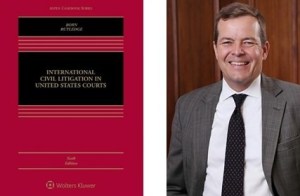
Now in print: the 6th edition of International Civil Litigation in United States Courts, a casebook co-authored by Peter B. “Bo” Rutledge (right), Dean and holder of the Herman E. Talmadge Chair of Law here at the University of Georgia School of Law, and Gary B. Born, London-based Chair of the International Arbitration Practice Group of the WilmerHale law firm.

As described by its publisher, Wolters Kluwer:

International Civil Litigation in United States Courts is the essential, comprehensive law school text for the current and future international litigator or international corporate lawyer. Covering all the topics discussed in competing texts and more, this casebook seamlessly combines international litigation, conflict of laws, and comparative civil procedure. This Sixth Edition includes excerpts and updated discussion of recent U.S. court decisions and legislation relating to a wide range of private and public international law topics, including foreign sovereign immunity, choice of law, antisuit injunctions, legislative jurisdiction, service of process on non-U.S. citizens, international discovery, foreign judgment enforcement, and international arbitration.

Table of contents and other details available here.

Georgia Law Professors Cohen and Durkee present at 2018 International Business Law Scholars Roundtable

The University of Georgia School of Law was well represented at IBL 2018, this year’s International Business Law Scholars Roundtable.

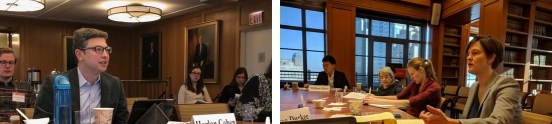
The event, held last Friday and Saturday at Brooklyn Law School, opened with a panel on “Corporate and Private Law Governance Issues in the International Sphere.” Among the speakers was Georgia Law Professor Melissa J. Durkee (above right), who presented “The New Functional Sovereignty: Private Authority in Global Governance.”

The gathering concluded with a panel on “International Economic Law,” at which Harlan G. Cohen (above left), Wilner/UGA Foundation Professor in International Law and our Center’s Faculty Co-Director, presented “What is International Trade Law For?”

They joined dozens of scholars, from law faculties at Harvard, NYU, Peking University, Sweden’s Orebo University, and elsewhere.

Georgia Law faculty take part in ASIL Midyear Meeting and Research Forum

From left, Melissa J. Durkee, Diane Marie Amann, Kathleen A. Doty, and Harlan G. Cohen

Four members of our University of Georgia School of Law faculty took part last weekend in the American Society of International Law Midyear Meeting and Research Forum at UCLA School of Law in Los Angeles.

Diane ASIL► Professor Diane Marie Amann, the Emily & Ernest Woodruff Chair in International Law and Faculty Co-Director of our Dean Rusk International Law Center, presented “Glimpses of Women at the Tokyo Tribunal,” which will appear as a chapter in a forthcoming volume commemorating this week’s 70th anniversary of the judgment of the International Military Tribunal for the Far East. Amann, who is serves as a Counselor of the American Society of International Law, also took part in the Society’s Executive Council meeting.

Professor Harlan G. Cohen, holder of the Gabriel M. Wilner/UGA Foundation Professorship in International Law and Faculty Co-Director of the Dean Rusk International Law Center, participated in the meeting of the Board of Editors of the American Journal of International Law. He was elected to the Board last year and serves as Editor of AJIL’s International Decisions section.MJDurkee

◄ Professor Melissa J. Durkee presented her work, “The New Functional Sovereignty: Private Authority in Global Governance,” on a panel exploring the roles of corporations in international law.

IMG_7538

► Center Director Kathleen A. Doty offered career advice to current law students and recent graduates as part of ASIL’s International Law Speed Networking. This event was part of a series of offerings at the Midyear Meeting aimed at professional development for students and early-career lawyers.


Drawing links between initiatives to increase protection of children during armed conflict & similar violence


“‘Protecting Children’: A Welcome Addition to Efforts to Redress Wartime Harms,” an essay I published yesterday at Just Security, underscores connections among a number of recent initiatives related to children and armed conflict.

The essay welcomes Protecting Children in Armed Conflict (Hart Publishing 2018), the 600-page report of the 2017 Inquiry on Protecting Children in Armed Conflict spearheaded by Gordon Brown, former British Prime Minister and current UN Special Envoy for Global Education. (I served on the Inquiry’s Advisory Panel.)

Leading a team of researchers was Shaheed Fatima QC, a barrister at London’s Blackstone Chambers, who spoke on this work at the International Law Weekend panel last month. (prior post here) My Just Security essay offers a detailed description and favorable critique of this research, noting the work’s connections with what the UN Security Council terms the “Six Grave Violations against Children in Armed Conflict.”

The essay further draws links between this work and the 2016 International Criminal Court Office of the Prosecutor Policy on Children, which I had the honor of helping to prepare in my ongoing service as ICC Prosecutor Fatou Bensouda’s Special Adviser on Children in & affected by Armed Conflict. (prior post here) The essay points to “the complementary potential of these and other initiatives,” and concludes:

Together, they may advance two essential goals: first, to articulate norms prohibiting wartime harms against children; and second, to secure redress for any such harms that occur.

My Just Security essay is here. It is part of a miniforum which began with a post last week jointly authored by Fatima and Brown, available here. The Just Security series will continue with forthcoming posts by Sarah Knuckey (Columbia Law), Alex Moorehead (Columbia Law), and Alex Whiting (Harvard Law).

(Cross-posted from Diane Marie Amann)

Georgia Law Professor Kent Barnett compares administrative law approaches at conference in Poland


Pleased today to welcome a contribution from Kent Barnett, J. Alton Hosch Associate Professor of Law here at the University of Georgia School of Law. Professor Barnett concentrates his teaching and scholarship in the areas of contracts law, consumer law, and administrative law—including comparative approaches. He contributes the post below on his recent collaboration with European counterparts on the panel above, at a conference in Poland.

In what may come as a surprise for many American administrative law scholars, the world extends beyond Washington, D.C.

These scholars rarely consider comparative approaches to administrative law or debates in other legal systems. Perhaps they can be forgiven because of the ever-increasing complexity of domestic administrative law. But as conservative and liberal political and judicial factions contest an increasing number of longstanding tenants of domestic administrative law, comparative inquires may prove more useful and timely than ever.

I confirmed this intuition recently, when I accepted an invitation to participate in a conference concerning “Judicial Deference in Competition Law,” sponsored by the Centre for Antitrust and Regulatory Studies at the University of Warsaw this month. Taking part in a panel that considered general aspects of deference law, I discussed my research into the theoretical and doctrinal foundations of how American courts defer to administrative agencies’ determinations. My co-panelists—Drs. Mira Scholten and Rob Widdershoven, both professors at the Netherlands’ University of Utrecht—discussed deference in European Union courts or theoretical models for understanding deference in most legal systems.

Most of the legal models (whether of the EU, national European courts, or U.S. courts) follow similar paths when approaching how and whether to defer to agencies. In many instances, the terminology differs or the boundaries for similar doctrines may vary slightly. But in the main, these disparate legal systems have largely reached consensus on certain matters: deference to factual findings for technical matters and deference to discretionary decisions.

But my interactions with scholars in Poland confirmed that the European model has some striking differences from the American system—differences that inform two current debates:

► One difference, as numerous panelists mentioned during the conference, is that European models distinguish between civil and “criminal” punishments. “Criminal” matters are significant agency actions, such as large fines, which require significantly more judicial oversight. American law, in contrast, does not meaningfully distinguish between insignificant and significant agency actions against regulated parties. Perhaps doing so, however, would assuage growing concerns over U.S. regulatory agencies’ ability to fine regulated parties or deprive them of necessary business licenses, especially when regulated firms demonstrate good faith attempts at regulatory compliance.

► A second difference is that European courts do not defer to agencies’ interpretations of law. American courts, on the other hand, defer under the well-known Chevron doctrine to agencies’ reasonable interpretations of ambiguous statutory provisions. The European experience suggests that whatever Chevron’s constitutional or statutory demerits, deference to agency legal interpretations is not inevitable. Instead, it is a chosen policy or jurisprudential choice whose benefits or demerits support or cut against it.

In short, the conference represents but the beginning of comparative conversations that U.S. administrative scholars can and should have to inform debates about domestic administrative law.

Accountability for harms to children during armed conflict discussed at Center-sponsored ILW panel

NEW YORK – Ways to redress offenses against children during armed conflict formed the core of the panel that our University of Georgia School of Law Dean Rusk International Law Center sponsored last Friday at International Law Weekend, an annual three-day conference presented by the American Branch of the International Law Association and the International Law Students Association. I was honored to take part.

► Opening our panel was Shaheed Fatima QC (top right), a barrister at Blackstone Chambers in London, who led a panel of researchers for the Inquiry on Protecting Children in Conflict, an initiative chaired by Gordon Brown, former United Kingdom Prime Minister and current UN Special Envoy for Global Education.

As Fatima explained, the Inquiry focused on harms that the UN Security Council has identified as “six grave violations” against children in conflict; specifically, killing and maiming; recruitment or use as soldiers; sexual violence; abduction; attacks against schools or hospitals; and denial of humanitarian access. With regard to each, the Inquiry identified legal frameworks in international criminal law, international humanitarian law, and international human rights law. It proposed a new means for redress: promulgation of a “single instrument” that would permit individual communications, for an expressed set of violations, to the Committee on the Rights of the Child, the treaty body that monitors compliance with the Convention on the Rights of the Child and its three optional protocols. These findings and recommendations have just been published as Protecting Children in Armed Conflict (Hart 2018).

► Next, Mara Redlich Revkin (2d from left), a Ph.D. Candidate in Political Science at Yale University and Lead Researcher on Iraq and Syria for the United Nations University Project on Children and Extreme Violence.

She drew from her fieldwork to provide a thick description of children’s experiences in regions controlled by the Islamic State, an armed group devoted to state-building – “rebel governance,” as Revkin termed it. Because the IS sees children as its future, she said, it makes population growth a priority, and exercises its control over schools and other “sites for the weaponization of children.” Children who manage to free themselves from the group encounter new problems on account of states’ responses, responses that Revkin has found often to be at odds with public opinion. These range from the  harsh punishment of every child once associated with IS, without considering the extent of that association, to the rejection of IS-issued birth certificates, thus rendering a child stateless.

► Then came yours truly, Diane Marie Amann (left), Emily & Ernest Woodruff Chair in International Law here at the University of Georgia School of Law and our Center’s Faculty Co-Director. I served as a member of the Inquiry’s Advisory Board.

Discussing my service as the Special Adviser to the Prosecutor of the International Criminal Court on Children in and affected by Armed Conflict, I focused on the preparation and contents of the 2016 ICC OTP Policy on Children, available here in Arabic, English, French, Spanish, and Swahili. The Policy pinpoints the crimes against and affecting children that may be punished pursuant to the Rome Statute of the International Criminal Court, and it further delineates a “child-sensitive approach” to OTP work at all stages, including investigation, charging, prosecution, and witness protection.

► Summing up the conversation was Harold Hongju Koh (2d from right), Sterling Professor of International Law at Yale Law School and former Legal Adviser to the U.S. Department of State, who served as a consultant to the Inquiry.

Together, he said, the presentations comprised “5 I’s: Inquiry, Iraq and Syria, the ICC, and” – evoking the theme of the conference – “international law and why it matters.” Koh lauded the Inquiry’s report as “agenda-setting,” and its proposal for a means to civil redress as a “panda’s thumb” response that bears serious consideration. Koh envisaged that in some future administration the United States – the only country in the world not to have ratified the Convention on the Rights of the Child – might come to ratify the proposed new  protocol, as it has the optional protocols relating to children in armed conflict and the sale of children.

The panel thus trained attention on the harms children experience amid conflict and called for redoubled efforts to secure accountability and compensation for such harms.

(Cross-posted from Diane Marie Amann)

Georgia Law’s international law librarian, Anne Burnett, takes part in global conference in Malaysia

Pleased today to welcome a contribution from Anne Burnett, who has served since 1996 as the foreign and international law librarian at the University of Georgia School of Law Alexander Campbell King Law Library. She earned her B.A. degree from the University of Nevada, her J.D. cum laude from Georgia Law, and her MLIS from the University of Texas in Austin. Burnett teaches International Legal Research, among other courses, at Georgia Law, and is active in global societies, as indicated in the post below.

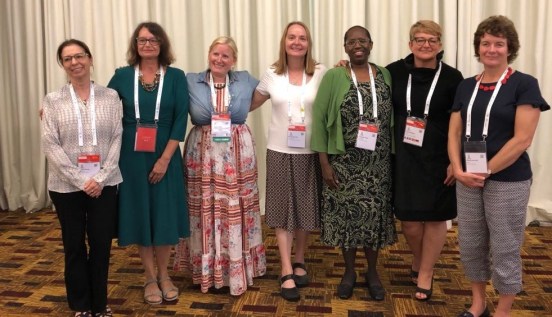
Over 3,500 librarians and information professionals gathered in Kuala Lumpur, Malaysia, this past August 24-30 for the World Library and Information Congress (WLIC), the annual conference of the International Federation of Library Associations and Institutions (IFLA). As Secretary of the Standing Committee for the IFLA Law Libraries Section (I’m at center in the Standing Committee photo at top), I participated in a week of meetings, educational programs, leadership workshops and strategic planning.

I became involved in the IFLA Law Libraries Section because of its work supporting the rule of law by promoting access to information and access to justice globally. Our section’s business meetings this year concentrated on planning upcoming workshops for law librarians in Senegal and the country of Georgia (the latter in conjunction with the Georgian-Norwegian Rule of Law Association). The section has conducted similar workshops in Croatia, Côte d’Ivoire and Uganda. These workshops spotlight open access to legal materials and also provide a nucleus for law librarian networks in the targeted regions. The section also discussed means of promoting the principles set forth in the IFLA Statement on Government Provision of Public Legal Information in the Digital Age, drafted by Section members and adopted by IFLA’s Governing Board, to encourage governments to ensure access to information, identified as a right in Article 19 of the Universal Declaration of Human Rights and in the UN’s 2030 Agenda for Sustainable Development.

One of my greatest pleasures in serving as an officer of the Standing Committee is my collaboration with law and government librarians from all corners of the world who share a common goal of providing and preserving access to government and legal information. Our Section Standing Committee meetings this year included members and observers from Africa, Southeast Asia, Australia, China, Canada, Australia and Europe.

The Section also sponsored two educational programs during the Kuala Lumpur conference:

  • In a program titled The Role of Government and Law Libraries in Times of Crisis and Turmoil, three speakers, including Law Librarian of Congress Jane Sanchez, provided examples of different roles played by government and law libraries in responding to crises and with access to justice initiatives and social advocacy projects.
  • A second program, titled Legal Capability: Law as a Life Skill, discussed programs in Canada and in the United States that seek to improve “legal capability” in the general population.

Additional programs of interest addressed global copyright issues, the impact of AI on information science, and providing services to indigenous populations.

The conference schedule allowed for some sightseeing opportunities. Kuala Lumpur (KL), the capital and largest city of Malaysia, boasts record-setting skyscrapers housing national and international corporations, high-end fashion stores, insane traffic and delicious street food (right). The large convention center, where we met, is in the shadows of the twin towers (top right) of Malay’s Petroleum Company, Petronas, which are the emblematic symbol of the city. But KL’s architecture also reflects Portuguese, Dutch and British colonialism. The population is similarly diverse, with predominately Muslim Malaysians joined by significant Indian and Chinese populations. I was fortunate to take a trip to the outskirts of KL to see the Hindu temple at the Batu Caves (above left), an international pilgrimage site with imposing statues, natural limestone caves, and very friendly and bold resident Macaque monkeys!

During a day trip to the coastal town of Melaka (or Malacca), situated between KL and Singapore, I was struck by the stark contrast between the raucous Joncker Steet Night Market and the sobering architectural reminders of colonialism. The A Famosa Portuguese fort, built in the early 16th Century by forced indigenous labor, later fell under Dutch, then British control.  Modern independent Malaysia, however, embraces its position as an upper middle—income economy, and the Malaysians I met were excited about the energy and growth there.

For a report from the overall WLIC conference, including details of the Law Libraries Section’s business meetings, see the October issue of the FCIL SIS newsletter and the FCIS SIS blog post on the Law Libraries’ Section’s educational programs.