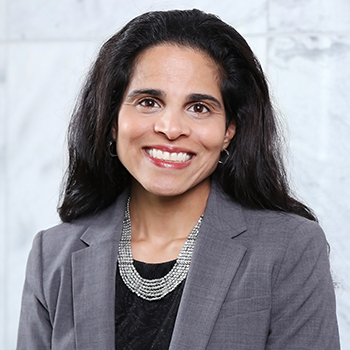
Georgia Law Professor Amann presents “Absent at the Creation? Nuremberg Women and International Justice” at Max Planck Luxembourg conference

Georgia Law Professor Diane Marie Amann opened a 2-day conference on “Women & International Law” with a presentation entitled “Absent at the Creation? Nuremberg Women & International Criminal Justice.” Also on the initial panel, which Temple Law Professor Jaya Ramji-Nogales moderated, were Professor Helena Alviar García, (Sciences Po-Paris, France), Ph.D. candidate Justina Uriburu (Geneva Graduate Institute, Switzerland), and Professor Ignacio de la Rasilla (Wuhan University, China).

The conference took place last Thursday and Friday at the Max Planck Institute Luxembourg for Procedural Law, whose Director is Professor Hélène Ruiz Fabri. It featured more than 4 dozen scholars and other experts from across the globe, including several from Australia, New Zealand, and the South Pacific. The chapters they presented will appear in a forthcoming Oxford Handbook on Women and International Law, co-edited by Ramji-Nogales and Ruiz Fabri along with Baltimore Law Professor Nienke Grossman and Howard Political Science Professor J. Jarpa Dawuni.

Amann, who is Regents’ Professor of International Law, Emily & Ernest Woodruff Chair in International Law, and Faculty Co-Director of the Dean Rusk International Law Center here at the University of Georgia School of Law, presented on an aspect of her ongoing research into the roles and experiences of lawyers and other women professionals at post-World War II international criminal trials.

“Law of Global Economic Statecraft,” October 24 Georgia Journal of International and Comparative Law conference, to feature book keynote discussion with Nicholas Mulder
This year’s annual conference of the Georgia Journal of International and Comparative Law will consider a highly topical question: “The Law of Global Economic Statecraft.” Featured will be a keynote discussion by Cornell University historian Nicholas Mulder, author of The Economic Weapon: The Rise of Sanctions as a Tool of Modern War (Yale University Press 2022), as well as panels including more than a dozen experts from around the world.

The daylong conference will take place on Monday, October 24, in the Larry Walker Room of Dean Rusk Hall at the University of Georgia School of Law.

Sponsoring along with GJICL, a 50-year-old student-edited journal, is the law school’s Dean Rusk International Law Center. GJICL Executive Conference Editor, 3L Claire Kimbrell, and Senior Conference Editor, Sarah Grace McCord, worked closely with Catrina Martin, the Center’s Global Practice Preparation Assistant, and with GJICL’s Faculty Advisor, Professor Harlan Grant Cohen, who is Gabriel M. Wilner/UGA Foundation Professor in International Law and one of the Center’s Faculty Co-Directors.

The University of Georgia Willson Center for Humanities & Arts is a cosponsor of the keynote event. Additional conference cosponsors include these University of Georgia units: Georgia Law students’ International Law Society; the Center for International Trade & Security, School of Public & International Affairs; the Department of History, Franklin College of Arts & Sciences; and the Department of Economics, Terry College of Business.

Registration for all aspects of the conference (to be livestreamed for online registrants) here.

Here’s the concept note:

“The global economy has been weaponized.  It’s not clear when it happened, or whether it’s even something new, but watching the response to Russia’s invasion of Ukraine has made it impossible to ignore.  With breathtaking speed, a full phalanx of sophisticated economic tools was mobilized against Russia that threatened to sever it from the global economy.  For its, part, Russia demonstrated the continued force of its own economic weapons – its control over substantial supplies of oil and gas.  But the speed with which these tools were amassed was in fact testament to years of experiments and practice.  Economic tools that had been developed to isolate “rogue states,” to fight terrorist networks, and to punish human rights abusers had begun to show how the carrot of the global market could quickly become a lever of influence and a forceful stick.  But these tools gained new prominence as they were refined and redeployed for use in the intensifying economic and geopolitical rivalry between China, the United States, and Europe.  

“Is international law prepared for this reality?  Until recently, tools of economic pressure have been left largely to the margins of the discipline, treated at best as the preferred alternative to more regulated fields of military activities, at worst as exceptional tools that could largely be ignored – even in the face of critiques from the Global South and regarding human rights.  While every international law textbook has chapters on the regulation of military activity and economic cooperation, few have standalone sections on sanctions.  International economic law regimes meanwhile struggle to adapt to the realities of ‘geoeconomics’ and ‘weaponized interdependence,’ in which, structures designed to encourage economic cooperation are repurposed as tools of competition and rivalry.

“A reconsideration is long overdue.  This symposium surveys the current state of economic statecraft – the tools in use, their purposes, and their targets.  It explores how they are or should be regulated.  But most importantly, it seeks to put today’s economic statecraft in historical, political, and legal context asking critical questions about the international order they reflect and the international order they might require.”

The day’s events are as follows:

9-9:10 am Welcome

  • Melissa J. “MJ” Durkee, Associate Dean for International Programs, Director of the Dean Rusk International Law Center, and Allen Post Professor, University of Georgia School of Law

9:10-10:30 am How We Got Here

Speaking on this 1st panel:

  • Zohra Ahmed, Assistant Professor of Law, University of Georgia School of Law
  • Mona Ali, Associate Professor of Economics, State University of New York-New Paltz
  • Henrique Choer Moraes, Minister-Counsellor, Embassy of Brazil in New Zealand
  • Nicholas Mulder, Assistant Professor and Milstein Faculty Fellow, Cornell University Department of History

10:45 am-12:05 pm Where We Are

Lauren Brown, Associate, Squire Patton Boggs, Washington, D.C., will moderate this 2d panel. Speaking will be:

  • Sarah Bauerle Danzman, Director, Tobias Center for Innovation in International Development, and Associate Professor, International Studies, Indiana University-Bloomington
  • Maryam Jamshidi, Associate Professor of Law University of Florida Levin College of Law
  • Tom Ruys, Professor, Faculty of Law and Criminology, Department of European, Public, and International Law, Ghent University, Belgium
  • Jan Zahradil, Member, European Parliament

1:05-2:25 pm Where We’re Headed

Speakers on this 3d panel:

  • Elena Chachko, Lecturer on Law, Harvard Law School
  • J. Benton Heath, Assistant Professor of Law, Temple University Beasley School of Law
  • Henry Farrell, SNF Agora Institute Professor of International Affairs at SAIS, Johns Hopkins University
  • Mona Paulsen, Assistant Professor of Law, London School of Economics Law School, England

2:40-3:55 pm Keynote Book Discussion on “The Economic Weapon: The Rise of Sanctions as a Tool of Modern War”

3:55 pm Thank You

  • Courtney Robinson, Editor-in-Chief, Georgia Journal of International and Comparative Law

Georgia Law Dean Bo Rutledge, co-author Gary Born publish “International Civil Litigation in the United States” (7th ed.)

The seventh edition of International Civil Ligitation in the United States has just been published by its co-authors, Gary B. Born (bottom left), a London-based lawyer who is chair of the International Arbitration Practice Group at the global law firm WilmerHale, and Peter B. “Bo” Rutledge (top left), who is Dean and Talmadge Chair of Law here at the University of Georgia School of Law.

Here’re the details from Aspen Publishing:

“Examining every topic discussed in competing texts with extensive narrative, unparalleled notes, and detailed citations, this book covers the gamut of international dispute resolution, whether judicial jurisdiction, sovereign immunity, extraterritoriality, conflicts of law, parallel proceedings, discovery disputes, service, judgment enforcement, and international arbitration. This Seventh Edition includes excerpts and updated discussions of recent U.S. court decisions and legislation relating to a wide range of private and public international law topics.” 

Included in this edition are a critique of the Restatement (Fourth) of the Foreign Relations of the United States (American Law Institute 2021), as well as developments in: litigation under the Alien Tort Statute and the Torture Victim Protection Act; sovereign immunity law following several landmark Supreme Court decisions; and extraterritorial application of federal law in the wake of landmark U.S. Supreme Court decisions.

Georgia Law Professor Diane Marie Amann interviewed on international law and developments in Ukraine-Russia war

An international law analysis by Georgia Law Professor Diane Marie Amann on recent developments in the Ukraine-Russia war is quoted in an article published Sunday by Voice of America Russian Service.

The Russian-language article, Юристы по международному праву: аннексия, проведенная Путиным, юридически ничтожна (that is, International Lawyers: The Annexation Carried out by Putin Is Legally Null and Void), was written by Evgenii Komarov. In addition to Amann, who is Regents’ Professor of International Law, Emily & Ernest Woodruff Chair in International Law, and Faculty Co-Director of the Dean Rusk International Law Center here at the University of Georgia School of Law, Komarov interviewed international law professors Lea Brilmayer and Zakhar Tropin, from, respectively, Yale Law School and the Shevchenko National University in Kyiv, Ukraine.

The article related particularly to last week’s assertion by Russian President Vladimir Putin that his country had annexed four regions of Ukraine that Russian troops had occupied in the months following their February 2022 invasion of the country.

Amann analyzed this development in light of international law norms set out in agreements to which Ukraine and Russia both belong, including the 1945 Charter of the United Nations, the 1949 Geneva Conventions, and human rights treaties. She also discussed the potential for accountability and international pressure, through, for instance, economic sanctions and geopolitical isolation, UN treaty bodies on human rights and anti-discrimination, the International Criminal Court, and proposals for a special tribunal.

Komarov wrote:

“The effectiveness of international law ‘depends on political will, and I think that the countries that make these decisions weigh the benefits and costs,’ states Diane Marie Amann. This leads to the fact that justice is moving very slowly.”

Georgia Law Professor Cohen discusses developments in international trade law as part of plenary opening ASIL interest group conference at Texas A&M Law

Harlan Grant Cohen, who is Gabriel M. Wilner/UGA Foundation Professor in International Law and Faculty Co-Director of the Dean Rusk International Law Center here at the University of Georgia School of Law, took part in last Thursday’s opening plenary of the Biennial Conference of the American Society of International Law International Economic Law Interest Group.

On the opening plenary panel entitled “Sustainable Development and the Multiple Aims of Trade Law,” Cohen (above, 2d from left) primarily discussed the new competition to define international trade’s purpose, as well as the increasing enmeshments of trade and national security.

Organizer of the plenary was Nicolas Lamp, Queen’s University, Ontario (above, with Cohen to his left). Other panelists included (l to r): Ernesto Fernández Monge, Pew Charitable Trusts; Olabisi Akinkugbe, Schulich School of Law, Dalhousie University; Kathleen Claussen, University of Miami School of Law; Tony VanDuzer, University of Ottawa Faculty of Law; and Maria Panezi, University of New Brunswick School of Law. (photo credit)

The overall theme of the conference, which took place September 22 to 24 at Texas A&M University School of Law in Fort Worth, Texas, was “Energy, Sustainability, and International Economic Law.”

Georgia Law Professor Amann publishes “International Child Law and the Settlement of Ukraine-Russia and Other Conflicts” in International Law Studies

Georgia Law Professor Diane Marie Amann has published, in the century-old, peer-reviewed international law journal of the U.S. Naval War College, an article analyzed international child law in order to imagine ways that peace processes may engage with children and ensure that children’s issues are addressed in future peace agreements.

Entitled “International Child Law and the Settlement of Ukraine-Russia and Other Conflicts,” the article appears at 99 International Law Studies 559-601 (2022) and is available here.

Amann, who is Regents’ Professor of International Law, Emily & Ernest Woodruff Chair in International Law, and Faculty Co-Director of the Dean Rusk International Law Center here at the University of Georgia School of Law, she served from 2012 to 2021 as the Special Adviser to the International Criminal Court Prosecutor on Children in & affected by Armed Conflict.

She undertook research on this topic while a Visiting Academic at University College London this past summer. An earlier version of her research forms part of the Ukraine Peace Settlement Project of the Lauterpacht Centre for International Law at the University of Cambridge in the United Kingdom. (prior post)

Here’s the abstract for Amann’s just-published article:

The Ukraine-Russia conflict has wreaked disproportionate harms upon children. Hundreds reportedly were killed or wounded within the opening months of the conflict, thousands lost loved ones, and millions left their homes, their schools, and their communities. Yet public discussions of how to settle the conflict contain very little at all about children. This article seeks to change that dynamic. It builds on a relatively recent trend, one that situates human rights within the structure of peace negotiations, to push for particularized treatment of children’s experiences, needs, rights, and capacities in eventual negotiations. The article draws upon twenty-first century projects that examine the lives of children in armed conflict by synthesizing international child law. The projects’ syntheses have influenced the work of certain international organizations bodies but not, to date, the work of peace settlements.

To demonstrate their relevance to conflict resolution, the article first outlines two syntheses by the United Nations and by the International Criminal Court Office of the Prosecutor. After mapping child rights and conflict harms, it examines the treatment of children in Colombia’s 2016 peace agreement and a 1999 agreement related to Sierra Leone. The article concludes by proposing child-inclusive options for peace processes and eventual peace agreements.

Five University of Georgia-based scholars present at 2022 annual conference of the European Society of International Law

Well represented at last week’s annual conference of the European Society of International Law were scholars from the University of Georgia.

Presenting at the conference were 4 professors affiliated with the University of Georgia School of Law – along with one researcher at the University of Georgia Digital Humanities Lab, sponsored by the Willson Center for the Humanities, and two scholars who earned their first degrees at the University of Georgia.

The 2022 ESIL conference took place at Utrecht University in the Netherlands, home institution of a recent Visiting Researcher at the Dean Rusk International Law Center here at Georgia Law, Professor Brianne McGonigle Leyh. Designed to explore the theme “In/Ex-clusiveness of International Law,” the conference began with Interest Group workshops on Wednesday. It concluded on Saturday

University of Georgia scholars’ presentations were as follows:

► Professor Diane Marie Amann (pictured above left) gave an online talk entitled “Absent at the Creation? Women and International Criminal Justice” as part of a Saturday hybrid session exploring “In/Ex-clusiveness of the Legal Construction of Justice.” The presentation drew on her research into the experiences of women professionals at post-World War II international criminal trials. Amann is Regents’ Professor of International Law, Emily & Ernest Woodruff Chair in International Law, and Faculty Co-Director of the Dean Rusk International Law Center here at the University of Georgia School of Law; additionally, she serves on the Coordinating Committee of ESIL’s Interest Group on International Criminal Justice. Also participating on this agora session were scholars from the Netherlands’ University of Amsterdam and Erasmus University, and also from the Irish Centre for Human Rights at the National University of Ireland-Galway.

► Professor Harlan Grant Cohen (second from left), who is Gabriel M. Wilner/UGA Foundation Professor in International Law and Faculty Co-Director of the Dean Rusk International Law Center here at the University of Georgia School of Law, presented twice:

► Professor Melissa J. “MJ” Durkee (center), who is Associate Dean for International Programs, Director of the Dean Rusk International Law Center, and Allen Post Professor here at the University of Georgia School of Law, likewise gave two presentations at the ESIL conference:

  • She presented “The Technology of Inclusion in International Climate Law,” a talk that drew from her forthcoming Yale Journal of International Law article The Pledging World Order, at a Wednesday workshop session entitled “Just Energy Transition – the International Human Rights Law Perspective.” The workshop’s overall title was “In/Ex-clusiveness in the Energy Transition and Climate Action”; host was the ESIL Interest Group on International Environmental Law. Also on Durkee’s panel were scholars from Leiden University in the Netherlands and from the China Institute of Boundary & Ocean Studies and Research Institute of Environmental Law of Wuhan University, China.
  • Durkee explored “The Logics of Inclusion and Exclusion in International Participatory Structures,” at a Thursday workshop entitled “International Organizations, Elites, and Masses: Perspectives on In/Exclusion,” and sponsored by the ESIL Interest Group on International Organizations. Her talk concerned an early-stage project that organizes perspectives on the inclusion and exclusion of nonstate actors in the activities of international organizations. Presenting other papers were scholars from the University of Hong Kong, the University of Melbourne in Australia, Max Planck Institute for Comparative Public Law & International Law in Germany the University of Hamburg in Germany, and the Guangdong University of Foreign Studies in China.

Meanwhile, Professor Tim R Samples (second from right), Associate Professor of Legal Studies at the University of Georgia Terry College of Business who has a courtesy appointment at Georgia Law, took part in three presentations.

  • Professor Samples and Dr. Katie Ireland (right), who recently joined the university’s DigiLab, spoke at two ESIL workshops along with their co-author, Caroline Kraczon, a Georgetown University Law Center 3L who earned her first degrees at the University of Georgia. Their paper, “Terms of Use Agreements and Social Platforms,” discusses their interdisciplinary project based on an original dataset of 75 digital platforms’ terms-of-use and core policies. The trio presented this research at the Wednesday workshop of the International Law & Technology Interest Group, on “Algorithmic and Technological Modes of In-/Exclusion: International Legal Method and Critique,” and also at “‘In/Ex-clusiveness through the Lens of International Business and Human Rights’” the Thursday workshop of the International Business & Human Rights Interest Group.
  • In addition, Samples co-presented Investment Law’s Transparency Gap, an article forthcoming in Cornell International Law Journal, with co-author Sebastian Puerta, a Ph.D. student in Economics at the University of California-Berkeley who earned his first degrees at the University of Georgia. Their work uses predictive modeling to estimate missing claims and awards in investment treaty arbitration. They spoke at a session of ESIL’s International Economic Law Interest Group, “In/ex-cluding Civil Society in Investment Law-making and Arbitration.” Also taking part in this session were scholars from the Institute of International Relations in Czechoslovakia, Ghent University and Université Libre de Bruxelles in Belgium, University of Vienna in Austria, University of Trento in Italy, and Carleton University in Canada.

The European Society’s 2023 annual conference, themed “Is International Law Fair?,” will begin with Interest Group workshops on August 30, and run through September 2, in Aix-en-Provence, France.

Georgia Law Professor MJ Durkee moderates online ASIL discussion of book on globalization of legal education

Professor Melissa J. “MJ” Durkee, Associate Dean for International Programs, Director of the Dean Rusk International Law Center, and Allen Post Professor here at the University of Georgia School of Law, moderated an online book discussion sponsored by the American Society of International Law.

Discussion centered on The Globalization of Legal Education: A Critical Perspective, published last month as an open access Oxford University Press title. Featured speakers were the co-editors, Bryant Garth (pictured above, upper right) and Gregory Shaffer (lower right), along with Swethaa Ballakrishnan (lower left), all of them professors at University of California-Irvine School of Law. Md. Rizwanul Islam (upper left), a professor at North South University Bangladesh, was the discussant.

Cohosting the event were ASIL’s Teaching International Law Interest Group and also its International Legal Theory Interest Group, of which Durkee (top, center) is Vice-Chair and another Georgia Law professor, Harlan G. Cohen, is Chair.

Video of the book discussion is available here and on YouTube.

Georgia Law Professor Usha Rodrigues in Frankfurter Allgemeine Zeitung article on special purpose acquisition companies

Usha Rodrigues, University Professor and M.E. Kilpatrick Chair of Corporate Finance & Securities Law and the University of Georgia School of Law, serving currently as the University of Georgia Interim Vice Provost for Academic Affairs, recently was featured the German daily newspaper Frankfurter Allgemeine Zeitung.

The article by reporter Von Roland Linder was entitled “Für hunderte Spacs tickt die Uhr,” or “The clock is ticking for hundreds of spacs” – the last term an acronym for “special purpose acquisition companies,” a corporate law phenomenon about which Rodrigues has written and frequently is quoted.

Professor MJ Durkee publishes essay on legacy of 1972 Stockholm Declaration in special issue of Georgia Journal of Comparative and International Law

Professor Melissa J. “MJ” Durkee, Associate Dean for International Programs, Director of the Dean Rusk International Law Center, and Allen Post Professor at the University of Georgia School of Law, published “International Environmental Law at Its Semicentennial: The Stockholm Legacy” in 50 Georgia Journal of International and Comparative Law 748 (2022), available at the journal’s website as well as SSRN.

The publication reflects upon issues raised at, the journal’s October 2021 conference, “The 1972 Stockholm Declaration at 50: Reflecting on a Half-Century of International Environmental Law.” (Prior posts and links to panel videos here)

Here’s the SSRN abstract of Professor Durkee’s essay:

“The 1972 United Nations Conference on the Human Environment produced the Stockholm Declaration, an environmental manifesto that forcefully declared a human right to environmental health and birthed the field of modern international environmental law. The historic event powerfully “dramatized . . . the unity and fragility of the biosphere,” sparking a remarkable period of international legal innovation and cooperation on environmental protection in the decades to come.

“The Stockholm Declaration can be rightly celebrated for putting environmental issues on the international legal agenda and driving the development of environmental law at the domestic level around the world. At the same time, the Declaration’s distinctive framing of environmental problems and solutions deeply influenced these abundant subsequent laws, and here its legacy is mixed. This special issue, in celebration of the Georgia Journal of International and Comparative Law’s 50th anniversary volume, evaluates the legacy of the Stockholm Declaration and the legal movement it launched.”

Published in the same journal issue were: “‘In Countless Ways and On an Unprecedented Scale’: Reflections on the Stockholm Declaration at 50” by Rebecca Bratspies, Professor of Law and founding Director of the Center for Urban Environmental Reform at CUNY School of Law; and “Legal Rights for Rivers” by Katie O’Bryan, Lecturer and Member of the Castan Centre for Human Rights Law, Faculty of Law, at Monash University in Australia.