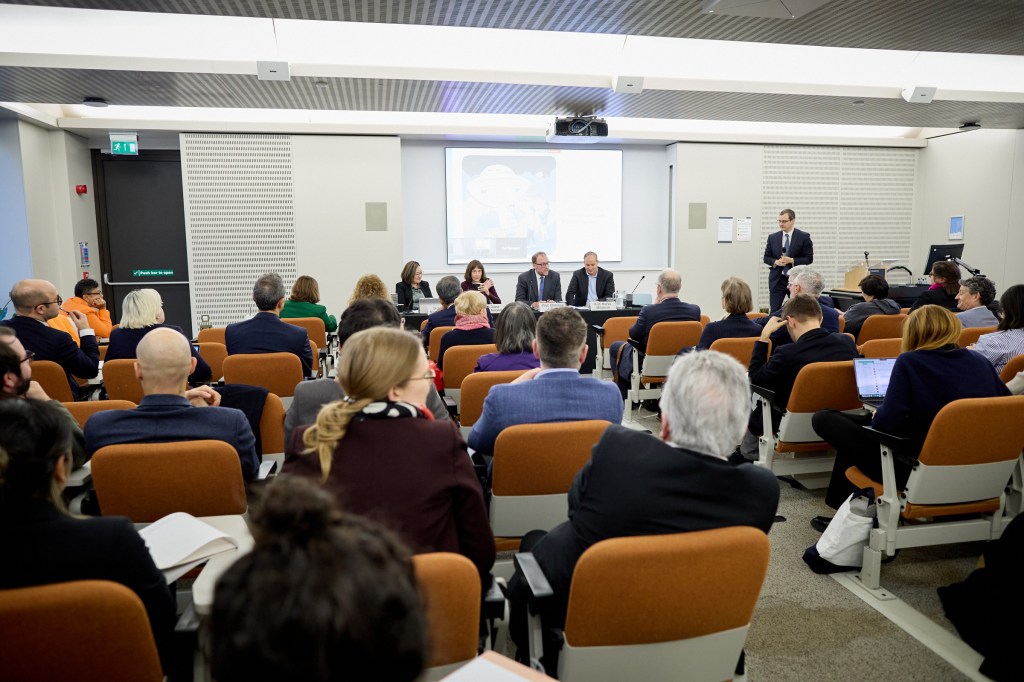
Georgia Law Professor Diane Marie Amann discusses nonpeaceful dispute settlement at University College London-National University of Singapore conference on “The Future of International Law”

University of Georgia School of Law Professor Emerita Diane Marie Amann recently took part in a panel entitled “(non-)peacefulness of the settlement of international disputes” at “The Future of International Law: Reflections on Challenges New and Old” conference at University College London Faculty of Laws. Cosponsoring along with UCL Laws was the National University of Singapore Centre for International Law.

Also on the panel were King’s College London Law Professor Christian J. Tams, International Law Commission  member Vilawan Mangklatanakul, University of Geneva Law Professor Makane Moïse Mbengue, and University of Reading Law Professor Marko Milanovic. Together they explored current developments in relation to legal norms on the use of force, territorial conquest, decolonization, and economic coercion.

Organizers of the daylong conference with UCL Laws Professor Martins Paparinskis and NUS Law Senior Fellow Nilufer Oral.

Amann, who is Regents’ Professor Emerita and Emily & Ernest Woodruff Chair in International Law Emerita at Georgia Law, served for many years as a Faculty Co-Director of our Dean Rusk International Law Center. At present she is an Academic Affiliate at University College London Faculty of Laws.
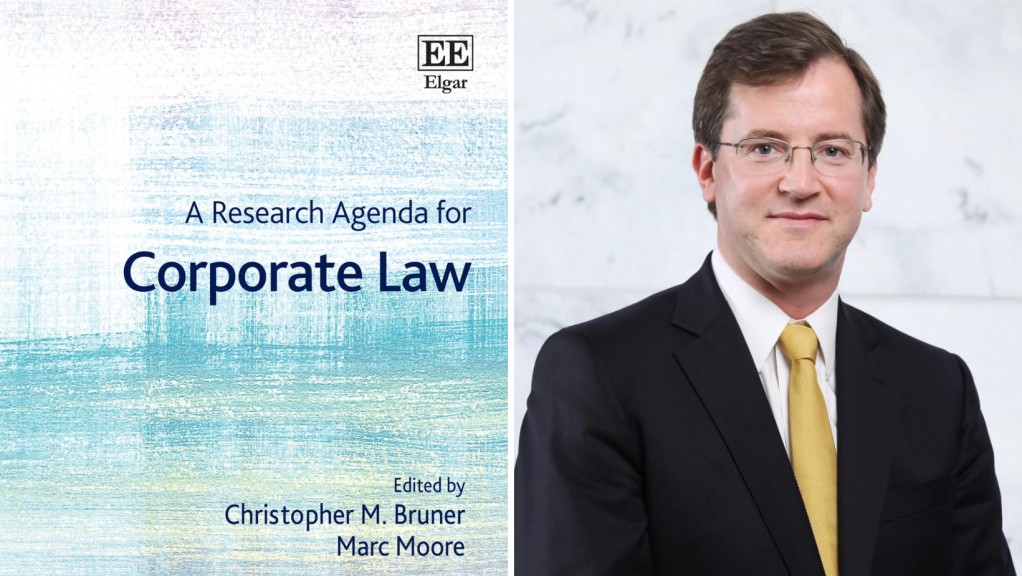
UGA Law Professor Bruner publishes “A Research Agenda for Corporate Law”

Christopher M. Bruner, Stembler Family Distinguished Professor in Business Law and Faculty Co-Director of the Dean Rusk International Law Center, recently co-edited the book A Research Agenda for Corporate Law with Marc Moore, Professor of Corporate/Financial Law, University College London Faculty of Laws.

Below is a description of the book:

This timely Research Agenda explores key dynamics and cutting-edge developments within corporate law. Bringing together a diverse range of scholars hailing from different jurisdictions, ideological perspectives, and methodological backgrounds, it provides a roadmap for future research in the field.

Through the investigation of different doctrinal and normative issues, leading scholars consider how evolving conceptual foundations, capital markets, social and cultural contexts, and technologies may impact corporate law and governance research. Ground-breaking contributions examine the increasingly global nature of corporate production and investment markets and the influence this has on the wider dynamics in the field, suggesting new directions for navigating this complex and fascinating terrain.

Students and scholars of corporate law, corporate governance, and law and business will value the innovative ideas unpacked in this state-of-the-art Research Agenda. Its forward looking and practical insights will also benefit practitioners and policymakers in corporate law, corporate governance, sustainability, and business law.

Prior posts on Bruner’s scholarship can be found here.