Georgia Journal of International and Comparative Law publishes Issue 1 of 53rd Volume

The University of Georgia School of Law’s Georgia Journal of International and Comparative Law (GJICL) is pleased to announce the publication of Issue 1 of its 53rd Volume

This issue features three Articles that engage with pressing global legal developments. These include:

Four student Notes were also published on a range of timely topics, including:

The GJICL is a preeminent forum for academic discussion on current international subjects. From its inception in 1970 as a student initiative supported by former U.S. Secretary of State and Georgia Law Professor Dean Rusk, GJICL features work by legal scholars and practitioners as well as student notes written by students on GJICL’s editorial board.
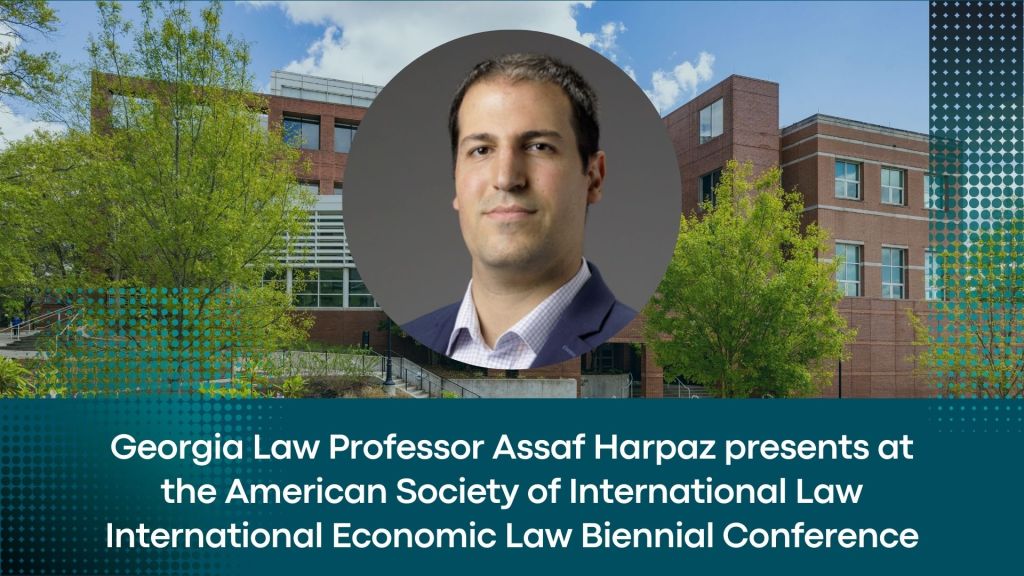
Georgia Law Professor Assaf Harpaz presents at the American Society of International Law International Economic Law Biennial Conference

University of Georgia School of Law Professor Assaf Harpaz virtually presented his forthcoming paper, Global Tax Wars in the Digital Era, 75 Am. U. L. Rev., at the American Society of International Law International Economic Law Biennial Conference.

Below is an abstract of the paper:

The digital economy fundamentally disrupts traditional international tax principles that rely on physical presence. When a business earns income abroad, the country of residence (where the taxpayer resides) and the country of source (where income is generated) both have legitimate, competing claims to tax that income. The international tax system favors residence-based taxation. The source country has the right to tax business profits only if the enterprise carries on a permanent establishment within its borders, which typically requires a physical presence. The permanent establishment standard becomes flawed in a digital economy where profit shifting practices are abundant and businesses no longer need a physical presence in the location of their online consumer markets.

An upcoming United Nations (UN) Framework Convention on International Tax Cooperation recognizes these challenges and is overwhelmingly supported by Global South economies. However, the Global North has historically dominated the international tax regime through the Organization for Economic Co-operation and Development (OECD), informally known as the “World Tax Organization.” A UN framework convention creates potential conflict in international tax policymaking and would need to bridge the underlying North-South divide.

This article explores the “tax wars” surrounding the leadership for global tax governance, contrasting the taxing powers and interests of the OECD-led Global North with those of the UN-backed Global South. It argues for a shift toward source-based taxation by revisiting the permanent establishment standard. To achieve this, the article promotes the significant economic presence doctrine that would expand the permanent establishment criteria to include online businesses. This proposal addresses longstanding inequities and is increasingly warranted in a digital economy that does not depend on physical presence.

Harpaz joined the University of Georgia School of Law as an assistant professor in summer 2024 and teaches classes in federal income tax and business taxation. Harpaz’s scholarly focus lies in international taxation, with an emphasis on the intersection of taxation and digitalization. He explores the tax challenges of the digital economy and the ways to adapt 20th-century tax laws to modern business practices.

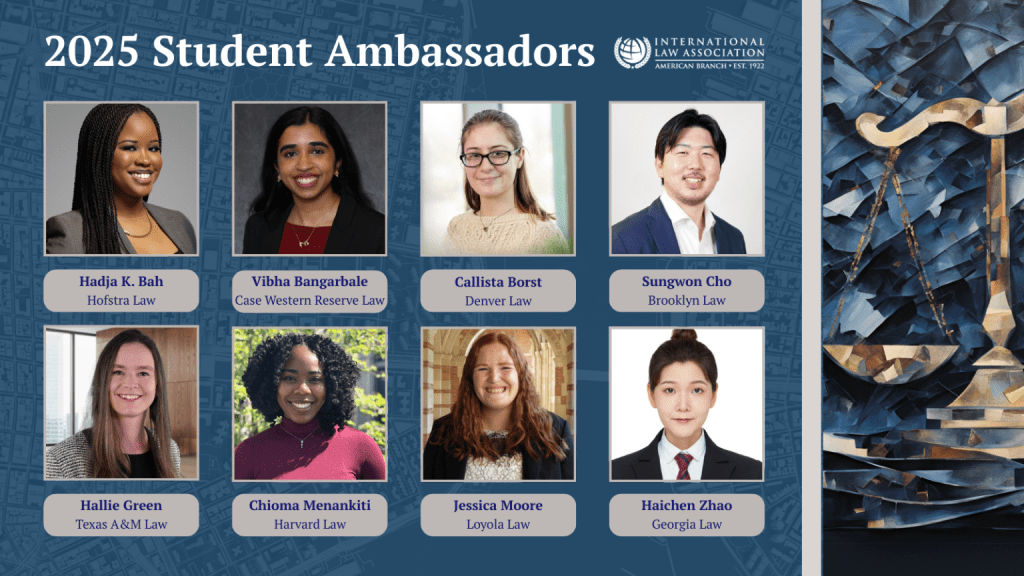
Georgia Law student Haichen Zhao (J.D. ’27) selected as 2025 ABILA Student Ambassador

University of Georgia School of Law student Haichen Zhao (J.D. ’27) was selected by the American Branch of the International Law Association (“ABILA”) to be a 2025 Student Ambassador. She is one of eight Ambassadors selected nationwide to assist with the work of the organization, especially in the preparation of the International Law Weekend 2025 conference.

In response to her selection as a Student Ambassador, Zhao reflected:

Being selected as a Student Ambassador for ABILA is a tremendous honor. With legal education spanning China and the United States, I am passionate about cross-cultural exchange and international collaboration in law. This role provides a unique opportunity to engage more deeply with the global legal community and support the work of ABILA. I look forward to contributing to the development of International Law Weekend, deepening my knowledge of international law, and helping other students discover the diverse academic and professional opportunities available in this field.

Zhao is the third Georgia Law student in the last three years to be selected as an ABILA Student Ambassador. In the past two years, Madison Graham (J.D. ’25) and Bohdan Krivuts (LL.M. 24, J.D. ’26) have served in this role.

Georgia Law Professor Walter Hellerstein presents at OECD Working Party

University of Georgia School of Law Professor Emeritus Walter Hellerstein presented “Overview of U.S. Federal Income Tax Reporting Regulations for Brokers of Crypto-Assets” at a meeting of the Organization for Economic Cooperation and Development Working Party No. 9 on Consumption Taxes in Paris, France, during May.

The Working Party No. 9 on Consumption Taxes is a forum for the discussion of consumption tax policy and administration, working with both Members and non-Members of the OECD to develop appropriate and effective taxation outcomes. To read more about Professor Hellerstein’s previous presentation at the OECD, click here.

Hellerstein is the Distinguished Research Professor & Francis Shackelford Distinguished Professor in Taxation Law Emeritus. He is a recipient of the National Tax Association’s Daniel M. Holland Medal for outstanding lifetime contributions to the study and practice of public finance, is widely regarded as the nation’s leading academician on state and local taxation. He has authored numerous books, textbooks, and law review articles, and has practiced extensively in the field. Hellerstein is currently a Visiting Professor at the Vienna University of Economics and Business, and he remains actively involved in his scholarship, consulting, and, in particular, his work as an academic advisor to the OECD.

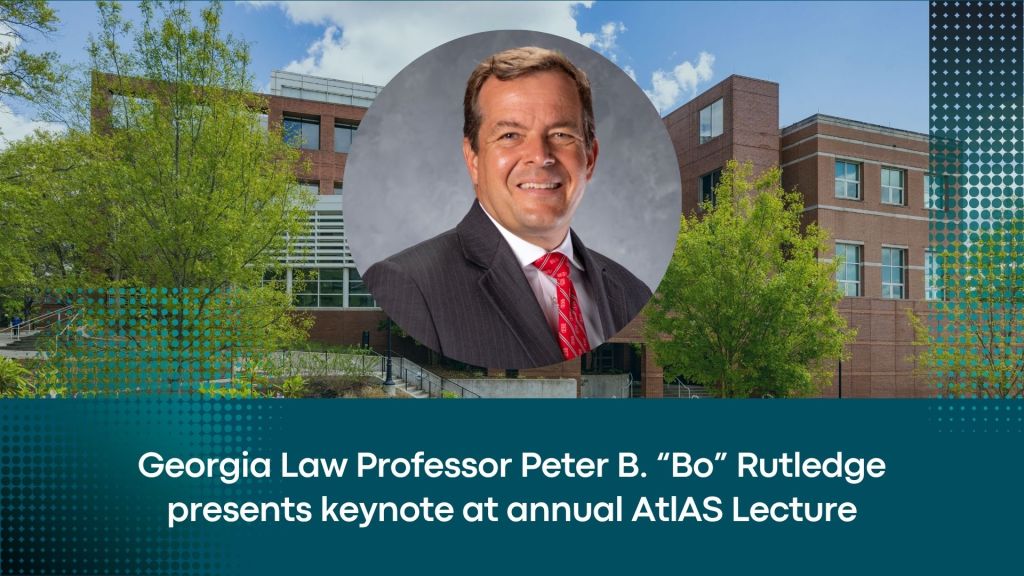
Georgia Law Professor Peter B. “Bo” Rutledge presents keynote at annual AtlAS Lecture

University of Georgia School of Law Professor Peter B. “Bo” Rutledge presented “Perpetual Peace Reconsidered: Arbitration and International Law in the 21st Century” as the keynote speaker at the 10th Annual Atlanta International Arbitration Society Lecture earlier this month. In his lecture, Rutledge considered the use of arbitration and alternative dispute resolution to resolve cross-border conflicts in the 21st century.

Rutledge holds the Talmadge Chair of Law. From 2015 through 2024, he served as dean of the University of Georgia School of Law. He is the author of the book Arbitration and the Constitution and co-author with Gary Born of the book International Civil Litigation in United States Courts. His works have been published by the Yale University Press, the Oxford University Press and the Cambridge University Press, and his articles have appeared in a diverse array of journals such as The University of Chicago Law Review, the Vanderbilt Law Review and the Journal of International Arbitration. He also regularly advises parties on matters of international dispute resolution (litigation and arbitration).

Georgia Law Professor Diane Marie Amann participates in Columbia University conference launching effort to embed child justice in new Crimes Against Humanity Treaty

University of Georgia School of Law Professor Diane Marie Amann recently took part in a New York conference that launched the Children and Crimes Against Humanity Coalition, formed to ensure that child justice is embedded in a treaty to be negotiated at the United Nations.

Held at Columbia University, the May 5 conference centered on “Justice for Children in the Future Convention on the Prevention and Punishment of Crimes Against Humanity” (pictured above right), a Coalition white paper setting forth provisions aimed at ensuring due recognition of children.

Professor Amann, who chaired a conference panel entitled “Increasing Visibility of Crimes Affecting Children and New Crimes Against Children,” commented on drafts and is an individual endorser of the Coalition white paper. Here at Georgia Law, she is Regents’ Professor of International Law, Emily & Ernest Woodruff Chair in International Law, and a Faculty Co-Director of our Dean Rusk International Law Center. She was Special Adviser to International Criminal Court Prosecutor Fatou Bensouda on Children in & affected by Armed Conflict from 2012 to 2021, and has served since 2023 on the Bring Back Kids UA Task Force. Her recent publications in this field include  “Child-Taking,” 45 Michigan Journal of International Law 305 (2024), and “International Child Law and the Settlement of Ukraine‑Russia and Other Conflicts,” 99 International Law Studies 559 (2022).

By U.N. General Assembly resolution, states will conclude the Crimes Against Humanity Treaty – known formally as the Convention on the Prevention and Punishment of Crimes Against Humanity – following diplomatic plenipotentiary conferences in 2028 and 2029. Preparatory meetings will take place in the interim, beginning next January.

The treaty’s text will derive from draft articles adopted in 2019 by the International Law Commission, and from amendments to those articles which U.N. member states may propose during the negotiation process.

Through efforts like the Columbia conference and the just-released white paper, the Children and Crimes Against Humanity Coalition will endeavor to promote states’ proposals to include in child-related provisions in the final treaty text. Its white paper proposes, inter alia: that every person under 18 be defined as a child; that the crime of persecution expressly include age as a prohibited ground; and the enumeration of acts that may constitute crimes against humanity explicitly include recruitment and use of children by armed groups and armed forces, as well as forced marriage. Further provisions relate to national justice and reparations proceedings; among these is the proposal that any child suspected of having committed a crime against humanity will be treated in a country’s child justice system, and not via an adult criminal prosecution.

The white paper’s authors are Véronique Aubert (Save the Children), Zoé Bertrand (Global Survivors Fund), Janine Morna (Amnesty International), and Zama Neff (Human Rights Watch). Those nongovernmental organizations co-sponsored the May 5 conference, along with various units of Columbia University and the U.N. permanent missions of Andorra, Brazil, Malta, Mexico, and the United Kingdom.

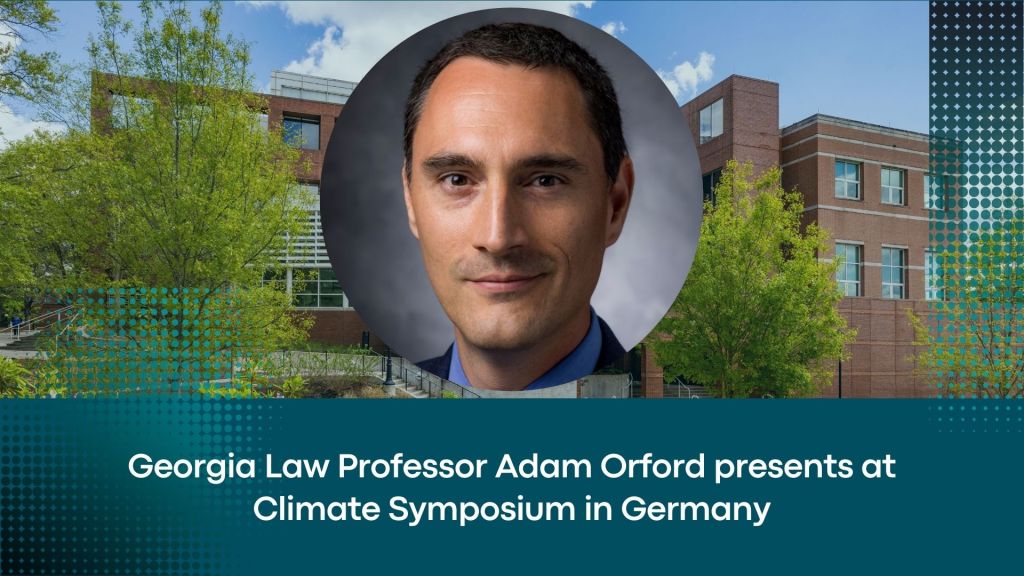
Georgia Law Professor Adam Orford presents at Climate Symposium in Germany

University of Georgia School of Law Professor Adam D. Orford presented in March at the Symposium on Just Transitions in the United States, UK, and the EU hosted by Indiana University School of Law at the European Gateway in Berlin, Germany. The symposium connected academics and social scientists for a conversation on “climate adaptation and the just transition in the United States, the United Kingdom, and European Union member nations.”

Below is a description of the symposium:

The purpose of this meeting is to connect invited scholars and practitioners writing on the topics of climate change and the just transition, broadly defined, with the goal of discussing recent developments in their respective jurisdictions and best practices for their research, as well as developing potential networks for collaboration. The day is built around brainstorming sessions and group activities to help foster conversation and possible collaborations.

Orford is an Assistant Professor of Law at the University of Georgia School of Law. His interdisciplinary research investigates legal and policy approaches to environmental protection, human health and wellbeing, and deep decarbonization of the United States economy. He also participates in collaborative research initiatives across UGA, including as the lead of the Georgia element of the National Zoning Atlas and as a participant in ongoing investigations into the legal, political, environmental and social dimensions of new energy manufacturing and emerging carbon removal technologies.

Georgia Law Professor Christopher Bruner presents on corporate governance in event co-hosted by Université Rennes 2 and Roskilde Universitet

University of Georgia School of Law Professor Christopher M. Bruner presented “Potential for Stakeholder Corporate Governance in the United States” at the online seminar titled “Stakeholder Approach and Corporate Governance Evolution.” The virtual seminar was co-hosted by Université Rennes 2 in France and Roskilde Universitet in Denmark.

Christopher M. Bruner is the Stembler Family Distinguished Professor in Business Law at the University of Georgia School of Law and serves as a faculty co-director of the Dean Rusk International Law Center.