LLM alums to meet prospective students in Brazil, Argentina

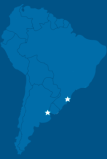
map_LLM fair_editLaw students, lawyers, and legal academics in Brazil and Argentina will soon have the opportunity to speak with graduates of the University of Georgia School of Law Master of Laws degree.

Two of our alums will attend university fairs in Curitiba and Buenos Aires sponsored by Education USA, an arm of the U.S. Department of State. They will be on hand personally to discuss the career benefits and special advantages of earning the Master of Law, or LL.M., degree at Georgia Law. (See prior posts about our current LLM students, as well as our hundreds of LLM alums, here.)

1

EducationUSA is the US Department of State’s global network of educational advising centers that promotes the more than 4,700 accredited U.S. colleges and universities. Find the nearest advising center.

Wednesday, October 17 in Curitiba, Brazil: our alumnus Felipe Forte Cobo (LLM 2013), a magistrate judge, will participate in the fair. Join him from 17:00-20:00 at the Hotel Four Points by Sheraton, 4211, Av. Sete de Setembro, Agua Verde, PR.

Monday, October 22 in Buenos Aires, Argentina: our alumna Martina Lourdes Rojo (LLM 2004), a professor of law, will participate in the fair. Join her from 18:00-21:00 at the Sheraton Buenos Aires Hotel & Convention Center, San Martin 1225/1275, Buenos Aires.

Interested persons are invited to register and attend. And feel free to e-mail LLM[at]uga.edu in order to assure one-to-one meeting – or to correspond, in the event you’re unable to attend one of the fairs.

Hope to see you there!

In international law journal, Library Director Carol A. Watson publishes article on “fake news”

Critical reading is the core topic of the article that Carol A. Watson, Director of the Alexander Campbell King Law Library here at the University of Georgia School of Law, has just published in a Cambridge University Press law journal.

Watson’s article, “Information Literacy in a Fake/False News World: An Overview of the Characteristics of Fake News and its Historical Development,” 46 International Journal of Legal Information 93 (2018), stems from her panel presentation at the 2017 Annual Course of the International Association of Law Libraries.

Here’s an extract:

“Prior to designing strategies and information literacy programs to combat the dissemination and proliferation of fake/false news, it is instructive for legal information professionals to understand the characteristics of fake news and the context of its historical development.”

The full article is available here.

“Reaffirmed my passion for human rights”: Hanna Karimipour on her Global Externship with Brussels NGO No Peace Without Justice

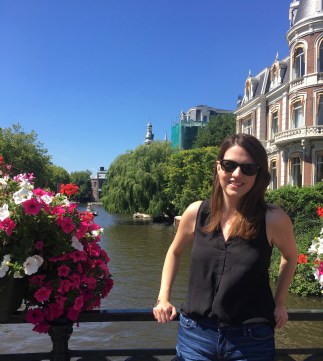
IMG_7351This is one in a series of posts by University of Georgia School of Law students, writing on their participation in our Global Governance Summer School or our Global Externship Overseas initiative. Author of this post is 2L Hanna Karimipour (right), who spent her 1L summer as a GEO, or Global Extern Overseas.

This summer, I had the opportunity to work at No Peace Without Justice (NPWJ) in Brussels, Belgium, as part of the Global Externships Overseas (GEO) initiative. NPWJ was founded in 1993 to support the establishment and operation of the International Criminal Tribunal for the former Yugoslavia (ICTY) and the International Criminal Court (ICC). Since then, NPWJ has worked on human rights and accountability in conflict and post-conflict settings around the world.

I came to law school because I’ve always known that I wanted to work in international relations and on human rights issues. After spending my 1L year getting the basics of U.S. law down and taking one international law course, I was eager to gain meaningful exposure to international law practice at NPWJ. As I sat for my final exams, the thought of my upcoming externship, as well as all the Belgian frites and waffles I would eat, carried me through.

On arriving in Brussels, I was not disappointed. Right away, I was researching the actus reus for aiding and abetting liability for war crimes under Article 25(3)(c) of the Rome Statute of the International Criminal Court. I was struck by the challenges to international legal research. There is no single database that catalogues case law, and considering that the ICC is only sixteen years old, the available precedent is limited. Moreover, ad hoc criminal tribunals – in particular, the ICTY – may have helpful case law,  for the issue I was working on, but the approaches of each court vary widely, and their case law can even be contradictory. Although at first I was overwhelmed, by the end of the summer I found the process of combing through cases, the text of the Statute itself, travaux préparatoires, academic articles, and books to be a thrilling and surprisingly fun process.

IMG_0285

As a part of my GEO, I was also able to travel with NPWJ. I went on a two-day mission to Geneva, Switzerland to the Office of the UN High Commissioner on Human Rights. There, NPWJ was invited to represent civil society at the Joint UN/Parliamentary Assembly of the Mediterranean (PAM) Seminar on Human Rights for PAM Members of Parliaments. Also in Geneva, I visited the Palais des Nations to attend a panel on transitional justice in Tunisia. As someone whose childhood dream was to be a United Nations ambassador, it was utterly exciting to be in the Palais des Nations, right down an escalator from where the Human Rights Council was in session.

The highlight of my experience, however, came when I was able to gain experience in the field as part of a six-day mission to Gaziantep, Turkey. Gaziantep is located approximately 30 miles from the Syrian border – about half the distance from Athens to Atlanta! I assisted with a NPWJ training on negotiation for members of Syrian civil society. It was a powerful experience to contribute to giving organizations the tools to safeguard human rights and to ensure transitional justice occurs and in the midst of the conflict in Syria. During this mission, I had the opportunity to meet and interact with several Syrian people who are directly taking action to improve the situation. Before this summer, the possibility of doing human rights field work wasn’t even on my radar. Now, it is something I am seriously considering for after law school.

My GEO at NPWJ was one of the most valuable experiences I have had thus far in my education and career, and has reaffirmed my passion for human rights. Oh, and I got plenty of the frites and waffles, too. I am looking forward to continuing my exploration of international law on campus at Georgia Law.
Transitional justice expert David Tolbert to speak on future of human rights

DT_BarcelonaWe at the University of Georgia School of Law Dean Rusk International Law Center will welcome human rights attorney David Tolbert to campus next Tuesday, October 2. His presentation, “Quo Vadis? Where Does the Human Rights Movement Go from Here?” will start at 12 noon in Classroom B, located on the 1st Floor of the law school’s Hirsch Hall. Lunch will be served.

Tolbert is a Visiting Scholar at Duke University’s Sanford School of Public Policy and the immediate past President of the International Center for Transitional Justice, a New York-based nongovernmental organization. He has held multiple positions at international criminal tribunals including as Registrar of the Special Tribunal for Lebanon, as special expert to the UN Secretary-General on the UN Assistance to the Khmer Rouge Trials, and as Deputy Chief Prosecutor of the International Criminal Tribunal for the former Yugoslavia.

Sponsoring his talk with the Dean Rusk International Law Center is the International Law Society, Georgia Law’s chapter of the International Law Students Association.

Details here.

Georgia Law Professor Harlan Cohen Fall 2018 Senior Fellow at NYU Law Institute for International Law & Justice

cohen2017New York University School of Law is hosting University of Georgia School of Law professor Harlan Grant Cohen (right) during the Fall 2018 semester. He serves as a Senior Fellow at the Institute for International Law and Justice (IILJ).

A member of our Georgia Law faculty since 2007, Cohen (right) publishes and teaches in a range of international law areas, including trade, foreign affairs, global governance, and human rights. He is the inaugural holder of the Gabriel M. Wilner/UGA Foundation Professorship in International Law and Faculty Co-Director of the Dean Rusk International Law Center.

logos combinedWhile at IILJ, Cohen will work on projects reconsidering the normative narratives underpinning the global trading system and exploring and mapping international law’s various communities of practice. He will also be involved in Institute programs on History and Theory of International Law, Global Governance, and Infrastructure as Regulation (InfraReg).
The IILJ organizes research projects with academic and policy institutions, and conducts academic and practical training initiatives.

Center to sponsor “Inquiry on Protecting Children in Conflict” panel at annual International Law Weekend, October 19 in New York City

In support of International Law Weekend, a three-day conference of the American Branch of the International Law Association, the University of Georgia School of Law Dean Rusk International Law Center will sponsor a panel entitled “The Inquiry on Protecting Children in Conflict,” set for 3 p.m. Friday, October 19, in Room 2-02B, Fordham Law School, 150 West 62d Street, New York City.

To be discussed are findings and recommendations of the 2018 report of the Inquiry on Protecting Children in Conflict, an initiative chaired by Gordon Brown, former United Kingdom Prime Minister and current UN Special Envoy for Global Education. The Inquiry reviewed the adequacy and effectiveness of the child-protection frameworks set out in international criminal law, international humanitarian law, and international human rights law, and also proposed reforms aimed at enhancing accountability and deterring future atrocities. The report has just been in book form as Protecting Children in Armed Conflict (Hart 2018).

Panelists include:

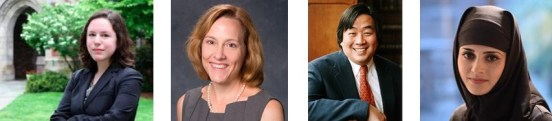
  • Shaheed Fatima QC, Barrister, Blackstone Chambers, London (pictured above at right), who led the legal panel that compiled the Inquiry’s report.
  • Professor Harold Hongju Koh, Sterling Professor of International Law at Yale Law School (second from right), who served as a consultant to the Inquiry.
  • Mara Redlich Revkin, Ph.D. Candidate in Political Science at Yale University and Lead Researcher on Iraq and Syria for the United Nations University Project on Children and Extreme Violence (pictured at left).
  • Professor Diane Marie Amann, Emily & Ernest Woodruff Chair in International Law at the University of Georgia School of Law and our Center’s Faculty Co-Director (second from left). Amann, who serves as Special Adviser to the Prosecutor of the International Criminal Court on Children in and affected by Armed Conflict, is a member of the Inquiry’s Advisory Panel.

Another principal cosponsor of International Law Weekend, which constitutes the 97th annual meeting of the American Branch of the International Law Association, is the worldwide International Law Students Association, with which Georgia Law students’ International Law Society is affiliated.

Full program, other details, and registration here.

Georgia Law Professor Harlan Cohen presents at European Society of International Law annual meeting in the UK

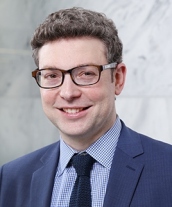
cohen2017Medium-logo_esil

Harlan Grant Cohen, the Gabriel M. Wilner/UGA Foundation Professor in International Law and Faculty Co-Director of the Dean Rusk International Law Center here at the University of Georgia School of Law, recently presented at the annual meeting of the European Society of International Law in Manchester, United Kingdom.

Cohen presented his paper, entitled “What is International Trade Law For?” as part of the International Economic Law Interest Group Roundtable, “The Multilateral Trading System in Trouble.”

Known by its acronym ESIL, the goals of the European Society of International Law “are to contribute to the rule of law in international relations and to promote the study of public international law.”

Belgian Consul General William De Baets to speak at Georgia Law, part of Center’s Consular Series

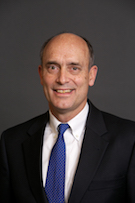
BELGIUM PORTRAIT DIPLOMATIC CONTACT DAYS

The Dean Rusk International Law Center at the University of Georgia School of Law welcomes Consul General William De Baets to campus on Tuesday, September 18. He will give a lecture, “Belgium: an old Transatlantic Friend at the Heart of Europe.”

De Baets is Belgium’s Consul General in Atlanta. A career diplomat, his prior postings have included the Ivory Coast, Venezuela, Ethiopia, Brussels, and Washington.

This lecture launches the Dean Rusk International Law Center’s Consular Series, which will bring perspectives on international trade, development, policy, and cooperation to campus during the 2018-2019 academic year.

Georgia Law and the Center have a long history of engagement with Belgium.  In 1973, Georgia Law welcomed its first foreign-trained LLM student from Brussels, and for the last 45 years, Georgia Law students have studied in Belgium during their summers.

The Consular Series is co-sponsored by the International Law Society, Georgia Law’s chapter of the International Law Students Association.

Details here.

National security expert, former judge James Baker to speak at Georgia Law

James_E._Baker_Photo_135_2pxWe at the University of Georgia School of Law Dean Rusk International Law Center will welcome Professor James E. Baker to campus this Thursday, September 13. He will speak on “National Security Decision-Making” from 3-4 p.m. in the Larry Walker Room, located on the 4th Floor of the law school’s Dean Rusk Hall. A reception will follow.

Professor Baker is the Director of the Syracuse University Institute for National Security & Counterterrorism. He is the former Chief Judge on the U.S. Court of Appeals for the Armed Forces.

Sponsoring his talk with the Dean Rusk International Law Center is the university’s School of Public and International Affairs. Also co-sponsoring is the International Law Society, Georgia Law’s chapter of the International Law Students Association.

Details here.

Introducing our LL.M. Class of 2019

IMG_3523

from left: top, Blessing Ibeh, Paolo Cariello Perez, Arif Iqbal, Jerry Dei, Maximillian Goos, Marc Bennett; middle, Trung Khuat, Anh Pham, Amir Tanhaei, Cristina de Aguiar Martins, Whayoon Song; front, Rosari Sarasvaty, Teresa Fariña Núñez, Darshini Nair, Linda Emanor, Hannah Ma.

We are proud to introduce the University of Georgia School of Law Master of Laws (LL.M.) Class of 2019.

The group of 16 includes lawyers from 14 different countries in Africa, Asia, Europe, and the Americas: Argentina, Brazil, China, Germany, Ghana, Indonesia, Iran, Jamaica, Malaysia, Nigeria, Pakistan, South Korea, Venezuela, and Vietnam.

They join a tradition that began at the University of Georgia School of Law in the early 1970s, when a Belgian lawyer became the first foreign-trained practitioner to earn a Georgia Law LL.M. degree. In the ensuing four decades, the law school and its Dean Rusk International Law Center have produced about 500 LL.M. graduates, with ties to 75 countries and every continent in the world.

Side by side with J.D. candidates, LL.M.s follow a flexible curriculum tailored to their own career goals – goals that may include preparation to sit for a U.S. bar examination, or pursuit of a concentration affording advancement in their home country’s legal profession or academic institutions.

The application for the LL.M. class of 2020 is now open; for information or to apply for LL.M. studies, see here.