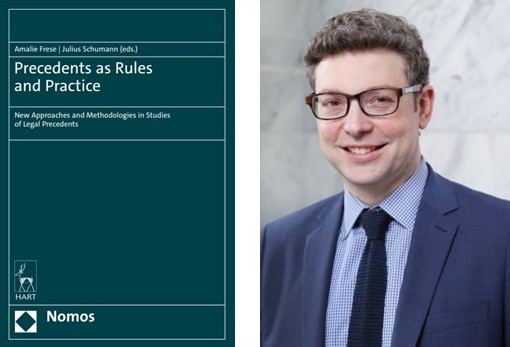
Harlan Cohen, who is Gabriel M. Wilner/UGA Foundation Professor in International Law and Faculty Co-Director of the Dean Rusk International Law Center here at the University of Georgia School of Law, has contributed a chapter entitled “Culture Clash: The Sociology of WTO Precedent” to a just-published essay collection.
Here’s the SSRN abstract for Professor Cohen’s chapter:
Thanks to the United States, the WTO Appellate Body can no longer hear appeals. Having blocked all appointments to the body, the United States has left its bench empty, with no members to fulfill its role. Among the United States’ justifications: The Appellate Body’s adoption of an apparent doctrine of precedent.
This chapter takes a deeper look at the fight over precedent at the WTO, both as a case study in the emergence and operation of precedent within international law and as a microcosm of the cultural conflicts playing out within the WTO. The chapter develops an account of precedent as a product of three overlapping, inter-dependent, and mutually constructed logics: (1) the jurisprudential, (2) the rational, and (3) the sociological. It then uses these three logics to retell the story of precedent at the WTO – the emerging patterns of argumentative practice, the Appellate Body’s adoption of a doctrinal test, and the escalating U.S. opposition to the “cogent reasons” standard that body applied. Seeing the fight over precedent as a function of all three logics reveals the real cultural fights for control of the WTO community of practice. Seeing that community of practice coalesce around and split over unwritten practices of precedent reveals how international law develops as much as a function of culture, training, and practice as of rules and power.
Our Center’s Director, Associate Dean Melissa J. “MJ” Durkee, has contributed an essay in the newest symposium issue, which she edited, of American Journal of International Law Unbound.
Entitled “Introduction to the Symposium on Frédéric Mégret, “Are There ‘Inherently Sovereign Functions’ in International Law?”, the essay appears at 115 American Journal of International Law Unbound 299 (2021) and is available online at the Cambridge University Press site. It opens a symposium exploring an article just published in the American Journal of International Law by McGill University Law Professor Frédéric Mégret. Also contributing to the symposium are Cambridge Law Professor Eyal Benvenisti, Collège de France Professor Samantha Besson, Columbia Political Science Professor Jean L. Cohen, Nottingham Law Professor Nigel D. White, and California-Berkeley Political Science Professor Daniel Lee.
In addition to leading the Dean Rusk International Law Center, Durkee is Associate Dean for International Programs and the Allen Post Professor here at the University of Georgia School of Law. She is on the Board of Editors of the American Journal of International Law and is the supervising editor of AJIL Unbound. Both are publications of the American Society of International Law, for which Durkee serves as an Executive Council member and Vice Chair of the International Legal Theory Interest Group.
The 1972 United Nations Conference on the Human Environment produced the “Stockholm Declaration,” an environmental manifesto that forcefully declared a human right to environmental health and birthed the field of modern international environmental law. In celebration of its 50th anniversary volume, the Georgia Journal of International and Comparative Law is convening a symposium to reflect on the first 50 years of international environmental law and the lessons this history may hold for the future.
The symposium will include a keynote address by Dinah L. Shelton, Manatt/Ahn Professor of International Law Emeritus at George Washington University School of Law whose distinguished service in areas of human rights and environmental law includes President of the Inter-American Commission on Human Rights. Also featured will be scholars and practitioners from around the world, taking part in panel discussions and breakout sessions: on the rights-based approach to environmental protection; on anti-racism, decolonization, and environmental protection; and on the future of international environmental law. As indicated in the schedule below, the panels reflect themes in Principle 1 of the 1972 Stockholm Declaration, which states in full:
“Man has the fundamental right to freedom, equality and adequate conditions of life, in an environment of a quality that permits a life of dignity and well-being, and he bears a solemn responsibility to protect and improve the environment for present and future generations. In this respect, policies promoting or perpetuating apartheid, racial segregation, discrimination, colonial and other forms of oppression and foreign domination stand condemned and must be eliminated.”
The conference will take place on Zoom, though students and a limited number of registrants may attend in person. Details and registration here. The full schedule follows:
Welcome and Introduction by Georgia Law’s Peter B. “Bo” Rutledge, Dean, MJ Durkee, Associate Dean for International Programs, Director of the Dean Rusk International Law Center, and Allen Post Professor, 9 a.m.
Panel 1: The Rights-Based Approach to Environmental Protection, 9:10 a.m. (followed by breakout session at 10:25 a.m.)
Recalling Principle 1’s statement that humankind “has the fundamental right to freedom, equality and adequate conditions of life, in an environment of a quality that permits a life of dignity and well-being,” the following panelists will explore how and in what contexts the Stockholm Declaration’s rights-based approach to environmental protection is useful, as well as limitations of this approach:
Nnimmo Bassey, Director, Health of Mother Earth Foundation
Tyler Giannini, Clinical Professor and Co-Director of the Harvard Human Rights Program and the International Human Rights Clinic at Harvard Law
Kate Mackintosh, Executive Director, Promise Institute for Human Rights, UCLA Law
Katie O’Bryan, Lecturer, Monash University, Australia
Moderating will be Diane Marie Amann, Regents’ Professor of International Law, Emily & Ernest Woodruff Chair in International Law and Faculty Co-Director of the Dean Rusk International Law Center at Georgia Law
Panel 2: Anti-Racism, Decolonization, and Environmental Protection, 10:50 a.m. (followed by breakout session at 12:05 p.m.)
Recalling Principle 1’s statement that “policies promoting or perpetuating apartheid, racial segregation, discrimination, colonial and other forms of oppression and foreign domination stand condemned and must be eliminated,” the following panelists will explore how international environmental law addresses, or fails to address, environmental racism:
Robin Bronen, Executive Director of the Alaska Institute for Justice
Sarah Riley Case, Boulton Junior Fellow at McGill University Faculty of Law in Canada
Usha Natarajan, Edward W. Said Fellow at Columbia University
Moderating will be Harlan G. Cohen, Gabriel M. Wilner/UGA Foundation Professor in International Law and Faculty Co-Director of the Dean Rusk International Law Center at Georgia Law
Panel 3: International Environmental Law’s Future, 1 p.m. (followed by breakout session at 2:15 p.m.)
Recalling Principle 1’s statement that humankind “bears a solemn responsibility to protect and improve the environment for present and future generations,” the following panelists will explore what are the successes and failures of the last 50 years of environmental law, as well as the key international environmental law challenges for the next 50 years:
Rebecca M. Bratspies, Professor and Director of the Center for Urban Environmental Reform at CUNY Law
Jutta Brunnée, Dean, University Professor, and James Marshall Tory Dean’s Chair at the University of Toronto Faculty of Law in Canada
Lakshman D. Guruswamy, Nicholas Doman Professor of International Environmental Law at Colorado Law
Cymie Payne, Associate Professor in the Department of Human Ecology and the School of Law, Rutgers University
Moderating will be MJ Durkee, Associate Dean for International Programs, Director of the Dean Rusk International Law Center, and Allen Post Professor at Georgia Law
Introduction of keynote by Adam D. Orford, Assistant Professor at Georgia Law, followed by keynote address, entitled “Stockholm Plus 50: Glass Half Full, Half Empty, or Shattered?” and delivered by Dinah L. Shelton, Manatt/Ahn Professor of International Law Emeritus at George Washington University School of Law, 2:40 p.m.
Closing remarks by Kimberlee Styple, Editor-in-Chief of the Georgia Journal of International and Comparative Law, 3:15 p.m.
Besides ASIL, many units of the University of Georgia are cosponsoring this event. They include the International Law Society, Environmental Law Association, Georgia Initiative for Climate & Society, Warnell School of Forestry & Natural Resources, School of Public & International Affairs, Center for International Trade & Security, Global Health Institute of the College of Public Health, School of Social Work, and College of Environment & Design.
Registration and details on the program and accommodations here.
The group of 16 hail from 12 different countries in Africa, Asia, Europe, and the Americas, including Argentina, Bahamas, Bangladesh, Ecuador, Germany, Iran, Mexico, Nigeria, Panama, Russia, Turkey, and Venezuela. Among them are judges, government attorneys, public interest lawyers, corporate attorneys, and seasoned litigators. Some of them are pictured above; from left, Franzisca Heinze, Julieta Sánchez Flor, Veronika Grubenko, Supreme Unukegwo, Agustina Figueroa Imfeld, and Ciro Pazmino.
This Class of 2022 joins a tradition that began at the University of Georgia School of Law in the early 1970s, when a Belgian lawyer became the first foreign-trained practitioner to earn a Georgia Law LL.M. degree. In the ensuing four decades, the law school and its Dean Rusk International Law Center have produced nearly 600 LL.M. graduates, with ties to nearly 100 countries and every continent in the world.
Side by side with J.D. candidates, LL.M.s follow a flexible curriculum tailored to their own career goals – goals that may include preparation to sit for a U.S. bar examination, or pursuit of a concentration affording advancement in their home country’s legal profession or academic institutions.
The application for the LL.M. Class of 2023 is now open; for information or to apply for LL.M. studies, see here.
University of Georgia School of Law Professor Thomas Kadri (above left) and McGill University Faculty of Law Professor Ignacio Cofone (above right) have published a chapter exploring a controversial procedural mechanism in privacy class actions.
Here’s the abstract for this chapter by Kadri and Cofone, as set out at SSRN:
This essay considers the potential for using cy près settlements in privacy class actions. These settlements are a procedural mechanism to overcome distribution challenges in class actions. When it is too burdensome to prove individual claims or too costly to distribute damages to class members, courts on occasions award damages to a charity or non-profit organization involved in work serving the class members’ interests. These controversial settlements have been gaining attention in various legal systems. The U.S. Supreme Court recently considered their propriety in Frank v. Gaos, while courts in Canada and several Latin American countries have been experimenting with cy près as well. The essay uses these cases to explore how this procedural mechanism can be particularly useful in privacy class actions. While cy près settlements require proper judicial supervision to prevent abuse, the chapter concludes that they can help to deter privacy invasions, enforce privacy laws, and provide plaintiffs with some measure of indirect relief when those laws are violated.
We at the University of Georgia School of Law Dean Rusk International Law Center are pleased to welcome Dr. Brianne McGonigle Leyh, a widely published expert in human rights law and global justice, with a focus on victims’ rights, transitional justice, social justice, and the documentation of serious crimes, as a Visiting Scholar. She joins us from Utrecht University School of Law in the Netherlands, where she is an Associate Professor. At Utrecht she is also a member of the Netherlands Institute of Human Rights, from which earned her Ph.D. in Law in 2011, the Montaigne Centre for Rule of Law & Administration of Justice, and the Utrecht Youth Academy, as well as Education Coordinator of the Utrecht Centre for Global Challenges.
Serving as her Georgia Law faculty sponsor is Diane Marie Amann, who is Regents’ Professor of International Law, Emily & Ernest Woodruff Chair in International Law, and a Faculty Co-Director of our Center.
On August 23, as part of her monthlong visit, Professor McGonigle Leyh will give a presentation on her current research, “The Avengers of International Criminal Law: The Role of Civil Society Actors in Advancing Accountability Efforts for Serious International Crimes.” Her focus is on the effect that strategic litigation – that is, universal jurisdiction cases under way in national systems in Germany, Switzerland, Finland, the Netherlands, and France – will have on international criminal justice. The research forms part of a larger project entitled “Networking Justice: Strengthening Accountability for Serious International Crimes.”
In addition to her doctorate, she holds a J.D. cum laude and an M.A. in International Relations from American University in Washington, D.C., as well as a B.A. magna cum laude in Genocide Studies & Human Rights from Boston University. Her many publications include a monograph, Procedural Justice? Victim Participation in International Criminal Proceedings (Intersentia 2011), several edited volumes, and dozens of law review articles. Among her professional affiliations, she is a Senior Peace Fellow with the Public International Law & Policy Group, sits on the advisory boards of the Netherlands Helsinki Committee and Pro Bono Connect, and is an Executive Editor of the Netherlands Quarterly of Human Rights.
Professor McGonigle Leyh’s visit continues our Center’s long tradition of hosting, for brief or extended stays, scholars and researchers whose work touches on issues of international, comparative, or transnational law. Details and an online application to become a visiting scholar here.
The world’s leading international economic law publication has awarded its top scholarship honor to Harlan G. Cohen, Gabriel M. Wilner/UGA Foundation Professor in International Law and Faculty Co-Director of the Dean Rusk International Law Center here at the University of Georgia School of Law.
As stated on the website of this Oxford University Press journal, the prize is named after its founding editor, John Howard Jackson (1932-2015), who, in the course of his career teaching law at Georgetown, Michigan, and Berkeley, kept “a keen eye on new developments and novel systemic interactions in the field beyond the four corners” of the General Agreement on Tariffs and Trade/World Trade Organization. With an aim to “underlining the importance of construing international economic law in this broader, ever changing perspective,” the Jackson Prize “is awarded annually to the article or other contribution in the JIEL that most significantly breaks new ground and adds new insights to the study and understanding of international economic law, especially in fields beyond a self-contained analysis of WTO law.”
Published in December 2020, Cohen’s “Nations and Markets” appears in volume 23, issue 4, of the peer-reviewed journal, at pages 793-815, and is available online here. Here’s the abstract:
Economics and security seem increasingly intertwined. Citing national security, states subject foreign investments to new scrutiny, even unwinding mergers. The provision of 5G has become a diplomatic battleground—Huawei at its center. Meanwhile, states invoke national security to excuse trade wars. The USA invoked the General Agreement on Tariffs and Trade national security exception to impose steel and aluminum tariffs, threatening more on automotive parts. Russia invoked that provision to justify its blockade of Ukraine, as did Saudi Arabia and the United Arab Emirates to excuse theirs of Qatar. And with the spread of COVID-19, states are invoking national security to scrutinize supply lines. Multiplying daily, such stories have led some observers to dub the era one of geoeconomics. Nonetheless, these developments remain difficult to judge, and the relationship between economics and national security remains confused and slippery. The essay seeks clarity in the deeper logic of these labels, revealing a fundamental choice between the logics of markets and the logics of state. Whether invoked to ‘secure’ borders, privacy, health, the environment, or jobs, ‘national security’ is a claim about the proper location of policymaking. Appeals to economics, with their emphasis on global welfare and global person-to-person relationships, are such claims as well. Resolving disputes, this essay argues, requires recognizing these root choices.
Bruner’s chapter appears in Research Handbook on Comparative Corporate Governance. Edited by Afra Afsharipour, Professor of Law and Senior Associate Dean for Academic Affairs at the University of California, Davis, School of Law, and Martin Gelter, Professor of Law at Fordham University School of Law, the volume was issued by Edward Elgar Publishing.
Here’s the abstract for Professor Bruner’s chapter, a version which is available at SSRN:
Methodology has not received sufficient attention in the field of comparative law, and this shortcoming is perhaps even more significant in the specific field of comparative corporate governance, where the general comparative legal literature that does exist on the subject tends to be ignored. While there is assuredly no single, optimal comparative method, it remains critically important for scholars to evaluate whether the approach undertaken is fit for purpose – that is, whether the comparative method adopted is in fact capable of illuminating the subject of inquiry.
This chapter highlights some significant methodological choices and challenges encountered in comparative corporate governance. Part II describes differing comparative postures that one might adopt, emphasizing similarity or difference, respectively – an important threshold consideration, in so far as one often finds what one sets out to find, without recognizing the degree to which such predispositions might cloud the analysis and preclude a fuller account. Part III examines how the law and economics movement, in particular, has affected comparative analysis of corporate governance, critiquing its (implicit) methodology and assessing its impacts. Part IV, then, discusses various choices in research design, emphasizing how the alternatives are impacted by the foregoing dynamics. Part V briefly concludes, calling for methodological self-awareness and candid acknowledgment of the limits of what various comparative approaches to corporate governance can deliver.
Also known as ICON•S, the Society has members from all around the globe, in all fields of law and beyond to the humanities and social sciences, and at all levels of seniority, from students to emeritus faculty.
Ringhand, an Election Law expert and immediate past Interim Director of our Dean Rusk International Law Center, took part in a panel on “Foreign Interference, Elections, and Democratic Speech: Comparative Approaches to a Global Challenge.”
Chairing the panel at the online ICON•S conference was Yasmin Dawood of the University of Toronto; she also spoke on “Combatting Foreign Election Interference: Canada’s Electoral Ecosystem Approach to Disinformation and Cyber Threats.” The panel also included: Jacob Eisler, Southampton Law School, on “Strangers in Strange Lands: Constitutional Formalities, Power Realities, and Comparative Anglophone Responses to Foreign Election Meddling”; Andrew Geddis, University of Otago, on “Islands in the Storm? Responses to Foreign Election Interference in Australia and New Zealand”; and Irène Couzigou, University of Aberdeen, on “The Limits of Law? The Multifaceted Approach of the French Legislation to Tackle Foreign Election Interference through Digital Disinformation.”
These Global Externs are enhancing their legal education through placements – remote this summer, on account of the pandemic – in law firms, in-house legal departments, and nongovernmental organizations based in Asia, Europe, and South America. Practice areas include dispute resolution, corporate law, refugee law, and international human rights law.
This year’s GEO class includes these placements in private law settings:
Ben Bacia (3L) – PSA India, New Delhi, India
Starlyn Endres (3L) – Orange, Brussels, Belgium
Savannah Grant (2L) – Araoz y Rueda, Madrid, Spain
Nishka Malik (2L) – Orange, Brussels, Belgium
Alina Salgado (2L) – MV Kini & Co., New Delhi, India
Maha Toor (2L) – Syngenta AG, Buenos Aires, Argentina
Additionally, the following students are working in public law placements:
Collin Douglas (2L) – Documentation Center of Cambodia, Phnom Penh
Caleb Grant (2L) – Documentation Center of Cambodia, Phnom Penh
Savannah Grant (2L) – No Peace Without Justice, Brussels, Belgium
Bradford Lorenz (3L) – Boat People SOS, Center for Asylum Protection, Bangkok, Thailand