Georgia Law Professor Assaf Harpaz presents at the American Society of International Law International Economic Law Biennial Conference

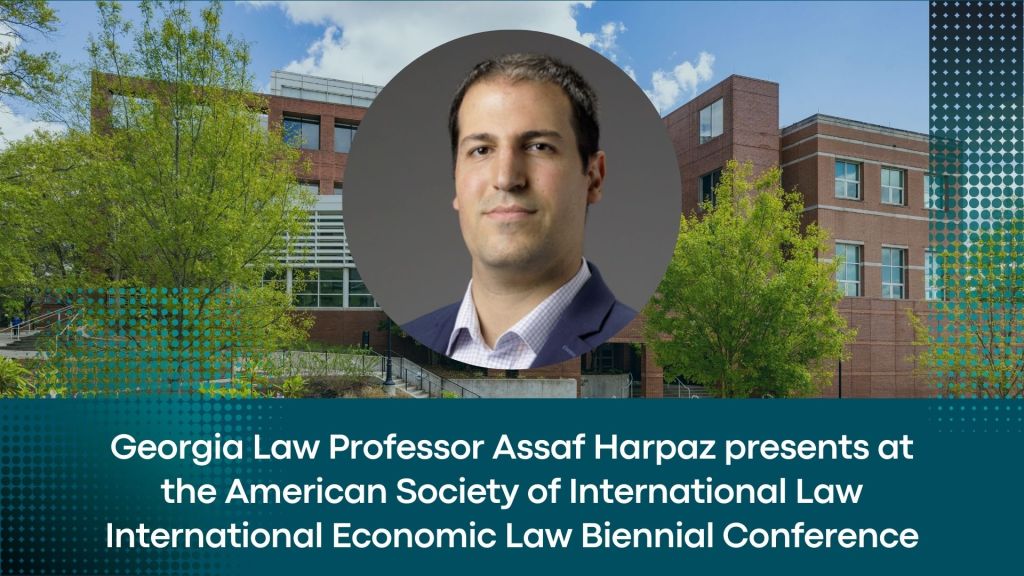
University of Georgia School of Law Professor Assaf Harpaz virtually presented his forthcoming paper, Global Tax Wars in the Digital Era, 75 Am. U. L. Rev., at the American Society of International Law International Economic Law Biennial Conference.

Below is an abstract of the paper:

The digital economy fundamentally disrupts traditional international tax principles that rely on physical presence. When a business earns income abroad, the country of residence (where the taxpayer resides) and the country of source (where income is generated) both have legitimate, competing claims to tax that income. The international tax system favors residence-based taxation. The source country has the right to tax business profits only if the enterprise carries on a permanent establishment within its borders, which typically requires a physical presence. The permanent establishment standard becomes flawed in a digital economy where profit shifting practices are abundant and businesses no longer need a physical presence in the location of their online consumer markets.

An upcoming United Nations (UN) Framework Convention on International Tax Cooperation recognizes these challenges and is overwhelmingly supported by Global South economies. However, the Global North has historically dominated the international tax regime through the Organization for Economic Co-operation and Development (OECD), informally known as the “World Tax Organization.” A UN framework convention creates potential conflict in international tax policymaking and would need to bridge the underlying North-South divide.

This article explores the “tax wars” surrounding the leadership for global tax governance, contrasting the taxing powers and interests of the OECD-led Global North with those of the UN-backed Global South. It argues for a shift toward source-based taxation by revisiting the permanent establishment standard. To achieve this, the article promotes the significant economic presence doctrine that would expand the permanent establishment criteria to include online businesses. This proposal addresses longstanding inequities and is increasingly warranted in a digital economy that does not depend on physical presence.

Harpaz joined the University of Georgia School of Law as an assistant professor in summer 2024 and teaches classes in federal income tax and business taxation. Harpaz’s scholarly focus lies in international taxation, with an emphasis on the intersection of taxation and digitalization. He explores the tax challenges of the digital economy and the ways to adapt 20th-century tax laws to modern business practices.

Georgia Law students attend 2025 ASIL Annual Meeting through professional development scholarships

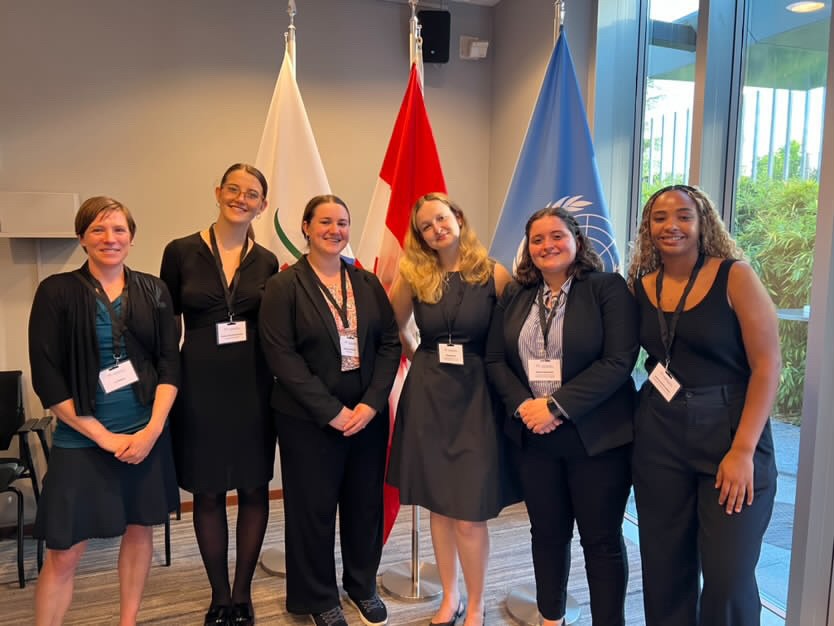
This year, six University of Georgia School of Law students attended the 119th Annual Meeting of the American Society of International Law in Washington, D.C. This year’s ASIL Annual Meeting convened with the theme “Traditions and Transitions in International Law.”

Attendees included: Annie Bordeaux (J.D. ’27), Jack Buckelew (J.D. ’25), Eleanor Cox (J.D. ’26), Carolina Mares (J.D. ’25), Jalyn Ross (J.D. ’27), and Emma Whitmore (J.D. ’26). They received a Louis B. Sohn Professional Development Fellowship to support their attendance of this conference. Awarded by the law school’s Dean Rusk International Law Center, Sohn Fellowships enable students to attend professional development opportunities related to international law.

Each student attended numerous panel discussions addressing a range of topics in international law. Some students were able to meet with D.C.-based Georiga Law alumni/ae as well, including Caroline Bailey (J.D. ’24) and Sandon Fernandes (J.D. ’24).

Reflecting on her biggest takeaways from attending the conference, Bordeaux stated:

The speakers…offered a powerful reminder that, even amid global instability and the uneven application of the rule of law, international law still holds the potential to serve as a means of accountability. The insights shared by brilliant professors, leaders, and researchers substantiated the idea that the role of international law remains instrumental in addressing injustice and shaping governance.

Mares reflected on her favorite session from the conference:

During the session on Grotius’ Legacy: The 400th Anniversary of The Law of War and Peace, former Georgia Law Professor Harlan Cohen and fellow panelists offered a compelling and nuanced exploration of Hugo Grotius’ seminal 1625 treatise. The Law of War and Peace laid the groundwork for modern international law, illuminating the interrelationship between human rights and legal norms, the moral dimensions of law, and the idea of law as distinct from both power and religion. Gaining historical context for today’s legal frameworks was a powerful reminder of the foundational values and enduring principles that continue to guide and inspire practitioners in the field.

Buckelew illustrated the connection between attending this conference and his academic and professional goals:

Attending the ASIL Annual Meeting gave me clarity and encouragement at a pivotal moment in my legal education. Personally, it reminded me that I came to law school with the hope of engaging with serious global issues and to be part of a community that values legal principles as tools for progress. Professionally, it helped me envision a path where I can grow into expertise, not just through formal education, but through ongoing engagement with legal communities like ASIL and others.

To read prior posts about Georgia Law students using Sohn Fellowships to attend professional development opportunities, please click here and here.

Georgia Law students attend 2024 ASIL Midyear Meeting in Chicago

Two University of Georgia School of Law students attended the American Society of International Law (ASIL) Midyear Meeting last month in Chicago, Illinois. This year’s meeting was hosted at the University of Chicago Law School.

Attendees included Samuel Kuo (LL.M. ’25) and Eman Mistry (J.D. ’25). Both students received a Louis B. Sohn Professional Development Fellowship to support their attendance of this conference. Awarded by the law school’s Dean Rusk International Law Center, Sohn Fellowships enable students to attend professional development opportunities related to international law.

Both Kuo and Mistry attended numerous panel discussions addressing a range of topics in international law. Kuo reflected on the experience, stating:

“I enjoyed the panel on the topic of disclosure in international arbitration moderated by Kelly Turner at the American Arbitration Association, featuring Dorothy Du from Motorola, Charles Kotuby from Three Crowns, Sarah Reynolds from Reynolds ADR and Javier Rubinstein from Rubinstein ADR LLC. The discussion centered upon the use of generative AI in international arbitration practice.  All areas of the legal profession are preparing for ethical AI use, and it was refreshing to hear a discussion on whether parties should disclose the use of generative AI in anticipating arbitration.”

To read prior posts about prior recipients of Sohn Fellowships, please click here and here.

Georgia Law Professor Diane Marie Amann’s remarks on ICC arrest warrants against Russian officials published in ASIL Annual Meeting proceedings

Remarks which University of Georgia School of Law Professor Diane Marie Amann delivered at a plenary panel of the American Society of International Law Annual Meeting have just been published.

Entitled “Children and the ICC Arrest Warrant Against the President and the Children’s Rights Commissioner of Russia,” Amann’s remarks form part of the chapter entitled “Late-Breaking Panel: ICC Arrest Warrants: Impunity in Check?” in 117 American Society of International Law Proceedings 328 (American Society of International Law, 2024).

Amann discussed the significance of the warrants, which had charged Russia’s President and another Presidential official of the war crimes of child deportation, and which were issued just days before the 2023 Annual Meeting. The remarks spurred her to further research on the topic, resulting in her article “Child-Taking,” also published this month, at 45 Michigan Journal of International Law 305 (2024) (prior post).

Also on the panel were: Professor Saira Mohamed, University of California-Berkeley School of Law; Professor Javier S. Eskauriatza, University of Nottingham Scholl of Law; and Professor Marko Milanović, University of Reading School of Law. Katherine Gallagher, Senior Staff Attorney at the Center for Constitutional Rights and an Adjunct Professor of Clinical Law at New York University School of Law, moderated. The panelists’ remarks in full are here.

Amann is Regents’ Professor of International Law, Emily & Ernest Woodruff Chair in International Law, and a Faculty Co-Director of our Dean Rusk International Law Center here at Georgia Law. She served from 2012 to 2021 as International Criminal Court Prosecutor Fatou Bensouda’s Special Adviser on Children in & affected by Armed Conflict. This Fall 2024 semester she is at the University of Oxford in the United Kingdom, serving as a Research Visitor at the Faculty of Law Bonavero Institute of Human Rights and as a Visiting Fellow at Exeter College.

Georgia Law 2L Aubrey “Ellie” Wilson-Wade attends ASIL Abroad meeting in Switzerland

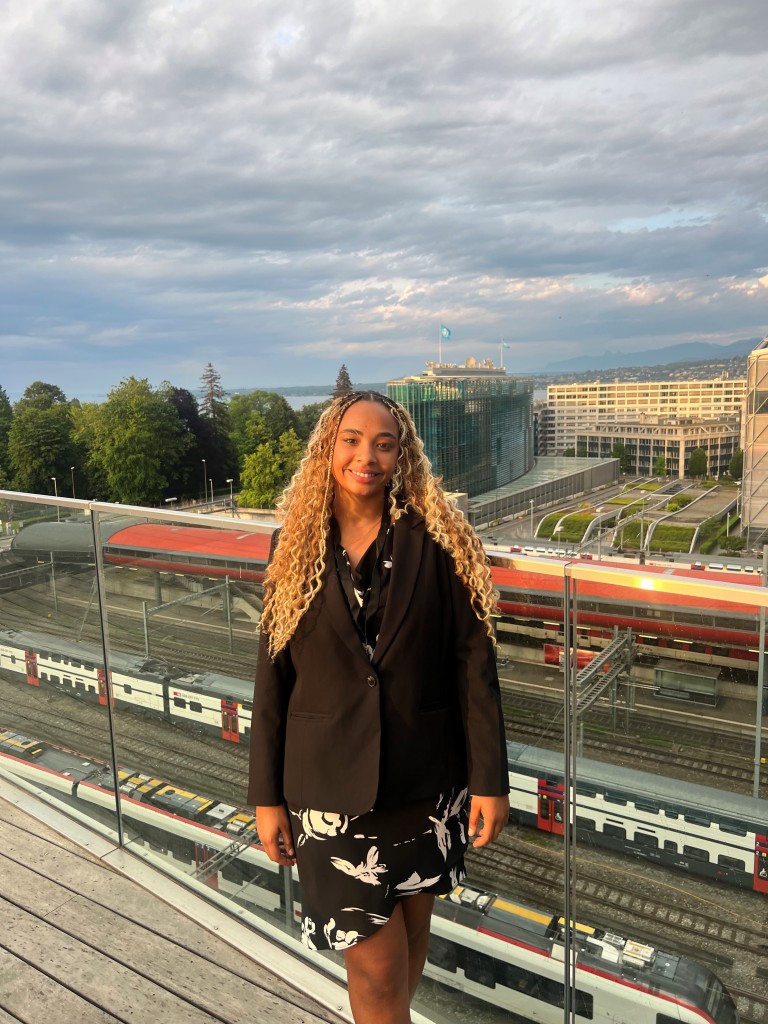
University of Georgia School of Law student, rising 2L Aubrey “Ellie” Wilson-Wade, recently attended the American Society of International Law (ASIL)’s 2024 ASIL Abroad meeting on June 5-6 at the University of Geneva in Geneva, Switzerland. The two-day conference consisted of dual parallel tracks on Human Rights, International Humanitarian Law, International Criminal Law (Track 1) and International Dispute Resolution & International Economic Law (Track 2). Georges Abi-Saab (honorary professor at The Geneva Graduate Institute) delivered a keynote speech, with Laurence Boisson de Chazournes (University of Geneva) as discussant. Below, Wilson-Wade reflects on her experience as an attendee of the conference. Georgia Law is an academic partner of ASIL.

I am so grateful to have had the opportunity to attend the 2024 ASIL Abroad Conference in Geneva, Switzerland. I was able to attend sessions in both track 1 and track 2, as I have an interest in both tracks’ topics. The most memorable sessions that I attended included “Enforcement of Arbitral Awards Rendered Against States” and “Compensation in International Law.” Additionally, I was able to see a mock arbitration related to growing tensions between investment treaties and environmental protection. These panels taught about investment and trade disputes in international law.

My favorite session was titled “Gender, Sexualized Violence, and Conflict: Incorporating the Women, Peace, and Security Agenda into Global Atrocity Prevention Efforts.” The panelists, including Priya Gopalan, Vanessa Murphy, and Dalila Seoane, were able to share their firsthand knowledge and experience working on issues related to gender-based violence.

Overall, the conference was a once-in-a-lifetime learning experience and every panel had an array of diverse perspectives and ideas. Not only was the substantive portion of the conference great, but I also met so many legal professionals and students during my time in Geneva. In just two days, I was able to connect with students attending law school throughout the United States, as well as from schools in England, Brazil, and Geneva. I was also able to network with legal professionals from all over the world.

As a first-year law student, it was a unique opportunity to learn about intricacies of international law outside of the typical classroom setting from professionals in the field. Additionally, it was a great way to make connections with international lawyers and law students. I would highly recommend any student who wishes to globalize their legal perspective and education to attend this conference.

Georgia Law Professor Amann presents at Eleventh Circuit Judicial Conference

Professor Diane Marie Amann recently presented “Human Trafficking Law” to judges in the U.S. Court of Appeals for the Eleventh Circuit as part of the circuit’s 2024 Judicial Conference.

Amann situated the crime of human trafficking within efforts to combat illicit flows of myriad goods, ranging from armaments to endangered animal species. She then considered the interplay of multilateral treaties and national statutes by comparing U.S. and British precedents on whether diplomatic immunity applies in cases alleging domestic servitude.

The talk furthered outreach efforts by the American Society of International Law, on whose Judicial Education Committee Amann serves.

Amann is Regents’ Professor of International Law, Emily & Ernest Chair in International Law, and Faculty Co-Director of the Dean Rusk International Law Center here at the University of Georgia School of Law. She writes and teaches in areas including transnational and international criminal law, child and human rights, constitutional law, and global legal history.

Georgia Law students attend ASIL annual meeting through professional development scholarships

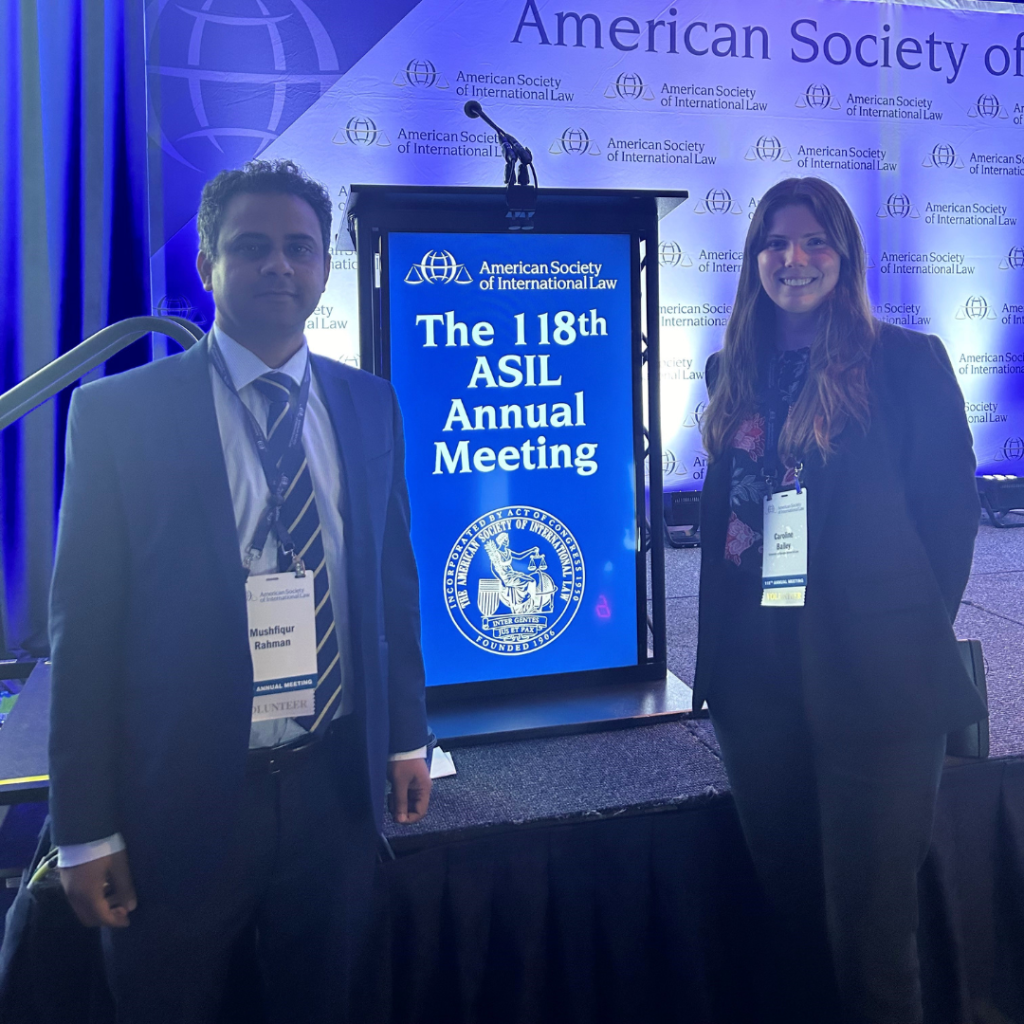
This year, two University of Georgia School of Law students volunteered at the 118th Annual Meeting of the American Society of International Law in Washington, D.C. Pictured above, they are, from left, LL.M. student M. Mushfiqur Rahman and 3L Caroline Bailey. This year’s ASIL Annual Meeting convened with the theme “International Law in an Interdependent World.”

The Louis B. Sohn Professional Development Fellowship, awarded by the law school’s Dean Rusk International Law Center, supported the Bailey’s travel to the conference. Rahman was supported by a new scholarship, the Naresh Gehi Annual Award.

Reflecting on the most memorable panel discussions she attended during the conference, Bailey stated:

“I particularly enjoyed the panel titled ‘If Nature has Rights, Who Speaks on its Behalf?’ Tribal Attorney and Director of CDER’s Tribal Rights of Nature Program, Frank Bibeau, Senior Lecturer and ARC Research Fellow at the University of Melbourne Law School, Dr. Erin O’Donnell, and Director at the Max Planck Institute for Comparative Public Law and International Law in Heidelberg, Anne Peters provided valuable perspectives and insightful commentary on the role of international lawyers in the protection of and advocacy for the legal rights of the environment. It was interesting to hear about the balance between environmental rights and sustainable development, as well as the recent developments around the world in establishing rights for rivers.

Rahman explained how meaningful these types of experiences can be for law students, especially LL.M.s:

“In building a legal career in the U.S. market, and especially with the difficulty of being an international student, one must not stop learning and developing his expertise in their chosen field. This is a long continuous process To that end, it is very necessary to take advantage of opportunities like the ASIL Annual Meeting. Attending the meeting is also helpful for students with ambitions who want not just to see themselves working in big law firms, but working on a bigger platform from a variety of viewpoints.

To read prior posts about Georgia Law students volunteering at the ASIL Annual Meeting, please click here, here, and here.

Georgia Law Professor MJ Durkee publishes “Privatizing International Governance” in ASIL Proceedings

Professor Melissa J. “MJ” Durkee, the law school’s Associate Dean for International Programs, Director of the Dean Rusk International Law Center, and Allen Post Professor, has published “Privatizing International Governance” in the Proceedings of the 116th Annual Meeting of the American Society of International Law (Cambridge University Press, 2022).

The essay, a version of which is also available at SSRN, introduced a panel that she organized and chaired at the 2022 ASIL Annual Meeting. Other speakers included: Nora Mardirossian, Columbia Center on Sustainable Investment; Suzy Nikièma, Lead, Sustainable Investment, International Institute for Sustainable Development; and Nancy Thevenin, United States Council for International Business. (prior posts here and here)

Here’s the extract for Professor Durkee’s essay:

“Public-private partnerships of all kinds are increasingly common in the international system. Since United Nations Secretary-General Kofi Annan’s launch of the Global Compact in 2000, the United Nations has increasingly opened up to business entities. Now, the Sustainable Development Goals, the Global Compact, and the Guiding Principles on Business and Human Rights all encourage engaging with business entities as partners in developing and executing global governance agendas. These partnerships are seen by some as indispensable to sustainable development, international business regulation, climate change mitigation, and other global governance agendas. At the same time, UN climate change bodies have been criticized for cozying up to corporate fossil fuel lobbies, global financial governance institutions are charged with leaning toward the interests of the large banking and financial industry they are meant to regulate, and the pharmaceutical industry has been accused of exerting outsized influence in health-related international standard-setting, sometimes against public health objectives. Reforms seek to restrain the dangers of mission-distortion and capture by business groups. The theme of this panel is ‘Privatizing International Governance,’ and this brief framing essay lays out history, context, and the questions these partnerships present.”

Georgia Law professors, alumna, students take part in annual meeting of American Society of International Law

Many members of the University of Georgia School of Law community – professors, alumna, and students – took part in last week’s 117th Annual Meeting of the American Society of International Law, the theme of which was “The Reach and Limits of International Law to Solve Today’s Challenges.”

The annual meeting took place Wednesday-Saturday at several venues in Washington, D.C.

Representatives of Georgia Law, an ASIL Academic Partner, included three scholars affiliated with the law school’s Dean Rusk International Law Center:

The Center’s Director, Melissa J. “MJ” Durkee, who is also Associate Dean for International Programs and Allen Post Professor, moderated a panel entitled “How Does International Law Change? Theories and Concepts of Legal Change.” (photo top row left) It was sponsored by ASIL’s International Legal Theory Interest Group, for which Durkee serves as Chair. Panelists were: Benedict Kingsbury, New York University; Nico Krisch, Graduate Institute of International and Development Studies in Geneva; and Sivan Shlomo Agon, Bar-Ilan University.

Durkee additionally serves on the ASIL Executive Council and the Board of Editors of the American Journal of International Law, and took part in the meetings of both those groups.

Diane Marie Amann, Regents’ Professor of International Law, Emily & Ernest Woodruff Chair in International Law, and one of our Center’s Faculty Co-Directors (above second from left), took part in a late-breaking panel, “ICC Arrest Warrant Against Putin: Impunity in Check?” (photo above left) Amann, an international child law expert and former Special Adviser to the International Criminal Court Prosecutor on Children in & affected by Armed Conflict, spoke on the significance of the fact that crimes against children form the basis of the international arrest warrant issued March 17 against the President and the Children’s Rights Commissioner of Russia. Additional panel participants were: Javier Eskauriatza, University of Nottingham; Marko Milanovic, University of Reading; Saira Mohamed, University of California-Berkeley; and moderator Katherine Gallagher, Center for Constitutional Rights. Panel video here.

Amann also attended the ASIL Executive Council meeting, completing her term as an ASIL Counsellor.

Harlan G. Cohen, Gabriel M. Wilner/UGA Foundation Professor in International Law and Faculty Co-Director of the Dean Rusk International Law Center, took the ASIL General Assembly stage: in his capacity as Chair of the 2023 Book Awards Committee, he co-presented those honors to numerous authors. (photo top row right, from left to right: ASIL President Greg Shaffer, honoree Damilola Olawuyi, ASIL Executive Director Michael Cooper, and Cohen; video 27:09)

Like Durkee, Cohen is a member of the AJIL Board of Editors and took part in the journal’s meeting. The annual meeting completed his service as Chair of ASIL’s International Legal Theory Interest Group.

A distinguished Georgia Law graduate also was featured:

Tess Davis (JD 2009), who is the Executive Director of the D.C.-based Antiquities Coalition and Dean Rusk International Law Center Council member, served as moderator for a session at the Smithsonian National Museum of Asian Art. (photo above right) Entitled “Protecting Cultural Heritage in Conflict Zones: Multi-Disciplinary Approaches,” the discussion also included: Patty Gerstenblith, DePaul University; Brooke Cuven, Cerberus Capital Management; Richard Kurin, Smithsonian Institution; and Zaydoon Zaid, American Foundation for Cultural Research.

Rounding out the contingent were four Georgia Law students, who received Louis B. Sohn Professional Development grants to serve as volunteers at the meeting: 2L Hao Chen “Bobby” Dong, 3L Collin Douglas, LLM candidate Alexandra Lampe, and 1L Mahi Patel.

Scholarly achievements, vibrant initiatives highlighted in newsletter of Dean Rusk International Law Center, University of Georgia School of Law

For a recap of the year’s research and global practice accomplishments, have a look at the newly published newsletter of the Dean Rusk International Law Center at the University of Georgia School of Law. Features include:

Scholarly achievements of our Center Director, Melissa J. Durkee, and our many other globally minded faculty, including Diane Marie Amann and Harlan G. Cohen, our Center’s Faculty Co-Directors, as well as Zohra Ahmed, Christopher Bruner, Jason Cade, Nathan Chapman, Walter Hellerstein, Thomas Kadri, Jonathan Peters, Peter B. “Bo” Rutledge, Tim Samples, and Laura Phillips-Sawyer.

► The exceptional performance of the Georgia Law students who competed in the 2022 Philip C. Jessup International Law Moot Court Competition, placing second in the United States, competing through octofinals internationally, and tying for best overall oralist through the International Advanced Rounds.

► Our International Law Colloquium in Spring 2022, a course featuring works-in-progress conversations with international law scholars based in Latin America and Europe as well as the United States.

► Recent events, including our day-long conference on “The Law of Global Economic Statecraft” cosponsored with the Georgia Journal of International & Comparative Law and other University of Georgia entities, our Consular Series of talks with diplomats, presentations by distinguished lawyers on issues including the Ukraine-Russia war, and participation in panels at meetings of the American Branch of the International Law Association, the American Society of International Law, and other global entities.

► Initiatives aimed at preparing our J.D. and LL.M. students for global legal practice, including our NATO Externship, our Global Externships, and the Global Governance Summer School we host in partnership with the Leuven Centre for Global Governance at Belgium’s University of Leuven (plus additional partnerships with O.P. Jindal University in India and Bar Ilan University in Israel).

The full newsletter is here.