The University of Georgia School of Law’s spring 2025 International Law Colloquium welcomed Professor Katrin Kuhlmann, who presented her working paper, “Micro International Law.” Greg Day, Associate Professor in the Terry College of Business at the University of Georgia, served as Kuhlmann’s faculty discussant.
Kuhlmann is the Faculty Director and Co-founder of the Center on Inclusive Trade and Development at Georgetown Law. Her scholarly focus lies in international law, development, inclusive and sustainable international trade law, regional trade agreements, agricultural law and food security, comparative economic law, African trade and development law and corridors, and the interdisciplinary connections between law and development.
Below is an abstract of Kuhlmann’s working paper:
International law has long been viewed as the domain of countries and capitals, not fields or factories, but this overly top-down perspective misses a critical and under-studied part of the picture. Underneath the macro level of standardized legal norms, international law is much more nuanced, with multiple sites of influence, production, design, adoption, and decision-making that scholars have largely neglected but which need to be better understood. Models stemming from legal systems in less powerful states, smaller-scale stakeholder interests, and local solutions are often treated as one-off anecdotes or isolated case studies without broader implications.
Capturing these lessons, cataloging them, and building a methodology around them could be transformational at a time when international law needs a refresh to make it more responsive to a new set of global challenges ranging from inequality to food insecurity to climate change.
This paper presents a conceptual and methodological framework for “micro international law” as a sub-field of international law. Adding a micro dimension to international law would bring it in line with other disciplines that recognize the importance of studying smaller-scale, more granular interventions. It would also make a significant contribution to the international legal field by integrating theoretical and empirical approaches to focus on the impact innovations within domestic legal systems and the interests of individuals have on international law (and the impact of international law on these systems and stakeholders), ultimately providing a framework for designing international law differently to equitably address more specialized needs and positively impact the lives of those international law aims to serve and benefit.
This year, Professor Desirée LeClercq is overseeing the colloquium, which is designed to introduce students to features of international economic law through engagement with scholars in the international legal field. To view the full list of International Law Colloquium speakers, visit our website.
This program is made possible through the Kirbo Trust Endowed Faculty Enhancement Fund and the Talmadge Law Faculty Fund.
University of Georgia School of Law professor Christopher M. Bruner was featured in Insurance Day, published by London-based Lloyd’s List Intelligence. The article by Ben Margulies, titled “Can the UK Capture Captives?,” discusses the UK government’s effort to create a competitive captive insurance regime.
Bruner shared his thoughts on the factors that make a jurisdiction attractive for establishing captive domiciles, suggesting that smaller jurisdictions can offer fast and flexible policymaking processes. Their small size “makes co-ordination much easier among all the relevant public and private constituencies and it renders their commitment to attractive regulatory structures more credible. They’re highly dependent on these service offerings economically and the market knows it.” London, however, offers competitive advantages in its own right. “London’s main advantage is the extraordinary breadth and depth of corporate and financial services offerings in one place,” Bruner explains. “It’s the ultimate one-stop shop, including in risk management, which provides a strong foundation in the form of pre-existing professional and regulatory know-how.”
Christopher M. Bruner is the Stembler Family Distinguished Professor in Business Law at the University of Georgia School of Law and serves as a faculty co-director of the Dean Rusk International Law Center.
University of Georgia School of Law Professor Christopher M. Bruner was featured on Law360 regarding opportunities for international law firms amid shifting geopolitical landscapes. The article titled “What’s Next For The Global Legal Market In 2025?” was written by Cara Bayles and published December 5, 2024.
From the article:
Shrinking markets may even present opportunities for firms that “lean into the geopolitical conflict,” by representing Chinese companies in contentious regulatory matters with the U.S., according to Christopher Bruner, a professor of business law and international law at the University of Georgia School of Law.
“What for one firm might pose risks in terms of how they operate in China, for another might present opportunities if they are helping companies navigate those choppy geopolitical waters,” he said.
Christopher M. Bruner is the Stembler Family Distinguished Professor in Business Law at the University of Georgia School of Law and serves as a faculty co-director of the Dean Rusk International Law Center.
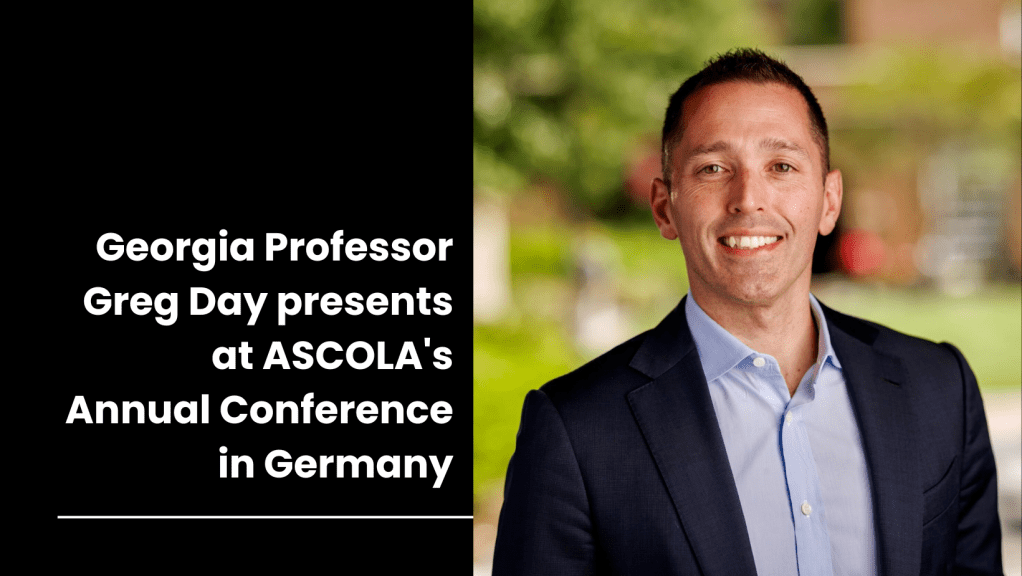
University of Georgia Associate Professor of Legal Studies Greg Day recently presented research at the 19thAmerican Society for Competition Law (ASCOLA) Annual Conference in Würzburg, Germany. The conference brings together about 120 scholars doing research in competition law, economics or policy from all over the world.
Greg Day is an Associate Professor of Legal Studies at the Terry College of Business and holds a courtesy appointment in the School of Law. He is also an Affiliated Fellow at Yale Law School’s Information Society Project as well as the University of North Carolina’s Center for Information, Technology, and Public Life. His research has primarily focused on the intersection of competition, technology, innovation, and privacy as well as the disparate impact of anticompetitive conduct.
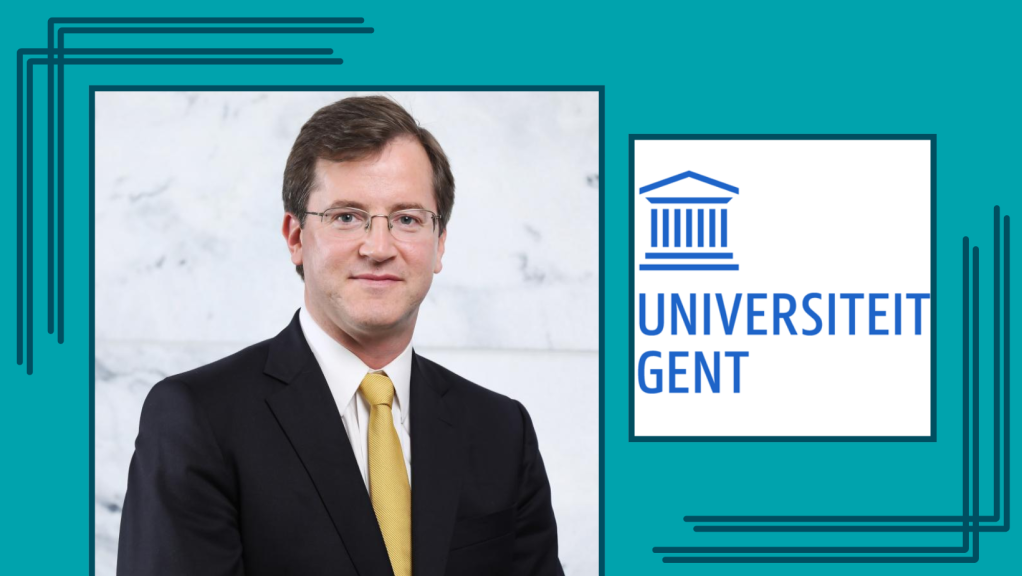
Christopher M. Bruner, Stembler Family Distinguished Professor in Business Law and Faculty Co-Director of the Dean Rusk International Law Center, gave the keynote address for a symposium on “Corporate Sustainability Due Diligence (CSDD), Sustainability, and Corporate Law” at Ghent University Law School in Belgium during May. Bruner’s keynote was titled “Developments and Debates on Corporate Sustainability in the US,” and the symposium was co-sponsored by the journal European Company Case Law (ECCL).
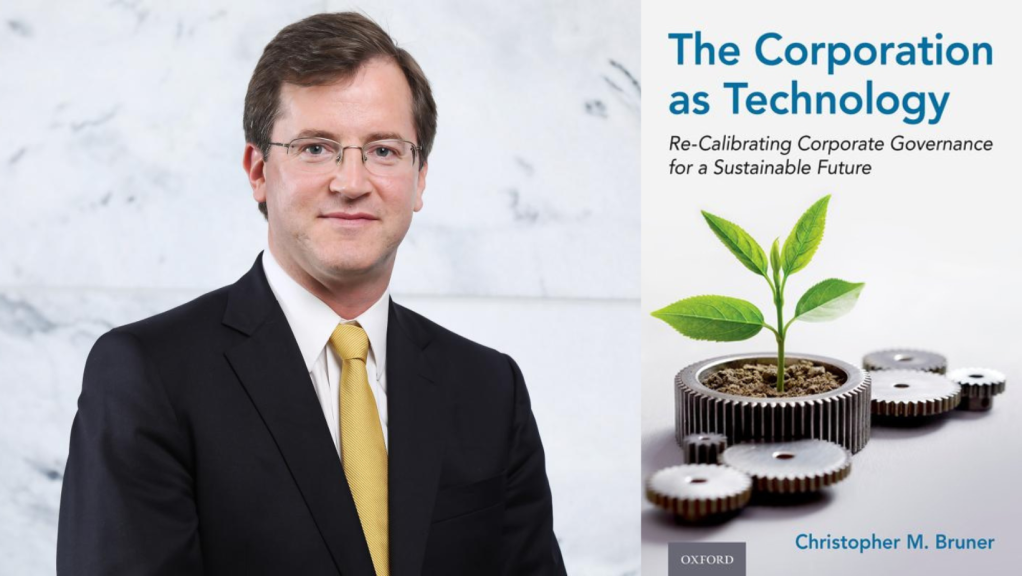
Recent decades have witnessed environmental, social, and economic upheaval, with major corporations contributing to a host of interconnected crises. The Corporation as Technology examines the dynamics of the corporate form and corporate law that incentivize harmful excesses and presents an alternative vision to render corporate activities more sustainable.
The corporate form is commonly described as a set of fixed characteristics that strongly prioritize shareholders’ interests. This book subverts this widely held belief, suggesting that such rigid depictions reinforce harmful corporate pathologies, including excessive risk-taking and lack of regard for environmental and social impacts. Instead, corporations are presented as a dynamic legal technology that policymakers can re-calibrate over time in response to changing landscapes.
This book explores the theoretical and practical ramifications of this alternative vision, focusing on how the corporate form can help secure an environmentally, socially, and economically sustainable future.
Christopher M. Bruner, Stembler Family Distinguished Professor in Business Law and Faculty Co-Director of the Dean Rusk International Law Center, published a review of a book titled Innovating Business for Sustainability: Regulatory Approaches in the Anthropocene (edited by B. Sjåfjell, C. Liao and A. Argyrou), in the Cambridge International Law Journal in December.
Challenging current attitudes to governance and regulation in business, this timely book ascertains how regulatory approaches can innovate to ensure sustainable business that contributes to social justice for current and future generations within ecological limits.
Combining a research-based approach with a gendered perspective of how sustainability goals are shaped and how businesses should engage with them, this pioneering book creates a comprehensive and contemporary understanding of what sustainability means for business. Identifying the limitations of current approaches to gender and equality alongside the weaknesses of current regulatory and theoretical approaches in business, chapters seek to enhance the practical understanding and embeddedness of sustainability into business within legal and regulatory landscapes. Insights from an international collection of expert scholars in fields ranging from sustainability science to law offer meaningful alternatives to the sustainable business status quo on both conceptual and concrete levels.
Providing a regulatory analysis of business positioned in a systems-based sustainability research framework, this book will prove an invaluable resource for students and scholars of sustainability science, business and management, and law and regulation. With practical insights, it will also prove essential for policymakers working in business regulation and sustainability in business.
Prior posts on Bruner’s scholarship can be found here.
Christopher M. Bruner, Stembler Family Distinguished Professor in Business Law and Faculty Co-Director of the Dean Rusk International Law Center, presented his working paper, “Prospects for a US Value Chain Due Diligence Law,” at a conference hosted by Tilburg Law School in the Netherlands titled “Connecting Responsible Organizations: Legal Strategies for Sustainability in Global Value Chains.”
Bruner participated in the panel titled “Sustainable corporate governance and tax transparency.” The conference, hosted by Tilburg’s Department of Private, Business & Labour Law, aimed to provide a platform for legal experts to discuss environmental and social sustainability challenges in global value chains.
Prior posts on Bruner’s scholarship can be found here.
Laura Phillips-Sawyer, Jane W. Wilson Associate Professor in Business Law, recently had her review essay titled “Revisiting Interwar Global Economic Governance: Technocrats, Sovereignty, and the Perennial Problem of Legitimacy in Global Governance” published online by Cambridge University Press. Phillips-Sawyer is an expert in U.S. antitrust law and policy, and her scholarship is related to questions of economic regulation, which intersect with legal history, economic thought, business strategy and structure, and political organization.
“These two extraordinary books, written by historians of international political economy, reject that failure narrative, at least in part. While it is of course true that the League of Nations failed to stem the Great Depression or quell the forces leading to World War II, the League fundamentally changed international law. Most notably, the League represented a turn away from empire and toward international institutions, which have governed global capitalism through “technocratic internationalism” ever since (Mulder, p. 21; Martin, p. 30). Historians have too often overlooked interwar international institution-building and the steady growth of administrative rule-making because of that failure narrative. Nonetheless, recent scholarship has highlighted the novel approaches that interwar international institutions took to managing international public health, migration, drug prohibition, contraband, and colonial supervision (Martin, pp. 8, 269n21). Building on a thriving subfield of “interwar internationalism,” Mulder and Martin both argue that the First World War marked a decisive turning point in global capitalism as new international institutions eroded the power and authority of empires and created a new category of “international economic regulation” (Mulder, p. 10; Martin, p. 8). Mulder focuses on the development of economic sanctions, which were first deployed in peacetime by the League of Nations in the wake of World War I, and explains how they became commonplace despite highly undesirable and unanticipated effects. Martin shows how international institutions intervened in global capital and commodity markets in ways that shaped and limited domestic policies, especially for states with uncertain or partial sovereignty. Both books show how the devices of economic regulation developed first under the auspices of empire were repurposed for the use of international institutions and then deployed first at the periphery and then on the European continent. The bottom line is that these were novel forms of organization and intervention, which rewrote international law and laid the groundwork for post-World War II “second wave” iterations of global governance (Martin, p. 3). The League may have failed, but not for lack of power and it—alongside other international groups—left an indelible mark on global governance.”
Prior posts on Phillips-Sawyer’s scholarship can be found here.
This year’s annual conference of the Georgia Journal of International and Comparative Law will address “ESG and Corporate Sustainability: Global Perspectives on Regulatory Reform.” Featured will be a keynote discussion by Jill E. Fisch, the Saul A. Fox Distinguished Professor of Business Law and Co-Director of the Institute for Law and Economics at the University of Pennsylvania Carey Law School, as well as panels including more than a dozen experts from around the world.
The daylong conference will take place on Monday, October 16, in the Larry Walker Room of Dean Rusk Hall at the University of Georgia School of Law.
Sponsoring along with GJICL, a student-edited journal established more than 50 years ago, is the law school’s Dean Rusk International Law Center. GJICL Editor in Chief, 3L Jack Schlafly, worked with Professor Christopher M. Bruner, who is the Stembler Family Distinguished Professor in Business Law and a newly appointed Faculty Co-Director of the Dean Rusk International Law Center; Center staff Sarah Quinn, Interim Director; Catrina Martin, Global Practice Preparation Assistant; and with the GJICL’s Faculty Advisor, Professor Harlan Grant Cohen, who is Gabriel M. Wilner/UGA Foundation Professor in International Law and one of the Center’s Faculty Co-Directors.
Below is the concept note of the conference:
We live in an era marked by complex and interconnected environmental, social, and economic crises, including climate change and various forms of destabilizing inequalities. Efforts to grapple with these realities are rapidly evolving and taking shape through a host of private and public institutions, both domestically and internationally, and an array of novel reform efforts aim to curb harmful corporate practices that have contributed to such crises.
Global asset managers have increasingly prioritized “environmental, social, and governance” (ESG) factors – emphasizing their relation to investment risk and investment return – and have taken up existing tools available to them through corporate law, securities regulation, and capital market structures to push for change. Meanwhile, various types of domestic regulatory reforms have been adopted, or are under consideration, in jurisdictions around the world to promote “corporate sustainability,” understood to include environmental, social, and economic dimensions. Some reform initiatives focus on disclosure, reflecting confidence that investors, consumers, and other constituencies armed with sufficient information could differentiate between sustainable and unsustainable companies, and that these private actors would effectively reward the former and punish the latter. Other reform initiatives take more direct aim at decision-making incentives of managers and investors alike, through corporate governance structures creating novel – and potentially powerful – liability regimes intended to force both domestic and multinational businesses to internalize costs that would otherwise be externalized to society and the environment. At the same time, a host of international organizations have sought to promote ESG and corporate sustainability through a range of global standard-setting and coordination efforts.
This symposium will grapple with the array of ESG and corporate sustainability initiatives taking shape today, mapping this rapidly evolving global landscape and engaging with the host of complex international and comparative legal challenges they raise. Speakers offering a diverse range of doctrinal, institutional, and jurisdictional perspectives will tackle these issues through presentations and panel discussions focusing on capital market developments, corporate governance reform initiatives, and efforts to constrain multinational businesses.
The day’s events are as follows:
9:00-9:15am | Welcome Messages
Peter B. “Bo” Rutledge, Dean and Talmadge Chair of Law, University of Georgia School of Law
Sarah Quinn, Interim Director, Dean Rusk International Law Center
9:15-10:30am | Panel 1: ESG and Sustainable Finance
George S. Georgiev, Associate Professor of Law, Emory University School of Law
Virginia Harper Ho, Professor of Law, City University of Hong Kong (Zoom)
Stephen Park, Associate Professor of Business Law and Satell Fellow in Corporate Social Responsibility, University of Connecticut School of Business
Anne Tucker, Professor of Law, Georgia State University College of Law
Moderator: Usha Rodrigues, University Professor and M.E. Kilpatrick Chair of Corporate Finance and Securities Law, University of Georgia School of Law
10:30-10:45am | Break
10:45-12:00pm | Panel 2: Corporate Law, Corporate Governance and Sustainability
Matthew T. Bodie, Robins Kaplan Professor of Law, University of Minnesota Law School
Andrew Johnston, Professor of Company Law and Corporate Governance, University of Warwick School of Law (UK) (Zoom)
Lindsay Sain Jones, Assistant Professor, University of Georgia Terry College of Business
Omari Scott Simmons, Professor of Law, George Washington University Law School
Moderator: Christopher M. Bruner, Stembler Family Distinguished Professor in Business Law and Faculty Co-Director of the Dean Rusk International Law Center, University of Georgia School of Law
12:00-1:00pm | Lunch
1:00-2:15pm | Panel 3: Multinational Corporations and Global Value Chains
Sarah Dadush, Professor of Law, Rutgers Law School (Zoom)
David Hess, Professor of Business Law and Business Ethics, University of Michigan Stephen M. Ross School of Business
Kish Parella, Class of 1960 Professor of Ethics and Law, Washington and Lee University School of Law (Zoom)
Jaakko Salminen, Associate Senior Lecturer, Department of Law, Lund University (Sweden) (Zoom)
Moderator: Harlan G. Cohen, Gabriel M. Wilner/UGA Foundation Professor in International Law and Faculty Co-Director of the Dean Rusk International Law Center, University of Georgia School of Law
2:15-2:30pm | Break
2:30-2:35pm | Keynote Introduction
Christopher M. Bruner, Stembler Family Distinguished Professor in Business Law and Faculty Co-Director of the Dean Rusk International Law Center, University of Georgia School of Law
2:35-3:15pm | Keynote Address
Jill E. Fisch, Saul A. Fox Distinguished Professor of Business Law and Co-Director of the Institute for Law and Economics, University of Pennsylvania Carey Law School
3:15 | Closing Remarks
Jack Schlafly, Editor in Chief, Georgia Journal of International and Comparative Law


 exchange of notes