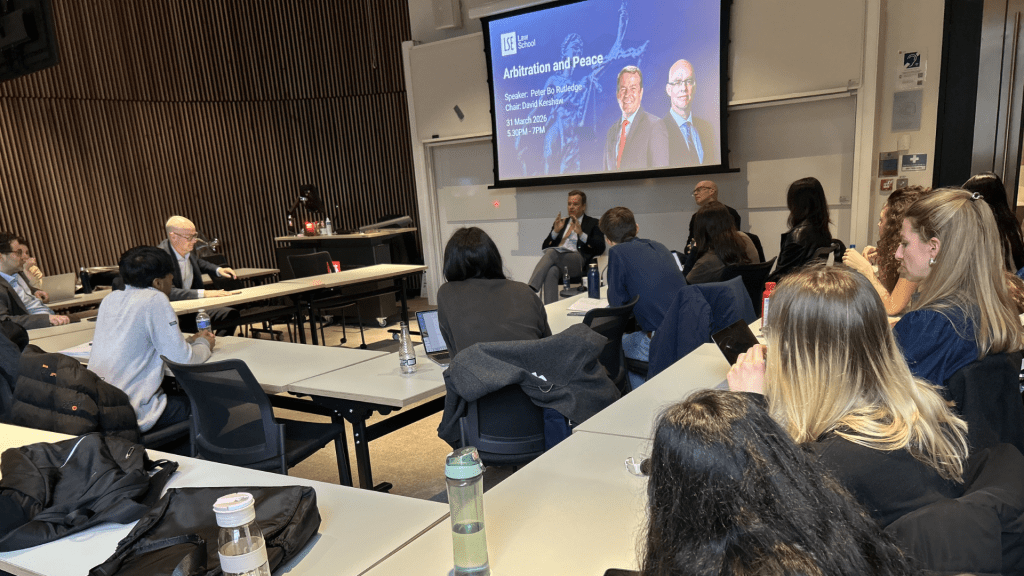
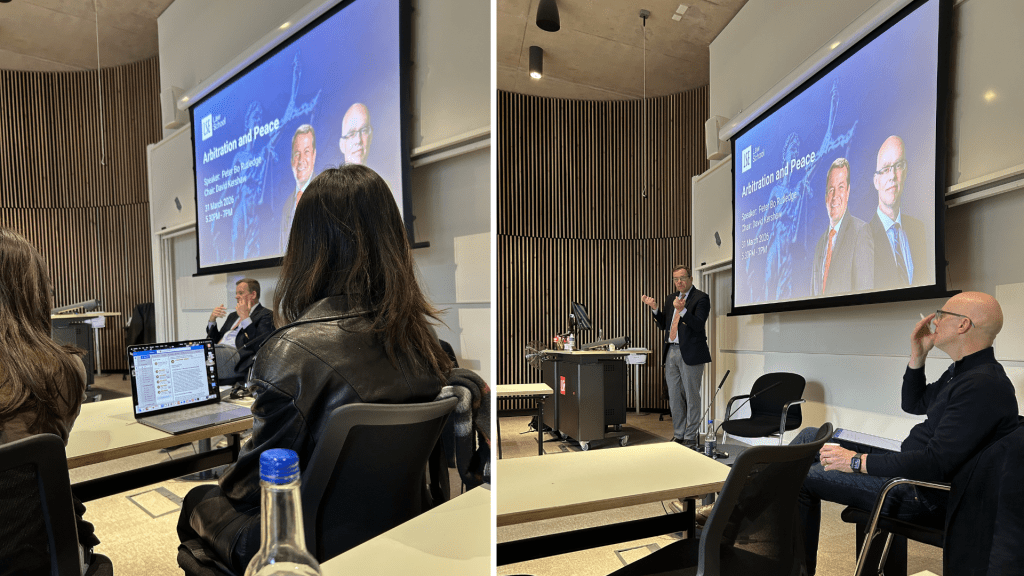
Georgia Law Professor Peter B. “Bo” Rutledge presents at the London School of Economics

University of Georgia School of Law Professor Peter B. “Bo” Rutledge presented “Arbitration and Peace” at The London School of Economics Law School during March. 

Peter B. “Bo” Rutledge holds the Talmadge Chair of Law. From 2015 through 2024, he served as dean of the University of Georgia School of Law. He is the author of the book Arbitration and the Constitution and co-author with Gary Born of the book International Civil Litigation in United States Courts. His works have been published by the Yale University Press, the Oxford University Press and the Cambridge University Press, and his articles have appeared in a diverse array of journals such as The University of Chicago Law Review, the Vanderbilt Law Review and the Journal of International Arbitration. He also regularly advises parties on matters of international dispute resolution (litigation and arbitration).
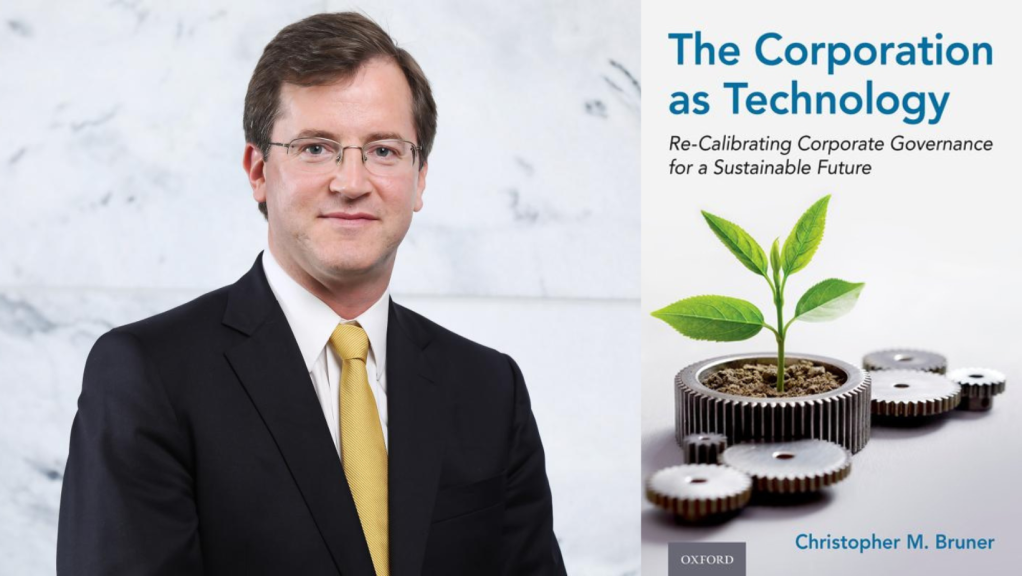
Georgia Law Professor Bruner presents at London School of Economics and Political Science (LSE)

Christopher M. Bruner, Stembler Family Distinguished Professor in Business Law and Faculty Co-Director of the Dean Rusk International Law Center, presented his book, The Corporation as Technology: Re-Calibrating Corporate Governance for a Sustainable Future (Oxford University Press 2022) at the London School of Economics and Political Science (LSE) in June.

Below is a description of the book:

Recent decades have witnessed environmental, social, and economic upheaval, with major corporations contributing to a host of interconnected crises. The Corporation as Technology examines the dynamics of the corporate form and corporate law that incentivize harmful excesses and presents an alternative vision to render corporate activities more sustainable.

The corporate form is commonly described as a set of fixed characteristics that strongly prioritize shareholders’ interests. This book subverts this widely held belief, suggesting that such rigid depictions reinforce harmful corporate pathologies, including excessive risk-taking and lack of regard for environmental and social impacts. Instead, corporations are presented as a dynamic legal technology that policymakers can re-calibrate over time in response to changing landscapes.

This book explores the theoretical and practical ramifications of this alternative vision, focusing on how the corporate form can help secure an environmentally, socially, and economically sustainable future.