Sojourn stirs questions about policies in China, Cuba and the United States

Our Center’s Director of Global Practice Preparation, Kathleen A. Doty, is a World Affairs Council Young Leaders Fellow just completing her tour of China. Traveling with her have been eleven others, many from globally minded businesses. This is the last dispatch in Kate’s series of posts on her travels.

4BEIJING – The people of China are warm. They love babies. I quickly found the best way to make a friend was to coo at the child in her arms. They love long meals and good toasts, and have spent centuries mastering the art of hospitality. Being a guest in China is wonderful.

Beijing is a vastly different city than Shanghai. It is old, gritty, artistic. I heard many people say that Beijing was like Washington, D.C., and Shanghai was like New York. I think that it is a shallow comparison, and having lived in both U.S. cities, I disagree.image1

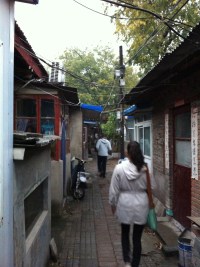
New York is much more than high rises; Beijing is a city alive and rich in a similar way. Of course, this impression has much to do with the organization of our trip; in Shanghai we were taken primarily to government developments, while in Beijing we were taking primarily to private companies and cultural sites. We visited the sleek showroom of Huawei, the Chinese version of Apple, and iQIYI, the Chinese version of Netflix, which exudes a hip imagestart-up vibe. I sipped exotic tea as I strolled through galleries in the profoundly cool 798 Art District, wandered back alleys in Old World neighborhoods, and saw a palace that has been grand since before my own country was founded. When the lights went out in a restaurant at dinner, the servers calmly brought candles to the table and we kept on with the toasts. Beijing was much more what I image2expected to find in China: a mix of the modern and the historical, of wealth and underdevelopment.
Cultural heritage was a theme I pondered throughout the trip. China is old in a way that I, a woman from Colorado, a place young even in the history of the United States, find mind-blowing. Beijing is a huge city. The several ring roads surrounding it put the Beltway or the Perimeter to shame. The city has been developed and redeveloped countless times, replacing so much of what once was. Walking the Great Wall (which is covered in scratched graffiti, in Chinese characters so foreign to my eye) and seeing the Forbidden City provided just a taste of an incredibly rich history that, little by little, is lost with improvements to modern life. I commented to a friend, an American expat living in China, that I found this sad. He responded that the history in 3China is too long to preserve the physical – you just can’t save every 5,000-year-old building – the cultural heritage of China lives in the language. Having mastered only four words in ten days – “Hello,” “Thank you,” “Cheers,” and “too expensive” – I have to admit that this is lost on me. But it emphasized the importance of intangible cultural heritage work as a means of preserving at least some of an ancient way of life.

Sitting alone in a public park one day, I marveled at how a parent or grandparent needed only to speak a word to a child and he or she behaved. Meeting times were given at strangely precise intervals (for example, 1:25) and taken very seriously. I heard more apologies for tardiness than I thought reasonable given a city of such size and with such congestion. Our guides shared their views that much of Eastern culture derives from Confucius’ thought, and emphasizes hierarchy and respect. This consideration to others was surprising given our pre-trip prepping that people push and don’t stand in line or respect your space, but it just reinforced the cultural difference in the meaning of “consideration.” In so many of my reflections about Communism and the economy, I couldn’t help but wonder how much of the attitudes I picked up on were born of pre-existing Eastern philosophy and culture, or from the current economic and political systems in the country.

I also couldn’t help but wonder about the tension between the incredible feats of the state and human rights. Much has been written about this topic and I am no expert, so I won’t belabor the point. But I found myself reflecting, much as I did during my studies in Cuba, on the tension between the social benefits of a Communist system – universal healthcare, education, and in the case of China, the elevation of an extraordinary number of people out of poverty in a short time frame – with the profound lack of freedoms.

2During our visit to the Great Wall, we were standing in an epically long line to take a shuttle bus from the base of the Wall to the parking lot where our bus was waiting. Our guide, a young man in the employ of the University who spoke nearly perfect English, sighed as we inched forward. He said:

“Thank God for the family planning policy.”

I was surprised because the one-child policy so deeply offends our Western concept of individual choice that I simply expected someone of roughly my age to concur; yet in such a populous country, a limit on the number of people is sometimes welcome. I relayed my surprise at his comment to another young Chinese woman I met, and she said,

“Oh yes. The problem with the family planning is that we now have a China that is out of balance, with too many old people and not enough young ones.”

I was so amazed; again, it was a comment totally focused on the macro. Is that Chinese culture? Is that the effect of a Communist system of government? Is it both?

These are the questions that will for me remain unanswered. After studying in Cuba, my takeaway was that they don’t have it right, but neither do we in the United States. The “right” is somewhere in the middle. My impression of China is that it is inching closer to the right balance than Cuba. I have far more context about Cuba to make that statement; this trip showed me, more than anything else, how much I don’t know about China. But standing in Tiananmen Square in the rain, I couldn’t help but think that an inch is terrifically small.

GJICL publishes award-winning article

gjiclScholarship published in the Georgia Journal of International & Comparative Law special issue on “Children and International Criminal Justice” has just been named Article of the Year by the U.S. National Section of the Paris-based Association internationale de droit pénal/International Association of Penal Law.

The honoree is Linda A. Malone, the Marshall-Wythe Foundation Professor of Law at William & Mary Law School in Williamsburg, Virginia, for her article entitledlamalo “Maturing Justice: Integrating the Convention on the Rights of the Child into the Judgements and Processes of the International Criminal Court,” 43 Ga. J. Int’l & Comp. L. 599 (2015). The article surveys the status of international child law and offers suggestions on how it may interface with ICC practices.

Professor Malone presented her research at a plenary session (also featuring a keynote by Prosecutor Fatou Bensouda) of the conference that GJICL and the Dean Rusk International Law Center, University of Georgia School of Law, held during the preparatory phase of the ICC Office of the Prosecutor Policy on Children. The final version of the policy will be launched next month at The Hague.

GJICL publishes “Children and International Criminal Justice” issue

gjicl43_3

Very pleased to announce that papers from a Georgia Law conference “Children & International Criminal Justice” have just been published by our Georgia Journal of International & Comparative Law.

The conference was cosponsored by Dean Rusk International Law Center and the Georgia Law Project on Armed Conflict & Children, as well as the university’s African Studies Institute, the Planethood Foundation, and the American Society of International Law-Southeast.

About 2 dozen experts came to Athens, Georgia, from as far as Doha and Kinshasa, to discuss the topic at hand. In so doing, they assisted in the preparation of the International Criminal Court Office of the Prosecutor Policy on Children. As detailed in recent posts, available here and here, the public comment period for the draft of that Policy continues through August 5, 2016, with launch of the final document set for mid-November.

bensouda_me2_28oct14cropA keynote speech by ICC Prosecutor Fatou Bensouda (at right) highlighted our conference, and the text of her speech headlines the edition. Other writings link the work of the ICC to the 1989 Convention of the Rights of the Child, examine the experiences of children in armed conflict and similar situations. Student rapporteurs’ accounts of expert breakout sessions additionally treat a range of issues. All these papers contributed significantly to the Policy process.

The edition concludes with students’ notes apart from the conference; one of these, for which I was honored to serve as faculty adviser, examines the issue of child marriage.

Here, in full, is the table of contents for Volume 43, issue 3, with PDF links to each article:

Children and International Criminal Justice Conference

“Convening Experts on Children and International Criminal Justice,” by yours truly, Diane Marie Amann (above, at left), Associate Dean for International Programs & Strategic Initiatives and Emily & Ernest Woodruff Chair in International Law, and also Prosecutor Bensouda’s Special Adviser on Children in & affected by Armed Conflict

“Children and International Criminal Justice,” by Fatou Bensouda (above, at right), Prosecutor of the International Criminal Court

malone“Maturing Justice: Integrating the Convention on the Rights of the Child into the Judgments and Processes of the International Criminal Court,” by Linda A. Malone (right), Marshall-Wythe Foundation Professor of Law and Founding Director of the Human Security Law Center, William & Mary Law School

drumblm“Children, Armed Violence and Transition: Challenges for International Law & Policy,” by Mark Drumbl (left), Class of 1975 Alumni Professor of Law and Director of the Transnational Law Institute at Washington & Lee University School of Law

“Child Protection in Times of Conflict and Children and International Criminal Justice,” by Kerry L. Neal neal(right), Child Protection Specialist, Justice for Children, UNICEF, New York

“Expert Workshop Session: Regulatory Framework,” by Ashley Ferrelli, Eric Heath, Eulen Jang, and Cory Takeuchi (all Georgia Law graduates, who were members of GJICL)

“Expert Workshop Session: Child Witnesses: Testimony, Evidence, and Witness Protection,” by Chelsea Swanson, Elizabeth DeVos, Chloe Ricke, and Andy Shin (now Georgia Law graduates, all then were members of GJICL)

“Expert Workshop Session: The Global Child,” by Haley Chafin, Jena Emory, Meredith Head, and Elizabeth Verner (all Georgia Law graduates, who were members of GJICL)

Student Notes

“Changing the Game: The Effects of the 2012 Revision of the ICC Arbitration Rules on the ICC Model Arbitration Clause for Trust Disputes,” by Colin Connor

“Water, Water Everywhere, But Just How Much is Clean?: Examining Water Quality Restoration Efforts Under the United States Clean Water Act and the United States-Canada Great Lakes Water Quality Agreement,” by Jill T. Hauserman

“REACHing for Environmental and Economic Harmony: Can TTIP Negotiations Bridge the U.S.-EU Chemical Regulatory Gap?,” by Ashley Henson

“Child Marriage in Yemen: A Violation of International Law,” by Elizabeth Verner

(Cross-posted from Diane Marie Amann)

Experts in Hague consultation on ICC prosecutors’ draft Policy on Children

fBopening

THE HAGUE, Netherlands – Experts gathered this week from around the world for a wide-ranging consultation on the International Criminal Court Office of the Prosecutor’s draft Policy on Children.

In her Opening Remarks to Monday’s consultation, Prosecutor Fatou Bensouda explained:

“This Policy, once finalised and adopted, will guide my Office in our ongoing efforts to address international crimes against or affecting children under the Rome Statute, as well as our interaction with children during the course of our work.

“The Policy will further provide clarity and transparency on how we intend to methodologically undertake this crucial work.

“Additionally, it is my hope that this Policy will also serve as a useful guide for national authorities and other actors in their respective endeavours to address crimes against and affecting children, and in their interactions with children in judicial processes.”

Released last month, the draft Policy:

► Reaffirms an oft-repeated commitment of the Prosecutor. To be precise, the Policy reinforces her Office’s concern for “children with weapons” – that is, persons under fifteen who have been recruited or used in armed groups, often called “child soldiers.” But it also details the Office’s concern for what the Prosecutor called “children affected by the weapons” – that is, all persons who, before their 18th birthday, endured crimes within the jurisdiction of the Court.

► Adopts a child-sensitive approach to its dealings with children. That approach recognizes children as both vulnerable and capable, as both needy and resilient – often, at the same time. The Policy pledges sensitivity to these realities according to the regulatory framework of the Rome Statute system, and also according to principles drawn from international instruments, like the 1989 Convention on the Rights of the Child, a treaty that enjoys near-universal ratification and is founding on 4 guiding principles:

  1. The child’s right to be treated without adverse discrimination;
  2. The right to life, survival, and development;
  3. The right to have the child’s best interests taken into account; and
  4. The child’s right to express views and have them considered.

The draft Policy on Children (available in full here) explicitly recognizes those principles and sets out the contours for respecting and ensuring them.

It thus enumerates crimes against and affecting children. Included are crimes of conscription and use, as well as child trafficking as enslavement and forcible transfer as genocide. Also included are crimes like persecution, if it targets children on the basis or age or birth, as well as attacks on schools.

The policy further details the approach of the Office with respect to children at all stages of the proceedings: preliminary examinations, investigations, prosecutions, sentencing, and reparations.

All these aspects received discussion at Monday’s consultation; some are reflected in tweets available at #EndCrimesAgainstChildren. The policy working group will be considered along with other public comments. The Office welcomes additional such comments, which should be sent via e-mail to OTPLegalAdvisorySection@icc-cpi.int no later than Friday, August 5, 2016. The Office anticipates final publication in October of this year.

It was an honor to take part in this consultation in my capacity as the Prosecutor’s Special Adviser on Children in & affected by Armed Conflict – and also to be accompanied at the consultation by one of my Georgia Law students, Chanel Chauvet. (We’re pictured below in front of a mural at the ICC’s new permanent premises.) A  rising 2L and Dean Rusk International Law Center Student Ambassador, Chanel just completed a weeklong Hague summer school on international humanitarian law.

chanel_dianeICC

(Cross-posted from Diane Marie Amann)

ICC Office of Prosecutor invites public comment on draft Policy on Children

draftpolicyIt is my great honor to note today’s release for public comment of the draft Policy on Children of the International Criminal Court Office of the Prosecutor.

Since my December 2012 appointment as Prosecutor Fatou Bensouda’s Special Adviser on Children in and affected by Armed Conflict, I’ve had the privilege of helping to convene consultations and taking part in the construction of this draft Policy. As part of that process, as noted on page 11 of the draft, we at the Dean Rusk International Law Center, University of Georgia School of Law, were honored in October 2014 to host the Prosecutor, members of her staff, and nearly 2 dozen other experts from academic, nongovernmental groups, and intergovernmental organizations. Our “Children & International Criminal Justice” conference featured a morning public plenary and Prosecutor’s keynote (pictured below), followed by an afternoon of closed-door breakout sessions. (Proceedings from that event, to appear in our Georgia Journal of International & Comparative Law, are nearing publication.)

Addressed in the draft Policy, which spans 37 pages, are:

► Overarching concerns, such as the nature of a child and childhood, the experiences of children in armed conflict and other contexts within the jurisdiction of the ICC, and how the Rome Statute of the ICC and other documents treat crimes against and affecting children; and

► Practical concerns, such as how the Office of the Prosecutor engages with children, in all aspects of its work, including preliminary examination, investigation, charging, prosecution, sentencing, reparations, and external relations.

As stated in the press release accompanying today’s publication:

In highlighting the importance of the Policy, Prosecutor Bensouda stated: “when I assumed 8_events2the role of Prosecutor in June 2012, one of the principal goals I set for the Office was to ensure that we pay particular attention not only to ‘children with arms’, but also ‘children affected by arms.’ This Policy demonstrates our firm commitment to closing the impunity gap for crimes against or affecting children, and adopting a child-sensitive approach in all aspects of our work bearing in mind their rights and best interests. It is also our hope that the Policy, once adopted, will serve as a useful guide to national authorities in their efforts to address crimes against children.”

The Office welcomes public comment on the draft. Such comments should be e-mailed to OTPLegalAdvisorySection@icc-cpi.int, no later than Friday, August 5, 2016.

Following revisions based on the comments, the Office of the Prosecutor expects to publish the final Policy on Children in November of this year.

(Cross-posted from Diane Marie Amann)