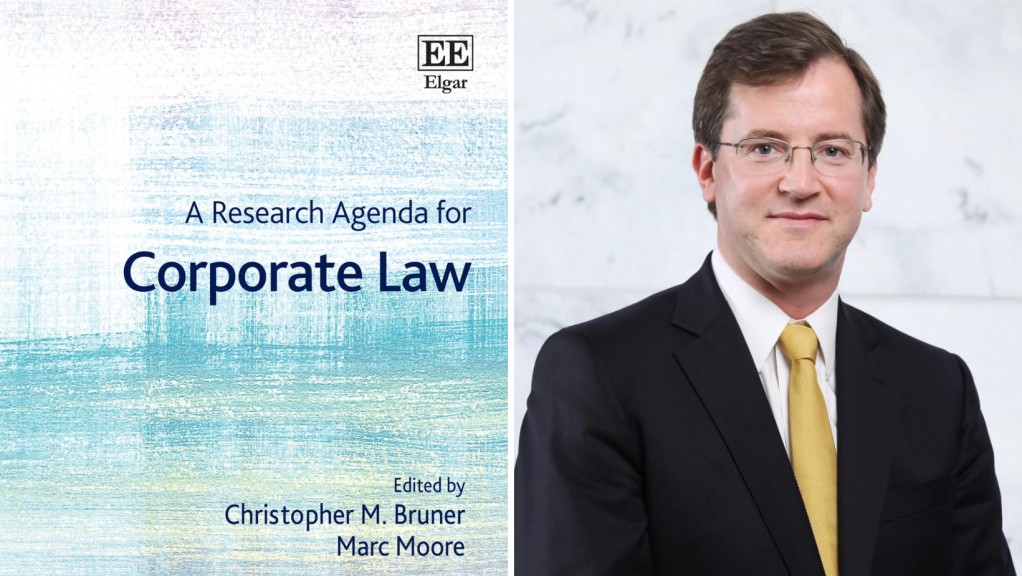
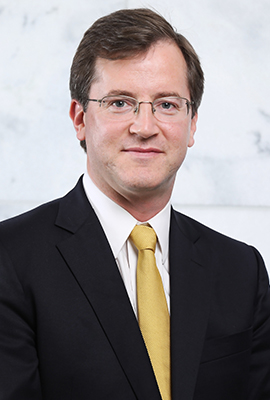
Christopher M. Bruner, Stembler Family Distinguished Professor in Business Law and Faculty Co-Director of the Dean Rusk International Law Center, recently co-edited the book A Research Agenda for Corporate Lawwith Marc Moore, Professor of Corporate/Financial Law, University College London Faculty of Laws.
This timely Research Agenda explores key dynamics and cutting-edge developments within corporate law. Bringing together a diverse range of scholars hailing from different jurisdictions, ideological perspectives, and methodological backgrounds, it provides a roadmap for future research in the field.
Through the investigation of different doctrinal and normative issues, leading scholars consider how evolving conceptual foundations, capital markets, social and cultural contexts, and technologies may impact corporate law and governance research. Ground-breaking contributions examine the increasingly global nature of corporate production and investment markets and the influence this has on the wider dynamics in the field, suggesting new directions for navigating this complex and fascinating terrain.
Students and scholars of corporate law, corporate governance, and law and business will value the innovative ideas unpacked in this state-of-the-art Research Agenda. Its forward looking and practical insights will also benefit practitioners and policymakers in corporate law, corporate governance, sustainability, and business law.
Prior posts on Bruner’s scholarship can be found here.
Christopher M. Bruner, Stembler Family Distinguished Professor in Business Law and Faculty Co-Director of the Dean Rusk International Law Center, recently presented working papers in Canada and Sweden.
He presented “Corporate Governance and Sustainability Incentives” at a conference titled “Addressing the Sustainability Impacts of Corporations” in October. The conference was hosted by the Nathanson Centre on Transnational Human Rights, Crime and Security at the Osgoode Hall Law School (York University) in Toronto.
Bruner also presented “Corporate Personhood, Corporate Rights, and the Contingency of Corporate Law” at “Decoding the Rights of Companies in the Technocene,” a conference hosted in December by the Lund University Faculty of Law in Lund, Sweden.
Bruner’s scholarship focuses on corporate law, corporate governance, comparative law and sustainability. He is a research member of the European Corporate Governance Institute (ECGI) and has presented his work in numerous countries around the world.
This year’s annual conference of the Georgia Journal of International and Comparative Law will address “ESG and Corporate Sustainability: Global Perspectives on Regulatory Reform.” Featured will be a keynote discussion by Jill E. Fisch, the Saul A. Fox Distinguished Professor of Business Law and Co-Director of the Institute for Law and Economics at the University of Pennsylvania Carey Law School, as well as panels including more than a dozen experts from around the world.
The daylong conference will take place on Monday, October 16, in the Larry Walker Room of Dean Rusk Hall at the University of Georgia School of Law.
Sponsoring along with GJICL, a student-edited journal established more than 50 years ago, is the law school’s Dean Rusk International Law Center. GJICL Editor in Chief, 3L Jack Schlafly, worked with Professor Christopher M. Bruner, who is the Stembler Family Distinguished Professor in Business Law and a newly appointed Faculty Co-Director of the Dean Rusk International Law Center; Center staff Sarah Quinn, Interim Director; Catrina Martin, Global Practice Preparation Assistant; and with the GJICL’s Faculty Advisor, Professor Harlan Grant Cohen, who is Gabriel M. Wilner/UGA Foundation Professor in International Law and one of the Center’s Faculty Co-Directors.
Below is the concept note of the conference:
We live in an era marked by complex and interconnected environmental, social, and economic crises, including climate change and various forms of destabilizing inequalities. Efforts to grapple with these realities are rapidly evolving and taking shape through a host of private and public institutions, both domestically and internationally, and an array of novel reform efforts aim to curb harmful corporate practices that have contributed to such crises.
Global asset managers have increasingly prioritized “environmental, social, and governance” (ESG) factors – emphasizing their relation to investment risk and investment return – and have taken up existing tools available to them through corporate law, securities regulation, and capital market structures to push for change. Meanwhile, various types of domestic regulatory reforms have been adopted, or are under consideration, in jurisdictions around the world to promote “corporate sustainability,” understood to include environmental, social, and economic dimensions. Some reform initiatives focus on disclosure, reflecting confidence that investors, consumers, and other constituencies armed with sufficient information could differentiate between sustainable and unsustainable companies, and that these private actors would effectively reward the former and punish the latter. Other reform initiatives take more direct aim at decision-making incentives of managers and investors alike, through corporate governance structures creating novel – and potentially powerful – liability regimes intended to force both domestic and multinational businesses to internalize costs that would otherwise be externalized to society and the environment. At the same time, a host of international organizations have sought to promote ESG and corporate sustainability through a range of global standard-setting and coordination efforts.
This symposium will grapple with the array of ESG and corporate sustainability initiatives taking shape today, mapping this rapidly evolving global landscape and engaging with the host of complex international and comparative legal challenges they raise. Speakers offering a diverse range of doctrinal, institutional, and jurisdictional perspectives will tackle these issues through presentations and panel discussions focusing on capital market developments, corporate governance reform initiatives, and efforts to constrain multinational businesses.
The day’s events are as follows:
9:00-9:15am | Welcome Messages
Peter B. “Bo” Rutledge, Dean and Talmadge Chair of Law, University of Georgia School of Law
Sarah Quinn, Interim Director, Dean Rusk International Law Center
9:15-10:30am | Panel 1: ESG and Sustainable Finance
George S. Georgiev, Associate Professor of Law, Emory University School of Law
Virginia Harper Ho, Professor of Law, City University of Hong Kong (Zoom)
Stephen Park, Associate Professor of Business Law and Satell Fellow in Corporate Social Responsibility, University of Connecticut School of Business
Anne Tucker, Professor of Law, Georgia State University College of Law
Moderator: Usha Rodrigues, University Professor and M.E. Kilpatrick Chair of Corporate Finance and Securities Law, University of Georgia School of Law
10:30-10:45am | Break
10:45-12:00pm | Panel 2: Corporate Law, Corporate Governance and Sustainability
Matthew T. Bodie, Robins Kaplan Professor of Law, University of Minnesota Law School
Andrew Johnston, Professor of Company Law and Corporate Governance, University of Warwick School of Law (UK) (Zoom)
Lindsay Sain Jones, Assistant Professor, University of Georgia Terry College of Business
Omari Scott Simmons, Professor of Law, George Washington University Law School
Moderator: Christopher M. Bruner, Stembler Family Distinguished Professor in Business Law and Faculty Co-Director of the Dean Rusk International Law Center, University of Georgia School of Law
12:00-1:00pm | Lunch
1:00-2:15pm | Panel 3: Multinational Corporations and Global Value Chains
Sarah Dadush, Professor of Law, Rutgers Law School (Zoom)
David Hess, Professor of Business Law and Business Ethics, University of Michigan Stephen M. Ross School of Business
Kish Parella, Class of 1960 Professor of Ethics and Law, Washington and Lee University School of Law (Zoom)
Jaakko Salminen, Associate Senior Lecturer, Department of Law, Lund University (Sweden) (Zoom)
Moderator: Harlan G. Cohen, Gabriel M. Wilner/UGA Foundation Professor in International Law and Faculty Co-Director of the Dean Rusk International Law Center, University of Georgia School of Law
2:15-2:30pm | Break
2:30-2:35pm | Keynote Introduction
Christopher M. Bruner, Stembler Family Distinguished Professor in Business Law and Faculty Co-Director of the Dean Rusk International Law Center, University of Georgia School of Law
2:35-3:15pm | Keynote Address
Jill E. Fisch, Saul A. Fox Distinguished Professor of Business Law and Co-Director of the Institute for Law and Economics, University of Pennsylvania Carey Law School
3:15 | Closing Remarks
Jack Schlafly, Editor in Chief, Georgia Journal of International and Comparative Law
Christopher Bruner, the Stembler Family Distinguished Professor in Business Law here at the University of Georgia School of Law, was quoted earlier this month in The Royal Gazette, a daily newspaper based in Hamilton, Bermuda. The article reported on participation by Bruner and others in Princeton University’s Law, Identity, and Economic Development in the Post-Colonial Era symposium held during April. (prior post)
“Small jurisdictions around the world – including in the Northern Atlantic and Caribbean regions – are at the front lines of a range of global environmental and economic challenges.
“Now more than ever, it is critical that we explore sustainable economic development models available to small jurisdictions, as well as the lessons that all jurisdictions can learn from their experiences.”
The seminar was hosted by the University of Notre Dame’s London Global Gateway and co-sponsored by the University College London Centre for Commercial Law.
Christopher M. Bruner, the Stembler Family Distinguished Professor in Business Law here at the University of Georgia School of Law, spoke at a 2-day conference last week at the University of Macerata in Italy.
“Business Risk, Financial Markets, and Sustainable Companies” was the title of the presentation by Bruner, a scholar of corporate law, corporate governance, comparative law, and sustainability, whose most recent book is The Corporation as Technology: Re-Calibrating Corporate Governance for a Sustainable Future (OUP 2022) (prior posts).
The conference, titled The Prism of Sustainability, was supported by the Erasmus+ Programme of the European Union.
Christopher M. Bruner, the Stembler Family Distinguished Professor in Business Law here at the University of Georgia School of Law, recently took part in a seminar session on corporate sustainability disclosures, presented online for students at the University of Minnesota Law School and University College Dublin Sutherland School of Law.
“Sustainability Disclosure Around the World” was the title of the presentation by Bruner, a scholar of corporate law, corporate governance, comparative law, and sustainability, whose most recent book is The Corporation as Technology: Re-Calibrating Corporate Governance for a Sustainable Future (OUP 2022) (prior posts).
Joining Bruner in presenting the seminar were Professor Brett McDonnell, Dorsey & Whitney Chair in Law at Minnesota Law, and Xiaoyu Gu, who is a Managing Director at AB CarVal, a global alternative investment management firm. Professor Claire Hill, who is James L. Krusemark Chair in Law at Minnesota Law, and Professor Joe McGrath, of University College Dublin Law, convened the event.
Georgia Law Professor Usha Rodrigues was quoted in an Agence France-Presse article about claims levied against against the Adani Group, led by Gautam Adani of India.
Rodrigues, a corporate law expert who is University Professor and M.E. Kilpatrick Chair of Corporate Finance & Securities Law here at the University of Georgia School of Law, is also serving as our university’s Interim Vice Provost for Academic Affairs.
As described on its website, the Brussels-based “ECGI is an international scientific non-profit association providing a forum for debate and dialogue between academics, legislators and practitioners, focusing on major corporate governance issues.” Its “global network of practitioner, academic and institutional members” is “appointed on the basis of their significant contribution to the field of corporate governance study.” EGCI’s press release on today’s new appointments is available here.
In addition to fostering research collaboration among its members, ECGI disseminates scholarship, hosts international events, and spearheads initiatives, including its ongoing project on “Responsible Capitalism.”
Bruner (prior posts) is a scholar of corporate law, corporate governance, comparative law, and sustainability. His books include The Corporation as Technology: Re-Calibrating Corporate Governance for a Sustainable Future (OUP 2022), The Cambridge Handbook of Corporate Law, Corporate Governance and Sustainability (co-edited with Beate Sjåfjell) (CUP 2019), Re-Imagining Offshore Finance: Market-Dominant Small Jurisdictions in a Globalizing Financial World (OUP 2016), and Corporate Governance in the Common-Law World: The Political Foundations of Shareholder Power (CUP 2013).
Christopher M. Bruner, the Stembler Family Distinguished Professor in Business Law here at the University of Georgia School of Law, presented on “Corporate Risk, Shareholder Liability, and the Role of Intermediaries” as part of a “Corporate Law, Corporate Governance and Sustainability” panel at a conference last month at the University of Oslo Faculty of Law in Norway.
Bruner also moderated another session and participated in an invitation-only research-collaboration workshop.
Entitled “The Risks of Unsustainability Conference,” the University of Oslo gathering brought together “academics from various fields to discuss how a research-based concept of risks of sustainability can be placed at the centre of law and policy, in business and finance, to contribute to ensuring a safe and just space for all living beings on this planet,” with the goal of “generat[ing] holistic inclusion of the risks of unsustainability at a systemic level, and unlock[ing] the potential of new modalities of sustainability law.”
In addition to Norway and the United States, the conference welcomed scholars based in Denmark, Italy, the Netherlands, Poland, Sweden, and the United Kingdom.





 exchange of notes