Delighted to announce that about a hundred scholars and practitioners in international law and related fields will participate in IntLawGrrls! 10th Birthday Conference, to be hosted by the Dean Rusk International Law Center, University of Georgia School of Law, on March 2 and 3, 2017.
The call for papers issued last autumn produced a trove of proposals from around the world – from women, and a few men, at all stages of their careers. That’s allowed us to build a research forum comprising 16 breakout panels, each with 5 presenters and a moderator. As detailed below, participants will be coming here to Athens from all over North America and Europe, and from as far away as Australia, Hong Kong, Japan, and Kosovo. (Although panels are full, attendance registration is available here.)
Additional highlights will include the March 2 screening of 500 Years, a Sundance-selected Guatemala documentary by IntLawGrrls contributor Pamela Yates, as well as a plenary on Strategies to Promote Women’s Participation in Shaping International Law and Policy amid the Global Emergence of Antiglobalism. Joining in the plenary conversation will be jurist Patricia A. Wald, American Society of International Law President Lucinda A. Low, Society for Historians of American Foreign Relations President Mary L. Dudziak, and former White House official Catherine Powell, as well as two of IntLawGrrls’ original editors, Jaya Ramji-Nogales and moderator Beth Van Schaack.
Making all this possible are the many cosponsors who’ve helped support various events, or partial travel grants aiding participation by several very-early-career attendees: IntLawGrrls, of course, plus the University of Georgia School of Law (its Dean Rusk International Law Center, Georgia Women in Law Lead initiative, International Law Society, and Women Law Students Association), the University of Georgia (its Willson Center for Humanities & the Arts and Institute of Native American Studies), the Planethood Foundation, the American Society of International Law and its Women in International Law Interest Group, and a few who wish to remain anonymous.
We look forward to celebrating the blog’s birthday – it was launched exactly a decade ago, on March 3, 2007 – with old and new colleagues alike.
IntLawGrrls! 10th Birthday Conference
Film: Thursday, March 2, 2017
7 p.m. Ciné, 234 West Hancock Avenue, Athens
 A.1. Screening of “500 Years” and Discussion with Filmmakers
◄ Pamela Yates, Co-founder and Creative Director, Skylight Pictures, Brooklyn, New York
◄ Paco de Onís, Executive Director, Skylight Pictures, Brooklyn, New York
 ► Moderator: Naomi Roht-Arriaza, Distinguished Professor of Law, University of California Hastings College of the Law, San Francisco
Research Forum: Friday, March 3, 2017
University of Georgia School of Law, Athens
B. 8:45-10:15 a.m.
B.2. The Practice of International Criminal Law
 ► Madeline Cameron Wardleworth, Solicitor, King & Wood Mallesons, Brisbane, Queensland, Australia, Digital Allies: Is Female Access to International Justice Being Improved via Technology and Innovation?
 ◄ Megan A. Fairlie, Associate Professor of Law, Florida International University College of Law, Miami, Recorded Testimony and Fair Trial Concerns in International Criminal Justice
► Beth S. Lyons, Defense Counsel, International Criminal Court and International Criminal Tribunal for Rwanda, New Jersey, Treatment of the ICTR Acquitted: The “Achilles Heel” of International Criminal Justice
 ◄ Yvonne McDermott, Senior Lecturer in Law, School of Law, Bangor University, Wales, Borrowed Truths: Expert Evidence and Authority in International Criminal Trials
► Moderator: Jason A. Cade, Assistant Professor of Law and Director of the Community Health Law Partnership Clinic, University of Georgia School of Law, Athens
B.3. Human Rights
► Ali Aghahosseini Dehaghani, Ph.D. Candidate in Public International Law, University of Nantes, France, International Law-Making by International Judicial Bodies: Towards a More Effective Role for Women’s Participation
 ► Karen E. Bravo, Associate Dean for Graduate Studies & International Affairs and Professor of Law, Indiana University Robert H. McKinney School of Law, Indianapolis, Interrogating Everyperson’s Roles in Today’s Slaveries
 ◄ Tequila J. Brooks, Attorney and International Employment Policy Specialist, Washington, D.C., Sexism and Gender Stereotypes in International Guest Worker Programs: An Analysis of Two 2016 Petitions under the North American Agreement on Labor Cooperation
 ► Deepa Das Acevedo, Sharswood Fellow, University of Pennsylvania Law School, Philadelphia, God’s Homes, Men’s Courts, Women’s Rights
 ◄ Urvashi Jain, LL.M. Candidate, University of Georgia School of Law, Athens, Educational Rights of the Transgender Children in India
► Natalie W. Romeri-Lewis, Senior Project Associate, The WomanStats 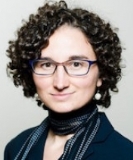 Project, Provo, Utah, and Adjunct Professor, Brigham Young University, Provo, Utah, International and Comparative Domestic Violence Law: A 176-Country Study of Banning, Ignoring, and Sustaining Domestic Violence
◄ Moderator: Jaya Ramji-Nogales, I. Herman Stern Professor of Law and Co-Director of the Institute for International Law and Public Policy, Temple University Beasley School of Law, Philadelphia
B.4. Women’s Leadership in Legal Institutions
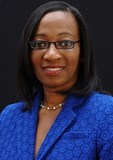 ◄ Josephine J. Dawuni, Assistant Professor of Political Science and founding Executive Director of the Institute for African Women in Law, Howard University, Washington, D.C., Matri-legal Feminism, International Law and the African Woman Judge
 ► Nienke Grossman, Associate Professor of Law, University of Baltimore School of Law, Maryland, Taking Stock of Women in International Legal Academia
 ◄ Maryann E. Gallagher, Lecturer, Department of International Affairs, School of Public & International Affairs, University of Georgia, Athens, Engendering Justice: Women Prosecutors in International Courts
 ► Claudia Martin, Professional Lecturer in Residence and Co-Director of the Academy on Human Rights and Humanitarian Law, American University Washington College of Law, Washington, D.C., Article 8 of the Convention to Eliminate All Forms of Discrimination against Women: A Stepping Stone in Ensuring Gender Parity in International Organs and Tribunals
► Samantha McLane, Budget and Operations Associate Director, Office of the  Chief Strategy Officer, Planned P
 arenthood Federation of America, New York, New York, Breaking the Federal Judiciary Glass Ceiling: How Affirmative Action Can Accelerate Gender Parity in the Mexican Supreme Court
◄ Moderator: Lori A. Ringhand, Associate Dean for Academic Affairs and J. Alton Hosch Professor of Law, University of Georgia School of Law, Athens
B.5. Issues in International Criminal Justice
 ► Dieneke de Vos, Ph.D. Candidate in International Criminal Law and Gender, European University Institute, Florence, Italy, Complementarity’s Gender Deficits – Analyzing Interactions Between the ICC and National Accountability Processes for Sexual Violence Crimes
 ◄ Christie J. Edwards, Director, International Humanitarian Law, American Red Cross, Washington, D.C., Forced Contraception as a Means of Torture
 ► Catherine Moore, Coordinator of International Law Programs, University of Baltimore School of Law, Maryland, The Rise of “Effective” Head of State Immunity through Negative Norm Diffusion: The Case of Al-Bashir and South Africa
► Jenica Marie Moore, Ph.D. Candidate in International Relations, School of Public & International Affairs, University of Georgia, Athens, The Search for Justice and Clarity in International Crimes: An Argument for a Change in How We Understand and Prosecute Mass Violence
 ► Jennifer Trahan, Clinical Associate Professor, The Center for Global Affairs, New York University School of Professional Studies, New York, Highlights of the ICC Crime of Aggression and Its Relationship to Humanitarian Intervention
 ◄ Moderator: Diane Marie Amann, Associate Dean for International Programs & Strategic Initiatives and Emily & Ernest Woodruff Chair in International Law, Dean Rusk International Law Center, University of Georgia School of Law, Athens, and International Criminal Court Prosecutor’s Special Adviser on Children in & affected by Armed Conflict
C. 10:30 a.m.-12 noon
C.6. International and Transnational Criminal Justice
► Maya Ezgi Avci, J.S.D. Candidate, IIT Chicago-Kent College of Law, Illinois, Female Recruiters: Victims or Perpetrators?
► Yvonne M. Dutton, Associate Professor of Law, Dean’s Fellow and Grimes Fellow, Indiana University Robert H. McKinney School of Law, Indianapolis, Bridging the Legitimacy Divide: The International Criminal Court’s Public Perception Challenge
◄ Monica Feltz, Executive Director, International Justice Project, Newark, New Jersey, Victim Participation at the ICC: the Darfur Situation
 ► Jing Geng, Visiting Researcher, Michigan Law School, and Ph.D. Candidate in Law, Católica Global School of Law, Lisbon, Portugal, Theorizing the Victim-Agent: A Response to the “Ideal” Victim of Trafficking
◄ Milena Sterio, Professor of Law and Associate Dean for Academic Enrichment, Cleveland-Marshall College of Law, Cleveland State University, Ohio,  The Karadzic Genocide Conviction: Inferences, Knowledge and Intent
► Moderator: Lesley Wexler, Professor of Law, University of Illinois College of Law, Champaign
C.7. Human Rights and Accountability across Levels and Regions
 ► Stephanie Farrior, Professor of Law and Director of the Center for Applied Human Rights, Vermont Law School, Vermont, Extraterritorial Treaty Obligations: Human Rights and the Environment
 ► Karen Hoffman, On-the-Ground Legal Advocate, Aldea–The People’s Justice Center, Reading, Pennsylvania, Redress for “Some Folks”: Pursuing Justice for Victims of Torture through Traditional Grounds of Jurisdiction
 ◄ Anna Karapetyan, Legal Intern, Organisation for the Prohibition of Chemical Weapons, The Hague, the Netherlands, A Recurring Phenomenon: The Prohibition of Torture and the Question of Judicial Corporal Punishment under International Human Rights Law
► Hannah Williams, J.D. Candidate, University of Georgia School of Law, Athens, The International Right of Syrian Refugee Children to an Education: Turkey’s Legal Responsibility
 ◄ Moderator: Hari M. Osofsky, Robins Kaplan Professor, Faculty Director of the Energy Transition Lab, and Director of the Joint Degree Program in Law, Science & Technology at the University of Minnesota, Minneapolis
C.8. Feminism/Theories
 ► Dafina Buçaj, Assistant Lecturer in International Law, Faculty of Law, University of Prishtina, Kosovo, Failure of International Law in Times of Crises: Have Women Played a Better Role in Being Problem-Solvers?
◄ Mary Hansel, Deputy Director, International Human Rights Clinic, Loyola Law School, Los Angeles, California, From the Crisis Model to an International Law of the Everyday
► Gina Heathcote, Senior Lecturer in Gender Studies & International Law and Chair of the Centre for Gender Studies, SOAS, University of London, England, Feminist Dialogues on International Law
◄ Bérénice K. Schramm, Postdoctoral Fellow, Centre for Gender Studies, SOAS, University of London, London, England, A Future Case (of) Study(ies): Francophone Feminist Approaches to International Law
► Sabrina Tremblay-Huet, Doctoral Candidate in Law, University of Sherbrooke, Quebec, Canada, Law and literature as a  feminist method to explore scarcities of legalization in international law: The example of the law on tourism
◄ Moderator: Naomi Norberg, Translator and Editor, Northmountain Translations, Pouilly sur Loire, France
C.9. Transnational Crime and Corporate Accountability
 ► Elizabeth Acorn, Ph.D. Candidate in Government, Cornell University, Ithaca, New York, The National Enforcement of International Anti-Foreign Bribery Standards: Multilateralizing the American Model
 ◄ Sydney Lang, B.C.L./LL.B. Candidate, McGill University, Faculty of Law, Montréal, Québec, Canada, Colonial Violence and Corporate Illusions in the Canadian Mining Industry: Investigating Access to Justice and Legal Accountability in Canada
 ► Lisa J. Laplante, Associate Professor, New England Law School, Boston, Massachusetts, Privatizing Human Rights Enforcement through Company Level Grievance Mechanisms
 ◄ Temitayo O. Peters, Associate, Palomar Law Group, Escondido, California, A Proposal: Using Mediation to Hold Transnational Corporations Accountable for Human Rights Violations
► Reem Radhi, Ph.D. Candidate in Law, Durham Law School, England, Restorative Justice for Corporate Criminal Liability and Sentencing in the US and the UK
► Moderator: Joshua Barkan, Associate Professor, Department of Geography, University of Georgia, Athens
D. 12:15-1:45 p.m. Plenary Panel
D.10. Strategies to Promote Women’s Participation in Shaping International Law and Policy amid the Global Emergence of Antiglobalism
 ► Mary L. Dudziak, Asa Griggs Candler Professor of Law, at
 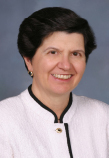 Emory University School of Law, Atlanta, Georgia, and President of the Society for Historians of American Foreign Relations
◄ Lucinda A. Low, Partner at Steptoe & Johnson LLP and President of the American Society of International Law, Washington, D.C.
 ◄ Catherine Powell, Associate Professor of Law at Fordham Law School in New York, Adjunct Senior Fellow on Women and Foreign Policy at the Council on Foreign Relations, and former State Department and White House official
►  Jaya Ramji-Nogales, I. Herman Stern Professor of Law and Co-Director of the Institute for International Law and Public Policy, Temple University Beasley School of Law, Philadelphia
◄ Patricia M. Wald, former Judge on the International Criminal Tribunal for the former Yugoslavia and Chief Judge of the U.S. Court of Appeals for the District of Columbia Circuit, and former member of the U.S. Privacy and Civil Liberties Oversight Board
► Moderator: Beth Van Schaack, Visiting Scholar, Center for International Security & Cooperation, Stanford University, California, and former Deputy to the Ambassador-at-Large for War Crimes Issues, Office of Global Criminal Justice, U.S. Department of State
E. 2-3:30 p.m.
E.11. Culture and Transitional Justice Mechanisms
 ► Kaitlin M. Ball, Ph.D. Candidate, Department of Political Science & International Studies, University of Cambridge, England, Negotiable Space: Policing of Youth in Post-Conflict Northern Ireland
◄ Victoria Barker, J.D. Candidate, University of Georgia School of Law, Athens, Cultural Rights in Canada’s Residential Schools: 1939-2000
 ► Elena Baylis, Associate Professor, University of Pittsburgh School of Law, joint appointment with the university’s Graduate School of Public & International Affairs, Pennsylvania, Transnational Models and Rule of Law Initiatives
◄ Mirka Fries, International Criminal Law Specialist, Berlin, Germany, Prosecuting Former Child Soldiers under International Criminal Law: Towards a System of  Just Punishment
► Azeezah Kanji, Director of Programming, Noor Cultural Centre, Toronto, Canada, The Al Mahdi Case at the International Criminal Court: Cultural  Property and Common Humanity in the “War on Terror”
◄ Moderator: Peter D. O’Neill, Assistant Professor, Department of Comparative Literature, University of Georgia, Athens
E.12. International Economic Law and Dispute Settlement
► Nguyet Thi Anh Le, Fulbright Scholar, American University Washington College of Law, Washington, D.C., The Jurisprudence of International Investment Arbitration Awards on State-Owned Enterprise (SOE): The Quest for the SOE Law Revisions in Developing Countries?
◄ Megan E. McCloskey, Ph.D. Candidate in Law, University of Washington School of Law, Seattle, International Investment Law and Gender Equality: The Case for Gender-Sensitive Policy-Making
 ► Mona Pinchis, Visiting Researcher, Stanford Law School, California, and Ph.D. Candidate in Law at King’s College London, England, Fair and Equitable Treatment in the Charter for the International Trade Organization
 ◄ Hayley Roberts, Coleg Cymraeg Cenedlaethol Lecturer in Law, School of Law, Bangor University, Wales, The South China Sea Arbitration: The Role of Negotiations in UNCLOS Dispute Settlement
► Chie Sato, Associate Professor, School of Law, Meiji University, Tokyo, Japan, The Rule Making for the Protection of Marine Environment Based on the Law of the  Sea
Sea
► Moderator: Harlan G. Cohen, Gabriel M. Wilner/UGA Foundation Professor in International Law, University of Georgia School of Law, Athens
E.13. Postwar/Cold War Policies and Legacies
 ► Işıl Aral, Ph.D. Candidate in Public International Law, University of Manchester, England, The Myth of the Cold War: Is 1991 Really a Turning Point for the Neutrality of International Law Regarding Democratic Governance?
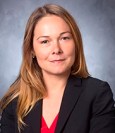 ◄ Kathleen A. Doty, Director of Global Practice Preparation, Dean Rusk International Law Center, University of Georgia School of Law, and M.A. Candidate in Political Science & International Affairs, School of Public & International Affairs, University of
  Georgia, Athens, Normalization of U.S.-Cuba Relations
► Naomi Roht-Arriaza, Distinguished Professor of Law, University of California Hastings College of the Law, San  Francisco, Safeguarding Development: Environment, Gender Empowerment and Human Rights Protections in U.S. Foreign Aid
◄ Kristin J. Smith, Fellow, Whitney R. Harris World Law Institute, Washington University School of Law, St. Louis, Missouri, U.S. Humanitarian Intervention Policy
◄ Lesley Wexler, Professor of Law, University of Illinois College of Law, Champaign, U.N. Amends
► Moderator: Mary L. Dudziak, Asa Griggs Candler Professor of Law, at Emory University School of Law, Atlanta, Georgia, and President of the Society for Historians of American Foreign Relations
E.14. Laws of War
 ► Leah Carmichael, Lecturer, Department of International Affairs, School of Public & International Affairs, University of Georgia, Athens, The Bombing of Bakeries: The Role of Intentional Starvation in Armed Conflicts and the Lack of Accountability under International Law
◄ Chanel Chauvet, J.D. Candidate, University of Georgia School of Law, Athens, Syria’s Responsibility under International Law to Protect Children from Warfare Attacks on Hospitals and Healthcare
► Andra le Roux-Kemp, Assistant Professor, City University of Hong Kong, School of Law, Hong Kong, The Normative Genesis of Security as an Individual and Public Good
◄ Cymie Payne, Associate Professor, Rutgers University, Camden, New Jersey, War, Peace, the Environment and International Law
► Ashika Singh, Forrester Fellow, Tulane University Law School, New Orleans, Louisiana, Identifying and Resolving Genuine Conflicts of International Law: A Case Study on Human Rights in Armed Conflict
 ◄ Moderator: Milena Sterio, Professor of Law and Associate Dean for Academic Enrichment, Cleveland-Marshall College of Law, Cleveland State University, Ohio
F. 3:45-5:15 p.m.
F.15. Transitional Justice
 ► Marissa R. Brodney, J.D. Candidate, Harvard Law School, Cambridge, Massachusetts, and Candidate for Master of Public Affairs degree, Princeton University
  Woodrow Wilson School, New Jersey, Implementing International Criminal Court-Ordered Collective Reparations: Unpacking Present Debates
► Belinda Cooper, Senior Fellow, World Policy Institute,  and Adjunct Professor at New York University Center for Global Affairs and Columbia University Institute for the Study of Human Rights, New York, Nuremberg’s Misunderstood Influence on Post-WWII Germany
◄ Saskia Nauenberg, Ph.D. Candidate in Sociology, University of California, Los Angeles, Colombia in Transition: Negotiating Accountability for Human Rights Violations
◄ Diane Orentlicher, Professor of International Law, American University Washington College of Law,  Washington, D.C., International Justice Delayed: A Case Study
► Shana Tabak, Visiting Assistant Professor of Law & Global Studies, Georgia State University School of Law,  Atlanta, Revisiting Gender within Colombia’s Peace Process
◄ Moderator: Amy J. Ross, Associate Professor, Department of Geography, University of Georgia, Athens
F.16. Laws and War and Counterterrorism
 ► Zohra Ahmed, Staff Attorney, Legal Aid Society, New York, New York, U.S. Deployment of the Consent Exception as a Justification for Drone Strikes in Pakistan
 ◄ Laurie R. Blank, Clinical Professor of Law and Director of the International Humanitarian Law Clinic, Emory University School of Law, Atlanta, Georgia, The Extent of Self-Defense against Terrorist Groups: For How Long and How Far?
► Tetyana Krupiy, Postdoctoral Fellow, McGill University, Montréal, Québec, Canada, Lethal Autonomous Weapons Systems and Accountability: A “Transformer” Test for a Game-Changing Technology
 ◄ Iryna Marchuk, Associate Professor, Faculty of Law, University of Copenhagen, Denmark, How Has the Conflict in Ukraine Challenged the Foundation of International Law?
 ► C. Cora True-Frost, Associate Professor, Syracuse University College of Law, New York, Addressing the
  Conditions Conducive to Terrorism: The Role of “Civil Society” in International Security
◄ Moderator: Christie J. Edwards, Director, International Humanitarian Law, American Red Cross, Washington, D.C.
F.17. International Environmental and Space Law
 ◄ Elizabeth Burleson, Burleson Institute, Cos Cob, Connecticut, Climate-Energy Sinks and Sources: Multilateral Paris Agreement and Dynamic Federalism
 ► Gwendolyn Gordon, Assistant Professor of Legal Studies & Business Ethics, The Wharton School, University of Pennsylvania, Philadelphia, Environmental Personhood
 ◄ Hari M. Osofsky, Robins Kaplan Professor, Faculty Director of the Energy Transition Lab, and Director of the Joint Degree Program in Law, Science & Technology at the University of Minnesota, Minneapolis, The Paris
  Agreement and Polycentric Climate Change Governance
► Anemoon Soete, Ph.D. Candidate and Academic Teaching Assistant in European, Public and International Law, Ghent University, Belgium, Beyond Statehood: The  Human Security Paradigm
◄ Cassandra Steer, Junior Wainwright Fellow, McGill University Faculty of Law, and Executive Director, Women in International Security Canada, Montréal,  Québec, Canada, What’s Wrong with the Colonization of Outer Space? A Feminist Analysis of Space Law
► Moderator: Joseph S. Miller, Professor of Law and Director of the Georgia Law at Oxford Program, University of Georgia School of Law, Athens
F.18. International and Transnational Prosecution of Sexual Violence Crimes
 ◄ Maike Isaac, Associate Scholar at the International Center for Ethics, Justice, and Public Life, Brandeis University, Waltham, Massachusetts, The Prosecution of Sexual Violence against Men in Armed Conflict under International Criminal Law:
  Past Omissions and Future Prospects for the Enhancement of the Visibility of Male Victimhood
► Daniela Kravetz, International Criminal Lawyer, The Hague, the Netherlands, Challenging Impunity for  Sexual Violence during Chile’s Military Past
◄ Mélissa Beaulieu Lussier, Avocate, Montréal, Québec, Canada, Prosecuting Sexual Violence against Child Soldiers and the Expressive Value of Sex Crime Prosecution: A Feminist Perspective
► Susana SáCouto, Director, War Crimes Research Office, American University Washington College of Law, Washington, D.C., A Critique of Modes of Liability as Applied to Sexual Violence Crimes
 ◄ Moderator: Maryann E. Gallagher, Lecturer, Department of International Affairs, School of Public & International Affairs, University of Georgia, Athens
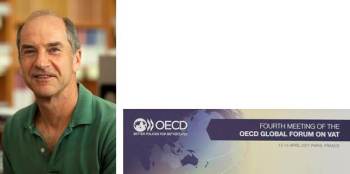 Professor Walter Hellerstein served as panelist at a high-level meeting on tax policy in Paris, France, earlier this month.
 Delighted to congratulate our own Associate Dean
  Delighted to congratulate our own Professor
  On the eve of the 111th Annual Meeting of the
 Professor
  Harlan Grant Cohen
 Due Process Abroad
 Georgia Law’s Dean Rusk International Law Center is honored to host a roundtable on the legacies of the U.S.-Vietnam War as part of next week’s visit to Athens by
  Entitled
  ►
►  ►
►  exchange of notes