GJICL publishes “Children and International Criminal Justice” issue

gjicl43_3

Very pleased to announce that papers from a Georgia Law conference “Children & International Criminal Justice” have just been published by our Georgia Journal of International & Comparative Law.

The conference was cosponsored by Dean Rusk International Law Center and the Georgia Law Project on Armed Conflict & Children, as well as the university’s African Studies Institute, the Planethood Foundation, and the American Society of International Law-Southeast.

About 2 dozen experts came to Athens, Georgia, from as far as Doha and Kinshasa, to discuss the topic at hand. In so doing, they assisted in the preparation of the International Criminal Court Office of the Prosecutor Policy on Children. As detailed in recent posts, available here and here, the public comment period for the draft of that Policy continues through August 5, 2016, with launch of the final document set for mid-November.

bensouda_me2_28oct14cropA keynote speech by ICC Prosecutor Fatou Bensouda (at right) highlighted our conference, and the text of her speech headlines the edition. Other writings link the work of the ICC to the 1989 Convention of the Rights of the Child, examine the experiences of children in armed conflict and similar situations. Student rapporteurs’ accounts of expert breakout sessions additionally treat a range of issues. All these papers contributed significantly to the Policy process.

The edition concludes with students’ notes apart from the conference; one of these, for which I was honored to serve as faculty adviser, examines the issue of child marriage.

Here, in full, is the table of contents for Volume 43, issue 3, with PDF links to each article:

Children and International Criminal Justice Conference

“Convening Experts on Children and International Criminal Justice,” by yours truly, Diane Marie Amann (above, at left), Associate Dean for International Programs & Strategic Initiatives and Emily & Ernest Woodruff Chair in International Law, and also Prosecutor Bensouda’s Special Adviser on Children in & affected by Armed Conflict

“Children and International Criminal Justice,” by Fatou Bensouda (above, at right), Prosecutor of the International Criminal Court

malone“Maturing Justice: Integrating the Convention on the Rights of the Child into the Judgments and Processes of the International Criminal Court,” by Linda A. Malone (right), Marshall-Wythe Foundation Professor of Law and Founding Director of the Human Security Law Center, William & Mary Law School

drumblm“Children, Armed Violence and Transition: Challenges for International Law & Policy,” by Mark Drumbl (left), Class of 1975 Alumni Professor of Law and Director of the Transnational Law Institute at Washington & Lee University School of Law

“Child Protection in Times of Conflict and Children and International Criminal Justice,” by Kerry L. Neal neal(right), Child Protection Specialist, Justice for Children, UNICEF, New York

“Expert Workshop Session: Regulatory Framework,” by Ashley Ferrelli, Eric Heath, Eulen Jang, and Cory Takeuchi (all Georgia Law graduates, who were members of GJICL)

“Expert Workshop Session: Child Witnesses: Testimony, Evidence, and Witness Protection,” by Chelsea Swanson, Elizabeth DeVos, Chloe Ricke, and Andy Shin (now Georgia Law graduates, all then were members of GJICL)

“Expert Workshop Session: The Global Child,” by Haley Chafin, Jena Emory, Meredith Head, and Elizabeth Verner (all Georgia Law graduates, who were members of GJICL)

Student Notes

“Changing the Game: The Effects of the 2012 Revision of the ICC Arbitration Rules on the ICC Model Arbitration Clause for Trust Disputes,” by Colin Connor

“Water, Water Everywhere, But Just How Much is Clean?: Examining Water Quality Restoration Efforts Under the United States Clean Water Act and the United States-Canada Great Lakes Water Quality Agreement,” by Jill T. Hauserman

“REACHing for Environmental and Economic Harmony: Can TTIP Negotiations Bridge the U.S.-EU Chemical Regulatory Gap?,” by Ashley Henson

“Child Marriage in Yemen: A Violation of International Law,” by Elizabeth Verner

(Cross-posted from Diane Marie Amann)
ICC Office of Prosecutor invites public comment on draft Policy on Children

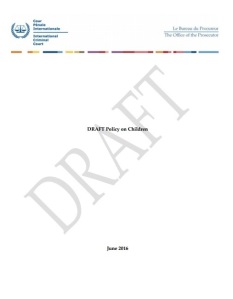
draftpolicyIt is my great honor to note today’s release for public comment of the draft Policy on Children of the International Criminal Court Office of the Prosecutor.

Since my December 2012 appointment as Prosecutor Fatou Bensouda’s Special Adviser on Children in and affected by Armed Conflict, I’ve had the privilege of helping to convene consultations and taking part in the construction of this draft Policy. As part of that process, as noted on page 11 of the draft, we at the Dean Rusk International Law Center, University of Georgia School of Law, were honored in October 2014 to host the Prosecutor, members of her staff, and nearly 2 dozen other experts from academic, nongovernmental groups, and intergovernmental organizations. Our “Children & International Criminal Justice” conference featured a morning public plenary and Prosecutor’s keynote (pictured below), followed by an afternoon of closed-door breakout sessions. (Proceedings from that event, to appear in our Georgia Journal of International & Comparative Law, are nearing publication.)

Addressed in the draft Policy, which spans 37 pages, are:

► Overarching concerns, such as the nature of a child and childhood, the experiences of children in armed conflict and other contexts within the jurisdiction of the ICC, and how the Rome Statute of the ICC and other documents treat crimes against and affecting children; and

► Practical concerns, such as how the Office of the Prosecutor engages with children, in all aspects of its work, including preliminary examination, investigation, charging, prosecution, sentencing, reparations, and external relations.

As stated in the press release accompanying today’s publication:

In highlighting the importance of the Policy, Prosecutor Bensouda stated: “when I assumed 8_events2the role of Prosecutor in June 2012, one of the principal goals I set for the Office was to ensure that we pay particular attention not only to ‘children with arms’, but also ‘children affected by arms.’ This Policy demonstrates our firm commitment to closing the impunity gap for crimes against or affecting children, and adopting a child-sensitive approach in all aspects of our work bearing in mind their rights and best interests. It is also our hope that the Policy, once adopted, will serve as a useful guide to national authorities in their efforts to address crimes against children.”

The Office welcomes public comment on the draft. Such comments should be e-mailed to OTPLegalAdvisorySection@icc-cpi.int, no later than Friday, August 5, 2016.

Following revisions based on the comments, the Office of the Prosecutor expects to publish the final Policy on Children in November of this year.

(Cross-posted from Diane Marie Amann)

Toward “a world founded upon four essential human freedoms”

Recalling President Roosevelt’s call to make the world secure so that everyone may enjoy “the four essential human freedoms,” we at the Dean Rusk International Law Center, University of Georgia School of Law, republish this Georgia Law message.

condemn

Review: Human rights’ importance clear in Amazon “rubber barons” film

embrace

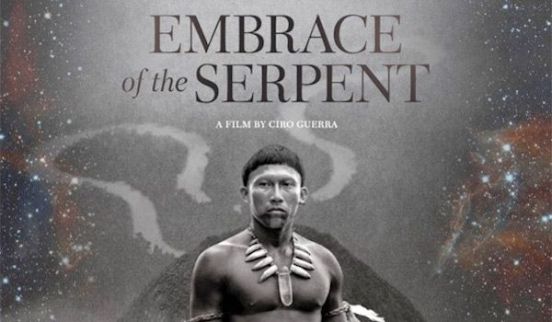
It’s our pleasure today to publish this post, which Hannah Coleman (below right), a member of the Georgia Law Class of 2017, wrote during her spring semester course on International Human Rights Law. Reviewing the feature-length, black-and-white drama Embrace of the Serpent (2015), by Colombia filmmaker Ciro Guerra, Hannah writes:

colemanEmbrace of the Serpent opens with the image of an Amazonian shaman, Karamakate, dressed in the authentic dress of his people. The man peers out over the river and quickly stands up as if he senses something. Then, a long boat pulls in between the trees with two men on board. Karamakate urges the two men to turn around and leave, but the boat continues to move closer and closer. Then, Karamakate pulls out a weapon and threatens the strangers to leave this place immediately. The audience can sense Karamakate’s tension and distrust of these travellers. Regardless of his warnings, the men do not stop, and the boat pulls ashore.

One man, Manduca, appears to be a native of the Amazon, but he is dressed in what Karamakate describes as “white man clothes.” Manduca refers to the second man, a white scientist from Germany named Theo, as his travel partner, and describes Theo’s rapidly weakening state. Karamakate is resistant to the new men, but his interest is peaked when Theo tells him there are still members of his tribe alive in another part of the jungle. The three men eventually set out on a journey, to find a sacred healing plant that they believe will rid Theo of his illness, and to find Karamakate’s people.

The audience is unaware of exactly what time period the film is set in, but the director provides clues in the form of discussions about white rubber barons coming into the forest and forcing the indigenous people into slavery in order to capitalize on the forest’s rubber trees.

The director skillfully focuses the audience’s attention on the impact the colonization is having on the indigenous people by concentrating on the journey of the men. Each time the men pull onto a riverbank to collect supplies, take a break, or camp for the evening, they meet someone different. With each interaction, the audience gains more insight into the horrors the indigenous people are facing due to the rubber barons, and we learn more about why Karamakate distrusts everyone. At one point, the three men arrive at a mission. This part was particularly interesting and disturbing because these people were stripped of their culture and forced into European practices. The mission consists only of young boys who are wearing white robes and not allowed to speak their native language. It was extremely sad to see all of these boys, taken from their parents at a young age, and forced to forget about their past.

After a while, a second story is skillfully woven into the movie’s plot. This story takes place several years later and involves Karamakate and another white man named Evan. Evan is following the diaries of Theo in order to find the same sacred plant Theo needed to cure his sickness. This second story is even more gut wrenchingly sad than the first, because Evan finds Karamakate in the same place that Theo and Manduca found him, only many years have passed, and Karamakate is still alone. It is clear that Karamakate’s memory is fading as he cannot tell Evan any details about his first trip with Theo and Manduca. But he agrees to help Evan find his way to the sacred plant.

boatAs these two follow the same pathway that Karamakate took many years before with Theo and Manduca, the audience is horrified to discover the lasting impact that the colonization has had on the Amazonian cultures. The most disturbing part of this story occurred when the two men arrived at the mission. They discover that this tribe of people has gone mad from engaging in cannibalism and likely inbreeding given their segregation from others. There are no Europeans left at the mission, so the tribe has taken some of the traditional Christian practices and interpreted them. This includes one man claiming to be Jesus Christ and tribe members forced to commit suicide. This portion of the film left a very powerful image of the horrors that entail when a group of people come into a community, strip them of their history, provide new practices, and then leave them confused and alone.

Until this movie, I had no knowledge about the European invasions of the Amazon to collect rubber, and the impact that this colonization had on the numerous cultures in that part of the world. The film demonstrates the impact on the indigenous people through Karamakate. He is the last remaining member of his tribe. Now, Karamakate has resolved himself to live in solitude where he is engrossed in loneliness. The impact of his solitude is really felt when the movie enters into the second story where Karamakate is the only man, living in the same place, alone, struggling to remember his past, and believing he is merely a shadow of his former self that walks the earth detached from his body. I can imagine many tribes in this region felt a very similar impact on their cultures during this invasion of their land. As their people are killed off, their traditions begin fading with their memories.

In my opinion, the most impactful statement of the whole movie was the dedication at the very end. While these images of death, destruction, and the loss of entire cultures, the director chose to end the film by dedicating the work to the song of those cultures and the songs we will never know. Those words have resonated with my since I saw the film. I am struck with such sadness that entire tribes have been forgotten; it is almost as if they never existed.

I am left thinking about how many times this phenomenon has occurred. Where the world calls for an item, such as rubber, so people invade, kill, and destroy everything in their wake in order to satisfy a desire. This being my first human rights class and my first international law class, this film demonstrated to me, once again, the importance of human rights and the uniting of nations to assure that people are not being stripped of their rights. I always knew that issues like this existed, but I never fully grasped the gravity of some of these events. It is interesting, sometimes it takes a movie based on true events to cause people, like me, to realize how history has a way of repeating itself. If we do not take care and protect people, we will continue to witness travesties such as the ones described in Embrace of the Serpent.

Honoring Judge Ward, rights pioneer

ward2crop
Horace T. Ward, a human rights pioneer, died at age 88 over the weekend in Atlanta.

Described by the New Georgia Encyclopedia as “the first African American to challenge the racially discriminatory practices at the University of Georgia.” To be precise, he sought, unsuccessfully, to study law at the university. The law school paid tribute to him by way of this statement, issued today:

“We at the University of Georgia School of Law mourn the passing of a legal giant, the Honorable Horace Taliaferro Ward. A native of LaGrange, Georgia, he earned a bachelor’s degree from Morehouse College and a master’s degree from Atlanta University before applying to Georgia Law in 1950. His application was denied, and it would be eleven years before the University of Georgia admitted African Americans as students. In 2014, the University conferred an honorary Doctor of Laws degree upon Ward – by then, a distinguished federal judge who had represented Martin Luther King, Jr. and others as a civil rights attorney, served in the U.S. Army in Korea, and been a Georgia state legislator. We at Georgia Law remain grateful for Judge Ward’s gracious acceptance of this belated and well-deserved recognition, and we express our sincere condolences to his family.”

(Above, a screenshot from a video of the May 9, 2014, commencement ceremony: Judge Horace T. Ward accepts honorary Doctor of Laws degree from University of Georgia President Jere Morehead, as Rebecca White, then Georgia Law’s dean, looks on. Behind Ward is Maurice Daniels, dean of the university’s School of Social Work and author of a 2001 biography of the judge.)

Learning law on both sides of Atlantic: Join Georgia Law at Oxford Spring 2017

oxford_Smith_traub2016crop

Learning in London: Georgia Law at Oxford Spring 2016 students with Professor-in-Residence James Smith and Kit Traub (JD 1988), Minister-Counselor for Political Affairs (acting), U.S. Embassy

Over the last decade, more than a hundred U.S. students have enriched their legal studies through Georgia Law’s offering of a semester-long experience the University of Oxford, one of England’s most venerable institutions. Providing 12 credits over the course of about 15 weeks, Georgia Law at Oxford is one of the few such semester-long opportunities among U.S. law schools.

According to Georgia Law Professor Joseph Miller, Director of Georgia Law at Oxford:

“The Oxford program is deeply engaging and rewarding. I remember my time there in Spring 2013 so fondly, and I continue to hear from alums of the program about how much they grew and learned in Oxford, one of the world’s ultimate university towns. It’s filled with life and living history, side by side.”

Applications are welcome for Spring 2017. Interested Georgia Law students are encouraged to attend one of 2 information sessions next week, to be held on Monday, March 14, and Wednesday, March 17; interested students from other law schools should contact Professor Miller, getmejoe[at]uga[dot]com, for information about attending as a University of Georgia visiting student.

The exciting Spring 2017 curriculum will be led by professors from both sides of the Atlantic:

Chapman_head► Georgia Law Professor Nathan Chapman (right) will be the Georgia Law professor in residence in Spring 2017. He’ll teach 2 courses, for a total of 7 units:

►► Comparative Constitutional Law: The course will survey the historical and philosophical origins of constitutionalism, with a special emphasis on the development of the liberal constitutional tradition associated with Magna Carta, the English Bill of Rights, the U.S. Constitution, and the French Declaration of the Rights of Man. The bulk of the course will explore the different structures, procedures, and rights provisions in a variety of contemporary constitutional systems (including treaty-based systems such as the European Union). A special concern will be legitimacy and methods of constitutional change.

►► The History of the Common Law: Using the excellent textbook by Langbein, Lettow Lerner, and Smith, this course will survey the development of the common law, courts, and legal profession in England and the United States, giving special emphasis to the ways that the common law and legal practice have diverged in England and American in the past 200 years. The course will conclude by comparing how the practice of law is structured and regulated in both countries today.

enchelmaierTN► Joining Professor Chapman will be Oxford Law’s Stefan Enchelmaier (left), Professor of European and Comparative Law. His 2-unit course, EU Economic Law, will examine the economic components of European Union law.

► Rounding out the curriculum will be a 3-unit Supervised Research Tutorial, modeled on the format of the renowned Oxford tutorial and taught by an array of Oxford Law faculty. Small-group meetings will be devoted to planning or revising the research paper that each student will complete during the semester, on a topic of comparative or international law.

Details and application here.

Cutting-edge law: Georgia-Leuven Global Governance Summer School

For students everywhere, we are delighted to announce a new opportunity to global study law and policy:

RuskStudiesAbroad_postcard_cropped2

Applications are welcome for a brand-new Global Governance Summer School (GGSS), spanning 3 weeks at the University of Leuven, located just minutes from Belgium’s main airport. Students in law and related disciplines, from the United States, Europe, and across the globe, are welcome to enroll. All students will receive a certificate, and U.S. law students also may earn 4 American Bar Association-approved credits.

GGSS launches a new partnership between the Dean Rusk International Law Center, University of Georgia School of Law – which has sponsored summer study abroad in Belgium since 1973 – and the Leuven Centre for Global Governance Studies at the University of Leuven, one of Belgium’s premier research institutions.

Cutting-edge issues will be explored July 10-30, 2016, through 4 courses, all taught in English by leading experts in regional, transnational, and international law and policy:

wouters_janGlobal Governance Overview: GGSS Co-Director Jan Wouters (left), Jean Monnet Chair ad personam EU and Global Governance, Director of the Leuven Centre for Global Governance Studies

Global Human Rights & Security Governance: GGSS Co-Director Diane Marie Amann (right), Associate Dean for International Programs & Strategic Initiatives and Emily & Ernest Woodruff Chair in International Law, Dean Rusk International Law Center, University of Georgia School of LawcropCohen_harlan_columns2012

Global Economic Governance: Harlan Grant Cohen (left), Associate Professor of Law, University of Georgia School of Law, and Managing Editor, AJIL Unboundaxel

Global Governance Practicum: Dr. Axel Marx (left), Deputy Director, Leuven Centre for Global Governance Studies, and Kathleen A. Doty (below right), Associate Director for Global Practice Preparation, Dean Rusk International Law Center, University of kate - CopyGeorgia School of Law

Pivotal to GGSS is a 2-day experts conference to be held at Leuven’s campus in the center of Brussels, capital of Belgium and numerous European Union agencies.

Also supplementing formal study will be professional development trips to the headquarters of the North
europarl_bruxAtlantic Treaty Organization (NATO) and the European Parliament (left) in Brussels, as well as the European Court of Justice in Luxembourg. Rounding out the GGSS offerings will be an optional trip to Flanders Fields, formerly a site of battle and now the resting place of many World War I combatants of all nationalities.

Deadline for applications is Monday, April 4, 2016. Details here; U.S.-based students, apply here. All others, including U.S.-based students seeking more information, should contact Kathleen A. Doty, doty[at]uga[dot]edu.