Professor Amann spoke on “Nuremberg Women as Shapers of International Criminal Justice,” as part of a panel entitled “Hidden Figures in International Courts and Tribunals.” She joined Howard University Professor J. Jarpa Dawuni, Director of the Institute for African Women in Law, and University of Baltimore Law Professor Nienke Grossman, Co-Director of the Center for International and Comparative Law. One of the seminar series’ organizers, Nina Pineau, moderated, while her co-organizer, Rita Guerreiro Texeira, gave opening remarks. Both are doctoral researchers at the Belgium-based Leuven Centre, with which our own Center partnered, pre-pandemic, on our Global Governance Summer School.
Scheduled to run throughout the 2021 spring and fall terms, the Women in International Law seminar commemorates 100 years since the first arrival of women law students at KU Leuven, one of the premier institutions of higher education in Europe. Details on and registration for subsequent sessions, at which experts who work in in Amsterdam, Istanbul, Lisbon, London, Geneva, The Hague, and Rome, on issues including international organizations, international fair trials, and law of the sea, here.
► Superb members of the law faculty, including: Dean Peter B. “Bo” Rutledge, an international arbitration expert; our Center’s Interim Director, Lori A. Ringhand, a scholar of comparative constitutional law and elections law; the Center’s Faculty Co-Directors, Professors Diane Marie Amann, an expert in security governance fields including the laws of war and international criminal justice, and Harlan G. Cohen, an expert in global governance and foreign relations law; Professors Melissa J. “MJ” Durkee, whose expertise includes international business law and international environmental law, Christopher M. Bruner, a comparative corporate governance scholar, Thomas E. Kadri, whose expertise includes cybercrime and global data privacy, Jason A. Cade, an immigration expert, Jonathan Peters, a journalism and law professor expert in international media and free speech, Anne Burnett, foreign and international law librarian, Elizabeth Weeks and Fazal Khan, health law specialists, Kent Barnett, Sonja West, and Elizabeth Chamblee Burch, who have presented overseas on administrative law, media law, and civil procedure, respectively, Walter Hellerstein, a world-renowned tax specialist, Nathan S. Chapman, a scholar of due process and extraterritoriality, Michael L. Wells, a European Union scholar, and Andrea Dennis, whose book “Rap on Trial” has garnered international media attention.
► Talented students pursuing JD, MSL, and LLM degrees, including: the staffers and editors of the Georgia Journal of International and Comparative Law who produce one of the country’s oldest student journals, and who led our January 2021 conference, “The Future of Global Healthcare Governance”; the advocates on our Willem C. Vis International Commercial Arbitration Moot and Philip C. Jessup International Law Moot Court teams; students in our Appellate Litigation Clinic who argue asylum cases before U.S. Courts of Appeals; participants in our full-semester NATO Externship and in our Global Externships; and the student leaders of our International Law Society.
► Academics, practitioners, and policymakers, from all over the world, who have contributed to our events – conferences, workshops, and lectures, as well as our International Law Colloquium and Consular Series.
► Graduates who excel as partners in international commercial law firms, as heads of nongovernmental organizations and international organizations, as in-house counsel at leading multinational enterprises, and as diplomats and public servants – and who give back through mentoring and other support.
With thanks to all, we look forward to continue strengthening our initiatives in international, comparative, transnational, and foreign relations law – not least, in the preparation of Georgia Law students to practice in our 21st C. globalized legal profession.
Melissa “MJ” Durkee, Allen Post Professor at Georgia Law, is leading the event, which will bring together a multinational group of scholars in law and social sciences. It’s cosponsored by the American Society of International Law and ASIL’s Interest Group on International Legal Theory. Durkee serves as Vice Chair of that interest group; Chair is her Georgia Law colleague Harlan G. Cohen, Gabriel M. Wilner/UGA Foundation Professor in International Law and Faculty Co-Director of our Center. Registration is available here.
Scheduled to speak at the conference, which will take place 1-5 p.m. Friday, September 11, and Friday, September 18:
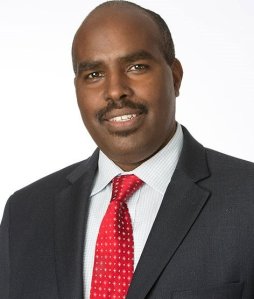
◄ Olabisi Akinkugbe, Assistant Professor, Schulich School of Law, Dalhousie University, Canada
► William C. Banks, Board of Advisors Distinguished Professor, Syracuse University College of Law, New York
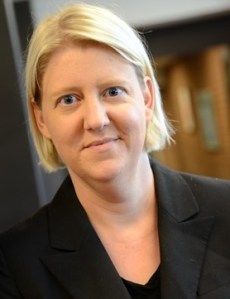
◄ Joshua Barkan, Associate Professor, Department of Geography, University of Georgia
► Kristen Boon, Miriam T. Rooney Professor of Law, Seton Hall School of Law, New Jersey
◄ Rachel Brewster, Jeffrey and Bettysue Hughes Professor of Law, Duke Law School, North Carolina
► David Ciepley, Fellow, Center for Advanced Study in the Behavioral Sciences, Stanford University, California
◄ Laura Dickinson, Oswald Symister Colclough Research Professor of Law, George Washington School of Law, District of Columbia
► Melissa “MJ” Durkee, Allen Post Professor, University of Georgia School of Law
◄ Benjamin Edwards, Associate Professor of Law, William S. Boyd School of Law, University of Nevada, Las Vegas
► James Gathii, Wing-Tat Lee Chair in International law, Loyola University Chicago School of Law, Illinois
◄ Sarah Haan, Associate Professor of Law, Washington and Lee School of Law, Virginia
► Catherine Hardee, Associate Professor of Law, California Western School of Law
◄ Doreen Lustig,Associate Professor, Tel Aviv University, Buchmann Faculty of Law, Israel
► Kish Parella, Associate Professor of Law, Washington and Lee University School of Law, Virginia
◄ Dalia Palombo, Senior Research Fellow, Institute for Business Ethics, University of St. Gallen, Switzerland
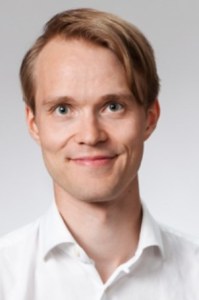
► Mikko Rajavuori,Academy of Finland Post-Doctoral Fellow, University of Eastern Finland Law School
◄ Ingrid Wuerth, Helen Strong Curry Chair in International Law, Vanderbilt School of Law, Tennessee
They’ll be examining aspects of the conference’s concept note:
“In international law, scholars and practitioners struggle to attribute rights and responsibilities between state and private entities in areas as diverse as military contracting, environmental accountability, human rights, international investment, and cyber espionage and warfare. In the corporate governance realm, attributing responsibility to entities is increasingly challenging in the context of globally dispersed corporate families with intricate parent-subsidiary structures; identity attribution has also produced headlining debates.
“While attribution questions fuel important conversations in both corporate and international law, the two literatures are not often in conversation. Questions of attribution in both domains nevertheless are becoming more complex and urgent, and the fields increasingly intersect: In some areas of law, attribution doctrines must determine the dividing line between states and firms. Doctrines of attribution construct the public domain, and thereby also the private. Attribution questions in both domains reinvigorate classic inquiries about the nature of a corporation, the relationship between private entities and the state, and the proper function of the law in mediating between the two.
“This conference will draw together corporate and international legal scholars, as well as thinkers outside the law, in order to cross-pollinate these two fields and the questions at their intersection, and to unearth promising theoretical tools. It will consider theoretical and doctrinal approaches to attribution, potential consequences of these approaches, and whether they may reconcile the ambiguities and deficiencies that drive current debates. The project aims to offer a new point of entry to enduring theoretical and doctrinal questions about the nature of corporations, of states, and of the relationship between them. It is particularly relevant at a time where corporations are ‘jurisdictionally ambiguous and spatially diffuse,’ states are deferential, dependent or outflanked, and multilateralism is at an ebb.”
Full details, including registration for this online event, are available here.
In this post Professor Diane Marie Amann, the Emily & Ernest Woodruff Chair in International Law and Faculty Co-Director of our Dean Rusk International Law Center here at the University of Georgia School of Law, discusses her most recent presentation, at an innovative online seminar.
What an honor to present my work in progress, “Intersectional Sovereignties: Dr. Aline Chalufour, Woman at Nuremberg – and at Paris, Ottawa, and Dalat” last week in “Global History and International Law”, a months-long seminar under way online.
Organizer of this superb scholarly offering is Dr. Anne-Sophie Schoepfel of the Institut d’études politiques de Paris, better known as SciencesPo. Her affiliation struck me as serendipitous, given that the subject of my paper was a graduate of SciencesPo. Born in 1899, Chalufour was also the 6th woman ever to earn a Ph.D. in international law from the University of Paris. In 1945-1946, she was the only woman lawyer on the French team that joined U.S., British, and Soviet allies in prosecuting vanquished Nazi leaders at Nuremberg.
Chalufour is one of the women on whom I’m focusing in my book-length study of women’s roles at that first Nuremberg trial, before the International Military Tribunal. But the richness of her experiences inspired this separate article.
Among the other highlights in Chalufour’s 90-year life: practice before the Paris Bar; activism in national and international feminist groups; teaching at colonial schools in what’s now Vietnam; serving de Gaulle’s Fighting French as a propagandist in Canada; gathering evidence about war crimes from liberated ex-detainees; taking part as the only French prosecutor in Britain’s first trial on Ravensbrück, a Nazi concentration camp for women; and, starting a few years after Nuremberg, service as a national judge.
My paper considers these episodes in light of of 3 theorizations: 1st, the shared sovereignty of the post-World War periods; 2d, sovereignty dynamics in colonial and imperial sites; and 3d, sovereignties of the person, imagined and corporeal. The paper then examines interrelations among these 3.
Serving as my discussant at last Wednesday’s session was Dr. George Giannakopoulos of King’s College London and NYU London. Numerous other participants offered valuable comments.
This was the 5th session in the seminar, which is slated to run through June 24 and has attracted law and history scholars from Asia and Latin America as well as Europe and North America. Next up, at 3 pm EDT this Wednesday, May 20, are 2 papers within the umbrella theme “Imperial Origins of the World Order”; details here.
What’s more, in due course Dr. Schoepfel and her SciencesPo colleagues are posting edited podcasts of each session. Already available at the seminar’s website and its YouTube channel:
“Epistemic Communities in Exile: Coining ‘Crimes against Humanity’ at London, 1940-45” by Dr. Kerstin von Lingen of the University of Vienna, Austria and author of a new journal article on this subject, as well as ‘Crimes against Humanity’. Eine Ideengeschichte der Zivilisierung von Kriegsgewalt 1864-1945 (Paderborn 2018), a monograph soon to be available in English. Discussants were Dr. Barak Kushner of the University of Cambridge, England, and Dr. Sabina Ferhadbegović of Imre Kertész Kolleg Jena, Germany.
“Genocide in Historical Perspective. The Language of Trangression” by Dr. Dirk Moses, of the University of Sydney, Australia, and author of The Problems of Genocide. Permanent Security and the Language of Transgression (forthcoming Cambridge University Press). Discussant was Dr. Charles Maier of Harvard University.
In this post Professor Diane Marie Amann, the Emily & Ernest Woodruff Chair in International Law and Faculty Co-Director of our Dean Rusk International Law Center at the University of Georgia School of Law, discusses her recent international law commentary.
Caution in giving too much credit, or blame, to one individual formed the focus of my contribution to last week’s symposium on “The Next ICC Prosecutor.”
My post began by welcoming the rich dialogue – in anticipation of December’s election of the 3d Prosecutor of the International Criminal Court – that had unfolded all week. Fueling that discussion were contributions from a couple dozen commentators on international criminal law: Ewan Brown, Danya Chaikel, David Crane, Geoff Dancy, Tom Dannenbaum, Christian De Vos, Elizabeth Evenson, Kate Gibson, James Goldston, Douglas Guilfoyle, Kevin Jon Heller, Mark Kersten, Patryk Labuda, Stephen Lamony, Luis Moreno Ocampo, Jonathan O’Donohue, Mariana Pena, Priya Pillai, William Schabas, Melinda Taylor, Valerie Oosterveld, Beth Van Schaack, and Kate Vigneswaran, Alex Whiting, and William H. Wiley.
My post then pointed to risks involved in “placing too much weight on the person and position of Prosecutor.” These included:
the risk of generating expectations, “inevitably doomed to disappoint”; and
the risk that “the very association of a complex project with a lone person or position” obscures the myriad ways that many other actors “play roles, in helping to construct perceptions of the project and in contributing, or not, to the project.”
My contribution is available in full here. For additional posts in the symposium, see list here.
“Conventionally, customary international law is developed through the actions and beliefs of nations. International treaties are interpreted, in part, by assessing how the parties to the treaty behave. This Article observes that these forms of uncodified international law—custom and subsequent treaty practice—are also developed through a nation’s reactions, or failures to react, to acts and beliefs that can be attributed to it. I call this ‘attributed lawmaking.’
“Consider the new commercial space race. Innovators like SpaceX and Blue Origin seek a permissive legal environment. A Cold-War-era treaty does not seem adequately to address contemporary plans for space. The treaty does, however, attribute private sector activity to nations. The theory of attributed lawmaking suggests that the attribution renders the activity of private actors in space relevant to the development of binding international legal rules. As a doctrinal matter, private activity that is attributed to the state becomes “state practice” for the purpose of treaty interpretation or customary international law formation. Moreover, as a matter of realpolitik, private actors standing in the shoes of the state can force states into a reactive posture, easing the commercially preferred rules into law through the power of inertia and changes to the status quo. Attributed lawmaking is not a new phenomenon but it may have increasing significance at a time when multilateral lawmaking is at an ebb, lines between public and private entities are blurring, and the question of attribution becomes both more complex and more urgent.”
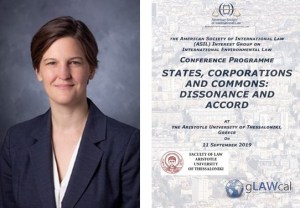
Professor Melissa J. Durkee, the J. Alton Hosch Associate Professor of Law here at the University of Georgia School of Law, presented her international law scholarship in Greece earlier this month.
Organizing the pre-conference meeting was the International Environmental Law Interest Group of the American Society of International Law. It took place at the Aristotle University of Thessaloniki, in northeastern Greece, and featured, in addition to Durkee, scholars from Germany, Greece, Italy, Russia, Slovenia, and the United Kingdom.
THE HAGUE – On this final day of the 2019 Global Governance Summer School, students visited two preeminent international tribunals — the International Court of Justice and the International Criminal Court — for high level briefings. They were also treated to a visit from Dr. Kaitlin Ball (JD ’14), a Georgia Law alumna who recently finished a PhD at Cambridge and is living in Europe.
The group started the day at the International Court of Justice (ICJ) for an audience with Hendrik Denys, law clerk to the Honorable Joan Donoghue, the American judge on the International Court of Justice. Mr. Denys, an alumnus of our partner school, KU Leuven, spoke with students about the history of the Peace Palace, the structure and procedure of the Court, and several representative decisions of the ICJ’s jurisprudence. He also provided advice for preparing a career in international law.
In the afternoon, the group visited the International Criminal Court (ICC), located on the dunes near The Hague’s North Sea coast. Student first had a meeting with Prosecutor Fatou Bensouda, for whom our summer school’s co-director, Georgia Law Professor Diane Marie Amann, serves as Special Adviser on Children in & affected by Armed Conflict. Bensouda described her own path to practicing international criminal law. While acknowledging the barriers to achieving justice, she expressed the urgency of continuing the effort, on behalf of global society as well as the victims of international crimes.
The second audience at the ICC was with the Honorable Kimberly Prost of Canada, who serves as a Judge in the Trial Division. Judge Prost discussed the history of the Court and the many of the challenges facing it. She also emphasized the important concept of complementarity in regards to the ICC’s relationship to national courts.
Students also had the opportunity to view the confirmation of charges against Al Hassan, who is suspected of war crimes and crimes against humanity allegedly committed in 2012 and 2013 in Timbuktu, Mali. During the portion of the hearing that time permitted the group to observe, students heard from one of the Legal Representatives of the Victims, who emphasized the impact of the alleged crimes.
All in all, it was a great day, a successful trip, and we look forward to returning next year!
From left, Ayman Tartir, Steven Miller, Gamble Baffert, Charles Wells, Emily Snow, Holly Stephens, Lauren Taylor, Briana Blakely, Jessica Parker, and Kathleen Doty.
In the afternoon, the group visited Escher in Het Paleis, the museum dedicated to M.C. Escher, set in Queen Emma’s winter palace. There, students took in masterpieces, and thoroughly enjoyed the interactive top floor of the museum. Everyone’s inner child came out to play!
Tomorrow, students will visit the International Court of Justice and the International Criminal Court before concluding the 2019 Global Governance Summer School.



 ◄
◄  ►
►  ◄
◄  ►
►  ◄
◄  ►
►  ◄
◄  ◄
◄  ►
►  ◄
◄  ►
►  ◄
◄  ►
►  ◄
◄  ►
► 

 In this post Professor
  Professor
  Professor
  The group started the day at the International Court of Justice (ICJ) for an audience with
  In the afternoon, the group visited the International Criminal Court (ICC), located on the dunes near The Hague’s North Sea coast. Student first had a meeting with Prosecutor
  The second audience at the ICC was with the
  Students also had the opportunity to view the
  Students spent the morning meeting with lawyers from the
 exchange of notes