Georgia Law Professor Thomas Kadri selected as Visiting Fellow of the Law Department of the European University Institute in Florence, Italy

University of Georgia School of Law Professor Thomas E. Kadri was selected as a Visiting Fellow at the Law Department of the European University Institute in Florence, Italy. Kadri’s fellowship will be supported by a Sarah Moss Fellowship and the Rusk Faculty Scholar-in-Residence Program provided by the Dean Rusk International Law Center.

During his time in Florence, Kadri will expand his ongoing research pertaining to the legal and technical regulation of AI-generated “deepfakes” and focus on the European regulatory approaches to this topic. In 2024, Kadri authored his third book, Dilemmas in Digital Abuse, which discusses related topics including harmful technological advancements and the corresponding regulatory responses.

Kadri is an Assistant Professor of Law at Georgia Law Law, and his research focuses on torts and criminal law, with an emphasis on how technology, law, and social norms enable and affect privacy, speech, and abuse. His scholarship appears in journals including the Harvard Law Review Forum, UCLA Law Review, Texas Law Review, Utah Law Review, Maryland Law Review, and Journal of Free Speech Law and he has published shorter pieces in The New York Times and Slate. His course offerings include Torts, Cybercrime, and Regulating Digital Abuse.
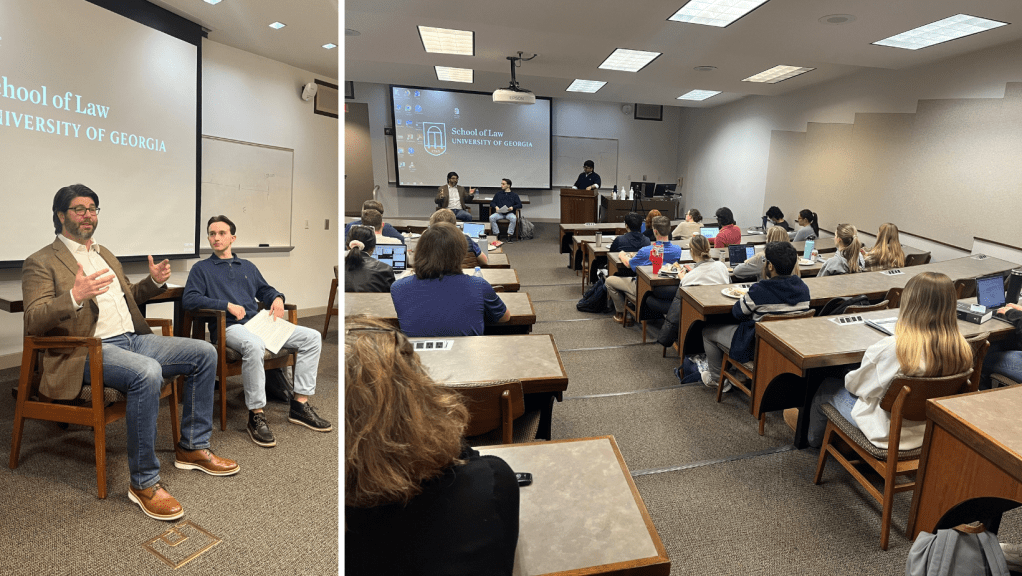
Clete Johnson (J.D., ’04) discusses TikTok and national security at Georgia Law

University of Georgia School of Law alumnus Clete Johnson (J.D., ’04), Partner at Wilkinson Barker Knauer LLP and non-resident senior fellow with the Strategic Technologies Program at the Center for Strategic and International Studies (CSIS), recently spoke to students about TikTok and its national security implications at an event hosted by the Dean Rusk International Law Center, the International Law Society, and the Privacy, Security, and Technology Law Society.

Johnson discussed how being in law school during 9/11 galvanized his interest in national security law. After graduation, he moved to DC and was able to gain experience in a wide variety of national security and cybersecurity leadership roles. His work in these national security and intelligence communities, in the regulatory arena, and in the Executive Branch now inform his advocacy to improve the efficiency of government-industry collaboration. Johnson stated that we are at an inflection point: incredible breakthroughs in technology and connectivity have the potential to solve the grand challenges of our time, but, as large holders of data, they can pose dangers to our freedoms.

Johnson was most recently the senior adviser for cybersecurity and technology at the U.S. Department of Commerce, where he coordinated the department’s cybersecurity initiatives and support for the Commission on Enhancing National Cybersecurity. He was also the department’s representative for National Security Council staff deliberations on cybersecurity, encryption, and other policy issues at the intersection of technology and security. Previously, Johnson was appointed by the Federal Communications Commission (FCC) chairman as the FCC’s first chief counsel for cybersecurity. In that position, he helped develop the FCC’s cybersecurity mission, focusing on creating new legal mechanisms for government collaboration with private sector stakeholders to improve the security and reliability of communications infrastructure. He was also the primary drafter of the charter for the Cybersecurity Forum for Independent and Executive Branch Regulators, a coordinating body of regulatory agencies presently chaired by the FCC. Prior to his time at the FCC, Johnson was Senator John D. Rockefeller IV’s designated counsel on the Senate Intelligence Committee and counsel for defense, foreign policy, and international trade. In those roles, he was a leading staffer on bipartisan Senate cybersecurity initiatives and the primary staff drafter of the legislation that codified the National Institute of Standards and Technology’s collaborative process to work with industry to develop and update the Cybersecurity Framework.

Before his government service, Johnson worked for a major Washington-based law firm, where he practiced in the areas of international trade, defense, and security. Earlier, he served as a U.S. Army officer in Germany, Korea, and the Balkans. He is a graduate of the University of Georgia School of Law, where he was editor-in-chief of the Georgia Journal of International and Comparative Law, and he received a master of science degree in international relations from the London School of Economics and Political Science. He received his bachelor’s degree from Harvard University, where he graduated cum laude, cross-enrolled at the Massachusetts Institute of Technology for service as executive officer of its Army ROTC Paul Revere Battalion.

Alexander White (J.D., ’09), Bermuda’s Privacy Commissioner, speaks at UGA Law

University of Georgia School of Law alumnus Alexander White (J.D., ’09), Privacy Commissioner of Bermuda, spoke to students about current developments and careers in the field of data privacy and cybersecurity in the Dean Rusk International Law Center’s Louis B. Sohn Library this week.

Students from UGA Law’s International Law Society and Privacy, Security, and Technology Law Society attended the talk and asked questions regarding recent data privacy and cybersecurity regulations and comparative privacy regimes, such as Europe’s General Data Protection Regulation. White provided insight into the various ways students can enter into this rapidly-evolving field at both the domestic and international level, emphasizing the importance of taking related coursework and participating in international programming during law school. He mentioned the transformative impact of his own Global Externship Overseas experience in Cambodia, work that he believes mirrors his current position’s mandate to “create laws around the proper and ethical way to do something.” White also offered his perspective on emerging concepts such as Artificial Intelligence and how they impact data privacy, specifically for regulators. 

White started his career in insurance and became certified in multiple jurisdictions under the International Association of Privacy Professionals. In 2014, he transitioned into the privacy field with his appointment as the State Deputy Chief Privacy Officer for the South Carolina Department of Administration, tasked with developing a statewide privacy program. White was appointed by former Secretary Jeh Johnson to the U.S. Department of Homeland Security Data Privacy and Integrity Advisory Committee (DPIAC) for a three-year term in 2017. Three years later, the Governor of Bermuda appointed White as founding head of the country’s data protection authority as Bermuda’s first Privacy Commissioner in 2020. White also teaches a Comparative Privacy Law course at UGA Law.

UGA Law Professor Kadri presents on “Cyberflashing” and other projects at gatherings in Germany

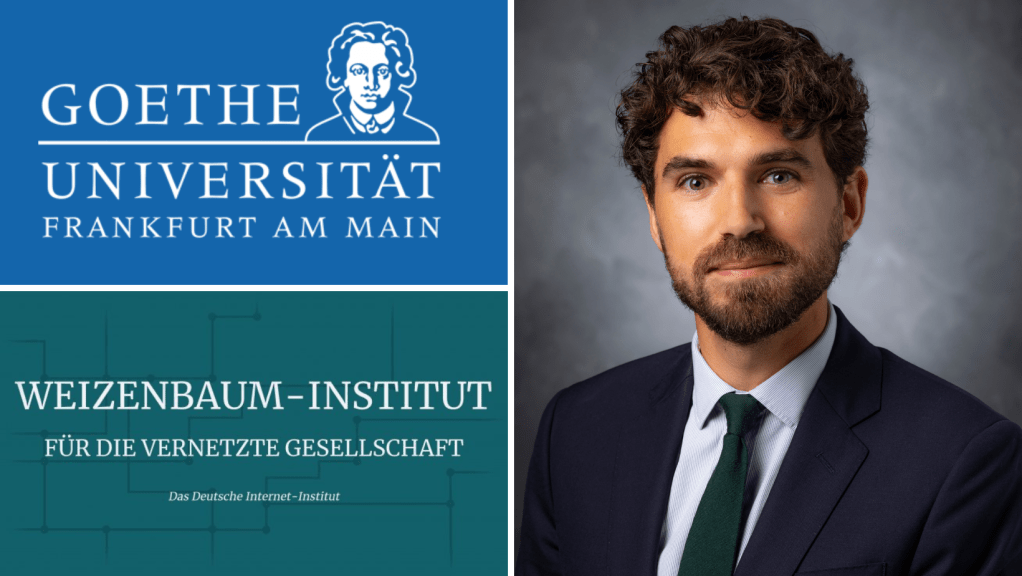
University of Georgia School of Law Professor Thomas E. Kadri presented his article “Cyberflashing,” co-authored with Harvard Law School SJD candidate Brenda Dvoskin, at a workshop hosted by Goethe University’s Center for Critical Computational Studies in Frankfurt, Germany. He also discussed several current works-in-progress during a visit to the Weizenbaum Institute for the Networked Society in Berlin, Germany. 

At these gatherings, Kadri discussed several of his current projects, including his work investigating how large technology companies have adopted particular strands of feminism to gain, exercise, and justify their power to regulate sexual speech and imagery. He also presented a related project that explores a recent legislative trend to regulate “cyberflashing,” which is the act of sending a nude image to a person without receiving prior consent. Lastly, Kadri discussed a piece proposing a regulatory response to how data brokers are enabling and exacerbating interpersonal abuse like stalking and harassment. 

The Weizenbaum Institute aims to investigate “the ethical, legal, economic and political aspects of digital change” to create an empirical basis for “responsible digitalisation.” Kadri explains how his current research fits within this framework:

“With each new innovation in the digital age, it can be tempting to assume that our capacity to use technology in a certain way means that we should use it in that way. My work, in part, seeks to resist this kind of technological determinism. Digitalization has offered huge benefits for humanity, but that doesn’t mean humanity should abdicate responsibility for judging — including through law — how we should use technology. Though it’s not for me to say, my hunch is that this kind of critical approach to technology (and law) would align with the Weizenbaum Institute’s aims to create a foundation for “responsible digitalisation.”

Kadri is an Assistant Professor of Law at UGA Law, and his research focuses on torts and criminal law, with an emphasis on how technology, law, and social norms enable and affect privacy, speech, and abuse. His scholarship appears in journals including the Harvard Law Review Forum, UCLA Law Review, Texas Law Review, Utah Law Review, Maryland Law Review, and Journal of Free Speech Law and he has published shorter pieces in The New York Times and Slate. His course offerings include Torts, Cybercrime, and Regulating Digital Abuse. 
Prior posts on Kadri’s scholarship can be found here

Georgia Law Professor Thomas Kadri and McGill Law Professor Ignacio Cofone publish transnational analysis of cy près settlements in privacy class actions

University of Georgia School of Law Professor Thomas Kadri (above left) and McGill University Faculty of Law Professor Ignacio Cofone (above right) have published a chapter exploring a controversial procedural mechanism in privacy class actions.

The chapter, entitled “Cy Près Settlements in Privacy Class Actions,” was first featured in Class Actions in Privacy Law, a 2020 Routledge volume that Cofone edited. A Spanish translation recently was published, under the title “Acuerdos Cy Près en Acciones de Clase sobre Privacidad,” in 2 Revista Jurídica Austral 33 (2021).

Here’s the abstract for this chapter by Kadri and Cofone, as set out at SSRN:

This essay considers the potential for using cy près settlements in privacy class actions. These settlements are a procedural mechanism to overcome distribution challenges in class actions. When it is too burdensome to prove individual claims or too costly to distribute damages to class members, courts on occasions award damages to a charity or non-profit organization involved in work serving the class members’ interests. These controversial settlements have been gaining attention in various legal systems. The U.S. Supreme Court recently considered their propriety in Frank v. Gaos, while courts in Canada and several Latin American countries have been experimenting with cy près as well. The essay uses these cases to explore how this procedural mechanism can be particularly useful in privacy class actions. While cy près settlements require proper judicial supervision to prevent abuse, the chapter concludes that they can help to deter privacy invasions, enforce privacy laws, and provide plaintiffs with some measure of indirect relief when those laws are violated.