
Georgia Law Professor Hellerstein publishes book and article exploring tax law and digital commerce

Walter Hellerstein, Distinguished Research Professor & Shackelford Distinguished Professor in Taxation Law Emeritus here at the University of Georgia School of Law, has 2 new publications:

► The second edition of his book Taxing Global Digital Commerce has just been issued by Wolters Kluwer. It was co-authored with Professor Arthur Cockfield and Professor Marie Lamensch, of the law faculties of Queen’s University Law in Canada and Vrije Universiteit Brussel in Belgium, respectively. Here’s the publisher’s overview:

Taxing Global Digital Commerce studies the tax challenges presented by cross-border digital commerce and reports on the rapidly changing environment surrounding the challenges. Digital commerce – the use of computer networks to facilitate transactions involving the production, distribution, sale, and delivery of goods and services – has grown from merely streamlining relations between consumer and business to a much more robust phenomenon embracing efficient business processes within a firm and between firms. Inevitably, the related taxation issues have grown as well. This latest edition of the preeminent text on the taxation of digital transactions revises, updates and expands the book’s coverage that reflects the significant changes that had been made to the content of the earlier volumes. It includes a detailed and up-to-date analysis of income tax and VAT developments regarding digital commerce under the Organisation for Economic Co-operation and Development and G20 Base Erosion and Profit Shifting (BEPS) reforms. It then explores the new EU VAT rules for both tangible and intangible Internet supplies and the implications of digital commerce for US state retail sales and use tax regimes, taking account of the significant developments resulting from the 2018 US Supreme Court decision in Wayfair.

► Also just published is a new article by Professor Hellerstein, entitled “Reflections on the Cross-Border Tax Challenges of the Digital Economy.” It appears at 96 Tax Notes International 671 and in 94 Tax Notes State 615.

Georgia Law Professor Cohen presents on “Nations and Markets” at Amsterdam ACIL-ESIL conference

Harlan G. Cohen, Gabriel M. Wilner/UGA Foundation Professor in International Law and Faculty Co-Director of the Dean Rusk International Law Center at the University of Georgia School of Law, was among more than 40 scholars from around the world who presented their scholarship earlier this month at at the International Economic Law and Security Interests Conference at the University of Amsterdam in the Netherlands.

Cohen spoke on “Nations and Markets” as part of a plenary panel entitled “The Public and the Private: Security Concerns and the Future of International Economic Governance.”

Co-hosts of the 2-day conference were the university’s Amsterdam Center for International Law and the Interest Group on International Economic Law of the European Society of International Law.

Georgia Law Professor MJ Durkee publishes “Interstitial Space Law” at Washington University Law Review

Professor Melissa J. Durkee, the J. Alton Hosch Associate Professor of Law here at the University of Georgia School of Law, has published her article “Interstitial Space Law” in the latest issue of the Washington University Law Review.

Here’s the abstract:

“Conventionally, customary international law is developed through the actions and beliefs of nations. International treaties are interpreted, in part, by assessing how the parties to the treaty behave. This Article observes that these forms of uncodified international law—custom and subsequent treaty practice—are also developed through a nation’s reactions, or failures to react, to acts and beliefs that can be attributed to it. I call this ‘attributed lawmaking.’

“Consider the new commercial space race. Innovators like SpaceX and Blue Origin seek a permissive legal environment. A Cold-War-era treaty does not seem adequately to address contemporary plans for space. The treaty does, however, attribute private sector activity to nations. The theory of attributed lawmaking suggests that the attribution renders the activity of private actors in space relevant to the development of binding international legal rules. As a doctrinal matter, private activity that is attributed to the state becomes “state practice” for the purpose of treaty interpretation or customary international law formation. Moreover, as a matter of realpolitik, private actors standing in the shoes of the state can force states into a reactive posture, easing the commercially preferred rules into law through the power of inertia and changes to the status quo. Attributed lawmaking is not a new phenomenon but it may have increasing significance at a time when multilateral lawmaking is at an ebb, lines between public and private entities are blurring, and the question of attribution becomes both more complex and more urgent.”

The article’s also available at SSRN.

Georgia Law Professor Amann’s UN Audiovisual Lecture marks 30th anniversary of Child Rights Convention

This week’s global commemoration of the 30th anniversary of the Convention on the Rights of the Child includes a special contribution from a Faculty Co-Director of the Dean Rusk International Law Center here at the University of Georgia School of Law:

The United Nations Audiovisual Library of International Law has just published “Child Rights, Conflict, and International Criminal Justice,” a lecture by Georgia Law Professor Diane Marie Amann, holder of the Emily & Ernest Woodruff Chair in International Law. As described in prior posts, Amann’s expertise in this field extends to her service as Special Adviser to International Criminal Court Prosecutor Fatou Bensouda on Children in & affected by Armed Conflict; that said, she produced this lecture in her personal capacity.

Amann’s 41-minute lecture was taped 8 November 2019 at the Codification Division of the UN Office of Legal Affairs, UN Headquarters, New York. It is available in video (here) and audio formats (SoundCloud, Apple Podcasts, and Google Podcasts).

As Amann posted at her personal blog, the lecture begins by setting forth particular harms that children endure in armed conflict and similar violence. It proceeds to trace the developments in child rights that led to adoption, on 20 November 1989, of the Convention on the Rights of the Child. Next, it describes parallel developments in two other key legal fields, international humanitarian law and international criminal law. After looking at relevant provisions of the Child Rights Convention and other instruments – in particular, the 1998 Rome Statute of the International Criminal Court – the lecture concludes by evaluating efforts to ensure the rights of the child by preventing and punishing international crimes against and affecting children.

Also provided at Amann’s AVL Faculty Page is a list of related materials on which her lecture relies.

Amann said this about the treaty that is enjoying a celebration, in Wednesday’s “World Children’s Day” and throughout this week:

“As for the 1989 Child Rights Convention itself – today it has 196 parties, including the Holy See, the State of Palestine, and every UN member state except the United States of America. Because of its nearly universal acceptance, as well as its comprehensive contents, the Convention has served for the last thirty years as the pre-eminent global charter on child rights and protection.”

Scholarly achievements, thriving initiatives featured in newsletter of Dean Rusk International Law Center

newletter_angle

For a recap of the year’s global law-and-practice accomplishments here at the University of Georgia School of Law, have a look at the just-published annual newsletter of the Dean Rusk International Law Center. Features include:

► Celebrating the scholarly achievements of our many other globally minded faculty and staff, including Diane Marie Amann, Christopher Bruner, Thomas V. Burch, Anne Burnett, Jason A. Cade, Nathan S. Chapman, Harlan G. Cohen, Kathleen A. Doty, Melissa J. Durkee, Walter Hellerstein, Lori Ringhand, Usha Rodrigues, and Peter B. “Bo” Rutledge.

► Events past and future, including day-long conferences cosponsored with the Georgia Journal of International & Comparative Law, public lectures and our Consular Series of lunch talks with Atlanta-based diplomats, cosponsorship of panels at regional and national international law meetings, and the upcoming International Law Colloquium Series.

► Initiatives aimed at preparing our J.D. and LL.M. students for global legal practice, including our Global Externships and our Global Governance Summer School, plus support for students’ organizations and international advocacy teams.

The full newsletter is here.

Australian Broadcasting Co. features Georgia Law Professor Dennis and new coauthored book, “Rap Lyrics on Trial”

A just-published article at ABC News, a digital publication of the Australian Broadcasting Co., features Georgia Law Professor Andrea L. Dennis (right), who holds the law school’s John Byrd Martin Chair of Law.
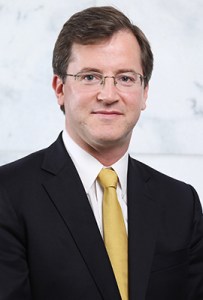
The article poses this headline question:  “Can violent rap lyrics be evidence of criminality or does the law misunderstand music’s biggest genre?” In seeking an answer, ABC music & pop culture reporter Paul Donoughue focuses on the new book Rap on Trial: Race, Lyrics, and Guilt in America (The New Press 2019), which Dennis, a criminal law expert, has coauthored with University of Richmond Liberal Arts Professor Erik Nielson.

The ABC article notes that the coauthors identified more than “500 cases in the US alone of rap lyrics being used in criminal trials, at times leading to inappropriate or wrongful convictions,” and continues:

“Few would say Johnny Cash’s famous lyric ‘I shot a man in Reno just to watch him die’ was evidence of the country singer’s murderous leanings, they write.

“‘It is quite clear to us that this [rap] is the only fictional art form that is used in this way,’ Professor Dennis said, adding that race was an essential factor in the story.

“There are very limited examples of it being appropriate, Professor Dennis said. For example, when a lyric accurately describes a specific crime.

“‘Usually, what’s happening is the lyrics are somewhat generic — talking about general crime or very common types of behaviour that almost any rap artist might talk about,’ she said.”

Donoghue further compares the U.S. situation to that in Australia, where speech protections are less strong but where no similar prosecution has yet taken place.

The full Australian article is available here; Dennis’ book, here.

Georgia Law Professor Bruner presents on comparative corporate governance methods at Fordham Law workshop

Christopher Bruner, the Stembler Family Distinguished Professor in Business Law here at the University of Georgia School of Law, took part this past weekend in a 2-day Comparative Corporate Governance Workshop at Fordham Law School in New York.

The  workshop centered around a new volume in progress, Research Handbook on Comparative Corporate Governance (Edward Elgar, forthcoming).

Bruner presented his own draft chapter, “Methods of Comparative Corporate Governance,” and also commented on draft chapters by two other contributors.

Georgia Law Dean Bo Rutledge, student Katherine Larsen publish commentary on promise of new international mediation treaty

A new treaty seems poised to raise the profile of mediation as a way of resolving disputes, according to commentary by the dean and a student researcher here at the University of Georgia School of Law.

Coauthoring the Daily Report article, entitled “Singapore Convention Presents an Opportunity for Georgia in Mediation,” were international dispute resolution expert Peter B. “Bo” Rutledge, Dean and Herman E. Talmadge Chair of Law at Georgia  Law, and 3L Katherine Larsen.

The United States belongs to a number of treaties – most notably, the UN Convention on the Recognition and Enforcement of Foreign Arbitral Awards, concluded in New York in 1958 and so known as the New York Convention – that make make arbitration awards enforceable. This membership, the article observed, “has given arbitration a comparative advantage over other forms of dispute resolution.”

But that could change once the 2018 UN Convention on International Settlement Agreements Resulting from Mediation – named the Singapore Convention in recognition of the city where it was concluded last December –  enters into force. Some predict that could happen within a year, the authors wrote, then focused on the significance of this for the state of Georgia:

“Much like it adopted an international arbitration code, the state should consider enacting an international mediation law tied to the provisions of the Singapore Convention. Such legislation could enhance Georgia’s appeal as a mediation forum and build upon its reputation as a jurisdiction hospitable to business, including the resolution of business disputes.”

The full commentary is available here. A Global Atlanta news report on a related talk that Dean Rutledge delivered at the annual conference of the Atlanta International Arbitration Society is here.

Georgia Law Professor Diane Marie Amann presents at ESIL and ICC on Dr. Aline Chalufour, lawyer on French prosecution team at Nuremberg

Earlier this month, in Europe, Professor Diane Marie Amann, the Emily & Ernest Woodruff Chair in International Law and Faculty Co-Director of the Dean Rusk International Law Center here at the University of Georgia School of Law, presented her research respecting the only French woman lawyer on Nuremberg.

Amann gave a paper entitled “Intersectional Sovereignties: Dr. Aline Chalufour, Woman at Nuremberg – and at Paris, Ottawa, and Dalat” at “New Histories of Sovereigns and Sovereignties,” a daylong workshop sponsored by the European Society of International Law Interest Group on the History of International Law. The workshop also featured scholars from Stanford University, the University of Glasgow in Scotland, and Oxford University in England. It took place at the National and Kapodistrian University of Athens, Greece, the day before the start of ESIL’s annual conference held at the same university.

The following week, Amann presented on Dr. Chalufour (pictured above at far right) as a guest lecturer in the series presented by the Office of the Prosecutor of the International Criminal Court at The Hague in the Netherlands.

The first talk explored the life of Dr. Chalufour, who was born in 1899 in Dieppe and lived at least until the early 1980s, through 3 theorizations of sovereignty: 1st, shared sovereignties theories developed alongside the 1920 establishment of the League of Nations; 2d, theories on the interrelation of international law with colonialism and imperialism; and 3d, feminist theorizations of human sovereignties. Amann’s second talk explored Dr. Chalufour’s work at Nuremberg as an example of a cross-cutting history from below.

This work in progress is part of Amann’s ongoing research into the roles that women played at post-World War II trials at Nuremberg and Tokyo.

Georgia Law Professor Melissa J. Durkee presents in Greece on customary international law, states, corporations and global commons

Professor Melissa J. Durkee, the J. Alton Hosch Associate Professor of Law here at the University of Georgia School of Law, presented her international law scholarship in Greece earlier this month.

Durkee spoke on “‘Attributed’ Customary International Law: States, Corporations and the Global Commons” at a panel entitled “Corporations, International Law and Human Rights For Sustainable Development.” The panel formed part of a meeting on “States, Corporations and Commons: Dissonance and Accord,” which took place the day before the start of the annual conference of the European Society of International Law, held this year in Athens, Greece.

Organizing the pre-conference meeting was the International Environmental Law Interest Group of the American Society of International Law. It took place at the Aristotle University of Thessaloniki, in northeastern Greece, and featured, in addition to Durkee, scholars from Germany, Greece, Italy, Russia, Slovenia, and the United Kingdom.