Georgia Law scholars head to D.C. for this week’s American Society of International Law Annual Meeting

The University of Georgia School of Law and its Dean Rusk International Law Center will be well-represented at the Annual Meeting of the American Society of International Law, to be held March 27-30 at the Washington Hilton, Washington, D.C.

In addition to the book award for C. Donald Johnson, our Center’s Director Emeritus, on which we posted yesterday, participation will be wide-ranging. Once again, a Georgia Law student will volunteer at the meeting, supported by our Center’s Louis B. Sohn Professional Development Fellowship. This year’s Sohn Fellow will be 1L Joshua Jones. Furthermore:

Diane Marie Amann, Emily & Ernest Woodruff Chair in International Law and the Center’s Faculty Co-Director, will lead a roundtable entitled Challenges and Prospects for International Peace and Security: UN Peacekeeping, NATO, and the UDHR at 70. To be held 9-10:30 a.m. Thursday, March 28, the session also will feature Michael W. Doyle, University Professor at the Columbia University School of International and Public Affairs; Steven Hill, Legal Adviser and Director of the Office of Legal Affairs at NATO Headquarters in Brussels; Bruce Oswald, Professor and Director of the Asia Pacific Centre for Military Law in the Melbourne Law School at the University of Melbourne; and Rita Siemion, International Legal Counsel at Human Rights First.

After noting that UN Peacekeeping, NATO, and the Universal Declaration of Human Rights all are marking their 70th anniversaries, the roundtable description asks:

“Have they failed to deliver on their original promise or have they adapted effectively to contemporary global realities? Is their future dependent on the continuation of Western hegemony and unity? Can they adapt to the changing nature of security threats, rising powers and a waning commitment to multilateralism? Are they instruments for peace, security and the promotion of international law? What challenges and opportunities lie ahead?”

Amann also will present a tribute to Judge Patricia Wald (1928-2019) at the ASIL Women in International Law Interest Group luncheon on Friday, March 29.

Harlan G. Cohen, Gabriel M. Wilner/UGA Foundation Professor in International Law and the Center’s Faculty Co-Director, will, in his capacity as Vice Chair of ASIL’s International Legal Theory Interest Group, co-convene a workshop entitled New Perspectives in International Legal Theory. To be held 9-10:30 a.m. Friday, March 29, the workshop will feature 4 junior scholars: David Hughes, University of Michigan; Karin Loevy, New York University; Valentina Vadi, Lancaster University; and Ka Lok Yip, Hong Kong University. Commentators will be Janne Nijman, University of Amsterdam, and Greg Shaffer, University of California-Irvine.

Georgia Law faculty also will take part in ASIL side meetings: Amann, an ASIL Counsellor, will participate in the Executive Council session; Melissa J. Durkee, J. Alton Hosch Associate Professor of Law, is Vice Chair of the Membership Committee; and Cohen is a member of the Editorial Board of the American Journal of International Law.

Full Annual Meeting program here.

Center’s Director Emeritus, C. Donald Johnson, to receive book award Thursday at ASIL Annual Meeting

C. Donald Johnson, Director Emeritus of our Dean Rusk International Law Center, University of Georgia School of Law, will receive a top honor this week in recognition of his 2018 Oxford University Press book,  The Wealth of a Nation: A History of Trade Politics in America.

The 2019 Certificate of Merit for High Technical Craftsmanship and Utility to Lawyers and Scholars (Honorable Mention) will be presented to Johnson during the 113th American Society of International Law Annual Meeting, occurring this week at the Washington Hilton in Washington, D.C. The presentation will take place during the Assembly of the Society – of which Georgia Law is an Academic Partner – at 4:45 p.m. Thursday, March 28.

In the words of the Society:

“This honor is awarded annually, based on the recommendation of a committee of Society members, to a recent work that represents a distinguished contribution to the field.”

In his book Johnson, our Center’s Director from 2004 to 2015, traces the history of trade politics in order o explore whether the United States is better served by a free trade agenda or protectionist measures. His expertise on these issues includes prior service as Ambassador in the Office of the United States Trade Representative and as a U.S. Representative, as well as his international trade law practice as a partner at the Washington law firm Patton Boggs. Johnson earned his Georgia Law J.D. in 1973, serving as Articles Editor of the Georgia Journal of International & Comparative Law, and then earned an LL.M. degree in International Economic Law and International Relations from the London School of Economics and Political Science.

Johnson serves on our Center’s Council, and recently visited us for a launch of his book and to present at a GJICL conference. We look forward to joining others Thursday at ASIL in celebrating his well-deserved honor.

Dispatch from UNHQ: 63d session of Commission on the Status of Women

IMG_1290 (2)I had the pleasure of spending last week at the United Nations headquarters in New York City, attending the 63d session of the Commission on the Status of Women (CSW). CSW is an intergovernmental body “dedicated to the promotion of gender equality and the empowerment of women.” It was established by the Economic and Social Council (ECOSOC) of the United Nations in 1946. I am grateful to have served as an NGO observer on behalf of the American Society of International Law, which holds special consultative status to ECOSOC.

IMG_1343 (2)

CSW takes place annually over a two-week period. This year, CSW was chaired by Ambassador Geraldine Byrne-Nason of Ireland, and focused on the theme of “social protection systems, access to public services and sustainable infrastructure for gender equality and the empowerment of women and girls.” During the course of CSW, state delegates negotiate recommendations, or agreed conclusions, related to this theme. The draft agreed conclusions that were discussed during the 63d CSW urge states, as well as other relevant organizations and institutions, to:

  • strengthen the normative, legal, and institutional environment for gender equality;
  • address gender gaps and biases in social protection;
  • transform public services for gender equality and women’s empowerment;
  • make infrastructure investment work for women and girls; and
  • mobilize resources, strengthen accountability, and improve evidence related to the experiences of women and girls.

IMG_1353 (2)Beyond the formal meetings and negotiations, participating states and organizations present a dizzying array of side and parallel events during the commission. I attended many robust sessions, in particular those that dealt with women, peace, and security (WPS). These ranged from from conversations about increasing women’s participation in peace processes, to discussions on challenges facing the implementation of National Action Plans in the Arab Region, to presentations by national and NGO representatives on the challenges to the WPS Agenda ahead of its 20th anniversary next year.

IMG_1341This was my first time attending CSW. It was an incredible gathering, at which impassioned people from around the world worked to improve the the status of women and girls in a range of roles and contexts: participants included government officials, advocates and activists, religious leaders, teachers, and students.
The energy of the week was tremendous: at a town-hall meeting for NGO representatives with UN Secretary-General António Guterres, delegations took turns singing songs from their home countries while we waited for the Secretary-General to arrive. It was profoundly inspiring to see such a diverse collection of people – people with the common goal of achieving gender equality –  connecting, building alliances, and sharing experiences.

Honored again to be honored for excellence in international law

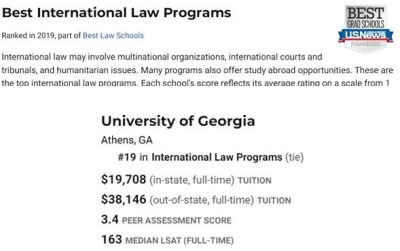
Delighted to share the news that the just-released 2020 US News rankings place our international law curriculum here at the University of Georgia School of Law at No. 19 in the United States.

By our count, this marks the 5th time in recent years we’ve been among the top 20 or so US law schools for international law.

The achievement is due in no small part to the enthusiastic support and hard work of everyone affiliated with Georgia Law’s 40-plus-year-old Dean Rusk International Law Center. As chronicled at this Exchange of Notes blog and our Center website, these include:

► Superb members of the law faculty, including: Dean Peter B. “Bo” Rutledge, an international arbitration expert; our Center’s Faculty Co-Directors and Director, respectively, Professors Diane Marie Amann, an expert in security governance fields including the laws of war and international criminal justice, Harlan G. Cohen, an expert in global governance and foreign relations law, and and Kathleen A. Doty, a specialist in arms control and the global Women, Peace & Security agenda; Professors Christopher M. Bruner, a comparative corporate governance scholar, Anne Burnett, foreign and international law librarian, Jason A. Cade, an immigration expert, Melissa J. Durkee, whose expertise includes international and transnational law, Lori A. Ringhand, a scholar of comparative constitutional law, current U.S.-U.K. Fulbright Scholar at the University of Aberdeen, and recent visitor to Israel’s Bar-Ilan University as part of our faculty exchange there, Kent Barnett, Sonja West, and Elizabeth Chamblee Burch, who have presented overseas on administrative law, media law, and civil procedure, respectively, Walter Hellerstein, a world-renowned tax specialist, Nathan S. Chapman, a scholar of due process and extraterritoriality Michael L. Wells, a European Union scholar;

► Talented students pursuing JD, MSL, and LLM degrees, including: the dozen or so who work with us as Dean Rusk International Law Center Student Ambassadors; the staffers and editors of the Georgia Journal of International and Comparative Law who produce one of the country’s oldest student journals, and who led our March 2018 conference, “The International Criminal Court & the Community of Nations”; the advocates on our Willem C. Vis International Commercial Arbitration Moot and Philip C. Jessup International Law Moot Court teams; participants in our full-semester NATO Externship in Belgium and in our Global Externships and Global Governance Summer School; and the student leaders of our International Law Society;

► Superb Center staff like Laura Tate Kagel, Amanda J. Shaw, Mandy Dixon, and Christian Lee;

► Visiting scholars like Professor Yanying Zhang of China’s Shandong University, Dr. SeongEun Kim of Korea’s Konkuk University, and Jiang Xi of China’s Jilin University of Finance and Economics;

► Academics, practitioners, and policymakers, from all over the world, who have contributed to our events – conferences and lectures, as well as our International Law Colloquium and Consular Series;

Graduates who excel as partners in international commercial law firms, as heads of public law entities like the United Nations Assistance Mission in Iraq, as in-house counsel at leading multinational enterprises, and as diplomats and public servants – and who give back through mentoring and other support;

► Our valued partnerships, with Georgia Law student organizations; with institutions like the Leuven Centre for Global Governance at Belgium’s University of Leuven; with organizations like the International Committee of the Red Cross, the American Society of International Law, the American Branch of the International Law Association, Global Atlanta, the World Affairs Council of Atlanta, the Atlanta International Arbitration Society, and the Planethood Foundation; with professional groups including the Georgia Asian and Pacific American Bar Association and the Vietnamese American Bar Association; with university units like the School of Public & International Affairs, the Department of Comparative Literature, the African Studies Institute, the Institute for Native American Studies, the Latin American & Caribbean Studies Institute, and the Willson Center for Humanities & Arts.

With thanks to all, we look forward to continue strengthening our initiatives in international, comparative, transnational, and foreign relations law – not least, in the preparation of Georgia Law students to practice in our 21st C. globalized legal profession.

Georgia Law Professor Hellerstein presents at Vienna tax conference

Walter Hellerstein, Distinguished Research Professor & Shackelford Distinguished Professor in Taxation Law Emeritus here at the University of Georgia School of Law, recently presented his scholarship in Austria.

Hellerstein spoke on “U.S. Experience and Recent Developments in the Collection of Tax on Online Sales” at a conference titled “Court of Justice of the European Union: Recent VAT Case Law” held at the Institute for Austrian and International Tax Law at the Wirtschafts Universität Wien / Vienna University of Economics and Business.

Georgia Law Professor Harlan Cohen publishes chapter on “Fragmentation”

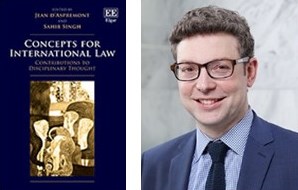
“Fragmentation” is the title of a just-published book chapter by Harlan Cohen, Gabriel M. Wilner/UGA Foundation Professor in International Law and Faculty Co-Director of the Dean Rusk International Law Center here at the University of Georgia School of Law.

The chapter appears in  Concepts for International Law: Contributions to Disciplinary Thought (Edward Elgar Publishing 2019), a 60-essay collection edited by scholars Jean d’Aspremont, of Sciences Po in Paris and the University of Manchester, and Sahib Singh, of the University of Helsinki.

Here’s the chapter abstract:

A danger, an opportunity, passé, a cliché, destabilizing, empowering, destructive, creative: depending on whom you ask, fragmentation has meant any and all of these for international law. The concept of fragmentation has been a mirror reflecting international lawyers’ perception of themselves, their field and its prospects for the future. This chapter chronicles fragmentation’s meanings over the past few decades. In particular, it focuses on the spreading fears of fragmentation around the turn of the millennium; how those fears were eventually repurposed; where, speculatively, those fears may have gone; and how and to what extent faith in international law was restored.

The book is available here; a version of Cohen’s contribution also is available at SSRN.

Georgia Law Professor Jason Cade presents on immigration enforcement

Jason A. Cade, Associate Professor of Law here at the University of Georgia School of Law, presented last week at the annual symposium of the Emory International Law Review at Emory University School of Law in Atlanta. This year’s topic symposium topic was “Continued Relevance and Challenges of the 1951 Refugee Convention on Global, Regional, and Local Levels.”

Cade, an immigration law expert who also directs Georgia Law’s Community Health Law Partnership Clinic, spoke on the consequences of enforcement policies at the southern border for asylum-seekers and other migrants. He was part of a Regional Panel that also included experts from Emory and Georgia State University.

Georgia Law Professor Lori Ringhand reflects on faculty exchange in Israel

Pleased today to welcome a contribution from Lori A. Ringhand, J. Alton Hosch Professor of Law here at the University of Georgia School of Law. Professor Ringhand concentrates her teaching and scholarship in the areas of constitutional law, election law, and state and local government law – including comparative approaches. She is currently in residence at the University of Aberdeen, Scotland, as a Fulbright Distinguished Chair in Spring 2019. She contributes the post below on her recent faculty exchange experience at Bar-Ilan University in Israel.

IMG_0084

I recently had the pleasure of participating in the faculty exchange between the University of Georgia School of Law and the Bar-Ilan University in Tel Aviv, Israel. This initiative lets faculty members from each school teach a mini-course at the other, as well as providing faculty with the opportunity to spend time sharing ideas and working with their colleagues abroad.

I taught Comparative Constitutional Law to a group of about fifteen law students at Bar-Ilan. Each day involved introductory readings, a short lecture, a group project, and student presentations. My students gave presentations on judicial selection methods, judicial review of executive powers in wartime, and the international law of secession. I learned a great deal, and hope they did as well.

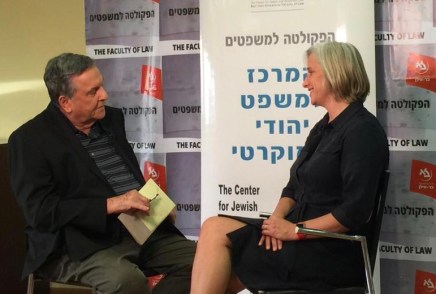
df26b686-af56-4ff9-887a-262b0ccbb8e6I also had the opportunity to talk about my work on the U.S. Supreme Court confirmation process. Despite the dismal reputation of confirmation hearings, my empirical work in this area demonstrates that these hearings play an important role in providing public validation of constitutional change over time. Israel is debating its own high court confirmation process, and I was honored to share my views on the U.S. system on Walla! Global! with anchor Oren Hahari, to do an interview with renowned Israeli journalist Ya’akov Ahimeir, and to lead a research seminar with the Bar-Ilan faculty. It was fun – and challenging – to defend my views in the wake of the hotly contested Kavanaugh hearings.

IMG_0036The highlight of the trip, though, was a weekend trip Jerusalem. I had never visited this part of the world, and touring such an ancient city was an unforgettable experience. The religious and cultural significance of the city is obvious, and seeing such a mix of cultures and peoples figuring out how to share their holy lands was an extraordinary experience. History really does come to life in places like Jerusalem, and I am grateful to the Dean Rusk International Law Center and Bar-Ilan University for making my trip possible.
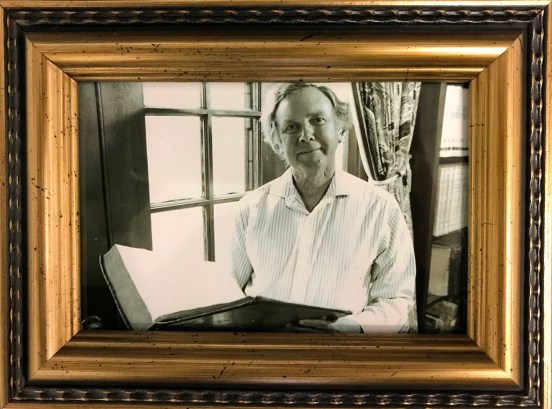
Georgia Law memorial Friday for Professor Alan Watson (1933-2018), Roman and comparative law scholar

The University of Georgia School of Law will honor Professor Alan Watson (1933-2018) at a memorial service at 10:30 a.m. this Friday, March 8, 2019, in the University of Georgia Chapel.

Watson, who passed away last November 7 at age 85, had been a Distinguished Research Professor and holder of the Ernest P. Rogers Chair during the more than two decades that he taught at Georgia Law. He had retired in 2012.

He was one of the world’s foremost authorities on Roman law, comparative law, legal history, and law and religion. At Georgia Law, his courses included Comparative Law, Jurisprudence, Law in the Gospels, and Western Legal Tradition. Watson taught and lectured widely throughout the world, in addition to publishing nearly 150 books and articles, many of which were translated into other languages. (He himself knew more than a dozen languages.)

One seminal text was Legal Transplants: An Approach to Comparative Law (1974). As stated at the Georgia Law website, which sets forth a detailed account of Watson’s distinguished background, accomplishments, and legacy:

“Notably, he coined the term ‘legal transplants’ which is now ubiquitous in legal literature.”

His survivors include his wife, Professor Camilla E. Watson, Ernest P. Rogers Chair of Law at Georgia Law.

Further information, including links to obituaries and memorials from the universities of Glasgow, Edinburgh, and Oxford, here.

Georgia Law Professor Christopher Bruner takes part in financial regulation conference in Singapore

Christopher Bruner, Stembler Family Distinguished Professor in Business Law here at the University of Georgia School of Law, took part in two panels at a conference entitled “Financial Services Law and Regulation in Singapore.” Hosting the February 28-March 1 conference was the Centre for Banking & Finance Law at the National University of Singapore Faculty of Law.

On the conference’s 1st day, Bruner presented on “Development of Financial Services in a Globalising Financial World,” focusing his remarks on the framework developed in his 2016 Oxford University Press book, Re-Imagining Offshore Finance. (prior post). Bruner also participated in the reflections panel that concluded the conference.

Occasioning the conference was the the publication of Financial Services Law and Regulation (Academy Publishing, 2019), edited by Dora Neo, Hans Tjio, and Luh Luh Lan, and featuring Singapore-based contributors. Professor Bruner and others from abroad provided global and comparative context.