“The Legacy of Fidel Castro” – upcoming panel Monday, December 5

fidelcastro1978

I’m pleased to announce that on Monday, December 5, 2016, I’ll be speaking on a panel about Fidel Castro’s legacy. It will take place from 2:00-3:30 p.m. in the Zell Miller Learning Center, Room 213.

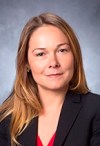
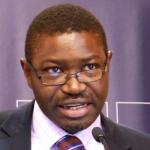
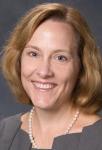
Convened by the Latin American and LASCI_PatrickCaribbean Studies Institute and co-history_faculty_04sponsored by the Dean Rusk International Law Center, the panel will also feature professors from several departments at the University of Georgia, including: Reinaldo timsamples_web_portrait_largeRomán from History (left), Susan Thomas from Musicology (left), and Tim Samples from the Terry College of Business (right).s_thomas_preferred

We’ll discuss the legacy, both positive and negative, that Castro leaves behind: universal healthcare, employment, and education, but also international sanctions, and human and kate - Copycivil rights abuses (about which I’ve written, here). In particular, I’ll talk about the legacy of U.S.-Cuban relations as seen through the U.S. naval base at Guantanamo, one of my current topics of research.

Hope to see you there!


“Humanity’s Common Heritage”: Georgia Law-ICRC conference on Geneva Conventions Commentaries

gjicl_confposter

Humanity’s Common Heritage – norms codified in international humanitarian law treaties to which all countries of the world belong – will be the topic of a conference this Friday, September 23, at the University of Georgia School of Law in Athens, Georgia.

The conference title derives from this observation about those treaties, the four 1949 Geneva Conventions, by Peter Maurer, President of the International Committee of the Red Cross:

“We know that the values that found expression in the Geneva Conventions have become an essential part of our common heritage of humanity, as growing numbers of people around the world share a moral and legal conviction in them. These contradicting realities challenge us to act: to react to the suffering and violations of the law, and to prevent them from occurring in the first place.”

At the core of this daylong event will be the Commentaries on which the ICRC is now working. Published online earlier this year was the initial Commentary, covering the Convention (I) for the Amelioration of the Condition of the Wounded and Sick in Armed Forces in the Field, as well as the articles common to all 4 Conventions. (Prior posts here, here, and here.) Experts will examine this 2016 Commentary and its role in the development, promotion, and implementation of contemporary international humanitarian law.

thumbnail_p1130913We’re honored that the Georgia Law alumnus leading that project, Geneva-based ICRC legal adviser Jean-Marie Henckaerts (LLM 1990), will keynote our conference, and also that the ICRC is cosponsoring the conference, along with our Center and our Georgia Journal of International & Comparative Law. This student-run review, which celebrates its 45th anniversary this year, will publish papers by the assembled experts and Georgia Law student rapporteurs.

akandeDr. Henckaerts will be part of a public panel from 9:15 a.m.-12 noon in Georgia Law’s Hatton Lovejoy 0042401-14ABCourtroom. Speaking in that morning session will be: Oxford Law Professor Dapo Akande; Emory Law Professor Laurie R. Blank; Major-General Blaise Cathcart, Judge Advocate General of the Canadian Armed Forces; New York University Law Professor Ryan Goodman; and cathcartmoderator Diane Marie ryan_goodman_photo_horizontalAmann, Associate Dean for International Programs & Strategic Initiatives and Emily & Ernest Woodruff Chair in International Law at Georgia Law, and also the International Criminal Court Prosecutor’s Special Adviser on Children in & affected by Armed Conflict.

Joining them in closed sessions during the afternoon will be additional international humanitarian law experts experts: Georgia Law Professor Harlan G. Cohen; Houston College of Law Professor Geoffrey S. Corn; American University Law Professor Jennifer Daskal; Jonathan Davis, a University of Georgia international affairs graduates and U.S. Department of State Attorney-Advisor; Kathleen A. Doty, our Center’s Director of Global Practice Preparation; Julia Grignon, Université Laval Law; Rutgers Law Professor Adil Haque; Christopher Harland, Legal Adviser at the ICRC’s Washington, D.C., office; Eric Jensen, U.S. Department of Defense; Michael Meier, U.S. Army Judge Advocate General Corps; Naz K. Modirzadeh, Harvard Law; Nicholas W. Mull, U.S. Marine Corps Judge Advocate General Corps (ret.); Vanderbilt Law Professor Michael A. Newton; Sasha Radin, U.S. Naval War College; Professor James K. Reap (JD 1976) of the University of Georgia, who’s just been named to the State Department’s Cultural Property Advisory Committee; Georgia State Law Professor Shana Tabak; and Creighton Law Professor Sean Watts.

Full description and details about the conference here.

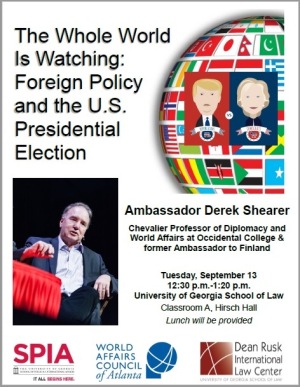
Former ambassador to talk on foreign policy and US Presidential election

untitledIssues of foreign policy and national security remain foremost in many voters’ minds as the 2016 U.S. Presidential election has entered its final, post-Labor Day lap. We’re thus delighted to be welcoming an expert in this areas to our Athens campus next week:

Fresh from recent lectures in Oxford, Auckland, and Berlin, Ambassador Derek Shearer will deliver a public talk entitled “The Whole World Is Watching: Foreign Policy & the U.S. Presidential Election” at 12:30 p.m. this Tuesday, September 13, at the University of Georgia School of Law. Sponsoring the talk is Georgia Law’s Dean Rusk International Law Center; cosponsors are the World Affairs Council of Atlanta and the University of Georgia School of Public & International Affairs.

Shearer, whom I’ve long been privileged to call a colleague, is Chevalier Professor of Diplomacy and World Affairs at Occidental College in Los Angeles who served as an economics official in the U.S. Department of Commerce, and then as U.S. Ambassador to Finland from 1994 to 1997. He’s the author of several books and a frequent writer on and contributor to public policy discussions;  his articles have appeared in The New York Times, Wall Street Journal, and International Herald Tribune.

In addition to the talk, Shearer will speak to students in Election Law and Strategic Intelligence courses.

toigoWe’re also very pleased to welcome Sue Toigo (left), Chairman of Fitzgibbon Toigo Associates and Shearer’s wife. She’ll discuss corporate responsibility with Georgia Law Business Ethics students.

For additional details, e-mail ruskintlaw@uga.edu.

(Cross-posted from Diane Marie Amann)

Experts in Hague consultation on ICC prosecutors’ draft Policy on Children

fBopening

THE HAGUE, Netherlands – Experts gathered this week from around the world for a wide-ranging consultation on the International Criminal Court Office of the Prosecutor’s draft Policy on Children.

In her Opening Remarks to Monday’s consultation, Prosecutor Fatou Bensouda explained:

“This Policy, once finalised and adopted, will guide my Office in our ongoing efforts to address international crimes against or affecting children under the Rome Statute, as well as our interaction with children during the course of our work.

“The Policy will further provide clarity and transparency on how we intend to methodologically undertake this crucial work.

“Additionally, it is my hope that this Policy will also serve as a useful guide for national authorities and other actors in their respective endeavours to address crimes against and affecting children, and in their interactions with children in judicial processes.”

Released last month, the draft Policy:

► Reaffirms an oft-repeated commitment of the Prosecutor. To be precise, the Policy reinforces her Office’s concern for “children with weapons” – that is, persons under fifteen who have been recruited or used in armed groups, often called “child soldiers.” But it also details the Office’s concern for what the Prosecutor called “children affected by the weapons” – that is, all persons who, before their 18th birthday, endured crimes within the jurisdiction of the Court.

► Adopts a child-sensitive approach to its dealings with children. That approach recognizes children as both vulnerable and capable, as both needy and resilient – often, at the same time. The Policy pledges sensitivity to these realities according to the regulatory framework of the Rome Statute system, and also according to principles drawn from international instruments, like the 1989 Convention on the Rights of the Child, a treaty that enjoys near-universal ratification and is founding on 4 guiding principles:

  1. The child’s right to be treated without adverse discrimination;
  2. The right to life, survival, and development;
  3. The right to have the child’s best interests taken into account; and
  4. The child’s right to express views and have them considered.

The draft Policy on Children (available in full here) explicitly recognizes those principles and sets out the contours for respecting and ensuring them.

It thus enumerates crimes against and affecting children. Included are crimes of conscription and use, as well as child trafficking as enslavement and forcible transfer as genocide. Also included are crimes like persecution, if it targets children on the basis or age or birth, as well as attacks on schools.

The policy further details the approach of the Office with respect to children at all stages of the proceedings: preliminary examinations, investigations, prosecutions, sentencing, and reparations.

All these aspects received discussion at Monday’s consultation; some are reflected in tweets available at #EndCrimesAgainstChildren. The policy working group will be considered along with other public comments. The Office welcomes additional such comments, which should be sent via e-mail to OTPLegalAdvisorySection@icc-cpi.int no later than Friday, August 5, 2016. The Office anticipates final publication in October of this year.

It was an honor to take part in this consultation in my capacity as the Prosecutor’s Special Adviser on Children in & affected by Armed Conflict – and also to be accompanied at the consultation by one of my Georgia Law students, Chanel Chauvet. (We’re pictured below in front of a mural at the ICC’s new permanent premises.) A  rising 2L and Dean Rusk International Law Center Student Ambassador, Chanel just completed a weeklong Hague summer school on international humanitarian law.

chanel_dianeICC

(Cross-posted from Diane Marie Amann)
International law alive and well in Atlanta

Last week was a busy one for international law in Atlanta.

On Thursday evening, the Young Arbitrators Group for the Atlanta International Arbitration Society (AtlAS) and the International Chamber of Commerce Young Arbitrators Forum (ICC YAF) presented an excellent event on international law practice in Atlanta. As announced, it featured four attorneys serving as in-house counsel at major corporations, including:

  • Gary Bunce, Assistant General Counsel, Delta Airlines
  • Carolyn Dinberg, VP and Associate General Counsel, InterContinental Hotels Group
  • Eugenia Milinelli, Counsel, JAS Freight Forwarding
  • Nicole Levy, Executive Director and Senior Legal Counsel, AT&TKing and Spalding

Attended by many young members of AtlAS, ICC YAF, and the broader Atlanta legal community, the evening presented an interesting conversation about the use of international arbitration by large corporations, and provided insight into the career tracks of the panelists. The panelists offered advice to young attorneys, such as the importance of acquiring language skills, and the reception afterwards at the office of King & Spalding provided a valuable networking opportunity.

Then, on Friday morning, the World Affairs Council of Atlanta hosted a breakfast with Ambassador Charles Rivkin, who currently serves as the Assistant Secretary of State for Economic and Business Affairs. Amb RivkinAmbassador Rivkin spoke about the Trans-Pacific Partnership Agreement (TPP) that was signed on February 4, 2016 in New Zealand, but has yet to be approved by Congress. Ambassador Rivkin stressed the ways the TPP would benefit Atlanta businesses, in particular those exporters of: transportation equipment; non-electrical machinery; computer and electronic products; chemicals; processed foods; electrical equipment, appliances and components; the agricultural sector generally. He further stressed that the the TPP is unique and good for U.S. businesses because it sets rules for state-owned enterprises, has a chapter dedicated to small and medium sized businesses, and addresses intellectual property and data flow, labor standards, and the environment. His remarks inspired a lively conversation with the audience, who represented a cross-section of the Atlanta business community.

Young Arbitrators Event in Atlanta

atlas-logoThe Young Arbitrators Group for the Atlanta International Arbitration 1526304_10152174822329940_1562069949_nSociety (AtlAS) and the International Chamber of Commerce Young Arbitrators Forum (ICC YAF) will present a cocktail reception and speakers panel tomorrow, June 2, 2016 from 5:30 – 7:00 p.m.

10268504_10152606953834696_6959801446290693027_nHosted by the Atlanta office of King & Spalding, the event will focus on international law issues faced by Atlanta’s global companies, and will highlight how many attorneys around the city handle international law and trans-border issues on a day to day basis.

The panel will be moderated by Jorge Fernandez, the Global Commerce Manager for the Metro Atlanta Chamber, and will also include:

  • Gary Bunce, Assistant General Counsel, Delta Airlines
  • Carolyn Dinberg, VP and Associate General Counsel, InterContinental Hotels Group
  • Eugenia Milinelli, Counsel, JAS Freight Forwarding
  • Nicole Levy, Executive Director and Senior Legal Counsel, AT&T

Students and professionals alike are welcome to attend what promises to be an interesting panel and excellent networking opportunity. RSVP is requested to gharrah@kslaw.com.

Georgia Law comments on Geneva Commentaries begin 30 March in D.C.

We’re honored to play a part of the International Committee of the Red Cross launch of its new Commentary on the First Geneva Convention for the Amelioration of the Condition of the Wounded and Sick in the Field, a volume due for release next Tuesday, March 22.

commentaryA week later, the head of Georgia Law’s Dean Rusk International Law Center, Diane Marie Amann, will take part in a panel discussion of the new Commentary at 2 p.m. Wednesday, March 30. Later in the year, we anticipate a Georgia Law conference on the same subject: it will be held on Friday, September 23, 2016.

The March 30 panel discussion will take place in the Columbia Ballroom of the Hyatt Regency Washington on Capitol Hill, 400 New Jersey Ave N.W., Washington, D.C. That’s the same hotel hosting the annual meeting of the American Society of International Law from March 30 to April 2. This is a side event, though ASIL and its international humanitarian law interest group, the Lieber Society on the Law of Armed Conflict,  are cosponsors of this event, hosted by the ICRC’s D.C.-based Regional Delegation for the US and Canada.

The Commentary is the 1st in a series of volumes intended to update earlier versions, some of which are pictured above: 4 circa-1952 volumes on the 4 Geneva Conventions of 1949, edited by Jean S. Pictet, plus a circa-1987 volume on Additional Protocols I & II of 1977, produced by multiple editors. In the words of the ICRC:

“Since their adoption, the Conventions and Protocols have been put to the test, and there have been significant developments in how they are applied and interpreted. The new Commentaries seek to incorporate these developments and provide an up-to-date interpretation of the law.”

This initial update carries particular significance because it contains commentary on Articles 1, 2, and 3 Common to all 4 Geneva Conventions. Common Article 2 and Common Article 3 have endured significant re-examination in the counterterrorism climate that’s prevailed since the attacks of September 11, 2001, readers of decisions such as Hamdan v. Rumsfeld and a plethora of academic literature well know (and as I’ve written here and elsewhere).

The discussion at the March 30 launch in D.C. will feature:

henckaerts► Dr. Jean-Marie Henckaerts (left), Head of the Commentaries Update Unit at ICRC headquarters in Geneva, Switzerland – and, we’re proud to add, a 1990 LLM alumnus of Georgia Law

► Yours truly, Diane Marie Amann (right), Associate Dean and Emily & Ernest Woodruff Chair in International Law at Georgia Law, and the International Criminal Court Prosecutor’s Special Adviser on Children in & affected by Armed Conflict

jackson► Colonel (ret.) Dick Jackson, Special Assistant to the Army Judge Advocate General for Law of War Matters, and Adjunct Professor of Law at Georgetown Law

mathesonMichael Matheson, Professorial Lecturer in Law, George Washington University Law School, and former member of the U.N. International Law Commission

RSVPs for March 30 welcome; for that and any other information on that event, contact Tracey Begley, trbegley@icrc.org.

(Cross-posted from Diane Marie Amann)