Reflections on Global Atlanta Event, “Georgia and Japan: 50 Years of Commerce and Culture — Debriefing on the 2023 SEUS-Japan Conference”

One of the Dean Rusk International Law Center’s current Visiting Research Scholars, Daesun Kim, Esq., attended this week’s Global Atlanta event, “Georgia and Japan: 50 Years of Commerce and Culture — Debriefing on the 2023 SEUS-Japan Conference.” Global Atlanta is one of the Center’s institutional partners. Below are some of Kim’s reflections of the event.

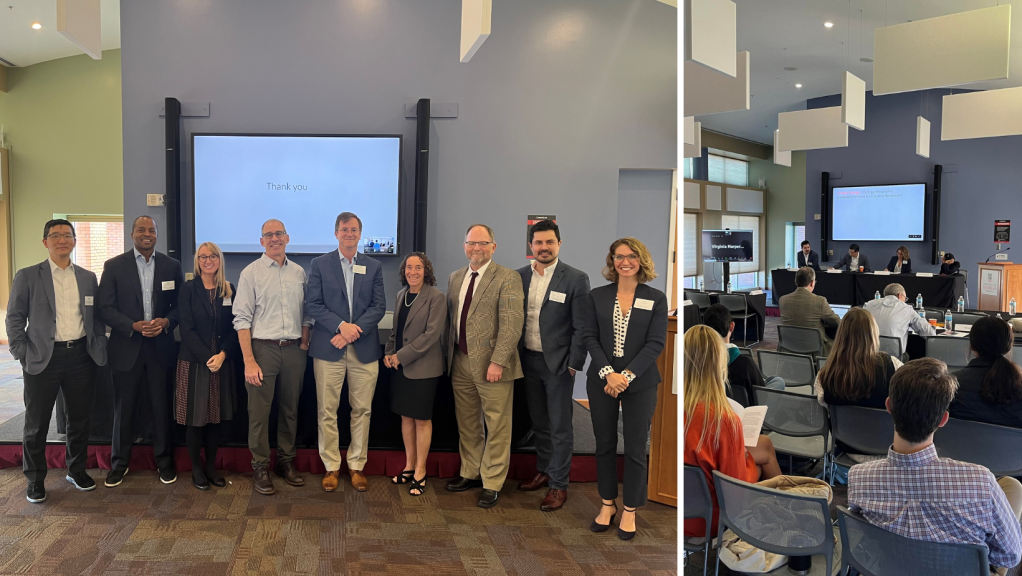
Global Atlanta, Baker Donelson, and the Japan-America Society of Georgia gathered on November 30 to discuss the October 2023 SEUS-Japan Conference. Around 50 economic and development leaders from Georgia participated in the October conference, which took place in Tokyo for the first time since COVID and included representatives from the 16 states in the Southeastern United States (SEUS). The visit by the Georgia delegation, in particular, holds significant meaning as it coincides with the 50th anniversary, commemorating the longstanding tradition and history between Japan and the state of Georgia.

The speakers at this week’s event, who reflected on their experience visiting Japan as part of this delegation, included:

  • Bob Johnson, immigration attorney at Baker Donelson, and board member of the Japan-America Society of Georgia
  • Trevor Williams, Managing Editor at Global Atlanta (moderator)
  • Jim Whitcomb, Chair of the Japan-America Society of Georgia
  • Jessica Cork, VP of Community Engagement and Communications at YKK, who was honored with the Busbee Award
  • Mellissa Takeuchi, Project Manager at the Georgia Department of Economic Development

The panelists’ takeaways from the SEUS-Japan Conference included the level of significance attributed to developing and maintaining personal connections with various government high-level officials. Georgia is a hub for Japanese businesses in the southeastern United States, with currently more than 500 Japanese-affiliated companies operating in the state, including YKK (USA) America, Inc., Kubota Manufacturing of America Corp., NACOM Corporation, and Yamaha Motor Mfg. Corp. of America. These officials see their establishment of personal and professional connections as significant contributors to the enhancement of economic and diplomatic cooperation.

These relationships are of particular importance for Georgia, whose Savannah Port acts as a gateway between Japan and the southeastern region of the U.S and thus plays a crucial role in the auto-EV-battery supply chain. It is anticipated that all states within SEUS will contribute to this industry’s growth; in particular, the panelists saw the development of certain business relationships, such as Toyota’s automotive and EV battery ventures, as important outcomes of the SEUS-Japan Conference.

Takeuchi highlighted the significance of the longstanding 50-year collaboration between SEUS and Japan. She noted a renewed energy from Japan to engage more actively and collaborate further with SEUS following the recent Japan visit. Additionally, she noted the importance of the Georgia-kai, a Georgia-based organization of Japanese expatriates, which holds a pivotal role in the state’s continued engagement with both existing and prospective Japanese industries.

The panelists agreed that Georgia and Japan’s growing relationship across economic, business, diplomatic, and cultural sectors is a direct result of this mutual investment in sustained communication and relationship building, the direct result of initiatives like the SEUS-Japan Conference.
Dixon named International Professional Education Manager at the Dean Rusk International Law Center

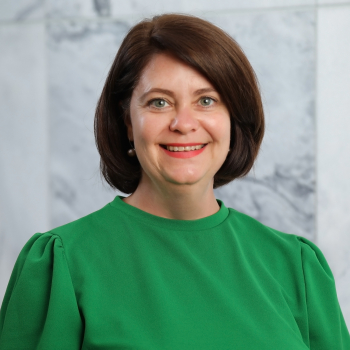
Mandy Dixon is the new International Professional Education Manager at the University of Georgia School of Law’s Dean Rusk International Law Center. She assumed the new position on November 20.

Since November 2016, Dixon has served as the Center’s International Professional Education Assistant. Her portfolio included: processing and preparing incoming applications for the Master of Laws (LL.M.) program, assisting incoming international students with university requirements, coordinating the logistics for both the Visiting Research Scholars (VRS) and international judicial trainings initiatives, and assisting with event planning at the Center (including conferences, speakers, and trainings).

As International Professional Education Manager, Dixon will serve as the lead of the International Professional Education (IPE) portfolio. Specifically, she will now manage the recruitment and admissions process for the LL.M. program and will provide oversight for the VRS and international judicial trainings initiatives.

Before joining the Center, Dixon worked for nine years at Mozley Finlayson & Loggins, LLP in Atlanta as a Human Resources and Bookkeeping Assistant. She also worked as a Paralegal and Legal Assistant at Warshauer Thornton & Easom, P.C., and Lokey, Mobley and Doyle, Attorneys at Law, respectively. She received her B.A. in Psychology from the University of Georgia, where she was a member of the Redcoat Marching Band for four years. In her free time, Dixon enjoys playing the bluegrass banjo, learning about history, and engaging in genealogical research.

UGA Law Professor Laura Phillips-Sawyer’s review essay “Revisiting Interwar Global Economic Governance: Technocrats, Sovereignty, and the Perennial Problem of Legitimacy in Global Governance” published online by Cambridge University Press

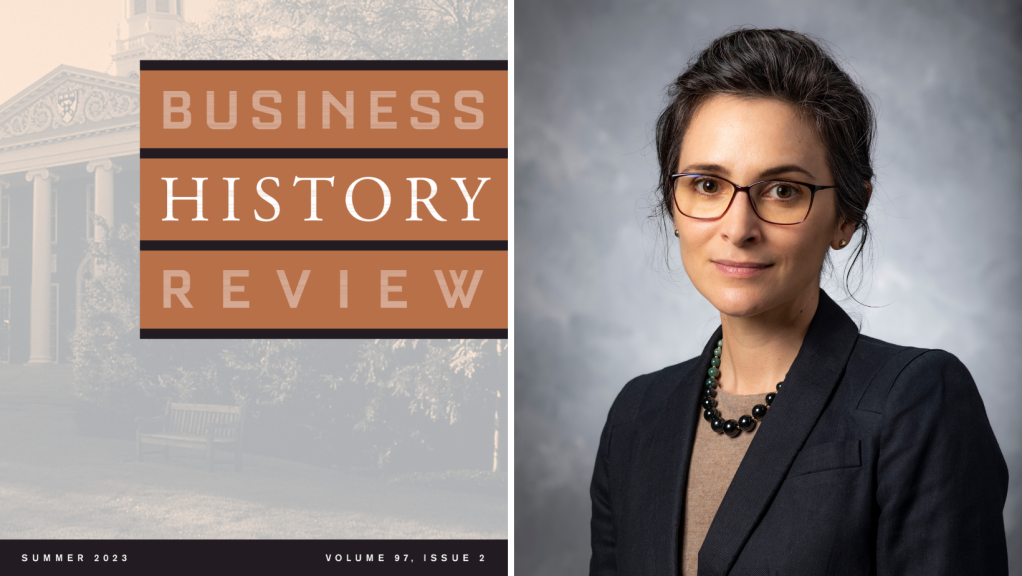
Laura Phillips-Sawyer, Jane W. Wilson Associate Professor in Business Law, recently had her review essay titled “Revisiting Interwar Global Economic Governance: Technocrats, Sovereignty, and the Perennial Problem of Legitimacy in Global Governance” published online by Cambridge University Press. Phillips-Sawyer is an expert in U.S. antitrust law and policy, and her scholarship is related to questions of economic regulation, which intersect with legal history, economic thought, business strategy and structure, and political organization. 

Her work, “Revisiting Interwar Global Economic Governance: Technocrats, Sovereignty, and the Perennial Problem of Legitimacy in Global Governance,” is a featured book review of two books — one of which is The Economic Weapon: The Rise of Sanctions as a Tool of Modern War (Yale University Press, 2022) by Cornell University historian Nicholas Mulder, who keynoted the 2022 Georgia Journal of International and Comparative Law conference, “The Law of Global Economic Statecraft.”

Below is an excerpt of the essay.

“These two extraordinary books, written by historians of international political economy, reject that failure narrative, at least in part. While it is of course true that the League of Nations failed to stem the Great Depression or quell the forces leading to World War II, the League fundamentally changed international law. Most notably, the League represented a turn away from empire and toward international institutions, which have governed global capitalism through “technocratic internationalism” ever since (Mulder, p. 21; Martin, p. 30). Historians have too often overlooked interwar international institution-building and the steady growth of administrative rule-making because of that failure narrative. Nonetheless, recent scholarship has highlighted the novel approaches that interwar international institutions took to managing international public health, migration, drug prohibition, contraband, and colonial supervision (Martin, pp. 8, 269n21). Building on a thriving subfield of “interwar internationalism,” Mulder and Martin both argue that the First World War marked a decisive turning point in global capitalism as new international institutions eroded the power and authority of empires and created a new category of “international economic regulation” (Mulder, p. 10; Martin, p. 8). Mulder focuses on the development of economic sanctions, which were first deployed in peacetime by the League of Nations in the wake of World War I, and explains how they became commonplace despite highly undesirable and unanticipated effects. Martin shows how international institutions intervened in global capital and commodity markets in ways that shaped and limited domestic policies, especially for states with uncertain or partial sovereignty. Both books show how the devices of economic regulation developed first under the auspices of empire were repurposed for the use of international institutions and then deployed first at the periphery and then on the European continent. The bottom line is that these were novel forms of organization and intervention, which rewrote international law and laid the groundwork for post-World War II “second wave” iterations of global governance (Martin, p. 3). The League may have failed, but not for lack of power and it—alongside other international groups—left an indelible mark on global governance.”

Prior posts on Phillips-Sawyer’s scholarship can be found here.

Video available for “ESG and Corporate Sustainability: Global Perspectives on Regulatory Reform,” conference held October 16 at UGA Law

The annual conference of the University of Georgia School of Law’s Georgia Journal of International and Comparative Law, entitled “ESG and Corporate Sustainability: Global Perspectives on Regulatory Reform,” can now be viewed online.

As posted previously, speakers representing a diverse range of doctrinal, institutional, and jurisdictional perspectives gathered on October 16 to discuss the array of contemporary ESG and corporate sustainability initiatives, mapping this rapidly evolving global landscape and engaging with the host of complex international and comparative legal challenges they raise.

Keynoting the conference was University of Pennsylvania Carey School of Law Professor Jill E. Fisch, Saul A. Fox Distinguished Professor of Business Law; Co-Director, Institute for Law & Economics.

The video links are as follows:

Introduction and Panel 1: ESG and Sustainable Finance, with Usha Rodrigues, University Professor and M.E. Kilpatrick Chair of Corporate Finance and Securities Law, University of Georgia School of Law; George S. Georgiev, Associate Professor of Law, Emory University School of Law; Virginia Harper Ho, Professor of Law, City University of Hong Kong; Stephen Park, Associate Professor of Business Law and Satell Fellow in Corporate Social Responsibility, University of Connecticut School of Business; and Anne Tucker, Professor of Law, Georgia State University College of Law.

Panel 2: Corporate Law, Corporate Governance and Sustainability, with Christopher M. Bruner, Stembler Family Distinguished Professor in Business Law and Faculty Co-Director of the Dean Rusk International Law Center, University of Georgia School of Law; Matthew T. Bodie, Robins Kaplan Professor of Law, University of Minnesota Law School; Andrew Johnston, Professor of Company Law and Corporate Governance, University of Warwick School of Law; Lindsay Sain Jones, Assistant Professor, University of Georgia Terry College of Business; and Omari Scott Simmons, Professor of Law, George Washington University Law School.

Panel 3: Multinational Corporations and Global Value Chains, with Harlan G. Cohen, Gabriel M. Wilner/UGA Foundation Professor in International Law and Faculty Co-Director of the Dean Rusk International Law Center, University of Georgia School of Law (and the GJICL’s Faculty Advisor); Sarah Dadush, Professor of Law, Rutgers Law School; David Hess, Professor of Business Law and Business Ethics, University of Michigan Stephen M. Ross School of Business; Kish Parella, Class of 1960 Professor of Ethics and Law, Washington and Lee University School of Law; and Jaakko Salminen, Associate Senior Lecturer, Department of Law, Lund University.

Keynote Address by Jill E. Fisch, Saul A. Fox Distinguished Professor of Business Law and Co-Director of the Institute for Law and Economics, University of Pennsylvania Carey Law School

This event was cosponsored by the Dean Rusk International Law Center.

Eduardo Conghos (LL.M., ’98), speaks about Argentinian environmental law at UGA Law

Director of GreenCo SA and National University of the South professor Eduardo Conghos (LL.M., ’98) spoke to students at the University of Georgia School of Law last week about environmental law in Argentina and the effects of “constitutional greening” in Latin America. The conversation was moderated by Adam D. Orford, Assistant Professor of Law.

Conghos provided students with historic context for environmental legal developments in Latin America, tracing the global period of “constitutional greening” that stretched from the 1970s through the 90s. Over these two decades, 14 of the 20 countries in Latin America encoded environmental considerations and protections into law. Some common characteristics included protection of natural resources, wildlife, and protected natural areas; a right to the environment; and a right to public participation in environmental processes. Despite these strong constitutional protections for the environment, Conghos noted that the lack of statutory laws created tension between judicial rulings in favor of environmental protection and consistent implementation and oversight of environmental regulations. He used the 2007 Argentinian Supreme Court decision, Mendoza, Beatriz Silvia et al. v. National Government et al. about damages (damages derived from the environmental pollution of the Matanza Riachuelo River) and the rulings that followed it to illustrate this conflict. Students asked Conghos about the reality of the private sector being able to adapt to new environmental regulations and whether arbitration would be the appropriate way to address some of these issues.

Conghos is an environmental lawyer, consultant, and professor based in Buenos Aires, Argentina. He is currently the Director of GreenCo S.A., an environmental consulting business that provides services to both public and private institutions. Conghos is also professor at the National University of the South in Buenos Aires, where he has worked in several faculty positions since 1999. His specialties include environmental legislation and environmental training, skills that he has honed over several decades of experience in both the public and private sectors in Argentina. Dr. Conghos received his LL.M. from the University of Georgia School of Law in 1998, as well as postgraduate degrees from the University of Salamanca, the National University of the South, the University of San Andres, and Buenos Aires University.

South Korean Consul General Suh featured at Global Atlanta Consular Conversation

One of the Dean Rusk International Law Center’s current Visiting Research Scholars, Daesun Kim, Esq., attended last week’s Consular Conversation with Sangpyo Suh, the Consul General of Korea in Atlanta. This event, organized by one of the Center’s institutional partners, Global Atlanta, is part of an ongoing series presented by Miller & Martin PLLC. Below are some of Kim’s reflections of the event.

Consul General of South Korea in Atlanta Sangpyo Suh serves as his country’s top diplomatic in the Southeastern United States. In a wide-ranging conversation with Trevor Williams, Global Atlanta’s managing editor, Suh detailed his diplomatic service before his arrival in Atlanta, including: Korea’s Ambassador to the OECD; Korea’s Ambassador to Gabon; Head of Energy, Climate Change and Environment, United Nations Mission; and, most recently, Korea’s Ambassador to Pakistan.

Suh explained that he first came to Atlanta in the mid-90s to study English as a diplomat at Georgia State University. During that time, the population of Koreans in Georgia was around 10,000. Now, in 2023, the population exceeds 150,000 and is growing. Korean investments in Georgia reflect this trend, with over $12.5 billion allocated towards foreign direct investment projects in Georgia alone as part of the $30 to $40 billion annually invested in the United States. The Hyundai electric vehicle plant project, currently under construction near Savannah, is worth more than $7 billion alone. The number of Korean companies in Georgia has increased dramatically in recent years, and Suh hopes to continue to strengthen the economic ties between the Southeast and Korea.

Suh is aware of more than 250 Korean companies in the Southeast, including 150 in Georgia. Outside of automotive investment, there has been trade and investment activity in response to the IRA/ CHIPS Act, with collaborations focusing on semiconductors, EVs, and batteries. He believes that the region serves as an important regional base for these key industries of the future.

This year marks the 70th anniversary of the U.S.-ROK alliance. While the economic partnership between the U.S. and Korea has grown, so have the countries’ cultural ties. Suh talked about how the number of students in the U.S. studying the Korean language is exploding. He credits this in no small part to the soft power of what is known as K-culture, including Korean “K-pop” music, Korean cinema, and television. Suh views part of his role as Consul General to promote these cultural ties and find ways to further develop them.

International Education Week, November 13-17 at UGA Law

During the week of November 13, the University of Georgia School of Law will host events during the lunch hour to highlight International Education Week (IEW) 2023. IEW is a joint initiative between the U.S. Department of State and the U.S. Department of Education that celebrates the benefits of international education and exchange worldwide. The theme for 2023 is “International Education Is the Future.”

All events will take place from 12-1pm. Exact locations can be found in the event hyperlinks. The events for the week are as follows:

Monday, November 13: Globalizing Your Legal Education in India

India is an emerging global economic superpower. Gaining academic or professional experience in India will prepare UGA Law students for the future of the global workforce. Learn from a panel of current J.D., Master of Laws (LL.M.), and exchange students about their experiences learning about and practicing law in India:

Tuesday, November 14: Marketing Your International Experience

In an increasingly globalized world, and in the globalizing field of law, international experience is a valuable part of your CV as a law student. Join a panel discussion about how international experiences can set you apart, and importantly, how you can market that experience to recruiters and interviewers during your job search and career. Panelists will include:

  • Andrew Arrington, 3L, completed a Global Externship Overseas at Sorainen in Tallinn, Estonia
  • Brandy Blue, Interim Senior Program Associate, Conflict Resolution Program, The Carter Center
  • Jean Rowe Luciani, UGA Law Assistant Director of Career Development (J.D., 1997)
  • Emily Snow, Associate, Caplan Cobb LLC (J.D., 2021)

Wednesday, November 15: African Women in Law Panel Discussion

Current Master of Laws (LL.M.) students will discuss their experiences as women practicing law in African countries. This event will take place in room E/ 252 of Hirsch Hall. Panelists will include:

Thursday, November 16: International Law Faculty Brown Bag Lunch Series with Dean Peter B. Rutledge

UGA Law Dean Rutledge will speak about his experience in the field of international arbitration. Students will have time for questions.

Friday, November 17: Coffee with Visiting Research Scholars

Join the Dean Rusk International Law Center’s 2023-2034 visiting researchers for coffee and conversation about their research:

  • Mine Turhan, assistant professor of administrative law in the Faculty of Law at the Izmir University of Economics in Türkiye
  • Daesun Kim, ESQ, a foreign attorney practicing law in Vietnam
  • Natalia Pires de Vasconcelos, former assistant professor of law at Insper Sao Paulo, Brazil and current PhD student in sociology

For more information about IEW programming at UGA, please visit the International Student Life website.

Kannan Rajarathinam (LL.M., ’88) speaks about the future of the United Nations at UGA Law

University of Georgia School of Law alumnus Dr. Kannan Rajarathinam (LL.M., ’88) spoke to students last week about the future of the United Nations in a multipolar world in a lecture entitled, “The UN at a Crossroads.”

Rajarathinam used his decades of experience working at the UN to frame his central question of what lies ahead for the international organization. Founded in 1945, the UN’s main focus over the past 80 years has remained the same: to provide all nations with the opportunity to work together to find shared solutions to shared challenges. From supporting refugees to providing food and vaccines globally, the UN has many ongoing campaigns that realize this vision.

One area where he felt the UN had been particularly successful is in building awareness of and consensus around the global challenge of climate change. He noted that the UN has led over twenty conferences on climate change, and, as a direct result of their commitment to this topic, climate security is a top concern for many western nations. Although there is still much work to be done, Rajarathinam stated that shared solutions, like a fund being developed to aid the Global South in managing the disproportionately-felt effects of climate change and technology-sharing to establish renewable energy systems worldwide, are more likely to find consensus due to the inclusive design of the UN.

There are many challenges to the UN’s role in the new multipolar landscape, including the emergence of regionally-focused forums like BRICS and the G20, international development initiatives like China’s Belt and Road Initiative, and ongoing conflicts like Russia’s invasion of Ukraine and the Israel-Hamas war. Rajarathinam believes that the ability of the UN to offer all 193 Member States from India to Nauru an equal vote is its main strength in withstanding this contemporary power shift. He concluded his talk by observing that, now that we are entering into a multipolar global landscape, no one country has the ability to control history anymore – and that, as a result, the world will be more colorful.

After his afternoon lecture, Rajarathinam met with current LL.M. students to discuss his career in the UN. Students shared their backgrounds and professional aspirations and were able to get advice from Rajarathinam and his wife, Usha.

Rajarathinam recently retired after nearly three decades of UN peace keeping and political work in the former Yugoslavia, Cyprus, Afghanistan, Iraq, Sudan and Somalia. Prior to the UN, he briefly practiced and taught law in India. A commentator of international and political affairs in India, he is the author of two political biographies of Indian leaders and his next work, on the political history of his state of Tamil Nadu in India is due next summer.

UGA Law Professor Amann presents “Child-Taking” scholarship at British universities in Cambridge and London

University of Georgia School of Law Professor Diane Marie Amann, whose expertise includes child rights, international criminal law, and global legal history, recently discussed her research on “child-taking” at two universities in the United Kingdom.

At the end of September Amann – who is Regents’ Professor of Law, Emily & Ernest Woodruff Chair in International Law, and Faculty Co-Director of the Dean Rusk International Law Center – presented “Child-Taking and Human Rights Law” at the 2023 European Human Rights Law Conference. Entitled “Human Rights Law: Prospects, Possibilities, Fears & Limitations,” the two-day conference took place at the University of Cambridge Faculty of Law.

Last week, she gave a public lecture on “Child-Taking in International Criminal Law” at King’s College London Department of War Studies.

Both talks drew from Amann’s forthcoming article, “Child-Taking,” to be published in the Michigan Journal of International Law.

As Amann theorizes it, child-taking occurs when a state or similarly powerful entity abducts children from their community and then endeavors to remake the children in its own image. This conduct lies at the heart of the International Criminal Court warrants pending against President Vladimir Putin and another top Russian official. The article also examines other examples of the phenomenon, including the Nazis’ kidnappings of non-German children during World War II and the forced placement of Indigenous children into boarding schools in North America, Australia, and elsewhere.

UGA Law students attend American Branch of the International Law Association’s International Law Weekend through Louis B. Sohn Professional Development Fellowships

Top row, from left to right: Aashka Vyas, Bohdan Krivuts, N’guessan Clément Kouame, Savelii Elizarov Bottom row, from left to right: Anna Carolina Mares, Eman Abdella Ali, Shivani Ravi Prakash, Victoria Agbakwuru, and Sarah Quinn

Each fall, the American Branch of the International Law Association hosts its annual International Law Weekend (ILW) conference in New York City. This event features over 30 panels, and many of the world’s leading international lawyers and diplomats participate. Audiences recently have included more than a thousand practitioners, academics, U.N. diplomats, business leaders, federal and state government officials, NGO leaders, journalists, students, and interested citizens. 

This year, the University of Georgia School of Law was a sponsor of the event, and eight students attended through the support of Louis B. Sohn Professional Development Scholarships awarded by the Dean Rusk International Law Center. This builds on a tradition of supporting students seeking professional development opportunities (Prior posts here, here, and here). Recipients of the scholarships this year included:

Krivuts was selected by ABILA to serve as one of six Student Ambassadors for the event.

ILW keynote speakers included Ambassador Sheikha Alya Ahmed Saif Al Thani, Permanent Representative of the State of Qatar to the United Nations, and Judge Gatti Santana, President, International Residual Mechanism for Criminal Tribunals. The students enjoyed hearing a range of perspectives on the current international law scheme and how its shortcomings and challenges may be met. For example, one of the panels that Vyas attended was “Investment Law and Energy in times of Armed Conflict.” She appreciated the legal framing of the recent events in Ukraine, and noted that these discussions illuminate the “…considerable gaps…in the current legal regime” and how they could potentially be addressed by “…adopting new measures to maintain cross-border investments during armed conflict.” Kouame, meanwhile, enjoyed the panel entitled “Trade, Labor Rights and Forced Labor.” He said that the panelists provided insight concerning the enforcement of labor and human rights provisions of the USMCA directly related to a research project he is conducting under Professor Christopher M. Bruner.

In addition to the ILW programming, students met with LL.M. alumni working in New York. These included Julie Guo (LL.M., ’09), who hosted students in her firm’s New York City office; along with Parham Zahedi (LL.M., ’18) and Tatyana Popovkina (LL.M., ’23), who met with students before the conference on Saturday. In both meetings, students were able to learn about the experiences of Guo, Zahedi, and Popvkina at UGA Law, how they prepared for the New York bar exam, and their advice for conducting domestic job searches. Students appreciated their insights; Mares, for example, commented that her conversations with alumni reminded her of the strength of the UGA Law community. “Alumni spoke about their gratitude for time spent at UGA and mentioned wanting to do as much as possible to help UGA grads entering the legal field,” she reflected. “Though New York is a competitive market to enter, with hard work and support from fellow UGA grads, it appears to be in reach as a dynamic place to establish a legal career.”

Each of the eight UGA Law students who attended the ABILA ILW agreed that being able to attend this type of professional conference is valuable as they learn about the field of international law and consider their professional futures. Ravi Prakash noted the event’s “transformative impact” on her professional aspirations. “This experience introduced me to a network of highly accomplished individuals in the realm of international law, many of whom are prolific writers, professors, ambassadors and successful attorneys in the field,” she commented. “Interacting with these experts not only expanded my knowledge but also provided valuable insights and connections that will be invaluable in my journey. On a personal level, it instilled in me a deeper passion for international law and a sense of belonging within this community of experts. This event has undoubtedly set me on a path to a more promising and fulfilling future in international law.”