First Legal Spanish Course Offered at UGA Law This Fall

This fall, UGA Law students have the opportunity to enroll in a new Legal Spanish course taught by Professor Kristen Shepherd, Community Health Law Partnership Clinic Staff Attorney & Adjunct Instructor.

Professor Shepherd conceptualized and proposed the course as two consecutive courses, Legal Spanish I and Legal Spanish II, both offered for one credit. Each course teaches students Spanish language skills used in legal settings with a focus on listening and speaking comprehension. They also provide students with a broad overview of the basics of the legal systems in Spanish-speaking countries to enable students to communicate legal concepts more accurately and efficiently.

The opportunity for students to learn Spanish for use in legal careers has taken several forms over the past decade at UGA Law. It began as a club led by Pedro Dorado (J.D. ‘17, LL.M. ‘15) before moving to a lunchtime study session led by two students who had completed Global Externships, one in a Spanish-speaking country. During the pandemic, Legal Spanish once again became a club that met regularly on Zoom.

Across changes in instructors and format, the ability to hone Spanish language skills specific to the legal profession has continued to be a goal that students felt strongly about institutionalizing. Third-year student Patricia Fors was a driving force behind turning this club into a for-credit course. Since Spring 2022, Ms. Fors has worked with Center faculty and staff to communicate the student demand for the course and to provide a student perspective on the course proposals.

“There is a high demand for attorneys able to effectively communicate with Spanish-speaking clients,” Ms. Fors communicated to us in an email. “I’m incredibly proud to attend a law school committed to breaking down one of the barriers that Hispanic communities face accessing the legal system.”

Professor Shepherd agreed with Ms. Fors’ sentiment, stating: “I am inspired by the student movement that led to this course—it is a reflection of our students’ dedication to providing first rate legal representation to a traditionally underserved population with diligence and sensitivity. I am confident that this will lead to better legal outcomes and client relationships.”

The inaugural course enrolled 17 students, all of whom speak conversational Spanish. Not only will they benefit from this new course, but so will the clients and communities they work with across their careers.

For more information about Legal Spanish, please contact Professor Shepherd.

UGA Professor Ramnath publishes first book, “Boats in a Storm: Law, Migration, and Decolonization in South and Southeast Asia, 1942–1962”

Kalyani Ramnath, Assistant Professor in the Department of History at the Franklin College of Arts & Sciences and Assistant Professor (by courtesy) at UGA Law, is publishing her first book, Boats in a Storm: Law, Migration, and Decolonization in South and Southeast Asia, 1942–1962, with Stanford University Press.

Below is a description of the book:

For more than century before World War II, traders, merchants, financiers, and laborers steadily moved between places on the Indian Ocean, trading goods, supplying credit, and seeking work. This all changed with the war and as India, Burma, Ceylon, and Malaya wrested independence from the British empire. Set against the tumult of the postwar period, Boats in a Storm centers on the legal struggles of migrants to retain their traditional rhythms and patterns of life, illustrating how they experienced citizenship and decolonization. Even as nascent citizenship regimes and divergent political trajectories of decolonization papered over migrations between South and Southeast Asia, migrants continued to recount cross-border histories in encounters with the law. These accounts, often obscured by national and international political developments, unsettle the notion that static national identities and loyalties had emerged, fully formed and unblemished by migrant pasts, in the aftermath of empires.

Drawing on archival materials from India, Sri Lanka, Myanmar, London, and Singapore, Kalyani Ramnath narrates how former migrants battled legal requirements to revive prewar circulations of credit, capital, and labor, in a postwar context of rising ethno-nationalisms that accused migrants of stealing jobs and hoarding land. Ultimately, Ramnath shows how decolonization was marked not only by shipwrecked empires and nation-states assembled and ordered from the debris of imperial collapse, but also by these forgotten stories of wartime displacements, their unintended consequences, and long afterlives.

On September 21 at 4:00 pm, at the University of Georgia Zell Miller Learning Center, a book release and reception will be held in honor of Professor Ramnath’s work. This event is open to the public.

UGA Law Professor Bruner presents “Managing Fraud Risk in the Age of AI” at the National University of Singapore (NUS)

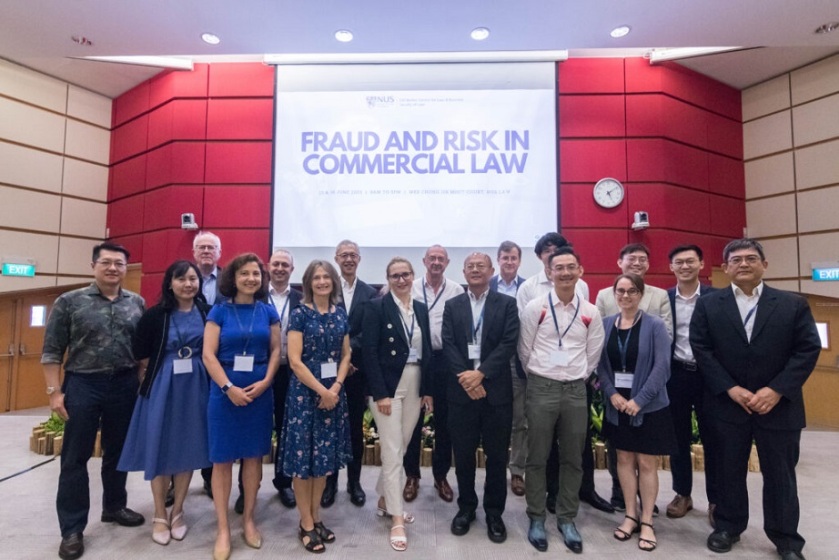
Professor Christopher Bruner, the Stembler Family Distinguished Professor in Business Law and a newly appointed Faculty Co-Director of the Dean Rusk International Law Center, presented “Managing Fraud Risk in the Age of AI” at the National University of Singapore (NUS) in June.

Bruner’s talk was part of a conference titled Fraud and Risk in Commercial Law, organized by Professors Paul Davies (University College London) and Hans Tjio (NUS) and hosted by the EW Barker Centre for Law & Business at the NUS Faculty of Law.

Below is Bruner’s presentation abstract:

Artificial Intelligence (AI) applications are widely expected to revolutionize every dimension of business. This paper explores current and potential impacts of AI on corporate management of fraud risk in both operational and compliance contexts. Much attention has been paid to the operational efficiencies that AI applications could enable in numerous industry settings, and such systems have already become central to a range of services in certain industries – notably finance. Heavy reliance on algorithmic processes can be expected to give rise, however, to a range of risks, including fraud risks. New forms of internal fraud risk, emanating from intra-corporate actors, as well as external fraud risk, emanating from extra-corporate actors, are already placing greater demands on the compliance function and requiring greater corporate investment in responsive AI capacity to keep pace with the evolving risk management environment. At the same time, these developments have already begun to prompt reevaluation of conventional legal theories of fraud that took shape, in commercial and financial contexts alike, by reference to human actors, as opposed to algorithmic processes.

The paper begins with an overview of growing operational reliance upon increasingly sophisticated AI applications across various industry settings, reflecting the increasingly data-intensive nature of modern business. It then explores forms of internal and external fraud risk that may arise from efforts to exploit weaknesses in operational AI, which efforts may themselves involve sophisticated deployment of malicious extra-corporate AI applications – ‘offensive AI’, as the cyber security industry describes it. This can in turn be expected to require responsive corporate efforts in the form of ‘defensive AI’, and the paper describes burgeoning efforts along these lines, as well as the increasing pressure to devote substantial resources and managerial attention to these dynamics that may arise from both corporate law and commercial realities. Finally, the paper analyzes shortcomings of conventional legal theories of fraud in this context. Here the paper assesses the difficulty of applying concepts such as deception, scienter, reliance, and loss causation to algorithmic processes lacking conventional capacity for intentionality and defying conventional explanation as to how inputs and outputs logically relate – a reflection of the AI ‘black box’ problem. The paper concludes with proposals to reform corporate oversight duties to incentivize managerial attention to these issues, and to reform conventional legal theories of fraud to disincentivize malicious AI applications.

UGA Law professor Diane Marie Amann and UCL Professor Martins Paparinskis

UGA Law Professor Amann presents “Child-Taking and the International Criminal Arrest Warrant” at University College London Faculty of Laws

University of Georgia School of Law Professor Diane Marie Amann, an expert on child and human rights, international criminal law, and the laws of war, presented a lecture entitled “Child-Taking and the International Criminal Arrest Warrant” at University College London Faculty of Laws in June.

News that the International Criminal Court is seeking the arrest of Russia’s President, Vladimir Putin, and Child Rights Commissioner, Maria Lvova-Belova, drew attention to the war crimes charged: “unlawful deportation of population (children)” and “unlawful transfer of population (children) from occupied areas.” Professor Amann’s lecture examined these and similar crimes, which she labels “child-taking.” International child-taking trials date to the Nuremberg tribunals, and have continued in modern forums like the ICC. Court records demonstrate that child-taking is no minor crime. Its present gravity and future consequences are heavy; so too, the prosecutorial burdens of securing indictments, conviction, and redress.

This presentation was chaired by UCL Professor of Public International Law, Martins Paparinskis.

Amann is the Regents’ Professor of International Law, the Emily & Ernest Woodruff Chair in International Law, and a Faculty Co-Director of the Dean Rusk International Law Center.

Welcoming Mine Turhan, Visiting Scholar at UGA Law’s Dean Rusk International Law Center

We at the University of Georgia School of Law Dean Rusk International Law Center are pleased to welcome a new Visiting Research Scholar: Mine Turhan, Assistant Professor of Administrative Law in the Faculty of Law at the Izmir University of Economics in Türkiye. She holds an LL.M. degree and a Ph.D. in Public Law from Dokuz Eylül University in Izmir, Türkiye.

Professor Turhan plans to conduct research on comparative administrative procedure between the United States and the European Union during her stay at the Dean Rusk International Law Center. Her project will focus on procedural due process rights, in particular the right to be heard before administrative agencies, and it will analyze how individual rights are protected by different procedures in the U.S. and the European Union against arbitrary actions on the part of administrative agencies.

Professor Turhan is sponsored as a Visiting Research Scholar by UGA Law Professor David E. Shipley, the Georgia Athletic Association Professor in Law. Professor Shipley teaches administrative law and civil procedure.

Turhan’s research is supported by a fellowship from the Scientific and Technological Research Council of Türkiye (TÜBİTAK) within the scope of the International Postdoctoral Research Fellowship Program. Her visit continues our Center’s long tradition of hosting scholars and researchers whose work touches on issues of international, comparative, or transnational law. Details and an online application to become a visiting scholar here.

Welcoming Ammar Zafar, Visiting Scholar at University of Georgia School of Law

We at the University of Georgia School of Law Dean Rusk International Law Center are pleased to welcome a new Visiting Research Scholar: Ammar Zafar, a PhD candidate at the University of Liverpool in the United Kingdom.

Zafar’s doctoral research focuses on the potential of central bank digital currencies, implemented through blockchain technology with the aim of establishing an inclusive and sustainable monetary system. While at the Dean Rusk International Law Center, he plans to conduct comparative research on how U.S. financial regulations and Federal Reserve fiscal policies address legal and macroeconomic issues related to CBDCs and blockchain technology. Zafar holds a master’s degree in Banking and Corporate Finance and a Master of Laws (LL.M.) degree in Legal Practice from Britain’s University of Bristol, as well as a bachelor’s degree in Business Economics from Karnataka State University, India, and an LL.B. degree from BPP Law University in London.

Serving as Zafar’s Georgia Law faculty sponsor will be Professor Usha Rodrigues, who holds the M.E. Kilpatrick Chair of Corporate Finance and Securities Law.

Zafar is visiting pursuant to an institutional partnership between the University of Liverpool and the University of Georgia. His visit continues our Center’s long tradition of hosting, for brief or extended stays, scholars and researchers whose work touches on issues of international, comparative, or transnational law. Details and an online application to become a visiting scholar here.

Georgia Law Professor Hellerstein presents on crypto-assets at OECD

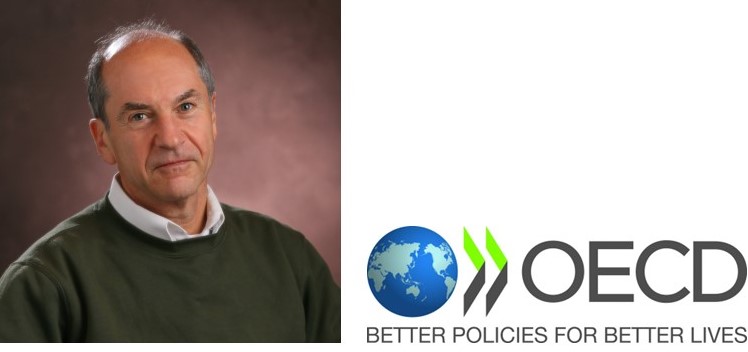
Walter Hellerstein, Distinguished Research Professor and Shackelford Distinguished Professor Emeritus in Taxation Law here at the University of Georgia School of Law, spoke this month at a gathering of the Organisation for Economic Co-operation and Development in Paris, France.

Hellerstein presented “Crypto-Assets: Key Concepts and Terms,” a paper he co-authored with a member of the Secretariat, at a meeting of the OECD Working Party No. 9 on Consumption Taxes.

Georgia Law Dean Rutledge and student Rudzinskyi comment on appeals decision affecting international arbitration

A decision in which the U.S. Court of Appeals for the Eleventh Circuit overturned its precedent regarding international arbitration awards, and thus ruled in line with other federal appellate courts, is the subject of a new commentary by  Peter B. “Bo” Rutledge (above left) and student Vladyslav Rudzinskyi, a member of the Master of Laws (LL.M.) Class of 2023.

Their article, entitled “Eleventh Circuit Switches Stance on Grounds for the Vacatur of Non-Domestic Awards,” appeared on May 11 in the Daily Report.

The article discusses Corporacion AIC, SA v. Hidroelectrica Santa Rita S.A., an en banc April 13, 2023, decision in which the Eleventh Circuit set aside panel precedents to hold that vacatur proceedings related to non-domestic awards are governed by chapter 1 the Federal Arbitration Act. Noting that the new decision corresponds with others in the Second, Third, Sixth, and Tenth Circuits, Rutledge and Rudzinskyi concluded noted:

“Previously, arbitration practitioners in the Eleventh Circuit (especially hubs like Atlanta and Miami) could tout its distinctive vacatur standards as a reason to site disputes there.

“Those standards had aligned the Eleventh Circuit with international jurisdictions following the UNCITRAL Model Arbitration Law (whose vacatur standards track those under the New York Convention). Corporacion strips the Eleventh Circuit of that potential comparative advantage as an arbitral forum.”

They further warned that “[t]he new standard risks diluting the enforceability of international awards.”

Georgia Law Professor Amann publishes afterword to new volume translating work by legal thinker Mireille Delmas-Marty

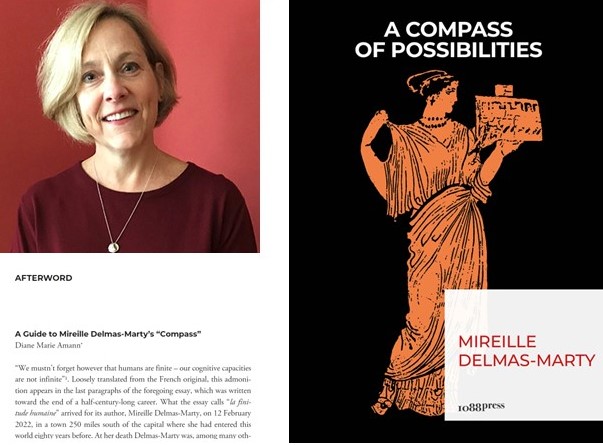
University of Georgia School of Law Professor Diane Marie Amann contributed the afterword to a just-published volume featuring an English translation of an important work by the late Mireille Delmas-Marty (1941-2022), Collège de France de Paris law professor and one of the pre-eminent legal thinkers of her generation.

Co-editors of the volume, A Compass of Possibilities, are law professors Emanuela Fronza (University of Bologna, Italy) and Chiara Giorgetti (University of Richmond). Fronza also wrote an Epilogue to the main work. Subtitled “Global Governance and Legal Humanism,” the book offers, in translation, Delmas-Marty’s 2011 closing lecture at Collège de France, entitled “Une boussole des possibles. Gouvernance mondiale et humanismes juridiques.” Publishing the new work is 1088 Press, a University of Bologna imprint.

Amann – who is Regents’ Professor of International Law, Emily & Ernest Woodruff Chair in International Law, and a Faculty Co-Director of our Dean Rusk International Law Center here at Georgia Law – was a longtime colleague of Delmas-Marty. Amann’s role in their collaborations included a year-long stint as professeure invitée at Université de Paris 1 (Panthéon-Sorbonne), where Delmas-Marty then taught; a lecture at Collège de France; and annual participation in a decade of gatherings of the Réseau ID franco-américain/French-American Network on the Internationalization of Law.

Amann’s afterword is titled “A Guide to Mireille Delmas-Marty’s “Compass'”; it appears at pp. 55-64 of the new volume. Here’s the abstract from a pre-publication version of Amann’s afterword, available at SSRN:

“This essay appears as the Afterword (pp. 55-64) to a volume featuring an important work by the late Mireille Delmas-Marty (1941-2022). A Collège de France de Paris law professor and one of the pre-eminent legal thinkers of her generation, Delmas-Marty and the essay’s author were longtime colleagues and collaborators. The volume contains an English translation of a 2011 lecture by Delmas-Marty, originally titled “Une boussole des possibles: Gouvernance mondiale et humanismes juridiques.” Amann’s essay surveys that writing, in a manner designed to acquaint non-francophone lawyers and academics with Delmas-Marty’s vast and visionary œuvre.”

Georgia Law Professor MJ Durkee’s “The Pledging World Order” published in new Yale Journal of International Law issue

The latest publication by University of Georgia School of Law Professor Melissa J. “MJ” Durkee is now in print at Yale Journal of International Law.

The article by Durkee, who is Associate Dean for International Programs, Director of the Dean Rusk International Law Center, and Allen Post Professor here at Georgia Law, is “The Pledging World Order,” 48 Yale J. Int’l L. 1 (2023).

Here’s the SSRN abstract:

“There is an emerging world order characterized by unilateral pledges within a legal or ‘legal-ish’ architecture of commitments. The pledging world order has materialized in the international legal response to climate change and in other diverse sites. It crosses and blurs the public-private divide. It erodes distinctions between multilateralism and localism, law and not-law, and progress and stasis. It is both a symptom of and a contributor to the dismantling of the Westphalian and postwar orders. Its report card is mixed: While pledging can be highly ineffective as a legal technology, the pledging world order may respond to some legitimacy concerns that attach to earlier orders. And this may be the best available method to respond to important global commons problems like climate change, biodiversity loss, orbital debris, and other emerging issues.

“This Article makes three principal contributions. First, it identifies pledging as a treaty design choice and contrasts it with a variety of standard forms of international lawmaking. Second, it casts pledging as a trans-regime, trans-substantive ordering device that appears both inside and outside of law, in public and private sites, and at all levels of organization. Third, it identifies features of the world order that pledging reflects. Specifically, the pledging world order privileges function over status, departs from the top-down methods of deep cooperation common to the postwar legal order, and embraces a form of coordinated autonomy. Reformers might make design choices to improve this order, try to reclaim features of older orders, or reject both paths and turn to something new.”

Prior posts on Durkee’s presentations of this scholarship here.