Six Georgia Law students receive Louis B. Sohn Professional Development Fellowships in fall 2025

This fall, six University of Georgia School of Law students received Louis B. Sohn Professional Development Fellowships to support their attendance of international law conferences. Named after the inaugural holder of the Emily and Ernest Woodruff Chair in International Law at Georgia Law, Sohn Fellowships enable students to attend professional development opportunities related to international law. The Fellowships are administered by the Dean Rusk International Law Center.

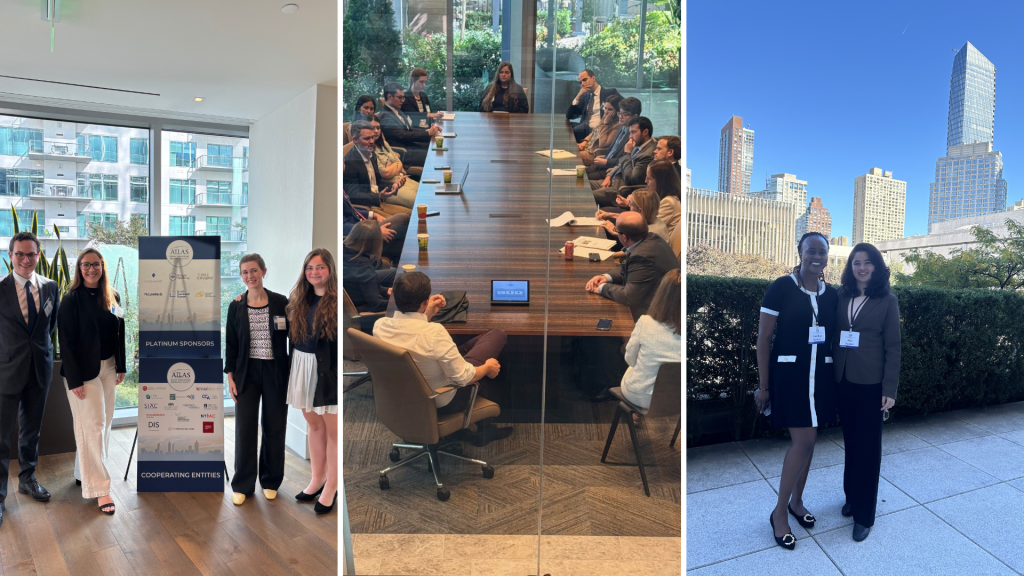
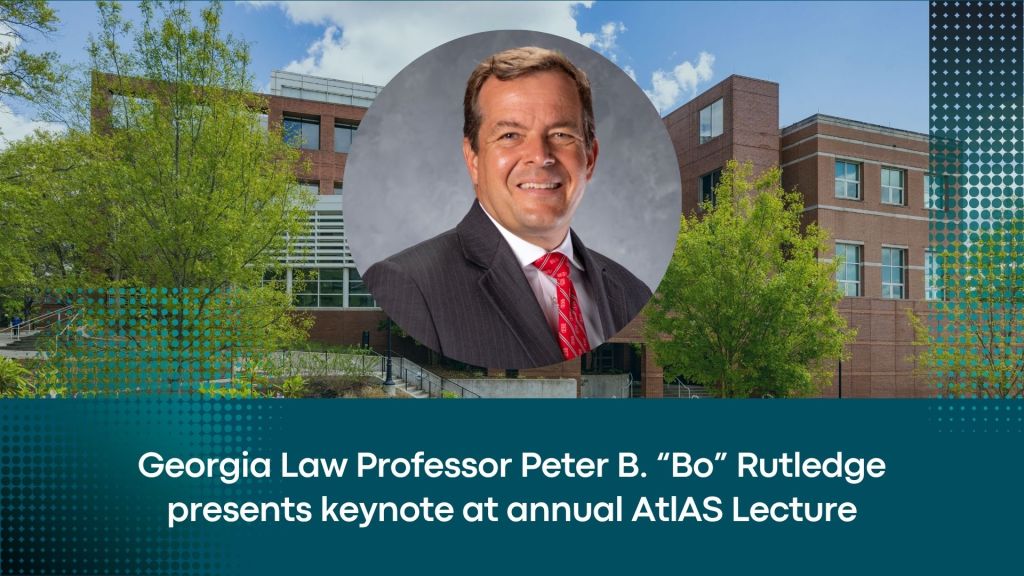
Elizabeth Burns (J.D. ’26), Wambui Kamau (LL.M. ’26), Anu Paudel (LL.M. ’26), Kara Reed (J.D. ’26), and Haichen Zhao (J.D. ’27) attended the American Branch of the International Law Association’s International Law Weekend in New York City, New York. Jalyn Ross (J.D. ’27) attended the 14th annual conference of the Atlanta International Arbitration Society (AtlAS) in Atlanta, Georgia.

Zhao was selected to be a 2025 Student Ambassador (detailed here). She was one of eight Ambassadors selected nationwide to assist with International Law Weekend.

Ross shared about her favorite panel from the AtlAS annual conference:

I really enjoyed the panel discussion on the impact of tariffs on international arbitration. This panel was addressing tangible issues regarding how businesses, countries, and counsel are adjusting with the current instability surrounding tariffs in the United States. This panel was applying concepts I recently learned about in my International Business Transactions class, including Incoterms and articles of the CISG, and discussing questions of interpretation and application that brought to life what I have been studying in a very real way.

Reflecting on the experience of attending the ABILA ILW, Paudel stated:

This conference has encouraged me to advance my academics and career in international law. Personally, it allowed me to gain hands-on insights on different arenas of international law. Hearing invaluable thoughts of international legal experts, law professors , judges, partners and directors has increased my in-depth knowledge on international law, that I couldn’t have acquired from any written book or article. Professionally, the conference allowed me to build strong networks with the panelists, and participants from other law schools.

Burns noted her biggest takeaway from the ABILA ILW:

My biggest takeaway was an increased confidence in the future of international law. Many, if not all, of the panelists we heard from were exasperated with recent blatant violations of international treaties and a lack of action from international tribunals. Their frustration and insistence on continuing to push for change was inspiring, and they gave me hope that there are still many high-level international professionals who have not thrown in the towel yet.

To read prior posts about Georgia Law students using Sohn Fellowships to attend professional development opportunities, please click here and here.

Georgia Law Professor Peter B. “Bo” Rutledge presents keynote at annual AtlAS Lecture

University of Georgia School of Law Professor Peter B. “Bo” Rutledge presented “Perpetual Peace Reconsidered: Arbitration and International Law in the 21st Century” as the keynote speaker at the 10th Annual Atlanta International Arbitration Society Lecture earlier this month. In his lecture, Rutledge considered the use of arbitration and alternative dispute resolution to resolve cross-border conflicts in the 21st century.

Rutledge holds the Talmadge Chair of Law. From 2015 through 2024, he served as dean of the University of Georgia School of Law. He is the author of the book Arbitration and the Constitution and co-author with Gary Born of the book International Civil Litigation in United States Courts. His works have been published by the Yale University Press, the Oxford University Press and the Cambridge University Press, and his articles have appeared in a diverse array of journals such as The University of Chicago Law Review, the Vanderbilt Law Review and the Journal of International Arbitration. He also regularly advises parties on matters of international dispute resolution (litigation and arbitration).

Georgia Law students Olha Kaliuzhna (J.D. ‘25) and Vladyslav Rudzinskyi (J.D. ‘25) win AtlAS Pre-Moot Invitational

University of Georgia School of Law students Olha “Olia” Kaliuzhna (J.D. ‘25) and Vladyslav “Vlad” Rudzinskyi (J.D. ‘25) won the Atlanta International Arbitration Society Pre-Moot Invitational, which took place in March. Rudzinskyi was also named the competition’s best advocate.

Law schools primarily from the Southeastern United States competed in this “warm up” tournament for the Willem C. Vis International Commercial Arbitration Moot to be held in Vienna, Austria, during April. 

Georgia Law students attend Atlanta International Arbitration Society annual conference

Last month, a group of eight University of Georgia School of Law students attended the 13th Annual Conference of the Atlanta International Arbitration Society (AtlAS).

Attendees included 3L Jacob Wood and Master of Laws (LL.M.) students Sara Dorbahani, Michael Faleye, Paria Keramatkhah, Neethu James, Fatemeh Khouei, Samuel Kuo, and Zulma Perez. Five of these students (Wood, Dorbahani, Faleye, Keramatkhah, and Khouei) received Louis B. Sohn Professional Development Fellowships to support their attendance of this conference. Awarded by the law school’s Dean Rusk International Law Center, Sohn Fellowships enable students to attend professional development opportunities related to international law.

Conference attendees attended a number of talks and events designed for practitioners and students involved in international arbitration, including the ICC Young Arbitration & ADR Forum, the AtlAS Young Practitioners Group, networking lunches, and panel discussions. Georgia Law Dean Peter B. “Bo” Rutledge led a fireside chat with alumnus and current President of AtlAS, Christof Siefarth (LL.M. ’86).

Reflecting on the variety of panels and speakers in attendance, Keramatkhah said:

My favorite [discussion] was the panel on the “Top 10 Developments in Arbitration” and Dean Rutledge’s speech. This panel covered key trends in international arbitration, such as the rise of the Borneo Arbitration Center, and UNCITRAL procedural amendments. It also highlighted the growing importance of the new IBA Rules of Disclosure and updates to the 1996 English Arbitration Act. Differences between US and European arbitration were discussed, particularly in witness handling, cross-examination, and the judge’s role. I found this panel very interesting as it was very helpful in understanding the current and future challenges of arbitration. As it regards Dean Rutledge’s speech, since I was involved in [the] research of his speech, I appreciated that it provided deep insights into dispute resolution.

In describing the ways in which this experience benefitted him professionally, Wood said:

Attending the AtlAS conference reaffirmed my desire to practice in the field of international arbitration and aided in my pursuit of this goal. I was able to meet and converse with a variety of practitioners and arbitrators from across the globe.

When asked about her favorite moment from the conference, Dorbahani explained:

One of the standout sessions delved into the art of writing for a multicultural audience. As international arbitration becomes more diverse, mastering the nuances of cross-cultural legal advocacy is vital. It emphasizes how language can either clarify or complicate arbitration across borders. Coming from a Civil Law background, I found this especially relevant, as it highlighted the delicate balance needed to communicate effectively in a global legal landscape.

To read prior posts about Georgia Law students using Sohn Fellowships to attend professional development opportunities, please click here and here.
Ninth Annual AtlAS Lecture speaker, Emory Professor Stacie Strong, considers use of artificial intelligence in international arbitration proceedings

A member of the Dean Rusk International Law Center’s staff, Global Practice Preparation Assistant Catrina Martin, attended this year’s ninth annual Atlanta International Arbitration Society (AtlAS) lecture, “Rage Against the Machine: Governing the Use of AI in International Arbitration.” AtlAS is one of the Center’s institutional partners, and Georgia Law alumnus Dr. Christof Siefarth (LL.M., ’88) is the newly-elected president. Below are some of Martin’s reflections of the event.

Earlier this month, the Atlanta International Arbitration Society co-hosted its 9th annual lecture with the Charlotte International Arbitration Society, held at Wyche Law Firm in downtown Greenville, South Carolina. Stacie Strong, Acting Professor of Law at Emory University Law, presented “Rage Against the Machine: Governing the Use of AI in International Arbitration,” to a hybrid crowd of practitioners, students, and academics.

Her lecture discussed the potential copyright concerns in using AI, such as who owns the created data, as well as privacy concerns given that AI generators have the ability to move past firewalls and other security measures. Discussion included a critique of how the increasing use of AI in arbitration, and across the broader legal field, is training students and young lawyers for the profession, and developing the building block skills of research, writing, and cite checking.

Strong advised that in arbitration, both parties agree during preliminary discussions on the use of AI, and that arbitrators proactively raise the issue with their clients.

Martin reflected on the value of this topic for law students in particular:

“[Strong’s] perspective is helpful for students who are interested in best practices in arbitration, and especially those ‘digital natives,’ for whom AI usage feels like a natural extension of technology already ingrained in their legal education, such as LexisNexis case searches. For students who are interested in international arbitration, generative AI use may offer cost and time savings on the front end, but the pitfalls, especially when arbitrating across common- and civil-law countries, outweigh this potential.”

Strong has taught at law schools around the world and has acted as a dual-qualified (England-US) practitioner with major international law firms in the UK and the US. She has also written over 130 books, articles, and other works and has acted as an expert consultant to a variety of governmental, non-governmental and intergovernmental organizations. A full biography can be found on Emory University’s website.