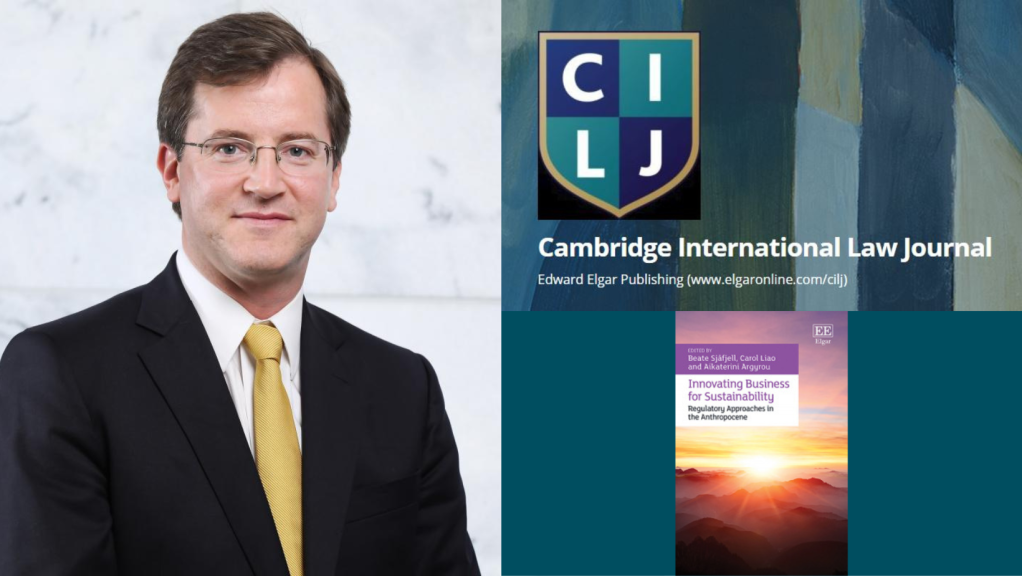
Christopher M. Bruner, Stembler Family Distinguished Professor in Business Law and Faculty Co-Director of the Dean Rusk International Law Center, published a review of a book titled Innovating Business for Sustainability: Regulatory Approaches in the Anthropocene (edited by B. Sjåfjell, C. Liao and A. Argyrou), in the Cambridge International Law Journal in December.
Challenging current attitudes to governance and regulation in business, this timely book ascertains how regulatory approaches can innovate to ensure sustainable business that contributes to social justice for current and future generations within ecological limits.
Combining a research-based approach with a gendered perspective of how sustainability goals are shaped and how businesses should engage with them, this pioneering book creates a comprehensive and contemporary understanding of what sustainability means for business. Identifying the limitations of current approaches to gender and equality alongside the weaknesses of current regulatory and theoretical approaches in business, chapters seek to enhance the practical understanding and embeddedness of sustainability into business within legal and regulatory landscapes. Insights from an international collection of expert scholars in fields ranging from sustainability science to law offer meaningful alternatives to the sustainable business status quo on both conceptual and concrete levels.
Providing a regulatory analysis of business positioned in a systems-based sustainability research framework, this book will prove an invaluable resource for students and scholars of sustainability science, business and management, and law and regulation. With practical insights, it will also prove essential for policymakers working in business regulation and sustainability in business.
Prior posts on Bruner’s scholarship can be found here.
University of Georgia School of Law alumnus Alexander White (J.D., ’09), Privacy Commissioner of Bermuda, spoke to students about current developments and careers in the field of data privacy and cybersecurity in the Dean Rusk International Law Center’s Louis B. Sohn Library this week.
Students from UGA Law’s International Law Society and Privacy, Security, and Technology Law Society attended the talk and asked questions regarding recent data privacy and cybersecurity regulations and comparative privacy regimes, such as Europe’s General Data Protection Regulation. White provided insight into the various ways students can enter into this rapidly-evolving field at both the domestic and international level, emphasizing the importance of taking related coursework and participating in international programming during law school. He mentioned the transformative impact of his own Global Externship Overseas experience in Cambodia, work that he believes mirrors his current position’s mandate to “create laws around the proper and ethical way to do something.” White also offered his perspective on emerging concepts such as Artificial Intelligence and how they impact data privacy, specifically for regulators.
White started his career in insurance and became certified in multiple jurisdictions under the International Association of Privacy Professionals. In 2014, he transitioned into the privacy field with his appointment as the State Deputy Chief Privacy Officer for the South Carolina Department of Administration, tasked with developing a statewide privacy program. White was appointed by former Secretary Jeh Johnson to the U.S. Department of Homeland Security Data Privacy and Integrity Advisory Committee (DPIAC) for a three-year term in 2017. Three years later, the Governor of Bermuda appointed White as founding head of the country’s data protection authority as Bermuda’s first Privacy Commissioner in 2020. White also teaches a Comparative Privacy Law course at UGA Law.
Applications are now open for the summer 2024 Global Governance Summer School, jointly presented by the University of Georgia School of Law’s Dean Rusk International Law Center and KU Leuven’s Leuven Centre for Global Governance Studies. Each summer, this short-term study abroad takes UGA Law students to Belgium and the Netherlands to explore global governance: the interaction of state, regional, and international legal regimes, plus individuals, corporations, intergovernmental and nongovernmental organizations, networks, and other non-state actors.
In summer 2023, the first summer GGSS ran since 2019, 17 students traveled to Europe for a week of lectures with KU Leuven professors. The first week of this for-credit course also included professional development briefings in Brussels at the European Parliament, where students were able to watch the final vote of the session cast, and a private law firm specializing in EU competition law. The programming then shifted to The Hague, Netherlands, where students received briefings at the International Criminal Court, the International Court of Justice, the International Residual Mechanism for Criminal Tribunals, and Leiden University.
The students in attendance had a variety of professional and academic motivations for participating in GGSS. For some, the professional connections, international experience, and expanded academic network will continue to benefit them as they pursue employment internationally. Erin Nalley, a current 2L who aims to work in international environmental law, stated how important the experiences of GGSS are for someone interested in an international career:
“The cultural, academic, and international experiences on this program were priceless and once in a lifetime. I made new friendships and professional connections on this trip that I most likely would not have made without GGSS.”
For others focusing their professional pursuits domestically, GGSS served as a unique professional development opportunity that will set them apart in their job search. Megan Jones, a current 2L interested in a business law career, reflected on the value of the knowledge she gained through her participation in GGSS:
“GGSS was a great opportunity for someone who sees themselves practicing domestically early in their legal career but still has an interest or desire to incorporate international aspects into their professional future. They say the best way to learn something is to immerse yourself in it, and that is exactly what GGSS is: an immersive experience that introduces you to the wide array of global opportunities the legal field has to offer.“
In addition to the UGA Law students, several graduate students at UGA in the law school’s Graduate Certificate in International Law participated in GGSS. Jasmine Underwood-Starling, a Ph.D. student in the Department of Sociology, noted that the benefits of GGSS are truly interdisciplinary:
“For any student interested in international, foreign, and comparative law, the GGSS is definitely worthwhile. The ability to go from classroom learning to then seeing the knowledge and practices in action the very next day is an invaluable experience. The program was truly inspiring.”
***
Applications for the summer 2024 Global Governance Summer School are now open. Current 1Ls, 2Ls, and graduate students are encouraged to apply. This 12-day, 3-credit summer school will explore global governance through the lens of comparative administrative law led by Kent Barnett, Associate Dean for Academic Affairs & J. Alton Hosch Professor of Law. GGSS will take place from May 20 – June 1, 2024. Students are encouraged to reference this instructional video for step-by-step information regarding how to create and successfully complete an application for GGSS in UGA’s Study Away Portal by the March 1 deadline. For more information, please plan to attend the Center’s International Opportunities Information Session on Tuesday, February 13 at 12pm, or email: ruskintlaw@uga.edu
Christopher M. Bruner, Stembler Family Distinguished Professor in Business Law and Faculty Co-Director of the Dean Rusk International Law Center, recently presented working papers in Canada and Sweden.
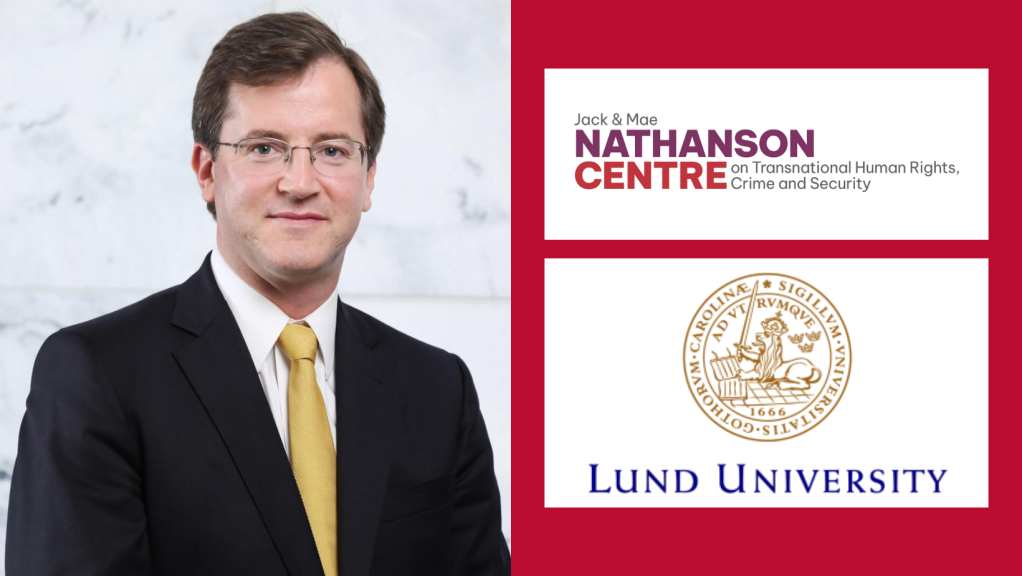
He presented “Corporate Governance and Sustainability Incentives” at a conference titled “Addressing the Sustainability Impacts of Corporations” in October. The conference was hosted by the Nathanson Centre on Transnational Human Rights, Crime and Security at the Osgoode Hall Law School (York University) in Toronto.
Bruner also presented “Corporate Personhood, Corporate Rights, and the Contingency of Corporate Law” at “Decoding the Rights of Companies in the Technocene,” a conference hosted in December by the Lund University Faculty of Law in Lund, Sweden.
Bruner’s scholarship focuses on corporate law, corporate governance, comparative law and sustainability. He is a research member of the European Corporate Governance Institute (ECGI) and has presented his work in numerous countries around the world.
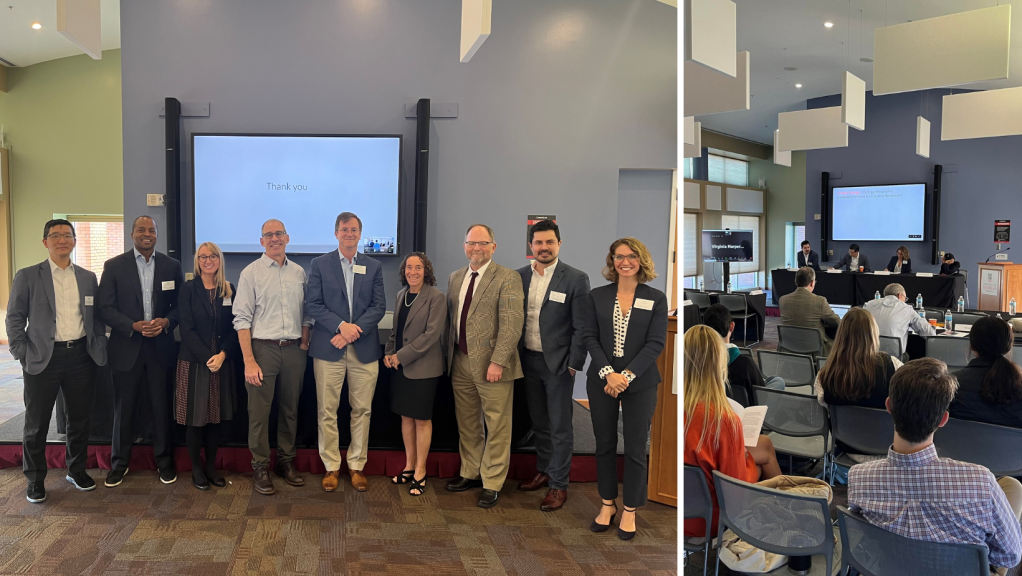
As posted previously, speakers representing a diverse range of doctrinal, institutional, and jurisdictional perspectives gathered on October 16 to discuss the array of contemporary ESG and corporate sustainability initiatives, mapping this rapidly evolving global landscape and engaging with the host of complex international and comparative legal challenges they raise.
Keynoting the conference was University of Pennsylvania Carey School of Law Professor Jill E. Fisch, Saul A. Fox Distinguished Professor of Business Law; Co-Director, Institute for Law & Economics.
The video links are as follows:
Introduction and Panel 1: ESG and Sustainable Finance, with Usha Rodrigues, University Professor and M.E. Kilpatrick Chair of Corporate Finance and Securities Law, University of Georgia School of Law; George S. Georgiev, Associate Professor of Law, Emory University School of Law; Virginia Harper Ho, Professor of Law, City University of Hong Kong; Stephen Park, Associate Professor of Business Law and Satell Fellow in Corporate Social Responsibility, University of Connecticut School of Business; and Anne Tucker, Professor of Law, Georgia State University College of Law.
Panel 2: Corporate Law, Corporate Governance and Sustainability, with Christopher M. Bruner, Stembler Family Distinguished Professor in Business Law and Faculty Co-Director of the Dean Rusk International Law Center, University of Georgia School of Law; Matthew T. Bodie, Robins Kaplan Professor of Law, University of Minnesota Law School; Andrew Johnston, Professor of Company Law and Corporate Governance, University of Warwick School of Law; Lindsay Sain Jones, Assistant Professor, University of Georgia Terry College of Business; and Omari Scott Simmons, Professor of Law, George Washington University Law School.
Panel 3: Multinational Corporations and Global Value Chains, with Harlan G. Cohen, Gabriel M. Wilner/UGA Foundation Professor in International Law and Faculty Co-Director of the Dean Rusk International Law Center, University of Georgia School of Law (and the GJICL’s Faculty Advisor); Sarah Dadush, Professor of Law, Rutgers Law School; David Hess, Professor of Business Law and Business Ethics, University of Michigan Stephen M. Ross School of Business; Kish Parella, Class of 1960 Professor of Ethics and Law, Washington and Lee University School of Law; and Jaakko Salminen, Associate Senior Lecturer, Department of Law, Lund University.
Keynote Addressby Jill E. Fisch, Saul A. Fox Distinguished Professor of Business Law and Co-Director of the Institute for Law and Economics, University of Pennsylvania Carey Law School
This event was cosponsored by the Dean Rusk International Law Center.
We at the University of Georgia School of Law Dean Rusk International Law Center are pleased to welcome a new Visiting Research Scholar: Mine Turhan, Assistant Professor of Administrative Law in the Faculty of Law at the Izmir University of Economics in Türkiye. She holds an LL.M. degree and a Ph.D. in Public Law from Dokuz Eylül University in Izmir, Türkiye.
Professor Turhan plans to conduct research on comparative administrative procedure between the United States and the European Union during her stay at the Dean Rusk International Law Center. Her project will focus on procedural due process rights, in particular the right to be heard before administrative agencies, and it will analyze how individual rights are protected by different procedures in the U.S. and the European Union against arbitrary actions on the part of administrative agencies.
Professor Turhan is sponsored as a Visiting Research Scholar by UGA Law Professor David E. Shipley, the Georgia Athletic Association Professor in Law. Professor Shipley teaches administrative law and civil procedure.
Turhan’s research is supported by a fellowship from the Scientific and Technological Research Council of Türkiye (TÜBİTAK) within the scope of the International Postdoctoral Research Fellowship Program. Her visit continues our Center’s long tradition of hosting scholars and researchers whose work touches on issues of international, comparative, or transnational law. Details and an online application to become a visiting scholar here.
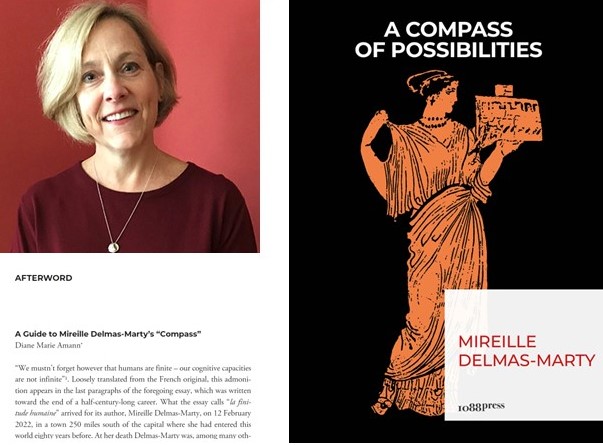
University of Georgia School of Law Professor Diane Marie Amann contributed the afterword to a just-published volume featuring an English translation of an important work by the late Mireille Delmas-Marty (1941-2022), Collège de France de Paris law professor and one of the pre-eminent legal thinkers of her generation.
Co-editors of the volume, A Compass of Possibilities, are law professors Emanuela Fronza (University of Bologna, Italy) and Chiara Giorgetti (University of Richmond). Fronza also wrote an Epilogue to the main work. Subtitled “Global Governance and Legal Humanism,” the book offers, in translation, Delmas-Marty’s 2011 closing lecture at Collège de France, entitled “Une boussole des possibles. Gouvernance mondiale et humanismes juridiques.” Publishing the new work is 1088 Press, a University of Bologna imprint.
Amann – who is Regents’ Professor of International Law, Emily & Ernest Woodruff Chair in International Law, and a Faculty Co-Director of our Dean Rusk International Law Center here at Georgia Law – was a longtime colleague of Delmas-Marty. Amann’s role in their collaborations included a year-long stint as professeure invitée at Université de Paris 1 (Panthéon-Sorbonne), where Delmas-Marty then taught; a lecture at Collège de France; and annual participation in a decade of gatherings of the Réseau ID franco-américain/French-American Network on the Internationalization of Law.
Amann’s afterword is titled “A Guide to Mireille Delmas-Marty’s “Compass'”; it appears at pp. 55-64 of the new volume. Here’s the abstract from a pre-publication version of Amann’s afterword, available at SSRN:
“This essay appears as the Afterword (pp. 55-64) to a volume featuring an important work by the late Mireille Delmas-Marty (1941-2022). A Collège de France de Paris law professor and one of the pre-eminent legal thinkers of her generation, Delmas-Marty and the essay’s author were longtime colleagues and collaborators. The volume contains an English translation of a 2011 lecture by Delmas-Marty, originally titled “Une boussole des possibles: Gouvernance mondiale et humanismes juridiques.” Amann’s essay surveys that writing, in a manner designed to acquaint non-francophone lawyers and academics with Delmas-Marty’s vast and visionary œuvre.”
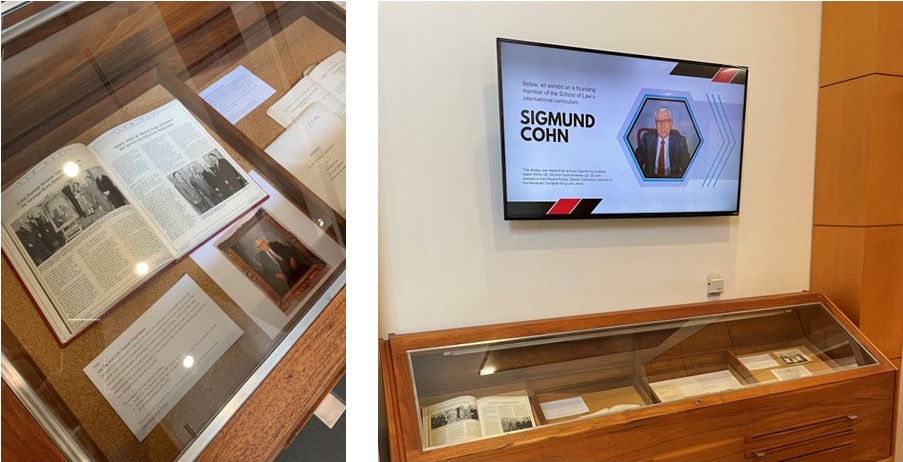
Cohn’s courses, in international law and in comparative law, blazed a trail. Others would follow Cohn’s path; among them, past Georgia Law Professors Dean Rusk, Louis B. Sohn, and Gabriel Wilner.
The exhibit was researched and curated by two of the Center’s Student Ambassadors, 3L Isabel White and 2L Carolina Mares, along with Rachel Evans, Metadata Services & Special Collections Librarian at the law school’s Alexander Campbell King Law Library. It features a collection of archival items about Cohn’s life and work.
Cohn was born in 1898 in Breslau, Germany (now Wrocław, Poland) to a Jewish family. He became a lawyer and then a judge in Germany’s Weimar Republic. But in 1934, Nazi Germany’s antisemitic laws forced him out of his judicial position. Cohn immigrated to Italy for a few years, but then was forced to immigrate once again, to the United States.
He was hired by Georgia Law, and became its first professor of Jewish ancestry, at a time when state laws barred the paying of foreign citizens. His hiring thus was supported financially by Harold Hirsch – then general counsel at the Coca-Cola Co., and the lawyer for whom Georgia Law’s Hirsch Hall is named.
A portrait of Professor Cohn greets visitors to the Dean Rusk International Law Center.
Cohn’s legacy likewise continues in the form of Georgia Law’s highly ranked curriculum (here and here), in global practice preparation and international professional education, benefiting candidates for Juris Doctor, Master of Laws (LL.M.), and Master in the Study of Law (M.S.L.) degrees as well as Graduate Certificate in International Law students.
Christopher M. Bruner, the Stembler Family Distinguished Professor in Business Law here at the University of Georgia School of Law, co-presented a seminar entitled “Comparative Analysis of Common-Law Countries” as part of the PhD Seminar on Company and Markets that was hosted online in October by the Research Group on Companies, Markets and Sustainability, a unit of the Faculty of Law, Department of Private Law, at the University of Oslo in Norway.
Joining Bruner in presenting the seminar was Professor Carol Liao, Director of the Centre for Business Law at the Peter A. Allard School of Law, University of British Columbia, Vancouver, Canada. Scholars from Denmark, Finland, Germany, Greece, Italy, Lithuania, the Netherlands, Norway, Portugal, Singapore, Spain, Sweden, and the United Kingdom also presented in the course of the weeklong University of Oslo event.
Bruner’s chapter appears in Research Handbook on Comparative Corporate Governance. Edited by Afra Afsharipour, Professor of Law and Senior Associate Dean for Academic Affairs at the University of California, Davis, School of Law, and Martin Gelter, Professor of Law at Fordham University School of Law, the volume was issued by Edward Elgar Publishing.
Here’s the abstract for Professor Bruner’s chapter, a version which is available at SSRN:
Methodology has not received sufficient attention in the field of comparative law, and this shortcoming is perhaps even more significant in the specific field of comparative corporate governance, where the general comparative legal literature that does exist on the subject tends to be ignored. While there is assuredly no single, optimal comparative method, it remains critically important for scholars to evaluate whether the approach undertaken is fit for purpose – that is, whether the comparative method adopted is in fact capable of illuminating the subject of inquiry.
This chapter highlights some significant methodological choices and challenges encountered in comparative corporate governance. Part II describes differing comparative postures that one might adopt, emphasizing similarity or difference, respectively – an important threshold consideration, in so far as one often finds what one sets out to find, without recognizing the degree to which such predispositions might cloud the analysis and preclude a fuller account. Part III examines how the law and economics movement, in particular, has affected comparative analysis of corporate governance, critiquing its (implicit) methodology and assessing its impacts. Part IV, then, discusses various choices in research design, emphasizing how the alternatives are impacted by the foregoing dynamics. Part V briefly concludes, calling for methodological self-awareness and candid acknowledgment of the limits of what various comparative approaches to corporate governance can deliver.





 exchange of notes