
University of Georgia School of Law alumna and Dean Rusk International Law Center Council member Tess Davis (J.D. ’09) was featured in the documentary “LOOT: A Story of Crime and Redemption,” which highlights the illicit art dealings of Western museums.
Below is a description of the film:
From remote Cambodian villages to elite art institutions in New York, LOOT : A Story of Crime & Redemption is a daring look into the underbelly of the multi-billion-dollar art market and the deadly reality behind “blood antiquities” filling Western museums today. During Cambodia’s civil war, British “adventurer-scholar” Douglas Latchford led an extensive criminal network, looting centuries-old temples hidden within landmine-filled jungles. The film offers access to key players, including “Blue Tiger” a former child soldier turned looter who now fights to return stolen artifacts.
The film tells the gripping story of the contrast of rich and poor as viewers learn about multi-million-dollar sales of works looted by Cambodian farmers paid $20.00 per week while risking their lives. LOOT : A Story of Crime and Redemption also takes viewers behind-the-scenes as stolen pieces are returned to Cambodia, including some arriving from New York’s Met Museum in July 2024. With thousands of pieces still overseas, Cambodia’s relentless struggle continues against the most powerful figures in the art world today.
Tess Davis, a lawyer and archaeologist by training, is Executive Director of the Antiquities Coalition, a nonprofit dedicated to the preservation and protection of art, artifacts, and cultural pieces. She oversees the organization’s work to fight cultural racketeering and also manages the day-to-day operations of the institute’s staff in Washington, DC, as well as programs overseas. Since 2013, Davis has been affiliated with the Scottish Centre for Crime and Justice Research, at the University of Glasgow. She came to Scotland from the Lawyers’ Committee for Cultural Heritage Preservation — a not-for-profit institution based in Washington, DC — where she was Executive Director until 2012. She previously worked for the nongovernmental organization Heritage Watch in Cambodia, first as Project Coordinator, and finally Assistant Director. Her career began at the Archaeological Institute of America.
Over the last decade, Davis has conducted extensive field research on the illicit trade in Cambodian antiquities, as well as legal research on the kingdom’s cultural property law. She also conceptualized and implemented a number of exciting projects in the country, including an exhibition at Angkor Wat about threats facing the temple, a hotline for the public to report archaeological discoveries or looting, and a children’s book entitled “If the Stones Could Speak.” From 2012-2014, she directed a legal internship program in Phnom Penh for international students from the Tulane-Siena Institute, who assist the Cambodian Ministry of Culture and Fine Arts with their legal needs. Davis has been a legal consultant for the Cambodian and US governments and works with both the art world and law enforcement to keep looted antiquities off the market. She writes and speaks widely on these issues — having been published in the New York Times, Wall Street Journal, the Los Angeles Times, CNN, the Huffington Post, and various scholarly publications — and featured in documentaries.

 Caroline Harvey, a current third-year student at the University of Georgia School of Law, is one of two 2019 winners of the
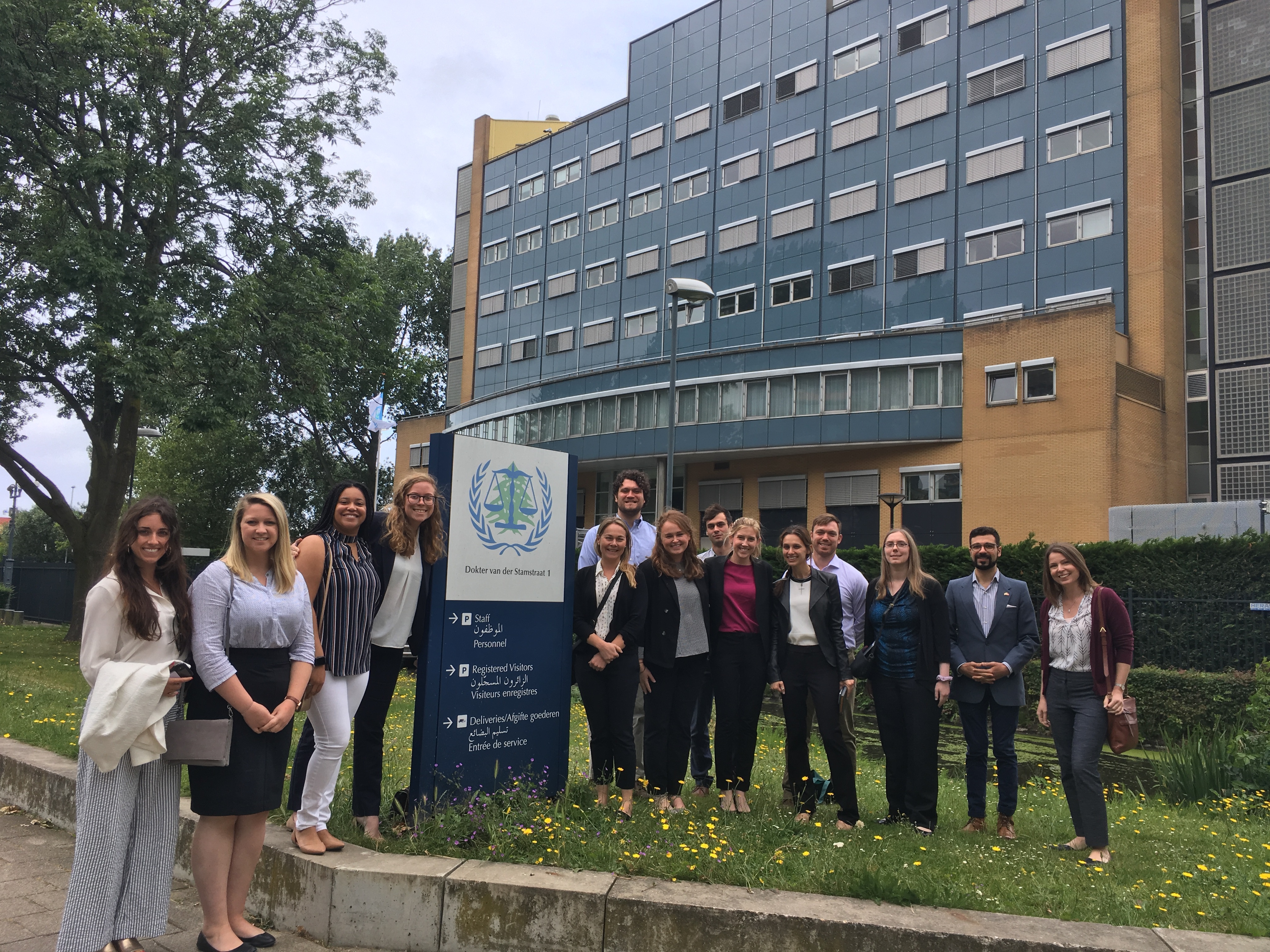
  Students spent the morning meeting with lawyers from the



 The Legal Unit of the HRC uses several legal and policy strategies to achieve this purpose. These include: filing domestic complaints against Israeli Defense Forces orders; filing complaints with various international human rights bodies; conducting international awareness campaigns; and directly educating Palestinians about their rights. I had the opportunity to work on several of these complaints. On one filed with the
  BEIJING – The people of China are warm. They love babies. I quickly found the best way to make a friend was to coo at the child in her arms. They love long meals and good toasts, and have spent centuries mastering the art of hospitality. Being a guest in China is wonderful.
 start-up vibe. I sipped exotic tea as I strolled through galleries in the profoundly cool
  expected to find in China: a mix of the modern and the historical, of wealth and underdevelopment.
 China is too long to preserve the physical – you just can’t save every 5,000-year-old building – the cultural heritage of China lives in the language. Having mastered only four words in ten days – “Hello,” “Thank you,” “Cheers,” and “too expensive” – I have to admit that this is lost on me. But it emphasized the importance of
 exchange of notes