GJICL publishes “Children and International Criminal Justice” issue

gjicl43_3

Very pleased to announce that papers from a Georgia Law conference “Children & International Criminal Justice” have just been published by our Georgia Journal of International & Comparative Law.

The conference was cosponsored by Dean Rusk International Law Center and the Georgia Law Project on Armed Conflict & Children, as well as the university’s African Studies Institute, the Planethood Foundation, and the American Society of International Law-Southeast.

About 2 dozen experts came to Athens, Georgia, from as far as Doha and Kinshasa, to discuss the topic at hand. In so doing, they assisted in the preparation of the International Criminal Court Office of the Prosecutor Policy on Children. As detailed in recent posts, available here and here, the public comment period for the draft of that Policy continues through August 5, 2016, with launch of the final document set for mid-November.

bensouda_me2_28oct14cropA keynote speech by ICC Prosecutor Fatou Bensouda (at right) highlighted our conference, and the text of her speech headlines the edition. Other writings link the work of the ICC to the 1989 Convention of the Rights of the Child, examine the experiences of children in armed conflict and similar situations. Student rapporteurs’ accounts of expert breakout sessions additionally treat a range of issues. All these papers contributed significantly to the Policy process.

The edition concludes with students’ notes apart from the conference; one of these, for which I was honored to serve as faculty adviser, examines the issue of child marriage.

Here, in full, is the table of contents for Volume 43, issue 3, with PDF links to each article:

Children and International Criminal Justice Conference

“Convening Experts on Children and International Criminal Justice,” by yours truly, Diane Marie Amann (above, at left), Associate Dean for International Programs & Strategic Initiatives and Emily & Ernest Woodruff Chair in International Law, and also Prosecutor Bensouda’s Special Adviser on Children in & affected by Armed Conflict

“Children and International Criminal Justice,” by Fatou Bensouda (above, at right), Prosecutor of the International Criminal Court

malone“Maturing Justice: Integrating the Convention on the Rights of the Child into the Judgments and Processes of the International Criminal Court,” by Linda A. Malone (right), Marshall-Wythe Foundation Professor of Law and Founding Director of the Human Security Law Center, William & Mary Law School

drumblm“Children, Armed Violence and Transition: Challenges for International Law & Policy,” by Mark Drumbl (left), Class of 1975 Alumni Professor of Law and Director of the Transnational Law Institute at Washington & Lee University School of Law

“Child Protection in Times of Conflict and Children and International Criminal Justice,” by Kerry L. Neal neal(right), Child Protection Specialist, Justice for Children, UNICEF, New York

“Expert Workshop Session: Regulatory Framework,” by Ashley Ferrelli, Eric Heath, Eulen Jang, and Cory Takeuchi (all Georgia Law graduates, who were members of GJICL)

“Expert Workshop Session: Child Witnesses: Testimony, Evidence, and Witness Protection,” by Chelsea Swanson, Elizabeth DeVos, Chloe Ricke, and Andy Shin (now Georgia Law graduates, all then were members of GJICL)

“Expert Workshop Session: The Global Child,” by Haley Chafin, Jena Emory, Meredith Head, and Elizabeth Verner (all Georgia Law graduates, who were members of GJICL)

Student Notes

“Changing the Game: The Effects of the 2012 Revision of the ICC Arbitration Rules on the ICC Model Arbitration Clause for Trust Disputes,” by Colin Connor

“Water, Water Everywhere, But Just How Much is Clean?: Examining Water Quality Restoration Efforts Under the United States Clean Water Act and the United States-Canada Great Lakes Water Quality Agreement,” by Jill T. Hauserman

“REACHing for Environmental and Economic Harmony: Can TTIP Negotiations Bridge the U.S.-EU Chemical Regulatory Gap?,” by Ashley Henson

“Child Marriage in Yemen: A Violation of International Law,” by Elizabeth Verner

(Cross-posted from Diane Marie Amann)

Experts in Hague consultation on ICC prosecutors’ draft Policy on Children

fBopening

THE HAGUE, Netherlands – Experts gathered this week from around the world for a wide-ranging consultation on the International Criminal Court Office of the Prosecutor’s draft Policy on Children.

In her Opening Remarks to Monday’s consultation, Prosecutor Fatou Bensouda explained:

“This Policy, once finalised and adopted, will guide my Office in our ongoing efforts to address international crimes against or affecting children under the Rome Statute, as well as our interaction with children during the course of our work.

“The Policy will further provide clarity and transparency on how we intend to methodologically undertake this crucial work.

“Additionally, it is my hope that this Policy will also serve as a useful guide for national authorities and other actors in their respective endeavours to address crimes against and affecting children, and in their interactions with children in judicial processes.”

Released last month, the draft Policy:

► Reaffirms an oft-repeated commitment of the Prosecutor. To be precise, the Policy reinforces her Office’s concern for “children with weapons” – that is, persons under fifteen who have been recruited or used in armed groups, often called “child soldiers.” But it also details the Office’s concern for what the Prosecutor called “children affected by the weapons” – that is, all persons who, before their 18th birthday, endured crimes within the jurisdiction of the Court.

► Adopts a child-sensitive approach to its dealings with children. That approach recognizes children as both vulnerable and capable, as both needy and resilient – often, at the same time. The Policy pledges sensitivity to these realities according to the regulatory framework of the Rome Statute system, and also according to principles drawn from international instruments, like the 1989 Convention on the Rights of the Child, a treaty that enjoys near-universal ratification and is founding on 4 guiding principles:

  1. The child’s right to be treated without adverse discrimination;
  2. The right to life, survival, and development;
  3. The right to have the child’s best interests taken into account; and
  4. The child’s right to express views and have them considered.

The draft Policy on Children (available in full here) explicitly recognizes those principles and sets out the contours for respecting and ensuring them.

It thus enumerates crimes against and affecting children. Included are crimes of conscription and use, as well as child trafficking as enslavement and forcible transfer as genocide. Also included are crimes like persecution, if it targets children on the basis or age or birth, as well as attacks on schools.

The policy further details the approach of the Office with respect to children at all stages of the proceedings: preliminary examinations, investigations, prosecutions, sentencing, and reparations.

All these aspects received discussion at Monday’s consultation; some are reflected in tweets available at #EndCrimesAgainstChildren. The policy working group will be considered along with other public comments. The Office welcomes additional such comments, which should be sent via e-mail to OTPLegalAdvisorySection@icc-cpi.int no later than Friday, August 5, 2016. The Office anticipates final publication in October of this year.

It was an honor to take part in this consultation in my capacity as the Prosecutor’s Special Adviser on Children in & affected by Armed Conflict – and also to be accompanied at the consultation by one of my Georgia Law students, Chanel Chauvet. (We’re pictured below in front of a mural at the ICC’s new permanent premises.) A  rising 2L and Dean Rusk International Law Center Student Ambassador, Chanel just completed a weeklong Hague summer school on international humanitarian law.

chanel_dianeICC

(Cross-posted from Diane Marie Amann)

“Tension in globalization”: Professor Harlan G. Cohen on Britain’s EU vote

cohen_harlan_columns2012 - Copy

Among the University of Georgia experts offering comments on “Brexit,” the June 23 referendum by which Britons voted to leave the European Union by a margin of 52% to 48%, is Professor Harlan G. Cohen.

Cohen, whose expertise includes global governance, foreign affairs law, and trade law, said:

“After the Brexit vote, the one thing that’s predictable is that we’re facing a long period of uncertainty. Yesterday, everyone knew what the rules were. While the rules don’t change today, no one knows what the rules will be in in three months or two years. The terms of trade in goods and services between the U.K. and the rest of the EU, the rights of U.K. citizens to work, to health care, and to travel in other EU countries, intelligence sharing between the U.K. and the other EU governments, and the regulation of any number of industries in the U.K. are now open to debate at home and subject to negotiations abroad. Article 50 of the Treaty on European Union lays out a process for withdrawal but subjects everything to negotiation between the U.K. and the other 27 member states. No one can know today where exactly those negotiations will lead.

“More broadly, the Brexit vote highlights the long-recognized tension in globalization. Increasingly, the things we want cannot be achieved and the problems we face cannot be solved by one country alone. They can only be achieved or solved through cooperation and coordination. But as we move key decisions to more regional or global levels, it becomes harder for people to feel that their voice is really being heard, that they really have a say in the rules defining their lives. When those global or regional decisions are controversial, as many EU decisions have been, those who disagree and feel left out are less likely to see the decisions as legitimate. In a modern globally interconnected world, the regulation we need is in constant tension with the governance we want. And it’s not clear that tension can be resolved. There are ways to manage this tension, which many people will be revisiting after the Brexit vote, but their effectiveness is limited.”

His remarks add to the reflections by a Georgia Law student who is a summer Global Extern in London; her thoughts here. (photo credit)


Cade comments on immigration ruling

Cade_JasonOct15 - CopyGeorgia Law Professor Jason A. Cade was among the immigration law scholars providing media commentary on a decision that the U.S. Supreme Court issued on Thursday.

At issue was the interpretation of a term in the federal immigration statute: “aggravated felony.” An undocumented immigrant found to have been convicted of a crime that amounts to this type of felony is to be removed from the United States. In the case under review, Luna Torres v. Lynch, a 5-member Court majority construed the term in a way that eases prosecutors’ burden of establishing that the crime of conviction was “aggravated.”

Professor Cade (above) is an immigration law expert who leads Georgia Law’s Community HeLP Clinic and also serves on our Dean Rusk International Law Center Council. Regarding the judgment in in Luna Torres, Cade said in a Bloomberg BNA: Criminal Law Reporter article:

“I think it’s fair to say that the majority was simply uncomfortable with an interpretation of the aggravated felony provision that would have made it more difficult for the government to remove some very serious noncitizen offenders.”

The article is available in PDF here; the Court’s decision, in PDF here. Professor Cade’s publications may be accessed here.

Global legal research online at SSRN

ssrn_shadowAs 2015-16 nears its close, we mark one of the new partnerships on which we embarked this academic year. In October, we began posting news of our scholarship at the Dean Rusk International Law Center Research Papers, a series in the vast Legal Scholarship Network of SSRN, the Social Science Research Network.

Our series highlights scholarly production at the University of Georgia Law, including writings by Georgia Law faculty and Center staff, as well as works appearing in our Georgia Journal of International & Comparative Law and other publications. All the contributions discuss issues of international, comparative, transnational, and foreign affairs law and policy. The series thus augments the decades-old tradition by which the Dean Rusk International Law Center serves Georgia Law’s nucleus global research, education, and service.

Among the works published to date:

► The Testamentary Foundations of Commercial Arbitration, 30 Ohio State Journal on Dispute Resolution (2015), by Dean Peter B. “Bo” Rutledge

► The Death of Deference and the Domestication of Treaty Law, Brigham Young University Law Review (forthcoming), by Professor Harlan Grant Cohen

► Judicial Federalism in the European Union, Houston Law Review (forthcoming), by Professor Michael Lewis Wells

Enforcing Immigration Equity, 84 Fordham Law Review 661 (2015), by Professor Jason A. Cade

A Hitchhiker’s Guide to the OECD’s International VAT/GST Guidelines, 18 Florida Tax Review 589 (2016), by Professor Walter Hellerstein

► Securing Child Rights in Time of Conflict, ILSA Journal of International & Comparative Law (forthcoming), by Associate Dean Diane Marie Amann

Toward Peace with Justice in Darfur: A Framework for Accountability, 18 U.C. Davis Journal of International Law and Policy 1 (2011), by Kathleen A. Doty, our Center’s Associate Director for Global Practice Preparation

View the papers are available online here or, even better, receive new postings through e-mail distribution by subscribing here.

D.C. bound, for ASIL Annual Meeting

SONY DSC

Students, faculty, and staff at Georgia Law are heading this week to Washington, D.C. – members and Academic Partner of the American Society of International Law, bound for ASIL’s 110th Annual Meeting.

It’s always a special time of year for us at the Dean Rusk International Law Center, given our long tradition with the Society – not least because Louis B. Sohn, our inaugural Emily & Ernest Woodruff Chair in International Law, served as an ASIL President. In his honor, the Center has awarded Louis B. Sohn Professional Development Fellows to our 1 LLM, 1 MSL, and 3 JD students who will volunteer at the meeting. They’re pictured above, standing tall with the portrait of Professor Sohn which overlooks our Center’s Louis B. Sohn Library on International Relations.  The Sohn Fellows are, from left, Hannah Mojdeh Williams, Victoria Aynne Barker, Katherine Nicole Richardson, Deborah Nogueira Yates, and Bradley C. Bowlin.

Also ASIL bound are:

copydianeDiane Marie Amann, Georgia Law’s Associate Dean for International Programs & Strategic Initiatives, current holder of the Emily & Ernest Woodruff Chair in International Law, and a former Vice President of the Society. Amann, who leads our Center, will take part in a panel discussion of the new International Committee of the Red Cross Commentary on the First Geneva Convention at 2 p.m. Wednesday, March 30. Her talk is a forerunner to a planned Georgia Journal of International & Comparative Law conference on the Commentary, to be held on Friday, September 23, 2016.

????????????????????????????????????

► Georgia Law Professor Harlan Cohen, who serves on ASIL’s Executive Council and as Managing Editor of its AJIL Unbound.

SONY DSC

Kathleen A. Doty, our Center’s Associate Director for Global Practice Preparation, and a past Attorney-Editor at ASIL. Formerly an attorney in the Office of the General Counsel, U.S. Department of the Navy, Doty also serves as Chair of ASIL’s Nonproliferation, Arms Control, and Disarmament Interest Group, also known as NACDIG. In that capacity, she’ll be moderating a panel entitled The Emergence of Cyber Deterrence: Implications for International Law, from 11 a.m. to 12:30 p.m. on Thursday, March 31. Speakers will be Gary Brown, Professor of Cyber Security at the Marine Corps University; Jonathan E. Davis, Attorney-Adviser, Office of the Legal Adviser, U.S. Department of State; and Tara McGraw Swaminatha, Of Counsel at the Washington office of DLA Piper LLP. Here’s the panel description, as set out at page 37 of the Annual Meeting Program:

“Military and civilian policymakers increasingly stress the importance of deterring other nations from engaging in computer network exploitation and attacks against the United States. Resulting from the behavior of China, Iran, and North Korea respecting offensive cyber capabilities, deterrence features prominently in the new Department of Defense cyber strategy, the response of the Obama administration to high profile attacks, and the Congressional debate around cyber issues. This panel will explore the emergence of cyber deterrence, and new trends in cyber security generally, as they relate to international law. Some important areas of concern include: how the emphasis on deterrence might affect the law on State responsibility, non-intervention, counter-measures, and the use of force; whether moving to strengthen cyber deterrence requires changing the permissive nature of international law on espionage; what new norms might be needed to support and stabilize cyber deterrence, such as confidence-building measures, arms control rules, and norms on escalation control; and how the emergence of cyber deterrence might affect other cyber issues important in international law, including Internet governance, digital commerce, and human rights. The session will also analyze what international legal lessons might be learned from nuclear and non-nuclear contexts where States have adopted deterrence strategies.”

See you there!

Georgia Law comments on Geneva Commentaries begin 30 March in D.C.

We’re honored to play a part of the International Committee of the Red Cross launch of its new Commentary on the First Geneva Convention for the Amelioration of the Condition of the Wounded and Sick in the Field, a volume due for release next Tuesday, March 22.

commentaryA week later, the head of Georgia Law’s Dean Rusk International Law Center, Diane Marie Amann, will take part in a panel discussion of the new Commentary at 2 p.m. Wednesday, March 30. Later in the year, we anticipate a Georgia Law conference on the same subject: it will be held on Friday, September 23, 2016.

The March 30 panel discussion will take place in the Columbia Ballroom of the Hyatt Regency Washington on Capitol Hill, 400 New Jersey Ave N.W., Washington, D.C. That’s the same hotel hosting the annual meeting of the American Society of International Law from March 30 to April 2. This is a side event, though ASIL and its international humanitarian law interest group, the Lieber Society on the Law of Armed Conflict,  are cosponsors of this event, hosted by the ICRC’s D.C.-based Regional Delegation for the US and Canada.

The Commentary is the 1st in a series of volumes intended to update earlier versions, some of which are pictured above: 4 circa-1952 volumes on the 4 Geneva Conventions of 1949, edited by Jean S. Pictet, plus a circa-1987 volume on Additional Protocols I & II of 1977, produced by multiple editors. In the words of the ICRC:

“Since their adoption, the Conventions and Protocols have been put to the test, and there have been significant developments in how they are applied and interpreted. The new Commentaries seek to incorporate these developments and provide an up-to-date interpretation of the law.”

This initial update carries particular significance because it contains commentary on Articles 1, 2, and 3 Common to all 4 Geneva Conventions. Common Article 2 and Common Article 3 have endured significant re-examination in the counterterrorism climate that’s prevailed since the attacks of September 11, 2001, readers of decisions such as Hamdan v. Rumsfeld and a plethora of academic literature well know (and as I’ve written here and elsewhere).

The discussion at the March 30 launch in D.C. will feature:

henckaerts► Dr. Jean-Marie Henckaerts (left), Head of the Commentaries Update Unit at ICRC headquarters in Geneva, Switzerland – and, we’re proud to add, a 1990 LLM alumnus of Georgia Law

► Yours truly, Diane Marie Amann (right), Associate Dean and Emily & Ernest Woodruff Chair in International Law at Georgia Law, and the International Criminal Court Prosecutor’s Special Adviser on Children in & affected by Armed Conflict

jackson► Colonel (ret.) Dick Jackson, Special Assistant to the Army Judge Advocate General for Law of War Matters, and Adjunct Professor of Law at Georgetown Law

mathesonMichael Matheson, Professorial Lecturer in Law, George Washington University Law School, and former member of the U.N. International Law Commission

RSVPs for March 30 welcome; for that and any other information on that event, contact Tracey Begley, trbegley@icrc.org.

(Cross-posted from Diane Marie Amann)
Global practice preparation through Georgia’s new Corsair Law Society

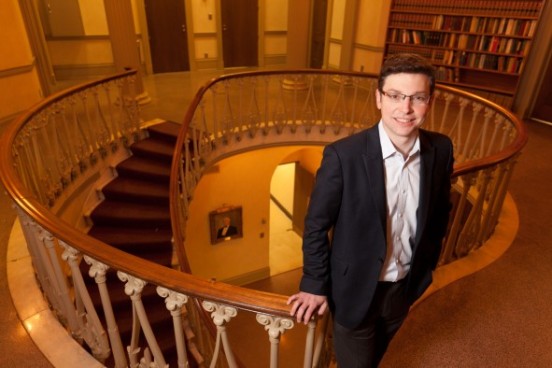
nycTop students at Georgia Law who wish to practice in the areas of transactional law or corporate litigation in major financial markets benefit from an expansive network.
Launched in Manhattan in January, our Corsair Law Society comprises alumni/ae who excel in business law careers throughout the country and beyond, in addition to students at Georgia Law and the University of Georgia Terry College of Business. (credit for photo of Manhattan skyline)

Advisers to the new Society include 2 members of the Faculty Division of the Dean Rusk International Law Center Council: Usha Rodrigues, Associate Dean for Faculty Development & M.E. Kilpatrick Chair of Corporate Finance and Securities Law; and Mehrsa Baradaran, J. Alton Hosch Associate Professor of Law. They join Margaret V. Sachs, Robert Cotten Alston Chair in Corporate Law, and Carol Morgan, who leads our Business Law & Ethics program.

That program, plus the Georgia Law-Terry College 3-year JD/MBA degree, offer topnotch global practice preparation for business-oriented students.

Learning law on both sides of Atlantic: Join Georgia Law at Oxford Spring 2017

oxford_Smith_traub2016crop

Learning in London: Georgia Law at Oxford Spring 2016 students with Professor-in-Residence James Smith and Kit Traub (JD 1988), Minister-Counselor for Political Affairs (acting), U.S. Embassy

Over the last decade, more than a hundred U.S. students have enriched their legal studies through Georgia Law’s offering of a semester-long experience the University of Oxford, one of England’s most venerable institutions. Providing 12 credits over the course of about 15 weeks, Georgia Law at Oxford is one of the few such semester-long opportunities among U.S. law schools.

According to Georgia Law Professor Joseph Miller, Director of Georgia Law at Oxford:

“The Oxford program is deeply engaging and rewarding. I remember my time there in Spring 2013 so fondly, and I continue to hear from alums of the program about how much they grew and learned in Oxford, one of the world’s ultimate university towns. It’s filled with life and living history, side by side.”

Applications are welcome for Spring 2017. Interested Georgia Law students are encouraged to attend one of 2 information sessions next week, to be held on Monday, March 14, and Wednesday, March 17; interested students from other law schools should contact Professor Miller, getmejoe[at]uga[dot]com, for information about attending as a University of Georgia visiting student.

The exciting Spring 2017 curriculum will be led by professors from both sides of the Atlantic:

Chapman_head► Georgia Law Professor Nathan Chapman (right) will be the Georgia Law professor in residence in Spring 2017. He’ll teach 2 courses, for a total of 7 units:

►► Comparative Constitutional Law: The course will survey the historical and philosophical origins of constitutionalism, with a special emphasis on the development of the liberal constitutional tradition associated with Magna Carta, the English Bill of Rights, the U.S. Constitution, and the French Declaration of the Rights of Man. The bulk of the course will explore the different structures, procedures, and rights provisions in a variety of contemporary constitutional systems (including treaty-based systems such as the European Union). A special concern will be legitimacy and methods of constitutional change.

►► The History of the Common Law: Using the excellent textbook by Langbein, Lettow Lerner, and Smith, this course will survey the development of the common law, courts, and legal profession in England and the United States, giving special emphasis to the ways that the common law and legal practice have diverged in England and American in the past 200 years. The course will conclude by comparing how the practice of law is structured and regulated in both countries today.

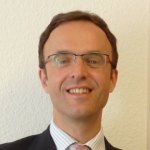
enchelmaierTN► Joining Professor Chapman will be Oxford Law’s Stefan Enchelmaier (left), Professor of European and Comparative Law. His 2-unit course, EU Economic Law, will examine the economic components of European Union law.

► Rounding out the curriculum will be a 3-unit Supervised Research Tutorial, modeled on the format of the renowned Oxford tutorial and taught by an array of Oxford Law faculty. Small-group meetings will be devoted to planning or revising the research paper that each student will complete during the semester, on a topic of comparative or international law.

Details and application here.

Cutting-edge law: Georgia-Leuven Global Governance Summer School

For students everywhere, we are delighted to announce a new opportunity to global study law and policy:

RuskStudiesAbroad_postcard_cropped2

Applications are welcome for a brand-new Global Governance Summer School (GGSS), spanning 3 weeks at the University of Leuven, located just minutes from Belgium’s main airport. Students in law and related disciplines, from the United States, Europe, and across the globe, are welcome to enroll. All students will receive a certificate, and U.S. law students also may earn 4 American Bar Association-approved credits.

GGSS launches a new partnership between the Dean Rusk International Law Center, University of Georgia School of Law – which has sponsored summer study abroad in Belgium since 1973 – and the Leuven Centre for Global Governance Studies at the University of Leuven, one of Belgium’s premier research institutions.

Cutting-edge issues will be explored July 10-30, 2016, through 4 courses, all taught in English by leading experts in regional, transnational, and international law and policy:

wouters_janGlobal Governance Overview: GGSS Co-Director Jan Wouters (left), Jean Monnet Chair ad personam EU and Global Governance, Director of the Leuven Centre for Global Governance Studies

Global Human Rights & Security Governance: GGSS Co-Director Diane Marie Amann (right), Associate Dean for International Programs & Strategic Initiatives and Emily & Ernest Woodruff Chair in International Law, Dean Rusk International Law Center, University of Georgia School of LawcropCohen_harlan_columns2012

Global Economic Governance: Harlan Grant Cohen (left), Associate Professor of Law, University of Georgia School of Law, and Managing Editor, AJIL Unboundaxel

Global Governance Practicum: Dr. Axel Marx (left), Deputy Director, Leuven Centre for Global Governance Studies, and Kathleen A. Doty (below right), Associate Director for Global Practice Preparation, Dean Rusk International Law Center, University of kate - CopyGeorgia School of Law

Pivotal to GGSS is a 2-day experts conference to be held at Leuven’s campus in the center of Brussels, capital of Belgium and numerous European Union agencies.

Also supplementing formal study will be professional development trips to the headquarters of the North
europarl_bruxAtlantic Treaty Organization (NATO) and the European Parliament (left) in Brussels, as well as the European Court of Justice in Luxembourg. Rounding out the GGSS offerings will be an optional trip to Flanders Fields, formerly a site of battle and now the resting place of many World War I combatants of all nationalities.

Deadline for applications is Monday, April 4, 2016. Details here; U.S.-based students, apply here. All others, including U.S.-based students seeking more information, should contact Kathleen A. Doty, doty[at]uga[dot]edu.