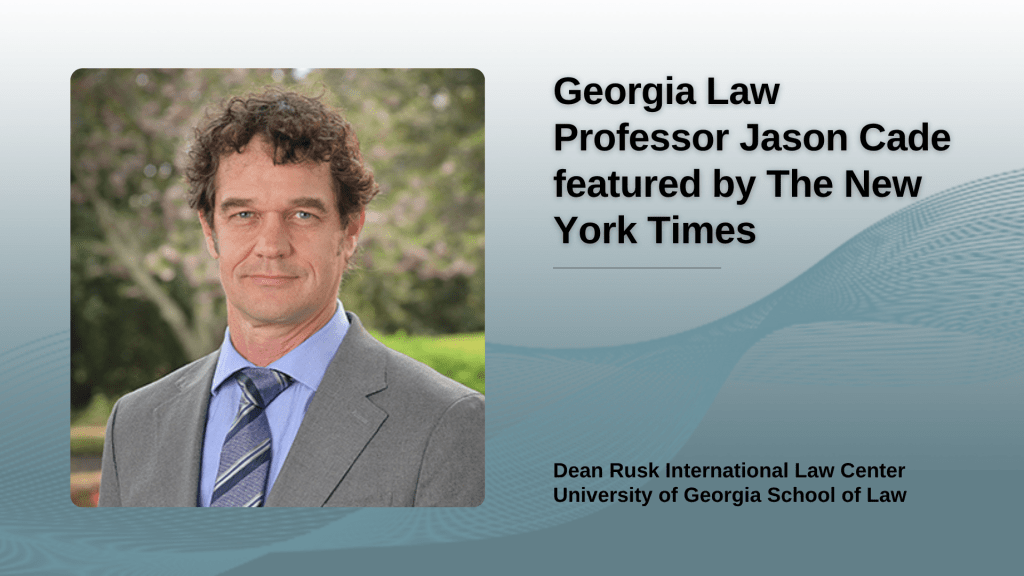
The University of Georgia School of Law clinics’ faculty and students, including Jason A. Cade, Associate Dean for Clinical Programs and Experiential Learning, and Kristen Shepherd, Community Health Law Partnership Clinic Staff Attorney of the Community HeLP Clinic, have continued their advocacy on behalf of women clients who are challenging the abuses they endured while in U.S. immigration detention.
As previously posted UGA Law’s Community HeLP Clinic and First Amendment Clinic have pursued administrative, judicial, and advocacy paths in support of women who had been in the custody of U.S. Immigration and Customs Enforcement (ICE) at the Irwin Detention Center, a privately run facility in south Georgia. While there, the women were subjected to nonconsensual medical procedures. Those who spoke out were met with retaliatory acts, including attempted or actual removal from the United States. For more than two years, the UGA Law clinics have represented these women in judicial and administrative proceedings.
The Community HeLP Clinic made significant progress in recent months on behalf of several women who experienced nonconsensual medical procedures while detained by ICE. These efforts included ongoing advocacy before a State Clemency Office, representation before immigration court on behalf of a woman who was unjustly deported, and successful advocacy before the Board of Immigration Appeals to reopen a third woman’s removal proceedings. The Clinic continues to represent these women and others in a putative class action lawsuit relevant to their allegations of medical abuse and retaliation. More information on these successes and engagements can be found here.
The Community HeLP Clinic is centered around interdisciplinary advocacy that focuses on immigration status and health, noncitizen workers and detainees, and public education. Along with overseeing the law school’s 11 in-house clinics and 7 externship programs, Cade directs the Clinic and aids law students in undertaking an interdisciplinary approach to immigrants’ rights through individual client representation, litigation, and project-based advocacy before administrative agencies and federal courts. Shepherd supervises students as they engage in a variety of services including interviewing and advising clients, conducting research and drafting legal documents, advocating in court proceedings and administrative hearings, and collaborating with legal and medical professionals in the community.