Georgia Law’s Emerging Scholars initiative, including internationalist Mary Yiyue Zhao, enters second year

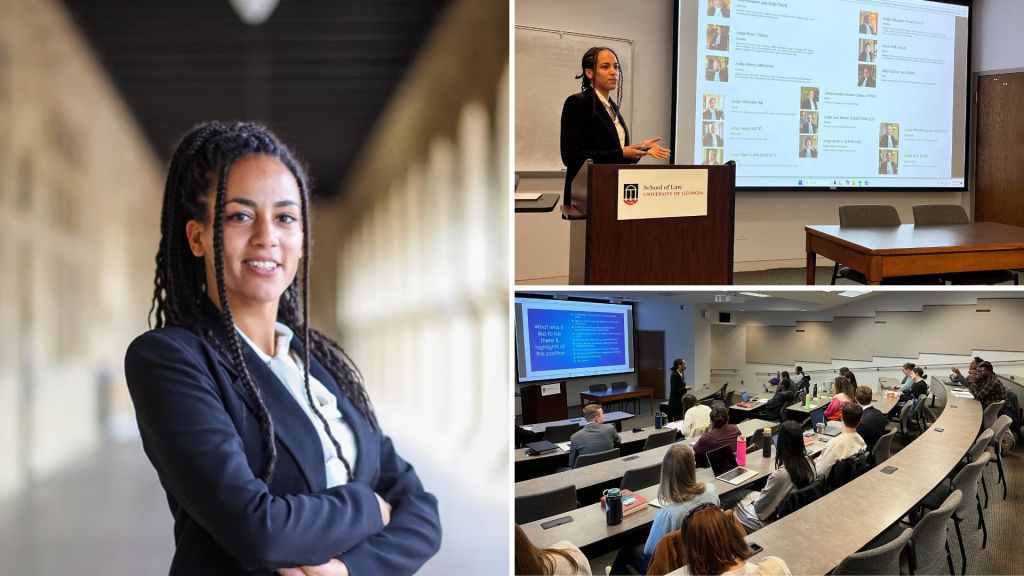
The University of Georgia School of Law’s Emerging Scholars initiative brings accomplished practitioners to campus to hone their teaching and academic-writing skills during a two-year residency. In 2023, three Emerging Scholars began their residencies: Jill Benton (J.D.’99), Shanée Brown, and Mary Yiyue Zhao. Of the three scholars, Zhao’s scholarship and courses include international areas of focus.

Zhao will instruct in the areas of international intellectual property law and international business transactions. Her scholarship includes: “Morals in Place of Markets: Courts’ Approach to Post-Sale Confusion” forthcoming in the Rutgers Law Review, “Investor-State Dispute Settlement Reform: Reconsidering the Multilateral Investment Court in the Context of Disputes Involving Intellectual Property” in the Columbia Journal of Law & the Arts and “Transparency in International Commercial Arbitration: Adopting a Balanced Approach” in the Virginia Journal of International Law

Before entering academia, Zhao served as an associate for approximately five years at Covington & Burling, where she represented clients in commercial and intellectual property litigation. She was also a visitor at the Max Planck Institute Department of Ethics, Law and Politics during September 2018. 

During her time in law school, she worked at the United Nations Commission on International Trade Law in Austria as a legal intern and at the International Law and Policy Institute in Norway as a research assistant. 

She earned her bachelor’s degree with highest honors from Cornell University in 2014 and both her law and master’s degrees from Stanford University in 2018.

Ninth Annual AtlAS Lecture speaker, Emory Professor Stacie Strong, considers use of artificial intelligence in international arbitration proceedings

A member of the Dean Rusk International Law Center’s staff, Global Practice Preparation Assistant Catrina Martin, attended this year’s ninth annual Atlanta International Arbitration Society (AtlAS) lecture, “Rage Against the Machine: Governing the Use of AI in International Arbitration.” AtlAS is one of the Center’s institutional partners, and Georgia Law alumnus Dr. Christof Siefarth (LL.M., ’88) is the newly-elected president. Below are some of Martin’s reflections of the event.

Earlier this month, the Atlanta International Arbitration Society co-hosted its 9th annual lecture with the Charlotte International Arbitration Society, held at Wyche Law Firm in downtown Greenville, South Carolina. Stacie Strong, Acting Professor of Law at Emory University Law, presented “Rage Against the Machine: Governing the Use of AI in International Arbitration,” to a hybrid crowd of practitioners, students, and academics.

Her lecture discussed the potential copyright concerns in using AI, such as who owns the created data, as well as privacy concerns given that AI generators have the ability to move past firewalls and other security measures. Discussion included a critique of how the increasing use of AI in arbitration, and across the broader legal field, is training students and young lawyers for the profession, and developing the building block skills of research, writing, and cite checking.

Strong advised that in arbitration, both parties agree during preliminary discussions on the use of AI, and that arbitrators proactively raise the issue with their clients.

Martin reflected on the value of this topic for law students in particular:

“[Strong’s] perspective is helpful for students who are interested in best practices in arbitration, and especially those ‘digital natives,’ for whom AI usage feels like a natural extension of technology already ingrained in their legal education, such as LexisNexis case searches. For students who are interested in international arbitration, generative AI use may offer cost and time savings on the front end, but the pitfalls, especially when arbitrating across common- and civil-law countries, outweigh this potential.”

Strong has taught at law schools around the world and has acted as a dual-qualified (England-US) practitioner with major international law firms in the UK and the US. She has also written over 130 books, articles, and other works and has acted as an expert consultant to a variety of governmental, non-governmental and intergovernmental organizations. A full biography can be found on Emory University’s website.

Georgia Law alumnus elected as president of the Atlanta International Arbitration Society

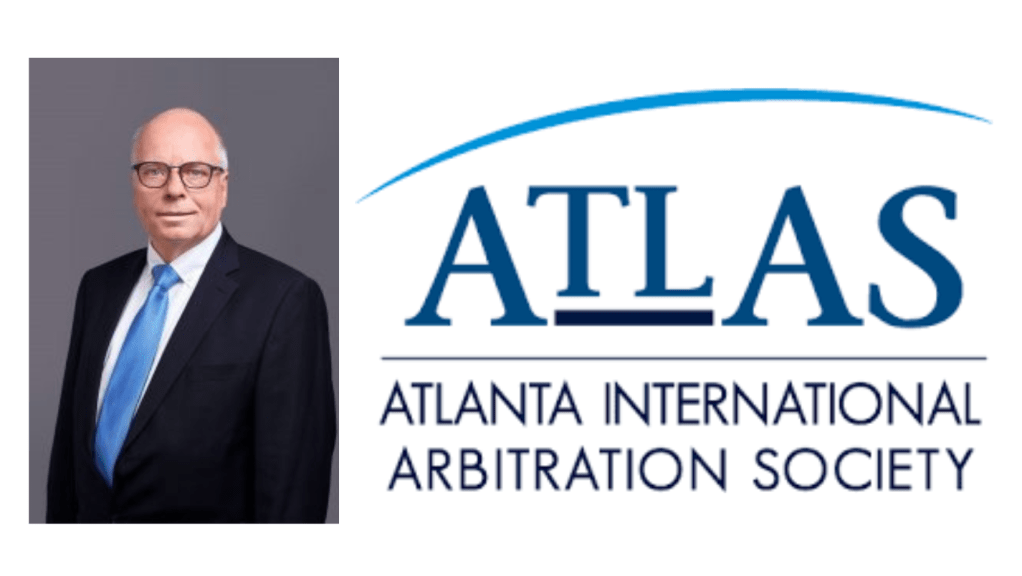
The Atlanta International Arbitration Society (“AtlAS”) recently elected University of Georgia School of Law alumnus and Rusk Council member Dr. Christof Siefarth (LL.M., ‘86) as President.

Siefarth is currently a partner at the German law firm Bodenheimer. He took office as President after AtlAS’s plenary meeting at Smith, Gambrell & Russell in March. Siefarth has been active in AtlAS throughout its 14-year history.

Siefarth has significant experience in arbitration throughout Europe, Asia, and the United States. He has participated on many AtlAS conference panels over the years, and he also has led discussions at AtlAS’s plenary meetings, including in December 2022, where the topic was “U.S. Experience with DIS Arbitration.” Siefarth is licensed to practice law in Germany and New York.

AtlAS’ mission is to promote and enhance Atlanta as a place to resolve the world’s business disputes using international arbitration and mediation. The University of Georgia School of Law is a founding organization and hosts its annual lecture every three years. Both Dean & Talmadge Chair of Law Peter B. “Bo” Rutledge and director of the Dean Rusk International Law Center Sarah Quinn serve on the organization’s Board of Directors.

Georgia Law LL.M. students place second overall at 11th International Commercial and Investment Arbitration Moot

Members of the University of Georgia School of Law LL.M. Class of 2024 earned first runner up at the 11th International Commercial & Investment Arbitration Moot Competition hosted by American University Washington College of Law in Washington, D.C. this month.

Forming the team at the competition were the three students: Cornelius Bulanov, Agostina Calamari, and Savelii Elizarov. Coaching the team was 2L Gloria María Correa, who completed her LL.M. in 2023 and is now in the J.D. program, as well as Georgia Law’s Dean, Peter B. “Bo” Rutledge, whose specialty is international arbitration. They were accompanied to the competition by Mandy Dixon, the International Professional Education Manager at the Dean Rusk International Law Center.

Each team participated in two rounds the first day, and the Georgia Law team advanced to the semifinals on the second day. The semifinals consisted of 6 teams, and Georgia Law was one of two that advanced to the final round. In the final round, they faced the University of Pittsburgh and finished as the runners up. 

In reflecting on the biggest takeaway from the experience, Elizarov stated:

I believe that my participation in this competition provided me with invaluable experience in international arbitration. Of course, gaining knowledge and improving public speaking skills were significant takeaways, it was also crucially important to meet new people, including professionals with many years of experience in this field, as well as fellow students who are just beginning their journey in this area.

Bulanov discussed their continuation of Georgia Law’s excellence in advocacy teams:

It has been an incredible journey from a totally inexperienced moot team to a proud finalist. Furthermore, it was a very special feeling to be able to represent the law school in a competition. We are constantly informed about the great successes that the Georgia Law moot teams regularly celebrate. This was a special motivation to also successfully complete the competition. The fact that it worked out this way makes me proud.

Calamari reflected on the experience in terms of it being an opportunity to learn more about international arbitration:

[W]e had the chance to spend three days with some of the most renowned professionals in international commercial arbitration. We performed in front of them and received their feedback while measuring us against LL.M. peers from other universities. It was such a rewarding experience that also allowed me to experience and understand another niche for international lawyers here in the U.S. 

Georgia Law’s Master of Laws (LL.M.) curriculum offers U.S. legal education to lawyers trained overseas. For more information about the curriculum, which is administered by the law school’s Dean Rusk International Law Center, is available here.

Georgia Law students compete in Vis arbitration moot in Vienna, Austria

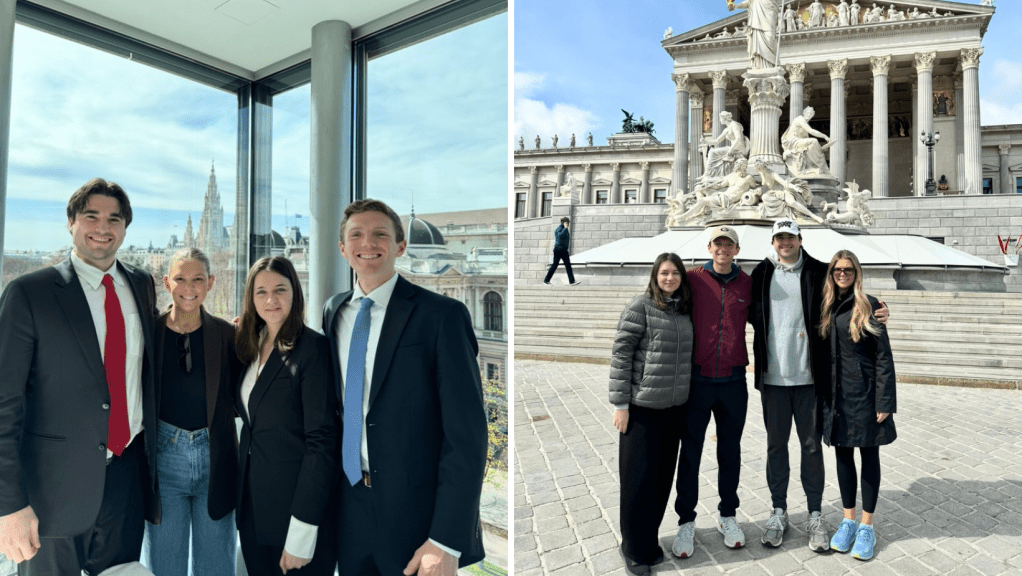
A team of students recently represented the University of Georgia School of Law at the 31st annual Willem C. Vis International Commercial Arbitration Moot in Vienna, Austria. 

The 2023-2024 team comprised 2Ls Jacob (“Jake”) Wood, Tiffany Torchia, Olha (“Olia”) Kaliuzhna, and Patrick Smith. Among those who supported their efforts were numerous coaches: 3Ls Hanna Esserman and Yekaterina (“Kat”) Ko, with support from 3Ls Sandon Fernandes and Benjamin (“Ben”) Price, and Georgia Law Dean Peter B. “Bo” Rutledge. They worked together beginning in October, writing two briefs and preparing for oral advocacy. In early February, the team also participated in the Fordham School of Law Vis Pre-Moot in New York. 

This year, 373 teams from 89 jurisdictions around the world competed in Austria. Alongside more than 2,500 students, the Georgia Law team competed for several days. 

Reflecting on the last six months of Vis, Patrick shared,

“As a member of the Vis Moot team, I worked with my teammates to research, brief, and argue an international commercial arbitration case that reflected a real life issue. At the Vis competition in Vienna, we met and competed against teams from around the world who had all worked on the same case, which was such a unique experience. We were lucky to have the guidance, expertise, and support of Dean Rutledge. Overall, Vis exposed me to the global nature of commercial arbitration and gave me an increased appreciation of international law.

To learn more about the Vis Moot team at Georgia Law, visit our website here.

From classmates to colleagues: LL.M. alumna Rawdha Hidri (LL.M. ’23) and 2L Carolina Mares reflect on summer work experience together

Through the Global Externships Overseas (GEO) initiative administered by the Dean Rusk International Law Center, 2L Carolina Mares spent her summer working in international arbitration at the Houerbi Law Firm in Tunis, Tunisia. In this placement, Ms. Mares worked under the supervision of Rawdha Hidri, a Fulbright recipient who completed her Master of Laws (LL.M.) at UGA Law in May 2023.

While it is not uncommon for our J.D. students to work under our LL.M. alumni/ae in GEO placements, this is the first experience in recent memory when they had the opportunity to meet on-campus and learn together as classmates prior to their experience abroad. Below, Mares and Hidri describe their experiences participating in the GEO from the perspectives of student and supervisor, respectively. Responses have been edited for length and clarity.   

* * * *

Carolina Mares, 2L

What initially interested you about the Global Externships Overseas (GEO) initiative?

With the desire to practice international law in my career moving forward, I knew that the GEO initiative was an incredible opportunity designed to encourage me to explore one potential avenue for my future. I was torn between pursuing summer work in public international law or looking for a firm that would give me some experience in international arbitration. However, when I heard about the possibility of focusing exclusively on international arbitration at Houerbi Law Firm, my mind was set.

What was your GEO experience like?

This summer, I worked at Houerbi Law Firm in Tunis, the capital of Tunisia. The firm specializes in commercial international arbitration and operates between Tunis and Paris with a focus on disputes in Europe, the Middle East, and Africa. My work consisted of reading case dockets, synthesizing parties’ positions, analyzing factual and legal exhibits, drafting an answer to a request for document production, and writing appropriate parts of an award. What I enjoyed most was the novelty of each case I got to work on. The parties in the disputes ranged from state to private parties in the UAE, Italy, Jordan, Iran, Malaysia, Tunisia, Turkey, and Morocco. I also had the chance to learn about all sorts of industries, including oil and gas, gold and fine jewelry manufacturing, and government procurement.

In addition to Rawdha, Mr. Houerbi was a phenomenal mentor to me during my time in Tunisia. With sixteen years of experience as the Arbitration and ADR Director of the ICC for the Mediterranean, the Middle East, and Africa, his positive and direct feedback played an important role in shaping my work and experience at the firm. He often invited me to sit in on team meetings that did not pertain to my particular cases so that I could gain exposure to as many disputes as possible, and he encouraged me to observe all of the virtual hearings that took place this summer.

How do you envision your GEO contributing to your academic and professional goals?

Taking part in the GEO has already impacted my professional trajectory. First, I now know that I enjoy the work involved in international arbitration, and I can picture myself pursuing a career in this practice area. Second, I’m convinced that my participation in a GEO is the reason I landed a 2L summer job fairly quickly, as it was the hot topic in all of my interviews. But more importantly, the GEO gave me a chance to take a deep dive into a niche area of law that is difficult to get into as a novice, especially in the Atlanta area. In addition to delving into international arbitration, the GEO program allowed me to develop my confidence navigating across cultures all while improving my French skills in a captivating work environment.

What was the best part of participating in a GEO?

The highlight of my GEO experience was making deep connections with my colleagues and experiencing day-to-day life in an incredibly rich culture that was brand new to me. Besides taking on the role of mentor, Rawdha was also my cultural guide. She introduced me to the coastal neighborhoods of Tunis, invited me to join her family and friends on the weekend for a shopping expedition in the Medina, pointed out the flocks of flamingos flying by in V-formation as we lounged on the beach, and took me sightseeing in Hammamet where we attended an amateur Opera concert at the Dar Sebastian villa overlooking the Mediterranean. In short, the best part of doing a GEO was getting a feel for the flow of life in Tunis and growing in my cultural competency, all of which I owe in big part to Rawdha’s support as my mentor and host.

* * * *

Rawdha Hidri (LL.M., ’23)

What interested you in serving as a placement supervisor for a GEO?

My time at UGA Law was so formative, I was eager to reciprocate and provide inquisitive American J.D. students with an experience as enriching as the one that I had in Athens. I strongly believe that immersing oneself in new experiences and can be influential on both personal and professional levels. Throughout my journey at UGA Law, I embraced the role of an informal cultural ambassador for my country Tunisia. The GEO initiative emerged as an ideal opportunity for both providing American J.D. students with professional experiences in a distinct legal framework and within a specific geopolitical context and with rich cultural immersion in my home country.

How did hosting a UGA Law student contribute to your firm’s work?

Carolina’s ability to methodically structure and articulate her thoughts has been a valuable addition to our team dynamics. Her innate attention to detail was evident from the outset, as she engaged diligently with the tasks assigned to her. Encouraging her to delve further and uncover nuances within cases became a rewarding challenge, showcasing her dedication to thorough exploration.

How did you approach integrating a UGA Law student into the local community and culture?

In the spirit of fostering a sense of belonging, I took it upon myself to introduce Carolina to the richness of Tunisian culture, ensuring she tried traditional Tunisian cuisine and experienced the crystal-clear waters of the Mediterranean. The entire team enthusiastically engaged in this process, sharing suggestions of places to visit, offering language lessons, and collectively enjoying lunches together outside the office on a weekly basis. This collaborative approach not only enhanced Carolina’s integration but also fostered a supportive and inclusive environment, benefitting both her and the entire team.

What did you enjoy about serving as a supervisor for a GEO?

Serving as a supervisor for a GEO was incredibly rewarding on a personal level. It expanded upon my own Fulbright journey that I started at UGA Law, allowing me to share my perspective and insights with someone eager to learn. The most fulfilling aspect was knowing that the student I hosted would carry their experiences in Tunisia with them, and that perspective would continue to guide them in their professional pursuits. This connection ensures a lasting impact, creating a sense of continuity and mutual understanding that extended beyond the program itself.

* * * *

Global Externships Overseas (GEOs) are four-to-twelve week summer placements in diverse areas of legal practice around the world. Students return to Athens with new colleagues and mentors, legal practice skills, and a deeper appreciation of the global legal profession. Over the last fifteen years, more than 200 UGA Law students have completed a GEO. Students secure placements tailored to their career goals with the aid of the Dean Rusk International Law Center.

For more information about GEOs, visit our website.