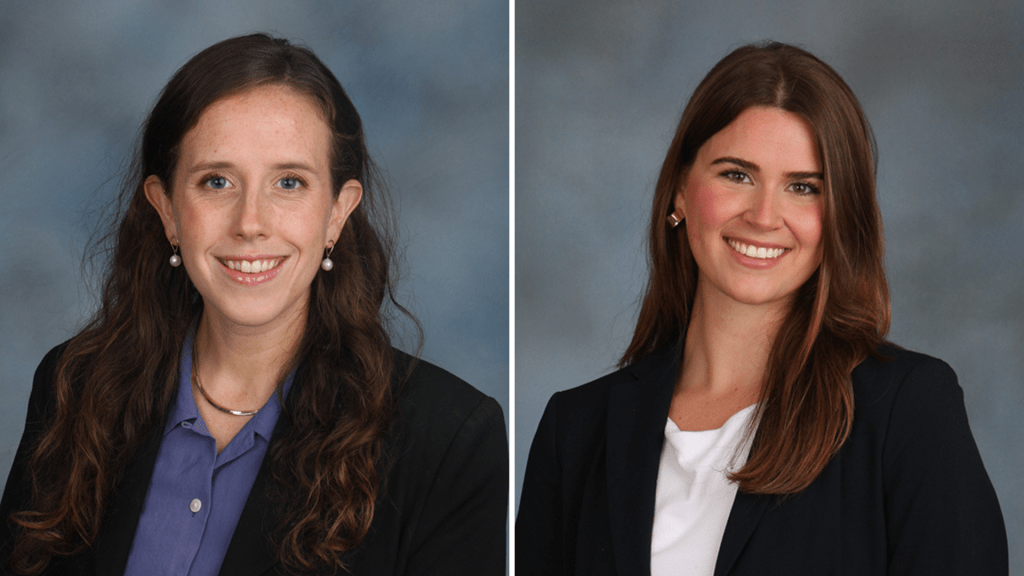
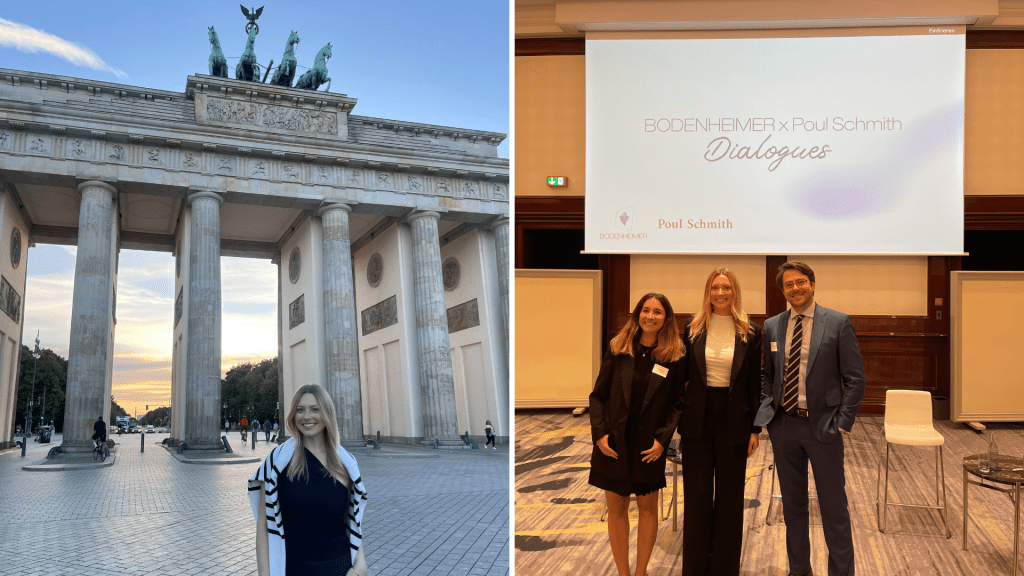
In the upcoming fall semester, two University of Georgia School of Law students will gain international hands-on learning experience through the Global Externships Overseas (GEO) initiative, administered by the Dean Rusk International Law Center in partnership with the DC Semester in Practice: Olivia Haas (J.D. ’27) and Lauren Parramore (J.D. ’27). Through their GEOs, students will work abroad in practice areas including international humanitarian law and international arbitration, respectively.
Haas will work with the International Committee of the Red Cross (ICRC) in Geneva, Switzerland, and will be supervised by Dr. Jean-Marie Henckaerts (LL.M. ’90). Parramore will spend her semester with Bodenheimer law firm in Cologne and Berlin, Germany, under the supervision of Dr. Christof Siefarth (LL.M. ’86).
Parramore has been selected as the recipient of a grant from the Halle Foundation to support her externship in Germany. Based in Atlanta, The Halle Foundation seeks to promote understanding, knowledge and friendship between the people of Germany and the United States. Parramore is the fifth Georgia Law student to receive this grant to support a semester-long GEO in Germany, following Jack Buckelew (J.D. ’25), Pace Cassell (J.D. ’26), Eleanor Cox (J.D. ’26), and William Stowers (J.D. ’27).
Since spring 2021, seventeen Georgia Law students have participated in semester-long GEOs, an extension of the Center’s existing GEO initiative that is offered jointly between the Center and the law school’s Clinical and Experiential Program. Professor Jessica L. Heywood, Clinical Associate Professor and Washington, D.C., Semester in Practice Director, teaches and directs students externing abroad in partnership with Taher Benany, Associate Director of the Dean Rusk International Law Center, who oversees the GEO initiative. Like Georgia Law’s summer GEOs, semester-long GEOs are legal placements around the world that offer all law students the opportunity to gain practical knowledge and experience in an international setting. They are typically supervised in their work by Georgia Law alumni. Students return to Athens with new colleagues and mentors, legal practice skills that set them apart from their peers, and a deeper appreciation of the global legal profession.
***
The Center is currently accepting applications for spring 2027 semester-long GEOs; all rising 2L and 3L students are eligible to apply. Applications are reviewed on a rolling basis. For more information and to access the application, please email Taher Benany: taher.benany@uga.edu
Today, we welcome a guest post by William Stowers, a member of the University of Georgia School of Law class of 2027. Stowers is the seventeenth Georgia Law student to participate in a semester-long international externship and the fourth recipient of a grant from the Halle Foundation to support his externship in Germany. The semester-long externships overseas initiative is an extension of the Center’s existing Global Externships Overseas and is offered jointly between the Center and the law school’s Clinical and Experiential Program. Stowers’ post describes his experience as a legal extern with Bodenheimer, a German law firm specializing in international arbitration. Stowers spent time in both Bodenheimer’s Cologne and Berlin offices, where he worked under Georgia Law alumnus Dr. Christof Siefarth (LL.M., ’86). Dr. Siefarth, who is also a member of the Dean Rusk International Law Center’s Advisory Council, is a Partner at Bodenheimer.
“Say yes to everything.” Professor Jessica Heywood gave my classmates and me this advice on the first day of our seminar for our semester-long Global Externships Overseas (GEOs). At the time, I had yet to depart for my semester in Germany or start my externship with Bodenheimer under Dr. Christof Siefarth (LL.M. ’86). Little did I know just what taking that advice would look like over the next three months.
I was greeted on the first day of my externship with flowers, a laptop, and an onboarding list. For those of us who had prior careers and externships, a first day is almost comforting in its regularity. After onboarding came lunch with my “BOB,” BODENHEIMER’s version of a mentor. My BOB was just a couple of doors down, and would be there for me throughout my time in Cologne and at the firm. During our first lunch, the following exchange took place:
“Oh, it’s great that you’ll be here for Karneval.”
“I’m sorry, for what?”
Looking back, this exchange brings a smile to my face. Carnival, or Karneval, is of course the Catholic celebration preceding Lent. I have seen videos of my friends revel in the streets and on the beaches of Rio de Janeiro for this February bacchanal, but I figured that this was an isolated event. As it turns out, Cologne loves Carnival, and it is apparently the second largest celebration for the event in the world. However, before the festivities began, I of course had real work to do.
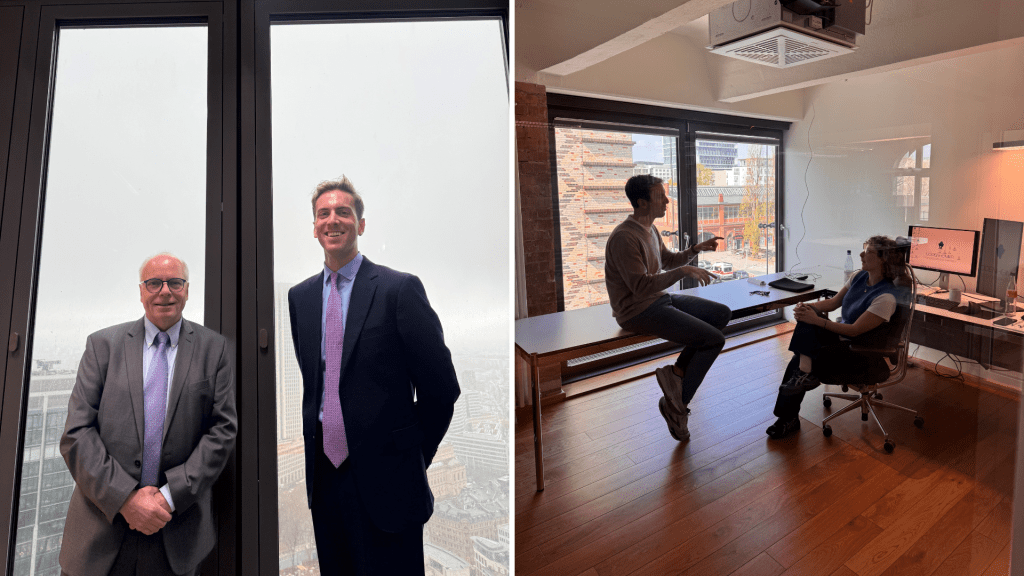
Almost immediately, I became involved in my very first international commercial dispute headed to arbitration. When I arrived, the parties were filing their final submissions and the arbitration hearing was scheduled just a few weeks after my first day in Frankfurt. The dispute was a complicated one, as cross-border commercial disputes often are, and I was swimming through information. It was exciting, but not as exciting as observing my first hearing in person. While it was an international, cross-border arbitration, the applicable law was German, most of the lawyers were German-qualified, and the arbitrator was a German lawyer. Unlike American courts, where the parties face the judge, the parties here faced each other. Unlike American courts, where the witness faces the parties and the jury, witnesses here sat in between the parties and faced the arbitral panel. Unlike American trial court proceedings, where judges usually limit their questions to clarifications, the arbitral panel here had multiple substantive questions that they could ask the witnesses. To be sure, I spent most of the hearing just watching. Watching the witnesses, the lawyers, the panel. It was all just different from my own experience in court. The mock trial kid and wannabe litigator in me kept lurching forward at different points to object to hearsay, speculation, and other things. Of course, the Federal Rules of Evidence don’t apply here. And, in all fairness, thank goodness. After the day and a half of hearings concluded, we returned to Cologne.
Pretty soon, the streets became populated with celebrants in colorful costumes and traditional uniforms, and visits to nearby breweries for pints of Kölsch were absolutely mandatory. The Thursday of Carnival, which is sort of the official beginning of the holiday, I was instructed not to wear a necktie lest a female colleague or perhaps a random stranger cut it off below the knot. I was also instructed that my innocent attempt at joining in the celebrations linguistically, by which I mean I wished a colleague “Guten Karneval,” was horribly wrong. The proper greeting was “Kölle Alaaf,” roughly translating to “Cologne above all.” The city was essentially on holiday until the next week. Parades began on that following Sunday, in which one of my friends participated. As a former marching band kid, I’m not sure I have ever seen such colorful and vivacious parades. The celebratory weekend peaks with Rose Monday (Rosenmontag). For not the first time in my life, I missed this main celebration in order to travel to New Delhi for a wedding. Yes, I was going directly from a German festival weekend to an Indian nuptial weekend. I returned over a week later and put myself on bed rest. Well, I intended to. My time in Cologne was quickly coming to an end and I had a few things on my list to do before I moved to Berlin.
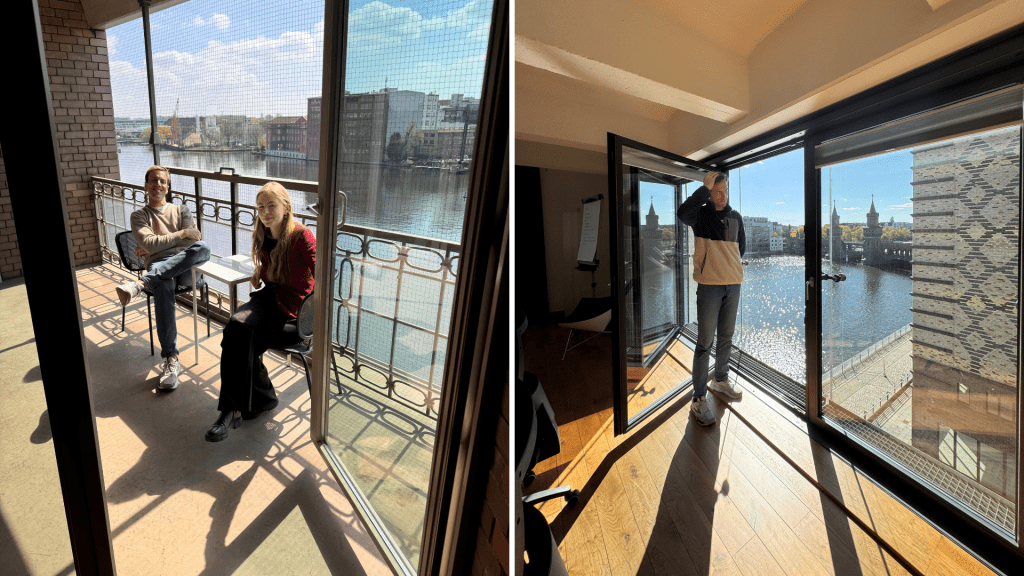
“Moving to Berlin?” a friend from home asked, insinuating that the term “moving” was not appropriate. Relocating? Geographically displacing myself? As lawyers in training, words matter. But there’s no need to make things unnecessarily complicated. My move to Berlin came at a perfect time. BODENHEIMER’s Cologne office was packing up and getting ready to set up a new office. The Berlin office, on the other hand, had been packed up and its new space was almost ready. After a couple of days getting settled into my accommodations for the remainder of the semester, which I was subletting from a friend of a friend, the new Berlin office was ready. After a few stops on the S-Bahn (light rail) to the Warschauer Straße station and an incredibly short walk to the banks of the Spree River, I arrived at BODENHEIMER’s new Berlin home. The newly renovated office smelled like it – fresh paint, new floors, and cardboard boxes full of equipment and files. I have to admit I found it poetic and just plain cool to begin this next chapter alongside the firm’s new chapter.
Over the remaining weeks in Berlin, my work continued. I supported the submission of a statement of claim for another transnational contractual dispute, conducted various research tasks, and assisted with contract drafting for our clients. At the same time, I was reconnecting with my friends in Berlin who I had met in the course of my previous travels and made new connections through them and my three flatmates, all of whom were incredibly gracious, kind, and patient. While I had settled into a routine and fallen in love with Cologne, I felt like I was settling into Berlin. After a quick trip to Dublin with a classmate and then a short sojourn to London to align with my mother’s theatre trip to the West End, landing back at the Berlin Airport brought the strangest feeling. For much of my life, landing at Hartsfield-Jackson felt like coming “home.” After college, for several years landing at San Francisco International began to feel like “home.” After just a few weeks, landing back in Berlin started to give me that same feeling.
As my time in Germany and at BODENHEIMER came to an end, the weather began defrosting (did I mention I spent most of my semester in the thirties and forties?). Flowers all along the Spree began to bloom, and I unofficially declared our first team lunch outside alongside one of the canals a proper occasion, where we all ordered Weißer Spargel mit Schnitzel (white asparagus with schnitzel). Poetically, the arbitral panel I had observed a few months before in Frankfurt delivered its award. This award, combined with my prior work on that same arbitration, my support in submitting another claim, and a project involving a pre-litigation contract dispute, represented a personal and professional milestone: I had seen the bulk of an arbitral lifecycle. Just in time for me to return home.
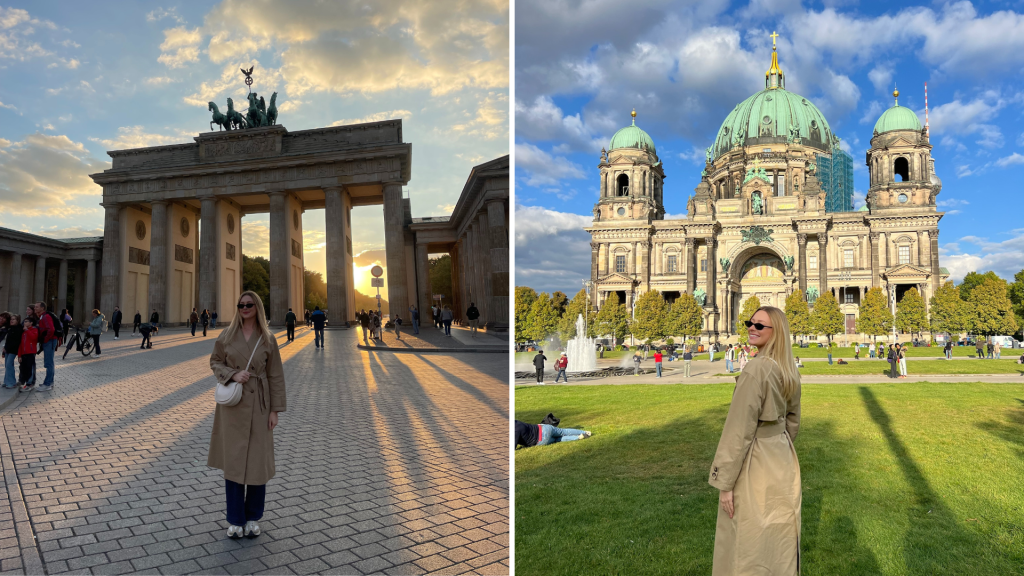
On my last weekend in Berlin, my flatmate celebrated his birthday with a friend’s picnic along the Spree across from Schloss Bellevue, the German President’s ceremonial residence. With the soft sunshine, gentle breeze, lofi beats, good snacks and drinks, surrounded by new friends, I realized that I had accomplished everything I wanted to on this journey. I had witnessed firsthand a new legal system, gotten my hands dirty in the nitty-gritty of international arbitration, explored new cities, reconnected with old friends, made new lifelong peers, and above all else, I enjoyed every moment. It is not lost on me, however, that none of this would have been possible without help. My flatmates and friends I made in Germany, my colleagues and mentors at BODENHEIMER, The Halle Foundation, the Dean Rusk International Center, my Georgia Law professors, and my friends and family back home made this semester possible. As I look forward to the rest of my career and the rest of my life, I know that they each made whatever future steps come next possible as well. And for that, I will forever be grateful and forever indebted.
***
For more information about semester-long Global Externships Overseas, please email: ruskintlaw@uga.edu
Today, we welcome a guest post by Eleanor Cox, a member of the University of Georgia School of Law class of 2026. Cox is the eleventh Georgia Law student to participate in a semester-long international externship and the third recipient of a grant from the Halle Foundation to support her externship in Germany. The semester-long externships overseas initiative is an extension of the Center’s existing Global Externships Overseas and is offered jointly between the Center and the law school’s Clinical and Experiential Program. Cox’s post describes her experience as a legal extern with Bodenheimer, a German law firm specializing in international arbitration. Cox was based in Bodenheimer’s Berlin office, where she worked under Georgia Law alumnus Dr. Christof Siefarth (LL.M., ’86). Dr. Siefarth, who is also a member of the Dean Rusk International Law Center’s Advisory Council, is a Partner at Bodenheimer.
“Do it afraid.” That simple reminder became my mantra during my semester abroad. It is an acknowledgement that discovery rarely feels comfortable at the start. Stepping into a new country, a new legal system, and a new professional culture required me to move forward even when I felt unsteady. But the very discomfort I feared became the gateway to the most meaningful growth I have experienced. During the fall 2025 semester, I externed at BODENHEIMER Law Firm in Berlin—a firm specializing in international dispute resolution with offices also in Cologne.
Living in Berlin
Berlin is a place that refuses to simplify itself. Its history is felt in every neighborhood, yet its present is defined by internationalism and constant reinvention. I met a woman who was nine years old when the wall fell, and she learned that the world had changed only when her family from the East knocked on her family’s front door for the first time. I also met a Syrian student working to adjust to the new language, culture, and that in-between feeling of starting over. Encounters like these reminded me that, as the most populated city in the European Union, Berlin cannot be described as one thing. It is one place that is also all places.
What I will miss most is the sense of community Berliners create without even trying: my morning conversations with a bakery owner on the way to the S-Bahn station, watching the city rush outside the second the sun appears, my favorite neighborhood dog Leo religiously greeting me at a local coffee shop, and never knowing whether a parade would materialize around the corner. It is both unpredictable and deeply human. One of my favorite things about Berlin is living in a city that constantly asks you to discover yourself and expand. It stretches you in small ways, like in the languages you hear, the people you meet, and the art tucked in quiet corners of the city.
Substantive Work and Office Culture
At BODENHEIMER, I worked on cross-border legal matters ranging from construction to inheritance. The international nature of the work required me to expand both my legal thinking and cultural awareness. I worked on matters involving different jurisdictions, which meant relying on machine-translated documents and learning the procedural rules of various arbitral institutions. Unsure of how much work would be available due to my limited German-language skills, I was surprised by how much opportunity being a native English speaker provided. I was able to assist in the drafting of statements of claim, attend case management conferences, and research cross-border enforcement.
With colleagues from four different continents, some of the most valuable learning happened outside of my actual assignments. Long lunches turned into lively conversations about world politics, personal histories, cultural differences, and the small absurdities that make international work so rich. These moments helped me understand the human side of international practice and reminded me how central curiosity is to this area.
Lessons to Carry Forward
The most challenging part of the placement was the constant unfamiliarity. But that challenge became the most rewarding part, too. Every day, I proved to myself, in small ways, that I could adapt and grow through trial and error. I learned to celebrate being unfamiliar rather than feel embarrassed by it. That shift in mindset is something I will carry with me.
Looking back, my semester in Berlin helped me see myself differently, personally and professionally. I became more confident, more flexible, and more willing to step into the unknown. What first felt foreign and intimidating slowly became more familiar. Living and working abroad showed me that the moments that feel uncomfortable are often the ones that push us forward the most. And for me, that made this experience not just educational, but truly transformative.
Today, we welcome a guest post by Elizabeth Ferguson, a member of the University of Georgia School of Law class of 2025. Ferguson participated in a semester-long international externship in spring 2025. The semester-long externships overseas initiative is an extension of the Center’s existing Global Externships Overseas and is offered jointly between the Center and the law school’s Clinical and Experiential Program. Ferguson’s post describes her experience as a legal extern with Bodenheimer, a law firm that handles disputes across jurisdictions, including cases in litigation, arbitration, and mediation and other ADR proceedings. Ferguson was based in Berlin, Germany, where she worked under Georgia Law alumnus Dr. Christof Siefarth (LL.M., ’86).
When I decided to participate in my semester-long Global Externship at Bodenheimer in Berlin, Germany I was looking for a new way to challenge myself academically. I concluded that taking myself far beyond the law school classroom I had spent two and a half years becoming familiar with would be the perfect opportunity. Although I was ready for a challenge, I didn’t anticipate how the lessons I learned in international arbitration would expand beyond its subject matter and into my professional life forever.
Bodenheimer is an international arbitration firm with a truly global scope. As a result, during my four months there, I researched many issues spanning multiple jurisdictions: I immersed myself in Chinese product quality standards, untangled questions of Indian law, and more.
When I received my first assignment, concerning a legal issue relying on law in an Asian country, the reality set in that I did not have the basic building blocks I needed to begin. When I received assignments on an unfamiliar issue while working at American law firms, I had a certain base knowledge to assist me because law school taught me the basics of the American civil and criminal systems and how to research them. However, in this situation, I quickly realized, I had none of those research tools or knowledge ready to go.
Although I conquered each task with the help of my colleagues, law school staff, and by familiarizing myself with the tools and knowledge used in international arbitration, I relived this fearful realization many times. Each time I received an assignment based in a jurisdiction I had not yet faced, I felt as though I was back at square one: navigating a new legal universe, where I didn’t speak the language, didn’t know the rules, and did not know where to begin. In American law firms, I had the comfort of a familiar legal system, a base knowledge to lean on, and research tools I used frequently. However, in Berlin, I often found myself staring at an assignment wondering, “Where do I even start?”
As a result, I began to struggle with something I’d never felt before: imposter syndrome. Imposter syndrome is a phenomenon where professionals experience feelings of inadequacy, despite evidence of their competence and achievements. I knew that I was given this opportunity for a reason, but nevertheless I could not shake this feeling of self-doubt and compare myself to my very impressive colleagues. Most of the attorneys in my office were fluent in at least three languages and were qualified attorneys in several countries! As someone who only spoke English and had not yet even graduated law school, I couldn’t help but compare myself to them and worry that I was simply not up to the task. As a result, my imposter syndrome began to eat away at my confidence.
But here’s the thing about throwing yourself into the deep end: you must learn to swim.
Over time, as I completed challenging assignments and learned from my helpful and knowledgeable colleagues, I developed strategies to identify, build, and promote my value as a young attorney in this unfamiliar environment which helped me combat my imposter syndrome. For example, one attorney frequently asked me to edit English language documents and made the observation that I was the only native English speaker in the office. At this moment, I realized that I was too busy comparing myself to my colleagues, who could all speak three to five languages, to recognize that my native English skills were a unique asset in my office when my colleagues needed someone to edit or translate documents into English. By the end of the semester, I was able to recognize my value in many ways and recognize the meaningful contributions I made through my work product.
Working at Bodenheimer taught me more than just the inner workings of international arbitration: it taught me how to quiet the inner critic, embrace uncertainty, and how to identify and promote my value, rather than focus on perceived shortcomings.
Berlin will always hold a special place in my heart, not just for its beautiful cathedral, the delicious Franzbrötchen, and the amazing colleagues I met, but for the reminder that growth often comes disguised as discomfort.
As I head into my next professional chapter, I’ll carry with me the lesson that the doubts you feel today will become issues you will conquer tomorrow.
***
Applications are open for spring 2026 semester-long Global Externships Overseas (GEOs). All current 2Ls and 3Ls are invited to submit an application by September 15. For more information and the application, please email: ruskintlaw@uga.edu
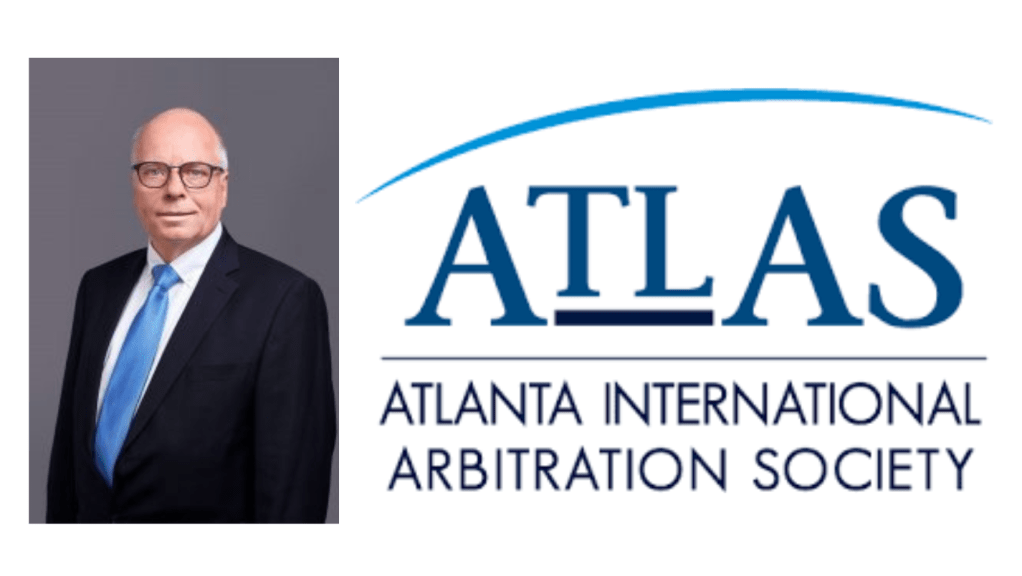
Siefarth is currently a partner at the German law firm Bodenheimer. He took office as President after AtlAS’s plenary meeting at Smith, Gambrell & Russell in March. Siefarth has been active in AtlAS throughout its 14-year history.
Siefarth has significant experience in arbitration throughout Europe, Asia, and the United States. He has participated on many AtlAS conference panels over the years, and he also has led discussions at AtlAS’s plenary meetings, including in December 2022, where the topic was “U.S. Experience with DIS Arbitration.” Siefarth is licensed to practice law in Germany and New York.
AtlAS’ mission is to promote and enhance Atlanta as a place to resolve the world’s business disputes using international arbitration and mediation. The University of Georgia School of Law is a founding organization and hosts its annual lecture every three years. Both Dean & Talmadge Chair of Law Peter B. “Bo” Rutledge and director of the Dean Rusk International Law Center Sarah Quinn serve on the organization’s Board of Directors.