Today, we welcome a guest post by William Stowers, a member of the University of Georgia School of Law class of 2027. Stowers is the seventeenth Georgia Law student to participate in a semester-long international externship and the fourth recipient of a grant from the Halle Foundation to support his externship in Germany. The semester-long externships overseas initiative is an extension of the Center’s existing Global Externships Overseas and is offered jointly between the Center and the law school’s Clinical and Experiential Program. Stowers’ post describes his experience as a legal extern with Bodenheimer, a German law firm specializing in international arbitration. Stowers spent time in both Bodenheimer’s Cologne and Berlin offices, where he worked under Georgia Law alumnus Dr. Christof Siefarth (LL.M., ’86). Dr. Siefarth, who is also a member of the Dean Rusk International Law Center’s Advisory Council, is a Partner at Bodenheimer.
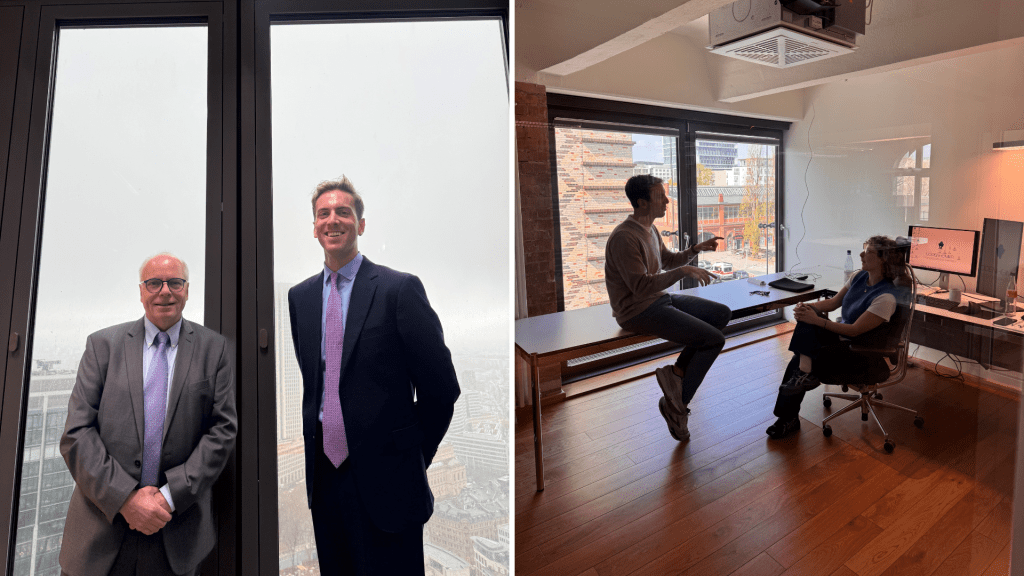
“Say yes to everything.” Professor Jessica Heywood gave my classmates and me this advice on the first day of our seminar for our semester-long Global Externships Overseas (GEOs). At the time, I had yet to depart for my semester in Germany or start my externship with Bodenheimer under Dr. Christof Siefarth (LL.M. ’86). Little did I know just what taking that advice would look like over the next three months.
I was greeted on the first day of my externship with flowers, a laptop, and an onboarding list. For those of us who had prior careers and externships, a first day is almost comforting in its regularity. After onboarding came lunch with my “BOB,” BODENHEIMER’s version of a mentor. My BOB was just a couple of doors down, and would be there for me throughout my time in Cologne and at the firm. During our first lunch, the following exchange took place:
“Oh, it’s great that you’ll be here for Karneval.”
“I’m sorry, for what?”
Looking back, this exchange brings a smile to my face. Carnival, or Karneval, is of course the Catholic celebration preceding Lent. I have seen videos of my friends revel in the streets and on the beaches of Rio de Janeiro for this February bacchanal, but I figured that this was an isolated event. As it turns out, Cologne loves Carnival, and it is apparently the second largest celebration for the event in the world. However, before the festivities began, I of course had real work to do.
Almost immediately, I became involved in my very first international commercial dispute headed to arbitration. When I arrived, the parties were filing their final submissions and the arbitration hearing was scheduled just a few weeks after my first day in Frankfurt. The dispute was a complicated one, as cross-border commercial disputes often are, and I was swimming through information. It was exciting, but not as exciting as observing my first hearing in person. While it was an international, cross-border arbitration, the applicable law was German, most of the lawyers were German-qualified, and the arbitrator was a German lawyer. Unlike American courts, where the parties face the judge, the parties here faced each other. Unlike American courts, where the witness faces the parties and the jury, witnesses here sat in between the parties and faced the arbitral panel. Unlike American trial court proceedings, where judges usually limit their questions to clarifications, the arbitral panel here had multiple substantive questions that they could ask the witnesses. To be sure, I spent most of the hearing just watching. Watching the witnesses, the lawyers, the panel. It was all just different from my own experience in court. The mock trial kid and wannabe litigator in me kept lurching forward at different points to object to hearsay, speculation, and other things. Of course, the Federal Rules of Evidence don’t apply here. And, in all fairness, thank goodness. After the day and a half of hearings concluded, we returned to Cologne.
Pretty soon, the streets became populated with celebrants in colorful costumes and traditional uniforms, and visits to nearby breweries for pints of Kölsch were absolutely mandatory. The Thursday of Carnival, which is sort of the official beginning of the holiday, I was instructed not to wear a necktie lest a female colleague or perhaps a random stranger cut it off below the knot. I was also instructed that my innocent attempt at joining in the celebrations linguistically, by which I mean I wished a colleague “Guten Karneval,” was horribly wrong. The proper greeting was “Kölle Alaaf,” roughly translating to “Cologne above all.” The city was essentially on holiday until the next week. Parades began on that following Sunday, in which one of my friends participated. As a former marching band kid, I’m not sure I have ever seen such colorful and vivacious parades. The celebratory weekend peaks with Rose Monday (Rosenmontag). For not the first time in my life, I missed this main celebration in order to travel to New Delhi for a wedding. Yes, I was going directly from a German festival weekend to an Indian nuptial weekend. I returned over a week later and put myself on bed rest. Well, I intended to. My time in Cologne was quickly coming to an end and I had a few things on my list to do before I moved to Berlin.
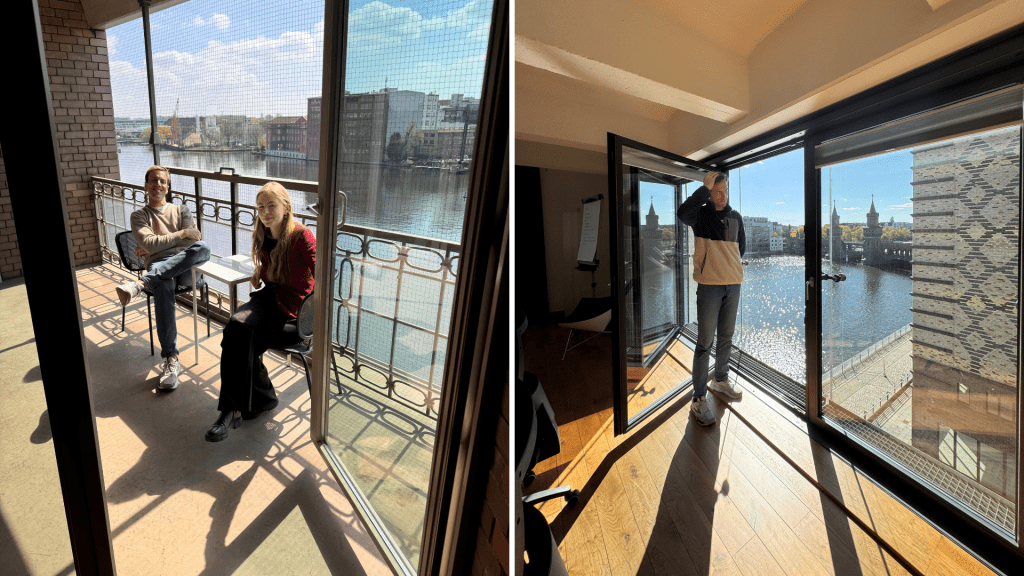
“Moving to Berlin?” a friend from home asked, insinuating that the term “moving” was not appropriate. Relocating? Geographically displacing myself? As lawyers in training, words matter. But there’s no need to make things unnecessarily complicated. My move to Berlin came at a perfect time. BODENHEIMER’s Cologne office was packing up and getting ready to set up a new office. The Berlin office, on the other hand, had been packed up and its new space was almost ready. After a couple of days getting settled into my accommodations for the remainder of the semester, which I was subletting from a friend of a friend, the new Berlin office was ready. After a few stops on the S-Bahn (light rail) to the Warschauer Straße station and an incredibly short walk to the banks of the Spree River, I arrived at BODENHEIMER’s new Berlin home. The newly renovated office smelled like it – fresh paint, new floors, and cardboard boxes full of equipment and files. I have to admit I found it poetic and just plain cool to begin this next chapter alongside the firm’s new chapter.
Over the remaining weeks in Berlin, my work continued. I supported the submission of a statement of claim for another transnational contractual dispute, conducted various research tasks, and assisted with contract drafting for our clients. At the same time, I was reconnecting with my friends in Berlin who I had met in the course of my previous travels and made new connections through them and my three flatmates, all of whom were incredibly gracious, kind, and patient. While I had settled into a routine and fallen in love with Cologne, I felt like I was settling into Berlin. After a quick trip to Dublin with a classmate and then a short sojourn to London to align with my mother’s theatre trip to the West End, landing back at the Berlin Airport brought the strangest feeling. For much of my life, landing at Hartsfield-Jackson felt like coming “home.” After college, for several years landing at San Francisco International began to feel like “home.” After just a few weeks, landing back in Berlin started to give me that same feeling.
As my time in Germany and at BODENHEIMER came to an end, the weather began defrosting (did I mention I spent most of my semester in the thirties and forties?). Flowers all along the Spree began to bloom, and I unofficially declared our first team lunch outside alongside one of the canals a proper occasion, where we all ordered Weißer Spargel mit Schnitzel (white asparagus with schnitzel). Poetically, the arbitral panel I had observed a few months before in Frankfurt delivered its award. This award, combined with my prior work on that same arbitration, my support in submitting another claim, and a project involving a pre-litigation contract dispute, represented a personal and professional milestone: I had seen the bulk of an arbitral lifecycle. Just in time for me to return home.
On my last weekend in Berlin, my flatmate celebrated his birthday with a friend’s picnic along the Spree across from Schloss Bellevue, the German President’s ceremonial residence. With the soft sunshine, gentle breeze, lofi beats, good snacks and drinks, surrounded by new friends, I realized that I had accomplished everything I wanted to on this journey. I had witnessed firsthand a new legal system, gotten my hands dirty in the nitty-gritty of international arbitration, explored new cities, reconnected with old friends, made new lifelong peers, and above all else, I enjoyed every moment. It is not lost on me, however, that none of this would have been possible without help. My flatmates and friends I made in Germany, my colleagues and mentors at BODENHEIMER, The Halle Foundation, the Dean Rusk International Center, my Georgia Law professors, and my friends and family back home made this semester possible. As I look forward to the rest of my career and the rest of my life, I know that they each made whatever future steps come next possible as well. And for that, I will forever be grateful and forever indebted.
***
For more information about semester-long Global Externships Overseas, please email: ruskintlaw@uga.edu


