Daniel “Tripp” Vaughn (J.D. ’25) reflects on semester-long Global Externship Overseas in Belgium

Today, we welcome a guest post by Daniel “Tripp” Vaughn, a member of the University of Georgia School of Law class of 2025. Vaughn participated in a semester-long international externship in spring 2025. The semester-long externships overseas initiative is an extension of the Center’s existing Global Externships Overseas and is offered jointly between the Center and the law school’s Clinical and Experiential Program. Vaughn’s post describes his experience as a legal extern with Van Bael & Bellis, a law firm working on EU and national competition law, EU trade and customs law, regulatory law, as well as Belgian business law. Vaughn was based in Brussels, Belgium, where he worked under Georgia Law alumnus Porter Elliott (J.D. ’96). This was Vaughn’s third Global Externship Overseas during his time at Georgia Law. He is now living in Leuven, Belgium, where he is pursuing a Master of Laws (LL.M.) degree at KU Leuven.
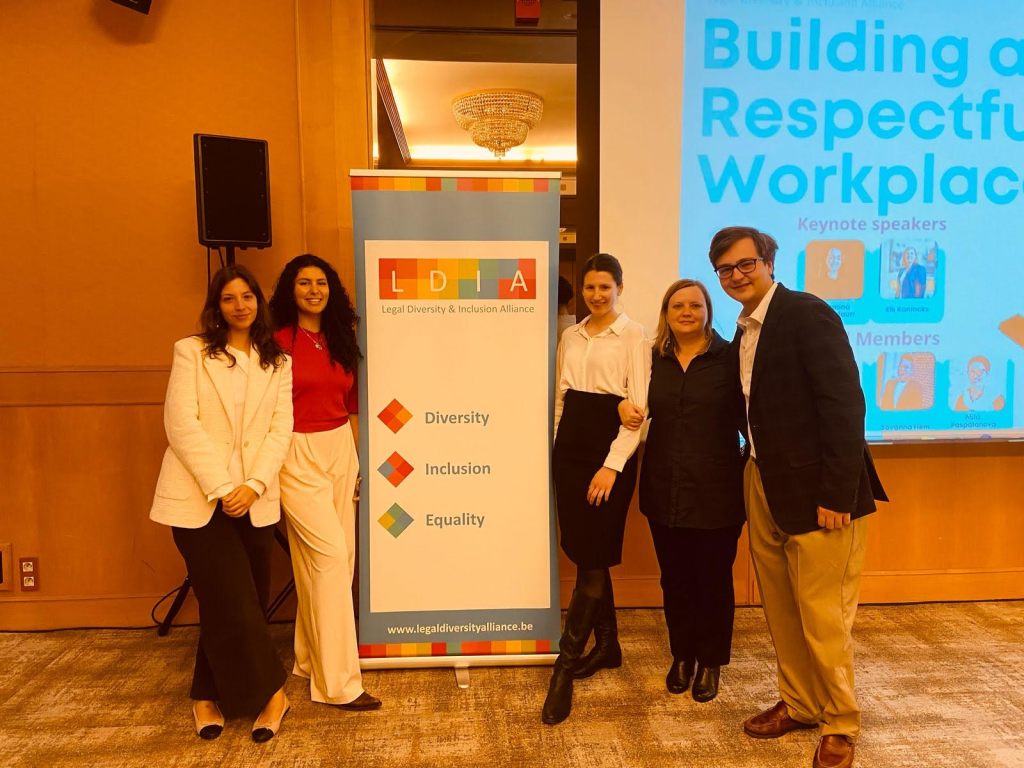
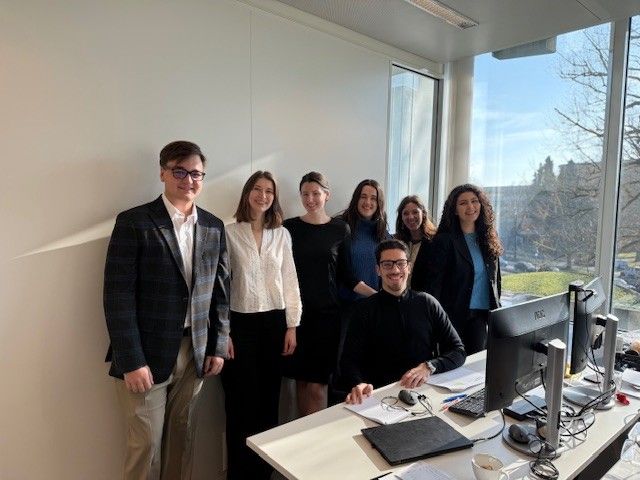
Last spring, I spent my final semester of law school working as a legal extern at Van Bael & Bellis (VBB), a Belgian law firm consisting of three offices in London, Brussels, and Geneva. VBB specializes in European and international legal work across three main categories: trade, antitrust, and corporate regulatory compliance. The firm’s composition truly represents its international focus, employing attorneys from more than 20 different countries. Just my office alone was shared with interns from Belgium, France, Ireland, Italy, Germany, and Spain. 

This international diversity, strongly reminiscent of the city of Brussels itself, created a uniquely open-minded and welcoming atmosphere at the firm. Every day, whether through work projects or casual conversations, I learned more about countries and legal systems all across the world. The sheer breadth of nationalities, experiences, and perspectives held by VBB’s attorneys ensured that everyone in the office was still expanding their understanding of business and law. In this context, it was clear throughout the firm that questions were not only expected but also encouraged. As an extern, this atmosphere afforded me an incredible opportunity to add to my knowledge and experience before graduating law school. 

This open mentality compounded the impact from my involvement in VBB’s extremely varied legal work, spanning from sanctions compliance and antidumping investigations to client alerts on upcoming legislation and updating internal materials on EU antitrust laws. I gained firsthand experience working on US-EU and EU-China trade disputes, including assessing tariffs and determining the correct classifications for products. When the EU proposed new legislation, I researched its impacts and together with expert attorneys wrote alerts for specifically affected clients as well as general takeaways. As part of my externship I also assisted many other tasks as well, including me in projects in over 20 different countries with different legal systems and approaches to corporate law.

However, of these many fascinating projects I had the opportunity to work on during my externship, sanctions compliance proved to be the most impactful and enduring. This work included researching involved parties of proposed transactions to ensure that the actions contemplated would pose minimal compliance risks from a sanctions perspective. While simple in concept, sanctioned parties would often go to great lengths to disguise their presence in transactions through strings of shell companies across the globe and the suppression of any information related to their ownership. Further complications often arose from the differences between UK, US, and EU sanction regimes, including the scope of sanctions, the jurisdiction of corresponding regulatory agencies, and the applicable penalties for noncompliance.

Despite these challenges, I began to increasingly enjoy the research and analysis required. Tracking down the ownership and control of various companies, which is often not openly disclosed information, consisted of sifting through media articles, social media posts, NGO reports, and other publicly accessible data such as ship transponders and locations. This process often felt like solving a particularly difficult puzzle, piecing together various clues to get a clearer picture of the involved parties and sanctions risks. Due to the lack of available information, many times the ownership or control of involved parties could not be definitively determined. However, it was incredibly satisfying when hours or days of research and seemingly unrelated shreds of information finally came together and yielded important conclusions.

I am extremely grateful for the experiences and opportunities given to me by Van Bael & Bellis. My time with the many talented attorneys at the firm opened my eyes to fields and career opportunities in international law that I never would have believed existed. As I am currently returning to Belgium for my Master of Laws (LL.M.) degree at KU Leuven, I am confident that my time with VBB will prove invaluable to me.
***

Applications are open for spring 2026 semester-long Global Externships Overseas (GEOs). All current 2Ls and 3Ls are invited to submit an application by September 15. For more information and the application, please email: ruskintlaw@uga.edu
Dean Rusk International Law Center receives grant from The Halle Foundation

The University of Georgia School of Law’s Dean Rusk International Law Center has received a grant from The Halle Foundation to support six law students in semester-long externships in Germany over the next three years.

“Germany is a country where our students are showing increasing interest,” according to Dean Rusk International Law Center Director Sarah Quinn. “Since 2022, three UGA Law students have participated in for-credit, semester-long externships with German law firms. This new partnership with The Halle Foundation will enable more students to immerse themselves in the heart of Europe and grow their international and legal skill sets, giving them the tools to succeed in the globalized practice of law” she said.

Reflecting on her externship with the German law firm Bodenheimer in fall 2022, alumna Emily Crowell (J.D. ’23) stated:

My externship…absolutely enhanced my legal education. I gained a much more holistic perspective on international arbitration, was exposed to laws from many different European countries, and worked alongside lawyers from different backgrounds and countries. Further, the attorneys at Bodenheimer allowed me to join teams involved in ongoing arbitrations and gave me substantive projects. The practical experience I gained at Bodenheimer was one of my most useful and enjoyable experiences of law school.

Alumna Meredith Williams (J.D. ’24), who externed with the German firm Weickmann in fall 2023, had a similarly transformative experience during her time abroad:

The opportunity to network and meet attorneys who work abroad is invaluable. I learned a lot about German and EU trademark law as well as had the opportunity to provide insight into the American system. Learning how to interact with international attorneys and international law in this way is certainly not something I would be able to do if I remained in Athens. Finally, Dr. Udo Herberth (LL.M. ’96) is not only an excellent mentor who has plentiful exciting work but is a great person to know.

More about Williams’ experience with Weickmann can be found here.

Based in Atlanta, The Halle Foundation seeks to promote understanding, knowledge and friendship between the people of Germany and the United States.

For more information or to set up an advising appointment, please email: ruskintlaw@uga.edu

Georgia Law 3L Daniel “Tripp” Vaughn reflects on summer research project in Belgium

University of Georgia School of Law student, rising 3L Daniel “Tripp” Vaughn, recently completed a short-term research project in Brussels, Belgium with Atlas Services Belgium (ASB), the holding company of the Orange Group in Belgium. Vaughn edited the updated 2024 version (13th edition) of the Guide to Listing in Belgium, to which former Georgia Law students also contributed– Emina Sadic Herzberger (J.D., ’22) co-authored the 2020 book, and both Starlyn Endres (J.D., ’22) and Alina Salgado (J.D., ’23) conducted subsequent research. The project has been overseen by Georgia Law alumnus Johan Van den Cruijce (LL.M., ’94), who is the Managing Director of ASB. Below, Vaughn reflects on the experience.

For three weeks this summer, I worked with Atlas Services Belgium (ASB), the holding company of the Orange group in Belgium. I edited the updated 2024 version (13th edition) of the Guide to Listing in Belgium. This guide initially began in 2005 as a brief, informal, and internal document detailing the obligations of public companies in Belgium. Following an explosion in EU corporation legislation and growing demand for accompanying guidance, a new version has been updated every 2-4 years until now the 13th edition comprises a formally published book of more than 400 pages.

My work with the guide brought me to the issue at the heart of the public/private divide: despite the fact that private companies suffer a severe discount to their valuation, public companies have increasingly moved to become private in Belgium (and in many other countries). As the EU continues to pass swathes of regulations on public companies, this decline is only expected to accelerate. Experiencing firsthand the enormous amount of work required to simplify and clarify the implications of these regulations demonstrated how even well meaning legislation can dramatically increase the burden on companies genuinely attempting to achieve compliance.

While editing the guide and discussing relevant legislation, I also had an interesting opportunity to compare the approaches to corporate regulation of the EU and the US. I found that in general legislation was surprisingly similar, but in particular areas liability diverged drastically. For example, Europe takes a much harsher approach to director liability for non-compliance of companies but drastically limits the potential for corporate tort liability compared to the US.

Another lesson I took from my experience in Brussels was learning more about the general operations of a holding company like ASB and how they are reflected by the office environment. Evenly divided between an accounting and legal department, the office caught up on all ongoing activities in bi-weekly staff meetings. I had the opportunity to learn how a capital increase in Belgium, a company dissolution in Thailand, a merger in Romania, and a decision to distribute dividends from Côte d’Ivoire all related to balance the finances of a single company. The office was incredibly open and friendly, and everyone was willing to explain why certain transactions were happening in their field.

In addition, we were able to travel to Paris for a day to meet with Cedric Testut, Group General Counsel of Orange. I met many of the lawyers of the Corporate Law and Europe Legal Department at the main office. Afterwards we discussed over lunch the scale of operations required for such a large international company as Orange and how AI might impact European legal work in the future. Diane Nicolas, General Counsel of Corporate Law and Europe, later showed us around the office for a more informal conversation about Orange’s role as the primary partner and telecommunications supplier of the 2024 Paris Olympic Games.

I am incredibly grateful for the opportunity to learn more about corporate compliance and the legal field in Europe. I plan to pursue an LL.M. in Europe after my third year of law school and my experience in Brussels was invaluable for my future plans.

UGA Law 3L Meredith Williams reflects on participation in the Bavarian International Trademark Association (“BITMA”) convention in Munich, Germany

Today we welcome a guest post by Meredith Williams, a member of the University of Georgia School of Law Class of 2024. Meredith is one of several UGA Law students to participate in a semester-long international externship, a pilot extension of our existing Global Externships Overseas initiative. This pilot is a joint initiative between the Dean Rusk International Law Center and the law school’s Clinical and Experiential Program. Meredith’s post describes her experience attending an international convention as part of her externship.

I am spending the fall semester of my 3L year working as a legal extern with Weickmann, an intellectual property law firm located in Munich, Germany. I work under Dr. Udo W. Herberth (LL.M., ’96), who heads the firm’s brands and designs group.

A highlight of my global externship thus far has been attending the second annual Bavarian International Trademark Association (“BITMA”) convention, which Dr. Herberth founded. The conference took place over two days, during which I met trademark and patent attorneys from fourteen different countries. On the first day, attorneys from each country presented on the topics of 1) use and 2) jurisdiction.

My externship and this conference in particular have crystalized for me how intellectual property is an increasingly international area of law. Many clients and companies wish to register, maintain, and prevent infringement of their trademarks in more than one country; yet, there are nuanced and important distinctions between different jurisdictions’ requirements and timelines. In a field of law where adding value to a brand is crucial, it is important to be aware of these differences and stay on top of deadlines.

I enjoyed learning from the diverse group of individuals at the BITMA conference. For example, a topic I found compelling was the question of translation of trademark languages. In Canada, the Quebec charter regarding French language has been amended. Attorneys at the conference suggested this will have an impact on trademarks because the French portion of the mark must be twice the size, yet the entire trademark need not be translated. For example, in Quebec, an Apple store could display a large “Le Magasin” before “Apple,” and not have to translate “Apple” into “Pomme.” Further, in Japan, there are four different scripts, which create even more nuance to registering a word mark. These evaluations go into much more detail than we had time to cover during the conference, but it has piqued my interest as something I had never thought about living in the English-dominant US.

Another aspect of the BITMA conference that I enjoyed was the balance between personal and professional. The group of 25 of us shared many meals, watched the traditional Bavarian parade for the opening weekend of Oktoberfest, and eventually made our way to the festivities. While the substantive knowledge I acquired from this group is important, I also learned a lot from interacting with everyone on a personal level. Dr. Herberth fostered a warm and supportive atmosphere throughout the convention. This type of collegial experience served as a reminder that there is value in getting to know colleagues as people outside of work. The BITMA group treated me as an equal and were interested in my path and life. It reminded me that I want to lend a helping hand to law students and those in the early stages of their careers as I progress through mine.

I look forward to the second half of my semester working at Weickmann. I thank UGA Law for leaving such a lasting, positive impression on Dr. Herberth; it is for this reason that he was incentivized to provide educational experiences for UGA Law students like myself, and it is also why I know that I, too, want to provide this type of experience to a UGA Law student one day.