Become part of a 45-year tradition: Georgia Law Master of Laws (LLM)

2016brochure_coverwebIn 1973, a Belgian attorney became the first foreign-trained lawyer to earn a Master of Laws, or LLM, degree at the University of Georgia School of Law.

The tradition launched then continues today: Even as the our current LLM class of 2017 pursues studies, we work to build next year’s LLM student body. We welcome inquiries and applications for the Class of 2018.

As detailed in our brochure (online in booklet form here; in printable PDF here), Georgia Law LLMs may prepare to sit for a US bar examination, one among many concentrations:

  • Preparation for a U.S. Bar Examination
  • Business Law and Dispute Settlement
  • Family Law and Migration Law
  • Transnational, International, and Comparative Law
  • Public Institutions and the Law

It’s a vibrant program; see our Exchange of Notes blog posts here.

Members of that class will join an alumni/ae base of more than 450 Georgia Law LLMs, who have ties to 75 countries, on every continent in the world, and 10,000 alums overall. They include judges and law firm partners, leaders in governments and in intergovernmental and nongovernmental organizations, heads of corporate legal departments, and university professors.

Click here to join this tradition of excellence in international professional education, or here to apply now.

Georgia Law’s annual Advocate magazine features our Center

SAs_Spr16

This Spring 2016 photo depicts Pedro Dorado, our Center Fellow, who earned his LLM in 2015 and is a candidate for the Georgia Law JD degree in 2017, and 4 of our Student Ambassadors. At left are Danielle Glover and Taryn Arbeiter, both now 2Ls; at right are Chanel Chauvet, now a 2L, and Olga Gambini, who earned her Georgia Law LLM in 2014 and JD in 2016.

Very pleased that our Dean Rusk International Law Center is featured in the just-released Advocate, the annual magazine of the University of Georgia School of Law. Highlights of the volume include the May 2016 commencement address of alumna Sally Yates, now Deputy Attorney General of the United States, and much more. The article recounting our 2015-16 achievements – “Center undergoes exciting changes” – appears at page 24, along with a version of the photo above. It’s reprinted here in full.

Georgia Law’s 38-year-old Dean Rusk International Law Center continues to expand its collaborative efforts and increase opportunities for both students and faculty to focus on global legal issues.

Led by Associate Dean for International Programs and Strategic Initiatives & Woodruff Chair in International Law Diane Marie Amann, the center itself has a new, modernized look that also acknowledges the rich history of international scholars who have greatly influenced the direction of the law school. Artwork is a focal point, including portraits of former U.S. Secretary of State and Sibley Professor of International Law Emeritus Dean Rusk, the center’s namesake, and the inaugural holder of the Woodruff Chair in International Law, Louis B. Sohn, namesake of the center’s Sohn Library on International Relations.
At an October rededication ceremony, Kannan Rajarathinam (LL.M.’88), who serves as head of office for the United Nations Assistance Mission for Iraq, delivered a keynote address titled “The United Nations at 70: Pursuing Peace in the 21st Century.”

New to the center this year are Director of Global Practice Preparation Kathleen A. Doty, Administrative Assistant Martica Marín and Executive Administrator Elena Williams. They join Amann and Director of International Professional Education Laura Tate Kagel (J.D.’06). Assisting them are second-year student Pedro Dorado, the Dean Rusk International Law Center Fellow, and about one dozen other student ambassadors, who provide research and other support.

In addition to hiring new staff, the center broadened its adviser base. The Dean Rusk International Law Center Council, comprising faculty, alumni/alumnae and counselors, includes lawyers practicing in a variety of international and transnational law subfields throughout the world.
Center initiatives include study abroad in Europe and opportunities to obtain practice experience through the Global Externship At-Home and Global Externship Overseas. GEA offers placements within the United States in legal departments, government offices and nongovernmental organizations, while GEO offers summer placements in a variety of law-office settings around the world.

Numerous events are planned for the 2016–17 academic year. Among them is a Sept. 23 conference – sponsored by the center, the Georgia Journal of International & Comparative Law and the International Committee of the Red Cross – at which experts will examine the new Geneva Convention Commentary edited by ICRC Legal Advisor Jean-Marie Henckaerts (LL.M.’90).

Henckaerts on “Locating the Geneva Conventions Commentaries in the international legal landscape”

Jean-Marie-HenckaertsIt is an honor to publish a post by our distinguished alumnus, Dr. Jean-Marie Henckaerts (LLM 1990). Based in Geneva, he is Legal Adviser in the Legal Division of the International Committee of the Red Cross and Head of the project to update the Commentaries on the 1949 Geneva Conventions and the Additional Protocols of 1977. We posted on the launch of the Commentary to the 1st Convention back in March, and are pleased to announce that on September 23, we’ll host an experts’ conference examining that volume. Proceedings to be published in our Georgia Journal of International & Comparative Law, for which Dr. Henckaerts served as Associate Editor while a Georgia Law student. We republish his post today courtesy of 3 blogs cosponsoring a series of posts on the topic, Opinio Juris, Intercross, and Humanitarian Law & Policy. Dr. Henckaerts writes:

Norms of international law develop through the adoption of treaties or through the formation of customary rules based on State practice and opinio juris. The treaty rules of international humanitarian law (IHL) are first and foremost contained in the Geneva Conventions and their Additional Protocols. In parallel, a body of customary rules govern the conduct of armed conflicts today. In 2005, the ICRC released a Study aimed at identifying customary IHL rules; it formulated 161 rules of IHL which have achieved, according to State practice compiled by the ICRC, customary status.

The ICRC Commentaries, like other commentaries, purport to clarify the meaning of treaty rules in order to facilitate their implementation: they are concerned with norm interpretation as opposed to norm identification. All laws, no matter how detailed they are, have to be interpreted when being applied. International treaties, such as the Geneva Conventions, are no different. A commentary’s purpose is to offer such interpretations and indicate where a question is not entirely settled. By their nature, they cannot amend the law.

Because the 1949 Geneva Conventions were drafted in such a way as to make them easily comprehensible by belligerents, their rules already offer a degree of specificity and practicality – see the detailed rules governing the protection of prisoners of war in the Third Convention. Yet, the scope or meaning of some of their provisions may also require further clarification – see the lack of detail governing the Conventions’ scope of application. Time had come to provide an up-to-date interpretive guide to the Conventions, to better address today’s humanitarian challenges.

Applying the rules on treaty interpretation to the Geneva Conventions

According to the 1969 Vienna Convention on the Law of Treaties, a treaty must be interpreted

“in good faith in accordance with the ordinary meaning to be given to the terms of the treaty in their context and in the light of its object and purpose”

(Art. 31(1)). The ‘object and purpose’ of the Conventions to respect and protect those affected by armed conflict while taking into consideration military necessity, has been a constant and leading compass throughout the research and drafting of the new Commentary on the First Geneva Convention (GCI). The ‘context’ to be considered for treaty interpretation comprises not only the text of the treaty, but also its preamble and annexes. As a supplementary means of interpretation (Art. 32), the preparatory work has been particularly important, when no recent practice on a topic could be found.

The Vienna Convention also reflects and foresees the need to take account the passing of time when interpreting treaties. Art. 31(3) provides that recourse may be had to

“subsequent practice in the application of the treaty which establishes the agreement of the parties regarding its interpretation”.

Other subsequent practice – for example conduct by one or more (but not all) Parties in the application of the treaty after its conclusion – may also be relevant as a supplementary means of interpretation. The weight of such practice may depend on its clarity and specificity, as well as its repetition. In the case of the Geneva Conventions, such practice – identified for example through military manuals, national legislation, case-law, reports of practice and official statements – has proved particularly useful in confirming or determining the meaning of a rule. ICRC experience and scholarly writings have also proved useful in informing the interpretation of the Conventions.

Pursuant to Art. 31(3) of the Vienna Convention, the Commentary also took into account other

“relevant rules of international law applicable in the relations between the parties”.

These include customary IHL and the three Additional Protocols, as well as other relevant branches of international law. In particular, human rights law, international criminal law and refugee law were still in their infancy when the Pictet commentary was being drafted but they have grown significantly in the meantime. In this regard, the development of case-law from international courts and tribunals since the 1990s also had to inform an up-to-date interpretation of IHL treaty rules.

An ICRC Commentary, resulting from a collaborative process

Where does the legitimacy of the ICRC to interpret the Conventions stem from? First, the ICRC benefits from a legal legitimacy as guardian and promoter of IHL, a role it was formally entrusted with by the international community through the Statutes of the International Red Cross and Red Crescent Movement, adopted by all States parties to the Geneva Conventions. Ensuring a coherent interpretation of the law is essential to enhance respect for it, and hence is at the core of the ICRC mandate. Second, the ICRC possesses an operational legitimacy, drawing from more than 150 years of experience in assisting and protecting those affected by armed conflicts, but also in engaging with weapon bearers to promote and disseminate IHL. Third, throughout the years, the ICRC has accumulated knowledge in material form: the ICRC archives have documented the practice of State and non-State actors, as well as its own. This wealth of experience and access to these materials sets the ICRC in a unique position to capture interpretations of IHL treaty rules.

At the same time, the updated Commentaries are far from an exclusively “ICRC” product. While they have been commissioned by the institution and edited by its staff lawyers, and include ICRC interpretations, they also incorporate an unprecedented level of external inputs, both in terms of process and substance. The Commentaries are the result of a collaborative process, involving external contributors as authors and reviewers. This allowed the new Commentary to take into account a wide range of perspectives, from different parts of the world, and to reflect main diverging views.

I am convinced that continuous efforts to interpret the law in a coherent manner is essential to ensure that the humanitarian spirit of the Geneva Conventions is carried forward into today’s conflicts. It is the ICRC’s hope that the new Commentaries will, like the Pictet Commentary, be a leading interpretative compass; but its ultimate authority will depend on its quality and relevance for practitioners and academics. The updated Commentaries should not be seen as the final word on the meaning of IHL treaty provisions, but rather as a picture of how the rules are interpreted today, and a contribution to continuing efforts to refine our understanding of the law and how it can best mitigate the effects of contemporary armed conflicts.

syria-crisis-1140x620

View of destruction in downtown Homs, Syria; photo courtesy of International Committee of the Red Cross. ©Jerome Session/Magnum Photos for ICRC
Our newest Masters of Laws

Saturday was the University of Georgia School of Law commencement, and we were very pleased to welcome to our community of nearly 500 LLM graduates the 15 talented lawyers pictured below. Congratulations to our newest Masters of Laws!

IMG_7955

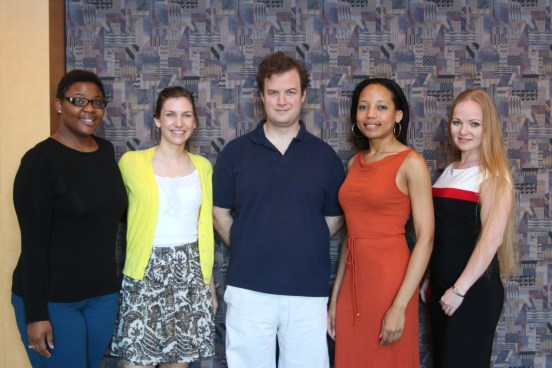
Our LLM Class of 2016 posed on Graduation Day for a photo with Laura Tate Kagel, our Center’s Director of International Professional Education (bottom right). From left, the new alums are: top, Elisha Atulomah, Miguel David Medina Cordoba, Mahemud Tekuya, and Fazle Rabbi Chisty; middle, Huajin Tang, Kun Wang, Simon Wolffram, Xiao Zhang, and Deborah Nogueira-Yates; bottom, Ekaterina Knapik, Gladys Ashiru, Nastasja Spee, Socorro Moctezuma Flores, Tingting Tang , and Oluwakemi Kusemiju.

Former Nigeria prosecutor’s LLM year features US practice experience

IMG_0526.Gladys ASHIRU_2_fb

Among the many talented foreign-trained lawyers set to earn Georgia Law’s Master of Laws (LLM) degree this month is Gladys Ashiru, who arrived with considerable experience as a prosecutor in Nigeria. She’s enriched this experience this year: in addition to her academic studies and a professional development trip, Gladys has worked as a volunteer prosecutor here in Athens.

Having immigrated to the United States, Gladys chose to put her career back on track by pursuing an LLM at Georgia Law. She says she was impressed by the collegiality she encountered during a visit to campus, and swayed by LLM graduates who spoke glowingly of their experience here.

Gladys’ strong interest in criminal law prompted Laura Tate Kagel, our Center’s Director of International Professional Education, to connect her with the Athens-based Office of the District Attorney for the Western Judicial Circuit, whose staff includes a number of Georgia Law alums. Assistant District Attorney Paige Otwell (JD 88) became Gladys’ mentor and introduced her to District Attorney Ken Mauldin (JD 80). After Gladys enrolled in Mauldin’s Spring 2016 Trial Practice course, he offered her the opportunity to observe and help out in the D.A.’s office. With the semester now at an end, Gladys recounts:

“It was an amazing experience for me. The internship broadened my horizons and exposed me to perspectives different from mine, especially in areas relating to jury selection and trials.”

After commencement on May 21, Ashiru plans to take the Georgia and New York bar exams, and also hopes to contribute to legal reform in Nigeria. Although she says that Georgia Law was challenging, she also found it rewarding, and calls it

“the best choice I made!”

Eastward bound, to meet potential LLMs in Prague, Warsaw, Budapest

Law students, lawyers, and legal academics in the Poland, Hungary, and the Czech Republic will soon have the opportunity for talk with a Dean Rusk International Law Center staffer about pursuing a degree at here at the University of Georgia School of Law.

logo-colorNext week, Laura Tate Kagel, our Center’s Director of International Professional Education, will take part in American universities fairs in Prague, Warsaw, and Budapest, sponsored by EducationUSA, an arm of the U.S. Department of State.

llm_coverShe’ll be on hand personally to discuss the career benefits and special advantages of earning the Master of Law, or LL.M., degree at Georgia Law. (See prior posts about our current LLM students, as well as our hundreds of LLM alums, here.)

Interested persons may show up at the times and places below. And feel free to e-mail Dr. Kagel at lkagel[at]uga.edu in order to assure one-to-one meeting – or to correspond, in the event you’re unable to attend one of the fairs.

Monday, April 18, Prague: 15:00-18:00 at the Alchymist Hotel, Tržiště 19, Prague 1

Wednesday, April 20, Warsaw: 12:00-15:30 at the University of Warsaw Library, BUW, ul. Dobra 55/66, Warsaw

Friday, April 22, Budapest: 15:00- 19:00 at the Budapest Marriott Hotel, Apaczai Csere Janos u. 4. Budapest 1052

Hope to see you there!

Georgia Law LLMs benefit from Atlanta professional development trip

Xiao_Zhang_CA11

Xiao Zhang at U.S. Courthouse

Professional development took an Atlanta turn this week when our LLM Class of 2016 traveled to our state capital to learn more about the judiciary and private-sector law.

GaSCt_Hines3

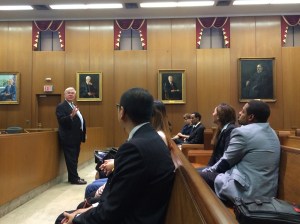
Justice Hines talks with students

The day began with a visit to the Supreme Court of Georgia, founded more than a 170 years ago. There, Presiding Justice P. Harris Hines talked with the students about the jurisprudence produced by him and his 6 colleagues on the high bench.

CA11_Martin3_crop

Judge Martin talks about CA11

Accompanied by Dean Rusk International Law Center staffers Laura Tate Kagel and Kathleen A. Doty, the LLM students then went to the U.S. Courthouse. They

CA11_MahemudTekuya_ElishaAtulomah2

Mahemud Tekuya & Elisha Atulomah at U.S. Courthouse

toured the U.S. Court of Appeals for the Eleventh Circuit and heard from our 1981 JD alumna, Judge Beverly B. Martin.

IMG_0565 - Copy

Mark J. Newman, partner at Troutman Sanders LLP, talks with LLMs

The day ended with lunch and practice briefings at the Atlanta office of the global law firm Troutman Sanders LLP, where they were treated to lunch and briefings on legal practice by Mark J. Newman and others.

LLMs_CA11

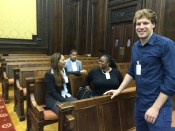
From left, Socorro Moctezuma Flores, Miguel Medina Cordoba, Oluwakemi Kusemiju, and Simon Wolffram at U.S. Courthouse

CA11_HuajinTang_GladysAshiru_TingtingTang

Huajin Tang, Gladys Ashiru & Tingting Tang at U.S. Courthouse

Our thanks to all who made this day a great success.

Become part of a 43-year tradition: Georgia Law Master of Laws (LLM)

2016Brochure_TNIn 1973, Edward de Jaegher of Brussels, Belgium, became the first foreign-trained lawyer to earn a Master of Laws, or LLM, degree at the University of Georgia School of Law.
The tradition launched 43 years ago today. Even as our current students complete their final semester of study, we continue to build next year’s LLM student body. We welcome inquiries and applications for the Class of 2017; details here.

Members of that class will join an alumni/ae base of more than 400 Georgia Law LLMs, who have ties to 75 countries, on every continent in the world. They include judges and law firm partners, leaders in governments and in intergovernmental and nongovernmental organizations, heads of corporate legal departments, and university professors. Here’s just two:

Oksana G. Wright (LLM’05; 1st law degree from St. Petersburg State University, Russia). Now an Associate at Fox Rothschild LLP in New York City, Oksana writes:

The International and Comparative Law program at UGA was my first exposure to U.S. law and the first stepping-stone of my legal career in the United States. At UGA, I received an opportunity to learn from top professors and fellow practitioners from all over the world. They contributed different views, perspectives, and experience to our discussions of relevant legal topics. This invaluable experience provided me with a competitive edge in my future legal career in New York where I deal with various international legal issues and work with individuals from different countries and backgrounds.

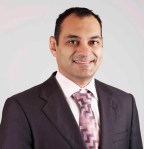
ObeidatOmar_jul15Omar Obeidat (LLM’97; 1st law degree from Yarmouk University in Jordan). A Partner and the Head of Intellectual Property at Al Tamimi & Co. Advocates & Legal Consultants in Dubai, United Arab Emirates, Omar writes:

I was fortunate to join the LLM program at UGA and was especially fortunate to have learned from distinguished professors particularly on intellectual property and copyright. Although I stayed for a short period at Georgia of little over 10 months, it is a period that stuck very well in my memory as a period filled with making good friends and enjoyable learning experience in a beautiful campus and well respected school of law.

Click here to join this tradition of excellence in international professional education.