Daniel “Tripp” Vaughn (J.D. ’25) reflects on semester-long Global Externship Overseas in Belgium

Today, we welcome a guest post by Daniel “Tripp” Vaughn, a member of the University of Georgia School of Law class of 2025. Vaughn participated in a semester-long international externship in spring 2025. The semester-long externships overseas initiative is an extension of the Center’s existing Global Externships Overseas and is offered jointly between the Center and the law school’s Clinical and Experiential Program. Vaughn’s post describes his experience as a legal extern with Van Bael & Bellis, a law firm working on EU and national competition law, EU trade and customs law, regulatory law, as well as Belgian business law. Vaughn was based in Brussels, Belgium, where he worked under Georgia Law alumnus Porter Elliott (J.D. ’96). This was Vaughn’s third Global Externship Overseas during his time at Georgia Law. He is now living in Leuven, Belgium, where he is pursuing a Master of Laws (LL.M.) degree at KU Leuven.
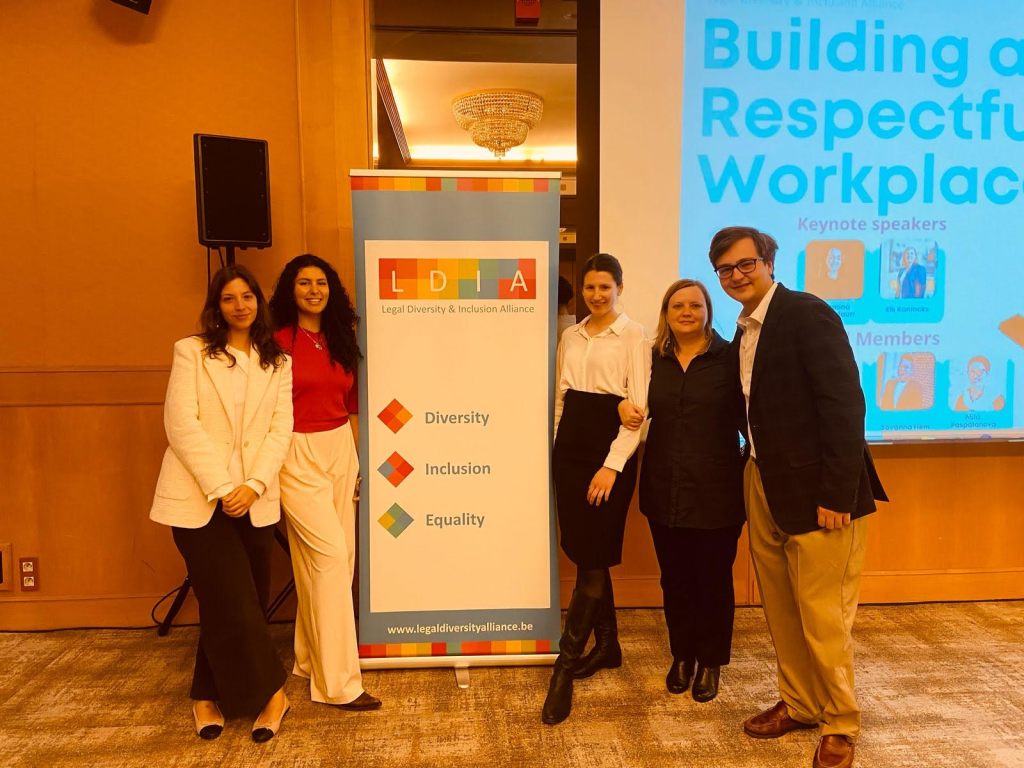
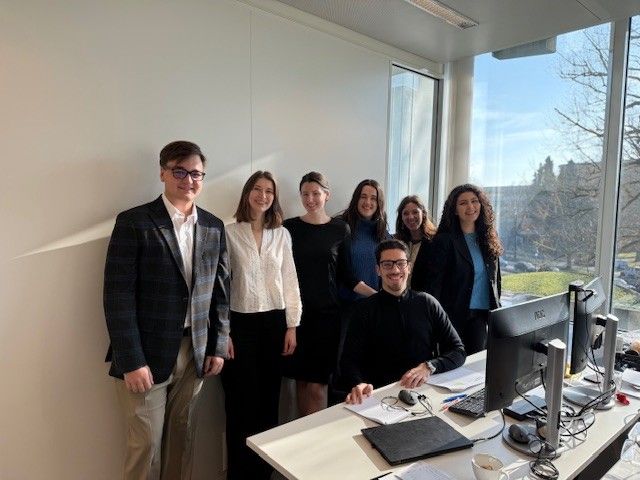
Last spring, I spent my final semester of law school working as a legal extern at Van Bael & Bellis (VBB), a Belgian law firm consisting of three offices in London, Brussels, and Geneva. VBB specializes in European and international legal work across three main categories: trade, antitrust, and corporate regulatory compliance. The firm’s composition truly represents its international focus, employing attorneys from more than 20 different countries. Just my office alone was shared with interns from Belgium, France, Ireland, Italy, Germany, and Spain. 

This international diversity, strongly reminiscent of the city of Brussels itself, created a uniquely open-minded and welcoming atmosphere at the firm. Every day, whether through work projects or casual conversations, I learned more about countries and legal systems all across the world. The sheer breadth of nationalities, experiences, and perspectives held by VBB’s attorneys ensured that everyone in the office was still expanding their understanding of business and law. In this context, it was clear throughout the firm that questions were not only expected but also encouraged. As an extern, this atmosphere afforded me an incredible opportunity to add to my knowledge and experience before graduating law school. 

This open mentality compounded the impact from my involvement in VBB’s extremely varied legal work, spanning from sanctions compliance and antidumping investigations to client alerts on upcoming legislation and updating internal materials on EU antitrust laws. I gained firsthand experience working on US-EU and EU-China trade disputes, including assessing tariffs and determining the correct classifications for products. When the EU proposed new legislation, I researched its impacts and together with expert attorneys wrote alerts for specifically affected clients as well as general takeaways. As part of my externship I also assisted many other tasks as well, including me in projects in over 20 different countries with different legal systems and approaches to corporate law.

However, of these many fascinating projects I had the opportunity to work on during my externship, sanctions compliance proved to be the most impactful and enduring. This work included researching involved parties of proposed transactions to ensure that the actions contemplated would pose minimal compliance risks from a sanctions perspective. While simple in concept, sanctioned parties would often go to great lengths to disguise their presence in transactions through strings of shell companies across the globe and the suppression of any information related to their ownership. Further complications often arose from the differences between UK, US, and EU sanction regimes, including the scope of sanctions, the jurisdiction of corresponding regulatory agencies, and the applicable penalties for noncompliance.

Despite these challenges, I began to increasingly enjoy the research and analysis required. Tracking down the ownership and control of various companies, which is often not openly disclosed information, consisted of sifting through media articles, social media posts, NGO reports, and other publicly accessible data such as ship transponders and locations. This process often felt like solving a particularly difficult puzzle, piecing together various clues to get a clearer picture of the involved parties and sanctions risks. Due to the lack of available information, many times the ownership or control of involved parties could not be definitively determined. However, it was incredibly satisfying when hours or days of research and seemingly unrelated shreds of information finally came together and yielded important conclusions.

I am extremely grateful for the experiences and opportunities given to me by Van Bael & Bellis. My time with the many talented attorneys at the firm opened my eyes to fields and career opportunities in international law that I never would have believed existed. As I am currently returning to Belgium for my Master of Laws (LL.M.) degree at KU Leuven, I am confident that my time with VBB will prove invaluable to me.
***

Applications are open for spring 2026 semester-long Global Externships Overseas (GEOs). All current 2Ls and 3Ls are invited to submit an application by September 15. For more information and the application, please email: ruskintlaw@uga.edu

Video available for “The Law of Global Economic Statecraft,” conference held October 24 at Georgia Law

Anyone who missed our October 24 University of Georgia School of Law conference entitled “The Law of Global Economic Statecraft” are most welcome now to view the event online.

As posted, an interdisciplinary and international range of speakers came together to address the intensifying geopolitics of sanctions, economic pressure, economic competition t this annual conference of the Georgia Journal of International and Comparative Law, which was cosponsored by the Dean Rusk International Law Center, and other University of Georgia units: Willson Center for Humanities & Arts; Georgia Law students’ International Law Society; the Center for International Trade & Security, School of Public & International Affairs; the Department of History, Franklin College of Arts & Sciences; and the Department of Economics, Terry College of Business.

Keynoting the conference was a book discussion with Cornell University historian Nicholas Mulder, author of The Economic Weapon: The Rise of Sanctions as a Tool of Modern War (Yale University Press 2022).

The video link is here. Times and descriptions of each panel are as follows:

00:07 Panel 1: How We Got Here, with Zohra Ahmed, Assistant Professor of Law, University of Georgia School of Law; Mona Ali, Associate Professor of Economics, State University of New York-New Paltz; Harlan Grant Cohen, Gabriel M. Wilner/UGA Foundation Professor in International Law and  GJICL’s Faculty Advisor; Nicholas Mulder, Assistant Professor and Milstein Faculty Fellow, Cornell University Department of History.

01:31 Panel 2: Where We Are, with Lauren Brown, Associate, Squire Patton Boggs, Washington, D.C.; Sarah Bauerle Danzman, Director, Tobias Center for Innovation in International Development, and Associate Professor, International Studies, Indiana University-Bloomington; Maryam Jamshidi, Associate Professor of Law University of Florida Levin College of Law; Tom Ruys, Professor, Faculty of Law and Criminology, Department of European, Public, and International Law, Ghent University, Belgium; and Jan Zahradil, Member, European Parliament.

02:53 Panel 3: Where We’re Headed, with Melissa J. “MJ” Durkee, Associate Dean for International Programs, Director of the Dean Rusk International Law Center, and Allen Post Professor, University of Georgia School of Law; Elena Chachko, Lecturer on Law, Harvard Law School; J. Benton Heath, Assistant Professor of Law, Temple University Beasley School of Law; Henry Farrell, SNF Agora Institute Professor of International Affairs at SAIS, Johns Hopkins University; and Mona Paulsen, Assistant Professor of Law, London School of Economics Law School, England.

04:17, Keynote Book Discussion of The Economic Weapon: The Rise of Sanctions as a Tool of Modern War, with (pictured above, from left) author Nicholas MulderLaura Phillips-Sawyer, Associate Professor at the University of Georgia School of Law; and Scott Reynolds Nelson, Georgia Athletic Association Professor at the University of Georgia Department of History.

“Law of Global Economic Statecraft,” October 24 Georgia Journal of International and Comparative Law conference, to feature book keynote discussion with Nicholas Mulder

This year’s annual conference of the Georgia Journal of International and Comparative Law will consider a highly topical question: “The Law of Global Economic Statecraft.” Featured will be a keynote discussion by Cornell University historian Nicholas Mulder, author of The Economic Weapon: The Rise of Sanctions as a Tool of Modern War (Yale University Press 2022), as well as panels including more than a dozen experts from around the world.

The daylong conference will take place on Monday, October 24, in the Larry Walker Room of Dean Rusk Hall at the University of Georgia School of Law.

Sponsoring along with GJICL, a 50-year-old student-edited journal, is the law school’s Dean Rusk International Law Center. GJICL Executive Conference Editor, 3L Claire Kimbrell, and Senior Conference Editor, Sarah Grace McCord, worked closely with Catrina Martin, the Center’s Global Practice Preparation Assistant, and with GJICL’s Faculty Advisor, Professor Harlan Grant Cohen, who is Gabriel M. Wilner/UGA Foundation Professor in International Law and one of the Center’s Faculty Co-Directors.

The University of Georgia Willson Center for Humanities & Arts is a cosponsor of the keynote event. Additional conference cosponsors include these University of Georgia units: Georgia Law students’ International Law Society; the Center for International Trade & Security, School of Public & International Affairs; the Department of History, Franklin College of Arts & Sciences; and the Department of Economics, Terry College of Business.

Registration for all aspects of the conference (to be livestreamed for online registrants) here.

Here’s the concept note:

“The global economy has been weaponized.  It’s not clear when it happened, or whether it’s even something new, but watching the response to Russia’s invasion of Ukraine has made it impossible to ignore.  With breathtaking speed, a full phalanx of sophisticated economic tools was mobilized against Russia that threatened to sever it from the global economy.  For its, part, Russia demonstrated the continued force of its own economic weapons – its control over substantial supplies of oil and gas.  But the speed with which these tools were amassed was in fact testament to years of experiments and practice.  Economic tools that had been developed to isolate “rogue states,” to fight terrorist networks, and to punish human rights abusers had begun to show how the carrot of the global market could quickly become a lever of influence and a forceful stick.  But these tools gained new prominence as they were refined and redeployed for use in the intensifying economic and geopolitical rivalry between China, the United States, and Europe.  

“Is international law prepared for this reality?  Until recently, tools of economic pressure have been left largely to the margins of the discipline, treated at best as the preferred alternative to more regulated fields of military activities, at worst as exceptional tools that could largely be ignored – even in the face of critiques from the Global South and regarding human rights.  While every international law textbook has chapters on the regulation of military activity and economic cooperation, few have standalone sections on sanctions.  International economic law regimes meanwhile struggle to adapt to the realities of ‘geoeconomics’ and ‘weaponized interdependence,’ in which, structures designed to encourage economic cooperation are repurposed as tools of competition and rivalry.

“A reconsideration is long overdue.  This symposium surveys the current state of economic statecraft – the tools in use, their purposes, and their targets.  It explores how they are or should be regulated.  But most importantly, it seeks to put today’s economic statecraft in historical, political, and legal context asking critical questions about the international order they reflect and the international order they might require.”

The day’s events are as follows:

9-9:10 am Welcome

  • Melissa J. “MJ” Durkee, Associate Dean for International Programs, Director of the Dean Rusk International Law Center, and Allen Post Professor, University of Georgia School of Law

9:10-10:30 am How We Got Here

Speaking on this 1st panel:

  • Zohra Ahmed, Assistant Professor of Law, University of Georgia School of Law
  • Mona Ali, Associate Professor of Economics, State University of New York-New Paltz
  • Henrique Choer Moraes, Minister-Counsellor, Embassy of Brazil in New Zealand
  • Nicholas Mulder, Assistant Professor and Milstein Faculty Fellow, Cornell University Department of History

10:45 am-12:05 pm Where We Are

Lauren Brown, Associate, Squire Patton Boggs, Washington, D.C., will moderate this 2d panel. Speaking will be:

  • Sarah Bauerle Danzman, Director, Tobias Center for Innovation in International Development, and Associate Professor, International Studies, Indiana University-Bloomington
  • Maryam Jamshidi, Associate Professor of Law University of Florida Levin College of Law
  • Tom Ruys, Professor, Faculty of Law and Criminology, Department of European, Public, and International Law, Ghent University, Belgium
  • Jan Zahradil, Member, European Parliament

1:05-2:25 pm Where We’re Headed

Speakers on this 3d panel:

  • Elena Chachko, Lecturer on Law, Harvard Law School
  • J. Benton Heath, Assistant Professor of Law, Temple University Beasley School of Law
  • Henry Farrell, SNF Agora Institute Professor of International Affairs at SAIS, Johns Hopkins University
  • Mona Paulsen, Assistant Professor of Law, London School of Economics Law School, England

2:40-3:55 pm Keynote Book Discussion on “The Economic Weapon: The Rise of Sanctions as a Tool of Modern War”

3:55 pm Thank You

  • Courtney Robinson, Editor-in-Chief, Georgia Journal of International and Comparative Law

Georgia Law Dean Bo Rutledge, students Katherine Larsen and Miles Porter publish on Cuba sanctions

Recent change in US policy toward Cuba is the subject of a new commentary by the dean and 2 student researchers here at the University of Georgia School of Law.

Coauthoring the Daily Report article, entitled “Lawyers Should Keep Their Eyes on Cuba Sanctions Cases,” were international business law expert Peter B. “Bo” Rutledge, Dean and Herman E. Talmadge Chair of Law at Georgia  Law, along with 3L Katherine M. Larsen and 2L Miles S. Porter.

The article examines the potentially “broad implications for entities that conduct business in or with Cuba” that may follow from the announcement earlier this year that a portion of the mid-1990s “Helms-Burton Act would no longer be suspended, thereby allowing U.S. nationals to file lawsuits against any individual or entity that ‘traffics in property expropriated by the Cuban government.”

The full commentary is here.