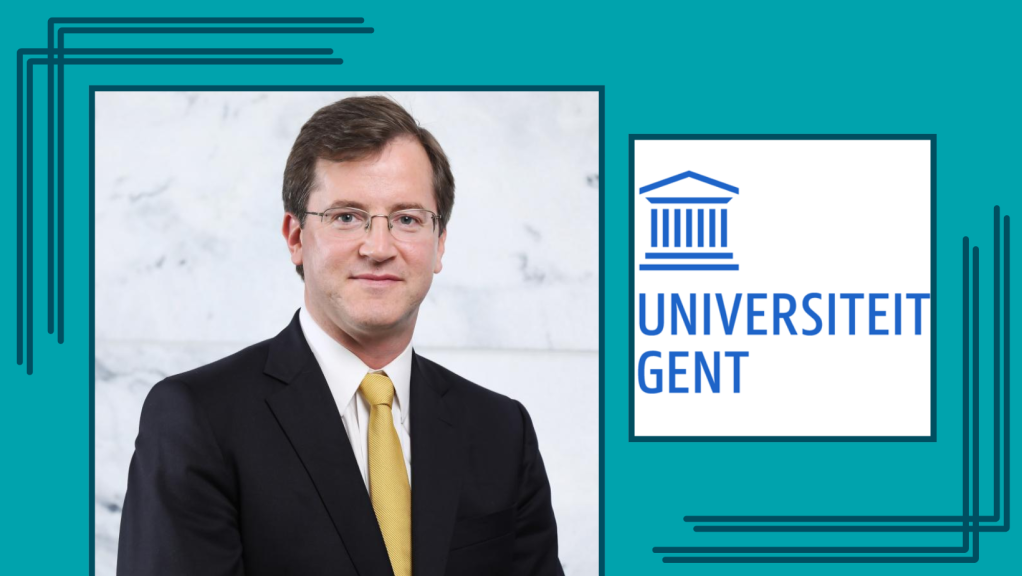
Christopher M. Bruner, Stembler Family Distinguished Professor in Business Law and Faculty Co-Director of the Dean Rusk International Law Center, gave the keynote address for a symposium on “Corporate Sustainability Due Diligence (CSDD), Sustainability, and Corporate Law” at Ghent University Law School in Belgium during May. Bruner’s keynote was titled “Developments and Debates on Corporate Sustainability in the US,” and the symposium was co-sponsored by the journal European Company Case Law (ECCL).
Groups like ABILA have been an integral part of my academic growth, and I am thrilled to have the opportunity to contribute as a student ambassador. I hope to use this position to meet other professionals across the field and give back in helping other students better understand the academic and professional opportunities available to them in studying international law
Graham is the second Georgia Law student in the last two years to be selected as an ABILA student ambassador. Last year, LL.M. student Bohdan Krivuts served in this role, detailed in a prior post (here).
Professor Diane Marie Amann recently was featured in Expresso, a newspaper based in Lisbon, Portugal, regarding efforts to hold Russian officials accountable for the war in Ukraine.
Reviewing various obstacles to these efforts, Tribuna quoted Amann as follows (in translation):
“One question, obviously, is whether this court will be able to arrest the accused leaders,” acknowledges Diane Marie Amann. Still, she points out, “this is a challenge in all criminal cases, and the magnitude of the challenge should not impede the effort to ensure justice.”
Recalling the March 17, 2023, arrest warrants issued by the International Criminal Court against Russian President Vladimir Putin and his Children’s Rights Commissioner Maria Lvova-Belova (about which Amann has written here), Tribuna wrote:
Although neither has been detained – which highlights the challenge that any legal system faces when trying to guarantee justice while the conflict is ongoing – the decision had effects, considers Amann. “It raised public awareness about the criminal allegations and encouraged states and civil society actors to call for the return of children.”
Amann is Regents’ Professor of International Law, Emily & Ernest Chair in International Law, and Faculty Co-Director of the Dean Rusk International Law Center here at the University of Georgia School of Law. She writes and teaches in areas including transnational and international criminal law, child and human rights, constitutional law, and global legal history.
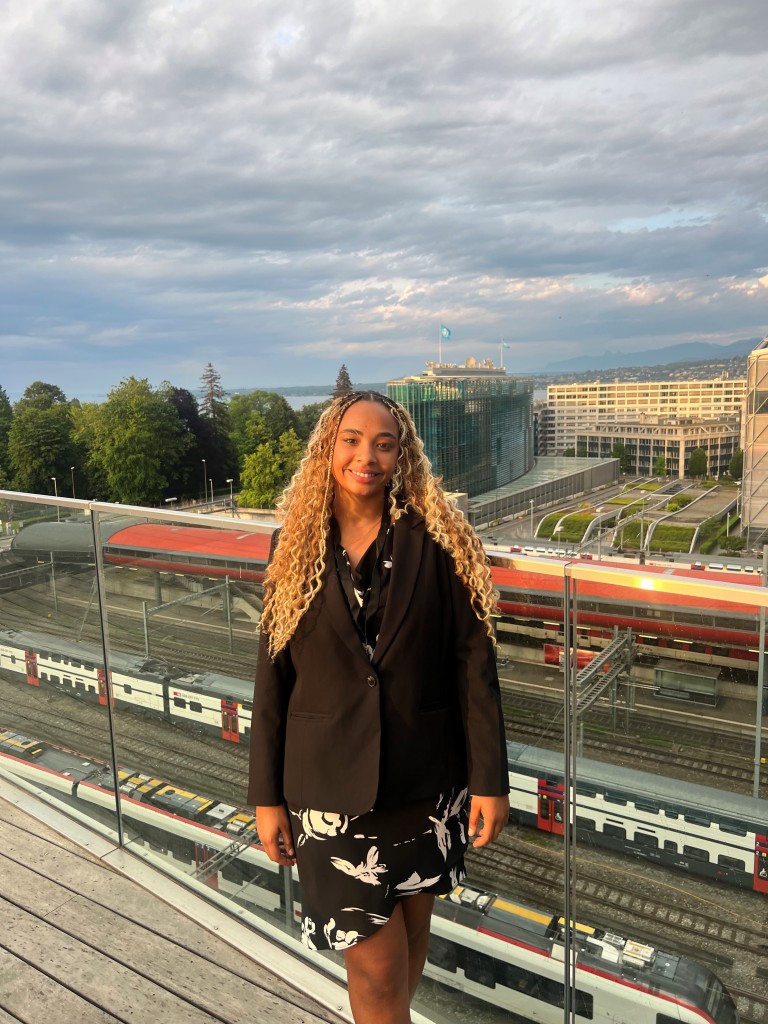
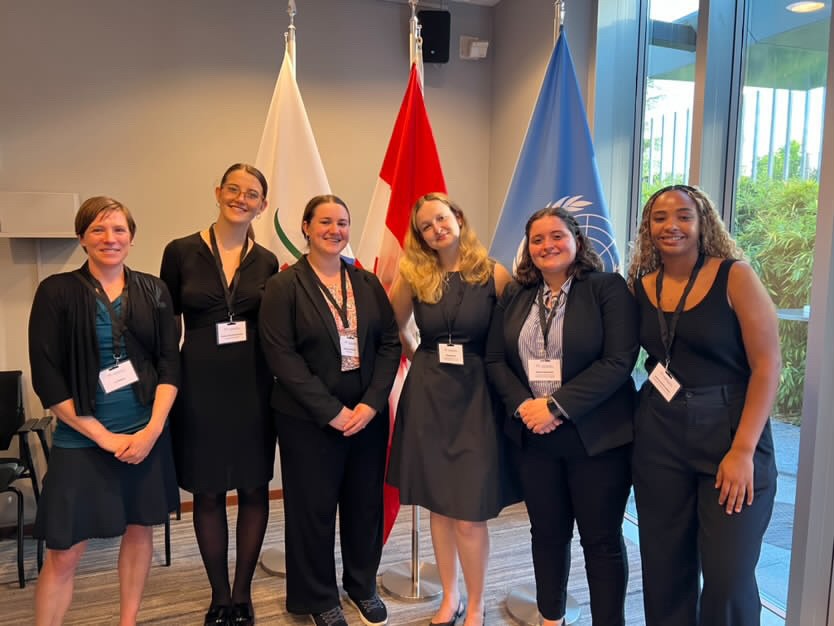
University of Georgia School of Law student, rising 2L Aubrey “Ellie” Wilson-Wade, recently attended the American Society of International Law (ASIL)’s 2024 ASIL Abroad meeting on June 5-6 at the University of Geneva in Geneva, Switzerland. The two-day conference consisted of dual parallel tracks on Human Rights, International Humanitarian Law, International Criminal Law (Track 1) and International Dispute Resolution & International Economic Law (Track 2). Georges Abi-Saab (honorary professor at The Geneva Graduate Institute) delivered a keynote speech, with Laurence Boisson de Chazournes (University of Geneva) as discussant. Below, Wilson-Wade reflects on her experience as an attendee of the conference. Georgia Law is an academic partner of ASIL.
I am so grateful to have had the opportunity to attend the 2024 ASIL Abroad Conference in Geneva, Switzerland. I was able to attend sessions in both track 1 and track 2, as I have an interest in both tracks’ topics. The most memorable sessions that I attended included “Enforcement of Arbitral Awards Rendered Against States” and “Compensation in International Law.” Additionally, I was able to see a mock arbitration related to growing tensions between investment treaties and environmental protection. These panels taught about investment and trade disputes in international law.
My favorite session was titled “Gender, Sexualized Violence, and Conflict: Incorporating the Women, Peace, and Security Agenda into Global Atrocity Prevention Efforts.” The panelists, including Priya Gopalan, Vanessa Murphy, and Dalila Seoane, were able to share their firsthand knowledge and experience working on issues related to gender-based violence.
Overall, the conference was a once-in-a-lifetime learning experience and every panel had an array of diverse perspectives and ideas. Not only was the substantive portion of the conference great, but I also met so many legal professionals and students during my time in Geneva. In just two days, I was able to connect with students attending law school throughout the United States, as well as from schools in England, Brazil, and Geneva. I was also able to network with legal professionals from all over the world.
As a first-year law student, it was a unique opportunity to learn about intricacies of international law outside of the typical classroom setting from professionals in the field. Additionally, it was a great way to make connections with international lawyers and law students. I would highly recommend any student who wishes to globalize their legal perspective and education to attend this conference.
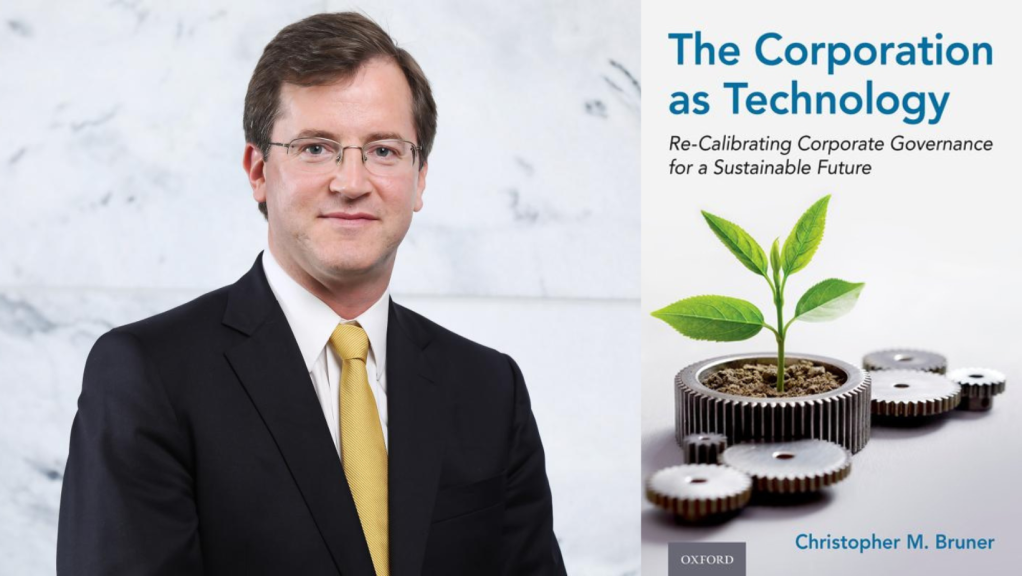
Recent decades have witnessed environmental, social, and economic upheaval, with major corporations contributing to a host of interconnected crises. The Corporation as Technology examines the dynamics of the corporate form and corporate law that incentivize harmful excesses and presents an alternative vision to render corporate activities more sustainable.
The corporate form is commonly described as a set of fixed characteristics that strongly prioritize shareholders’ interests. This book subverts this widely held belief, suggesting that such rigid depictions reinforce harmful corporate pathologies, including excessive risk-taking and lack of regard for environmental and social impacts. Instead, corporations are presented as a dynamic legal technology that policymakers can re-calibrate over time in response to changing landscapes.
This book explores the theoretical and practical ramifications of this alternative vision, focusing on how the corporate form can help secure an environmentally, socially, and economically sustainable future.
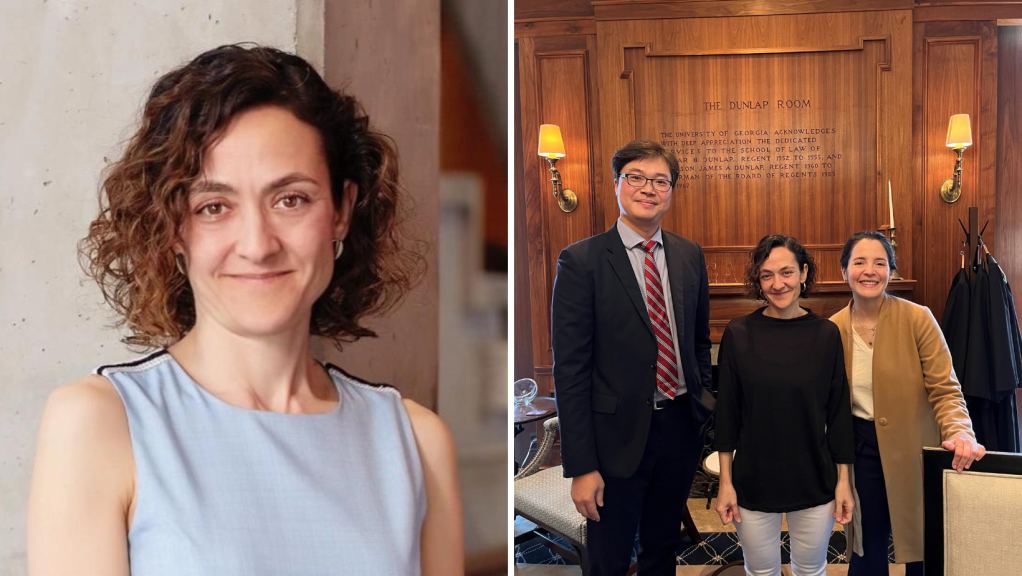
The Dean Rusk International Law Center Visiting Researcher for 2023-2024, Mine Turhan, Assistant Professor of Administrative Law in the Faculty of Law at the Izmir University of Economics in Türkiye, recently concluded her research year at the University of Georgia School of Law under the supervision of Georgia Athletic Association Professor in Law David E. Shipley. Below are some of Turhan’s reflections on her research findings regarding administrative procedure and procedural fairnessat Georgia Law.
I was a visiting researcher at the University of Georgia School of Law and the Dean Rusk International Law Center for my post-doc research during 2023-2024 academic year.
My research was related to administrative procedure and procedural fairness. The concept of administrative procedure serves a dual purpose within a legal framework. Primarily, it defines and establishes the limits of the authority of administrative agencies by outlining the structured steps and processes they must follow. Simultaneously, administrative procedure prevents arbitrary actions of agencies by ensuring accurate decisions by the proper application of the law to the facts. This dual function promotes transparency, fairness, and accountability in the functions of administrative agencies.
My research focused on the right to be heard in administrative procedure, and administrative hearings during the process of individual measures which would adversely affect the person concerned. I looked specifically at American and European procedural rights in adjudicative proceedings, in particular the right to be heard before administrative agencies. I tried to answer how procedural rights were protected by different administrative procedures in the U.S. and European countries against arbitrary actions of administrative agencies. I also tried to understand the administrative hearing procedures and components of hearings in common law and civil law systems.
Administrative procedure acts have a significant role in protecting the procedural rights. Therefore, I focused on the administrative procedure acts of different countries to find an answer. The U.S. Administrative Procedure Act, dated 1946, was helpful for my research. I have analyzed the court precedents regarding the right to be heard and I also have observed administrative hearings in U.S. to better understand administrative hearing procedures in U.S.
Throughout my time at the Dean Rusk International Law Center, I have been impressed by the dedication of the faculty, scholars, and staff to fostering a dynamic learning environment. The guidance and mentorship I received from Professor David Shipley has been instrumental in shaping my research. His expertise and encouragement have inspired me to push the boundaries of my intellectual curiosity and pursue excellence in my studies. The resources available at the School of Law, including the extensive library collections and research databases, have greatly enriched my research endeavors.
As I reflect on my time at the Dean Rusk International Law Center, I am filled with appreciation for the enriching experiences and lasting connections forged during my research. The skills and insights gained through my research studies will undoubtedly serve me well in my future endeavors, both academically and professionally.
I extend my heartfelt thanks to everyone at the Dean Rusk International Law Center and the University of Georgia School of Law for their support and encouragement. I am proud to have been a part of such an vibrant academic community and look forward to carrying forward the relationships formed as I embark on the next chapter of my journey.
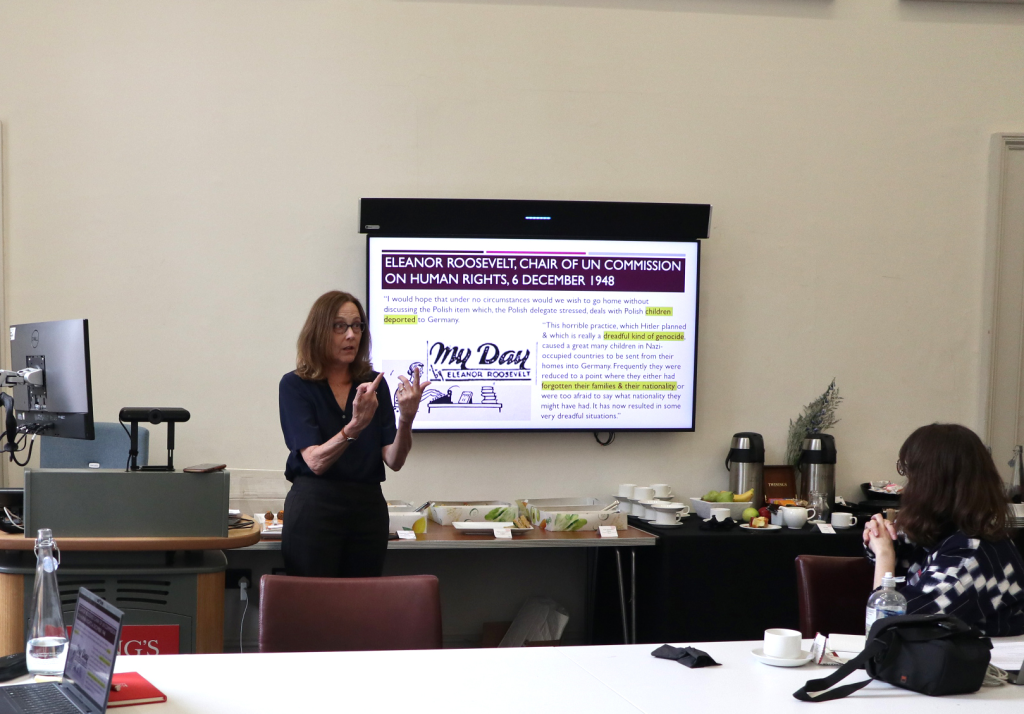
Professor Diane Marie Amann recently presented her research on “Child-Taking” during a Forced Separation Workshop at King’s College London, which cosponsored the event along with Queen’s University Belfast School of Law and the UK Gender, Justice and Security Hub.
Organizers of the workshop – Professor Fionnuala Ni Aolain, Dr. Rebekka Friedman, and Dr. Diana Florez – brought together a global array of participants who engaged in a multidisciplinary exploration of instances and consequences of separating families. Studied were contemporary and historical contexts across the globe. They included: armed conflict and similar violence; security, carceral, and migration detention; coerced schooling; enslavement; and illegal adoptions.
Amann’s talk drew from her article, “Child-Taking,” soon to be published in the Michigan Journal of International Law. (Preprint draft available at SSRN.) As Amann theorizes it, child-taking occurs when a state or similarly powerful entity abducts children from their community and then endeavors to remake the children in its own image. This conduct, involving children taken from Ukraine, lies at the heart of the International Criminal Court warrants pending against President Vladimir Putin and another top Russian official. The article also examines other examples of the phenomenon, including the Nazis’ kidnappings of non-German children during World War II and the forced placement of Indigenous children into boarding schools in North America, Australia, and elsewhere.
Amann is Regents’ Professor of International Law, Emily & Ernest Chair in International Law, and Faculty Co-Director of the Dean Rusk International Law Center here at the University of Georgia School of Law. She writes and teaches in areas including child and human rights, constitutional law, transnational and international criminal law, and global legal history.


 exchange of notes