UGA Law clinics continue efforts on behalf of immigrant women alleging abuse, retaliation while in ICE detention

The University of Georgia School of Law clinics’ faculty and students, including Jason A. Cade, Associate Dean for Clinical Programs and Experiential Learning, and Kristen Shepherd, Community Health Law Partnership Clinic Staff Attorney of the Community HeLP Clinic, have continued their advocacy on behalf of women clients who are challenging the abuses they endured while in U.S. immigration detention.

As previously posted UGA Law’s Community HeLP Clinic and First Amendment Clinic have pursued administrative, judicial, and advocacy paths in support of women who had been in the custody of U.S. Immigration and Customs Enforcement (ICE) at the Irwin Detention Center, a privately run facility in south Georgia. While there, the women were subjected to nonconsensual medical procedures. Those who spoke out were met with retaliatory acts, including attempted or actual removal from the United States. For more than two years, the UGA Law clinics have represented these women in judicial and administrative proceedings.

The Community HeLP Clinic made significant progress in recent months on behalf of several women who experienced nonconsensual medical procedures while detained by ICE. These efforts included ongoing advocacy before a State Clemency Office, representation before immigration court on behalf of a woman who was unjustly deported, and successful advocacy before the Board of Immigration Appeals to reopen a third woman’s removal proceedings. The Clinic continues to represent these women and others in a putative class action lawsuit relevant to their allegations of medical abuse and retaliation. More information on these successes and engagements can be found here.

The Community HeLP Clinic is centered around interdisciplinary advocacy that focuses on immigration status and health, noncitizen workers and detainees, and public education. Along with overseeing the law school’s 11 in-house clinics and 7 externship programs, Cade directs the Clinic and aids law students in undertaking an interdisciplinary approach to immigrants’ rights through individual client representation, litigation, and project-based advocacy before administrative agencies and federal courts. Shepherd supervises students as they engage in a variety of services including interviewing and advising clients, conducting research and drafting legal documents, advocating in court proceedings and administrative hearings, and collaborating with legal and medical professionals in the community.

From classmates to colleagues: LL.M. alumna Rawdha Hidri (LL.M. ’23) and 2L Carolina Mares reflect on summer work experience together

Through the Global Externships Overseas (GEO) initiative administered by the Dean Rusk International Law Center, 2L Carolina Mares spent her summer working in international arbitration at the Houerbi Law Firm in Tunis, Tunisia. In this placement, Ms. Mares worked under the supervision of Rawdha Hidri, a Fulbright recipient who completed her Master of Laws (LL.M.) at UGA Law in May 2023.

While it is not uncommon for our J.D. students to work under our LL.M. alumni/ae in GEO placements, this is the first experience in recent memory when they had the opportunity to meet on-campus and learn together as classmates prior to their experience abroad. Below, Mares and Hidri describe their experiences participating in the GEO from the perspectives of student and supervisor, respectively. Responses have been edited for length and clarity.   

* * * *

Carolina Mares, 2L

What initially interested you about the Global Externships Overseas (GEO) initiative?

With the desire to practice international law in my career moving forward, I knew that the GEO initiative was an incredible opportunity designed to encourage me to explore one potential avenue for my future. I was torn between pursuing summer work in public international law or looking for a firm that would give me some experience in international arbitration. However, when I heard about the possibility of focusing exclusively on international arbitration at Houerbi Law Firm, my mind was set.

What was your GEO experience like?

This summer, I worked at Houerbi Law Firm in Tunis, the capital of Tunisia. The firm specializes in commercial international arbitration and operates between Tunis and Paris with a focus on disputes in Europe, the Middle East, and Africa. My work consisted of reading case dockets, synthesizing parties’ positions, analyzing factual and legal exhibits, drafting an answer to a request for document production, and writing appropriate parts of an award. What I enjoyed most was the novelty of each case I got to work on. The parties in the disputes ranged from state to private parties in the UAE, Italy, Jordan, Iran, Malaysia, Tunisia, Turkey, and Morocco. I also had the chance to learn about all sorts of industries, including oil and gas, gold and fine jewelry manufacturing, and government procurement.

In addition to Rawdha, Mr. Houerbi was a phenomenal mentor to me during my time in Tunisia. With sixteen years of experience as the Arbitration and ADR Director of the ICC for the Mediterranean, the Middle East, and Africa, his positive and direct feedback played an important role in shaping my work and experience at the firm. He often invited me to sit in on team meetings that did not pertain to my particular cases so that I could gain exposure to as many disputes as possible, and he encouraged me to observe all of the virtual hearings that took place this summer.

How do you envision your GEO contributing to your academic and professional goals?

Taking part in the GEO has already impacted my professional trajectory. First, I now know that I enjoy the work involved in international arbitration, and I can picture myself pursuing a career in this practice area. Second, I’m convinced that my participation in a GEO is the reason I landed a 2L summer job fairly quickly, as it was the hot topic in all of my interviews. But more importantly, the GEO gave me a chance to take a deep dive into a niche area of law that is difficult to get into as a novice, especially in the Atlanta area. In addition to delving into international arbitration, the GEO program allowed me to develop my confidence navigating across cultures all while improving my French skills in a captivating work environment.

What was the best part of participating in a GEO?

The highlight of my GEO experience was making deep connections with my colleagues and experiencing day-to-day life in an incredibly rich culture that was brand new to me. Besides taking on the role of mentor, Rawdha was also my cultural guide. She introduced me to the coastal neighborhoods of Tunis, invited me to join her family and friends on the weekend for a shopping expedition in the Medina, pointed out the flocks of flamingos flying by in V-formation as we lounged on the beach, and took me sightseeing in Hammamet where we attended an amateur Opera concert at the Dar Sebastian villa overlooking the Mediterranean. In short, the best part of doing a GEO was getting a feel for the flow of life in Tunis and growing in my cultural competency, all of which I owe in big part to Rawdha’s support as my mentor and host.

* * * *

Rawdha Hidri (LL.M., ’23)

What interested you in serving as a placement supervisor for a GEO?

My time at UGA Law was so formative, I was eager to reciprocate and provide inquisitive American J.D. students with an experience as enriching as the one that I had in Athens. I strongly believe that immersing oneself in new experiences and can be influential on both personal and professional levels. Throughout my journey at UGA Law, I embraced the role of an informal cultural ambassador for my country Tunisia. The GEO initiative emerged as an ideal opportunity for both providing American J.D. students with professional experiences in a distinct legal framework and within a specific geopolitical context and with rich cultural immersion in my home country.

How did hosting a UGA Law student contribute to your firm’s work?

Carolina’s ability to methodically structure and articulate her thoughts has been a valuable addition to our team dynamics. Her innate attention to detail was evident from the outset, as she engaged diligently with the tasks assigned to her. Encouraging her to delve further and uncover nuances within cases became a rewarding challenge, showcasing her dedication to thorough exploration.

How did you approach integrating a UGA Law student into the local community and culture?

In the spirit of fostering a sense of belonging, I took it upon myself to introduce Carolina to the richness of Tunisian culture, ensuring she tried traditional Tunisian cuisine and experienced the crystal-clear waters of the Mediterranean. The entire team enthusiastically engaged in this process, sharing suggestions of places to visit, offering language lessons, and collectively enjoying lunches together outside the office on a weekly basis. This collaborative approach not only enhanced Carolina’s integration but also fostered a supportive and inclusive environment, benefitting both her and the entire team.

What did you enjoy about serving as a supervisor for a GEO?

Serving as a supervisor for a GEO was incredibly rewarding on a personal level. It expanded upon my own Fulbright journey that I started at UGA Law, allowing me to share my perspective and insights with someone eager to learn. The most fulfilling aspect was knowing that the student I hosted would carry their experiences in Tunisia with them, and that perspective would continue to guide them in their professional pursuits. This connection ensures a lasting impact, creating a sense of continuity and mutual understanding that extended beyond the program itself.

* * * *

Global Externships Overseas (GEOs) are four-to-twelve week summer placements in diverse areas of legal practice around the world. Students return to Athens with new colleagues and mentors, legal practice skills, and a deeper appreciation of the global legal profession. Over the last fifteen years, more than 200 UGA Law students have completed a GEO. Students secure placements tailored to their career goals with the aid of the Dean Rusk International Law Center.

For more information about GEOs, visit our website.
Welcoming the newest class of Master of Laws (LL.M.) students to UGA Law

With the Fall 2023 semester in full swing, we at the Dean Rusk International Law Center are proud to welcome another class of talented lawyers, now studying for our University of Georgia School of Law Master of Laws (LL.M.) degree.

The group of 18 hails from 14 different countries in Africa, Asia, Europe, and the Americas, including Nigeria, Ethiopia, India, Germany, Argentina, Romania, Brazil, Russia, Côte d’Ivoire, Ukraine, Ghana, China, Bangladesh, and Afghanistan. Among them are lawyers and other professionals specializing in a wide range of fields including corporate law, alternative commercial dispute resolution, immigration law, bankruptcy law, family law, corporate sports law, international trade, business law, cybersecurity and digital fraud, refugee and asylum law, technology law, tax law, and criminal law.

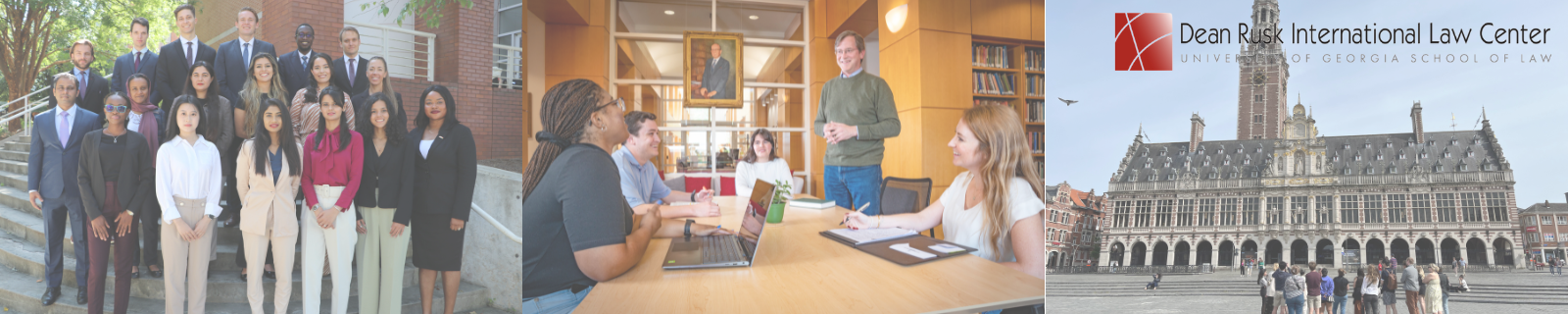
They are pictured above, standing on the steps of Dean Rusk Hall. From the left to right – top row: Daniel Danca, Bohdan Krivuts, Savelii Elizarov, Cornelius Bulanov, N’guessan Clément Kouame, Jonas Römer; middle row: Md Mushfiqur Rahman, Eman Abdella Ali, Quraisha Sherzad, Raissa dos Santos Bastos Rolim, Gracia Varinia Rojas Mina Bogliotti, Agostina Calamari; bottom row: Victoria Agbakwuru, Xinyi Nie, Shivani Ravi Prakash, Naina Bishnoi, Amanda Pinto, and Lydia Lartey.

This Class of 2024 joins a tradition that began at the University of Georgia School of Law in the early 1970s, when a Belgian lawyer became the first foreign-trained practitioner to earn a UGA Law LL.M. degree. In the ensuing four decades, the law school and its Dean Rusk International Law Center have produced nearly 600 LL.M. graduates, with ties to nearly 100 countries and every continent in the world.

Side by side with J.D. candidates, LL.M.s follow a flexible curriculum tailored to their own career goals – goals that may include preparation to sit for a U.S. bar examination, or pursuit of a concentration affording advancement in their home country’s legal profession or academic institutions.

The application for the LL.M. Class of 2025 is now open; for information or to apply for LL.M. studies, see here.

UGA Professor Ramnath publishes first book, “Boats in a Storm: Law, Migration, and Decolonization in South and Southeast Asia, 1942–1962”

Kalyani Ramnath, Assistant Professor in the Department of History at the Franklin College of Arts & Sciences and Assistant Professor (by courtesy) at UGA Law, is publishing her first book, Boats in a Storm: Law, Migration, and Decolonization in South and Southeast Asia, 1942–1962, with Stanford University Press.

Below is a description of the book:

For more than century before World War II, traders, merchants, financiers, and laborers steadily moved between places on the Indian Ocean, trading goods, supplying credit, and seeking work. This all changed with the war and as India, Burma, Ceylon, and Malaya wrested independence from the British empire. Set against the tumult of the postwar period, Boats in a Storm centers on the legal struggles of migrants to retain their traditional rhythms and patterns of life, illustrating how they experienced citizenship and decolonization. Even as nascent citizenship regimes and divergent political trajectories of decolonization papered over migrations between South and Southeast Asia, migrants continued to recount cross-border histories in encounters with the law. These accounts, often obscured by national and international political developments, unsettle the notion that static national identities and loyalties had emerged, fully formed and unblemished by migrant pasts, in the aftermath of empires.

Drawing on archival materials from India, Sri Lanka, Myanmar, London, and Singapore, Kalyani Ramnath narrates how former migrants battled legal requirements to revive prewar circulations of credit, capital, and labor, in a postwar context of rising ethno-nationalisms that accused migrants of stealing jobs and hoarding land. Ultimately, Ramnath shows how decolonization was marked not only by shipwrecked empires and nation-states assembled and ordered from the debris of imperial collapse, but also by these forgotten stories of wartime displacements, their unintended consequences, and long afterlives.

On September 21 at 4:00 pm, at the University of Georgia Zell Miller Learning Center, a book release and reception will be held in honor of Professor Ramnath’s work. This event is open to the public.

Welcoming Mine Turhan, Visiting Scholar at UGA Law’s Dean Rusk International Law Center

We at the University of Georgia School of Law Dean Rusk International Law Center are pleased to welcome a new Visiting Research Scholar: Mine Turhan, Assistant Professor of Administrative Law in the Faculty of Law at the Izmir University of Economics in Türkiye. She holds an LL.M. degree and a Ph.D. in Public Law from Dokuz Eylül University in Izmir, Türkiye.

Professor Turhan plans to conduct research on comparative administrative procedure between the United States and the European Union during her stay at the Dean Rusk International Law Center. Her project will focus on procedural due process rights, in particular the right to be heard before administrative agencies, and it will analyze how individual rights are protected by different procedures in the U.S. and the European Union against arbitrary actions on the part of administrative agencies.

Professor Turhan is sponsored as a Visiting Research Scholar by UGA Law Professor David E. Shipley, the Georgia Athletic Association Professor in Law. Professor Shipley teaches administrative law and civil procedure.

Turhan’s research is supported by a fellowship from the Scientific and Technological Research Council of Türkiye (TÜBİTAK) within the scope of the International Postdoctoral Research Fellowship Program. Her visit continues our Center’s long tradition of hosting scholars and researchers whose work touches on issues of international, comparative, or transnational law. Details and an online application to become a visiting scholar here.

Welcoming Ammar Zafar, Visiting Scholar at University of Georgia School of Law

We at the University of Georgia School of Law Dean Rusk International Law Center are pleased to welcome a new Visiting Research Scholar: Ammar Zafar, a PhD candidate at the University of Liverpool in the United Kingdom.

Zafar’s doctoral research focuses on the potential of central bank digital currencies, implemented through blockchain technology with the aim of establishing an inclusive and sustainable monetary system. While at the Dean Rusk International Law Center, he plans to conduct comparative research on how U.S. financial regulations and Federal Reserve fiscal policies address legal and macroeconomic issues related to CBDCs and blockchain technology. Zafar holds a master’s degree in Banking and Corporate Finance and a Master of Laws (LL.M.) degree in Legal Practice from Britain’s University of Bristol, as well as a bachelor’s degree in Business Economics from Karnataka State University, India, and an LL.B. degree from BPP Law University in London.

Serving as Zafar’s Georgia Law faculty sponsor will be Professor Usha Rodrigues, who holds the M.E. Kilpatrick Chair of Corporate Finance and Securities Law.

Zafar is visiting pursuant to an institutional partnership between the University of Liverpool and the University of Georgia. His visit continues our Center’s long tradition of hosting, for brief or extended stays, scholars and researchers whose work touches on issues of international, comparative, or transnational law. Details and an online application to become a visiting scholar here.

Georgia Law Professor Hellerstein presents on crypto-assets at OECD

Walter Hellerstein, Distinguished Research Professor and Shackelford Distinguished Professor Emeritus in Taxation Law here at the University of Georgia School of Law, spoke this month at a gathering of the Organisation for Economic Co-operation and Development in Paris, France.

Hellerstein presented “Crypto-Assets: Key Concepts and Terms,” a paper he co-authored with a member of the Secretariat, at a meeting of the OECD Working Party No. 9 on Consumption Taxes.

Georgia Law Dean Rutledge and student Rudzinskyi comment on appeals decision affecting international arbitration

A decision in which the U.S. Court of Appeals for the Eleventh Circuit overturned its precedent regarding international arbitration awards, and thus ruled in line with other federal appellate courts, is the subject of a new commentary by  Peter B. “Bo” Rutledge (above left) and student Vladyslav Rudzinskyi, a member of the Master of Laws (LL.M.) Class of 2023.

Their article, entitled “Eleventh Circuit Switches Stance on Grounds for the Vacatur of Non-Domestic Awards,” appeared on May 11 in the Daily Report.

The article discusses Corporacion AIC, SA v. Hidroelectrica Santa Rita S.A., an en banc April 13, 2023, decision in which the Eleventh Circuit set aside panel precedents to hold that vacatur proceedings related to non-domestic awards are governed by chapter 1 the Federal Arbitration Act. Noting that the new decision corresponds with others in the Second, Third, Sixth, and Tenth Circuits, Rutledge and Rudzinskyi concluded noted:

“Previously, arbitration practitioners in the Eleventh Circuit (especially hubs like Atlanta and Miami) could tout its distinctive vacatur standards as a reason to site disputes there.

“Those standards had aligned the Eleventh Circuit with international jurisdictions following the UNCITRAL Model Arbitration Law (whose vacatur standards track those under the New York Convention). Corporacion strips the Eleventh Circuit of that potential comparative advantage as an arbitral forum.”

They further warned that “[t]he new standard risks diluting the enforceability of international awards.”

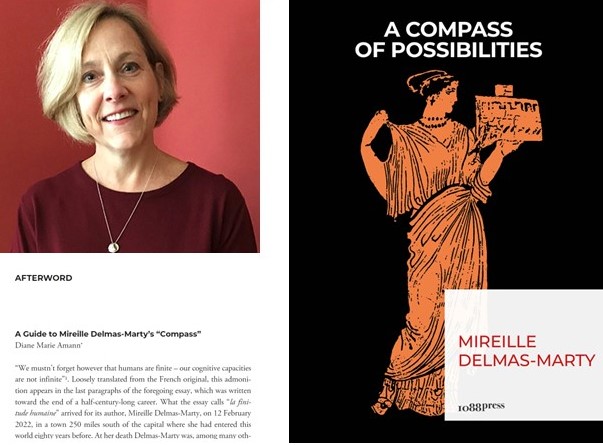
Georgia Law Professor Amann publishes afterword to new volume translating work by legal thinker Mireille Delmas-Marty

University of Georgia School of Law Professor Diane Marie Amann contributed the afterword to a just-published volume featuring an English translation of an important work by the late Mireille Delmas-Marty (1941-2022), Collège de France de Paris law professor and one of the pre-eminent legal thinkers of her generation.

Co-editors of the volume, A Compass of Possibilities, are law professors Emanuela Fronza (University of Bologna, Italy) and Chiara Giorgetti (University of Richmond). Fronza also wrote an Epilogue to the main work. Subtitled “Global Governance and Legal Humanism,” the book offers, in translation, Delmas-Marty’s 2011 closing lecture at Collège de France, entitled “Une boussole des possibles. Gouvernance mondiale et humanismes juridiques.” Publishing the new work is 1088 Press, a University of Bologna imprint.

Amann – who is Regents’ Professor of International Law, Emily & Ernest Woodruff Chair in International Law, and a Faculty Co-Director of our Dean Rusk International Law Center here at Georgia Law – was a longtime colleague of Delmas-Marty. Amann’s role in their collaborations included a year-long stint as professeure invitée at Université de Paris 1 (Panthéon-Sorbonne), where Delmas-Marty then taught; a lecture at Collège de France; and annual participation in a decade of gatherings of the Réseau ID franco-américain/French-American Network on the Internationalization of Law.

Amann’s afterword is titled “A Guide to Mireille Delmas-Marty’s “Compass'”; it appears at pp. 55-64 of the new volume. Here’s the abstract from a pre-publication version of Amann’s afterword, available at SSRN:

“This essay appears as the Afterword (pp. 55-64) to a volume featuring an important work by the late Mireille Delmas-Marty (1941-2022). A Collège de France de Paris law professor and one of the pre-eminent legal thinkers of her generation, Delmas-Marty and the essay’s author were longtime colleagues and collaborators. The volume contains an English translation of a 2011 lecture by Delmas-Marty, originally titled “Une boussole des possibles: Gouvernance mondiale et humanismes juridiques.” Amann’s essay surveys that writing, in a manner designed to acquaint non-francophone lawyers and academics with Delmas-Marty’s vast and visionary œuvre.”

Georgia Law Professor MJ Durkee’s “The Pledging World Order” published in new Yale Journal of International Law issue

The latest publication by University of Georgia School of Law Professor Melissa J. “MJ” Durkee is now in print at Yale Journal of International Law.

The article by Durkee, who is Associate Dean for International Programs, Director of the Dean Rusk International Law Center, and Allen Post Professor here at Georgia Law, is “The Pledging World Order,” 48 Yale J. Int’l L. 1 (2023).

Here’s the SSRN abstract:

“There is an emerging world order characterized by unilateral pledges within a legal or ‘legal-ish’ architecture of commitments. The pledging world order has materialized in the international legal response to climate change and in other diverse sites. It crosses and blurs the public-private divide. It erodes distinctions between multilateralism and localism, law and not-law, and progress and stasis. It is both a symptom of and a contributor to the dismantling of the Westphalian and postwar orders. Its report card is mixed: While pledging can be highly ineffective as a legal technology, the pledging world order may respond to some legitimacy concerns that attach to earlier orders. And this may be the best available method to respond to important global commons problems like climate change, biodiversity loss, orbital debris, and other emerging issues.

“This Article makes three principal contributions. First, it identifies pledging as a treaty design choice and contrasts it with a variety of standard forms of international lawmaking. Second, it casts pledging as a trans-regime, trans-substantive ordering device that appears both inside and outside of law, in public and private sites, and at all levels of organization. Third, it identifies features of the world order that pledging reflects. Specifically, the pledging world order privileges function over status, departs from the top-down methods of deep cooperation common to the postwar legal order, and embraces a form of coordinated autonomy. Reformers might make design choices to improve this order, try to reclaim features of older orders, or reject both paths and turn to something new.”

Prior posts on Durkee’s presentations of this scholarship here.