Georgia Law 3L Davis Wright on his externship in Virginia: “My time at NATO helped me grow as an aspiring lawyer, law student, and person.”

Pleased today to welcome this post by University of Georgia School of Law student Davis Wright, who describes his just-completed his Fall 2021 externship in Norfolk, Virginia, in the legal department of HQ SACT, a leading unit of the North Atlantic Treaty Organization. This externship is administered by our law school’s Dean Rusk International Law Center in partnership with NATO Allied Command Transformation. Davis arrived at Georgia Law with a background in international relations and politics, having competed in Model United Nations and worked for a member of the Dáil Éireann. His experiences at Georgia Law have included service as a Dean Rusk International Law Center Student Ambassador and J.D.-to-LL.M. liaison. He is due to receive his J.D. degree this May, and then to begin practice as an Associate at the Atlanta office of Jones Day.

Working in the Office of the Legal Advisor at the North Atlantic Treaty Organization (NATO) Headquarters Supreme Allied Commander Transformation (HQ SACT) in Norfolk, Virginia, was an exciting and rewarding experience. In the time I was at HQ SACT I grew substantially, in personal, academic, and professional aspects.

Personal growth

During the time I spent at HQ SACT, I was exposed to a diverse range of ideas and people. While the Chief Legal Advisor at HQ SACT is American, there is a French Legal Advisor, a Dutch Legal Advisor, and a Turkish intern. All of these interactions were valuable to me as I was exposed to cultural and legal perspectives from their home nations. 

My interactions at the office likewise gave me exposure to a diverse set of views on a variety of topics, ranging from the insignificant, such as musical preferences, to the significant, such as views on the war in Afghanistan and NATO’s involvement in it. These new friendships, and sometimes deep discussions, helped me grow as a person and challenged my views and perspective of the world.

Academic growth

As one part of my externship at HQ SACT, I participated in a once-a-week seminar course with Georgia Law Professor Diane Marie Amann, who is a Faculty Co-Director of the Dean Rusk International Law Center. We discussed a variety of topics through weekly readings on different areas of international law. Highlights included the role of the legal advisor in armed conflict, rules of engagement, and immunities of international organizations in domestic courts. Most of these subjects were new to me, and the weekly seminar helped build my knowledge and challenge my perspective on different international legal issues.

I am especially pleased that I was encouraged to lead the discussions in this seminar and to select readings for subjects that I find of interest. This encouragement to be curious and take a leading role also helped me grow academically.

Professional growth

The experience at HQ SACT was completely new for me as I had never before worked in the national security sector or for an international organization. My time in the legal office was largely split into two categories, as follows:

  • Legal assistance: During the mornings I was assigned to legal assistance work. This is essentially all the support elements that the office provides to both civilian and military personnel at HQ SACT. This work varies depending on who walks through the door, but includes a large amount of immigration work.  These experiences provided me an appreciation of the multitude of legal issues that foreign personnel face during their time in the United States. Additionally, these experiences provided me valuable client interaction that will assist my future career.
  • Legal projects: In the afternoons I worked on projects for the legal advisors. These projects varied considerably. For example, I had the opportunity to work on an overhaul to the general terms and conditions throughout HQ SACT and its subordinate commands, and to research whether NATO information is protected under U.S. laws against espionage. These projects all challenged me and provided an opportunity to make a substantial impact during my time at HQ SACT.  

In short, my time at NATO helped me grow as an aspiring lawyer, law student, and person. I am sure I will use the experiences I have gained so far at NATO in my future career.

I am extremely grateful that the Dean Rusk International Law Center and the University of Georgia School of Law allowed me to partake in this unique experience. Specifically, I would like to thank the Center’s Associate Director for Global Practice Preparation, Sarah Quinn, and Professor Amann, for their valuable guidance. I would also like to thank everyone at HQ SACT, especially Theresa Donahue, Kathy Hansen-Nord, Monte DeBoer, Butch Bracknell, Mette Hartov, Vincent Grassin, and Muge Karatas.

Georgia Law Professor Zohra Ahmed publishes on Pakistan, United States & global war on terror at LPE Blog

Zohra Ahmed, who is an Assistant Professor of Law here at the University of Georgia School of Law, posted “Towards a Law and Political Economy Approach to the Global War on Terror” at the LPE Blog published by The Law and Political Economy (LPE) Project, housed at Yale Law School.

Here’s the abstract:

“To ensure support for its Global War on Terror, the United States has exploited the Pakistani government’s reliance on foreign credit to guarantee cooperation in US counterinsurgency operations. In leveraging its role as a lender to provide Pakistan with short-term financial relief, the United States has deepened Pakistan’s economic dependency, undermined the nation’s chance for a more equal domestic political and economic arrangement, and consolidated the power of its domestic military elite.”

Professor Ahmed’s full essay, posted last Wednesday, is available here.

Georgia Law Professor Walter Hellerstein presents on value added tax in International Monetary Fund webinar

Walter Hellerstein, Distinguished Research Professor & Shackelford Distinguished Professor in Taxation Law Emeritus here at the University of Georgia School of Law, presented last Tuesday in a webinar entitled “VAT and the Digital Economy,” organized by the International Monetary Fund as part of its ongoing VAT Webinar Series. More than 500 participants from countries around the world attended.

Hellerstein spoke on “Taxing digital economy: VAT vs. CIT and DST,” as part of a panel moderated by Katherine Baer of the IMF. Also on the panel were experts based in Australia, Panama, and South Africa.

The webinar program is here.

Georgia Law Professor Harlan Cohen on “Metaphors of International Law”

Harlan G. Cohen, Gabriel M. Wilner/UGA Foundation Professor in International Law and Faculty Co-Director of the Dean Rusk International Law Center at the University of Georgia School of Law, has posted “Metaphors of International Law”, to appear in International Law’s Invisible Frames – Social Cognition and Knowledge Production in International Legal Processes.

Set to be published by Oxford University Press in 2021, the volume is co-edited by Andrea Bianchi, Professor of International Law at Switzerland’s Graduate Institute Geneva, and Moshe Hirsch, Maria Von Hofmannsthal Chair in International Law at the Hebrew University of Jerusalem.

Cohen presented the essay at a European Society of International Law workshop in Israel last December (prior post).

Here’s the abstract:

This chapter explores international law in search of its hidden and not-so-hidden metaphors. In so doing, it discovers a world inhabited by states, where rules are mined or picked when ripe, where trade keeps boats forever afloat on rising tides. But is also unveils a world in which voices are silenced, inequality is ignored, and hands are washed of responsibility.

International law is built on metaphors. Metaphors provide a language to describe and convey the law’s operation, help international lawyers identify legal subjects and categorize situations in doctrinal categories, and provide normative justifications for the law. Exploring their operation at each of these levels, this chapter describes the ways metaphors allow international lawyers to build a shared, tangible universe of legal meaning. But it also reveals how metaphors simultaneously help hide international law’s dark side, blind international lawyers to alternative ways of organizing the world, and prejudge legal outcomes. Metaphors, a key building block of the international law we know, become key also to its demolition, restoration, or remodeling.

The chapter is now available at SSRN.

UGA Professor Jonathan Peters Participates in Expert Workshop on the ICCPR at Cambridge

JP headshot (1).jpgJonathan Peters, a media law professor with appointments in the School of Law and the Grady College of Journalism and Mass Communication, was among 34 scholars, policy leaders, and United Nations officials who participated in an expert workshop last week at the University of Cambridge on the right to peaceful assembly.

2019-12-04_11-36-49_243The workshop’s purpose was to support the U.N. Human Rights Committee by informing its drafting of General Comment No. 37 on Article 21 of the International Covenant on Civil and Political Rights. Article 21 guarantees the right of peaceful assembly, and the General Comment will provide an authoritative interpretation of that right as well as substantive guidance to ensure its practical enjoyment.

One significant open question is whether General Comment No. 37 will recognize the Internet as a space where assemblies occur—on social media platforms and through other information and communication technologies. Participants exchanged ideas about whether and how Article 21 could be interpreted to protect virtual assemblies.

Peters, whose research explores digital media and the law, discussed the state action doctrine in U.S. law and how it distinguishes public and private action, along with the history and evolution of the public forum doctrine and its application to physical and virtual spaces.

Other workshop participants came from the U.N. Human Rights Committee, the Office of the U.N. High Commissioner for Human Rights, the Organization for Security and Co-operation in Europe, the Office for Democratic Institutions and Human Rights, the European Center for Not-for-Profit Law, the International Center for Not-for-Profit Law, Amnesty International, Article 19, and numerous universities.

Scholarly achievements, thriving initiatives featured in newsletter of Dean Rusk International Law Center

newletter_angle

For a recap of the year’s global law-and-practice accomplishments here at the University of Georgia School of Law, have a look at the just-published annual newsletter of the Dean Rusk International Law Center. Features include:

► Celebrating the scholarly achievements of our many other globally minded faculty and staff, including Diane Marie Amann, Christopher Bruner, Thomas V. Burch, Anne Burnett, Jason A. Cade, Nathan S. Chapman, Harlan G. Cohen, Kathleen A. Doty, Melissa J. Durkee, Walter Hellerstein, Lori Ringhand, Usha Rodrigues, and Peter B. “Bo” Rutledge.

► Events past and future, including day-long conferences cosponsored with the Georgia Journal of International & Comparative Law, public lectures and our Consular Series of lunch talks with Atlanta-based diplomats, cosponsorship of panels at regional and national international law meetings, and the upcoming International Law Colloquium Series.

► Initiatives aimed at preparing our J.D. and LL.M. students for global legal practice, including our Global Externships and our Global Governance Summer School, plus support for students’ organizations and international advocacy teams.

The full newsletter is here.

LLM alumna meets prospective students in Argentina

Last week our alumna Martina Lourdes Rojo (LLM ’04), a law professor in the faculty of judicial sciences at the Universidad del Salvador in Argentina, met with prospective LLM students in Buenos Aires.

1

EducationUSA is the US Department of State’s global network of educational advising centers that promotes the more than 4,700 accredited U.S. colleges and universities. Find the nearest advising center.

Part of a university fair sponsored by Education USA, an arm of the U.S. Department of State, the day offered an opportunity discuss the career benefits and special advantages of earning the Master of Law, or LL.M., degree at Georgia Law.

Students who missed it should feel free to email LLM@uga.edu to hear more about the flexible degree program. We are currently accepting applications and look forward to hearing from you!


Center’s Laura Kagel meets with prospective LLMs in Mexico

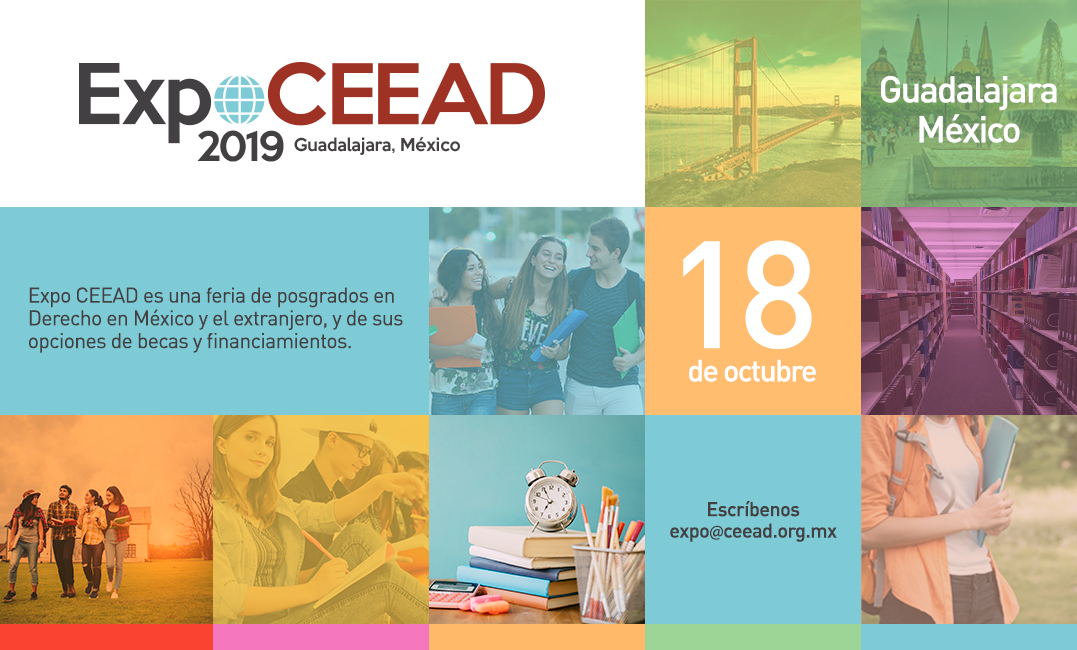
portada_esLaw students in Guadalajara, Mexico will have the opportunity to talk with a Dean Rusk International Law Center staffer about pursuing a degree at here at the University of Georgia School of Law.

Laura Tate Kagel, the Center’s Associate Director of International Professional Education, will give a presentation for students this evening, Friday, October 18, at 7:00 p.m. about the LL.M. degree at the University of Georgia.

She has spent the day at the Expo CEEAD (Centro de Estudios sobre la Enseñanza y el Aprendizaje del Derecho), speaking with prospective students about the career benefits and special advantages of earning the Master of Law, or LL.M., degree at Georgia Law. (See prior posts about our current LL.M. students, as well as our hundreds of LL.M. alums, here.)

If you’d like to learn more about the LL.M. degree, please email LLM@uga.edu. EXPO CEEAD information is available here.

Student Caroline Harvey wins cultural heritage writing competition

Caroline HarveyCaroline Harvey, a current third-year student at the University of Georgia School of Law, is one of two 2019 winners of the Lawyer’s Committee for Cultural Heritage Preservation Law Student Writing Competition in Cultural Heritage Law.

Harvey’s paper, “An Avenue for Fairness: Disclosure-Based Compensation Schemes for Good Faith Purchasers of Stolen Art,” argues that in art replevin actions, courts should take an additional step in their due diligence analyses and consider whether a good faith possessor of stolen artwork should be entitled to compensation after forfeiting artwork to the true owner. This, she argues, would “more fairly balance the equities between the parties and avoid total loss to the good faith purchaser.”

Harvey currently serves as the Executive Notes Editor for the Georgia Law Review. After her first year, she participated in the Global Governance Summer School, and she completed a Global Externship At-Home at the Antiquities Coalition in Washington, D.C.  Last summer, she worked for Norris Legal Atlanta Law Group. She holds a B.A. in Art History from the University of Georgia, and hopes to practice in the areas of cultural heritage and art law.

“The Future of Space Governance” conference will convene experts on October 28

17-098-Kepler-90_MultiExoplanetSystem-20171214On Monday, October 28, 2019, the Dean Rusk International Law Center and the Georgia Journal of International and Comparative Law at the University of Georgia School of Law will host a daylong conference to explore “The Future of Space Governance.” The conference will feature a keynote speech by Professor Emerita Joanne Irene Gabrynowicz, University of Mississippi School of Law, as well as panel discussions by academics and practitioners.

Participants will consider the following concept note:

International legal frameworks governing outer space developed under the conditions of a bi-polar, Cold War world, where the two great powers were the only spacefaring nations, and were engaged in a feverish race to space. The international agreements reflect the concerns of the time, primarily to prevent militarization and colonization of outer space. It seemed essential to keep the cold war out of space, and to keep it from going hot. Then, the U.S. made it to the moon, winning the race and effectively freezing space governance in Cold War terms.

Exactly half a century later, the world has changed, and so has space. A bi-polar world has gone multipolar, and an optimistic period of multilateralism has given way to a decline in robust international cooperation. Meanwhile, developments in outer space have exploded in complexity, ambition, and commercial promise. The number of entrants and potential entrants has proliferated: seventy-two nations now claim they have space agencies, and at least fourteen have orbital launch capabilities. One of the key new entrants is China, which is busy exploring the dark side of the moon and plans a permanent Chinese lunar colony as early as 2030. India, too, is broadening its ambitions, launching a moon lander trip this year, and planning for manned spaceflight and a space station launch soon thereafter. The SpaceX program is making rocket launches available for bargain basement prices, bringing space activities within the reach of a gaggle of startups keen to grab their piece of the commercial pie. Other commercial actors imagine space tourism, colonies, and missions to Mars. At the same time, the United States, still the dominant player in space, has announced plans to launch a “Space Force,” aimed at defense of U.S. military interests from space.

Fifty years after the first moonwalk, the prospect for a new set of multilateral agreements governing outer space is remote, yet the legal questions raised by new space activity are mounting. With little prospect of new multilateral treaties, outer space governance will need to make do with existing law, generate customary rules to govern new applications, and develop forms of sublegal understanding and cooperation.

This conference takes a stakeholder approach to emerging questions of outer space governance. It seeks to understand the perspective and concerns of classic space powers, new entrants, non-space faring nations, and international organizations like the Committee on the Peaceful Uses of Outer Space, as well as civilian space agencies, national militaries, and commercial actors. It asks for views on the sufficiency of existing law and governance structures and probes the legal needs of new and existing stakeholders. It will explore the agendas of the growing collection of actors, and attempt to find new prospects for governance.

Here’s the schedule:

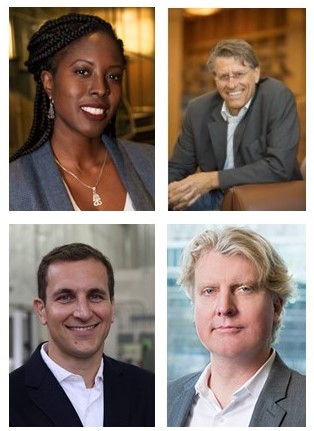
RutledgeFull_cropped


8:45-9:00  Welcome

Peter B. “Bo” Rutledge, University of Georgia School of Law


9:00-10:30  New Entrants: Nations

What are the emerging governance challenges as new nations emerge as space-farers?

Slide1

Steven Mirmina, NASA

Saadia Pekkanen, University of Washington, Henry M. Jackson School of International Studies

Cassandra Steer, Women in International Security Canada

Charles Stotler, University of Mississippi School of Law

cohen2017crop


Moderator ǀ Harlan G. Cohen, University of Georgia School of Law


10:45-12:15  New Norms? Commercial Actors

What norms govern, or should govern, potential commercial uses such as extraction, tourism, and settlement?Panel 2

Julia Selman Ayetey, McGill University

Frans von der Dunk, Nebraska College of Law

Brian Israel, ConsenSys

Mark J. Sundahl, Cleveland-Marshall College of Law

UW Headshot


Moderator ǀ Melissa J. Durkee, University of Georgia School of Law


Gabrynowicz_hi_res_small1:15-2:00  Keynote

Professor Emerita Joanne Irene Gabrynowicz, University of Mississippi School of Law


2:15-3:45  New Uses: Security in Space

What are the appropriate responses to the new U.S. “Space Force” and other threats of space militarization?

Panel 3.jpg

Mariel Borowitz, Georgia Tech, Sam Nunn School of International Affairs

David Kuan-Wei Chen, Center for Research in Air and Space Law, McGill University

James Gutzman, United States Air Force

Andrea Harrington, Air Command and Staff College, Air University

img_2013crop


Moderator ǀ Diane Marie Amann, University of Georgia School of Law

GJICL EIC3:45-4:00  Closing Remarks

Lauren Elizabeth Lisauskas, Editor-in-Chief, Georgia Journal of International and Comparative Law


Registration, CLE credit, and other details here. Additional cosponsors include the International Law Society, Georgia Law’s chapter of the the International Law Students Association.