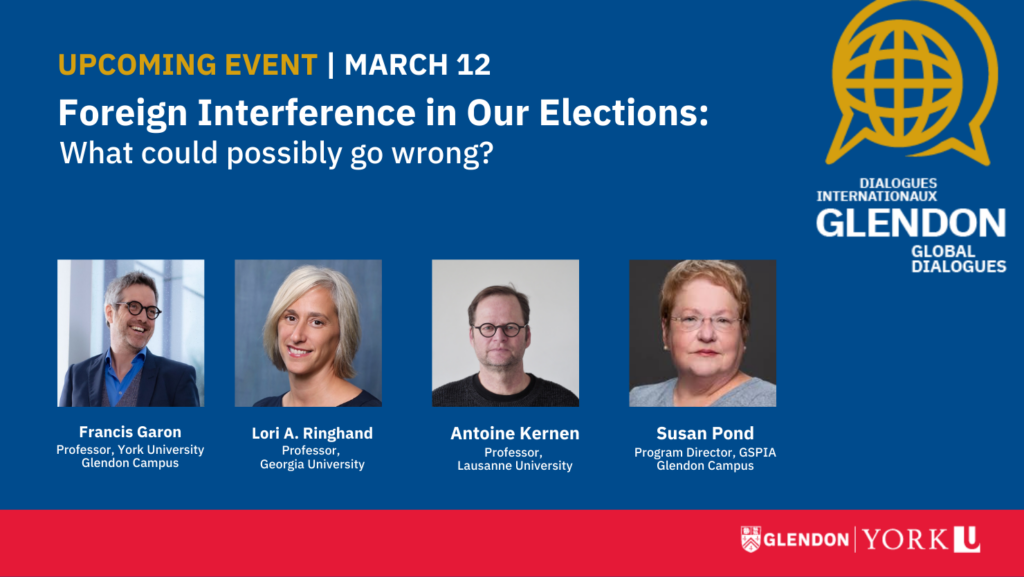
In addition to Ringhand, panelists included Francis Garon, Associate Professor of Political Science, Program Director of The Glendon School of Public and International Affairs; Antoine Kernen, Professor, Lausanne University; and Susan Pond, Director Glendon School of Public and International Affairs, York University.
This year’s Global Dialogue series aims to bring together renowned scholars and practitioners in political science, law, and international affairs to explore:
How foreign actors manipulate public opinion through disinformation and digital influence
The legal and policy frameworks protecting electoral integrity
The role of media, governments, and civil society in countering these threats
Ringhand teaches courses on constitutional law and election law. She has been a member of the University of Georgia School of Law faculty since 2008 and was named a Hosch Professor in 2012 and awarded a Josiah Meigs Distinguished Professorship, UGA’s highest teaching honor, in 2021. She is a nationally known Supreme Court scholar and the author of two books about the Supreme Court confirmation process: Supreme Court Confirmation Hearings and Constitutional Change (with Paul M. Collins) published by Cambridge University Press; and Supreme Bias: Gender and Race in U.S. Supreme Court Confirmation Hearings (with Christina L. Boyd and Paul M. Collins), published by Stanford University Press. She also is the co-author of Constitutional Law: A Context and Practices Casebook, which is part of a series of casebooks dedicated to incorporating active teaching and learning methods into traditional law school casebooks. Ringhand also publishes extensively on election law related issues, and was awarded a Fulbright Distinguished Chair Award at the University of Aberdeen in Scotland to explore the different approaches to campaign finance regulation taken by the United States and the United Kingdom.
University of Georgia School of Law students Franklin Phan (J.D. ’27) and Kara Reed (J.D. ’26) were selected to receive funding for legal externships in Vietnam and Japan this summer through the UGA Office of Global Engagement’s Asia-Georgia Internship Connection Scholarship.
Both students’ scholarships will support their Global Externship Overseas (GEO), administered by Georgia Law’s Dean Rusk International Law Center. Phan will extern with KPMG Law in Ho Chi Minh City, Vietnam, where will be supervised by Georgia Law alumnus Binh Tran (J.D. ’11), Director at KPMG Law. Reed’s GEO will take place in Tokyo, Japan, where she will extern with Kuribayashi Sogo Law Office under the guidance of Georgia Law alumnus Tsutomu Kuribayashi (LL.M. ’97), Managing Director. This will be Reed’s second GEO; the summer of her first year at Georgia Law, she externed with Baker Tilly in Hamburg, Germany, under the supervision of Georgia Law alumnus Dr. Christian Engelhardt (LL.M., ’01)
In addition to their externships, both students will engage in supervised research projects. Reed will work with Christopher M. Bruner, Stembler Family Distinguished Professor in Business Law & Faculty Co-Director of the Dean Rusk International Law Center. Her project will explore the relationships at contract formation in American and Japanese law. Pamela Foohey, Allen Post Professor of Law, will oversee Phan’s research regarding mechanisms for enforcing cross-border contracts.
This scholarship funds student pursuing credit-bearing internships in southeast Asia for a duration of at least four weeks. Preference is given to students traveling to Cambodia, Indonesia, Japan, South Korea, Laos, Malaysia, Mongolia, the Philippines, Singapore, Taiwan, Thailand, and Vietnam. Posts about past recipients of this scholarship at Georgia Law can be found here.
The University of Georgia School of Law’s spring 2025 International Law Colloquium welcomed Duke University School of Law’s Professor Rachel Brewster, who presented her working paper, “The Rise of Global FCPA Settlements.” Assaf Harpaz, Assistant Professor of Law at Georgia Law, served as Brewster’s faculty discussant.
Brewster is the Jeffrey and Bettysue Hughes Distinguished Professor of Law at Duke University School of Law. Her scholarly focus lies in international economic law, international dispute settlement, World Trade Organization (WTO) law, anti-corruption law, and international relations theory. Brewster currently serves as the co-director of Duke’s Center for International and Comparative Law and is co-chair of Duke’s JD-LLM in International and Comparative Law Program.
Below is an abstract of Brewster’s working paper:
For the last two decades, the United States has been the dominant enforcer of anti-bribery norms worldwide. Using the broad extraterritorial jurisdiction granted by the Foreign Corrupt Practices Act (FCPA), the Department of Justice and the Securities and Exchange Commission have prosecuted domestic and foreign corporations for bribing foreign government officials. This transnational enforcement system has been described as a negative comity regime: foreign governments defer to American prosecutions even if the case involves their nationals. This system has created a robust enforcement environment but often faces foreign resistance to the perceived “American dominance” of the regime.
This Article analyzes the recent rise of a new enforcement model: the global FCPA settlement, where multiple governments enter into parallel deferred prosecution agreements or other non-trial resolutions with corporate entities. This enforcement model is now the principal form for concluding “blockbuster” FCPA cases and has significant implications for the evolution of the transnational anti-bribery law regime. The Article argues that the rise of global settlements results from (1) a greater demand by foreign governments to be involved in foreign bribery resolutions when their national firms are on trial and (2) American prosecutors’ willingness to accommodate this demand when it results in more effective prosecutions (i.e., new cases, more claims, or stronger evidence). This Article contends that the rise of global FCPA settlements marks a significant shift in the international anti-bribery enforcement regime, transitioning from a negative comity to a coordinated comity regime. The global resolution model addresses some of the concerns of the negative comity regime by permitting multiple governments to have a voice in negotiating the level of the penalties, the distribution of the penalties, and any structural reforms that the firm will be required to adopt. It also can potentially increase the effectiveness of the enforcement regime by expanding the geographic scope of the investigations and quality of evidence. The Article concludes by discussing the importance of this Article to the Trump Administration’s recent executive order on FCPA enforcement.
This year, Professor Desirée LeClercq is overseeing the colloquium, which is designed to introduce students to features of international economic law through engagement with scholars in the international legal field. To view the full list of International Law Colloquium speakers, visit our website.
This program is made possible through the Kirbo Trust Endowed Faculty Enhancement Fund and the Talmadge Law Faculty Fund.
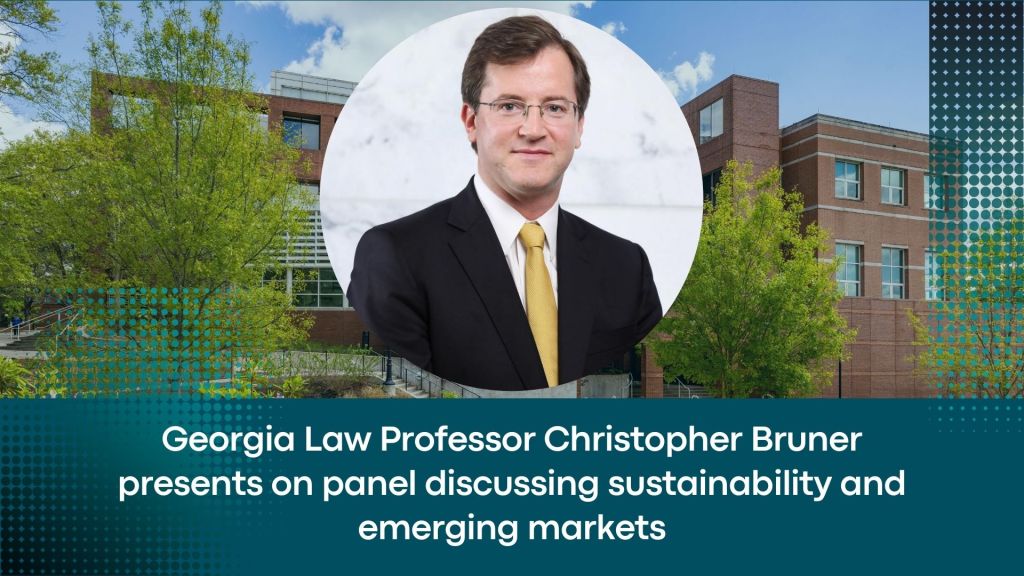
University of Georgia School of Law Professor Christopher M. Bruner presented on a panel titled “Sustainability and Emerging Markets” at the “Corporate Governance in the Global South” roundtable hosted by George Washington University Law School in Washington, D.C. The panel was moderated by Rosa Celorio, Associate Dean for International and Comparative Legal Studies and Burnett Family Distinguished Professorial Lecturer in International and Comparative Law and Policy at George Washington University Law School.
Christopher M. Bruner is the Stembler Family Distinguished Professor in Business Law at the University of Georgia School of Law and serves as a faculty co-director of the Dean Rusk International Law Center.
Last month, the University of Georgia School of Law Master of Laws (LL.M.) class of 2025 traveled to Atlanta for a professional development trip organized by the Dean Rusk International Law Center’s director of international professional education, Dr. Laura Tate Kagel. Students were accompanied by Dr. Kagel, International Professional Education Manager Mandy Dixon, and Center Associate Director Taher Benany.
The group of foreign lawyers was hosted by the law offices of Arnall Golden Gregory, LLP for lunch and a lively discussion with legal practitioners. Abe Schear, a partner in the Real Estate and Leasing practices at AGG, offered the students sound career advice and discussed how his involvement with the International Bar Association helped him grow the firm’s international practice. Theresa Kananen related her career journey and described her current role as partner and co-chair of the Payment Systems & Fintech industry team, offering compelling illustrations of the types of cases that arise in her practice area. Glenn Hendrix, a partner in AGG’s Healthcare Group and the founding president of the Atlanta International Arbitration Society (“AtlAS”), recounted the challenges and advantages of dispute resolution in a global society. Teri Simmons (J.D. ’89), a partner and chair of the firm’s Global Mobility practice and an adjunct professor of law at UGA, and her team members Dorothea Hockel and Naina Bishnoi (LL.M. ’24), explained how they help foreign businesses avoid legal pitfalls when bringing their operations to the United States.
Professional development trips are among many opportunities offered to Georgia Law LL.M. students to foster career connections and gain insight into potential career paths.
To learn more about the LL.M. program, click here.
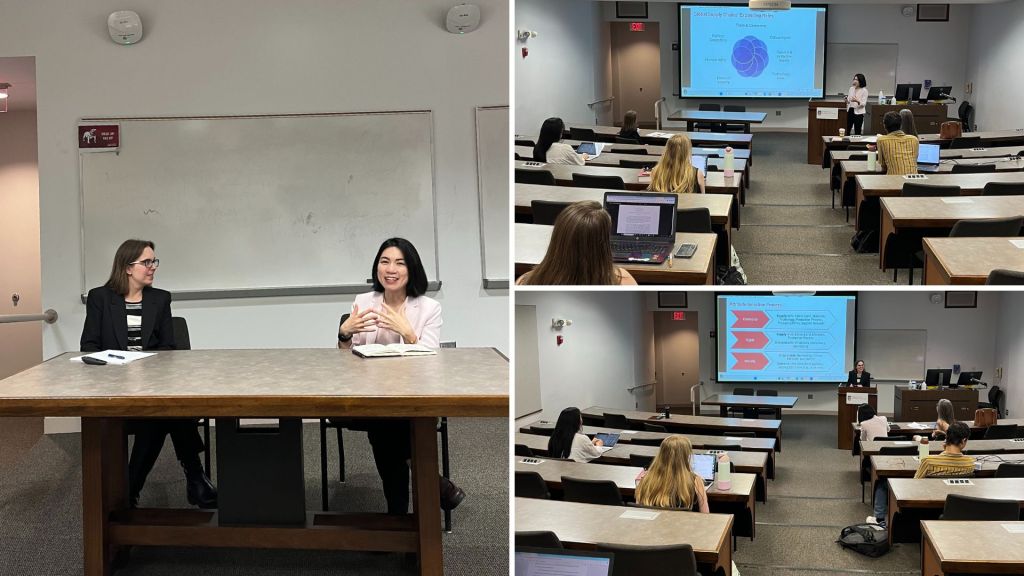
The University of Georgia School of Law’s spring 2025 International Law Colloquium recently hosted Temple Law’s Trang (Mae) Nguyen, who presented her working paper, “Goods’ Nationalities.” Pamela Foohey, Allen Post Professor of Law at Georgia Law, served as Nguyen’s faculty discussant.
Nguyen is an Associate Professor of Law at the Temple University Beasley School of Law and is an Affiliated Scholar at the U.S.-Asia Law Institute at the New York University School of Law. Her research focuses on business law, contracts, transnational law, and international law. Nguyen also previously held research appointments at the University of Hong Kong Faculty of Law, the National University of Singapore Centre for Asian Legal Studies, and the Singapore Management University Yong Pung How School of Law.
Below is an abstract of Nguyen’s working paper:
Products’ nationalities are at the center of today’s fast-changing global order. The Trump administration’s liberal use of tariffs against friends and foes, sanctions against Russian products, the banning of Chinese goods, and efforts to revitalize American manufacturing, to name just a few, all hinge on classifications of where a product is deemed “from.” But in today’s globalized economy, what exactly makes something “American” or “Chinese” or of any other nationality, for that matter?
This Article reexamines how goods acquire their designated nationalities at a time when such designation matters well beyond traditional commerce. It advances two main arguments. First, a product’s nationality is not fixed; rather, it is malleable and can vary depending upon the substantive legal regime under which the good is regulated—once predominantly trade law but now increasingly through a trade-security nexus and a trade-human rights nexus. Second, such malleability occurs through what I call an “attribute selection” process. In effect, each legal regime pivots the nationality analysis on certain “attributes” of a product, swapping and switching them as befit underlying interests and policy goals. The construction of product nationality thus occurs through mapping two separate sets of variables: first, the bundle of attributes of a product, and second, the “prisms” through which laws place significance on these attributes.
This Article makes several contributions. First, descriptively, it charts an updated account on product nationality’s expanded use, particularly in trade law’s nexus with national security and human rights. Second, conceptually, building on this updated descriptive account, it advances a novel framework—the attribute selection process—to unpack the making of product nationality. Third, normatively, it underscores how the need to use product nationality as proxy fits uneasily with the reality of global production, and how efforts to move away from nationality-based rules are likely vulnerable to similar challenges. Ultimately, while the Article makes clear that the concept of nationality is doing heavy lifting across various legal fields, it does not take a strong normative stand, opting instead to explain why taking a strong normative position is premature during fast evolving developments. Finally, the Article offers some practical considerations for policymakers, businesses, and other stakeholders as they consider product-nationality regulations going forward.
This year, Professor Desirée LeClercq is overseeing the colloquium, which is designed to introduce students to features of international economic law through engagement with scholars in the international legal field. To view the full list of International Law Colloquium speakers, visit our website.
This program is made possible through the Kirbo Trust Endowed Faculty Enhancement Fund and the Talmadge Law Faculty Fund.
University of Georgia School of Law alumna and Dean Rusk International Law Center Council member Tess Davis (J.D. ’09) was featured in the documentary “LOOT: A Story of Crime and Redemption,” which highlights the illicit art dealings of Western museums.
From remote Cambodian villages to elite art institutions in New York, LOOT : A Story of Crime & Redemption is a daring look into the underbelly of the multi-billion-dollar art market and the deadly reality behind “blood antiquities” filling Western museums today. During Cambodia’s civil war, British “adventurer-scholar” Douglas Latchford led an extensive criminal network, looting centuries-old temples hidden within landmine-filled jungles. The film offers access to key players, including “Blue Tiger” a former child soldier turned looter who now fights to return stolen artifacts.
The film tells the gripping story of the contrast of rich and poor as viewers learn about multi-million-dollar sales of works looted by Cambodian farmers paid $20.00 per week while risking their lives. LOOT : A Story of Crime and Redemption also takes viewers behind-the-scenes as stolen pieces are returned to Cambodia, including some arriving from New York’s Met Museum in July 2024. With thousands of pieces still overseas, Cambodia’s relentless struggle continues against the most powerful figures in the art world today.
Tess Davis, a lawyer and archaeologist by training, is Executive Director of the Antiquities Coalition, a nonprofit dedicated to the preservation and protection of art, artifacts, and cultural pieces. She oversees the organization’s work to fight cultural racketeering and also manages the day-to-day operations of the institute’s staff in Washington, DC, as well as programs overseas. Since 2013, Davis has been affiliated with the Scottish Centre for Crime and Justice Research, at the University of Glasgow. She came to Scotland from the Lawyers’ Committee for Cultural Heritage Preservation — a not-for-profit institution based in Washington, DC — where she was Executive Director until 2012. She previously worked for the nongovernmental organization Heritage Watch in Cambodia, first as Project Coordinator, and finally Assistant Director. Her career began at the Archaeological Institute of America.
Over the last decade, Davis has conducted extensive field research on the illicit trade in Cambodian antiquities, as well as legal research on the kingdom’s cultural property law. She also conceptualized and implemented a number of exciting projects in the country, including an exhibition at Angkor Wat about threats facing the temple, a hotline for the public to report archaeological discoveries or looting, and a children’s book entitled “If the Stones Could Speak.” From 2012-2014, she directed a legal internship program in Phnom Penh for international students from the Tulane-Siena Institute, who assist the Cambodian Ministry of Culture and Fine Arts with their legal needs. Davis has been a legal consultant for the Cambodian and US governments and works with both the art world and law enforcement to keep looted antiquities off the market. She writes and speaks widely on these issues — having been published in the New York Times, Wall Street Journal, the Los Angeles Times, CNN, the Huffington Post, and various scholarly publications — and featured in documentaries.
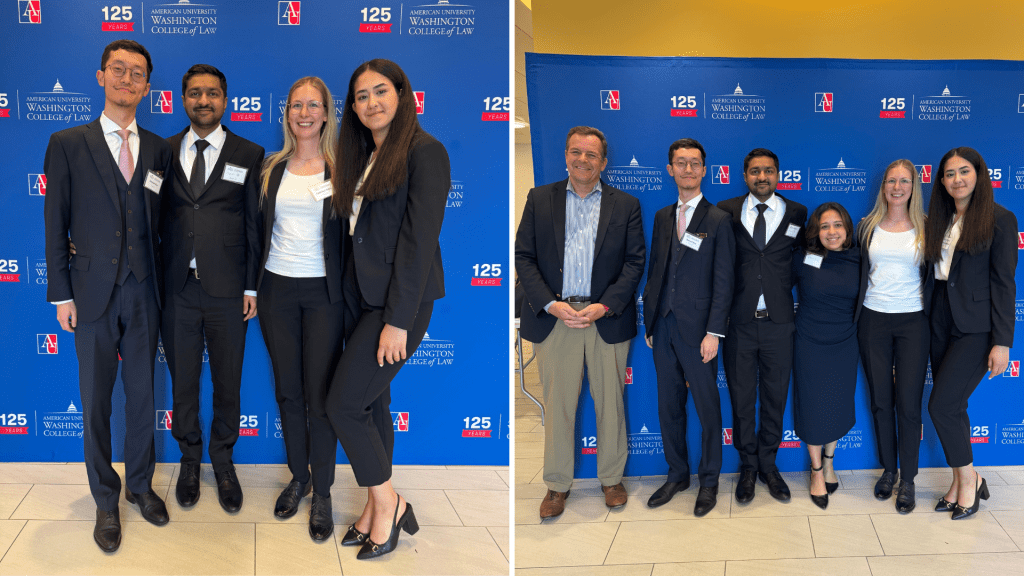
Members of the University of Georgia School of Law LL.M. Class of 2025 won the 12th International Commercial & Investment Arbitration Moot Competition hosted by American University Washington College of Law in Washington, D.C. earlier this month. This event was created specifically for LL.M. students to foster the study of international arbitration for the resolution of international business and investment disputes.
There are a variety of acts known as “dark patterns,” such as forcing consumers to register as members when browsing or purchasing products, or obscuring important information for consumers. These acts of dark patterns not only disadvantage consumers and other users, but there are also concerns that they may harm fair and free competition between businesses that use dark patterns and those that do not use such means. It is necessary to consider how to address the issue of dark patterns from the perspective of Antimonopoly Act and competition policy.
This symposium will include speeches and a panel discussion regarding current situation of dark patterns, their regulatory trends and future issues in Japan and abroad, and the way competition policy should approach dark patterns.
Day is an Associate Professor of Legal Studies at the Terry College of Business and holds a courtesy appointment in the School of Law. He is also an Affiliated Fellow at Yale Law School’s Information Society Project as well as the University of North Carolina’s Center for Information, Technology, and Public Life. His research has primarily focused on the intersection of competition, technology, innovation, and privacy as well as the disparate impact of anticompetitive conduct.
Today, we welcome a guest post by Pace Cassell, a member of the University of Georgia School of Law class of 2026. Cassell is the eighth Georgia Law student to participate in a semester-long international externship and the second recipient of a grant from the Halle Foundation to support her externship in Germany. The semester-long externships overseas initiative is an extension of the Center’s existing Global Externships Overseas and is offered jointly between the Center and the law school’s Clinical and Experiential Program. Cassell’s post describes her experience as a legal extern with Baker Tilly, a global professional services network specializing in advisory, tax, assurance, and legal services. Cassell is based in Hamburg, Germany, where she works under Georgia Law alumnus Dr. Christian Engelhardt (LL.M., ’01). Dr. Engelhardt is the Head of IP/IT Legal at Baker Tilly.
Living in Hamburg
I am going to miss so many things I’ve gotten used to during my time here in Hamburg – living on a cobblestone street, taking the U-Bahn all over the city, grabbing a Franzbrötchen on the way to work, and having everything I could need within walking distance.
Hamburg is located on the Elbe River, which connects the city to the North Sea. The Hamburg port is the largest in Germany and has driven much of Hamburg’s industrial and economic development. Within the city are the Alster Lakes, which are surrounded by walking paths and cafes. The swans on the Alster are protected by law and taken care of by the city; Hamburg legend says as long as there are swans on the lakes, the city will be free and prosperous. Due to these bodies of water, Hamburg has more bridges than any other city in the world, and more canals than Venice and Amsterdam combined.
Navigating a new city where you know no one can be daunting, especially when there is a language barrier. I took German classes from elementary school through college, but classroom learning truly does not compare to being immersed in the language the way I have been in Hamburg. The real-life context and direct association of words to concepts allows for faster understanding and retention and makes the learning process feel more intuitive and natural.
While I am still far from fluent, I’m proud of how far I’ve come with my German in such a short time. As philosopher Tomáš Masaryk put it, “As many languages you know, as many times you are a human being.” Language shapes our perception of reality, and learning how another culture expresses thought has been transformative.
Substantive Work and Comparative Perspective
Baker Tilly is an international law firm and has 698 branches, with eleven in Germany alone. The partner I work under, Dr. Engelhardt, focuses his practice on intellectual property, information technology, and data privacy. During my placement, I’ve been able to undertake research assignments ranging from analyzing European Court of Justice opinions, to investigating U.S. sanctions on foreign companies, and comparing American and European policies on artificial intelligence and data privacy.
Prior this experience, I had a vague interest in the General Data Protection Regulation, but I never considered my personal data important enough to merit much consideration. I felt little concern about the use of this data by large companies. However, understanding the principles of transparency, democratization, and fair competition embodied by the European data privacy regime has shifted my thinking and awakened an interest in a new area of law. Data privacy is much more than an abstract policy issue. The collection of our personal information, who can access it, and how it’s used to influence decisions can have significant implications on daily life – from targeted advertising to employment opportunities and even political influence.
More broadly, gaining a comparative perspective has allowed me to not only learn more about German culture but has also provided greater context for understanding my own. Seeing the practical effects of European and German regulations and policies on everyday life has been invaluable, and I never would have been able to gain this perspective had I not spent my semester here. This exposure has deepened my appreciation for the role legal frameworks play in shaping societal norms, and the value in evaluating the law through a global lens, both in a legal workplace and daily life.
Takeaways from the experience
I’ve always been curious about international law, and how American jurisprudence compares to that of other countries. I would recommend a global externship to anyone who shares this fascination. Outside of what you may learn about a legal system directly through doing legal work, living in another country allows you to experience firsthand the nuances of how its laws interact with society at large. Living in Germany has been a dream come true for me, one I’m sure I will continue reflecting on for years to come.