Students in Georgia Law’s Appellate Litigation Clinic win Board of Immigration Appeals case on behalf of asylum-seeker from Russia

Four students in the University of Georgia School of Law Appellate Litigation Clinic have just secured asylum relief for a Russian client, and in so doing earned hands-on experience in practicing law in today’s interconnected world.

The client, Rim Iakovlev, is a Jehovah’s Witness who had fled to the United States after a ruling by the Russian Supreme Court outlawed his religion. A U.S. immigration judge granted his petition for asylum. But the U.S. Department of Homeland Security appealed. It was at this point that the Board of Immigration Appeals, through its pro bono project, appointed Georgia Law’s Appellate Litigation Clinic to represent asylum-seeker Iakovlev. The Board is an administrative appellate agency within the Executive Office for Immigration Review, U.S. Department of Justice.

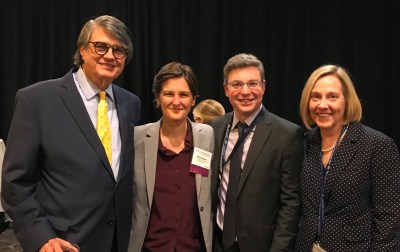
Drafting the brief in the case, under supervision by Professor Thomas V. Burch, Director of the Appellate Litigation Clinic, were four Georgia Law students: 3Ls Wade H. Barron, C. Daniel Lockaby, and Sarah A. Quattrocchi, and 2L Addison Smith. Their brief stressed consistencies in the accounts given by Iakovlev and his wife, and also refuted the DHS contention that the asylum-seeker was obliged to present a letter from his congregation attesting to his status as a Jehovah’s Witness.

Upon reading the parties’ briefs, the Board of Immigration Appeals affirmed the immigration judge’s decision to grant Iakovlev’s petition for asylum. DHS chose not to appeal the Board’s decision, so that Iakovlev was released from detention last week.

Update from Nigeria: attorney Chukwudi Ofili, LLM Class of 2018, reflects on his post-graduation year

This is one in a series of posts by University of Georgia School of Law LLM students, writing on their participation in our LLM degree and about their post-graduate experiences. Author of this post is alumnus Chukwudi Ofili, a member of the Class of 2018.

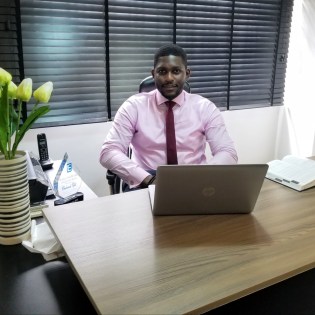
Chudi photoIt has been an eventful year for me. In January 2018, during my last semester at the University of Georgia, I began a corporate in-house counsel externship – an experiential learning opportunity open to qualified Georgia Law LLM students – at Coca-Cola headquarters in Atlanta There, I had the opportunity to work on issues such as cybersecurity, imports, and Office of Foreign Assets Control compliance.

Following graduation, I took the New York bar examination in July.  When I learned that I had passed, I was in London, participating in the highly selective International Lawyers For Africa (ILFA) 2018 Flagship Secondment Programme (IFSP), which each year places lawyers from various African jurisdictions at highly reputed international law firms and corporations for a period of three months. I was placed with Trinity International LLP, a niche project and corporate finance firm focusing on energy, infrastructure, resources, and industry. During my secondment, I worked on some international transactions, with focus on financing power and infrastructure projects across the African continent.

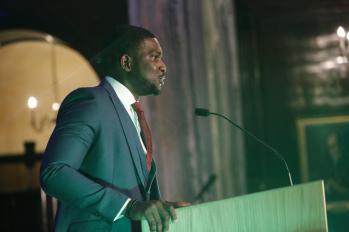
Chudi speechIFSP was an enriching and exciting experience. It included training programs and networking events that introduced the participants to some of the brightest minds in the international legal market, in diverse practice areas. In particular, the networking opportunities were immense and may not be replicated in our lives on such a scale. I was pleased to selected to deliver the valedictory address for the London IFSP cohort at the ILFA Gala Night, which marked the end of the program.

I am now happy to be back in Nigeria at Bloomfield Law Practice, in the Corporate, Securities, and Finance practice group. I was recently interviewed for an article in THISDAY Newspaper Nigeria Legal Personality of the Week. In the interview, I expressed my hopes for good prospects in 2019. The year is already off to a good start: I’ve just completed a co-authored article,  Recognition and Enforcement of Cross-Border Insolvency; Nigeria in Perspective.

I came to Georgia Law after working with my firm, Bloomfield Law Practice, having graduated with first-class honors from Babcock University in Nigeria. At Georgia Law, I was the recipient of a prestigious graduate research assistantship, and participated in the Business Law Society.

I will always recommend the Georgia Law LLM curriculum, as it is tailored to each student’s career goals; for example, preparing to sit for a U.S. bar exam, or pursuing a concentration. Plus, students come to find out that Athens (which is just about an hour away from Atlanta) is a lovely place for studies, with friendly people.

Delivering prestigious Gresham College Fulbright Lecture in London, Georgia Law Professor Lori Ringhand analyzes laws regulating online election campaign spending in US and UK

Pleased today to welcome back Lori A. Ringhand, J. Alton Hosch Professor of Law here at the University of Georgia School of Law, and, this Spring 2019 semester, a Fulbright Distinguished Chair at the University of Aberdeen, Scotland. In connection with her US-UK Fulbright award, Professor Ringhand gave a prestigious lecture this past Tuesday, April 2, in London. Her account of that lecture – available on video – is below.

I recently had the pleasure of delivering the Gresham College Fulbright Lecture at the Museum of London. Gresham College has been offering free public lectures to residents of London for more than 400 years, and has been offering Fulbright lectures in partnership with the US/UK Fulbright Commission for decades.  Recent Gresham lecturers include eminent public law scholar Vernon Bogdanor,  historian and author Timothy Garton Ash, and current Speaker of the House of Commons, John Bercow.

My lecture focused on the challenges faced by lawmakers in the United States and the United Kingdom as they try to ensure that campaign finance laws remain relevant in the age of widespread online electioneering. As both nations have discovered, our existing regimes are not built for a world in which political advertising spreads, rapidly, organically, and often anonymously, through online social media platforms.

Regulators in the US and the UK nonetheless rarely look to each other’s experiences to inform their own thinking in this complex area. The election law systems of each country are seen as so fundamentally different that comparative consideration seems pointless.

As I explained in my Gresham Lecture, I disagree.

The differences in regulatory approaches certainly are real, and significant:

  • In the UK, political spending is limited, and most of it runs through political parties and regulated third-party campaigners, with outside or unregulated groups historically playing little role.
  • In the US, in contrast, political spending is increasingly dominated by outside groups, which can both raise and spend unlimited amounts of money, often entirely outside of the federal regulatory system.

But in regard to regulating online election activity, the similarities between the two nations are much more meaningful than the differences. As I laid out in the talk, the regulatory challenges presented by online electioneering difficult in both principle and practice, but they are fundamentally the same in each country. Consequently, there is a great deal we can learn from each other in this area.

I hope my lecture helps us take a necessary first step in that direction.

Georgia Law Dean Bo Rutledge, student Katherine Larsen to speak to Atlanta International Arbitration Society on ECJ ruling, proposed treaty

Later this week, international arbitration expert Peter B. “Bo” Rutledge, Dean and Herman E. Talmadge Chair of Law at the University of Georgia School of Law, will co-present with 2L Katherine Larsen at a luncheon meeting of the Atlanta International Arbitration Society (AtlAS). The lecture, entitled “Achmea and the Proposed International Mediation Convention: Implications for the U.S. Lawyer,” will take place 12 noon-1:30 p.m. this Friday, April 5, at the Atlanta office of King & Spalding.

The presentation will discuss the recent decision of the European Court of Justice in Achmea v. Slovakia, the proposed Singapore Convention on Mediation, and the implication of these developments for lawyers in the United States.

The meeting is open to the public. Persons interested in attending who are not AtlAS members should RSVP to ruskintlaw@uga.edu. 

ASIL book award for Center’s Director Emeritus, C. Donald Johnson

We were delighted to come together in D.C. yesterday to celebrate the book award given by the American Society of International Law to C. Donald Johnson, an alumnus of the University of Georgia School of Law and Director Emeritus of the law school’s Dean Rusk International Law Center (prior post detailing this award here).

Above, Don holds the award, honoring his 2018 Oxford University Press book The Wealth of a Nation: A History of Trade Politics in America. He is flanked to the left by ASIL President Sean Murphy, to the right by ASIL Executive Director Mark Agrast and Professor Anna Spain Bradley, chair of the awards committee.

Below, Don marked the occasion with the 3 Georgia Law faculty taking part in ASIL’s annual meeting this week: Professors Melissa J. Durkee, Harlan G. Cohen, and Diane Marie Amann.

“Excited to pursue the conservation of biodiversity around the world”: Andrew Hedin on his Global Externship at the Secretariat of the Pacific Regional Environment Programme

This is one in a series of posts by University of Georgia School of Law students, writing on their participation in our Global Governance Summer School or Global Externship Overseas initiative. Author of this post is Andrew Hedin, a member of the Class of 2020 who spent his 1L summer as a GEO, or Global Extern Overseas.

Strange Clouds.jpg

Malo! (“Hi” in Samoan.) This summer I lived in the tropical paradise of Samoa, working for the Secretariat of the Pacific Regional Environment Programme (SPREP). During my externship, I worked on environmental law issues and had the opportunity to attend a major conference in Fiji. Following my internship, I was invited to observe the first United Nations conference to work towards a treaty on the conservation and sustainable use of marine biodiversity on the high seas.

35750776_408257666318944_551903434974953472_n

SPREP is an international governmental organization serving the fourteen island nations of the South Pacific, as well as five states with territories in the region, including the United States. Headquartered in Apia, the capital city of Samoa, SREP addresses environmental issues ranging from waste disposal to climate change to biodiversity. It also serves a data collection function, which facilitates identification and monitoring of environmental issues. The work of the organization is critical because the Pacific Island states encompass over fifteen million kilometers of marine territory, and are considered to be the largest source of marine biodiversity in the world. However, these ecosystems are fragile and have faced significant reduction due to increased human activity both within and outside the region.

20180724_123546During my externship, I worked closely with SPREP’s legal counsel, and participated in various projects on topics like preventing the practice of shark finning and banning the use of non-reusable plastics. My most extensive assignment related to the implementation of the Nagoya Protocol on Access to Genetic Resources and the Fair and Equitable Sharing of Benefits Arising from their Utilization to the Convention on Biological Diversity. The Protocol seeks to ensure that there are predictable conditions for access to genetic material, and that the benefits of genetic resource research are shared with the country of origin. Thus, the Protocol requires parties to enter into a contract that obtains prior informed consent of the resource provider, clearly lays out the benefits to the providing community, and defines the scope of access for the user of the genetic resource. The Protocol also creates intellectual property rights in traditional knowledge associated with genetic material in order to protect indigenous communities’ use of local resources. I had the opportunity to assist in the drafting of model implementing legislation and contract templates, and to conduct an analyses of implementation issues in the Cook Islands and Tonga.

I was fortunate to travel with the access and benefits sharing team to Fiji to attend a conference on this topic hosted by the International Development Law Organization and the ABS Initiative. This provided a global context for my work; I learned about how the Nagoya Protocol was being implemented in other regions. It was also a tremendous opportunity to meet practitioners working in this area.

Faga-Loa BayThe opportunity to work on biodiversity was amplified by the chance to do so in Samoa. When I wasn’t working, I spent the summer exploring the natural wonders of the small island nation. Consisting of two main islands – Upolu and Savai’i – and eight small inlets, Samoa boasts an extensive coral reef ecosystem, pristine beaches, massive waterfalls, and miles upon miles of coconut trees. It is also home to 200,000 people, who keep alive one of the world’s oldest cultures. Family and community are integral to the Samoan way of life, and Samoans take great pride in maintaining traditions that have been passed down for thousands of years. One of these, familiar around the world, is the Samoan art of tatau, or tattooing. Practiced for more than 3000 years, the art involves tattooing from the waist to the knees, entirely by hand. The traditional tattoo is highly respected, symbolizing an individual’s determination, endurance, and ability to assume responsibility. While I did not get any tattoos, having the opportunity to see the incredible natural world of the Pacific renewed my resolve to forge a career in international environmental law to protect these valuable resources.

Hedin_UNAfter completing my internship with SPREP and returning to campus this fall, I was pleased to be selected by the American Society of International Law, of which the University of Georgia School of Law is an Academic Partner, to serve as an NGO observer at the United Nations. As noted in the most recent edition of the ASIL Newsletter, I attended the first Intergovernmental Conference for an international legally binding instrument, under the United Nations Convention on the Law of Sea, on the conservation and sustainable use of marine biological diversity of areas beyond national jurisdiction.

At the conference, I watched as state delegates, and representatives of intergovernmental and nongovernmental organizations debated the four foundational pillars of the potential agreement:

  • accessing marine genetic resources and sharing in their benefits;
  • area-based management tools;
  • environmental impact assessments; and
  • capacity building with associated marine technology sharing.

This experience was incredible because I observed firsthand how treaty negotiations begin. Although representatives discussed an array of issues and expressed many concerns, there was near-consensus on the importance of protecting the genetic diversity in our oceans. While this is no small task and there is a significant amount of work to be done, after observing the proceedings, I am optimistic that reaching an agreement is possible.

Tu Soa 4x5While I knew that I was interested in international environmental law, before this summer I had never heard of the Nagoya Protocol. Now, I have an understanding of the contracts that govern access to genetic resources, and of their value to indigenous communities. I also built a network of professionals doing great work to advance this initiative. I am incredibly grateful for my time in Samoa and at the UN, and am excited to build on these experiences to pursue the conservation of biodiversity around the world for the benefit of generations to come.

Register now: “U.S. Employment Law in a Global Context” training, May 15-17 at Georgia Law’s Atlanta campus

Employment Law Logo Thumbnail 1
Registration is now open for “U.S. Employment Law in a Global Context,” a three-day training to be held May 15 to 17, 2019. Presented jointly by the Dean Rusk International Law Center and CIFAL Atlanta, the training will take place at the University of Georgia School of Law Atlanta Campus, located in the Buckhead neighborhood, 3475 Lenox Road NE.

The training is designed to enable in-house counsel and human resources managers of international companies operating in the United States, or companies seeking to establish a presence in the U.S. market, to obtain specialized knowledge in evolving areas of employment law. Legal academics and students of labor and employment law are also welcome to register to attend.

Prominent experts in the field of employment law will teach the courses, which will be offered for CLE credit. In addition, the full schedule includes a networking reception, lunch with speakers, and a closing ceremony. Training topics and speakers include:

Wednesday, May 15Day 1 speakers

  • U.S. Labor and Employment Law: An Historical Overview (Daniel P. Hart, Partner, Seyfarth Shaw LLP)
  • U.S. Labor Law Today (Kyllan B. Kershaw, Partner, Seyfarth Shaw LLP)
  • Fair Labor Standards Act (Brett C. Bartlett, Partner, Seyfarth Shaw LLP)
  • Employment Discrimination & Title VII (Myra Creighton, Partner, Fisher Phillips)

Thursday, May 16

  • Sexual Harassment Law Day 2 speakers(Amanda A. Farahany, Managing Partner, Barrett & Farahany LLP)
  • Privacy Issues in the Workplace (Montserrat C. Miller, Partner, Arnall Golden Gregory LLP)
  • Dispute Resolution Systems in the Workplace & Arbitration Clauses in Employment Contracts (Daniel M. Klein, Klein Dispute Resolution)
  • Global Mobility Best Practices (Teri A. Simmons, Partner, Arnall Golden Gregory LLP)

Friday, May 17

  • Day 3 speakersTrade Secrets, Non-Compete Clauses, and Employee Mobility (Keshia M. Tiemann, Associate, Greenberg Traurig LLP)
  • Consideration of Employment Contracts for a Global Workforce (Susan Nofi, former General Counsel, Heidelberg USA, Inc.)

CIFAL Atlanta is part of the United Nations Institute for Training and Research (UNITAR) network of international training centers. We at the Dean Rusk International Law Center are delighted to partner with them, continuing our twenty year history of providing trainings for foreign judges and other legal practitioners.

Details and registration available here.

Georgia Law scholars head to D.C. for this week’s American Society of International Law Annual Meeting

The University of Georgia School of Law and its Dean Rusk International Law Center will be well-represented at the Annual Meeting of the American Society of International Law, to be held March 27-30 at the Washington Hilton, Washington, D.C.

In addition to the book award for C. Donald Johnson, our Center’s Director Emeritus, on which we posted yesterday, participation will be wide-ranging. Once again, a Georgia Law student will volunteer at the meeting, supported by our Center’s Louis B. Sohn Professional Development Fellowship. This year’s Sohn Fellow will be 1L Joshua Jones. Furthermore:

Diane Marie Amann, Emily & Ernest Woodruff Chair in International Law and the Center’s Faculty Co-Director, will lead a roundtable entitled Challenges and Prospects for International Peace and Security: UN Peacekeeping, NATO, and the UDHR at 70. To be held 9-10:30 a.m. Thursday, March 28, the session also will feature Michael W. Doyle, University Professor at the Columbia University School of International and Public Affairs; Steven Hill, Legal Adviser and Director of the Office of Legal Affairs at NATO Headquarters in Brussels; Bruce Oswald, Professor and Director of the Asia Pacific Centre for Military Law in the Melbourne Law School at the University of Melbourne; and Rita Siemion, International Legal Counsel at Human Rights First.

After noting that UN Peacekeeping, NATO, and the Universal Declaration of Human Rights all are marking their 70th anniversaries, the roundtable description asks:

“Have they failed to deliver on their original promise or have they adapted effectively to contemporary global realities? Is their future dependent on the continuation of Western hegemony and unity? Can they adapt to the changing nature of security threats, rising powers and a waning commitment to multilateralism? Are they instruments for peace, security and the promotion of international law? What challenges and opportunities lie ahead?”

Amann also will present a tribute to Judge Patricia Wald (1928-2019) at the ASIL Women in International Law Interest Group luncheon on Friday, March 29.

Harlan G. Cohen, Gabriel M. Wilner/UGA Foundation Professor in International Law and the Center’s Faculty Co-Director, will, in his capacity as Vice Chair of ASIL’s International Legal Theory Interest Group, co-convene a workshop entitled New Perspectives in International Legal Theory. To be held 9-10:30 a.m. Friday, March 29, the workshop will feature 4 junior scholars: David Hughes, University of Michigan; Karin Loevy, New York University; Valentina Vadi, Lancaster University; and Ka Lok Yip, Hong Kong University. Commentators will be Janne Nijman, University of Amsterdam, and Greg Shaffer, University of California-Irvine.

Georgia Law faculty also will take part in ASIL side meetings: Amann, an ASIL Counsellor, will participate in the Executive Council session; Melissa J. Durkee, J. Alton Hosch Associate Professor of Law, is Vice Chair of the Membership Committee; and Cohen is a member of the Editorial Board of the American Journal of International Law.

Full Annual Meeting program here.

Center’s Director Emeritus, C. Donald Johnson, to receive book award Thursday at ASIL Annual Meeting

C. Donald Johnson, Director Emeritus of our Dean Rusk International Law Center, University of Georgia School of Law, will receive a top honor this week in recognition of his 2018 Oxford University Press book,  The Wealth of a Nation: A History of Trade Politics in America.

The 2019 Certificate of Merit for High Technical Craftsmanship and Utility to Lawyers and Scholars (Honorable Mention) will be presented to Johnson during the 113th American Society of International Law Annual Meeting, occurring this week at the Washington Hilton in Washington, D.C. The presentation will take place during the Assembly of the Society – of which Georgia Law is an Academic Partner – at 4:45 p.m. Thursday, March 28.

In the words of the Society:

“This honor is awarded annually, based on the recommendation of a committee of Society members, to a recent work that represents a distinguished contribution to the field.”

In his book Johnson, our Center’s Director from 2004 to 2015, traces the history of trade politics in order o explore whether the United States is better served by a free trade agenda or protectionist measures. His expertise on these issues includes prior service as Ambassador in the Office of the United States Trade Representative and as a U.S. Representative, as well as his international trade law practice as a partner at the Washington law firm Patton Boggs. Johnson earned his Georgia Law J.D. in 1973, serving as Articles Editor of the Georgia Journal of International & Comparative Law, and then earned an LL.M. degree in International Economic Law and International Relations from the London School of Economics and Political Science.

Johnson serves on our Center’s Council, and recently visited us for a launch of his book and to present at a GJICL conference. We look forward to joining others Thursday at ASIL in celebrating his well-deserved honor.

Dispatch from UNHQ: 63d session of Commission on the Status of Women

IMG_1290 (2)I had the pleasure of spending last week at the United Nations headquarters in New York City, attending the 63d session of the Commission on the Status of Women (CSW). CSW is an intergovernmental body “dedicated to the promotion of gender equality and the empowerment of women.” It was established by the Economic and Social Council (ECOSOC) of the United Nations in 1946. I am grateful to have served as an NGO observer on behalf of the American Society of International Law, which holds special consultative status to ECOSOC.

IMG_1343 (2)

CSW takes place annually over a two-week period. This year, CSW was chaired by Ambassador Geraldine Byrne-Nason of Ireland, and focused on the theme of “social protection systems, access to public services and sustainable infrastructure for gender equality and the empowerment of women and girls.” During the course of CSW, state delegates negotiate recommendations, or agreed conclusions, related to this theme. The draft agreed conclusions that were discussed during the 63d CSW urge states, as well as other relevant organizations and institutions, to:

  • strengthen the normative, legal, and institutional environment for gender equality;
  • address gender gaps and biases in social protection;
  • transform public services for gender equality and women’s empowerment;
  • make infrastructure investment work for women and girls; and
  • mobilize resources, strengthen accountability, and improve evidence related to the experiences of women and girls.

IMG_1353 (2)Beyond the formal meetings and negotiations, participating states and organizations present a dizzying array of side and parallel events during the commission. I attended many robust sessions, in particular those that dealt with women, peace, and security (WPS). These ranged from from conversations about increasing women’s participation in peace processes, to discussions on challenges facing the implementation of National Action Plans in the Arab Region, to presentations by national and NGO representatives on the challenges to the WPS Agenda ahead of its 20th anniversary next year.

IMG_1341This was my first time attending CSW. It was an incredible gathering, at which impassioned people from around the world worked to improve the the status of women and girls in a range of roles and contexts: participants included government officials, advocates and activists, religious leaders, teachers, and students.

The energy of the week was tremendous: at a town-hall meeting for NGO representatives with UN Secretary-General António Guterres, delegations took turns singing songs from their home countries while we waited for the Secretary-General to arrive. It was profoundly inspiring to see such a diverse collection of people – people with the common goal of achieving gender equality –  connecting, building alliances, and sharing experiences.