ICC Office of Prosecutor invites public comment on draft Policy on Children

draftpolicyIt is my great honor to note today’s release for public comment of the draft Policy on Children of the International Criminal Court Office of the Prosecutor.

Since my December 2012 appointment as Prosecutor Fatou Bensouda’s Special Adviser on Children in and affected by Armed Conflict, I’ve had the privilege of helping to convene consultations and taking part in the construction of this draft Policy. As part of that process, as noted on page 11 of the draft, we at the Dean Rusk International Law Center, University of Georgia School of Law, were honored in October 2014 to host the Prosecutor, members of her staff, and nearly 2 dozen other experts from academic, nongovernmental groups, and intergovernmental organizations. Our “Children & International Criminal Justice” conference featured a morning public plenary and Prosecutor’s keynote (pictured below), followed by an afternoon of closed-door breakout sessions. (Proceedings from that event, to appear in our Georgia Journal of International & Comparative Law, are nearing publication.)

Addressed in the draft Policy, which spans 37 pages, are:

► Overarching concerns, such as the nature of a child and childhood, the experiences of children in armed conflict and other contexts within the jurisdiction of the ICC, and how the Rome Statute of the ICC and other documents treat crimes against and affecting children; and

► Practical concerns, such as how the Office of the Prosecutor engages with children, in all aspects of its work, including preliminary examination, investigation, charging, prosecution, sentencing, reparations, and external relations.

As stated in the press release accompanying today’s publication:

In highlighting the importance of the Policy, Prosecutor Bensouda stated: “when I assumed 8_events2the role of Prosecutor in June 2012, one of the principal goals I set for the Office was to ensure that we pay particular attention not only to ‘children with arms’, but also ‘children affected by arms.’ This Policy demonstrates our firm commitment to closing the impunity gap for crimes against or affecting children, and adopting a child-sensitive approach in all aspects of our work bearing in mind their rights and best interests. It is also our hope that the Policy, once adopted, will serve as a useful guide to national authorities in their efforts to address crimes against children.”

The Office welcomes public comment on the draft. Such comments should be e-mailed to OTPLegalAdvisorySection@icc-cpi.int, no later than Friday, August 5, 2016.

Following revisions based on the comments, the Office of the Prosecutor expects to publish the final Policy on Children in November of this year.

(Cross-posted from Diane Marie Amann)

My family history & path to the bench

It is an honor today to publish this post by our distinguished alumna, the Honorable Carla Wong McMillian, Judge on the Georgia Court of Appeals since 2013. Born in Augusta, Georgia, she earned her Georgia Law J.D. degree summa cum laude in 1998. She is the first Asian Pacific American state appellate judge ever to be appointed in the Southeast, and, since 2014,  the first Asian American to be elected to a statewide office in Georgia. Judge McMillian also serves as President-Elect of the Georgia Asian Pacific American Bar Association (GAPABA). Reflecting on these achievements in this essay, which we reprint courtesy of and with thanks to the Georgia Asian American Times, she writes:

Carla McMillianI am proud to be an American. I am equally as proud of my Asian American heritage.

I grew up in Augusta, Georgia, where the Chinese community has had a long history. The Chinese first immigrated to the city in 1872 to help build an extension of the Augusta Canal. These Chinese men — and it was all men in those days – began sending for their wives and children, and word spread that Augusta was a good place to immigrate and to make a new life.

My father’s parents were some of those who heard from others in their villages in southern China about Augusta. They originally immigrated to San Francisco, but moved to Georgia in the 1910’s and opened a small grocery store. In those days, if you were Chinese, you had two options to make a living in the South — open a laundry or a grocery store. My father was the youngest of six children and was born in the back room of that store where the family lived.

I am sure that my grandparents never dreamed that they would have a granddaughter who is a lawyer much less a judge. And although they did not know the language or the culture, they instilled in their children a love of this country and a service mindset. I am proud that my father and uncle are veterans who did their part to protect our freedom and way of life.

That’s my father’s side of the family – the Wongs from Augusta. But I also want to talk about my mother, who emigrated from Hong Kong to marry my dad. As a result, Chinese was my first language – that is what we primarily spoke at home before my siblings and I went to school.

One of my most distinct memories as a child was going into a courtroom and watching my mother be naturalized as an American citizen. I can remember my sister and me in our best dresses, standing with my father and watching my mother take her oath of allegiance to the United States. That was a proud day for my mother and for the rest of my family.

Growing up in an Asian American family in the Deep South, there just were not too many people outside of my family who looked like me, spoke like me, or ate the same kinds of foods at home. It used to be when I was a teenager that I wanted to cover up all of those differences and blend in. But as I have grown older, I have learned to embrace those differences because that is what makes our country so great.

I want to share with you that I never aspired to be a judge. I practiced for many years with a law firm in Atlanta where I expected to be for my entire career. But some judicial positions came open in my local jurisdiction. I almost did not apply. I was comfortable with my law practice and frankly I knew that even if I got the appointment, I would then have to run for election to keep my seat. I was fearful about facing the rigors of campaigning each election cycle. So after about a week of soul-searching, I had all but decided not to apply.

But I changed my mind one night as I was looking at my young children. I thought about what I wanted to tell them twenty years from now, about seizing opportunities and about doing what I could to serve the community where they will be growing up. So I applied for the judgeship and was appointed initially to the trial court and later to the Court of Appeals.

As a judge, I have taken an oath to uphold the Constitution. The Constitution ensures that we are a nation of laws, but it begins with the simple words, “We, the people.” Therefore, we must remember that key to the concept that we are a nation of laws is the notion of equality — the belief that “all men are created equal.” No one is above the law, and no one is so low that they cannot avail themselves of the law’s protection.

We must always remind our children that the rights and privileges guaranteed by the Constitution are there for us all. Without them, I would not be in the position that I am in today. The Constitution gives everyone an opportunity to fulfill their potential, even for someone like me who came from a family of immigrants because by protecting the rights that the Declaration of Independence declares to be God-given, the Constitution provides each of us the freedom and opportunity to pursue our own destiny. I am honored to serve as the first Asian American on our Court of Appeals and as the first Asian American to be elected to statewide office in Georgia.

whole_court_2016

Toward “a world founded upon four essential human freedoms”

Recalling President Roosevelt’s call to make the world secure so that everyone may enjoy “the four essential human freedoms,” we at the Dean Rusk International Law Center, University of Georgia School of Law, republish this Georgia Law message.

condemn

International law alive and well in Atlanta

Last week was a busy one for international law in Atlanta.

On Thursday evening, the Young Arbitrators Group for the Atlanta International Arbitration Society (AtlAS) and the International Chamber of Commerce Young Arbitrators Forum (ICC YAF) presented an excellent event on international law practice in Atlanta. As announced, it featured four attorneys serving as in-house counsel at major corporations, including:

  • Gary Bunce, Assistant General Counsel, Delta Airlines
  • Carolyn Dinberg, VP and Associate General Counsel, InterContinental Hotels Group
  • Eugenia Milinelli, Counsel, JAS Freight Forwarding
  • Nicole Levy, Executive Director and Senior Legal Counsel, AT&TKing and Spalding

Attended by many young members of AtlAS, ICC YAF, and the broader Atlanta legal community, the evening presented an interesting conversation about the use of international arbitration by large corporations, and provided insight into the career tracks of the panelists. The panelists offered advice to young attorneys, such as the importance of acquiring language skills, and the reception afterwards at the office of King & Spalding provided a valuable networking opportunity.

Then, on Friday morning, the World Affairs Council of Atlanta hosted a breakfast with Ambassador Charles Rivkin, who currently serves as the Assistant Secretary of State for Economic and Business Affairs. Amb RivkinAmbassador Rivkin spoke about the Trans-Pacific Partnership Agreement (TPP) that was signed on February 4, 2016 in New Zealand, but has yet to be approved by Congress. Ambassador Rivkin stressed the ways the TPP would benefit Atlanta businesses, in particular those exporters of: transportation equipment; non-electrical machinery; computer and electronic products; chemicals; processed foods; electrical equipment, appliances and components; the agricultural sector generally. He further stressed that the the TPP is unique and good for U.S. businesses because it sets rules for state-owned enterprises, has a chapter dedicated to small and medium sized businesses, and addresses intellectual property and data flow, labor standards, and the environment. His remarks inspired a lively conversation with the audience, who represented a cross-section of the Atlanta business community.

Young Arbitrators Event in Atlanta

atlas-logoThe Young Arbitrators Group for the Atlanta International Arbitration 1526304_10152174822329940_1562069949_nSociety (AtlAS) and the International Chamber of Commerce Young Arbitrators Forum (ICC YAF) will present a cocktail reception and speakers panel tomorrow, June 2, 2016 from 5:30 – 7:00 p.m.

10268504_10152606953834696_6959801446290693027_nHosted by the Atlanta office of King & Spalding, the event will focus on international law issues faced by Atlanta’s global companies, and will highlight how many attorneys around the city handle international law and trans-border issues on a day to day basis.

The panel will be moderated by Jorge Fernandez, the Global Commerce Manager for the Metro Atlanta Chamber, and will also include:

  • Gary Bunce, Assistant General Counsel, Delta Airlines
  • Carolyn Dinberg, VP and Associate General Counsel, InterContinental Hotels Group
  • Eugenia Milinelli, Counsel, JAS Freight Forwarding
  • Nicole Levy, Executive Director and Senior Legal Counsel, AT&T

Students and professionals alike are welcome to attend what promises to be an interesting panel and excellent networking opportunity. RSVP is requested to gharrah@kslaw.com.

Review: Human rights’ importance clear in Amazon “rubber barons” film

embrace

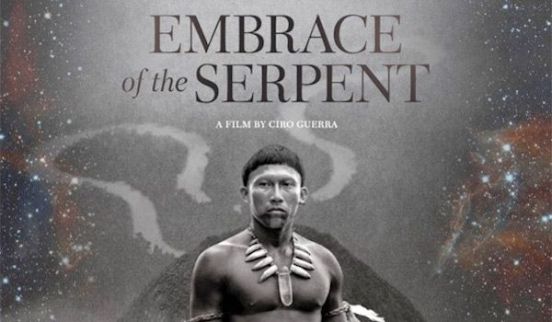
It’s our pleasure today to publish this post, which Hannah Coleman (below right), a member of the Georgia Law Class of 2017, wrote during her spring semester course on International Human Rights Law. Reviewing the feature-length, black-and-white drama Embrace of the Serpent (2015), by Colombia filmmaker Ciro Guerra, Hannah writes:

colemanEmbrace of the Serpent opens with the image of an Amazonian shaman, Karamakate, dressed in the authentic dress of his people. The man peers out over the river and quickly stands up as if he senses something. Then, a long boat pulls in between the trees with two men on board. Karamakate urges the two men to turn around and leave, but the boat continues to move closer and closer. Then, Karamakate pulls out a weapon and threatens the strangers to leave this place immediately. The audience can sense Karamakate’s tension and distrust of these travellers. Regardless of his warnings, the men do not stop, and the boat pulls ashore.

One man, Manduca, appears to be a native of the Amazon, but he is dressed in what Karamakate describes as “white man clothes.” Manduca refers to the second man, a white scientist from Germany named Theo, as his travel partner, and describes Theo’s rapidly weakening state. Karamakate is resistant to the new men, but his interest is peaked when Theo tells him there are still members of his tribe alive in another part of the jungle. The three men eventually set out on a journey, to find a sacred healing plant that they believe will rid Theo of his illness, and to find Karamakate’s people.

The audience is unaware of exactly what time period the film is set in, but the director provides clues in the form of discussions about white rubber barons coming into the forest and forcing the indigenous people into slavery in order to capitalize on the forest’s rubber trees.

The director skillfully focuses the audience’s attention on the impact the colonization is having on the indigenous people by concentrating on the journey of the men. Each time the men pull onto a riverbank to collect supplies, take a break, or camp for the evening, they meet someone different. With each interaction, the audience gains more insight into the horrors the indigenous people are facing due to the rubber barons, and we learn more about why Karamakate distrusts everyone. At one point, the three men arrive at a mission. This part was particularly interesting and disturbing because these people were stripped of their culture and forced into European practices. The mission consists only of young boys who are wearing white robes and not allowed to speak their native language. It was extremely sad to see all of these boys, taken from their parents at a young age, and forced to forget about their past.

After a while, a second story is skillfully woven into the movie’s plot. This story takes place several years later and involves Karamakate and another white man named Evan. Evan is following the diaries of Theo in order to find the same sacred plant Theo needed to cure his sickness. This second story is even more gut wrenchingly sad than the first, because Evan finds Karamakate in the same place that Theo and Manduca found him, only many years have passed, and Karamakate is still alone. It is clear that Karamakate’s memory is fading as he cannot tell Evan any details about his first trip with Theo and Manduca. But he agrees to help Evan find his way to the sacred plant.

boatAs these two follow the same pathway that Karamakate took many years before with Theo and Manduca, the audience is horrified to discover the lasting impact that the colonization has had on the Amazonian cultures. The most disturbing part of this story occurred when the two men arrived at the mission. They discover that this tribe of people has gone mad from engaging in cannibalism and likely inbreeding given their segregation from others. There are no Europeans left at the mission, so the tribe has taken some of the traditional Christian practices and interpreted them. This includes one man claiming to be Jesus Christ and tribe members forced to commit suicide. This portion of the film left a very powerful image of the horrors that entail when a group of people come into a community, strip them of their history, provide new practices, and then leave them confused and alone.

Until this movie, I had no knowledge about the European invasions of the Amazon to collect rubber, and the impact that this colonization had on the numerous cultures in that part of the world. The film demonstrates the impact on the indigenous people through Karamakate. He is the last remaining member of his tribe. Now, Karamakate has resolved himself to live in solitude where he is engrossed in loneliness. The impact of his solitude is really felt when the movie enters into the second story where Karamakate is the only man, living in the same place, alone, struggling to remember his past, and believing he is merely a shadow of his former self that walks the earth detached from his body. I can imagine many tribes in this region felt a very similar impact on their cultures during this invasion of their land. As their people are killed off, their traditions begin fading with their memories.

In my opinion, the most impactful statement of the whole movie was the dedication at the very end. While these images of death, destruction, and the loss of entire cultures, the director chose to end the film by dedicating the work to the song of those cultures and the songs we will never know. Those words have resonated with my since I saw the film. I am struck with such sadness that entire tribes have been forgotten; it is almost as if they never existed.

I am left thinking about how many times this phenomenon has occurred. Where the world calls for an item, such as rubber, so people invade, kill, and destroy everything in their wake in order to satisfy a desire. This being my first human rights class and my first international law class, this film demonstrated to me, once again, the importance of human rights and the uniting of nations to assure that people are not being stripped of their rights. I always knew that issues like this existed, but I never fully grasped the gravity of some of these events. It is interesting, sometimes it takes a movie based on true events to cause people, like me, to realize how history has a way of repeating itself. If we do not take care and protect people, we will continue to witness travesties such as the ones described in Embrace of the Serpent.
Center officer to visit China as World Affairs Council Young Leaders Fellow

kate - CopyPleased to announce that Kathleen A. Doty, our Center’s our Associate Director of Global Practice Preparation, has just been chosen as a World Affairs Council of Atlanta Young Leaders China Fellow.

She and nine other area professionals under forty will take part in an expenses-paid, ten-day journey to four cities in China: Beijing, Shanghai, Suzhou, and Hangzhou.

Selection criteria for this Fellowship included global leadership qualities and ability to contribute to U.S.-China relations. Accordingly, during the October 2016 trip, Fellows will engage with media and business leaders, government agencies, and universities, in addition to touring cultural attractions like the pavilionGreat Wall and the China Pavilion at right, which was constructed for Shanghai World Expo 2010.

Doty, pictured at top, joined our Center in October after several years practicing international law in Washington, D.C. She was Assistant Counsel for Arms Control and International Law at the Office of the General Counsel, Strategic Systems Programs, U.S. Department of the Navy, and before that, Attorney-Editor at the American Society of International Law and Managing Editor of the Society’s American Journal of International Law.

At Georgia Law, Doty’s portfolio includes conceptualization and administration of: the Center’s Global Governance Summer School, a partnership with the Leuven Centre on Global Governance Studies in Belgium; Global Externships Overseas and At-Home; and research projects and academic-year programming. Her Fellowship thus promises both to strengthen our Center’s ties with our community and to make connections that will help us enhance our students’ global practice experience.

Our newest Masters of Laws

Saturday was the University of Georgia School of Law commencement, and we were very pleased to welcome to our community of nearly 500 LLM graduates the 15 talented lawyers pictured below. Congratulations to our newest Masters of Laws!

IMG_7955

Our LLM Class of 2016 posed on Graduation Day for a photo with Laura Tate Kagel, our Center’s Director of International Professional Education (bottom right). From left, the new alums are: top, Elisha Atulomah, Miguel David Medina Cordoba, Mahemud Tekuya, and Fazle Rabbi Chisty; middle, Huajin Tang, Kun Wang, Simon Wolffram, Xiao Zhang, and Deborah Nogueira-Yates; bottom, Ekaterina Knapik, Gladys Ashiru, Nastasja Spee, Socorro Moctezuma Flores, Tingting Tang , and Oluwakemi Kusemiju.

Summer 2016 GEOs: Georgia Law students ready to take on the world

GEO blog post photoThis summer, ten law students will benefit from international placements through the Global Externship Overseas, or GEO, administered by Georgia Law’s Dean Rusk International Law Center.

These students have been awarded funding to enable them to earn legal training in law firms, in-house legal departments, government agencies, and nongovernmental organizations around the world. Practice areas span a range, including refugee law, property law, criminal law, corporate law, and cultural heritage law.

2016 GEO participants include several rising 3Ls, who are headed to Europe and Asia:

► Bradley Dumbacher – GÖRG, Cologne, Germany
► Shirley Kathryn Griffis – Maples Teesdale, London, United Kingdom
► Brenny B. Nguyen – Boat People SOS, Bangkok, Thailand
► Jianan Zhang – Lenovo & Han Kun Law, Beijing, China

Numerous rising 2Ls also will be working ’round the world:

► Megan Alpert – GÖRG, Cologne, Germany
► Victoria Barker – DLA Piper, St. Petersburg, Russia
► Decker McMorris – Tosetto, Weigmann e Associati, Milan, Italy
► Claire Provano – Studio Legale Associato Rossini, Turin, Italy
► Carson Stepanek – Tosetto, Weigmann e Associati, Milan, Italy
► Hannah Mojdeh Williams – Department of Intangible Cultural Heritage, Ministry of Culture and Fine Arts, Phnom Penh, Cambodia

We congratulate them all on their GEO acceptance, and wish them an enriching summer. Can’t wait to hear travel notes!

Cade comments on immigration ruling

Cade_JasonOct15 - CopyGeorgia Law Professor Jason A. Cade was among the immigration law scholars providing media commentary on a decision that the U.S. Supreme Court issued on Thursday.

At issue was the interpretation of a term in the federal immigration statute: “aggravated felony.” An undocumented immigrant found to have been convicted of a crime that amounts to this type of felony is to be removed from the United States. In the case under review, Luna Torres v. Lynch, a 5-member Court majority construed the term in a way that eases prosecutors’ burden of establishing that the crime of conviction was “aggravated.”

Professor Cade (above) is an immigration law expert who leads Georgia Law’s Community HeLP Clinic and also serves on our Dean Rusk International Law Center Council. Regarding the judgment in in Luna Torres, Cade said in a Bloomberg BNA: Criminal Law Reporter article:

“I think it’s fair to say that the majority was simply uncomfortable with an interpretation of the aggravated felony provision that would have made it more difficult for the government to remove some very serious noncitizen offenders.”

The article is available in PDF here; the Court’s decision, in PDF here. Professor Cade’s publications may be accessed here.