Georgia Professor Greg Day presents at Japan’s Fair Trade Commission Symposium

University of Georgia Professor Greg Day was recently invited to present “The Evolving Landscape of Dark Patterns in the United States” at Japan’s Fair Trade Commission symposium titled Dark Patterns: The Role of Competition Policy on Deceptive Web Designs. Day’s presentation centered around antitrust, consumer protection laws, and dark patterns.

Below is a description of the symposium:

There are a variety of acts known as “dark patterns,” such as forcing consumers to register as members when browsing or purchasing products, or obscuring important information for consumers. These acts of dark patterns not only disadvantage consumers and other users, but there are also concerns that they may harm fair and free competition between businesses that use dark patterns and those that do not use such means. It is necessary to consider how to address the issue of dark patterns from the perspective of Antimonopoly Act and competition policy.

This symposium will include speeches and a panel discussion regarding current situation of dark patterns, their regulatory trends and future issues in Japan and abroad, and the way competition policy should approach dark patterns.

Day is an Associate Professor of Legal Studies at the Terry College of Business and holds a courtesy appointment in the School of Law. He is also an Affiliated Fellow at Yale Law School’s Information Society Project as well as the University of North Carolina’s Center for Information, Technology, and Public Life. His research has primarily focused on the intersection of competition, technology, innovation, and privacy as well as the disparate impact of anticompetitive conduct.


Georgia Law’s Environmental Law Association hosts Fernanda Hopenhaym, member of the UN Working Group on Business and Human Rights

Earlier this month, the University of Georgia School of Law’s Environmental Law Association hosted Fernanda Hopenhaym, member of the UN Working Group on Business and Human Rights, for a virtual event entitled “Corporate Environmental Responsibility: International Legal Frameworks and US Performance.” Georgia Law Professor Christopher M. Bruner, Stembler Family Distinguished Professor in Business Law & Faculty Co-Director of the Dean Rusk International Law Center, moderated the conversation.

Hopenhaym and Bruner discussed the connection between environmental sustainability and human rights, exploring key dynamics, including how communities can suffer when their rights to food, clean water, and fair working conditions are compromised and how corporations are voluntarily improving their practices, but the complexity of their structures—spanning subsidiaries and global supply chains—makes full due diligence difficult. They also talked about where the U.S. stands on corporate compliance and the challenges in providing remedies for affected communities. They concluded the event by discussing the future of corporate accountability, particularly in the context of the ongoing UN Treaty on Business and Human Rights (BHR) process.

Hopenhaym is Co-Executive Director at Project on Organizing, Development, Education and Research (PODER), an organization in Latin America dedicated to corporate accountability. For twenty years, Ms. Hopenhaym has worked on economic, social and gender justice. Since 2006 Ms. Hopenhaym has been working on issues related to human rights and financial institutions and in the last ten years, she has focused specifically on business and human rights, working to advance corporate accountability and strengthen respect for human rights vis-a-vis private and public investments or development projects, and private sector operations. She has been involved in processes related to the implementation of the UN Guiding Principles, as well as in other processes regarding relevant instruments, such as the Binding Treaty negotiations and due diligence laws. She has conducted research on cases related to corporate impact on human rights and the environment and worked with and accompanied local communities affected by public/private projects in their pursuit of justice and remedy. She has conducted advocacy in the LAC region and globally to advance corporate accountability and human rights as well as leading training and capacity building on business and human rights related issues. From January 2019 to December 2021, Ms. Hopenhaym was Chair of the Board of ESCRNet, the international network for economic, social and cultural rights; she has been a board member of EarthRights International since early 2021 and an adviser to the Business and Human Rights Award Foundation since early 2020.

Georgia Law’s Environmental Law Association “seek[s] to further the development and advancement of environmental law through activities designed to increase environmental awareness among members of the community at large and the student bodies of the University of Georgia and the Georgia School of Law.” This year’s ELA President, Kellianne Elliott (J.D. ’26), and Carolina Ruiz (LL.M. ’26) organized this event.

Georgia Law Professor Christopher Bruner presents at Bucerius Law School in Hamburg, Germany

University of Georgia School of Law professor Christopher M. Bruner delivered his presentation “A Political Economy of Corporate Sustainability Reform in the United States” at the Sustainability in Corporate Law Conference at Bucerius Law School in Hamburg, Germany.

Bruner is the Stembler Family Distinguished Professor in Business Law at the University of Georgia School of Law and serves as a faculty co-director of the Dean Rusk International Law Center. He holds a courtesy appointment at the UGA Terry College of Business. Bruner teaches a range of corporate and transactional subjects, and he has received the School of Law’s C. Ronald Ellington Award for Excellence in Teaching.

Georgetown Law professor Katrin Kuhlmann presents working paper at International Law Colloquium

The University of Georgia School of Law’s spring 2025 International Law Colloquium welcomed Professor Katrin Kuhlmann, who presented her working paper, “Micro International Law.” Greg Day, Associate Professor in the Terry College of Business at the University of Georgia, served as Kuhlmann’s faculty discussant.

Kuhlmann is the Faculty Director and Co-founder of the Center on Inclusive Trade and Development at Georgetown Law. Her scholarly focus lies in international law, development, inclusive and sustainable international trade law, regional trade agreements, agricultural law and food security, comparative economic law, African trade and development law and corridors, and the interdisciplinary connections between law and development.

Below is an abstract of Kuhlmann’s working paper:

International law has long been viewed as the domain of countries and capitals, not fields or factories, but this overly top-down perspective misses a critical and under-studied part of the picture. Underneath the macro level of standardized legal norms, international law is much more nuanced, with multiple sites of influence, production, design, adoption, and decision-making that scholars have largely neglected but which need to be better understood. Models stemming from legal systems in less powerful states, smaller-scale stakeholder interests, and local solutions are often treated as one-off anecdotes or isolated case studies without broader implications.

Capturing these lessons, cataloging them, and building a methodology around them could be transformational at a time when international law needs a refresh to make it more responsive to a new set of global challenges ranging from inequality to food insecurity to climate change.

This paper presents a conceptual and methodological framework for “micro international law” as a sub-field of international law. Adding a micro dimension to international law would bring it in line with other disciplines that recognize the importance of studying smaller-scale, more granular interventions. It would also make a significant contribution to the international legal field by integrating theoretical and empirical approaches to focus on the impact innovations within domestic legal systems and the interests of individuals have on international law (and the impact of international law on these systems and stakeholders), ultimately providing a framework for designing international law differently to equitably address more specialized needs and positively impact the lives of those international law aims to serve and benefit.

This year, Professor Desirée LeClercq is overseeing the colloquium, which is designed to introduce students to features of international economic law through engagement with scholars in the international legal field. To view the full list of International Law Colloquium speakers, visit our website.

This program is made possible through the Kirbo Trust Endowed Faculty Enhancement Fund and the Talmadge Law Faculty Fund.

Georgia Law Professor Christopher Bruner featured in Insurance Day

University of Georgia School of Law professor Christopher M. Bruner was featured in Insurance Day, published by London-based Lloyd’s List Intelligence. The article by Ben Margulies, titled “Can the UK Capture Captives?,” discusses the UK government’s effort to create a competitive captive insurance regime.

Bruner shared his thoughts on the factors that make a jurisdiction attractive for establishing captive domiciles, suggesting that smaller jurisdictions can offer fast and flexible policymaking processes. Their small size “makes co-ordination much easier among all the relevant public and private constituencies and it renders their commitment to attractive regulatory structures more credible. They’re highly dependent on these service offerings economically and the market knows it.” London, however, offers competitive advantages in its own right. “London’s main advantage is the extraordinary breadth and depth of corporate and financial services offerings in one place,” Bruner explains. “It’s the ultimate one-stop shop, including in risk management, which provides a strong foundation in the form of pre-existing professional and regulatory know-how.”

Christopher M. Bruner is the Stembler Family Distinguished Professor in Business Law at the University of Georgia School of Law and serves as a faculty co-director of the Dean Rusk International Law Center.

Georgia Law Professor Christopher Bruner featured on Law360

University of Georgia School of Law Professor Christopher M. Bruner was featured on Law360 regarding opportunities for international law firms amid shifting geopolitical landscapes. The article titled “What’s Next For The Global Legal Market In 2025?” was written by Cara Bayles and published December 5, 2024.

From the article:

Shrinking markets may even present opportunities for firms that “lean into the geopolitical conflict,” by representing Chinese companies in contentious regulatory matters with the U.S., according to Christopher Bruner, a professor of business law and international law at the University of Georgia School of Law.

“What for one firm might pose risks in terms of how they operate in China, for another might present opportunities if they are helping companies navigate those choppy geopolitical waters,” he said.

Christopher M. Bruner is the Stembler Family Distinguished Professor in Business Law at the University of Georgia School of Law and serves as a faculty co-director of the Dean Rusk International Law Center.

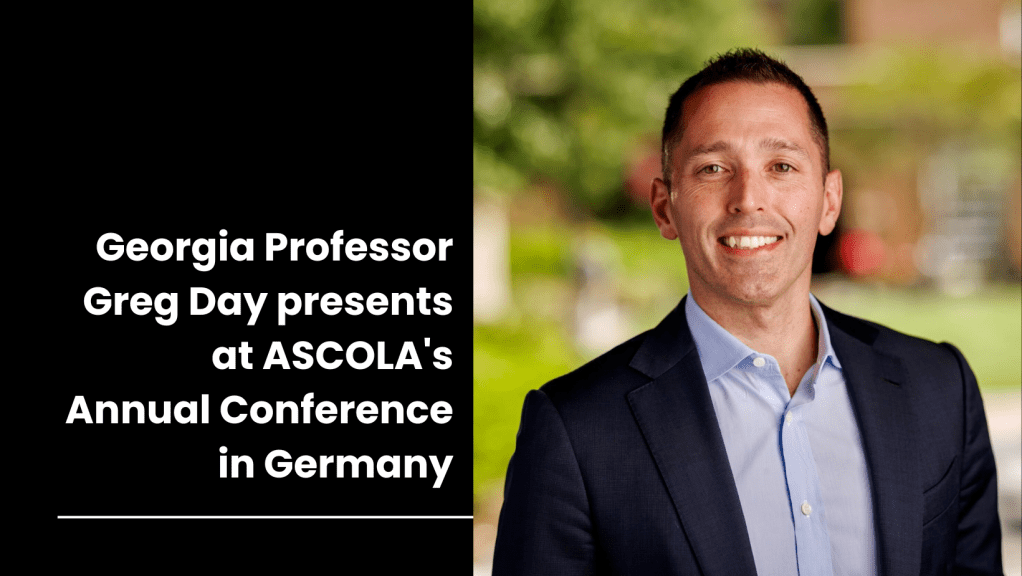
Georgia Professor Greg Day presents at ASCOLA’s Annual Conference in Germany

University of Georgia Associate Professor of Legal Studies Greg Day recently presented research at the 19th American Society for Competition Law (ASCOLA) Annual Conference in Würzburg, Germany. The conference brings together about 120 scholars doing research in competition law, economics or policy from all over the world. 

Greg Day is an Associate Professor of Legal Studies at the Terry College of Business and holds a courtesy appointment in the School of Law. He is also an Affiliated Fellow at Yale Law School’s Information Society Project as well as the University of North Carolina’s Center for Information, Technology, and Public Life. His research has primarily focused on the intersection of competition, technology, innovation, and privacy as well as the disparate impact of anticompetitive conduct.

Georgia Law Professor Bruner gives keynote address at Ghent University Law School in Belgium

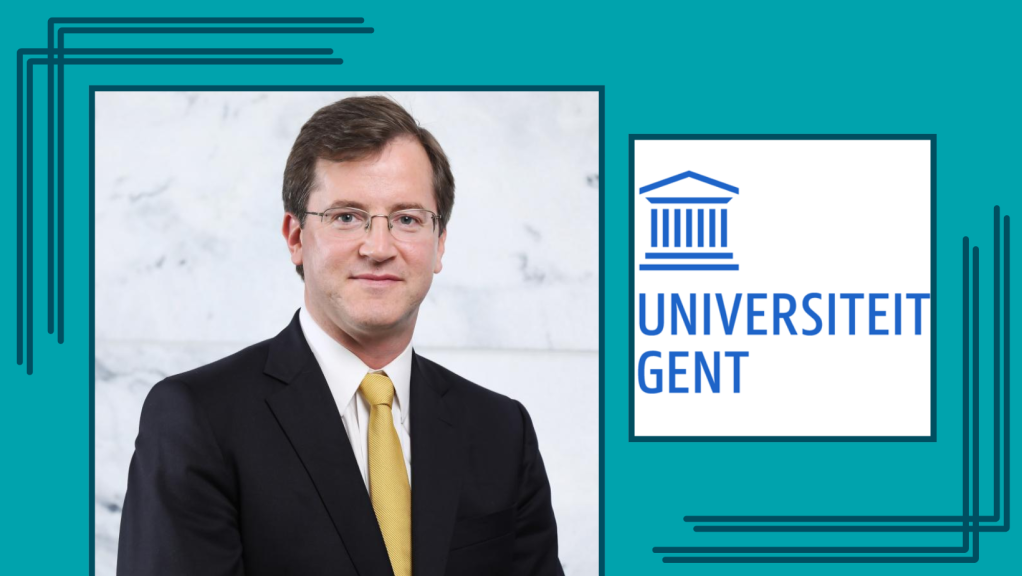
Christopher M. Bruner, Stembler Family Distinguished Professor in Business Law and Faculty Co-Director of the Dean Rusk International Law Center, gave the keynote address for a symposium on “Corporate Sustainability Due Diligence (CSDD), Sustainability, and Corporate Law” at Ghent University Law School in Belgium during May. Bruner’s keynote was titled “Developments and Debates on Corporate Sustainability in the US,” and the symposium was co-sponsored by the journal European Company Case Law (ECCL).

Georgia Law Professor Bruner presents at London School of Economics and Political Science (LSE)

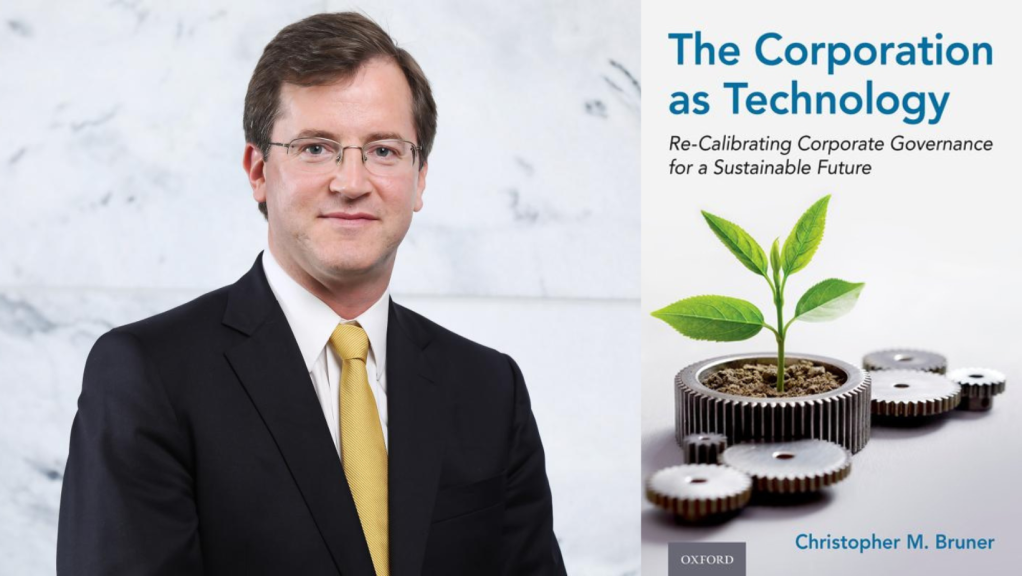
Christopher M. Bruner, Stembler Family Distinguished Professor in Business Law and Faculty Co-Director of the Dean Rusk International Law Center, presented his book, The Corporation as Technology: Re-Calibrating Corporate Governance for a Sustainable Future (Oxford University Press 2022) at the London School of Economics and Political Science (LSE) in June.

Below is a description of the book:

Recent decades have witnessed environmental, social, and economic upheaval, with major corporations contributing to a host of interconnected crises. The Corporation as Technology examines the dynamics of the corporate form and corporate law that incentivize harmful excesses and presents an alternative vision to render corporate activities more sustainable.

The corporate form is commonly described as a set of fixed characteristics that strongly prioritize shareholders’ interests. This book subverts this widely held belief, suggesting that such rigid depictions reinforce harmful corporate pathologies, including excessive risk-taking and lack of regard for environmental and social impacts. Instead, corporations are presented as a dynamic legal technology that policymakers can re-calibrate over time in response to changing landscapes.

This book explores the theoretical and practical ramifications of this alternative vision, focusing on how the corporate form can help secure an environmentally, socially, and economically sustainable future.

Georgia Law Professor Bruner publishes book review in Cambridge International Law Journal

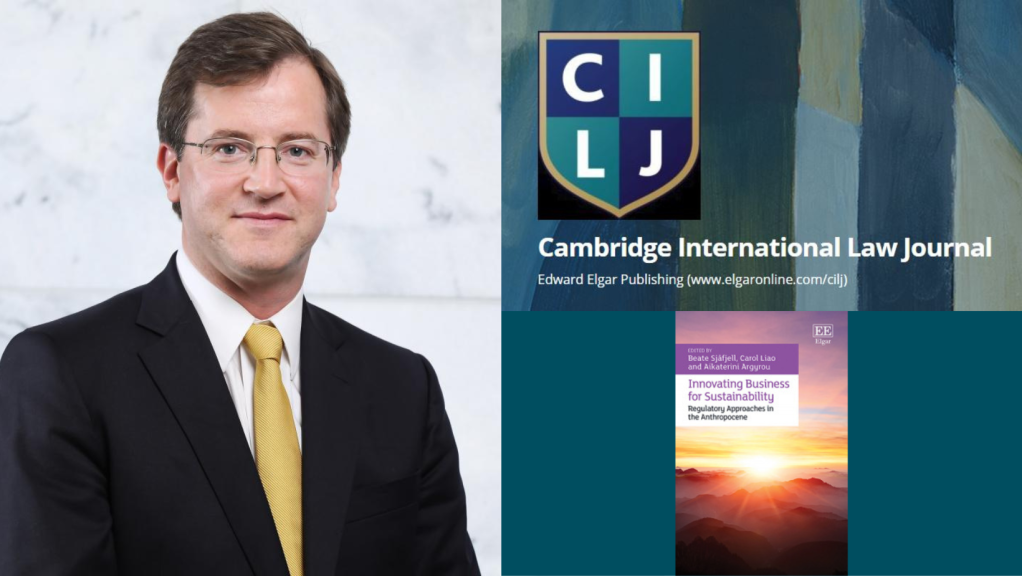
Christopher M. Bruner, Stembler Family Distinguished Professor in Business Law and Faculty Co-Director of the Dean Rusk International Law Center, published a review of a book titled Innovating Business for Sustainability: Regulatory Approaches in the Anthropocene (edited by B. Sjåfjell, C. Liao and A. Argyrou), in the Cambridge International Law Journal in December.

Below is a description of the book:

Challenging current attitudes to governance and regulation in business, this timely book ascertains how regulatory approaches can innovate to ensure sustainable business that contributes to social justice for current and future generations within ecological limits.

Combining a research-based approach with a gendered perspective of how sustainability goals are shaped and how businesses should engage with them, this pioneering book creates a comprehensive and contemporary understanding of what sustainability means for business. Identifying the limitations of current approaches to gender and equality alongside the weaknesses of current regulatory and theoretical approaches in business, chapters seek to enhance the practical understanding and embeddedness of sustainability into business within legal and regulatory landscapes. Insights from an international collection of expert scholars in fields ranging from sustainability science to law offer meaningful alternatives to the sustainable business status quo on both conceptual and concrete levels.

Providing a regulatory analysis of business positioned in a systems-based sustainability research framework, this book will prove an invaluable resource for students and scholars of sustainability science, business and management, and law and regulation. With practical insights, it will also prove essential for policymakers working in business regulation and sustainability in business.

Prior posts on Bruner’s scholarship can be found here.