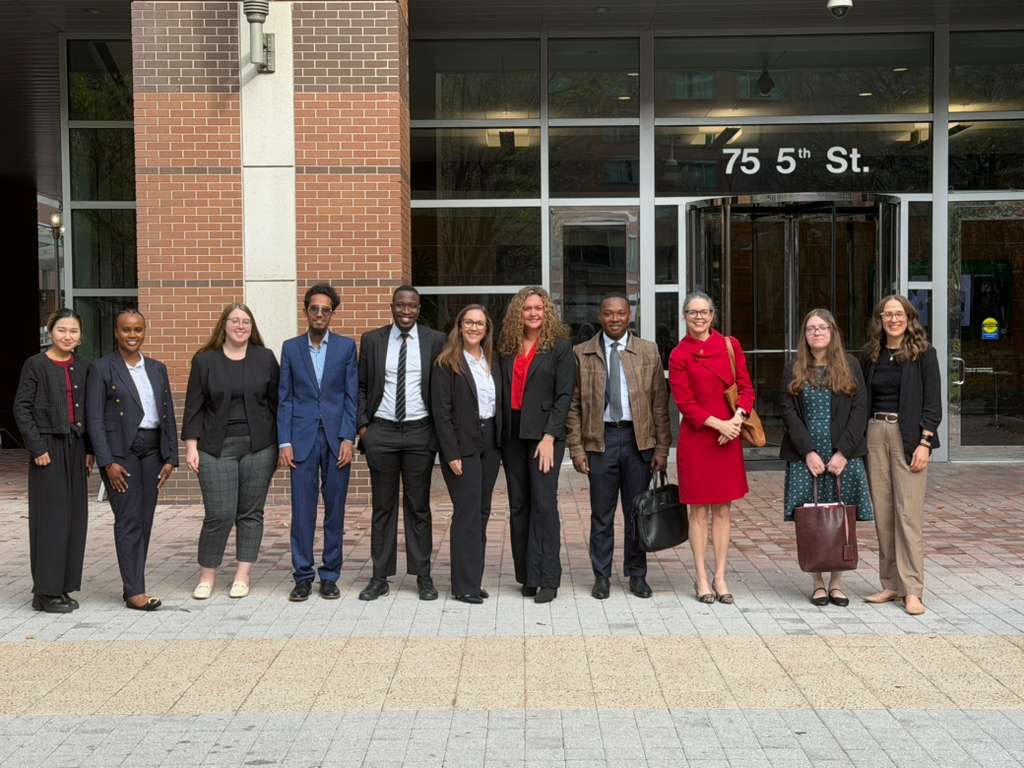
Margaret Mullins, former Senior Advisor to the Deputy Secretary of Defense, speaks about careers in national security at Georgia Law

Margaret Mullins, former Senior Advisor to the Deputy Secretary of Defense and current Director of Public Options and Governance at the Vanderbilt Policy Accelerator, delivered a talk this week to University of Georgia School of Law students entitled: “A Conversation with Margaret Mullins: Career Opportunities in National Security”.

In conversation with Georgia Law student Isaac Clement (J.D. ’27), Mullins discussed her career trajectory in national security. She provided law students with an overview of her educational background as well as her work in the Army, on Capitol Hill, with the U.S. Department of Defense, and in academia. She answered questions from law students about military and national security law, the intersections of law and policy, considerations for political and apolitical work, the importance of international education and language learning, and general advice for students interested in national security careers.

This talk was co-sponsored by the International Law Society, Armed Forces Association, Middle Eastern Law Students Association, and Law Democrats.

Students were invited to continue the conversation at Mullins’ evening lecture, “The Myths of the Last Supper: The Lessons of History and the Future of Defense Procurement”, presented as part of the Benson-Bertsch Center for International Trade & Security‘s 2025-2026 Global Decisions Lecture Series. Mullins discussed her recent publication about the history of defense procurement in the United States, debunking several myths surrounding the impacts of the 1993 “Last Supper.”

Mullins is the Director of Public Options and Governance at the Vanderbilt Policy Accelerator, where she researches and writes on defense acquisition and civil service reform. She is also an Assistant Adjunct Professor at Georgetown University’s Center for Security Studies.

Previously, Mullins served as Senior Advisor to the Deputy Secretary of Defense and as Senior Advisor for National Security to the Chair of the U.S. Export-Import Bank. Earlier in her career, she worked in the U.S. Senate on defense and foreign policy issues, including as national security advisor to Georgia Senator Raphael Warnock, and served as an intelligence officer in the U.S. Army, deploying to Afghanistan in 2013.

Mullins holds a BSFS from Georgetown University’s School of Foreign Service, an MPA from Princeton University’s School of Public and International Affairs, and a JD from Georgetown University Law Center. She has been a Council on Foreign Relations Term Member and is a member of the Truman National Security Project.

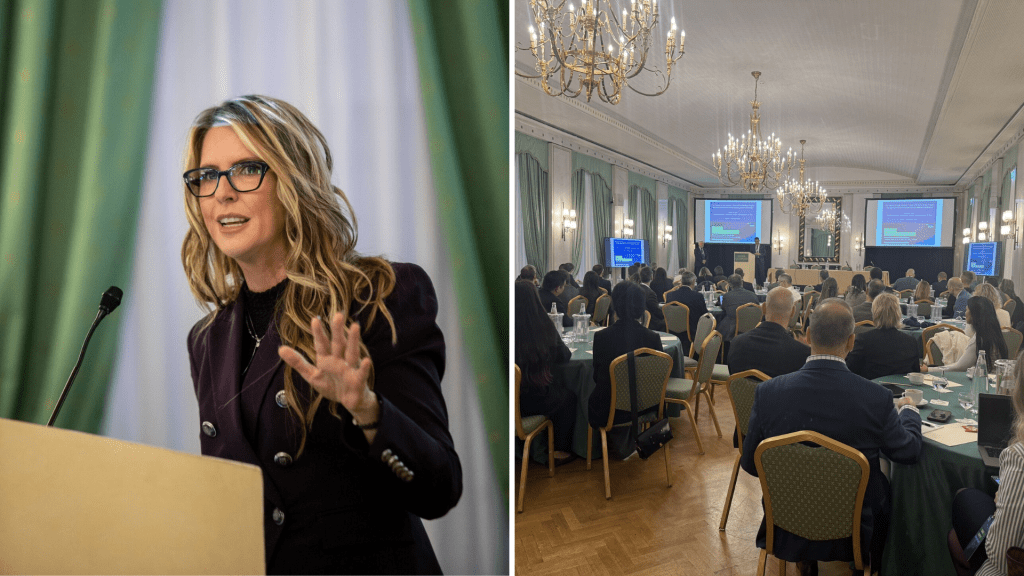
Georgia Law Professor Desirée LeClercq presents at FCDO Trade & Economic Diplomacy Faculty

University of Georgia School of Law Professor Desirée LeClercq recently delivered a presentation for the Foreign, Commonwealth & Development Office’s Trade & Economic Diplomacy Faculty entitled “Growing Employment Through Trade: The Role of Fair Labour Standards.”

LeClercq discussed the evolution of international labor standards, noting how rules once designed to protect workers and improve living conditions are now used by countries such as the United States to enforce rights abroad and reshape global supply chains. Drawing on her experience as director of labour affairs at the Office of the U.S. Trade Representative and as a legal officer at the International Labour Organization, she illustrated this trend through examples from the United States-Mexico-Canada Agreement (USMCA).

LeClercq joined the University of Georgia School of Law in 2024 as an assistant professor. She teaches Contracts, International Trade and Workers Rights, International Labor Law, International Law and U.S. Labor Law, and Public International Law. She also serves as a faculty co-director of the Dean Rusk International Law Center and as the faculty adviser for the Georgia Journal of International and Comparative Law

Dean Rusk International Law Center participates in event at the Halle Foundation in Atlanta

Last week, the University of Georgia School of Law’s Dean Rusk International Law Center participated in a dinner reception celebrating global education and the philanthropic generosity of the Halle Foundation, supporting American-German educational exchange. This event was jointly sponsored by the University of Georgia’s Department of Germanic and Slavic Studies and the Office of Global Engagement.

The mission of The Halle Foundation is to promote understanding, knowledge, and friendship between the people of Germany, as seen in its European context, and those of the United States. In furtherance of this mission, the Foundation supports, primarily through grantmaking, initiatives and activities with a preference to organizations and institutions operating within, or with some discernable connection to, the state of Georgia. UGA has several international mobility initiatives, including Georgia Law’s semester-long Global Externships Overseas (GEO) initiative, that are beneficiaries of the Halle Foundation.

The evening program began with welcoming remarks by Dr. Eike Jordan, Chairman of the Board of Trustees of the Halle Foundation and Dr. Martin Kagel, Associate Provost for Global Engagement, UGA Office of Global Engagement. Then, faculty and administrators at UGA who oversee initiatives benefitting from the Halle Foundation’s support spoke about the impact that their grants have on students. Speakers included: Dr. Jan Uelzmann, Co-Director of Film, Art, and Cultural History in Berlin program; Dr. Heide Crawford, Co-Coordinator of ENGR-GRMN Dual Degree Program, Director of the Freiburg Study Abroad program; and Sarah Quinn, Director of the Dean Rusk International Law Center.

Then, UGA students shared reflections about what their time abroad in Germany meant to them academically, professionally, and personally. Georgia Law student Pace Cassell (J.D. ’26) spoke about her experience as a legal extern at Baker Tilly in Hamburg, Germany during the spring 2025 semester through the semester-long GEO initiative, jointly administered by the Center and the DC Semester in Practice. Cassell is the recipient of a grant from the Halle Foundation, awarded to the law school in summer 2024 to support six students over three years participate in semester-long externships in Germany.

***

Applications are open for fall 2027 semester-long Global Externships Overseas (GEOs). All current 1Ls and 2Ls are invited to submit an application by February 15. For more information and the application, please email: ruskintlaw@uga.edu

Georgia Law alumnus Alexandre Jorge Fontes Laranjeira (LL.M. ’23) presents at EducationUSA LL.M. Fair in Brasília, Brazil

Today, we welcome a guest post by Georgia Law alumnus Alexandre Jorge Fontes Laranjeira, who graduated with his Master of Laws (LL.M.) degree in 2023. Laranjeira recently represented the law school at the EducationUSA LL.M. Fair held in Brasília, Brazil. Laranjeira is currently a Federal Court of Appeals Judge for the First Region in Brazil. In this role, he sits on a three-judge panel that primarily handles appeals related to the role of Federal Regulatory Agencies, and appeals concerning Education Law, Health Law, Patent Law, Environmental Law, and Banking Law. Prior to his current appointment, Laranjeira served as a Federal District Court Judge for nearly 31 years. His extensive judicial career includes overseeing Federal District Courts in four different states across Brazil, with a notable tenure of four and a half years in the Amazon Region. His experience in these diverse jurisdictions has endowed him with a profound understanding of environmental and indigenous populations matters. Before ascending to the bench, Laranjeira was a Career Prosecutor for the Federal District in Brazil, where he honed his legal acumen and prosecutorial skills. Despite residing in Brazil, he is a registered mediator with the Georgia Office of Dispute Resolution, a credential he obtained through the Georgia Law Mediation Clinic course. Laranjeira serves as a member of the Dean Rusk International Law Center’s Advisory Council.

On October 9, 2025, I represented the University of Georgia School of Law at the EducationUSA LL.M. Fair held in Brasília, Brazil. The event was part of the EducationUSA Latin America LL.M. Tour Fall 2025, which included visits to Mexico, Brazil, Paraguay, Uruguay, Argentina, Chile, Peru, and Colombia. The Brazilian portion of the tour covered four major cities (Brasília, Rio de Janeiro, Curitiba, and São Paulo), all of which are among the most significant cultural and academic centers in my home country.

As a member of the Dean Rusk International Law Center Council, I volunteered for this opportunity to engage directly with Brazilian candidates interested in Georgia Law’s Master of Laws (LL.M.) degree program. My goal was not only to connect with prospective students, but also to promote Georgia Law’s international programs within my hometown and among members of the local legal community.

Representing Georgia Law at an international fair was an enriching experience on both personal and professional levels. I interacted with numerous law students eager to pursue international academic opportunities and met many talented and motivated individuals seeking to enhance their legal education abroad. As a Georgia Law LL.M. alumnus, I was able to share firsthand insights about the academic excellence, vibrant community, and welcoming environment that characterize life in Athens, Georgia.

I am deeply grateful to Anelise Hofmann, EducationUSA Country Coordinator, and Jefferson Couto, the local EducationUSA representative in Brasília, for their invaluable support throughout the fair. I also extend my thanks to Mandy Dixon, International Professional Education Manager, and Sarah Quinn, Director of the Dean Rusk International Law Center, for their guidance and for providing all the materials necessary to represent UGA at this important event.

***

MASTER OF LAWS (LL.M.) APPLICANTS: The application for Georgia Law’s LL.M. class of 2027 is now open. Detailed information about the degree program and how to apply can be found here. Recruiting events, both virtual and in-person, are listed here.

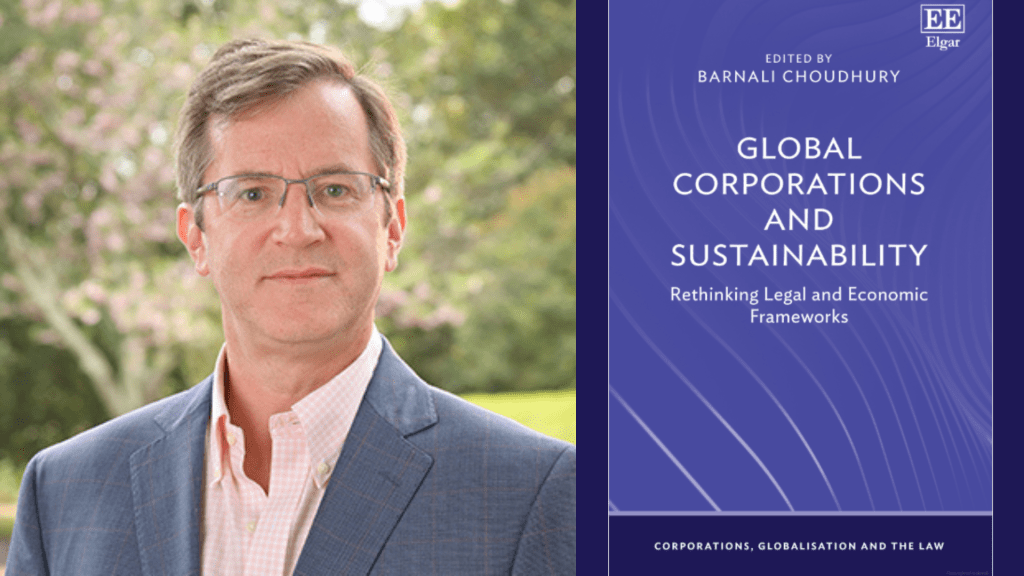
Georgia Law Professor Christopher Bruner presents on multinational value chains at the University of Turin (Italy)

University of Georgia School of Law Professor Christopher Bruner presented “Value Chain Due Diligence and Populist Politics” at the University of Turin in Italy earlier this month. The seminar was co-hosted by the Department of Law and the Department of Economics and Statistics, with Roberto Caranta, Professor, Department of Law, and David Monciardini, Assistant Professor, Department of Economics and Statistics, serving as discussants. The audience included faculty and Ph.D. students.

Bruner is the Stembler Family Distinguished Professor in Business Law at the University of Georgia School of Law and serves as a faculty co-director of the Dean Rusk International Law Center.

Welcoming Johan Van den Cruijce, Visiting Scholar at Georgia Law’s Dean Rusk International Law Center

We at the University of Georgia School of Law Dean Rusk International Law Center are pleased to welcome a new Visiting Research Scholar: Johan Van den Cruijce (LL.M. ’94), Managing Director, Atlas Services Belgium (Orange group) in Brussels, Belgium. He is currently a Postdoctoral Research Fellow at Vlerick Business School (Belgium) and holds dual Ph.D.s in Applied Economics from the KU Leuven and Ghent University. His work focuses on the intersection of law, economics, and corporate finance—especially on how control rights and marketability restrictions affect the valuation of privately held firms.

Dr. Van den Cruijce brings over 25 years of international executive experience in governance, finance and law. He serves as Managing Director at Atlas Services Belgium (Orange group), where he is responsible for the global network of holding companies across Europe and the United States. His work includes M&A, corporate restructuring, treasury and tax strategy, and legal oversight of listed and unlisted entities. He also holds executive and non-executive directorships in Orange group companies in several countries (including Belgium, France, Italy, the Netherlands, Denmark, the U.K. and the U.S.).

Dr. Van den Cruijce has presented at leading international conferences and his academic research has been published in reputable peer reviewed journals. His recent work explores valuation discounts in illiquid markets, the legal-economic role of control in private firms, and the implications of corporate structure on firm value.

He is an alumnus of the University of Georgia School of Law and also holds an MBA degree from the KU Leuven and a law degree from the University of Antwerp. He has completed executive education programs at, amongst others, INSEAD, IESE Business School, London Business School, and Vlerick Business School.

Dr. Van den Cruijce is sponsored as a Visiting Research Scholar by Georgia Law Professor Christopher Bruner, Stembler Family Distinguished Professor in Business Law & Faculty Co-Director of the Dean Rusk International Law Center.

Georgia Law Professor Assaf Harpaz presents at University of Virginia International Business Transactions Guest Lecture Series

University of Georgia School of Law Professor Assaf Harpaz remotely presented his article Global Tax Wars in the Digital Era 75 Am. U. L. Rev. (forthcoming 2025) as part of the University of Virginia International Business Transactions Guest Lecture Series.

The article’s abstract is as follows: 

The digital economy fundamentally disrupts international tax principles that rely on physical presence. When a business earns income abroad, the country of residence (where the taxpayer resides) and the country of source (where income is generated) both have legitimate, competing claims to tax that income. The international tax system tends to favor residence-based taxation. The source country has the right to tax business profits only if the enterprise carries on a permanent establishment within its borders, which typically requires physical presence. The permanent establishment standard becomes flawed in a digital economy where profit shifting practices are abundant and businesses no longer need a physical presence in the location of their online consumer markets. 

An upcoming United Nations (U.N.) Framework Convention on International Tax Cooperation recognizes these challenges and is overwhelmingly supported by Global South economies. However, the Global North has historically dominated the international tax regime through the Organization for Economic Co-operation and Development (OECD), informally known as the “World Tax Organization.” A U.N. framework convention creates potential conflict in international tax policymaking and would need to bridge the underlying North-South divide. 

This Article explores the “tax wars” surrounding the leadership for global tax governance, contrasting the taxing powers and interests of the OECD-led Global North with those of the U.N.-backed Global South. It argues for a shift toward source-based taxation by revisiting the permanent establishment standard. To achieve this, the Article promotes a significant economic presence doctrine that would expand the permanent establishment criteria to include online businesses. This proposal addresses longstanding inequities and is increasingly warranted in a digital economy that does not depend on physical presence. 

Harpaz joined the University of Georgia School of Law as an assistant professor in summer 2024 and teaches classes in federal income tax and business taxation. Harpaz’s scholarly focus lies in international taxation, with an emphasis on the intersection of taxation and digitalization. He explores the tax challenges of the digital economy and the ways to adapt 20th-century tax laws to modern business practices.

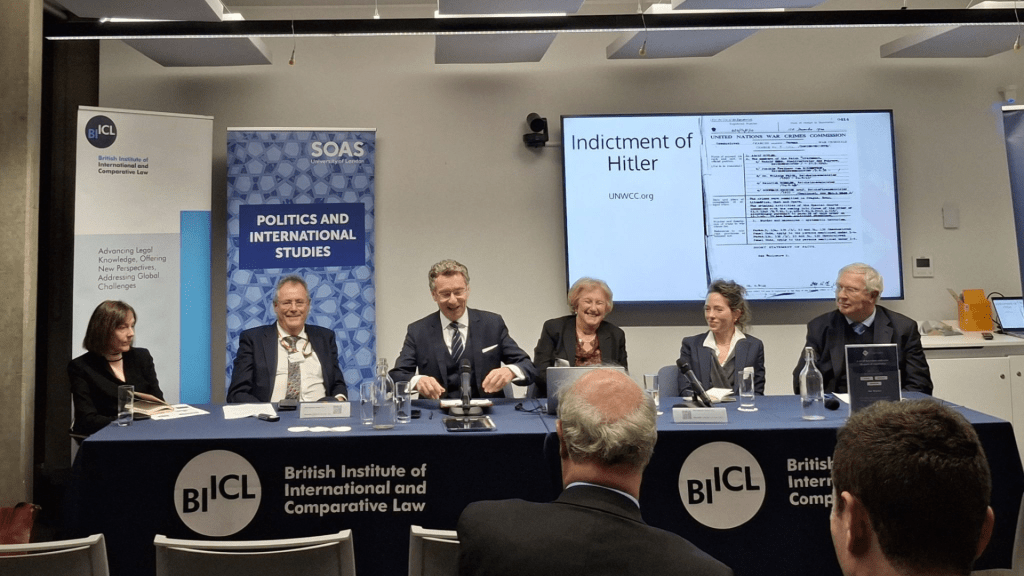
Georgia Law Professor Diane Marie Amann publishes on command responsibility in book on International Criminal Court

Weakening Command Responsibility Doctrine? The Bemba Appeals Judgment,” a chapter by University of Georgia School of Law Professor Diane Marie Amann, has just been published in The International Criminal Court: Legal, Policy, and Political Challenges.

Amann, who is Regents’ Professor of International Law, Emily & Ernest Woodruff Chair in International Law, and a Faculty Co-Director of our Dean Rusk International Law Center here at Georgia Law, is a Visiting Academic this semester at University College London Faculty of Laws.

Her commentary on Prosecutor v. Bemba, a 2018 judgment of acquittal by the ICC Appeals Chamber, first appeared as “In Bemba, Command Responsibility Doctrine Ordered to Stand Down.” It then was included in this 2025 Brill Publishers collection, edited by UCLA Law Professor Richard H. Steinberg. Also contributing to the book’s section on the Bemba judgment were attorney Nadia Carine Fornel Poutou and law professors Miles Jackson (Oxford), Michael Newton (Vanderbilt), and Leila Nadya Sadat (Washington University).

Here’s the abstract for Professor Amann’s essay:

“The acceptance of commander’s responsibility is, in effect, acceptance of authority over persons permitted to kill. With that acceptance comes a heavy burden, grown out of practical and moral concerns and reflected in longstanding legal doctrine. At odds with this burden was the judgment of acquittal that the International Criminal Court Appeals Chamber entered in Bemba in 2018. Originally appearing in an online forum, this commentary argues for a statutory construction that better would serve the purposes of the ICC and the command responsibility doctrine.”

“Crimmigration as Paradigmatic Migration Control in the United States: Exploring the Impact on Communities, Courts, and Attorneys” November 7 Georgia Journal of International and Comparative Law and Georgia Criminal Law Review annual conference

This year’s annual conference of the Georgia Journal of International and Comparative Law will present “Crimmigration as Paradigmatic Migration Control in the United States: Exploring the Impact on Communities, Courts, and Attorneys“. The conference will be offered jointly by the GJICL and the Georgia Criminal Law Review.

The daylong conference will take place on Friday, November 7 in the Larry Walker Room of Dean Rusk Hall at the University of Georgia School of Law. CLE credit is available for both in-person and virtual attendance. Registration information can be found on the conference webpage.

Sponsoring along with GJICL, a student-edited journal established more than 50 years ago, is the law school’s Dean Rusk International Law Center. GJICL Editor in Chief, Casey Smith (J.D. ’26) and Executive Conference Editor Kellianne Elliot (J.D. ’26) worked Georgia Criminal Law Review Editor in Chief Kerolls Gadelrab (J.D. ’26); Professor Jason A. Cade, J. Alton Hosch Professor of Law & Community Health Law Partnership Clinic Director; Center staff Sarah Quinn, Director; Catrina Martin, Global Practice Preparation Assistant; Taher S. Benany, Center Associate Director; and with the GJICL’s Faculty Advisor, Professor Desirée LeClercq, who is Assistant Professor of Law & Faculty Co-Director of the Dean Rusk International Law Center.

Below is the concept note of the conference:

Political and legal developments have precipitated a convergence of the fields of criminal law and immigration law. Now commonly referred to as crimmigration, this merger of previously distinct practice areas already has profoundly reshaped the legal and social terrain for migrants in the United States. While entry and removal decisions remain essentially administrative, enforcement practices and rhetoric increasingly embrace the punitive logic and carceral reach of the criminal legal system, but with fewer due process protections. As new legislation vastly expands detention authorization and other enforcement resources, it seems apparent that the rhetoric and mechanics of crimmigration will continue to dominate immigration policy in the United States for the foreseeable future. 

This symposium, jointly sponsored by the Dean Rusk International Law Center, the Georgia Journal of International and Comparative Law, and the Georgia Criminal Law Review, invites scholars, immigration attorneys and judges to engage with these developments. We hope panelists will collectively address a number of important questions, such as the following: How does the new crimmigration landscape impact immigrants and communities in the Southeast and beyond? What new burdens does it put on the judiciary, and what role do federal courts have today in determining and upholding constitutional and statutory protections for migrants? Does the durability and continued expansion of crimmigration pose new challenges for immigration and criminal law attorneys; and, if so, how are the immigration and criminal law bars responding to those challenges? As crimmigration tactics expand, what new legal threats face U.S. citizens, including family members, employers, and immigrant advocates? Does the crimmigration paradigm contend with or obscure the structural forces that drive migration, particularly from the global south? Are there reasons to hope or expect the emergence of alternatives to crimmigration as the governing paradigm for the regulation of immigrants in the United States? 

These conversations will occur through three panels and a lunchtime keynote speaker. 

The day’s events are as follows:

9:30am | Opening Remarks

Usha Rodrigues, Dean, University Professor & M.E. Kilpatrick Chair of Corporate Finance and Securities Law

9:35am | Panel 1: Introduction to Crimmigration & the Current State of Affairs

  • Abel Rodríguez, Assistant Professor of Law, Wake Forest Law
  • Shalini Ray, Associate Professor of Law and Director of Faculty Research, Alabama Law
  • Gracie Willis, Attorney, National Immigration Project
  • Moderator: Christian Turner, Associate Professor of Law, University of Georgia School of Law

10:35am | Break

10:45am| Panel 2: The Impact of Crimmigration Policies on Communities and Advocates 

  • Jessica Vosburgh, Senior Staff Attorney, Center for Constitutional Rights
  • Jenny R. Hernandez, Lead Senior Attorney at Immigration Defense Unit, City of Atlanta Office of the Public Defender
  • Carolina Antonini, Founding Partner, Antonini & Cohen Immigration Law
  • Moderator: Elizabeth Taxel, Clinical Associate Professor & Criminal Defense Practicum Director, University of Georgia School of Law

12:00pm | Keynote Introduction

Jason A. Cade, J. Alton Hosch Professor of Law & Community Health Law Partnership Clinic Director, University of Georgia School of Law

12:05     Keynote Address

Judge Ana C. Reyes, United States District Court, District of Columbia

1:00pm | Panel 3: Challenging the Legality of Migration Controls & Envisioning Reform

  • Daniel I. Morales, Associate Professor of Law; Dwight Olds Chair, The University of Houston Law Center
  • Rebecca A. Sharpless, Associate Dean for Experiential Learning, Professor of Law, Director, Immigration Clinic, University of Miami School of Law
  • Emily Torstveit Ngara, Director of Clinical Programs, Associate Clinical Professor and Director, Immigration Clinic, Center for Access to Justice, Immigration Law Clinic, Georgia State University College of Law
  • Moderator: Jason A. Cade J. Alton Hosch Professor of Law & Community Health Law Partnership Clinic Director, University of Georgia School of Law

2:00 | Closing Remarks

Casey Smith, Editor in Chief, Georgia Journal of International and Comparative Law

Georgia Law Professor Christopher Bruner presents keynote at University of Turin (Italy) symposium   

University of Georgia School of Law Professor Christopher Bruner presented the keynote address for a symposium titled “Sustainability is (Still) Possible! Governing Market Actors for a Safe and Just Space” at the University of Turin (Italy) in September. Bruner’s keynote was titled “Corporate Sustainability and Anti-ESG Backlash” and the symposium was co-sponsored by Turin’s Department of Law and Department of Economics and Statistics. 

Bruner is the Stembler Family Distinguished Professor in Business Law at the University of Georgia School of Law and serves as a faculty co-director of the Dean Rusk International Law Center.