Georgia Law’s annual Advocate magazine features our Center

SAs_Spr16

This Spring 2016 photo depicts Pedro Dorado, our Center Fellow, who earned his LLM in 2015 and is a candidate for the Georgia Law JD degree in 2017, and 4 of our Student Ambassadors. At left are Danielle Glover and Taryn Arbeiter, both now 2Ls; at right are Chanel Chauvet, now a 2L, and Olga Gambini, who earned her Georgia Law LLM in 2014 and JD in 2016.

Very pleased that our Dean Rusk International Law Center is featured in the just-released Advocate, the annual magazine of the University of Georgia School of Law. Highlights of the volume include the May 2016 commencement address of alumna Sally Yates, now Deputy Attorney General of the United States, and much more. The article recounting our 2015-16 achievements – “Center undergoes exciting changes” – appears at page 24, along with a version of the photo above. It’s reprinted here in full.

Georgia Law’s 38-year-old Dean Rusk International Law Center continues to expand its collaborative efforts and increase opportunities for both students and faculty to focus on global legal issues.

Led by Associate Dean for International Programs and Strategic Initiatives & Woodruff Chair in International Law Diane Marie Amann, the center itself has a new, modernized look that also acknowledges the rich history of international scholars who have greatly influenced the direction of the law school. Artwork is a focal point, including portraits of former U.S. Secretary of State and Sibley Professor of International Law Emeritus Dean Rusk, the center’s namesake, and the inaugural holder of the Woodruff Chair in International Law, Louis B. Sohn, namesake of the center’s Sohn Library on International Relations.
At an October rededication ceremony, Kannan Rajarathinam (LL.M.’88), who serves as head of office for the United Nations Assistance Mission for Iraq, delivered a keynote address titled “The United Nations at 70: Pursuing Peace in the 21st Century.”

New to the center this year are Director of Global Practice Preparation Kathleen A. Doty, Administrative Assistant Martica Marín and Executive Administrator Elena Williams. They join Amann and Director of International Professional Education Laura Tate Kagel (J.D.’06). Assisting them are second-year student Pedro Dorado, the Dean Rusk International Law Center Fellow, and about one dozen other student ambassadors, who provide research and other support.

In addition to hiring new staff, the center broadened its adviser base. The Dean Rusk International Law Center Council, comprising faculty, alumni/alumnae and counselors, includes lawyers practicing in a variety of international and transnational law subfields throughout the world.
Center initiatives include study abroad in Europe and opportunities to obtain practice experience through the Global Externship At-Home and Global Externship Overseas. GEA offers placements within the United States in legal departments, government offices and nongovernmental organizations, while GEO offers summer placements in a variety of law-office settings around the world.

Numerous events are planned for the 2016–17 academic year. Among them is a Sept. 23 conference – sponsored by the center, the Georgia Journal of International & Comparative Law and the International Committee of the Red Cross – at which experts will examine the new Geneva Convention Commentary edited by ICRC Legal Advisor Jean-Marie Henckaerts (LL.M.’90).

GJICL publishes “Children and International Criminal Justice” issue

gjicl43_3

Very pleased to announce that papers from a Georgia Law conference “Children & International Criminal Justice” have just been published by our Georgia Journal of International & Comparative Law.

The conference was cosponsored by Dean Rusk International Law Center and the Georgia Law Project on Armed Conflict & Children, as well as the university’s African Studies Institute, the Planethood Foundation, and the American Society of International Law-Southeast.

About 2 dozen experts came to Athens, Georgia, from as far as Doha and Kinshasa, to discuss the topic at hand. In so doing, they assisted in the preparation of the International Criminal Court Office of the Prosecutor Policy on Children. As detailed in recent posts, available here and here, the public comment period for the draft of that Policy continues through August 5, 2016, with launch of the final document set for mid-November.

bensouda_me2_28oct14cropA keynote speech by ICC Prosecutor Fatou Bensouda (at right) highlighted our conference, and the text of her speech headlines the edition. Other writings link the work of the ICC to the 1989 Convention of the Rights of the Child, examine the experiences of children in armed conflict and similar situations. Student rapporteurs’ accounts of expert breakout sessions additionally treat a range of issues. All these papers contributed significantly to the Policy process.

The edition concludes with students’ notes apart from the conference; one of these, for which I was honored to serve as faculty adviser, examines the issue of child marriage.

Here, in full, is the table of contents for Volume 43, issue 3, with PDF links to each article:

Children and International Criminal Justice Conference

“Convening Experts on Children and International Criminal Justice,” by yours truly, Diane Marie Amann (above, at left), Associate Dean for International Programs & Strategic Initiatives and Emily & Ernest Woodruff Chair in International Law, and also Prosecutor Bensouda’s Special Adviser on Children in & affected by Armed Conflict

“Children and International Criminal Justice,” by Fatou Bensouda (above, at right), Prosecutor of the International Criminal Court

malone“Maturing Justice: Integrating the Convention on the Rights of the Child into the Judgments and Processes of the International Criminal Court,” by Linda A. Malone (right), Marshall-Wythe Foundation Professor of Law and Founding Director of the Human Security Law Center, William & Mary Law School

drumblm“Children, Armed Violence and Transition: Challenges for International Law & Policy,” by Mark Drumbl (left), Class of 1975 Alumni Professor of Law and Director of the Transnational Law Institute at Washington & Lee University School of Law

“Child Protection in Times of Conflict and Children and International Criminal Justice,” by Kerry L. Neal neal(right), Child Protection Specialist, Justice for Children, UNICEF, New York

“Expert Workshop Session: Regulatory Framework,” by Ashley Ferrelli, Eric Heath, Eulen Jang, and Cory Takeuchi (all Georgia Law graduates, who were members of GJICL)

“Expert Workshop Session: Child Witnesses: Testimony, Evidence, and Witness Protection,” by Chelsea Swanson, Elizabeth DeVos, Chloe Ricke, and Andy Shin (now Georgia Law graduates, all then were members of GJICL)

“Expert Workshop Session: The Global Child,” by Haley Chafin, Jena Emory, Meredith Head, and Elizabeth Verner (all Georgia Law graduates, who were members of GJICL)

Student Notes

“Changing the Game: The Effects of the 2012 Revision of the ICC Arbitration Rules on the ICC Model Arbitration Clause for Trust Disputes,” by Colin Connor

“Water, Water Everywhere, But Just How Much is Clean?: Examining Water Quality Restoration Efforts Under the United States Clean Water Act and the United States-Canada Great Lakes Water Quality Agreement,” by Jill T. Hauserman

“REACHing for Environmental and Economic Harmony: Can TTIP Negotiations Bridge the U.S.-EU Chemical Regulatory Gap?,” by Ashley Henson

“Child Marriage in Yemen: A Violation of International Law,” by Elizabeth Verner

(Cross-posted from Diane Marie Amann)

Rusk Councilmember Teri Simmons (JD89) elected to Sister Cities board

Simmons4282_Headshot_520x282Very pleased to congratulate Teri Simmons, a distinguished Georgia Law alumna and member of our Dean Rusk International Law Center Council, on her recent election to the Board of Directors of Sister Cities International.

As stated on its website,

“Sister Cities International was created at President Eisenhower’s 1956 White House summit on citizen diplomacy, where he envisioned a network that would be a champion for peace and prosperity by fostering bonds between people from different communities around the world.”

Ms. Simmons, who earned her J.D. from Georgia Law in 1989, embodies the network’s slogan, “Peace through People.” Her service to her alma mater has included appearances on careers panels as well as participation in our Center’s Council. She is a partner at the Atlanta law firm of Arnall Golden Gregory, where she leads the firm’s International Immigration and Naturalization Practice and serves as practice leader of its German Business Practice. Among her clients has been the Atlanta Committee for the 1996 Olympic Games.

60th Logo_concept 2She has chaired the Atlanta Sister Cities Commission, and also managed programs with Nuremberg, Germany, one of Atlanta’s 18 sister cities. Fluent in German, she has received honors including a Friendship Award from the German government and the Prize of Honor from the City of Nuremberg. Additionally, Ms. Simmons has chaired the state chapter and served on the board of the American Immigration Lawyers Association.

The announcement of her election appeared in the latest Diplomacy newsletter, distributed by Global Atlanta in partnership with our Center. Details on the partnership and newsletter subscription here; online Diplomacy archive here.

Experts in Hague consultation on ICC prosecutors’ draft Policy on Children

fBopening

THE HAGUE, Netherlands – Experts gathered this week from around the world for a wide-ranging consultation on the International Criminal Court Office of the Prosecutor’s draft Policy on Children.

In her Opening Remarks to Monday’s consultation, Prosecutor Fatou Bensouda explained:

“This Policy, once finalised and adopted, will guide my Office in our ongoing efforts to address international crimes against or affecting children under the Rome Statute, as well as our interaction with children during the course of our work.

“The Policy will further provide clarity and transparency on how we intend to methodologically undertake this crucial work.

“Additionally, it is my hope that this Policy will also serve as a useful guide for national authorities and other actors in their respective endeavours to address crimes against and affecting children, and in their interactions with children in judicial processes.”

Released last month, the draft Policy:

► Reaffirms an oft-repeated commitment of the Prosecutor. To be precise, the Policy reinforces her Office’s concern for “children with weapons” – that is, persons under fifteen who have been recruited or used in armed groups, often called “child soldiers.” But it also details the Office’s concern for what the Prosecutor called “children affected by the weapons” – that is, all persons who, before their 18th birthday, endured crimes within the jurisdiction of the Court.

► Adopts a child-sensitive approach to its dealings with children. That approach recognizes children as both vulnerable and capable, as both needy and resilient – often, at the same time. The Policy pledges sensitivity to these realities according to the regulatory framework of the Rome Statute system, and also according to principles drawn from international instruments, like the 1989 Convention on the Rights of the Child, a treaty that enjoys near-universal ratification and is founding on 4 guiding principles:

  1. The child’s right to be treated without adverse discrimination;
  2. The right to life, survival, and development;
  3. The right to have the child’s best interests taken into account; and
  4. The child’s right to express views and have them considered.

The draft Policy on Children (available in full here) explicitly recognizes those principles and sets out the contours for respecting and ensuring them.

It thus enumerates crimes against and affecting children. Included are crimes of conscription and use, as well as child trafficking as enslavement and forcible transfer as genocide. Also included are crimes like persecution, if it targets children on the basis or age or birth, as well as attacks on schools.

The policy further details the approach of the Office with respect to children at all stages of the proceedings: preliminary examinations, investigations, prosecutions, sentencing, and reparations.

All these aspects received discussion at Monday’s consultation; some are reflected in tweets available at #EndCrimesAgainstChildren. The policy working group will be considered along with other public comments. The Office welcomes additional such comments, which should be sent via e-mail to OTPLegalAdvisorySection@icc-cpi.int no later than Friday, August 5, 2016. The Office anticipates final publication in October of this year.

It was an honor to take part in this consultation in my capacity as the Prosecutor’s Special Adviser on Children in & affected by Armed Conflict – and also to be accompanied at the consultation by one of my Georgia Law students, Chanel Chauvet. (We’re pictured below in front of a mural at the ICC’s new permanent premises.) A  rising 2L and Dean Rusk International Law Center Student Ambassador, Chanel just completed a weeklong Hague summer school on international humanitarian law.

chanel_dianeICC

(Cross-posted from Diane Marie Amann)

Henckaerts on “Locating the Geneva Conventions Commentaries in the international legal landscape”

Jean-Marie-HenckaertsIt is an honor to publish a post by our distinguished alumnus, Dr. Jean-Marie Henckaerts (LLM 1990). Based in Geneva, he is Legal Adviser in the Legal Division of the International Committee of the Red Cross and Head of the project to update the Commentaries on the 1949 Geneva Conventions and the Additional Protocols of 1977. We posted on the launch of the Commentary to the 1st Convention back in March, and are pleased to announce that on September 23, we’ll host an experts’ conference examining that volume. Proceedings to be published in our Georgia Journal of International & Comparative Law, for which Dr. Henckaerts served as Associate Editor while a Georgia Law student. We republish his post today courtesy of 3 blogs cosponsoring a series of posts on the topic, Opinio Juris, Intercross, and Humanitarian Law & Policy. Dr. Henckaerts writes:

Norms of international law develop through the adoption of treaties or through the formation of customary rules based on State practice and opinio juris. The treaty rules of international humanitarian law (IHL) are first and foremost contained in the Geneva Conventions and their Additional Protocols. In parallel, a body of customary rules govern the conduct of armed conflicts today. In 2005, the ICRC released a Study aimed at identifying customary IHL rules; it formulated 161 rules of IHL which have achieved, according to State practice compiled by the ICRC, customary status.

The ICRC Commentaries, like other commentaries, purport to clarify the meaning of treaty rules in order to facilitate their implementation: they are concerned with norm interpretation as opposed to norm identification. All laws, no matter how detailed they are, have to be interpreted when being applied. International treaties, such as the Geneva Conventions, are no different. A commentary’s purpose is to offer such interpretations and indicate where a question is not entirely settled. By their nature, they cannot amend the law.

Because the 1949 Geneva Conventions were drafted in such a way as to make them easily comprehensible by belligerents, their rules already offer a degree of specificity and practicality – see the detailed rules governing the protection of prisoners of war in the Third Convention. Yet, the scope or meaning of some of their provisions may also require further clarification – see the lack of detail governing the Conventions’ scope of application. Time had come to provide an up-to-date interpretive guide to the Conventions, to better address today’s humanitarian challenges.

Applying the rules on treaty interpretation to the Geneva Conventions

According to the 1969 Vienna Convention on the Law of Treaties, a treaty must be interpreted

“in good faith in accordance with the ordinary meaning to be given to the terms of the treaty in their context and in the light of its object and purpose”

(Art. 31(1)). The ‘object and purpose’ of the Conventions to respect and protect those affected by armed conflict while taking into consideration military necessity, has been a constant and leading compass throughout the research and drafting of the new Commentary on the First Geneva Convention (GCI). The ‘context’ to be considered for treaty interpretation comprises not only the text of the treaty, but also its preamble and annexes. As a supplementary means of interpretation (Art. 32), the preparatory work has been particularly important, when no recent practice on a topic could be found.

The Vienna Convention also reflects and foresees the need to take account the passing of time when interpreting treaties. Art. 31(3) provides that recourse may be had to

“subsequent practice in the application of the treaty which establishes the agreement of the parties regarding its interpretation”.

Other subsequent practice – for example conduct by one or more (but not all) Parties in the application of the treaty after its conclusion – may also be relevant as a supplementary means of interpretation. The weight of such practice may depend on its clarity and specificity, as well as its repetition. In the case of the Geneva Conventions, such practice – identified for example through military manuals, national legislation, case-law, reports of practice and official statements – has proved particularly useful in confirming or determining the meaning of a rule. ICRC experience and scholarly writings have also proved useful in informing the interpretation of the Conventions.

Pursuant to Art. 31(3) of the Vienna Convention, the Commentary also took into account other

“relevant rules of international law applicable in the relations between the parties”.

These include customary IHL and the three Additional Protocols, as well as other relevant branches of international law. In particular, human rights law, international criminal law and refugee law were still in their infancy when the Pictet commentary was being drafted but they have grown significantly in the meantime. In this regard, the development of case-law from international courts and tribunals since the 1990s also had to inform an up-to-date interpretation of IHL treaty rules.

An ICRC Commentary, resulting from a collaborative process

Where does the legitimacy of the ICRC to interpret the Conventions stem from? First, the ICRC benefits from a legal legitimacy as guardian and promoter of IHL, a role it was formally entrusted with by the international community through the Statutes of the International Red Cross and Red Crescent Movement, adopted by all States parties to the Geneva Conventions. Ensuring a coherent interpretation of the law is essential to enhance respect for it, and hence is at the core of the ICRC mandate. Second, the ICRC possesses an operational legitimacy, drawing from more than 150 years of experience in assisting and protecting those affected by armed conflicts, but also in engaging with weapon bearers to promote and disseminate IHL. Third, throughout the years, the ICRC has accumulated knowledge in material form: the ICRC archives have documented the practice of State and non-State actors, as well as its own. This wealth of experience and access to these materials sets the ICRC in a unique position to capture interpretations of IHL treaty rules.

At the same time, the updated Commentaries are far from an exclusively “ICRC” product. While they have been commissioned by the institution and edited by its staff lawyers, and include ICRC interpretations, they also incorporate an unprecedented level of external inputs, both in terms of process and substance. The Commentaries are the result of a collaborative process, involving external contributors as authors and reviewers. This allowed the new Commentary to take into account a wide range of perspectives, from different parts of the world, and to reflect main diverging views.

I am convinced that continuous efforts to interpret the law in a coherent manner is essential to ensure that the humanitarian spirit of the Geneva Conventions is carried forward into today’s conflicts. It is the ICRC’s hope that the new Commentaries will, like the Pictet Commentary, be a leading interpretative compass; but its ultimate authority will depend on its quality and relevance for practitioners and academics. The updated Commentaries should not be seen as the final word on the meaning of IHL treaty provisions, but rather as a picture of how the rules are interpreted today, and a contribution to continuing efforts to refine our understanding of the law and how it can best mitigate the effects of contemporary armed conflicts.

syria-crisis-1140x620

View of destruction in downtown Homs, Syria; photo courtesy of International Committee of the Red Cross. ©Jerome Session/Magnum Photos for ICRC
“London had fallen”: Brexit reflections from a Georgia Law Global Extern

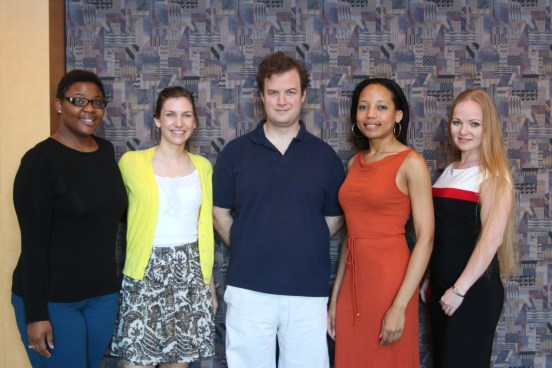
It’s our pleasure today to publish this post by Shirley Kathryn Griffis (below right), a member of the Georgia Law Class of 2017. Katie, as she’s known, spent Spring 2016 as  in our study abroad at Oxford University, and then began her second summer as a Global Externship Overseas in the London law firm Maples Teesdale. Reflecting on last week’s “Brexit” vote, Katie writes:

KatieThe first thing I thought on Friday morning was, “this can’t have happened.” It was a sentiment shared by almost all of my colleagues at Maples Teesdale’s London office, where I am spending my summer Global Externship Overseas. Together, we spent Friday morning pulling up articles, dusting off our United Kingdom constitutional law practice guides, and sharing legal theories on how the Brexit vote might be undone. It seemed that through the 51.9% to 48.1% vote to leave the European Union, London had fallen.

And we were in denial:

“The referendum is not legally binding.”

“Parliament can override.”

“Scotland won’t accept this. They can block it.”

“Cameron didn’t invoke Article 50, there’s still a chance.”

“Did you see the petition for the second referendum? Three million signatures! This won’t stand.”

The mood in London quickly turned from denial to anger when Prime Minister David Cameron announced that the results of the referendum must be respected, and the members of Parliament largely agreed. I chimed in with other voices from London on social media, asking how this could have happened. The feeling in London is that there is so much to be angry about that it is hard to know where to start, and whom to blame. Londoners started circulating a secessionist petition, there was a rally in Trafalgar Square to show solidarity with Europe, and everyone is talking about immigrating to Ireland.

London has a long way to go before accepting the reality of Brexit. The financial markets are reeling. The pound has plummeted, hitting a 31-year low in just four hours, and four major companies—Prudential Insurance, HSBC, BT and Royal Bank of Scotland—announced they were considering major staffing changes to include relocation or mass downsizing. As the financial capital of the United Kingdom, most major businesses in London have structured themselves to operate in accordance with European Union law and procedure. It is for this reason that London’s “stay” vote was 70% in favor—the European Union is vital to the survival of London’s economy.

FlagsThis is my second summer working for Maples Teesdale in London. I have always envisioned myself returning to London to practice after I graduate from the University of Georgia School of Law, but I worry now about whether that will be a possibility. It’s still uncertain what jobs, even industries, are safe, and how long the current financial crash will continue. I stand by my colleagues here in London, hoping that no matter how far London falls, it won’t take long at all to get back up and carry on.
ICC Office of Prosecutor invites public comment on draft Policy on Children

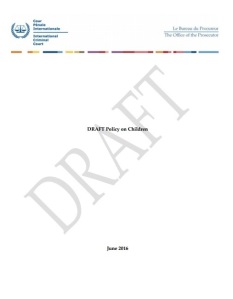
draftpolicyIt is my great honor to note today’s release for public comment of the draft Policy on Children of the International Criminal Court Office of the Prosecutor.

Since my December 2012 appointment as Prosecutor Fatou Bensouda’s Special Adviser on Children in and affected by Armed Conflict, I’ve had the privilege of helping to convene consultations and taking part in the construction of this draft Policy. As part of that process, as noted on page 11 of the draft, we at the Dean Rusk International Law Center, University of Georgia School of Law, were honored in October 2014 to host the Prosecutor, members of her staff, and nearly 2 dozen other experts from academic, nongovernmental groups, and intergovernmental organizations. Our “Children & International Criminal Justice” conference featured a morning public plenary and Prosecutor’s keynote (pictured below), followed by an afternoon of closed-door breakout sessions. (Proceedings from that event, to appear in our Georgia Journal of International & Comparative Law, are nearing publication.)

Addressed in the draft Policy, which spans 37 pages, are:

► Overarching concerns, such as the nature of a child and childhood, the experiences of children in armed conflict and other contexts within the jurisdiction of the ICC, and how the Rome Statute of the ICC and other documents treat crimes against and affecting children; and

► Practical concerns, such as how the Office of the Prosecutor engages with children, in all aspects of its work, including preliminary examination, investigation, charging, prosecution, sentencing, reparations, and external relations.

As stated in the press release accompanying today’s publication:

In highlighting the importance of the Policy, Prosecutor Bensouda stated: “when I assumed 8_events2the role of Prosecutor in June 2012, one of the principal goals I set for the Office was to ensure that we pay particular attention not only to ‘children with arms’, but also ‘children affected by arms.’ This Policy demonstrates our firm commitment to closing the impunity gap for crimes against or affecting children, and adopting a child-sensitive approach in all aspects of our work bearing in mind their rights and best interests. It is also our hope that the Policy, once adopted, will serve as a useful guide to national authorities in their efforts to address crimes against children.”

The Office welcomes public comment on the draft. Such comments should be e-mailed to OTPLegalAdvisorySection@icc-cpi.int, no later than Friday, August 5, 2016.

Following revisions based on the comments, the Office of the Prosecutor expects to publish the final Policy on Children in November of this year.

(Cross-posted from Diane Marie Amann)

My family history & path to the bench

It is an honor today to publish this post by our distinguished alumna, the Honorable Carla Wong McMillian, Judge on the Georgia Court of Appeals since 2013. Born in Augusta, Georgia, she earned her Georgia Law J.D. degree summa cum laude in 1998. She is the first Asian Pacific American state appellate judge ever to be appointed in the Southeast, and, since 2014,  the first Asian American to be elected to a statewide office in Georgia. Judge McMillian also serves as President-Elect of the Georgia Asian Pacific American Bar Association (GAPABA). Reflecting on these achievements in this essay, which we reprint courtesy of and with thanks to the Georgia Asian American Times, she writes:

Carla McMillianI am proud to be an American. I am equally as proud of my Asian American heritage.

I grew up in Augusta, Georgia, where the Chinese community has had a long history. The Chinese first immigrated to the city in 1872 to help build an extension of the Augusta Canal. These Chinese men — and it was all men in those days – began sending for their wives and children, and word spread that Augusta was a good place to immigrate and to make a new life.

My father’s parents were some of those who heard from others in their villages in southern China about Augusta. They originally immigrated to San Francisco, but moved to Georgia in the 1910’s and opened a small grocery store. In those days, if you were Chinese, you had two options to make a living in the South — open a laundry or a grocery store. My father was the youngest of six children and was born in the back room of that store where the family lived.

I am sure that my grandparents never dreamed that they would have a granddaughter who is a lawyer much less a judge. And although they did not know the language or the culture, they instilled in their children a love of this country and a service mindset. I am proud that my father and uncle are veterans who did their part to protect our freedom and way of life.

That’s my father’s side of the family – the Wongs from Augusta. But I also want to talk about my mother, who emigrated from Hong Kong to marry my dad. As a result, Chinese was my first language – that is what we primarily spoke at home before my siblings and I went to school.

One of my most distinct memories as a child was going into a courtroom and watching my mother be naturalized as an American citizen. I can remember my sister and me in our best dresses, standing with my father and watching my mother take her oath of allegiance to the United States. That was a proud day for my mother and for the rest of my family.

Growing up in an Asian American family in the Deep South, there just were not too many people outside of my family who looked like me, spoke like me, or ate the same kinds of foods at home. It used to be when I was a teenager that I wanted to cover up all of those differences and blend in. But as I have grown older, I have learned to embrace those differences because that is what makes our country so great.

I want to share with you that I never aspired to be a judge. I practiced for many years with a law firm in Atlanta where I expected to be for my entire career. But some judicial positions came open in my local jurisdiction. I almost did not apply. I was comfortable with my law practice and frankly I knew that even if I got the appointment, I would then have to run for election to keep my seat. I was fearful about facing the rigors of campaigning each election cycle. So after about a week of soul-searching, I had all but decided not to apply.

But I changed my mind one night as I was looking at my young children. I thought about what I wanted to tell them twenty years from now, about seizing opportunities and about doing what I could to serve the community where they will be growing up. So I applied for the judgeship and was appointed initially to the trial court and later to the Court of Appeals.

As a judge, I have taken an oath to uphold the Constitution. The Constitution ensures that we are a nation of laws, but it begins with the simple words, “We, the people.” Therefore, we must remember that key to the concept that we are a nation of laws is the notion of equality — the belief that “all men are created equal.” No one is above the law, and no one is so low that they cannot avail themselves of the law’s protection.

We must always remind our children that the rights and privileges guaranteed by the Constitution are there for us all. Without them, I would not be in the position that I am in today. The Constitution gives everyone an opportunity to fulfill their potential, even for someone like me who came from a family of immigrants because by protecting the rights that the Declaration of Independence declares to be God-given, the Constitution provides each of us the freedom and opportunity to pursue our own destiny. I am honored to serve as the first Asian American on our Court of Appeals and as the first Asian American to be elected to statewide office in Georgia.

whole_court_2016

Our newest Masters of Laws

Saturday was the University of Georgia School of Law commencement, and we were very pleased to welcome to our community of nearly 500 LLM graduates the 15 talented lawyers pictured below. Congratulations to our newest Masters of Laws!

IMG_7955

Our LLM Class of 2016 posed on Graduation Day for a photo with Laura Tate Kagel, our Center’s Director of International Professional Education (bottom right). From left, the new alums are: top, Elisha Atulomah, Miguel David Medina Cordoba, Mahemud Tekuya, and Fazle Rabbi Chisty; middle, Huajin Tang, Kun Wang, Simon Wolffram, Xiao Zhang, and Deborah Nogueira-Yates; bottom, Ekaterina Knapik, Gladys Ashiru, Nastasja Spee, Socorro Moctezuma Flores, Tingting Tang , and Oluwakemi Kusemiju.

Summer 2016 GEOs: Georgia Law students ready to take on the world

GEO blog post photoThis summer, ten law students will benefit from international placements through the Global Externship Overseas, or GEO, administered by Georgia Law’s Dean Rusk International Law Center.

These students have been awarded funding to enable them to earn legal training in law firms, in-house legal departments, government agencies, and nongovernmental organizations around the world. Practice areas span a range, including refugee law, property law, criminal law, corporate law, and cultural heritage law.

2016 GEO participants include several rising 3Ls, who are headed to Europe and Asia:

► Bradley Dumbacher – GÖRG, Cologne, Germany
► Shirley Kathryn Griffis – Maples Teesdale, London, United Kingdom
► Brenny B. Nguyen – Boat People SOS, Bangkok, Thailand
► Jianan Zhang – Lenovo & Han Kun Law, Beijing, China

Numerous rising 2Ls also will be working ’round the world:

► Megan Alpert – GÖRG, Cologne, Germany
► Victoria Barker – DLA Piper, St. Petersburg, Russia
► Decker McMorris – Tosetto, Weigmann e Associati, Milan, Italy
► Claire Provano – Studio Legale Associato Rossini, Turin, Italy
► Carson Stepanek – Tosetto, Weigmann e Associati, Milan, Italy
► Hannah Mojdeh Williams – Department of Intangible Cultural Heritage, Ministry of Culture and Fine Arts, Phnom Penh, Cambodia

We congratulate them all on their GEO acceptance, and wish them an enriching summer. Can’t wait to hear travel notes!