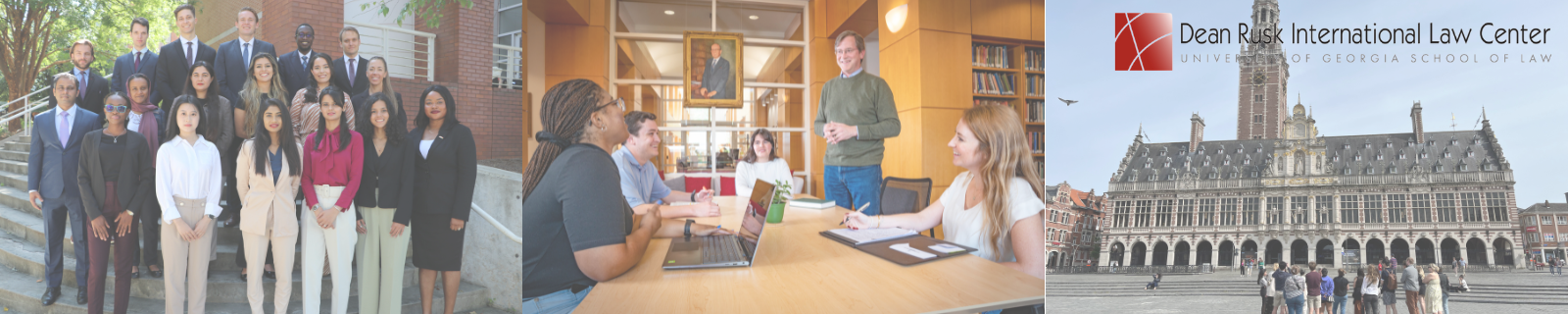
This is one in a series of posts by University of Georgia School of Law students, writing on their participation in our 2017 Global Governance Summer School or Global Externship Overseas initiative. Author of this post is 2L Rebecca Wackym, who spent her 1L summer as a GEO, or Global Extern Overseas.
For six weeks this summer, I lived and worked in the ancient and industrial city of Hebron (in Arabic, “Al-Khalil”) in the southern West Bank. Hebron is often touted as a “microcosm” of the Israeli-Palestinian conflict. And for good reason: Hebron’s contested Old City district is home to both 30,000 Palestinians and 500-800 Israeli settlers, the latter protected by approximately 2,000 Israeli troops.

At the center of the Old City and the conflict in Hebron is the Ibrahimi Mosque. It is the burial place of the patriarchs of Judaism, Christianity, and Islam: Abraham, Sarah, Isaac, Rebecca, Jacob, and Leah. It is the oldest religious building in the world that has been continually used for its original purpose, and it is the only religious building that serves as both a mosque and a synagogue. Much like the Temple Mount and Dome of the Rock area, the Ibrahimi Mosque has been the subject of a tug of war between the Israelis and Palestinians since the occupation began.
The organization I worked for, Hebron Rehabilitation Committee (HRC), is on the front lines of the battle for cultural heritage rights. HRC succeeded in its efforts to designate the Ibrahimi Mosque and the Old City of Hebron as a UNESCO World Heritage Site in Danger. During my time in Hebron, I worked with the Legal Unit of Hebron Rehabilitation Committee, which was founded to respond to human rights violations against the Palestinian citizens of the Old City, particularly violations pertaining to personal and public property.
 The Legal Unit of the HRC uses several legal and policy strategies to achieve this purpose. These include: filing domestic complaints against Israeli Defense Forces orders; filing complaints with various international human rights bodies; conducting international awareness campaigns; and directly educating Palestinians about their rights. I had the opportunity to work on several of these complaints. On one filed with the United Nations Human Rights Council, I did research on Israeli case law. My research involved the exhaustion of domestic remedies requirement in the context of road closure cases, in which the courts typically do not get involved if the closure can be justified by a “security-related” reason. I also wrote a complaint to the Special Rapporteur on the right to freedom of peaceful assembly and of association. For this project, I conducted interviews with victims, compiled evidence, and researched relevant military orders and case law.
The transition from living in the United States to living in a conservative, Muslim-majority place was daunting, but my supervisor, Nicole Trudeau, did everything she could to ease the culture shock. She introduced me to her Palestinian friends and invited me to eat with local residents of the Old City. I felt very welcome and even at home during my time in Hebron. The professional culture was more relaxed than in the United States – the office closed at 3 pm, and tea breaks were customary– but I was surprised to find that it was also almost as progressive. Women outnumbered men in the office and had leadership roles. It was an eye-opening to see a conservative culture value women in the workforce.
During my externship with HRC, I received an invaluable education not only in human rights, cultural heritage, and humanitarian law practice, but also in the Israeli-Palestinian conflict and their respective cultures. I spent weekends traveling all over Israel and the West Bank. I spoke with members of the Israel Defense Forces and Palestinian soldiers, young people in Tel Aviv and Ramallah, settlers in Hebron, and local and international activists just trying to make the situation better. The experience was absolutely incredible. And I will never forget the friends I left in Hebron. Salam!

 Kammen (right), a U.S. Army veteran, earned his J.D. from New York University School of Law in 1971. A name partner in a criminal defense law firm in Indianapolis, Indiana, his specialties include death penalty defense.
 values such as
  The University of Oxford, England, will host Georgia Law Associate Dean
  While at Oxford, Amann (right) plans to continue her research on “Women at Nuremberg,” which explores the many roles women played in post-World War II international criminal trials in Europe, as prosecutors, defense counsel, journalists, witnesses, staffers, and defendants.
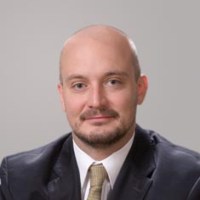 We at the Dean Rusk International Law Center are delighted this week to host a distinguished Visiting Scholar: University of Georgia School of Law alumnus, Dr.
  Professor Dondé has written and published widely on issues such as international criminal law, comparative criminal law, human rights, and extradition; his books include


 Caribbean Studies Institute
 sponsored by the Dean Rusk International Law Center, the panel will also feature professors from several departments at the University of Georgia, including:
  Román
Román
 civil rights abuses (about which I’ve written,
  BEIJING – The people of China are warm. They love babies. I quickly found the best way to make a friend was to coo at the child in her arms. They love long meals and good toasts, and have spent centuries mastering the art of hospitality. Being a guest in China is wonderful.
 start-up vibe. I sipped exotic tea as I strolled through galleries in the profoundly cool
  expected to find in China: a mix of the modern and the historical, of wealth and underdevelopment.
 China is too long to preserve the physical – you just can’t save every 5,000-year-old building – the cultural heritage of China lives in the language. Having mastered only four words in ten days – “Hello,” “Thank you,” “Cheers,” and “too expensive” – I have to admit that this is lost on me. But it emphasized the importance of
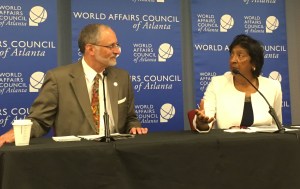 “The biggest violators of human rights are states themselves, by commission or omission.”
 I was honored to give welcoming remarks at the breakfast. Georgia Law’s
  On this and other issues, she said, advocates endeavor to encourage states first to obligate themselves to respect and ensure human rights, and then to implement the undertakings they have made in this regard:
 exchange of notes