“ESG and Corporate Sustainability: Global Perspectives on Regulatory Reform,” October 16 Georgia Journal of International and Comparative Law annual conference

This year’s annual conference of the Georgia Journal of International and Comparative Law will address “ESG and Corporate Sustainability: Global Perspectives on Regulatory Reform.” Featured will be a keynote discussion by Jill E. Fisch, the Saul A. Fox Distinguished Professor of Business Law and Co-Director of the Institute for Law and Economics at the University of Pennsylvania Carey Law School, as well as panels including more than a dozen experts from around the world.

The daylong conference will take place on Monday, October 16, in the Larry Walker Room of Dean Rusk Hall at the University of Georgia School of Law.

Sponsoring along with GJICL, a student-edited journal established more than 50 years ago, is the law school’s Dean Rusk International Law Center. GJICL Editor in Chief, 3L Jack Schlafly, worked with Professor Christopher M. Bruner, who is the Stembler Family Distinguished Professor in Business Law and a newly appointed Faculty Co-Director of the Dean Rusk International Law Center; Center staff Sarah Quinn, Interim Director; Catrina Martin, Global Practice Preparation Assistant; and with the GJICL’s Faculty Advisor, Professor Harlan Grant Cohen, who is Gabriel M. Wilner/UGA Foundation Professor in International Law and one of the Center’s Faculty Co-Directors.

Below is the concept note of the conference:

We live in an era marked by complex and interconnected environmental, social, and economic crises, including climate change and various forms of destabilizing inequalities. Efforts to grapple with these realities are rapidly evolving and taking shape through a host of private and public institutions, both domestically and internationally, and an array of novel reform efforts aim to curb harmful corporate practices that have contributed to such crises.

Global asset managers have increasingly prioritized “environmental, social, and governance” (ESG) factors – emphasizing their relation to investment risk and investment return – and have taken up existing tools available to them through corporate law, securities regulation, and capital market structures to push for change. Meanwhile, various types of domestic regulatory reforms have been adopted, or are under consideration, in jurisdictions around the world to promote “corporate sustainability,” understood to include environmental, social, and economic dimensions. Some reform initiatives focus on disclosure, reflecting confidence that investors, consumers, and other constituencies armed with sufficient information could differentiate between sustainable and unsustainable companies, and that these private actors would effectively reward the former and punish the latter. Other reform initiatives take more direct aim at decision-making incentives of managers and investors alike, through corporate governance structures creating novel – and potentially powerful – liability regimes intended to force both domestic and multinational businesses to internalize costs that would otherwise be externalized to society and the environment. At the same time, a host of international organizations have sought to promote ESG and corporate sustainability through a range of global standard-setting and coordination efforts.

This symposium will grapple with the array of ESG and corporate sustainability initiatives taking shape today, mapping this rapidly evolving global landscape and engaging with the host of complex international and comparative legal challenges they raise. Speakers offering a diverse range of doctrinal, institutional, and jurisdictional perspectives will tackle these issues through presentations and panel discussions focusing on capital market developments, corporate governance reform initiatives, and efforts to constrain multinational businesses.

The day’s events are as follows:

9:00-9:15am | Welcome Messages

Peter B. “Bo” Rutledge, Dean and Talmadge Chair of Law, University of Georgia School of Law

Sarah Quinn, Interim Director, Dean Rusk International Law Center

9:15-10:30am | Panel 1: ESG and Sustainable Finance

  • George S. Georgiev, Associate Professor of Law, Emory University School of Law
  • Virginia Harper Ho, Professor of Law, City University of Hong Kong (Zoom)
  • Stephen Park, Associate Professor of Business Law and Satell Fellow in Corporate Social Responsibility, University of Connecticut School of Business
  • Anne Tucker, Professor of Law, Georgia State University College of Law
  • Moderator: Usha Rodrigues, University Professor and M.E. Kilpatrick Chair of Corporate Finance and Securities Law, University of Georgia School of Law

10:30-10:45am | Break

10:45-12:00pm | Panel 2: Corporate Law, Corporate Governance and Sustainability

  • Matthew T. Bodie, Robins Kaplan Professor of Law, University of Minnesota Law School
  • Andrew Johnston, Professor of Company Law and Corporate Governance, University of Warwick School of Law (UK) (Zoom)
  • Lindsay Sain Jones, Assistant Professor, University of Georgia Terry College of Business 
  • Omari Scott Simmons, Professor of Law, George Washington University Law School 
  • Moderator: Christopher M. Bruner, Stembler Family Distinguished Professor in Business Law and Faculty Co-Director of the Dean Rusk International Law Center, University of Georgia School of Law

12:00-1:00pm | Lunch

1:00-2:15pm | Panel 3: Multinational Corporations and Global Value Chains

  • Sarah Dadush, Professor of Law, Rutgers Law School (Zoom)
  • David Hess, Professor of Business Law and Business Ethics, University of Michigan Stephen M. Ross School of Business
  • Kish Parella, Class of 1960 Professor of Ethics and Law, Washington and Lee University School of Law (Zoom)
  • Jaakko Salminen, Associate Senior Lecturer, Department of Law, Lund University (Sweden) (Zoom)
  • Moderator: Harlan G. Cohen, Gabriel M. Wilner/UGA Foundation Professor in International Law and Faculty Co-Director of the Dean Rusk International Law Center, University of Georgia School of Law

2:15-2:30pm | Break

2:30-2:35pm | Keynote Introduction

Christopher M. Bruner, Stembler Family Distinguished Professor in Business Law and Faculty Co-Director of the Dean Rusk International Law Center, University of Georgia School of Law

2:35-3:15pm | Keynote Address

Jill E. Fisch, Saul A. Fox Distinguished Professor of Business Law and Co-Director of the Institute for Law and Economics, University of Pennsylvania Carey Law School

3:15 | Closing Remarks

Jack Schlafly, Editor in Chief, Georgia Journal of International and Comparative Law
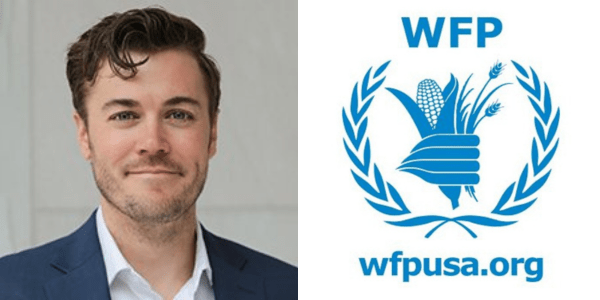
Chase Sova, senior director of Public Policy and Research at World Food Program USA, speaks at UGA Law

Senior director of Public Policy and Research at World Food Program USA (WFP USA) Chase Sova spoke to students about the intersection of international law and policy as it relates to the global challenge of food insecurity Monday here at the University of Georgia School of Law.

Sova began his talk by explaining the relationship between WFP USA, a US-based non-profit organization, and the United Nations World Food Programme, which the WFP USA works to support stateside. He then discussed the global food insecurity landscape and how it is driven primarily by climate change, conflict, and economic disruptions, or shocks. Sova established links between international trade law and food insecurity, especially in the context of recent global events like the COVID-19 pandemic and the Russian invasion of Ukraine. He introduced students to the current debates about whether policies resulting in extreme food insecurity and starvation could be violations of international human rights law. Students were able to ask Sova questions about his educational background, his advice to those seeking careers in public service, and job opportunities for students interested in the work of the WFP USA.

Before his current position with WFP USA, Sova worked with the United Nations Food and Agriculture Organization (FAO), International Center for Tropical Agriculture (CIAT) and the CGIAR Research Program on Climate Change, Agriculture and Food Security (CCAFS). He has consulted with the World Bank, Johns Hopkins, and Tufts University. Interested in the intersection of food insecurity and conflict, humanitarian assistance, climate change, and sustainable agriculture, Sova has worked on food systems in 15 developing countries across Latin America, sub-Saharan Africa and South Asia. He has led several major research initiatives including WFP USA’s Winning the Peace: Hunger and Instability flagship report. Sova has served as an expert witness at the Senate Foreign Relations Committee, his writing has been featured extensively in peer-reviewed journals, and he regularly lectures on food insecurity at Universities in Washington, D.C. He delivered a TEDx talk on “Winning the Long Game in the Fight to End Hunger” in 2018. Sova earned his Ph.D. from Oxford University.

This event was part of a visit organized by the UGA Office of Global Engagement under the leadership of the Associate Provost for Global Engagement, Martin Kagel, as part of the FYOS Global Citizenship Cluster series. It was cohosted by the Terry College of Business.

Alexander Campbell King Law Library hosts annual gathering for international students

Last Friday, international students at UGA Law gathered for an annual reception hosted by the Alexander Campbell King Law Library. International students in the J.D. program, Master of Laws (LL.M.) students, and exchange students from O.P. Jindal Global University Law School (JGLS) were invited to this social gathering to meet with each other and Law Library staff. This year, several LL.M. alumni/ae were in attendance, in addition to staff from the Dean Rusk International Law Center, the Center’s two Visiting Research Scholars, members of the Center’s Faculty Committee, and law faculty who teach classes for LL.M. students.

This event began in 2018 when Access Services Manager Marie Mize and Access Services Associate Szilvia Somodi proposed that the Law Library host a reception for the LL.M. students in order to introduce them to the law library staff and to talk about the library’s services. They and Foreign & International Law Librarian Anne Burnett planned the reception, which was first held September 11, 2018.

Over the years, this event has evolved in response to both students’ needs external circumstances. The event date was adjusted to accommodate the acculturative stress patterns of international students, who, Law Library staff learned, tend to experience homesickness around this time of the year. During the 2020-21 academic year, the Law Library held two virtual receptions in the fall and spring semesters to build community despite not being able to gather in person. In lieu of catered refreshments, Somodi and Mize assembled goodie bags that were made available for pickup in the Law Library for the week surrounding the virtual events.

Beginning in 2022, the Law Library expanded the event to include all international students in the J.D. program and Visiting Research Scholars. This year, the first two exchange students from UGA Law’s partnership with JGLS joined, in addition to several LL.M. alumni/ae. Somodi and Mize continue to be crucial to the planning and execution of the event, with the broader support of the library’s Student Engagement Team.

This event shines a spotlight on the relationship between the Law Library and UGA Law’s community of international students, emphasizing that they are welcome and encouraged to use the library’s facilities and services— and that the Law Library staff is glad they are here.

From classmates to colleagues: LL.M. alumna Rawdha Hidri (LL.M. ’23) and 2L Carolina Mares reflect on summer work experience together

Through the Global Externships Overseas (GEO) initiative administered by the Dean Rusk International Law Center, 2L Carolina Mares spent her summer working in international arbitration at the Houerbi Law Firm in Tunis, Tunisia. In this placement, Ms. Mares worked under the supervision of Rawdha Hidri, a Fulbright recipient who completed her Master of Laws (LL.M.) at UGA Law in May 2023.

While it is not uncommon for our J.D. students to work under our LL.M. alumni/ae in GEO placements, this is the first experience in recent memory when they had the opportunity to meet on-campus and learn together as classmates prior to their experience abroad. Below, Mares and Hidri describe their experiences participating in the GEO from the perspectives of student and supervisor, respectively. Responses have been edited for length and clarity.   

* * * *

Carolina Mares, 2L

What initially interested you about the Global Externships Overseas (GEO) initiative?

With the desire to practice international law in my career moving forward, I knew that the GEO initiative was an incredible opportunity designed to encourage me to explore one potential avenue for my future. I was torn between pursuing summer work in public international law or looking for a firm that would give me some experience in international arbitration. However, when I heard about the possibility of focusing exclusively on international arbitration at Houerbi Law Firm, my mind was set.

What was your GEO experience like?

This summer, I worked at Houerbi Law Firm in Tunis, the capital of Tunisia. The firm specializes in commercial international arbitration and operates between Tunis and Paris with a focus on disputes in Europe, the Middle East, and Africa. My work consisted of reading case dockets, synthesizing parties’ positions, analyzing factual and legal exhibits, drafting an answer to a request for document production, and writing appropriate parts of an award. What I enjoyed most was the novelty of each case I got to work on. The parties in the disputes ranged from state to private parties in the UAE, Italy, Jordan, Iran, Malaysia, Tunisia, Turkey, and Morocco. I also had the chance to learn about all sorts of industries, including oil and gas, gold and fine jewelry manufacturing, and government procurement.

In addition to Rawdha, Mr. Houerbi was a phenomenal mentor to me during my time in Tunisia. With sixteen years of experience as the Arbitration and ADR Director of the ICC for the Mediterranean, the Middle East, and Africa, his positive and direct feedback played an important role in shaping my work and experience at the firm. He often invited me to sit in on team meetings that did not pertain to my particular cases so that I could gain exposure to as many disputes as possible, and he encouraged me to observe all of the virtual hearings that took place this summer.

How do you envision your GEO contributing to your academic and professional goals?

Taking part in the GEO has already impacted my professional trajectory. First, I now know that I enjoy the work involved in international arbitration, and I can picture myself pursuing a career in this practice area. Second, I’m convinced that my participation in a GEO is the reason I landed a 2L summer job fairly quickly, as it was the hot topic in all of my interviews. But more importantly, the GEO gave me a chance to take a deep dive into a niche area of law that is difficult to get into as a novice, especially in the Atlanta area. In addition to delving into international arbitration, the GEO program allowed me to develop my confidence navigating across cultures all while improving my French skills in a captivating work environment.

What was the best part of participating in a GEO?

The highlight of my GEO experience was making deep connections with my colleagues and experiencing day-to-day life in an incredibly rich culture that was brand new to me. Besides taking on the role of mentor, Rawdha was also my cultural guide. She introduced me to the coastal neighborhoods of Tunis, invited me to join her family and friends on the weekend for a shopping expedition in the Medina, pointed out the flocks of flamingos flying by in V-formation as we lounged on the beach, and took me sightseeing in Hammamet where we attended an amateur Opera concert at the Dar Sebastian villa overlooking the Mediterranean. In short, the best part of doing a GEO was getting a feel for the flow of life in Tunis and growing in my cultural competency, all of which I owe in big part to Rawdha’s support as my mentor and host.

* * * *

Rawdha Hidri (LL.M., ’23)

What interested you in serving as a placement supervisor for a GEO?

My time at UGA Law was so formative, I was eager to reciprocate and provide inquisitive American J.D. students with an experience as enriching as the one that I had in Athens. I strongly believe that immersing oneself in new experiences and can be influential on both personal and professional levels. Throughout my journey at UGA Law, I embraced the role of an informal cultural ambassador for my country Tunisia. The GEO initiative emerged as an ideal opportunity for both providing American J.D. students with professional experiences in a distinct legal framework and within a specific geopolitical context and with rich cultural immersion in my home country.

How did hosting a UGA Law student contribute to your firm’s work?

Carolina’s ability to methodically structure and articulate her thoughts has been a valuable addition to our team dynamics. Her innate attention to detail was evident from the outset, as she engaged diligently with the tasks assigned to her. Encouraging her to delve further and uncover nuances within cases became a rewarding challenge, showcasing her dedication to thorough exploration.

How did you approach integrating a UGA Law student into the local community and culture?

In the spirit of fostering a sense of belonging, I took it upon myself to introduce Carolina to the richness of Tunisian culture, ensuring she tried traditional Tunisian cuisine and experienced the crystal-clear waters of the Mediterranean. The entire team enthusiastically engaged in this process, sharing suggestions of places to visit, offering language lessons, and collectively enjoying lunches together outside the office on a weekly basis. This collaborative approach not only enhanced Carolina’s integration but also fostered a supportive and inclusive environment, benefitting both her and the entire team.

What did you enjoy about serving as a supervisor for a GEO?

Serving as a supervisor for a GEO was incredibly rewarding on a personal level. It expanded upon my own Fulbright journey that I started at UGA Law, allowing me to share my perspective and insights with someone eager to learn. The most fulfilling aspect was knowing that the student I hosted would carry their experiences in Tunisia with them, and that perspective would continue to guide them in their professional pursuits. This connection ensures a lasting impact, creating a sense of continuity and mutual understanding that extended beyond the program itself.

* * * *

Global Externships Overseas (GEOs) are four-to-twelve week summer placements in diverse areas of legal practice around the world. Students return to Athens with new colleagues and mentors, legal practice skills, and a deeper appreciation of the global legal profession. Over the last fifteen years, more than 200 UGA Law students have completed a GEO. Students secure placements tailored to their career goals with the aid of the Dean Rusk International Law Center.

For more information about GEOs, visit our website.

Nomsa Ndongwe, Research Fellow at the James Martin Center for Nonproliferation Studies, speaks at UGA Law

James Martin Center for Nonproliferation Studies (CNS) Research Fellow Nomsa Ndongwe spoke to students about careers in international law and contemporary security challenges Wednesday here at the University of Georgia School of Law.

Joined by UGA alumna and CNS Research Associate Tricia White, Ndongwe discussed her own career trajectory and current work in nonproliferation at CNS. Both Ndongwe and White identified several skills aspiring international lawyers can work towards in law school, including learning languages and developing subject matter expertise. Ndongwe championed the importance of professional networking, building relationships with peers, and making use of the resources available to students at UGA Law, like the Career Development Office and the Dean Rusk International Law Center. She also answered student questions about the Russian war in Ukraine, space law, maritime law, and global nuclear security challenges.

Ndongwe is a Co-founder of the WCAPS West Coast Chapter, and an N-Square Innovators Network Fellow 2020 – 2021. As of January 2022, she co-leads the CNS Young Women in Nonproliferation Initiative, is a School of International Futures Mentor 2023, and served as a Girl Security mentor. She is also a part of the P5 –Young Professionals Network (YPN) 2022-2023 cohort. She has a Master of Arts in Nonproliferation, Terrorism Studies, and Financial Crime Management from the Middlebury Institute of International Studies. She obtained her first degree, an LLB Single (Hons) degree at Brunel University, and her Postgraduate Diploma in Legal Practice (LPC) from the University of Law in Guildford, UK.

Previously, she served as diplomat for the Zimbabwe Permanent Mission to the United Nations Office at Geneva, focusing mainly on the Disarmament portfolio and International Telecommunication Union (ITU). Nomsa is a featured non-proliferation panelist/moderator for the Ploughshares Foundation, Harvard Belfer Center, Trinity College DC, United Nations Office for Disarmament Affairs (UNODA) New York, Naval Postgraduate School, United Nations Institute for Disarmament Research (UNIDIR), N Square Innovators Network and Royal United Services Institute (RUSI).

This event was cosponsored by the International Law Society and the UGA Law Career Development Office.

Welcoming the newest class of Master of Laws (LL.M.) students to UGA Law

With the Fall 2023 semester in full swing, we at the Dean Rusk International Law Center are proud to welcome another class of talented lawyers, now studying for our University of Georgia School of Law Master of Laws (LL.M.) degree.

The group of 18 hails from 14 different countries in Africa, Asia, Europe, and the Americas, including Nigeria, Ethiopia, India, Germany, Argentina, Romania, Brazil, Russia, Côte d’Ivoire, Ukraine, Ghana, China, Bangladesh, and Afghanistan. Among them are lawyers and other professionals specializing in a wide range of fields including corporate law, alternative commercial dispute resolution, immigration law, bankruptcy law, family law, corporate sports law, international trade, business law, cybersecurity and digital fraud, refugee and asylum law, technology law, tax law, and criminal law.

They are pictured above, standing on the steps of Dean Rusk Hall. From the left to right – top row: Daniel Danca, Bohdan Krivuts, Savelii Elizarov, Cornelius Bulanov, N’guessan Clément Kouame, Jonas Römer; middle row: Md Mushfiqur Rahman, Eman Abdella Ali, Quraisha Sherzad, Raissa dos Santos Bastos Rolim, Gracia Varinia Rojas Mina Bogliotti, Agostina Calamari; bottom row: Victoria Agbakwuru, Xinyi Nie, Shivani Ravi Prakash, Naina Bishnoi, Amanda Pinto, and Lydia Lartey.

This Class of 2024 joins a tradition that began at the University of Georgia School of Law in the early 1970s, when a Belgian lawyer became the first foreign-trained practitioner to earn a UGA Law LL.M. degree. In the ensuing four decades, the law school and its Dean Rusk International Law Center have produced nearly 600 LL.M. graduates, with ties to nearly 100 countries and every continent in the world.

Side by side with J.D. candidates, LL.M.s follow a flexible curriculum tailored to their own career goals – goals that may include preparation to sit for a U.S. bar examination, or pursuit of a concentration affording advancement in their home country’s legal profession or academic institutions.

The application for the LL.M. Class of 2025 is now open; for information or to apply for LL.M. studies, see here.

First Legal Spanish Course Offered at UGA Law This Fall

This fall, UGA Law students have the opportunity to enroll in a new Legal Spanish course taught by Professor Kristen Shepherd, Community Health Law Partnership Clinic Staff Attorney & Adjunct Instructor.

Professor Shepherd conceptualized and proposed the course as two consecutive courses, Legal Spanish I and Legal Spanish II, both offered for one credit. Each course teaches students Spanish language skills used in legal settings with a focus on listening and speaking comprehension. They also provide students with a broad overview of the basics of the legal systems in Spanish-speaking countries to enable students to communicate legal concepts more accurately and efficiently.

The opportunity for students to learn Spanish for use in legal careers has taken several forms over the past decade at UGA Law. It began as a club led by Pedro Dorado (J.D. ‘17, LL.M. ‘15) before moving to a lunchtime study session led by two students who had completed Global Externships, one in a Spanish-speaking country. During the pandemic, Legal Spanish once again became a club that met regularly on Zoom.

Across changes in instructors and format, the ability to hone Spanish language skills specific to the legal profession has continued to be a goal that students felt strongly about institutionalizing. Third-year student Patricia Fors was a driving force behind turning this club into a for-credit course. Since Spring 2022, Ms. Fors has worked with Center faculty and staff to communicate the student demand for the course and to provide a student perspective on the course proposals.

“There is a high demand for attorneys able to effectively communicate with Spanish-speaking clients,” Ms. Fors communicated to us in an email. “I’m incredibly proud to attend a law school committed to breaking down one of the barriers that Hispanic communities face accessing the legal system.”

Professor Shepherd agreed with Ms. Fors’ sentiment, stating: “I am inspired by the student movement that led to this course—it is a reflection of our students’ dedication to providing first rate legal representation to a traditionally underserved population with diligence and sensitivity. I am confident that this will lead to better legal outcomes and client relationships.”

The inaugural course enrolled 17 students, all of whom speak conversational Spanish. Not only will they benefit from this new course, but so will the clients and communities they work with across their careers.

For more information about Legal Spanish, please contact Professor Shepherd.

UGA Professor Ramnath publishes first book, “Boats in a Storm: Law, Migration, and Decolonization in South and Southeast Asia, 1942–1962”

Kalyani Ramnath, Assistant Professor in the Department of History at the Franklin College of Arts & Sciences and Assistant Professor (by courtesy) at UGA Law, is publishing her first book, Boats in a Storm: Law, Migration, and Decolonization in South and Southeast Asia, 1942–1962, with Stanford University Press.

Below is a description of the book:

For more than century before World War II, traders, merchants, financiers, and laborers steadily moved between places on the Indian Ocean, trading goods, supplying credit, and seeking work. This all changed with the war and as India, Burma, Ceylon, and Malaya wrested independence from the British empire. Set against the tumult of the postwar period, Boats in a Storm centers on the legal struggles of migrants to retain their traditional rhythms and patterns of life, illustrating how they experienced citizenship and decolonization. Even as nascent citizenship regimes and divergent political trajectories of decolonization papered over migrations between South and Southeast Asia, migrants continued to recount cross-border histories in encounters with the law. These accounts, often obscured by national and international political developments, unsettle the notion that static national identities and loyalties had emerged, fully formed and unblemished by migrant pasts, in the aftermath of empires.

Drawing on archival materials from India, Sri Lanka, Myanmar, London, and Singapore, Kalyani Ramnath narrates how former migrants battled legal requirements to revive prewar circulations of credit, capital, and labor, in a postwar context of rising ethno-nationalisms that accused migrants of stealing jobs and hoarding land. Ultimately, Ramnath shows how decolonization was marked not only by shipwrecked empires and nation-states assembled and ordered from the debris of imperial collapse, but also by these forgotten stories of wartime displacements, their unintended consequences, and long afterlives.

On September 21 at 4:00 pm, at the University of Georgia Zell Miller Learning Center, a book release and reception will be held in honor of Professor Ramnath’s work. This event is open to the public.

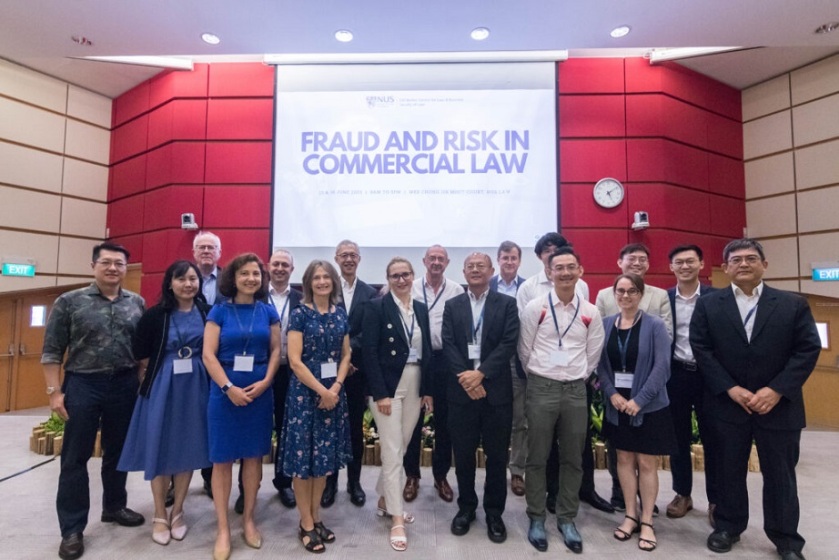
UGA Law Professor Bruner presents “Managing Fraud Risk in the Age of AI” at the National University of Singapore (NUS)

Professor Christopher Bruner, the Stembler Family Distinguished Professor in Business Law and a newly appointed Faculty Co-Director of the Dean Rusk International Law Center, presented “Managing Fraud Risk in the Age of AI” at the National University of Singapore (NUS) in June.

Bruner’s talk was part of a conference titled Fraud and Risk in Commercial Law, organized by Professors Paul Davies (University College London) and Hans Tjio (NUS) and hosted by the EW Barker Centre for Law & Business at the NUS Faculty of Law.

Below is Bruner’s presentation abstract:

Artificial Intelligence (AI) applications are widely expected to revolutionize every dimension of business. This paper explores current and potential impacts of AI on corporate management of fraud risk in both operational and compliance contexts. Much attention has been paid to the operational efficiencies that AI applications could enable in numerous industry settings, and such systems have already become central to a range of services in certain industries – notably finance. Heavy reliance on algorithmic processes can be expected to give rise, however, to a range of risks, including fraud risks. New forms of internal fraud risk, emanating from intra-corporate actors, as well as external fraud risk, emanating from extra-corporate actors, are already placing greater demands on the compliance function and requiring greater corporate investment in responsive AI capacity to keep pace with the evolving risk management environment. At the same time, these developments have already begun to prompt reevaluation of conventional legal theories of fraud that took shape, in commercial and financial contexts alike, by reference to human actors, as opposed to algorithmic processes.

The paper begins with an overview of growing operational reliance upon increasingly sophisticated AI applications across various industry settings, reflecting the increasingly data-intensive nature of modern business. It then explores forms of internal and external fraud risk that may arise from efforts to exploit weaknesses in operational AI, which efforts may themselves involve sophisticated deployment of malicious extra-corporate AI applications – ‘offensive AI’, as the cyber security industry describes it. This can in turn be expected to require responsive corporate efforts in the form of ‘defensive AI’, and the paper describes burgeoning efforts along these lines, as well as the increasing pressure to devote substantial resources and managerial attention to these dynamics that may arise from both corporate law and commercial realities. Finally, the paper analyzes shortcomings of conventional legal theories of fraud in this context. Here the paper assesses the difficulty of applying concepts such as deception, scienter, reliance, and loss causation to algorithmic processes lacking conventional capacity for intentionality and defying conventional explanation as to how inputs and outputs logically relate – a reflection of the AI ‘black box’ problem. The paper concludes with proposals to reform corporate oversight duties to incentivize managerial attention to these issues, and to reform conventional legal theories of fraud to disincentivize malicious AI applications.

UGA Law professor Diane Marie Amann and UCL Professor Martins Paparinskis

UGA Law Professor Amann presents “Child-Taking and the International Criminal Arrest Warrant” at University College London Faculty of Laws

University of Georgia School of Law Professor Diane Marie Amann, an expert on child and human rights, international criminal law, and the laws of war, presented a lecture entitled “Child-Taking and the International Criminal Arrest Warrant” at University College London Faculty of Laws in June.

News that the International Criminal Court is seeking the arrest of Russia’s President, Vladimir Putin, and Child Rights Commissioner, Maria Lvova-Belova, drew attention to the war crimes charged: “unlawful deportation of population (children)” and “unlawful transfer of population (children) from occupied areas.” Professor Amann’s lecture examined these and similar crimes, which she labels “child-taking.” International child-taking trials date to the Nuremberg tribunals, and have continued in modern forums like the ICC. Court records demonstrate that child-taking is no minor crime. Its present gravity and future consequences are heavy; so too, the prosecutorial burdens of securing indictments, conviction, and redress.

This presentation was chaired by UCL Professor of Public International Law, Martins Paparinskis.

Amann is the Regents’ Professor of International Law, the Emily & Ernest Woodruff Chair in International Law, and a Faculty Co-Director of the Dean Rusk International Law Center.