Director of GreenCo SA and National University of the South professor Eduardo Conghos (LL.M., ’98) spoke to students at the University of Georgia School of Law last week about environmental law in Argentina and the effects of “constitutional greening” in Latin America. The conversation was moderated by Adam D. Orford, Assistant Professor of Law.
Conghos provided students with historic context for environmental legal developments in Latin America, tracing the global period of “constitutional greening” that stretched from the 1970s through the 90s. Over these two decades, 14 of the 20 countries in Latin America encoded environmental considerations and protections into law. Some common characteristics included protection of natural resources, wildlife, and protected natural areas; a right to the environment; and a right to public participation in environmental processes. Despite these strong constitutional protections for the environment, Conghos noted that the lack of statutory laws created tension between judicial rulings in favor of environmental protection and consistent implementation and oversight of environmental regulations. He used the 2007 Argentinian Supreme Court decision, Mendoza, Beatriz Silvia et al. v. National Government et al. about damages (damages derived from the environmental pollution of the Matanza Riachuelo River) and the rulings that followed it to illustrate this conflict. Students asked Conghos about the reality of the private sector being able to adapt to new environmental regulations and whether arbitration would be the appropriate way to address some of these issues.
Conghos is an environmental lawyer, consultant, and professor based in Buenos Aires, Argentina. He is currently the Director of GreenCo S.A., an environmental consulting business that provides services to both public and private institutions. Conghos is also professor at the National University of the South in Buenos Aires, where he has worked in several faculty positions since 1999. His specialties include environmental legislation and environmental training, skills that he has honed over several decades of experience in both the public and private sectors in Argentina. Dr. Conghos received his LL.M. from the University of Georgia School of Law in 1998, as well as postgraduate degrees from the University of Salamanca, the National University of the South, the University of San Andres, and Buenos Aires University.
One of the Dean Rusk International Law Center’s current Visiting Research Scholars, Daesun Kim, Esq., attended last week’s Consular Conversation with Sangpyo Suh, the Consul General of Korea in Atlanta. This event, organized by one of the Center’s institutional partners, Global Atlanta, is part of an ongoing series presented by Miller & Martin PLLC. Below are some of Kim’s reflections of the event.
Consul General of South Korea in Atlanta Sangpyo Suh serves as his country’s top diplomatic in the Southeastern United States. In a wide-ranging conversation with Trevor Williams, Global Atlanta’s managing editor, Suh detailed his diplomatic service before his arrival in Atlanta, including: Korea’s Ambassador to the OECD; Korea’s Ambassador to Gabon; Head of Energy, Climate Change and Environment, United Nations Mission; and, most recently, Korea’s Ambassador to Pakistan.
Suh explained that he first came to Atlanta in the mid-90s to study English as a diplomat at Georgia State University. During that time, the population of Koreans in Georgia was around 10,000. Now, in 2023, the population exceeds 150,000 and is growing. Korean investments in Georgia reflect this trend, with over $12.5 billion allocated towards foreign direct investment projects in Georgia alone as part of the $30 to $40 billion annually invested in the United States. The Hyundai electric vehicle plant project, currently under construction near Savannah, is worth more than $7 billion alone. The number of Korean companies in Georgia has increased dramatically in recent years, and Suh hopes to continue to strengthen the economic ties between the Southeast and Korea.
Suh is aware of more than 250 Korean companies in the Southeast, including 150 in Georgia. Outside of automotive investment, there has been trade and investment activity in response to the IRA/ CHIPS Act, with collaborations focusing on semiconductors, EVs, and batteries. He believes that the region serves as an important regional base for these key industries of the future.
This year marks the 70th anniversary of the U.S.-ROK alliance. While the economic partnership between the U.S. and Korea has grown, so have the countries’ cultural ties. Suh talked about how the number of students in the U.S. studying the Korean language is exploding. He credits this in no small part to the soft power of what is known as K-culture, including Korean “K-pop” music, Korean cinema, and television. Suh views part of his role as Consul General to promote these cultural ties and find ways to further develop them.
During the week of November 13, the University of Georgia School of Law will host events during the lunch hour to highlight International Education Week (IEW) 2023. IEW is a joint initiative between the U.S. Department of State and the U.S. Department of Education that celebrates the benefits of international education and exchange worldwide. The theme for 2023 is “International Education Is the Future.”
All events will take place from 12-1pm. Exact locations can be found in the event hyperlinks. The events for the week are as follows:
India is an emerging global economic superpower. Gaining academic or professional experience in India will prepare UGA Law students for the future of the global workforce. Learn from a panel of current J.D., Master of Laws (LL.M.), and exchange students about their experiences learning about and practicing law in India:
In an increasingly globalized world, and in the globalizing field of law, international experience is a valuable part of your CV as a law student. Join a panel discussion about how international experiences can set you apart, and importantly, how you can market that experience to recruiters and interviewers during your job search and career. Panelists will include:
Andrew Arrington, 3L, completed a Global Externship Overseas at Sorainen in Tallinn, Estonia
Brandy Blue, Interim Senior Program Associate, Conflict Resolution Program, The Carter Center
Jean Rowe Luciani, UGA Law Assistant Director of Career Development (J.D., 1997)
Current Master of Laws (LL.M.) students will discuss their experiences as women practicing law in African countries. This event will take place in room E/ 252 of Hirsch Hall. Panelists will include:
University of Georgia School of Law alumnus Dr. Kannan Rajarathinam (LL.M., ’88) spoke to students last week about the future of the United Nations in a multipolar world in a lecture entitled, “The UN at a Crossroads.”
Rajarathinam used his decades of experience working at the UN to frame his central question of what lies ahead for the international organization. Founded in 1945, the UN’s main focus over the past 80 years has remained the same: to provide all nations with the opportunity to work together to find shared solutions to shared challenges. From supporting refugees to providing food and vaccines globally, the UN has many ongoing campaigns that realize this vision.
One area where he felt the UN had been particularly successful is in building awareness of and consensus around the global challenge of climate change. He noted that the UN has led over twenty conferences on climate change, and, as a direct result of their commitment to this topic, climate security is a top concern for many western nations. Although there is still much work to be done, Rajarathinam stated that shared solutions, like a fund being developed to aid the Global South in managing the disproportionately-felt effects of climate change and technology-sharing to establish renewable energy systems worldwide, are more likely to find consensus due to the inclusive design of the UN.
There are many challenges to the UN’s role in the new multipolar landscape, including the emergence of regionally-focused forums like BRICS and the G20, international development initiatives like China’s Belt and Road Initiative, and ongoing conflicts like Russia’s invasion of Ukraine and the Israel-Hamas war. Rajarathinam believes that the ability of the UN to offer all 193 Member States from India to Nauru an equal vote is its main strength in withstanding this contemporary power shift. He concluded his talk by observing that, now that we are entering into a multipolar global landscape, no one country has the ability to control history anymore – and that, as a result, the world will be more colorful.
After his afternoon lecture, Rajarathinam met with current LL.M. students to discuss his career in the UN. Students shared their backgrounds and professional aspirations and were able to get advice from Rajarathinam and his wife, Usha.
Rajarathinam recently retired after nearly three decades of UN peace keeping and political work in the former Yugoslavia, Cyprus, Afghanistan, Iraq, Sudan and Somalia. Prior to the UN, he briefly practiced and taught law in India. A commentator of international and political affairs in India, he is the author of two political biographies of Indian leaders and his next work, on the political history of his state of Tamil Nadu in India is due next summer.
University of Georgia School of Law Professor Diane Marie Amann, whose expertise includes child rights, international criminal law, and global legal history, recently discussed her research on “child-taking” at two universities in the United Kingdom.
At the end of September Amann – who is Regents’ Professor of Law, Emily & Ernest Woodruff Chair in International Law, and Faculty Co-Director of the Dean Rusk International Law Center – presented “Child-Taking and Human Rights Law” at the 2023 European Human Rights Law Conference. Entitled “Human Rights Law: Prospects, Possibilities, Fears & Limitations,” the two-day conference took place at the University of Cambridge Faculty of Law.
Both talks drew from Amann’s forthcoming article, “Child-Taking,” to be published in the Michigan Journal of International Law.
As Amann theorizes it, child-taking occurs when a state or similarly powerful entity abducts children from their community and then endeavors to remake the children in its own image. This conduct lies at the heart of the International Criminal Court warrants pending against President Vladimir Putin and another top Russian official. The article also examines other examples of the phenomenon, including the Nazis’ kidnappings of non-German children during World War II and the forced placement of Indigenous children into boarding schools in North America, Australia, and elsewhere.
Top row, from left to right: Aashka Vyas, Bohdan Krivuts, N’guessan Clément Kouame, Savelii Elizarov Bottom row, from left to right: Anna Carolina Mares, Eman Abdella Ali, Shivani Ravi Prakash, Victoria Agbakwuru, and Sarah Quinn
Each fall, the American Branch of the International Law Association hosts its annual International Law Weekend (ILW) conference in New York City. This event features over 30 panels, and many of the world’s leading international lawyers and diplomats participate. Audiences recently have included more than a thousand practitioners, academics, U.N. diplomats, business leaders, federal and state government officials, NGO leaders, journalists, students, and interested citizens.
This year, the University of Georgia School of Law was a sponsor of the event, and eight students attended through the support of Louis B. Sohn Professional Development Scholarships awarded by the Dean Rusk International Law Center. This builds on a tradition of supporting students seeking professional development opportunities (Prior posts here, here, and here). Recipients of the scholarships this year included:
ILW keynote speakers included Ambassador Sheikha Alya Ahmed Saif Al Thani, Permanent Representative of the State of Qatar to the United Nations, and Judge Gatti Santana, President, International Residual Mechanism for Criminal Tribunals. The students enjoyed hearing a range of perspectives on the current international law scheme and how its shortcomings and challenges may be met. For example, one of the panels that Vyas attended was “Investment Law and Energy in times of Armed Conflict.” She appreciated the legal framing of the recent events in Ukraine, and noted that these discussions illuminate the “…considerable gaps…in the current legal regime” and how they could potentially be addressed by “…adopting new measures to maintain cross-border investments during armed conflict.” Kouame, meanwhile, enjoyed the panel entitled “Trade, Labor Rights and Forced Labor.” He said that the panelists provided insight concerning the enforcement of labor and human rights provisions of the USMCA directly related to a research project he is conducting under Professor Christopher M. Bruner.
In addition to the ILW programming, students met with LL.M. alumni working in New York. These included Julie Guo (LL.M., ’09), who hosted students in her firm’s New York City office; along with Parham Zahedi (LL.M., ’18) and Tatyana Popovkina (LL.M., ’23), who met with students before the conference on Saturday. In both meetings, students were able to learn about the experiences of Guo, Zahedi, and Popvkina at UGA Law, how they prepared for the New York bar exam, and their advice for conducting domestic job searches. Students appreciated their insights; Mares, for example, commented that her conversations with alumni reminded her of the strength of the UGA Law community. “Alumni spoke about their gratitude for time spent at UGA and mentioned wanting to do as much as possible to help UGA grads entering the legal field,” she reflected. “Though New York is a competitive market to enter, with hard work and support from fellow UGA grads, it appears to be in reach as a dynamic place to establish a legal career.”
Each of the eight UGA Law students who attended the ABILA ILW agreed that being able to attend this type of professional conference is valuable as they learn about the field of international law and consider their professional futures. Ravi Prakash noted the event’s “transformative impact” on her professional aspirations. “This experience introduced me to a network of highly accomplished individuals in the realm of international law, many of whom are prolific writers, professors, ambassadors and successful attorneys in the field,” she commented. “Interacting with these experts not only expanded my knowledge but also provided valuable insights and connections that will be invaluable in my journey. On a personal level, it instilled in me a deeper passion for international law and a sense of belonging within this community of experts. This event has undoubtedly set me on a path to a more promising and fulfilling future in international law.”
Gabriel M. Wilner/UGA Foundation Professor in International Law & Faculty Co-Director of the Dean Rusk International Law Center Harlan Grant Cohen spoke to International Law Society (ILS) members in late September as part of an ongoing brown bag lunch series with international law faculty at UGA Law.
Cohen provided the students in attendance with an introduction to his current research. He then outlined his path into academia and offered students insight into the spectrum of professional opportunities within the field of international law, noting fast-growing sectors like export controls, CFIUS issues, and space law. He also offered some reflections on the changing nature of the field, including the recent trend of withdrawal from international organizations and treaties; the emergence of new centers of power that challenge norms in international law; and increasing economic competition influencing international law through mechanisms such as trade rules and sanctions. Cohen encouraged student questions to drive the majority of the conversation, providing career and networking advice throughout the discussion. He recommended that students interested in international law enroll in the spring Public International Law course, attend conferences and get involved in international law organizations, and try to learn a second language if possible.
ILS President, 2L Madison Graham, spearheaded this series with the intention of orienting new law students towards the international law faculty. She hopes to expand the student body’s definition of what international law means and to bring their attention to the academic achievements of the international law faculty here at UGA Law.
ILS is the student chapter of the International Law Students Association, a Washington, D.C.-based organization that for decades has provided students with opportunities to study, research, and network in the international law arena through conferences, publications, and administration of the Philip C. Jessup International Law Moot Court Competition. At UGA Law, ILS hosts events and projects designed to stimulate and advance understand of international, comparative, foreign, and transnational law and institutions. ILS’ faculty advisor is Diane Marie Amann, Regents’ Professor of International Law, Emily & Ernest Woodruff Chair in International Law, Faculty Co-Director of the Dean Rusk International Law Center.
Today we welcome a guest post by Meredith Williams, a member of the University of Georgia School of Law Class of 2024. Meredith is one of several UGA Law students to participate in a semester-long international externship, a pilot extension of our existing Global Externships Overseas initiative. This pilot is a joint initiative between the Dean Rusk International Law Center and the law school’s Clinical and Experiential Program. Meredith’s post describes her experience attending an international convention as part of her externship.
I am spending the fall semester of my 3L year working as a legal extern with Weickmann, an intellectual property law firm located in Munich, Germany. I work under Dr. Udo W. Herberth (LL.M., ’96), who heads the firm’s brands and designs group.
A highlight of my global externship thus far has been attending the second annual Bavarian International Trademark Association (“BITMA”) convention, which Dr. Herberth founded. The conference took place over two days, during which I met trademark and patent attorneys from fourteen different countries. On the first day, attorneys from each country presented on the topics of 1) use and 2) jurisdiction.
My externship and this conference in particular have crystalized for me how intellectual property is an increasingly international area of law. Many clients and companies wish to register, maintain, and prevent infringement of their trademarks in more than one country; yet, there are nuanced and important distinctions between different jurisdictions’ requirements and timelines. In a field of law where adding value to a brand is crucial, it is important to be aware of these differences and stay on top of deadlines.
I enjoyed learning from the diverse group of individuals at the BITMA conference. For example, a topic I found compelling was the question of translation of trademark languages. In Canada, the Quebec charter regarding French language has been amended. Attorneys at the conference suggested this will have an impact on trademarks because the French portion of the mark must be twice the size, yet the entire trademark need not be translated. For example, in Quebec, an Apple store could display a large “Le Magasin” before “Apple,” and not have to translate “Apple” into “Pomme.” Further, in Japan, there are four different scripts, which create even more nuance to registering a word mark. These evaluations go into much more detail than we had time to cover during the conference, but it has piqued my interest as something I had never thought about living in the English-dominant US.
Another aspect of the BITMA conference that I enjoyed was the balance between personal and professional. The group of 25 of us shared many meals, watched the traditional Bavarian parade for the opening weekend of Oktoberfest, and eventually made our way to the festivities. While the substantive knowledge I acquired from this group is important, I also learned a lot from interacting with everyone on a personal level. Dr. Herberth fostered a warm and supportive atmosphere throughout the convention. This type of collegial experience served as a reminder that there is value in getting to know colleagues as people outside of work. The BITMA group treated me as an equal and were interested in my path and life. It reminded me that I want to lend a helping hand to law students and those in the early stages of their careers as I progress through mine.
I look forward to the second half of my semester working at Weickmann. I thank UGA Law for leaving such a lasting, positive impression on Dr. Herberth; it is for this reason that he was incentivized to provide educational experiences for UGA Law students like myself, and it is also why I know that I, too, want to provide this type of experience to a UGA Law student one day.
This year’s annual conference of the Georgia Journal of International and Comparative Law will address “ESG and Corporate Sustainability: Global Perspectives on Regulatory Reform.” Featured will be a keynote discussion by Jill E. Fisch, the Saul A. Fox Distinguished Professor of Business Law and Co-Director of the Institute for Law and Economics at the University of Pennsylvania Carey Law School, as well as panels including more than a dozen experts from around the world.
The daylong conference will take place on Monday, October 16, in the Larry Walker Room of Dean Rusk Hall at the University of Georgia School of Law.
Sponsoring along with GJICL, a student-edited journal established more than 50 years ago, is the law school’s Dean Rusk International Law Center. GJICL Editor in Chief, 3L Jack Schlafly, worked with Professor Christopher M. Bruner, who is the Stembler Family Distinguished Professor in Business Law and a newly appointed Faculty Co-Director of the Dean Rusk International Law Center; Center staff Sarah Quinn, Interim Director; Catrina Martin, Global Practice Preparation Assistant; and with the GJICL’s Faculty Advisor, Professor Harlan Grant Cohen, who is Gabriel M. Wilner/UGA Foundation Professor in International Law and one of the Center’s Faculty Co-Directors.
Below is the concept note of the conference:
We live in an era marked by complex and interconnected environmental, social, and economic crises, including climate change and various forms of destabilizing inequalities. Efforts to grapple with these realities are rapidly evolving and taking shape through a host of private and public institutions, both domestically and internationally, and an array of novel reform efforts aim to curb harmful corporate practices that have contributed to such crises.
Global asset managers have increasingly prioritized “environmental, social, and governance” (ESG) factors – emphasizing their relation to investment risk and investment return – and have taken up existing tools available to them through corporate law, securities regulation, and capital market structures to push for change. Meanwhile, various types of domestic regulatory reforms have been adopted, or are under consideration, in jurisdictions around the world to promote “corporate sustainability,” understood to include environmental, social, and economic dimensions. Some reform initiatives focus on disclosure, reflecting confidence that investors, consumers, and other constituencies armed with sufficient information could differentiate between sustainable and unsustainable companies, and that these private actors would effectively reward the former and punish the latter. Other reform initiatives take more direct aim at decision-making incentives of managers and investors alike, through corporate governance structures creating novel – and potentially powerful – liability regimes intended to force both domestic and multinational businesses to internalize costs that would otherwise be externalized to society and the environment. At the same time, a host of international organizations have sought to promote ESG and corporate sustainability through a range of global standard-setting and coordination efforts.
This symposium will grapple with the array of ESG and corporate sustainability initiatives taking shape today, mapping this rapidly evolving global landscape and engaging with the host of complex international and comparative legal challenges they raise. Speakers offering a diverse range of doctrinal, institutional, and jurisdictional perspectives will tackle these issues through presentations and panel discussions focusing on capital market developments, corporate governance reform initiatives, and efforts to constrain multinational businesses.
The day’s events are as follows:
9:00-9:15am | Welcome Messages
Peter B. “Bo” Rutledge, Dean and Talmadge Chair of Law, University of Georgia School of Law
Sarah Quinn, Interim Director, Dean Rusk International Law Center
9:15-10:30am | Panel 1: ESG and Sustainable Finance
George S. Georgiev, Associate Professor of Law, Emory University School of Law
Virginia Harper Ho, Professor of Law, City University of Hong Kong (Zoom)
Stephen Park, Associate Professor of Business Law and Satell Fellow in Corporate Social Responsibility, University of Connecticut School of Business
Anne Tucker, Professor of Law, Georgia State University College of Law
Moderator: Usha Rodrigues, University Professor and M.E. Kilpatrick Chair of Corporate Finance and Securities Law, University of Georgia School of Law
10:30-10:45am | Break
10:45-12:00pm | Panel 2: Corporate Law, Corporate Governance and Sustainability
Matthew T. Bodie, Robins Kaplan Professor of Law, University of Minnesota Law School
Andrew Johnston, Professor of Company Law and Corporate Governance, University of Warwick School of Law (UK) (Zoom)
Lindsay Sain Jones, Assistant Professor, University of Georgia Terry College of Business
Omari Scott Simmons, Professor of Law, George Washington University Law School
Moderator: Christopher M. Bruner, Stembler Family Distinguished Professor in Business Law and Faculty Co-Director of the Dean Rusk International Law Center, University of Georgia School of Law
12:00-1:00pm | Lunch
1:00-2:15pm | Panel 3: Multinational Corporations and Global Value Chains
Sarah Dadush, Professor of Law, Rutgers Law School (Zoom)
David Hess, Professor of Business Law and Business Ethics, University of Michigan Stephen M. Ross School of Business
Kish Parella, Class of 1960 Professor of Ethics and Law, Washington and Lee University School of Law (Zoom)
Jaakko Salminen, Associate Senior Lecturer, Department of Law, Lund University (Sweden) (Zoom)
Moderator: Harlan G. Cohen, Gabriel M. Wilner/UGA Foundation Professor in International Law and Faculty Co-Director of the Dean Rusk International Law Center, University of Georgia School of Law
2:15-2:30pm | Break
2:30-2:35pm | Keynote Introduction
Christopher M. Bruner, Stembler Family Distinguished Professor in Business Law and Faculty Co-Director of the Dean Rusk International Law Center, University of Georgia School of Law
2:35-3:15pm | Keynote Address
Jill E. Fisch, Saul A. Fox Distinguished Professor of Business Law and Co-Director of the Institute for Law and Economics, University of Pennsylvania Carey Law School
3:15 | Closing Remarks
Jack Schlafly, Editor in Chief, Georgia Journal of International and Comparative Law
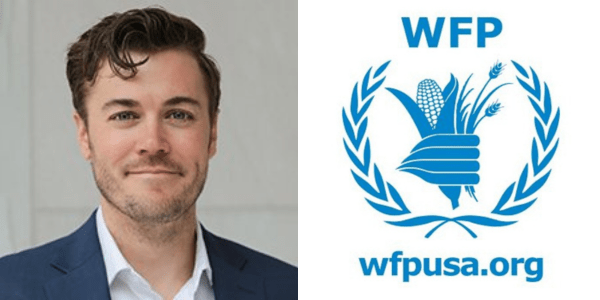
Senior director of Public Policy and Research at World Food Program USA (WFP USA) Chase Sova spoke to students about the intersection of international law and policy as it relates to the global challenge of food insecurity Monday here at the University of Georgia School of Law.
Sova began his talk by explaining the relationship between WFP USA, a US-based non-profit organization, and the United Nations World Food Programme, which the WFP USA works to support stateside. He then discussed the global food insecurity landscape and how it is driven primarily by climate change, conflict, and economic disruptions, or shocks. Sova established links between international trade law and food insecurity, especially in the context of recent global events like the COVID-19 pandemic and the Russian invasion of Ukraine. He introduced students to the current debates about whether policies resulting in extreme food insecurity and starvation could be violations of international human rights law. Students were able to ask Sova questions about his educational background, his advice to those seeking careers in public service, and job opportunities for students interested in the work of the WFP USA.
Before his current position with WFP USA, Sova worked with the United Nations Food and Agriculture Organization (FAO), International Center for Tropical Agriculture (CIAT) and the CGIAR Research Program on Climate Change, Agriculture and Food Security (CCAFS). He has consulted with the World Bank, Johns Hopkins, and Tufts University. Interested in the intersection of food insecurity and conflict, humanitarian assistance, climate change, and sustainable agriculture, Sova has worked on food systems in 15 developing countries across Latin America, sub-Saharan Africa and South Asia. He has led several major research initiatives including WFP USA’s Winning the Peace: Hunger and Instability flagship report. Sova has served as an expert witness at the Senate Foreign Relations Committee, his writing has been featured extensively in peer-reviewed journals, and he regularly lectures on food insecurity at Universities in Washington, D.C. He delivered a TEDx talk on “Winning the Long Game in the Fight to End Hunger” in 2018. Sova earned his Ph.D. from Oxford University.


 exchange of notes