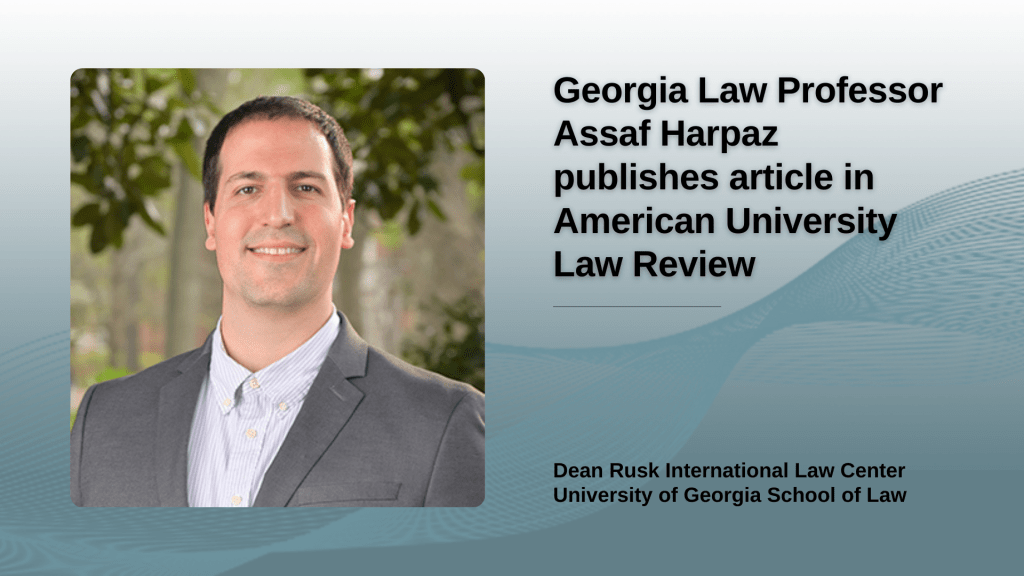
University of Georgia School of Law Professor Assaf Harpaz published “Global Tax Wars in the Digital Era” in the American University Law Review (Vol. 75, 2025). The article explores the global conflict over tax governance, particularly the tensions between OECD-led Global North countries and the UN-backed Global South. It argues for a shift toward source-based taxation that would allow countries to tax online businesses that have a “significant economic presence” without a physical one.
The article’s abstract can be found below:
The digital economy fundamentally disrupts international tax principles that rely on physical presence. When a business earns income abroad, the country of residence (where the taxpayer resides) and the country of source (where income is generated) both have legitimate, competing claims to tax that income. The international tax system tends to favor residence-based taxation. The source country has the right to tax business profits only if the enterprise carries on a permanent establishment within its borders, which typically requires physical presence. The permanent establishment standard becomes flawed in a digital economy where profit shifting practices are abundant and businesses no longer need a physical presence in the location of their online consumer markets.
An upcoming United Nations Framework Convention on International Tax Cooperation recognizes these challenges and is overwhelmingly supported by Global South economies. However, the Global North has historically dominated the international tax regime through the Organization for Economic Co-operation and Development (OECD), informally known as the “World Tax Organization.” A U.N. framework convention creates potential conflict in international tax policymaking and would need to bridge the underlying North-South divide.
This Article explores the “tax wars” surrounding the leadership for global tax governance, contrasting the taxing powers and interests of the OECD-led Global North with those of the U.N.-backed Global South. It argues for a shift toward source-based taxation by revisiting the permanent establishment standard. To achieve this, the Article promotes a significant economic presence doctrine that would expand the permanent establishment criteria to include online businesses. This proposal addresses longstanding inequities and is increasingly warranted in a digital economy that does not depend on physical presence.
Harpaz joined the University of Georgia School of Law as an assistant professor in summer 2024 and teaches classes in federal income tax and business taxation. Harpaz’s scholarly focus lies in international taxation, with an emphasis on the intersection of taxation and digitalization. He explores the tax challenges of the digital economy and the ways to adapt 20th-century tax laws to modern business practices.
The drafting process for a United Nations Framework Convention on International Tax Cooperation, along with two early protocols, is now underway. A UN framework convention represents a Global South effort to shift international tax policymaking from the OECD to the UN. For developing countries, the UN has long been viewed as a more inclusive space for tax policy negotiations, producing more favorable but historically less influential standards compared to the OECD.
Support for the UN framework convention, including its terms of reference, has been sharply divided across traditional Global North-South lines. The backlash following the OECD’s recent two-pillar reform triggered the UN initiative, as Global South countries quickly turned to the UN to begin a new chapter in cross-border taxation. Nonetheless, the UN framework convention faces an uphill battle as the Global North and South fundamentally diverge on questions of choice of forum, tax principles, and the desired scope of the convention. The U.S.’s recent withdrawal from the UN negotiation process casts further doubt on the institution’s capacity to achieve universality and compete with the OECD for the informal title of “World Tax Organization.
This article examines the ongoing UN tax negotiations, focusing on the Global North-South tensions and the historical context of the UN forum shift. It argues that the North-South divide remains a barrier to garnering institutional legitimacy, potentially undermining the framework convention’s viability.
Harpaz joined the University of Georgia School of Law as an assistant professor in summer 2024 and teaches classes in federal income tax and business taxation. Harpaz’s scholarly focus lies in international taxation, with an emphasis on the intersection of taxation and digitalization. He explores the tax challenges of the digital economy and the ways to adapt 20th-century tax laws to modern business practices.
University of Georgia School of Law Professor Diane Marie Amann recently took part in a New York conference that launched the Children and Crimes Against Humanity Coalition, formed to ensure that child justice is embedded in a treaty to be negotiated at the United Nations.
Professor Amann, who chaired a conference panel entitled “Increasing Visibility of Crimes Affecting Children and New Crimes Against Children,” commented on drafts and is an individual endorser of the Coalition white paper. Here at Georgia Law, she is Regents’ Professor of International Law, Emily & Ernest Woodruff Chair in International Law, and a Faculty Co-Director of our Dean Rusk International Law Center. She was Special Adviser to International Criminal Court Prosecutor Fatou Bensouda on Children in & affected by Armed Conflict from 2012 to 2021, and has served since 2023 on the Bring Back Kids UA Task Force. Her recent publications in this field include “Child-Taking,” 45 Michigan Journal of International Law 305 (2024), and “International Child Law and the Settlement of Ukraine‑Russia and Other Conflicts,” 99 International Law Studies 559 (2022).
By U.N. General Assembly resolution, states will conclude the Crimes Against Humanity Treaty – known formally as the Convention on the Prevention and Punishment of Crimes Against Humanity – following diplomatic plenipotentiary conferences in 2028 and 2029. Preparatory meetings will take place in the interim, beginning next January.
The treaty’s text will derive from draft articles adopted in 2019 by the International Law Commission, and from amendments to those articles which U.N. member states may propose during the negotiation process.
Through efforts like the Columbia conference and the just-released white paper, the Children and Crimes Against Humanity Coalition will endeavor to promote states’ proposals to include in child-related provisions in the final treaty text. Its white paper proposes, inter alia: that every person under 18 be defined as a child; that the crime of persecution expressly include age as a prohibited ground; and the enumeration of acts that may constitute crimes against humanity explicitly include recruitment and use of children by armed groups and armed forces, as well as forced marriage. Further provisions relate to national justice and reparations proceedings; among these is the proposal that any child suspected of having committed a crime against humanity will be treated in a country’s child justice system, and not via an adult criminal prosecution.
The white paper’s authors are Véronique Aubert (Save the Children), Zoé Bertrand (Global Survivors Fund), Janine Morna (Amnesty International), and Zama Neff (Human Rights Watch). Those nongovernmental organizations co-sponsored the May 5 conference, along with various units of Columbia University and the U.N. permanent missions of Andorra, Brazil, Malta, Mexico, and the United Kingdom.
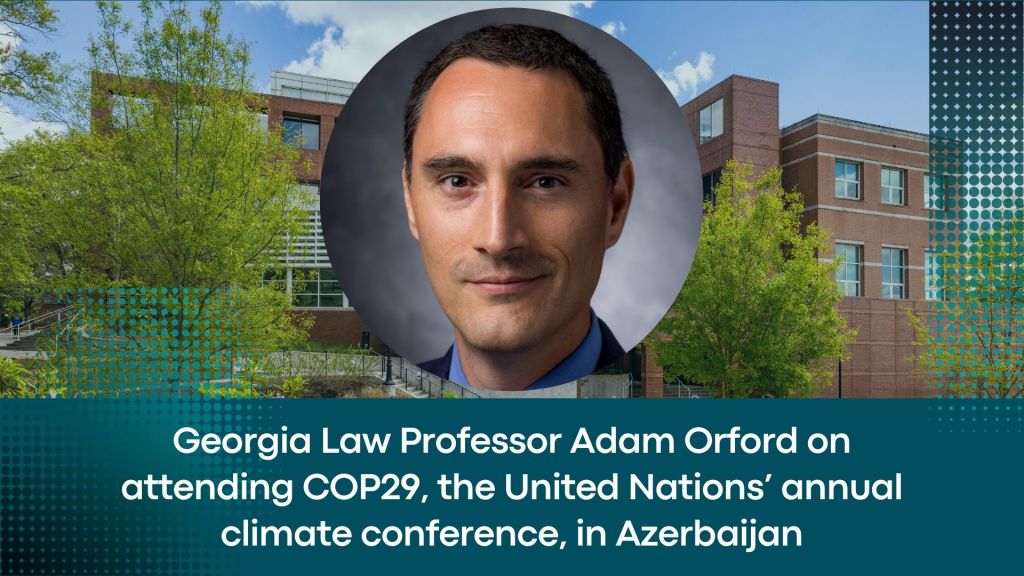
Adam D. Orford, Assistant Professor of Law at the University of Georgia School of Law, participated in the recent 29th Conference of Parties to the United Nations Framework Convention on Climate Change (COP29) in Baku, Azerbaijan. He served as an observer for the American Bar Association. Orford’s interdisciplinary research investigates legal and policy approaches to environmental protection, human health and well-being, and deep decarbonization of the U.S. economy. He also participates in collaborative research initiatives across the University of Georgia, including as lead of the Georgia element of the National Zoning Atlas and as a participant in investigations into the legal, political, environmental and social dimensions of new energy manufacturing and emerging carbon removal technologies.
In his guest post below, Orford summarizes the ABA’s role and the major outcomes at COP29. More detail on this issues can be found in the four COP primers he published at Environmental Law Prof Blog (here, here, here, and here).
ABA’s Role
I participated in COP29 as a delegate for the ABA, which has sent delegates to the climate COPs since 2021. This program followed a 2019 ABA resolution on climate change that urged
“federal, state, local, territorial, and tribal governments, and the private sector, to recognize their obligation to address climate change,”
and called on lawyers to
“engage in pro bono activities to aid efforts to reduce greenhouse gas emissions and adapt to climate change, and to advise their clients of the risks and opportunities that climate change provides.”
The focus of the ABA’s delegations has been to work with other national bar associations to educate the profession about the critical role that lawyers and law associations play in responding to climate change—an issue which may arise unexpectedly, in practices as diverse as environment and energy, human rights, corporate governance, personal injury, real estate development, trusts and estates, municipal management, international trade, and more.
Participating law associations have developed a Climate Registry that is posted on the International Bar Association’s website, providing ready tools to other lawyers and law associations for adopting climate resolutions and other guidance to address climate change. The ABA does not take positions on negotiating outcomes at the COPs, but its delegations work to assist ABA members in understanding the often complex climate COP processes and outcomes.
COP29 Outcomes
As part of my work, I tracked the progress of dozens of negotiations aimed at implementing commitments made by the parties to the UNFCCC and Paris Agreement. Here are some of the most significant outcomes of this year’s negotiations:
A contentious and chaotic COP
Azerbaijan, this year’s host and lead facilitator for the conference’s negotiations, came into COP29 with little climate leadership experience, and it often struggled to maintain trust among the parties.
From remarks praising fossil fuels to open the conference, to procedural maneuvering to achieve controversial results, to protests from many parties that they were not being sufficiency included in negotiations, to delays in the development and circulation of draft negotiating texts, to limited participation from civil society, to relatively disappointing outcomes on many important issues, COP29 highlighted just how difficult climate negotiations have become as the world has continued to warm and countries have fallen behind on taking necessary actions to abate their greenhouse gas emissions.
Disappointing climate finance commitments
This was the year that the parties were required to agree upon a so-called “New Quantified Collective Goal” for climate finance, meaning the amount of annual funding that wealthy developed countries are committed to “mobilizing” for the benefit of poorer developing countries. The prior commitment, $100 billion per year, had only ever been met once, and the actual need is estimated to exceed $1 trillion per year.
After two weeks of contentious debate that included developed countries pushing for expanding contributions from emerging economies and developing countries pushing for $1.3 trillion with a significant public finance component, developed countries only agreed to commit to achieving $300 billion per year—by 2035.
This result was so far below the developing country goals that at one point they walked out of the negotiations entirely in protest.
Procedural machinations to allow carbon credit trading
After years of controversy and delay, the parties at COP29 agreed to finalize the “Article 6 rulebook,” meaning the rules and definitions for international trade in carbon credits originally contemplated by the Paris Agreement in 2015. This outcome was achieved through an irregular procedure, however: A subsidiary implementing body had ratified the rules months before the COP and then provided them to the parties as a take-it-or-leave-it fait accompli. The parties did quickly agree to accept the new rules, but then developed lengthy further guidance intended to promote transparency and environmental integrity in the markets.
Backsliding on the commitment to transition away from fossil fuels
At last year’s COP28 in Dubai, all parties had agreed to include text indicating a goal to “transition away” from fossil fuels as part of the global climate response. However, major oil producers, including especially Saudi Arabia, have since backed away from this commitment, and they worked vigorously throughout COP29 to avoid repeating this language in any form at any point. This opposition nearly derailed several negotiations, and resulted in at least one item being deferred until COP30 next year.
In addition, although countries are supposed to submit their third voluntary climate action plans in February 2025, very few made firm commitments to reduce their climate emissions at COP29—a troubling change from the relatively robust pledges at prior COPs.
Leadership vacuum
COP29 began just days after the U.S. Presidential election. That election’s outcome will have major implications for the trajectory of United States, and therefore global, climate policy.
With the U.S. delegation largely unable to make credible future commitments, there was some speculation that this would provide an opportunity for China to take on a larger global leadership role, particularly in the development of low-carbon energy technologies necessary to respond to climate change. However, China’s most significant efforts at COP29 were quite different:
China opposed calls for it to join developed countries and make firm climate finance commitments; and
It pushed unsuccessfully to add international trade issues to the negotiating agenda.
With the world’s two largest greenhouse gas emitters both taking a back seat, global climate policy lacks clear leadership at a critical time. 2024 is likely to be the warmest year in human history; and 2025 is likely to be warmer still.
Nonetheless, the COP process remains the most important forum for developing international commitments to climate change response. While imperfect, the parties do continue to make progress—sometimes a little, sometimes a lot—every year.
Many parties are already pointing to the disappointing outcomes of COP29 as the basis for redoubling their efforts to strengthen commitments at future COPs. Next year’s COP30 will be held in Belém, Brazil.
Left: The ABA delegation included (from left to right) Uma Outka, law professor at the University of Kansas; Kamran Jamil, law clerk at SD California and co-chair of the ABA International Law Division young lawyers division; and Adam D. Orford, Assistant Professor at the University of Georgia School of Law. Top Right: COP29 plenary session with Mukhtar Babayev, Minister of Ecology and Natural Resources of the Azerbaijan Republic.
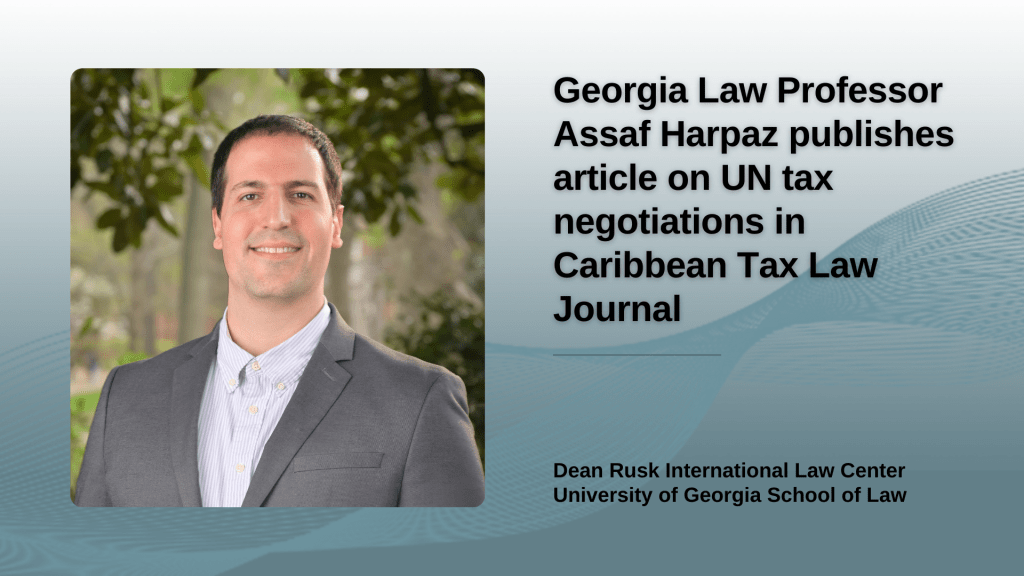
In this article, Harpaz explains the key issues being addressed in the U.N. framework convention on international tax cooperation, including the global north-south divide and its role in the multilateral process.
The article’s abstract is as follows:
The United Nations recently concluded the second session of negotiations on terms of reference for a framework convention on international tax cooperation. The framework convention presents an opportunity to multilaterally address pressing global tax issues. Its goal is to “strengthen international tax cooperation and make it fully inclusive and more effective.”
The extensively negotiated terms of reference make several substantive commitments, including the fair allocation of taxing rights; tax evasion and avoidance by high-net worth individuals; sustainable development; mutual administrative assistance in tax matters; tax-related illicit financial flows; and prevention and resolution of tax disputes.
The ongoing multilateral effort brings the promise of a more equitable international tax regime. However, support for the U.N.’s work and the substantive issues identified has been sharply divided along global north-south lines. A successful U.N. process will need to acquire legitimacy from both the developed superpowers and the developing countries that have historically been excluded from international tax policymaking decisions.
The article explains the key issues being addressed in the U.N. framework convention on international tax cooperation, including the global north-south divide and its role in the multilateral process.
Assaf Harpaz joined University of Georgia School of Law as an assistant professor in summer 2024 and will teach classes in federal income tax and business taxation. Harpaz’s scholarly focus lies in international taxation, with an emphasis on the intersection of taxation and digitalization. He explores the tax challenges of the digital economy and the ways to adapt 20th-century tax laws to modern business practices.
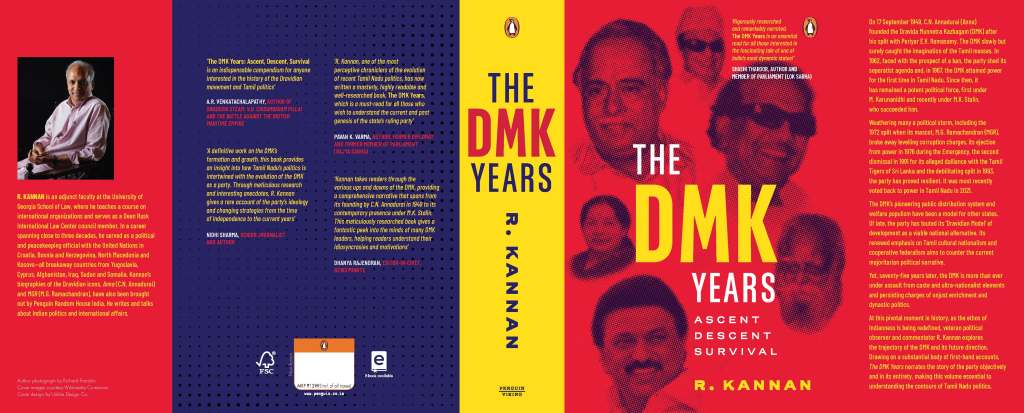
University of Georgia School of Law alumnus and adjunct professor Kannan Rajarathinam (LL.M. ’88) recently published a book, The DMK Years: Ascent, Descent, Survival (India Viking, 2024). The ‘DMK Years’ tells the story of how India’s democracy has accommodated the cultural nationalist aspirations of the Tamils. It also tells the seventy-five-year story of the DMK and the state of Tamil Nadu, once separatist but now India’s second-most prosperous state.
Below is a full description of the book:
India has twenty states and eight union (federal territories). In April 2023, it became the world’s most populated country. It has 22 official languages, numerous ethnicities and people of all faiths.
Uniting a country as vast and diverse as India is a herculean task. However, India’s democracy, which was adopted after the 1947 Partition, has shown remarkable resilience. The country’s quasi-federal constitution was designed with unity in mind, recognizing and valuing the diverse population as a key component of its unity.
Yet, India’s unity has not been without its challenges. The restive border states of Kashmir and Punjab are well known. However, there have been other less well-known challenges to the Indian Union. One such was from Tamil Nadu, the southernmost state where the sub-nationalist Dravida Munnetra Kazhagam (DMK) or Dravidian Progressive Federation espoused separation since its founding in 1949.
As the DMK grew into a significant political force, the Indian Centre brought forward the Sixteenth Amendment to the Constitution in 1962, banning any secessionist advocacy—even by peaceful means. The DMK dropped its demand and, in five years, became the ruling party in the state of Tamil Nadu. Since then, it has alternated in power there with its breakaway party, the All India Anna DMK, and has been part of the federal coalition for eighteen years.
The ‘DMK Years’ tells the story of how India’s democracy has accommodated the cultural nationalist aspirations of the Tamils. It also tells the seventy-five-year story of the DMK and the state of Tamil Nadu, once separatist but now India’s second-most prosperous state.
Kannan Rajarathinam is an adjunct professor at the University of Georgia School of Law teaching a course on International Organizations. Between 1993 and 2022, he served the United Nations in various capacities, including senior political affairs officer, head of office, senior planning and coordination officer, chief civil affairs officer, and legal officer from Afghanistan to Bosnia and Herzegovina. Before joining the UN, he briefly taught at the University of Madras in India as a guest faculty member and junior professor and practised law. Presently, he serves on the Dean Rusk International Law Center Advisory Council.
University of Georgia School of Law alumnus Dr. Kannan Rajarathinam (LL.M., ’88) spoke to students last week about the future of the United Nations in a multipolar world in a lecture entitled, “The UN at a Crossroads.”
Rajarathinam used his decades of experience working at the UN to frame his central question of what lies ahead for the international organization. Founded in 1945, the UN’s main focus over the past 80 years has remained the same: to provide all nations with the opportunity to work together to find shared solutions to shared challenges. From supporting refugees to providing food and vaccines globally, the UN has many ongoing campaigns that realize this vision.
One area where he felt the UN had been particularly successful is in building awareness of and consensus around the global challenge of climate change. He noted that the UN has led over twenty conferences on climate change, and, as a direct result of their commitment to this topic, climate security is a top concern for many western nations. Although there is still much work to be done, Rajarathinam stated that shared solutions, like a fund being developed to aid the Global South in managing the disproportionately-felt effects of climate change and technology-sharing to establish renewable energy systems worldwide, are more likely to find consensus due to the inclusive design of the UN.
There are many challenges to the UN’s role in the new multipolar landscape, including the emergence of regionally-focused forums like BRICS and the G20, international development initiatives like China’s Belt and Road Initiative, and ongoing conflicts like Russia’s invasion of Ukraine and the Israel-Hamas war. Rajarathinam believes that the ability of the UN to offer all 193 Member States from India to Nauru an equal vote is its main strength in withstanding this contemporary power shift. He concluded his talk by observing that, now that we are entering into a multipolar global landscape, no one country has the ability to control history anymore – and that, as a result, the world will be more colorful.
After his afternoon lecture, Rajarathinam met with current LL.M. students to discuss his career in the UN. Students shared their backgrounds and professional aspirations and were able to get advice from Rajarathinam and his wife, Usha.
Rajarathinam recently retired after nearly three decades of UN peace keeping and political work in the former Yugoslavia, Cyprus, Afghanistan, Iraq, Sudan and Somalia. Prior to the UN, he briefly practiced and taught law in India. A commentator of international and political affairs in India, he is the author of two political biographies of Indian leaders and his next work, on the political history of his state of Tamil Nadu in India is due next summer.
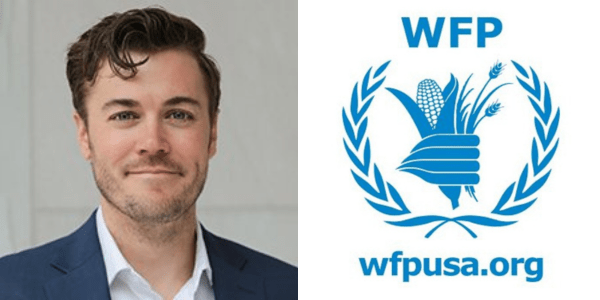
Senior director of Public Policy and Research at World Food Program USA (WFP USA) Chase Sova spoke to students about the intersection of international law and policy as it relates to the global challenge of food insecurity Monday here at the University of Georgia School of Law.
Sova began his talk by explaining the relationship between WFP USA, a US-based non-profit organization, and the United Nations World Food Programme, which the WFP USA works to support stateside. He then discussed the global food insecurity landscape and how it is driven primarily by climate change, conflict, and economic disruptions, or shocks. Sova established links between international trade law and food insecurity, especially in the context of recent global events like the COVID-19 pandemic and the Russian invasion of Ukraine. He introduced students to the current debates about whether policies resulting in extreme food insecurity and starvation could be violations of international human rights law. Students were able to ask Sova questions about his educational background, his advice to those seeking careers in public service, and job opportunities for students interested in the work of the WFP USA.
Before his current position with WFP USA, Sova worked with the United Nations Food and Agriculture Organization (FAO), International Center for Tropical Agriculture (CIAT) and the CGIAR Research Program on Climate Change, Agriculture and Food Security (CCAFS). He has consulted with the World Bank, Johns Hopkins, and Tufts University. Interested in the intersection of food insecurity and conflict, humanitarian assistance, climate change, and sustainable agriculture, Sova has worked on food systems in 15 developing countries across Latin America, sub-Saharan Africa and South Asia. He has led several major research initiatives including WFP USA’s Winning the Peace: Hunger and Instability flagship report. Sova has served as an expert witness at the Senate Foreign Relations Committee, his writing has been featured extensively in peer-reviewed journals, and he regularly lectures on food insecurity at Universities in Washington, D.C. He delivered a TEDx talk on “Winning the Long Game in the Fight to End Hunger” in 2018. Sova earned his Ph.D. from Oxford University.
Professor Melissa J. “MJ” Durkee, who is the Associate Dean for International Programs, Director of the Dean Rusk International Law Center, and Allen Post Professor here at the University of Georgia School of Law, has published “Industry Groups in International Governance: A Framework for Reform” in the bi-annual, peer-reviewed Journal of Human Rights and the Environment.
Here’s the abstract:
“The Sustainable Development Goals and the UN Guiding Principles on Business and Human Rights encourage engaging with businesses as partners in important global governance agendas. Indeed, many international organizations are now partnering with business groups to secure funding and private sector engagement. At the same time, reforms at the World Health Organization, Food and Agriculture Organization and others seek to restrain the dangers of mission distortion and capture by business groups. Shareholders at major multinational oil and gas companies also recognize these dangers and seek to rein in lobbying that is at odds with the goals of the Paris Climate Agreement. Despite these tensions, little scholarly attention has been paid to the regulations that govern how industry and trade groups may participate in the work of international organizations. Specifically, little attention has been devoted to how those regulations could best capture the potential benefits of business engagement while restraining the potential harms. This article offers a history of engagement between international organizations and industry and trade associations, reviews arguments for embracing or restraining their participation, and develops a framework for regulations to govern their access.”
A version of this new article also is available at SSRN.
Walter Hellerstein, Distinguished Research Professor & Shackelford Distinguished Professor in Taxation Law Emeritus here at the University of Georgia School of Law, presented last week at an online meeting organized by the United Nations Conference on Trade and Development.
Hellerstein spoke on “Main Issues on E-Commerce and Taxation” as part of a 2-day the online Ad Hoc Expert Group Meeting on Electronic Commerce and Taxation. This principal presentation helped to set the stage by providing an overview of the issues relevant for e-commerce taxation.






 exchange of notes